
Reviewed · SACSAYHUAMAN AND INCA RUINS
Cusco City Sightseeing, San Pedro Market, Cathedral and Qorikancha Temple
Cusco’s past and present come together in one compact afternoon here. You begin above the city at San Cristóbal Plaza, move through the food stalls of San Pedro Market, then trace Inca stonework and colonial power through Qorikancha, San Blas, Hatun Rumiyoc Street, and the Cathedral. I like the strong mix of daily life and major monuments, and I like having transport and entrance tickets arranged for you.
The small-group format, capped at 15 people, can make the tour feel personal and easygoing. Guides such as Henry, Jose Marie, Gabriel, Manuel, and Robin have been praised for clear explanations and thoughtful help. The main caution is timing: some departures have finished in about two and a half hours, and bilingual commentary can feel brief if most of the group speaks Spanish.
In This Review
- Key points to know before you book
- Why this afternoon works well in Cusco
- San Cristóbal Plaza and the first view of Cusco
- San Pedro Market, where Cusco does its daily shopping
- Qorikancha, the afternoon’s essential monument
- San Blas and Hatun Rumiyoc Street
- Cusco Cathedral and the Plaza de Armas
- How the bilingual format affects the experience
- Price, transport, and the question of value
- Timing problems and how to protect your afternoon
- Who should book this Cusco city tour
- Should you book it?
- FAQ
- What time does the tour begin?
- How long does the tour last?
- What places are visited?
- Are entrance tickets included?
- Is hotel pickup included?
- Is the tour offered in English?
- How many people can join the tour?
- Can most people participate?
- Is San Pedro Market included?
- What is the cancellation policy?
Key points to know before you book
- San Pedro Market gives you a real look at Cusco life, with produce, potatoes, corn, bread, cheese, handicrafts, and plenty of local color.
- Qorikancha is the historical high point for many people, where Inca stonework meets the Santo Domingo church and convent.
- The Twelve-Angled Stone is a quick but memorable stop along Hatun Rumiyoc Street.
- The Cathedral ticket is included, along with admission to Qorikancha.
- Hotel pickup and drop-off save effort, though vehicles cannot reach every hotel in the historic center.
- The 2:00 pm start suits a first afternoon, but confirm the pickup time and language balance if your schedule is tight.
Why this afternoon works well in Cusco
Cusco can feel confusing at first. Streets twist, altitude slows your pace, and the city’s story is spread across plazas, churches, markets, and fragments of Inca walls. This tour gives you a useful first map.
You see the city from above, watch local commerce at ground level, then visit the two major historic interiors: Qorikancha and the Cathedral. In between, the route follows streets where Inca masonry remains part of ordinary city life. That sequence matters. You are not looking at isolated monuments. You are seeing how Cusco grew from an Inca capital into a Spanish colonial center and then into the modern city around you.
I especially like this for your first full afternoon, or for a short stay when you want the main sights without arranging separate taxis and admissions. The guide adds context that can be easy to miss on your own, particularly at Qorikancha and along Hatun Rumiyoc Street.
The tour is advertised at about three hours and 30 minutes, beginning at 2:00 pm. Actual timing appears to depend on pickup delays, traffic, group size, and how much time the guide spends at each stop. Some experiences have lasted close to the stated length, while others have been shorter. If you have dinner booked soon after 5:30 pm, leave a cushion.
More Inca ruins above Cusco:
- Cusco: Half-Day City Tour with Sacsayhuaman and Q’enco
★ 4.6 · 1,129 reviews - City Tour Cusco Qoricancha Sacsayhuaman y Tambomachay
★ 4.7 · 617 reviews - Cusco: 3-Hour Horse Riding Tour to the Temple of the Moon
★ 5.0 · 105 reviews
San Cristóbal Plaza and the first view of Cusco
The outing begins at San Cristóbal Plaza, in the San Blas area, with broad views across Cusco. This is a smart opening stop because you can see the city’s bowl-shaped setting before walking into its dense center.
The viewpoint also helps you understand the route. The Plaza de Armas lies below, while tiled roofs and church towers fill the middle distance. Your guide can point out how the old city fits together, giving the rest of the afternoon a clear frame.
The San Cristóbal church is part of the artisans’ quarter and is noted for its carved woodwork. The stop is not only about taking a picture. It introduces the area’s artistic side before you continue toward the market and central monuments.
There is one practical issue: Cusco’s altitude can make even a gentle walking tour feel demanding, especially on your first day. A leisurely pace is helpful, and several people have found the slower approach useful. Give yourself time to adjust before arriving, drink tea or soup if that suits you, and carry Peruvian soles for small bathroom charges. Some facilities charge one or two soles.
San Pedro Market, where Cusco does its daily shopping
San Pedro Market is the most immediate cultural stop. It is not a polished food hall designed only for sightseeing. It is a working central market where you can see piles of potatoes, corn, bread from Oropesa, cheese, groceries, handicrafts, and other regional products.
This is where the tour connects monuments with ordinary life. You get a look at what people buy, sell, cook, and carry home. The smells and close-packed stalls can be a lot to take in, but that is part of the point. The market gives you a more grounded view of Cusco than another church interior would.
You have about 45 minutes here according to the planned schedule. That is enough to walk through the main sections and browse, but not enough for a slow, meal-sized exploration of every stall. If you want to buy something, decide early how much time you want to spend shopping so you do not lose the guide’s explanations.
The market can also be the least comfortable stop for some people. Crowds, strong food smells, and narrow aisles are possible, and the tour does not turn this into a long culinary session. Think of it as a guided introduction to local food and commerce, not a market cooking class.
Qorikancha, the afternoon’s essential monument
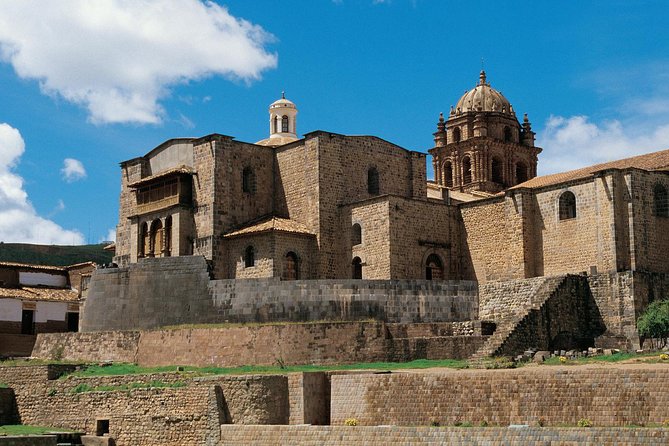
Qorikancha, also written Coricancha, was the Inca Temple of the Sun. Its earlier names, Intikancha and Intiwasi, reflect its purpose as a sacred center dedicated to Inti, the sun deity.
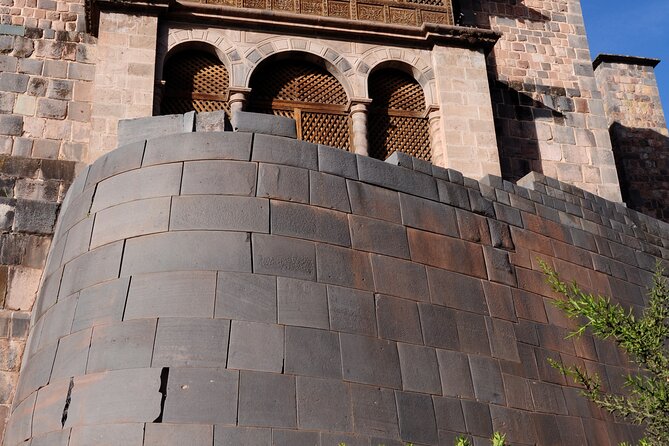
The Spanish conquest changed the building dramatically. Much of the original complex was destroyed after the 16th-century conflict, and surviving Inca stonework became the foundation for the Santo Domingo church and convent. That collision is what makes the site so valuable. You can study the precise Inca masonry while also seeing the later religious structure built over it.
Allow about 30 minutes to an hour here, depending on the group and the guide. Some people find Qorikancha the most interesting stop because it explains Cusco’s Inca foundations better than a quick street view can. Others have found the visit too brief, especially when the guide remains mostly in the innermost area.
Pay attention to the contrast between the tight stone joints and the later colonial walls. Your guide’s explanation is important because the ruins alone do not tell the whole story. Guides such as Henry and Jose Marie have been singled out for making the historical and cultural details clear, though guide quality and pace can vary by departure.
The included admission improves the value of the tour. Qorikancha is one of the two paid sights covered in the price, so you do not have to queue or work out separate tickets during a short afternoon.
More Cusco city tours:
- Open Bus Cusco City Tour
★ 4.5 · 219 reviews - Cusco: City Tour | Half-Day Tour to 4 Archaeological Sites
★ 4.6 · 206 reviews - City Tour in Cusco & visit Museum South American Camelid Private.
★ 5.0 · 147 reviews - Cusco: Half-Day City Tour
★ 4.2 · 129 reviews
San Blas and Hatun Rumiyoc Street
The route continues through San Blas, Cusco’s artisans’ quarter. The area is tied to carved woodwork and small-scale craft, and the church provides another look at colonial decoration.
From there, you walk along Hatun Rumiyoc Street toward the center. The street is famous for the Twelve-Angled Stone, a carefully fitted block of Inca masonry built into a wall associated with Inca Roca Palace. The palace is now the Archbishop’s Palace, a neat example of how Spanish institutions occupied an older Inca setting.
The Twelve-Angled Stone is not a large museum exhibit. It is part of the wall, on a city street, and the stop can be quick. That is exactly why it is memorable. Cusco’s Inca remains are not confined to an archaeological park. They are built into the routes you use to reach a café, church, or plaza.
This section is mainly about walking and explanation rather than a long formal visit. Wear shoes that handle uneven stone streets, and expect the group to pause while the guide explains the wall and points out the stone. The route is manageable for most people, but altitude and steps can make it feel harder than the distance suggests.
Cusco Cathedral and the Plaza de Armas
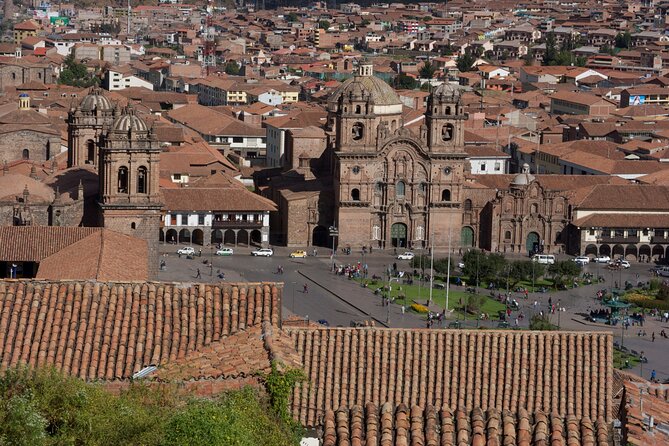
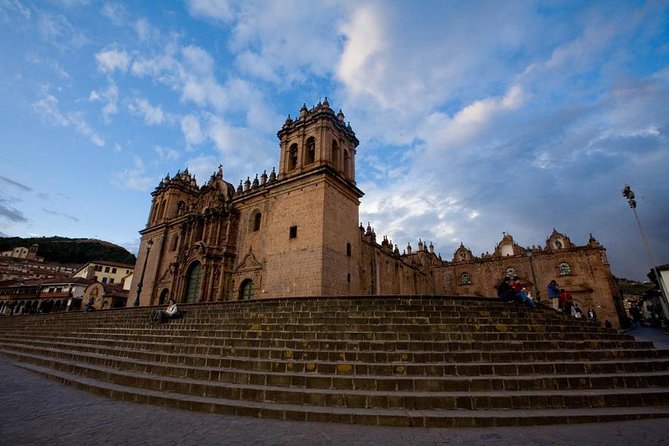
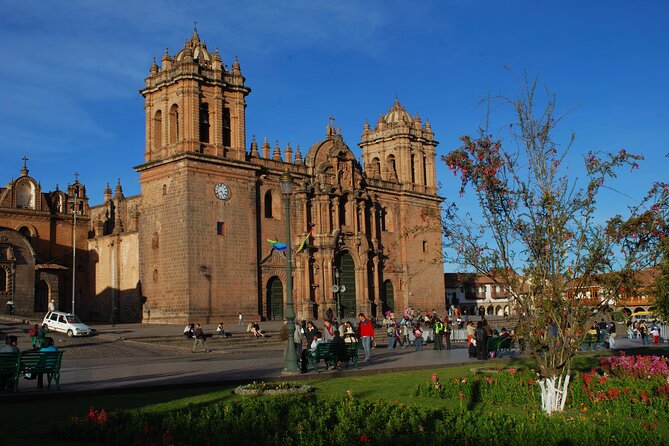
The tour finishes in the Plaza de Armas, Cusco’s central square, with admission to the Cathedral Basilica of the Assumption of the Virgin. Construction took place from 1560 to 1654, and the building became the mother church of the Roman Catholic Archdiocese of Cusco.
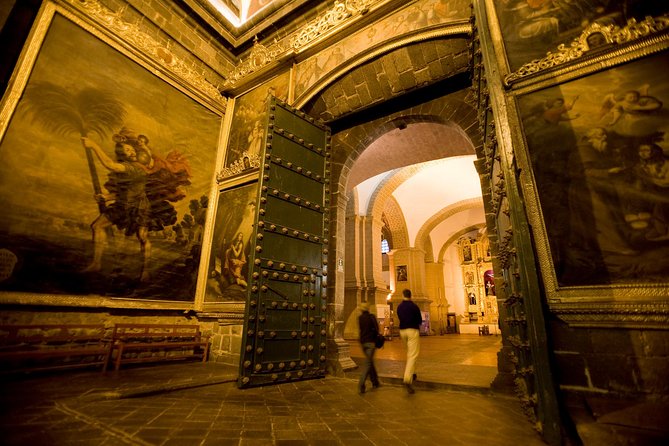
Inside, look for the carved woodwork and colonial paintings. The Cathedral is especially useful after Qorikancha because you can compare two powerful religious traditions in the same city. The Spanish church is not simply another beautiful building. It represents the colonial order that followed the Inca state, while the earlier stonework remains close by in the streets and foundations.
The scheduled visit lasts about an hour, though the real stop can be shorter when the group is running late. Some departures have treated the Cathedral as a quick final visit, while others have allowed enough time to see the principal artworks and hear the guide’s explanation.
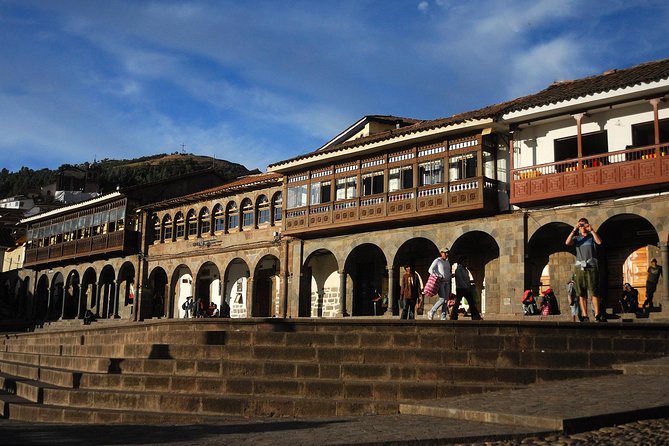
The plaza is also a practical ending point. You can stay in the center for dinner, shopping, or another walk instead of returning immediately to a hotel. If hotel drop-off is part of your arrangement, the vehicle may not be able to reach hotels in pedestrian-only parts of the historic center, so you may be left at a nearby accessible point.
How the bilingual format affects the experience
The guide service is provided in English and Spanish. This makes the tour suitable for mixed-language groups, but the balance of the commentary matters.
When a group includes many Spanish speakers and only one or two English speakers, the guide may give the main explanation in Spanish and follow with a shorter English version. That can leave English-speaking participants feeling they received less detail. If historical explanation is your main reason for booking, ask about the expected language balance before confirming if that option is available.
On the other hand, strong guides can handle both languages well. Accounts of guides including Marcelo, Manuel, Gabriel, Robin, Henry, and Jose Marie describe clear stories, cultural context, and a relaxed pace. One solo participant also appreciated that Gabriel helped take photos at each stop, a small kindness that matters when you are exploring alone.
The group limit of 15 is a plus. It is small enough for questions and easier movement through streets and interiors, but it is not a private tour. If you want to stop for as long as you like at every painting or market stall, a private guide would give you more control.
Price, transport, and the question of value
At $59 per person, this tour is priced above a simple self-guided walk, but the comparison is not quite fair. The fee includes a bilingual guide, hotel pickup and drop-off from select hotels, transport between parts of the city, and entrance to Qorikancha and the Cathedral.
Cusco’s central sights can be walked between, and you can visit San Pedro Market without paying an entrance fee. If you are comfortable with maps, taxis, and buying tickets, you can spend less on your own. The tour earns its price through organization and interpretation, not through exclusive access.
Transport is most useful when you are tired, newly arrived, or still learning Cusco’s streets. Several people valued the efficient movement by car even though much of the route can be completed on foot. Others found too much time was lost in traffic, especially when the vehicle stopped at hotels for additional pickups.
That is the central value question. Book it if you want a guided framework and do not want to coordinate four stops yourself. Skip it if you prefer a slow walk, long market browsing, or complete control over how much time you spend inside each monument.
Timing problems and how to protect your afternoon
The planned start is 2:00 pm, with an approximate duration of three and a half hours. Pickup timing can shift, and one poorly managed departure involved a substantial delay followed by the prospect of a rushed visit. The money was refunded in that case, but the lost afternoon was still frustrating.
I would confirm the pickup time with the operator on the day before the tour and avoid booking a nonrefundable dinner immediately afterward. The free cancellation rule allows a full refund when you cancel at least 24 hours before the local start time. Changes or cancellations inside that window are not accepted for a refund.
The schedule printed for the stops adds up to more time than the advertised total, which means the listed durations should be treated as rough guidance rather than guaranteed time at every site. Traffic, hotel pickups, and the bilingual format can all change the pace.
Who should book this Cusco city tour
This is a good match for you if:
- You are new to Cusco and want the major sights explained in one afternoon.
- You want both local daily life and formal historic sites.
- You prefer a small shared group instead of a large coach.
- You value included admission and arranged transport.
- You have limited time in the city.
- You are comfortable with moderate walking at high altitude.
It is less suitable if you want a slow art tour, a serious food tour, or guaranteed English-only commentary. It is also a poor fit for a tightly packed evening schedule unless the operator confirms a reliable pickup and finish time.
Should you book it?
Book this tour if you want a practical first look at Cusco with a guide who can connect San Pedro Market, Inca stonework, Qorikancha, San Blas, and the Cathedral into one story. The strongest parts are the mix of the market and monuments, the included admissions, and the chance to ask questions in a small group.
Before paying, confirm three things: your hotel can receive vehicle pickup, the tour will provide enough English commentary for your group, and the approximate finish time works with your plans. If those details line up, $59 is fair for an organized introduction. If not, walk the center at your own pace and visit the paid sites separately.
FAQ
What time does the tour begin?
The stated start time is 2:00 pm.
How long does the tour last?
The experience is advertised as approximately three hours and 30 minutes. Actual timing can vary, and some departures have finished sooner.
What places are visited?
The route includes San Cristóbal Plaza, San Blas, San Pedro Market, Qorikancha, Hatun Rumiyoc Street, the Twelve-Angled Stone, the Archbishop’s Palace exterior area, Plaza de Armas, and Cusco Cathedral.
Are entrance tickets included?
Yes. Admission to Cusco Cathedral and Qorikancha Temple is included.
Is hotel pickup included?
Yes, hotel pickup and drop-off are included from select hotels. Some hotels are in areas where vehicles are not permitted.
Is the tour offered in English?
Yes. The guide service is bilingual in English and Spanish.
How many people can join the tour?
The maximum group size is 15 people.
Can most people participate?
The tour information states that most people can participate. The route includes walking through historic streets, and altitude may affect your comfort.
Is San Pedro Market included?
Yes. The tour spends approximately 45 minutes at Mercado Central de San Pedro, where you can see local produce, food products, and handicrafts.
What is the cancellation policy?
You can cancel up to 24 hours before the local start time for a full refund. Cancellations or changes made less than 24 hours before departure are not refunded.
More Cusco Food Tours
- Cusco: Peruvian Cooking Class, Cocktails & Local Market Tour
★ 4.9 · 512 reviews - Cooking class and market tour with a local chef
★ 5.0 · 186 reviews - The 10 Tastings of Cusco With Locals: Private Food Tour
★ 4.5 · 71 reviews - Vegan Peruvian Cooking Class Cocktails and Local Market in Cusco
★ 5.0 · 46 reviews
Just added around Cusco
- Cusco: Via Ferrata, Skybike, and Rappel Adventure★ 5.0 · 3 reviews
- From Cusco: Maras and Moray and Ollantaytambo Tour★ 5.0 · 3 reviews
- Cusco: Rainbow Mountain Tour at Sunset Without the Crowds★ 4.7 · 3 reviews
- Cusco: Sacred Valley Day Trip with Maras & Moray Salt Mines★ 5.0 · 3 reviews
- Valle Sur Cusco | half day★ 4.3 · 3 reviews
- IN MACHU PICCHU: Private Tour Guide Service★ 5.0 · 3 reviews
- Salkantay trek to Machu Picchu – 5D/4N – Premium★ 3.3 · 3 reviews
- Full-Day Condor Viewpoint & Inca Sites Tour★ 5.0 · 3 reviews
Sacsayhuaman and Inca Ruins, compared.
Half-Day City Tour with Sacsayhuaman and Q’enco
Read our review →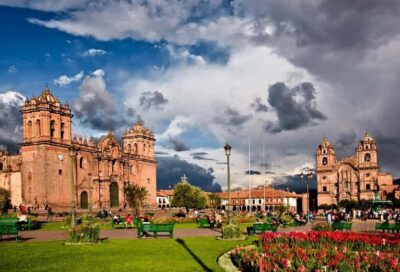
City Tour Cusco Qoricancha Sacsayhuaman y Tambomachay
Read our review →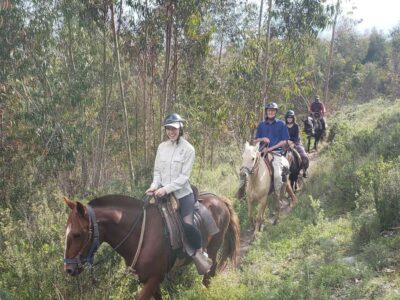
3-Hour Horse Riding Tour to the Temple of the Moon
Read our review →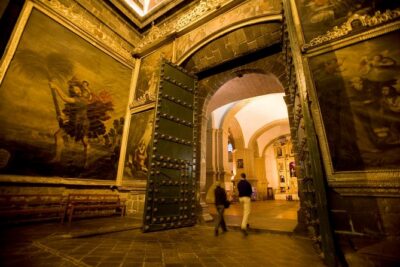
Cusco City Sightseeing and Sacsayhuaman Archeological Park Tour
Read our review →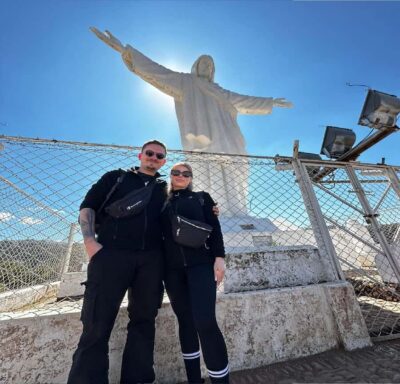
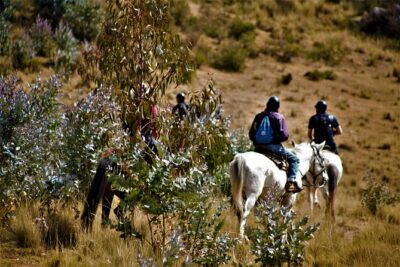
Horse Riding Chacan Mountain And Temple Of The Moon
Read our review →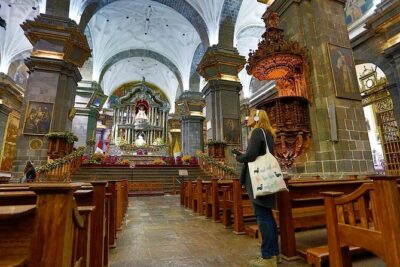
Cusco 4-Hour Private Tour Including Sacsayhuaman and Qenqo
Read our review →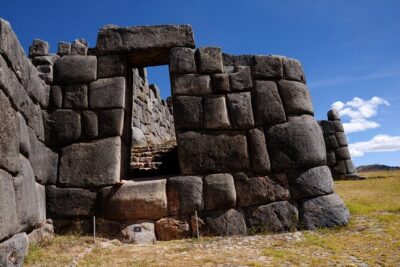
Sacsayhuaman Temple, Tambomachay and Puca Pucara Half-Day Tour
Read our review →Browse the lists this tour appears in