
Reviewed · SACSAYHUAMAN AND INCA RUINS
Sacsayhuaman Temple, Tambomachay and Puca Pucara Half-Day Tour
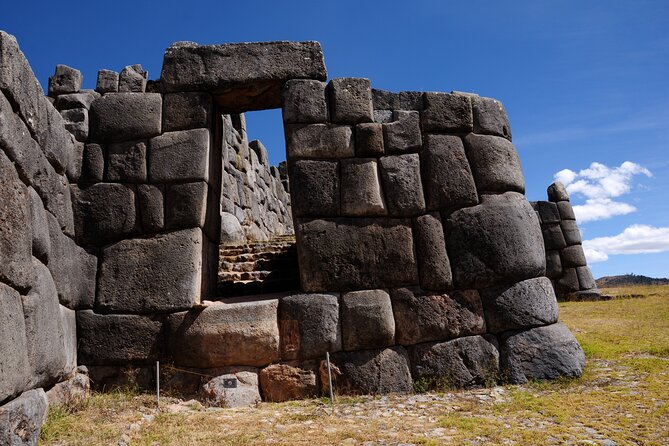
Sacsayhuaman is the star here: huge fitted stones, high terraces, and broad views over Cusco make it one of the most memorable stops near the city. This tour adds three smaller Inca sites, so you can see a lot without arranging taxis or sorting out admission on your own.
I like the small-group limit of 14 people and the early 8 a.m. start. I also like the prebooked archaeological ticket, since it removes one piece of hassle. The catch is time. Some departures move briskly, and an unlisted alpaca or textile-shop stop has cut into sightseeing for some people.
In This Review
- Key points to know before booking
- Four Inca sites, one practical Cusco morning
- Sacsayhuaman: the main event above Cusco
- Q’enko: carved rock and a short visit
- Puca Pucara: a lookout with a name that tells you something
- Tambomachay: sacred water in the hills
- Why the guide can make or break the morning
- The textile-shop issue
- Transport, timing, and the altitude factor
- Is $69 a fair price?
- Who should book this half-day tour?
- My call: book it for coverage, not lingering
- FAQ
- What sites does the tour visit?
- What time does the tour start?
- How long does the tour last?
- Is hotel pickup included?
- Is admission included?
- How many people can join the tour?
Key points to know before booking
- Sacsayhuaman gets the most time: Plan on about 1 hour 30 minutes there, though the exact pace can vary.
- Four sites fit into one morning: You visit Sacsayhuaman, Q’enqo, Puca Pucara, and Tambomachay near Cusco.
- The 8 a.m. start is useful: Early arrival can mean fewer people and better access to Sacsayhuaman.
- A bilingual guide leads the tour: Guides such as Jose Aguilar, Ana, Yuber, Robinson, Alex, and Mariné have received strong praise, but the assigned guide varies.
- Expect a fast overview at the smaller sites: Q’enqo, Puca Pucara, and Tambomachay each receive roughly 30 to 45 minutes.
- Watch for shopping stops: Some departures have included an alpaca or textile shop that was not part of the advertised sightseeing plan.
Four Inca sites, one practical Cusco morning
This is a useful introduction to the archaeological sites scattered in the hills above Cusco. You leave the city in an air-conditioned minivan, stop at four places, and return to your hotel with much of the afternoon still open.
The advertised duration is about three hours, although the stated stop times add up to roughly 2 hours 45 minutes before driving. In practice, some outings have taken closer to four hours, while one rushed departure finished in about 2.5 hours. Pickup, traffic, group size, guide pace, and any shopping stop can all change the clock.
That variation matters. If you want a quick orientation before visiting Machu Picchu or the Sacred Valley, the compact format works well. If you want long explanations, careful photography, and time to wander, you may find the schedule tight.
The tour is capped at 14 people, though some departures have been much smaller. One person reported having a private-feeling outing because no other English-speaking participants joined. A group of eight also had enough room for a detailed bilingual explanation. Smaller groups can help, but they do not automatically guarantee a slow pace.
More Inca ruins above Cusco:
- Cusco: Half-Day City Tour with Sacsayhuaman and Q’enco
★ 4.6 · 1,129 reviews - City Tour Cusco Qoricancha Sacsayhuaman y Tambomachay
★ 4.7 · 617 reviews - Cusco City Sightseeing, San Pedro Market, Cathedral and Qorikancha Temple
★ 4.5 · 139 reviews
Sacsayhuaman: the main event above Cusco
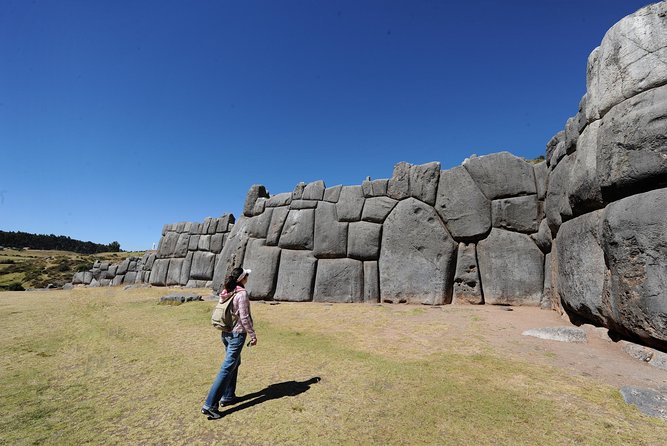
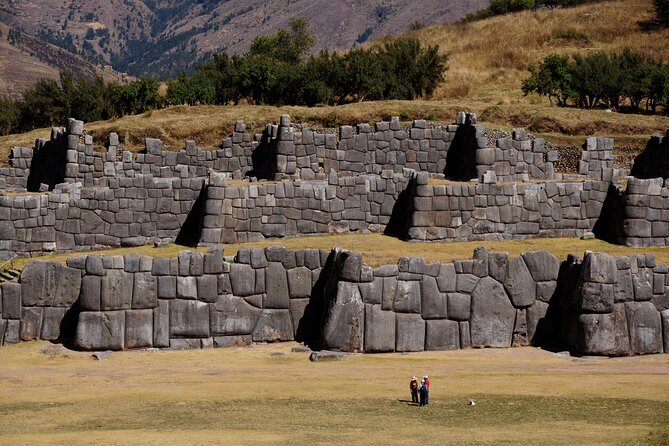
Sacsayhuaman is the reason to book this outing. The site spreads across broad terraces above Cusco, with massive stones fitted together so closely that the joints can seem almost impossible. You get time to walk among the three levels, see the remains of the towers, and look down toward the city.
The guide should explain the site’s role, construction, and place in Inca culture. This is also where the best views appear, including the white Cristo Blanco statue nearby. One person noted that the statue was about a 10-minute walk away, but it was not part of that tour’s route.
I would give Sacsayhuaman your full attention. Look at the scale of the blocks, then step back and study how the terraces follow the hill. The site works on two levels: it is impressive as an engineering project, and it also helps you understand how closely Inca ceremonial and defensive spaces were tied to the natural setting.
The stated visit lasts 1 hour 30 minutes. Some people had almost two hours here and felt it was the strongest part of the morning. Others felt the guide spent too much time at the viewpoint and not enough among the ruins. That is the main risk of a group tour: you follow the guide’s plan rather than setting your own.
The early departure is a real advantage. Sacsayhuaman can draw long lines during busy periods, and arriving early may give you quieter paths and a clearer view of the stonework. The admission ticket is included, so you are not stopping to buy a separate ticket at the site.
Q’enko: carved rock and a short visit
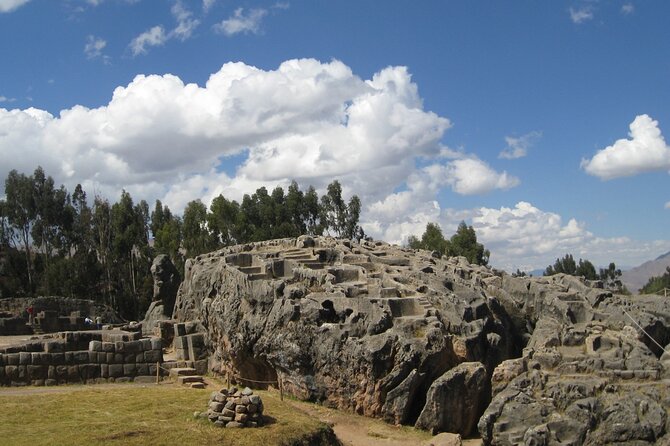
Q’enko, also written Q’enqo, is a smaller and more atmospheric stop. Its central feature is a carved rock complex with passages, channels, stairways, and an altar cut into the stone. Your guide connects these details with Inca ceremonies and ritual use.
The planned stop is about 30 minutes. That is enough for a basic explanation and a look at the main features, but not enough for a leisurely exploration. The carved surfaces can be easy to miss if you are simply following the group, so stay close during the explanation and then use any spare minutes to look carefully at the rock.
The provided tour information notes that the altar area was not accessible at one point because of health restrictions. Conditions can change, so you should ask your guide what parts are open on the day. Even with limited access, the top viewpoint and carved rock make Q’enko a worthwhile short stop.
Compared with Sacsayhuaman, Q’enko has less visual scale. Its appeal is in the details and the questions it raises about ceremonies. I would treat it as a concise introduction, not a full archaeological study.
Puca Pucara: a lookout with a name that tells you something
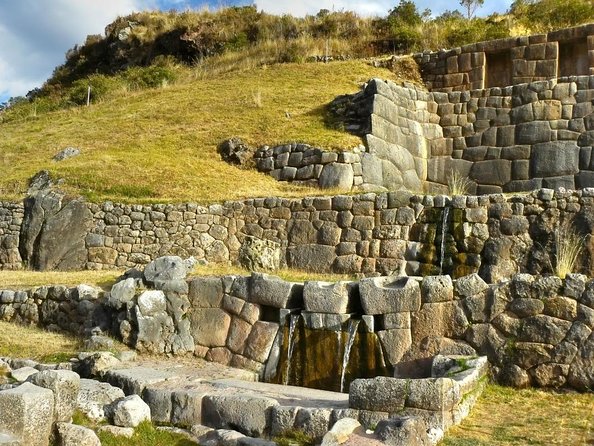
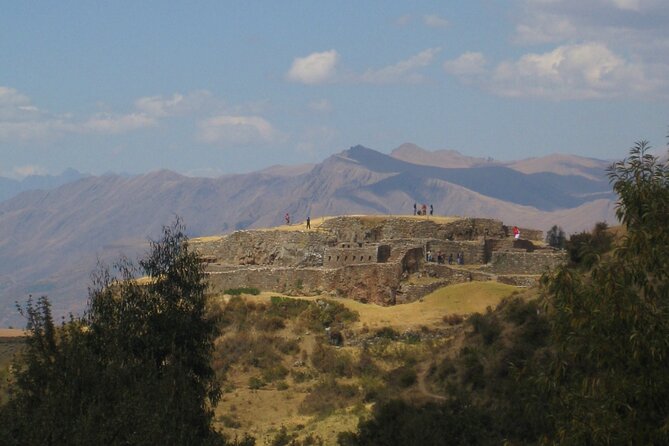
Puca Pucara means red fortress in Quechua. The hilltop complex served as a military position and checkpoint connected with the defense of Cusco and Sacsayhuaman. Its walls, water features, and aqueducts are easier to understand when you notice the site’s position above the surrounding routes.
The visit lasts about 30 minutes. That is usually enough to walk around, take photographs, and hear the basic explanation. The site may feel less monumental than Sacsayhuaman, but its setting helps show how the Inca organized movement and protection around Cusco.
Puca Pucara also gives you a useful change of scale. At Sacsayhuaman, the focus is giant masonry. Here, the emphasis is on position, visibility, walls, and control. I would listen for the connection between this lookout and the larger defensive network rather than expecting another enormous citadel.
Some people have felt that the smaller sites were handled too quickly, while others found 30 minutes sufficient. That difference comes down to your interests. If you love architecture and military planning, you may want more time. If you want a broad survey of the main sites, the stop does its job.
A few more Cusco departures worth comparing
- Cusco: City Tour | Half-Day Tour to 4 Archaeological Sites
★ 4.6 · 206 reviews - Cusco: Half-Day City Tour
★ 4.2 · 129 reviews - From Cusco: Moray, Maras Salt Mines & Chinchero Weavers Half-Day
★ 5.0 · 126 reviews - Cusco: Half-Day Horseback Riding at Devil’s Balcony
★ 4.9 · 89 reviews
Tambomachay: sacred water in the hills
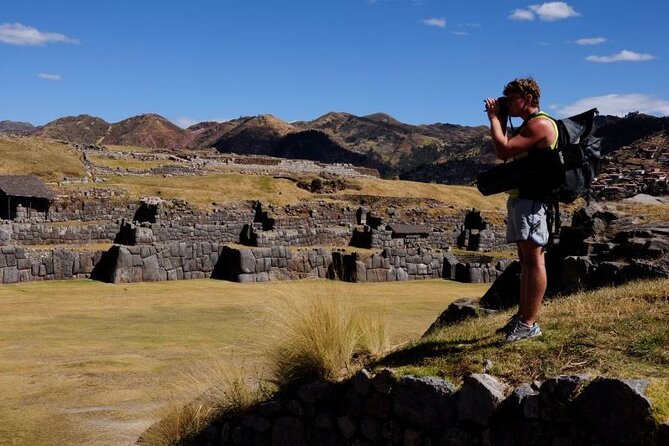
Tambomachay centers on natural springs and carefully built stone water channels. The spring water was linked with ritual life, youth, and good fortune, making this a different experience from the military character of Puca Pucara or the huge terraces of Sacsayhuaman.
The planned stop lasts about 45 minutes. That gives you time to look at the fountains, follow the channels with your eyes, and hear how water fit into the Andean view of the world. The site is smaller, so the guide’s explanation carries much of the visit.
Tambomachay is also a good reminder that Inca achievement was not only about walls and roads. Water management, ceremony, and the natural setting mattered just as much. I find this stop most rewarding when you slow down and study how the spring emerges through the stonework.
The order of the sites may vary. The tour description presents Tambomachay early in the route, while the detailed schedule places Sacsayhuaman first. Your driver and guide set the actual sequence, so use the published order as a general outline rather than a guarantee.
Why the guide can make or break the morning
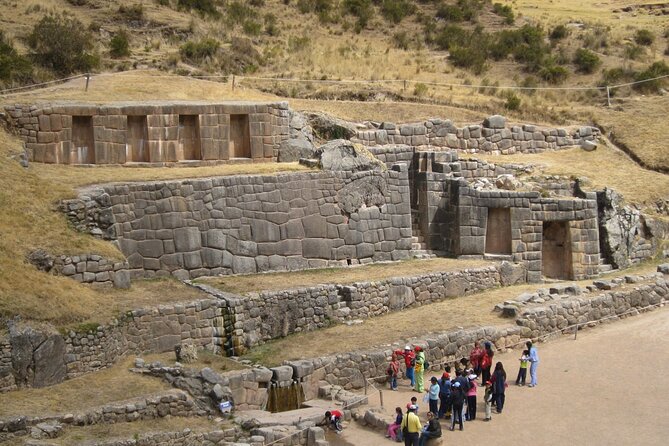
This tour depends heavily on the person leading it. A strong guide turns four short stops into a connected story about Inca engineering, ritual, defense, and Cusco. A weak guide can make even Sacsayhuaman feel like a quick photo stop.
Several guides have been singled out for clear explanations and good service. Jose Aguilar was praised for explaining all four sites in both Spanish and English, with nearly two hours at Sacsayhuaman. Ana was described as helpful during rainy conditions, while Yuber received strong praise for his understanding of Cusco, Quechua culture, and Inca history.
Robinson, Alex, Mariné, Henry, and River also received positive comments for friendly or informative guiding. These names show the range of guide quality available, but you cannot assume you will receive a particular person unless the operator confirms it.
Language balance matters in bilingual groups. One English-speaking participant said Henry made an extra effort when most of the group spoke Spanish. That is encouraging, but a bilingual tour can still involve pauses and repeated explanations. If you need a very detailed English-only lecture, ask about a private or longer option.
One serious complaint involved a guide who gave inaccurate information and ignored a question about the Spanish and Inca battle at Sacsayhuaman. That experience also included a shopping stop and too little time at the ruins. I would not dismiss the whole outing because of one guide, but it is fair to recognize that the experience is not uniform.
The textile-shop issue
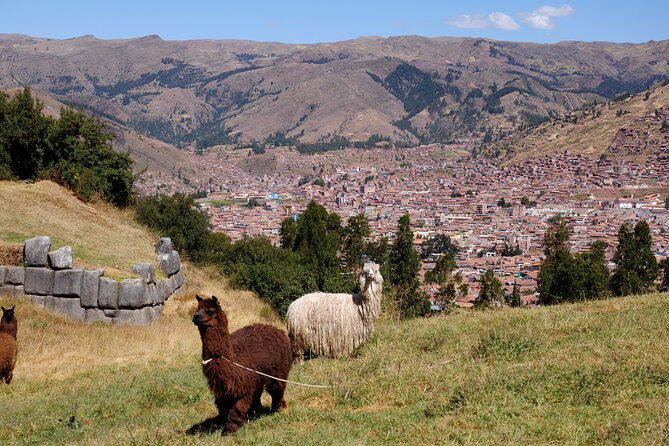
The advertised inclusions cover transport, guiding, admission, and hotel pickup and drop-off. They do not list a textile-shop visit. Yet some departures have included a stop at an alpaca or sweater shop for about 20 to 30 minutes.
The educational part can be useful. You may learn how alpaca, baby alpaca, vicuña, llama, wool, and synthetic fibers differ. If you want to buy a scarf or sweater, this can be convenient.
The problem is that an unexpected sales stop takes time from Sacsayhuaman or Puca Pucara. One person felt the main site was shortened for this reason. Another disliked hard-sell tactics and reported a 30 percent markup when paying by Visa. That is a practical warning: ask about the price, payment surcharge, and fiber content before buying anything.
You should not assume the shop is included on every departure, but you should be prepared for the possibility. If shopping is not your goal, tell the guide politely that you would rather spend the time at the archaeological sites. The guide may not be able to change the group schedule, but it is worth asking.
Transport, timing, and the altitude factor
Hotel pickup begins around 8 a.m. The minivan is air-conditioned, clean, and comfortable according to several positive accounts, and direct transport saves you from negotiating separate taxi rides between hilltop sites.
Some Cusco hotels sit in streets where vehicles cannot enter. In that case, pickup and drop-off may happen at a nearby accessible point. Confirm the meeting details before departure, especially if your hotel is in the historic center.
Be ready on time. One person arrived expecting a 9 a.m. start and found the tour actually began at 8, delaying the group and leaving less time at the sites. Check the start time with VIPAC Travel rather than relying only on a third-party booking page.
You will walk over uneven ground and stone steps. Rain can make the surfaces slippery, and one person specifically advised avoiding the rainy season if you find rocky paths and steps difficult. Wear shoes with a firm grip, bring a hat, and use sunscreen. At Cusco’s high altitude, strong sun can catch you quickly, even when the air feels cool.
The tour is described as suitable for most people, but the site conditions still require ordinary walking ability. Ask before booking if you have concerns about steps, slippery surfaces, or extended standing.
Is $69 a fair price?
At $69 per person, you are paying for convenience as much as sightseeing. The price includes hotel transport, a bilingual guide, and admission to the four archaeological sites. For a small group, that can be reasonable, especially if you want to cover the area in one morning without arranging a driver.
The value is strongest when you are short on time, new to Cusco, or visiting before a flight. One person used the outing on a final day and returned with enough time for lunch and shopping. The tour also works well as a first look before you return independently to Sacsayhuaman for a slower visit.
The value drops if you want a detailed archaeological experience. A taxi or private driver could let you choose the order and spend longer at the sites, though you would still need to arrange a guide and handle site admission. The group option is simpler, but you surrender control over timing.
I would compare the $69 cost with the time you save. Four sites, a vehicle, a guide, and one admission ticket in a compact morning can justify the price. Just do not pay for a half-day overview expecting a private, scholarly tour.
Who should book this half-day tour?
I would recommend it to you if you want:
- A practical first look at the four main Inca sites outside Cusco
- A small group instead of a large coach
- Early access to Sacsayhuaman
- Hotel transport and prearranged admission
- A morning activity that leaves time for lunch, shopping, or another Cusco sight
- A guide who can explain the sites in English and Spanish
I would hesitate if your main goal is extended time at Sacsayhuaman, quiet photography, or detailed discussion at every stop. I would also think twice if an unplanned shopping stop would irritate you. In that case, ask VIPAC Travel in advance whether the departure includes a textile visit or consider a private arrangement.
The tour has an overall rating of 4.5 from 59 submitted ratings, with strong praise for the sites, transport, early start, and several guides. The weaker experiences center on rushed visits, uneven guiding, time lost at shops, and confusion over the start time. That is a fairly clear pattern, and it gives you the right expectations.
My call: book it for coverage, not lingering
Book this tour if you want an efficient morning that covers Sacsayhuaman, Q’enko, Puca Pucara, and Tambomachay with transport handled for you. The stonework at Sacsayhuaman alone can make the outing worthwhile, and the smaller sites add useful context about ritual water, carved rock, and defense.
Skip it in favor of a private guide or self-arranged visit if you want to set your own pace. The best way to enjoy Sacsayhuaman is not to rush, and this tour cannot promise that every departure will give you the same amount of time or the same quality of explanation.
FAQ
What sites does the tour visit?
The tour visits Sacsayhuaman, Q’enko, Puca Pucara, and Tambomachay near Cusco.
What time does the tour start?
The stated start time is 8:00 a.m.
How long does the tour last?
The advertised duration is approximately three hours. The planned visits total about 2 hours 45 minutes, but some departures have taken closer to four hours because of transport, pickup, and other stops.
Is hotel pickup included?
Yes. Hotel pickup and drop-off are included, though some hotels are on streets where vehicles cannot enter. You may need to meet the vehicle at a nearby accessible point.
Is admission included?
Yes. The tour includes admission to the archaeological park covering the four sites.
How many people can join the tour?
The maximum group size is 14 people. Some departures may be smaller.
Just added around Cusco
- Cusco: Via Ferrata, Skybike, and Rappel Adventure★ 5.0 · 3 reviews
- From Cusco: Maras and Moray and Ollantaytambo Tour★ 5.0 · 3 reviews
- Cusco: Rainbow Mountain Tour at Sunset Without the Crowds★ 4.7 · 3 reviews
- Cusco: Sacred Valley Day Trip with Maras & Moray Salt Mines★ 5.0 · 3 reviews
- Valle Sur Cusco | half day★ 4.3 · 3 reviews
- Salkantay trek to Machu Picchu – 5D/4N – Premium★ 3.3 · 3 reviews
- IN MACHU PICCHU: Private Tour Guide Service★ 5.0 · 3 reviews
- Full-Day Condor Viewpoint & Inca Sites Tour★ 5.0 · 3 reviews
Sacsayhuaman and Inca Ruins, compared.
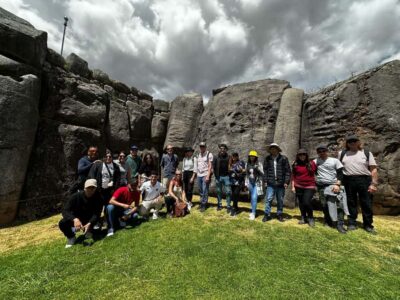
Half-Day City Tour with Sacsayhuaman and Q’enco
Read our review →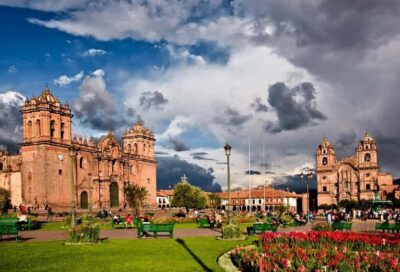
City Tour Cusco Qoricancha Sacsayhuaman y Tambomachay
Read our review →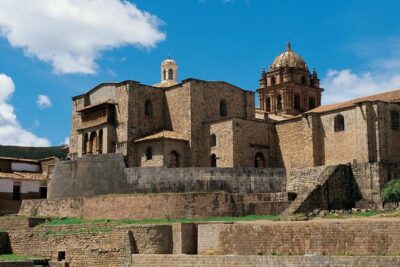
Cusco City Sightseeing, San Pedro Market, Cathedral and Qorikancha Temple
Read our review →
3-Hour Horse Riding Tour to the Temple of the Moon
Read our review →
Cusco City Sightseeing and Sacsayhuaman Archeological Park Tour
Read our review →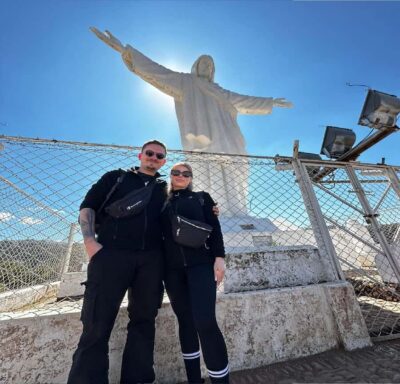
Horse Riding Chacan Mountain And Temple Of The Moon
Read our review →
Cusco 4-Hour Private Tour Including Sacsayhuaman and Qenqo
Read our review →Browse the lists this tour appears in