
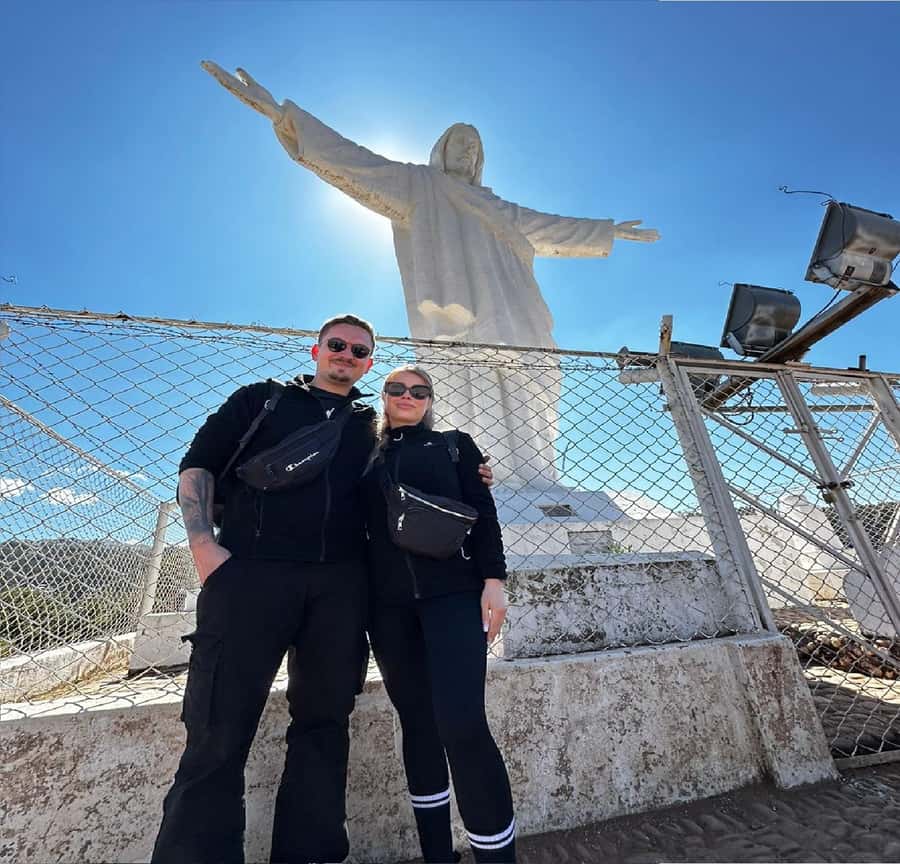
Reviewed · SACSAYHUAMAN AND INCA RUINS
Cusco: Historical Guided City Tour with 4 Inca Ruins
The big draw here is the chance to see four major Inca sites around Cusco in one half-day. Sacsayhuaman supplies the giant stones and sweeping views, Qenqo adds ceremony and mystery, Puka Pukara shows how the Inca watched the roads, and Tambomachay finishes with carefully built water fountains.
I like the strong guides and the easy transport between sites. Luis, Alfredo, Romulo, and Hyame are all praised for clear explanations, good English, and thoughtful answers. I also like the timing: you can finish near the Plaza de Armas by about 2:30 p.m. and still have the afternoon free. The catch is that the $23 price does not include the main entrance fees, which add up quickly.
In This Review
- Key things to know before you book
- Why this Cusco half-day tour works well
- Qoricancha, where Inca and Spanish Cusco meet
- Sacsayhuaman and Cusco’s huge stonework
- Qenko, ceremony beneath the stone
- Puka Pukara and the road into Cusco
- Tambomachay, the final water shrine
- What the guides add to the day
- The real price: $23 plus entrance fees
- Timing, pickup, and the shape of the day
- Who should book this tour?
- Should you book the Cusco four-ruins tour?
- FAQ
- How long does the Cusco city tour last?
- Which archaeological sites are included?
- Is hotel pickup included?
- Are entrance tickets included in the price?
- What languages are available?
- Do I need a Cusco Tourist Card?
- What should I bring?
Key things to know before you book
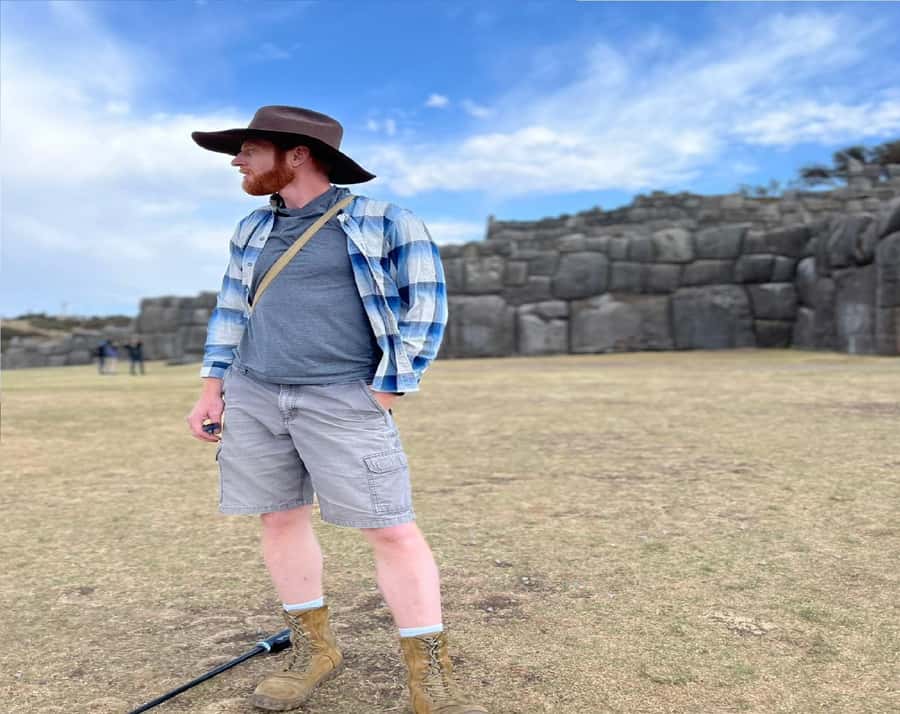
- Four Inca ruins in one outing: Visit Sacsayhuaman, Qenqo, Puka Pukara, and Tambomachay without arranging separate taxis.
- Qoricancha adds an important city-center stop: See the former Temple of the Sun before heading into the hills above Cusco.
- Guides are the heart of the experience: Luis, Alfredo, Romulo, and Hyame have been praised for strong English and clear explanations.
- Morning and afternoon schedules differ: Morning tours generally run from about 8:35 or 9 a.m. to 2:30 p.m., while the afternoon option runs from noon to about 6 or 6:30 p.m.
- Budget extra money for admission: Qoricancha, the cathedral, and the archaeological sites are not covered by the advertised tour price.
- This is a smart first-day orientation: You get important sights, practical transport, and a useful introduction to Cusco’s Inca and colonial layers.
Why this Cusco half-day tour works well
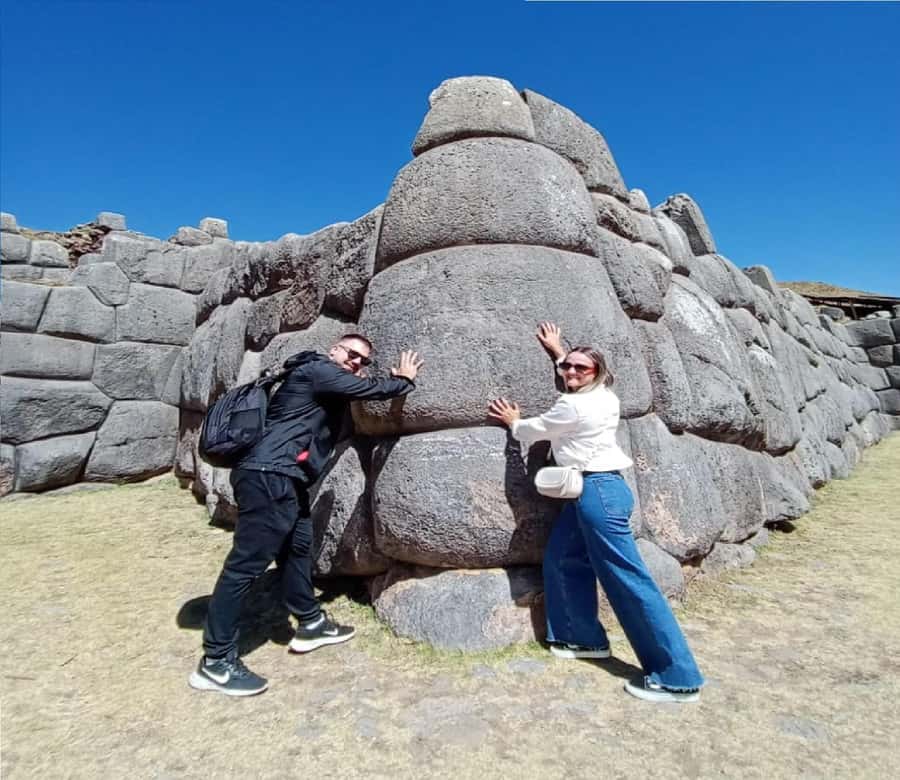
Cusco rewards a guided introduction. Its streets, churches, ruins, and nearby sites are packed with details that are easy to miss when you are simply walking from one plaza to the next. This tour gives you a broad first look, linking the city’s most important Inca remains with four sites outside the center.
The route also solves a practical problem. Sacsayhuaman, Qenqo, Puka Pukara, and Tambomachay are close enough to visit together, but far enough from the Plaza de Armas that walking between them would take time and energy. Tourist transport keeps the day moving, while your guide provides the explanation at each stop.
The experience lasts about six hours. That makes it useful if you have limited time in Cusco, are preparing for a trek, or want to get your bearings before exploring independently. One useful detail from the tour format is that you finish near the Plaza de Armas rather than returning to each hotel. That puts you in a good spot for lunch, a museum, or an afternoon stroll.
You should also plan for altitude. The tour includes walking at several archaeological sites, along with uneven ground and exposed areas. Comfortable shoes, water, sunscreen, and rain gear are sensible choices. Cusco weather can change quickly, and the provided list specifically recommends carrying rain protection and cash.
More Inca ruins above Cusco:
- Cusco: Half-Day City Tour with Sacsayhuaman and Q’enco
★ 4.6 · 1,129 reviews - City Tour Cusco Qoricancha Sacsayhuaman y Tambomachay
★ 4.7 · 617 reviews - Cusco City Sightseeing, San Pedro Market, Cathedral and Qorikancha Temple
★ 4.5 · 139 reviews
Qoricancha, where Inca and Spanish Cusco meet
The morning route begins at Qoricancha at about 8:55 a.m., while other morning arrangements include pickup between 8:35 and 9 a.m. This temple is also called the Temple of the Sun, and it was the most important Inca religious building in Cusco.
Qoricancha matters because it gives you a clear introduction to the collision of Inca and Spanish cultures. The Spanish built the Santo Domingo church over the Inca temple, leaving a place where two eras occupy the same walls. Your guide can help you understand why the site was so important, rather than treating it as just another church visit.
The guided visit is included in the first two morning options, but the entrance fee is not. The listed price for Qoricancha is 15 soles. That is a modest extra cost, but you should know about it before comparing this tour with a more expensive package that might include tickets.
The afternoon option handles the center differently. It begins at the entrance to Cusco Cathedral between 11:50 a.m. and noon, then continues to Qoricancha. The cathedral visit includes paintings from the Cusco School, but entry costs 50 soles and availability must be requested. If the cathedral is a priority, confirm that part before booking.
Sacsayhuaman and Cusco’s huge stonework
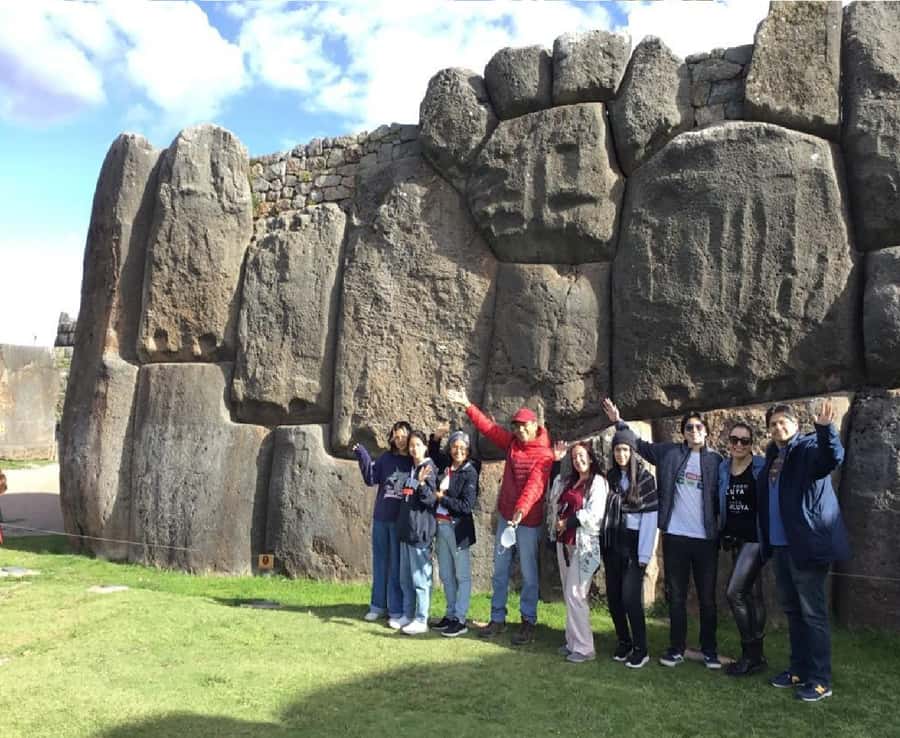
From Qoricancha, the group travels to Sacsayhuaman, the largest archaeological site within Cusco itself. The name is commonly translated as puma head, fitting Cusco’s traditional puma-shaped plan.
This is the tour’s most immediately impressive stop. The walls use enormous stones, with some blocks described as weighing more than 100 tons. Other details put the stones at roughly four to six meters high. You do not need a specialist background to appreciate the scale. The fit and size of the masonry make Sacsayhuaman the place where the engineering of the Inca becomes impossible to ignore.
Your guide leads the visit for about an hour and a half. That time should allow room for explanation and photographs, though the exact pace can vary with the group and site conditions. The elevated position also gives you broad views over Cusco, so keep your camera ready and do not spend the whole stop looking only at the walls.
Sacsayhuaman is also where the archaeological entrance ticket can be purchased. The listed fee for the archaeological zones is 70 soles. This is the main cost to add to the $23 tour price, and it covers the set of sites visited on the route according to the provided information. Check the current ticket rules when booking, since admission policies can change.
Qenko, ceremony beneath the stone
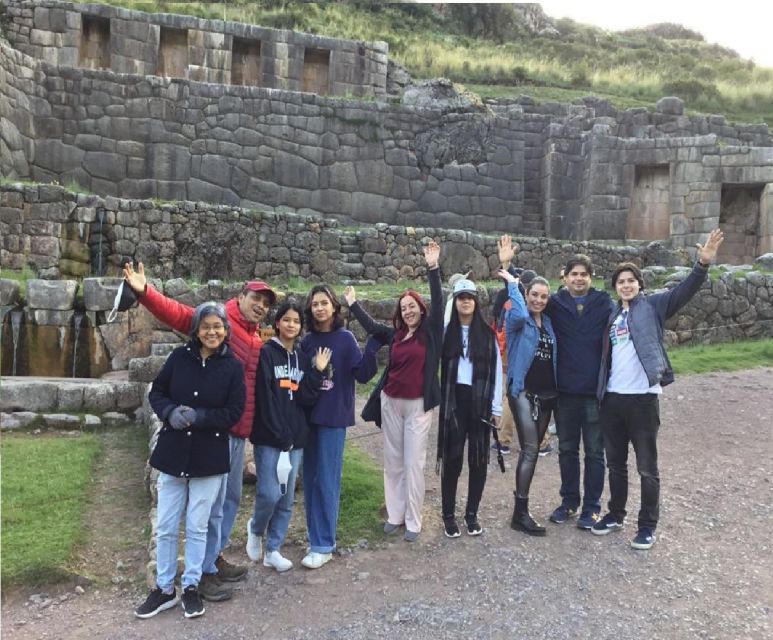
Qenko follows Sacsayhuaman. The site is described as a ceremonial center and an ancient place connected with mummification. Accounts also connect it with sacrifices to the Sun God, so your guide’s explanation matters here.
Qenko is less about massive walls and more about carved stone, ritual use, and atmosphere. The site invites questions, but some details remain uncertain. A good guide can separate established archaeological information from later stories and legends. Jackie specifically praised the way the guide compared facts with myths, a useful approach at a place where confident claims can easily go beyond the evidence.
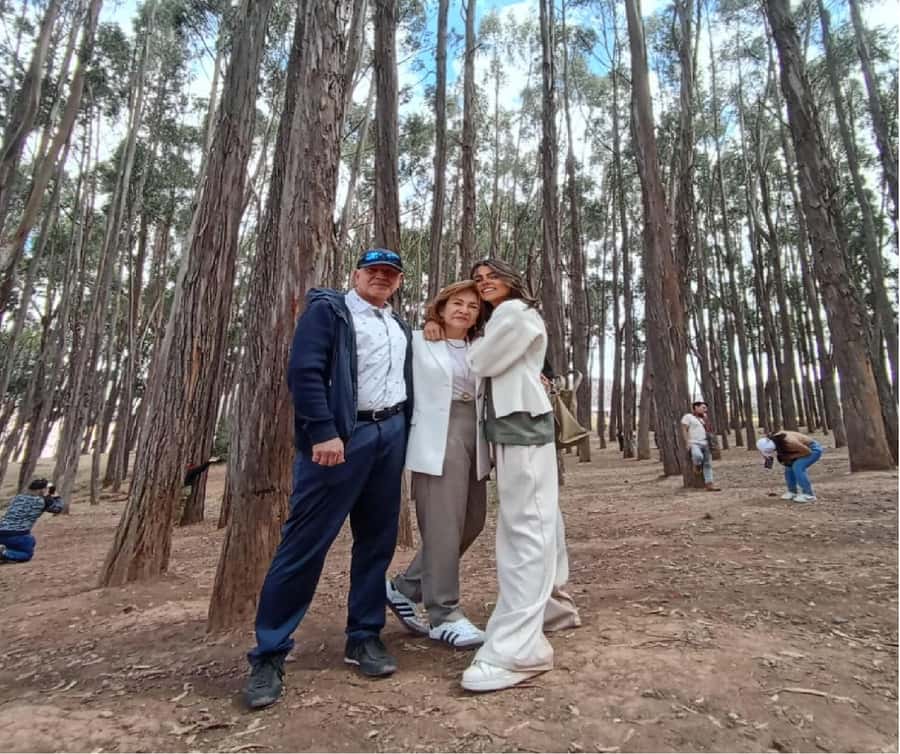
The planned visit lasts about an hour and a half. That may sound long for a compact site, but the time includes guided interpretation and nearby stops. You will also visit the Qenko eucalyptus forest, which provides a change from stone ruins and a chance to take photographs.
Do not expect a long woodland walk. The forest is included as a photographic stop, and the schedule still has to cover three more archaeological sites. Think of it as a brief scenic pause rather than a separate nature outing.
More Cusco city tours:
- Open Bus Cusco City Tour
★ 4.5 · 219 reviews - Cusco: City Tour | Half-Day Tour to 4 Archaeological Sites
★ 4.6 · 206 reviews - City Tour in Cusco & visit Museum South American Camelid Private.
★ 5.0 · 147 reviews - Cusco: Half-Day City Tour
★ 4.2 · 129 reviews
Puka Pukara and the road into Cusco
Puka Pukara is often called the Red Fortress because of the color of its stones. It was built high above Cusco as a surveillance and control point, allowing the Inca to monitor access to the city.
This stop helps you see the Inca road system as something organized and controlled, not simply a collection of isolated ruins. From here, you can enjoy views across the Andean surroundings while your guide explains how the site fit into movement around the imperial center.
Puka Pukara is a good example of why the full route is more useful than seeing Sacsayhuaman alone. Sacsayhuaman gives you the dramatic stonework, while Puka Pukara shows a more practical side of Inca planning. The Red Fortress may not have the same visual punch as the huge blocks at Sacsayhuaman, but it adds context.
The site visit is listed as about an hour and a half. As with every stop, wear shoes with a good grip and keep water close. The tour includes several outdoor areas, and the sun can feel strong even when the air is cool.
Tambomachay, the final water shrine
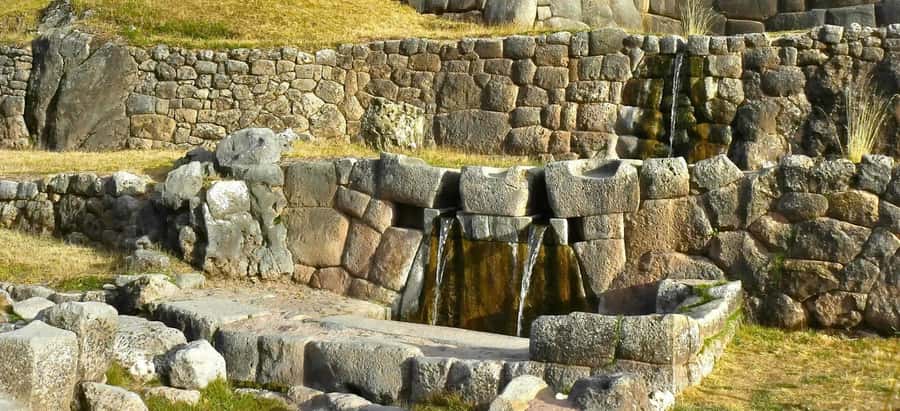
Tambomachay is known as the Temple of Water. Its fountains and channels are the main attraction, with water flowing through carefully arranged stonework.
This makes a fitting final stop. After the military scale of Sacsayhuaman and the ritual questions raised at Qenko, Tambomachay shows a quieter, more refined side of Inca construction. The site’s appeal is not its size. It is the precision of the water system and the way the setting feels connected to springs and mountain surroundings.
The tour allows about an hour and a half here. That gives your guide time to explain the fountains and gives you a chance to take photographs before returning to Cusco. If you are taking the morning option, the vehicle then leaves you near the Plaza de Armas, usually on Plateros Street, at about 2:30 p.m.
The afternoon option finishes later, around 6 or 6:30 p.m., also near the main square. Choose the morning schedule if you want lunch and independent sightseeing afterward. Choose the afternoon schedule if you prefer a slower start or want to pair the tour with a morning activity.
What the guides add to the day
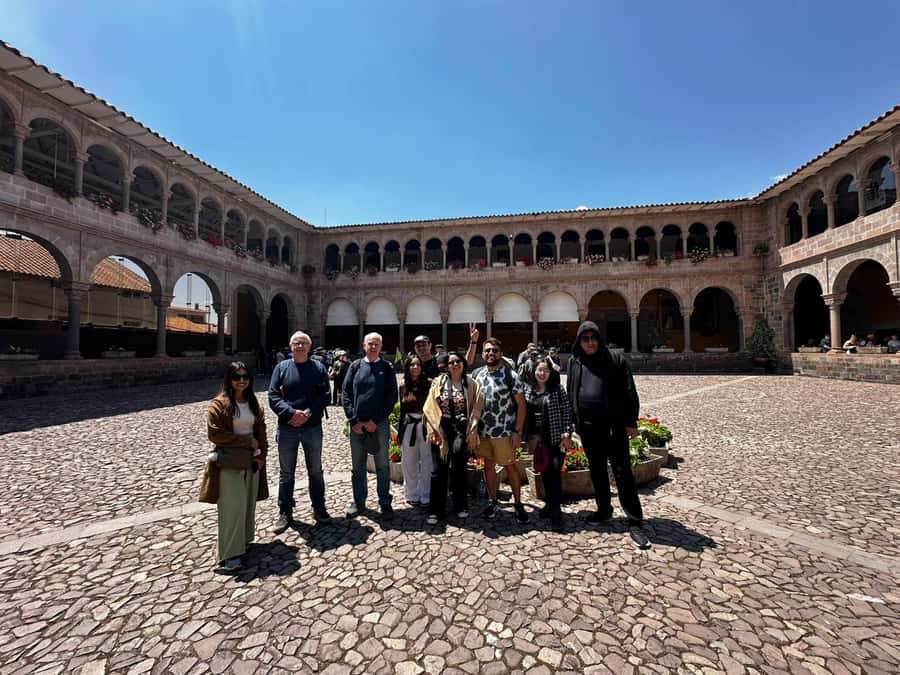
The guide is the main reason to choose this tour over arranging transport on your own. The sites are impressive by themselves, but their purpose and sequence are not always obvious. A guide can connect Qoricancha’s religious role, Sacsayhuaman’s defensive reputation, Qenko’s ceremonies, Puka Pukara’s surveillance function, and Tambomachay’s waterworks.
The strongest feedback centers on language and explanation. Luis is praised for detailed bilingual presentations and for checking that everyone understood. Alfredo is noted for moving comfortably between English and Spanish. Hyame helped one visitor make good use of a short stay in Cusco before a Machu Picchu trek, and Romulo is praised for making the experience worthwhile through strong explanations.
Those details are useful if you are booking an English-language tour. The advertised languages are English and Spanish, but guide assignments can vary. If you have questions about a technical point, ask them. The guides are expected to answer questions, and the best use of your time is an active conversation rather than simply following the group from ruin to ruin.
The real price: $23 plus entrance fees
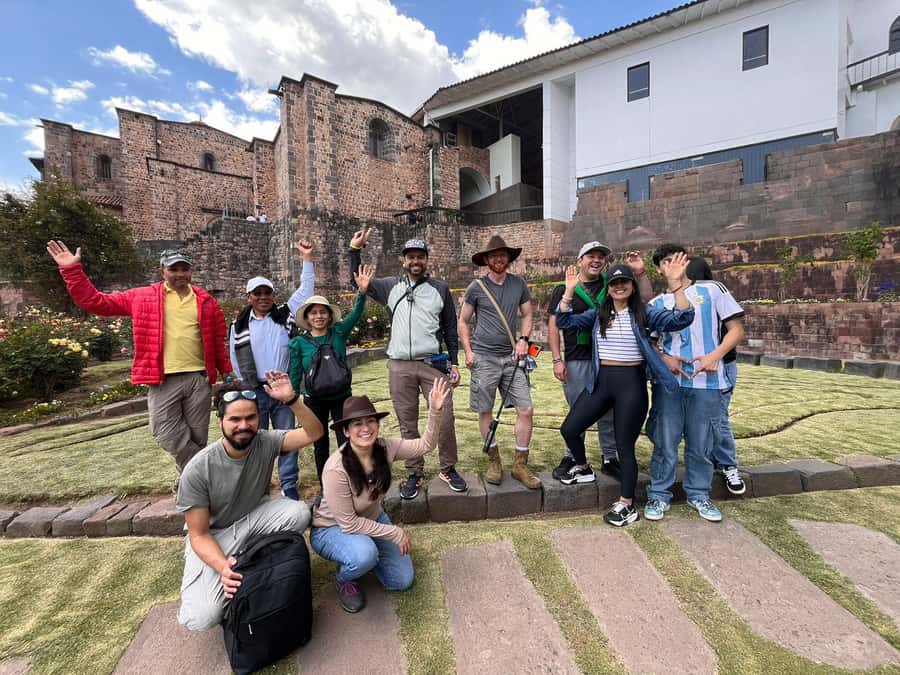
At $23 per person, the tour is priced as an affordable way to cover a lot of ground. You receive tourist transport, an accredited professional guide, and hotel pickup for eligible hotels on the morning options. Pickup is available from hotels close to Cusco’s main square, and you should wait in the hotel lobby if you select it.
The advertised price does not cover every important cost. Plan for:
- 15 soles for Qoricancha
- 70 soles for the archaeological zones
- 50 soles for Cusco Cathedral, if you visit and admission is available
That means the tour is not a $23 all-in sightseeing day. Still, the value can be good because private taxi arrangements to four outlying sites, plus a guide, could cost more and require more planning. The tour is especially worthwhile if you are traveling alone or as a couple and do not want to organize transport for each stop.
The Cusco Tourist Card is required for access to the Inca sites. It is available only in person and requires your passport. Children under nine can receive it free with a passport. Carry cash for tickets and small expenses, and bring your passport or identification as requested.
Timing, pickup, and the shape of the day
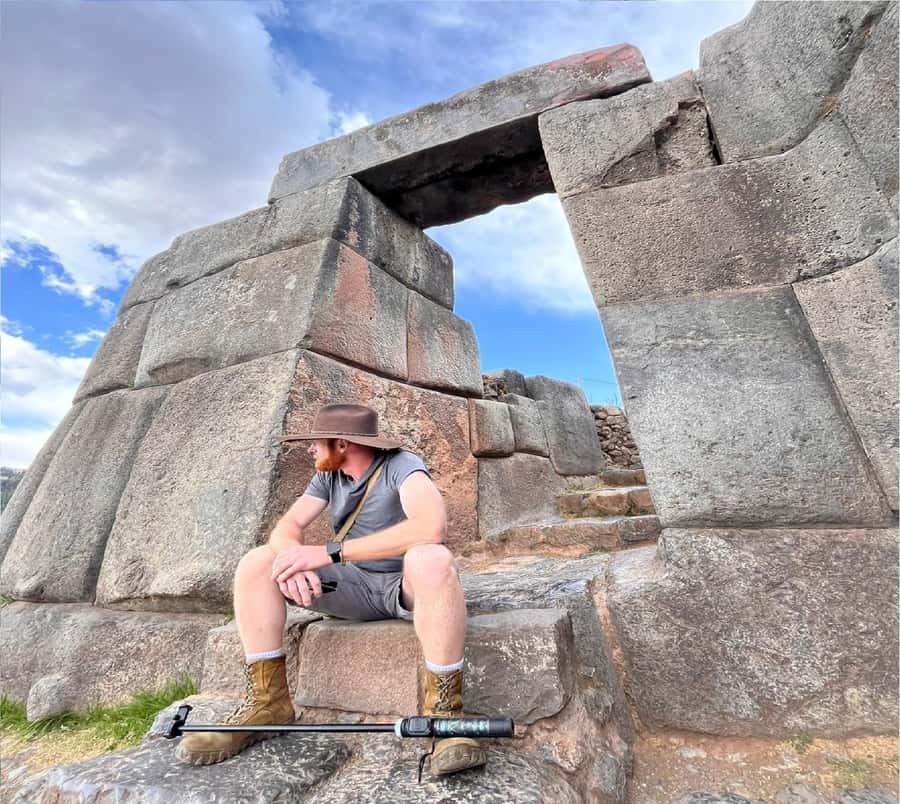
There are three general formats. Morning option one begins at Qoricancha around 8:55 a.m. Morning option two includes hotel pickup from about 8:35 to 9 a.m. The afternoon option starts at Cusco Cathedral between 11:50 a.m. and noon.
The many listed pickup hotels are concentrated around the historic center. If your hotel is not among the pickup points or is not close to the main square, you may need to reach the meeting point yourself. Confirm the exact arrangement before the day of the tour.
The route is busy. Each major stop is listed at about 90 minutes, yet the whole experience lasts six hours and includes transfers between sites. Expect a structured schedule rather than a leisurely private outing. You will see a lot, but you may not have unlimited time at every viewpoint.
The tour ends near Plaza de Armas, with drop-off listed at either the square or Calle Plateros. That is convenient, but it is not a hotel return. Plan your next stop from the center.
Who should book this tour?
I would choose this tour for a first visit to Cusco, a short stay, or a day before a trek. It gives you the basic framework for understanding the area and saves you from spending your first day arranging taxis. It also suits anyone who wants explanations in English or Spanish and prefers a guide to independent reading at the ruins.
It is a good match for visitors who can handle outdoor walking, uneven surfaces, sun, and high-altitude conditions. Comfortable shoes and water are essential. The experience is not suitable for people over 95, according to the stated restrictions.
I would hesitate if you want a slow, highly personal visit with long photo stops. The schedule covers five major attractions, and a group tour cannot give every site unlimited time. I would also compare the final cost carefully if you need the cathedral and all entrance fees included.
Free cancellation is available up to 24 hours before the start, and you can reserve now and pay later. Those terms help if your Cusco schedule may change, but they do not remove the need to confirm pickup, the cathedral option, and current ticket requirements.
Should you book the Cusco four-ruins tour?
Book it if you want a practical six-hour introduction to Cusco’s Inca sites, with transport and a bilingual guide doing the connecting work. The combination of enormous Sacsayhuaman, ceremonial Qenko, watchful Puka Pukara, water-focused Tambomachay, and central Qoricancha gives you a useful range in a single outing.
Skip it if you already know these sites well or want a private pace. For most first-time visitors, though, the $23 starting price is attractive once you budget for the 70 soles archaeological ticket and the Qoricancha fee. Choose the morning tour for a free afternoon, or the cathedral-based afternoon option if a later start suits your plans.
FAQ
How long does the Cusco city tour last?
The tour lasts about six hours. Morning options generally finish near the Plaza de Armas at approximately 2:30 p.m., while the afternoon option ends between 6 and 6:30 p.m.
Which archaeological sites are included?
The route visits Sacsayhuaman, Qenqo, Puka Pukara, and Tambomachay. It also includes Qoricancha, the Temple of the Sun.
Is hotel pickup included?
Hotel pickup is included for morning options from hotels close to Cusco’s main square. You should wait in your hotel lobby. The afternoon option begins at the entrance to Cusco Cathedral between 11:50 a.m. and noon.
Are entrance tickets included in the price?
No. Qoricancha costs 15 soles, the archaeological zones cost 70 soles, and Cusco Cathedral costs 50 soles if that visit is available. Other items not specifically listed are also excluded.
What languages are available?
The tour offers live guides in English and Spanish. Guide assignments can vary, with Luis, Alfredo, Romulo, and Hyame among the guides associated with the experience.
Do I need a Cusco Tourist Card?
Yes. Access to the Inca sites requires the Cusco Tourist Card, which is available only in person and requires your passport. Children under nine can receive it free with a passport.
What should I bring?
Bring your passport or identification, comfortable shoes, water, sunscreen, a camera, rain gear, and cash. Alcohol and drugs are not allowed, and alcoholic drinks may not be consumed in the vehicle.
More Inca Sites Near Cusco
- Cusco City Sightseeing and Sacsayhuaman Archeological Park Tour
★ 4.5 · 101 reviews - Machu Picchu Private Archaeological and Historical Guided Tour
★ 5.0 · 86 reviews - Cusco: Historic Walking Tour with Pisco Sour and Music Show
★ 4.6 · 65 reviews - Private Ollantaytambo, Pisac Ruins Tour with Farm Visit, Gourmet Picnic Lunch
★ 5.0 · 52 reviews
Just added around Cusco
- Cusco: Via Ferrata, Skybike, and Rappel Adventure★ 5.0 · 3 reviews
- From Cusco: Maras and Moray and Ollantaytambo Tour★ 5.0 · 3 reviews
- Cusco: Rainbow Mountain Tour at Sunset Without the Crowds★ 4.7 · 3 reviews
- Cusco: Sacred Valley Day Trip with Maras & Moray Salt Mines★ 5.0 · 3 reviews
- Valle Sur Cusco | half day★ 4.3 · 3 reviews
- IN MACHU PICCHU: Private Tour Guide Service★ 5.0 · 3 reviews
- Salkantay trek to Machu Picchu – 5D/4N – Premium★ 3.3 · 3 reviews
- Full-Day Condor Viewpoint & Inca Sites Tour★ 5.0 · 3 reviews
Sacsayhuaman and Inca Ruins, compared.
Half-Day City Tour with Sacsayhuaman and Q’enco
Read our review →
City Tour Cusco Qoricancha Sacsayhuaman y Tambomachay
Read our review →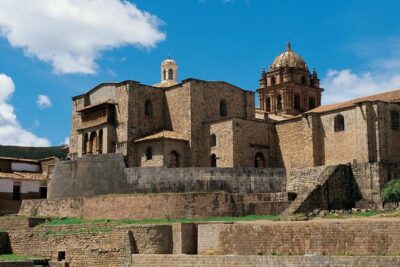
Cusco City Sightseeing, San Pedro Market, Cathedral and Qorikancha Temple
Read our review →
3-Hour Horse Riding Tour to the Temple of the Moon
Read our review →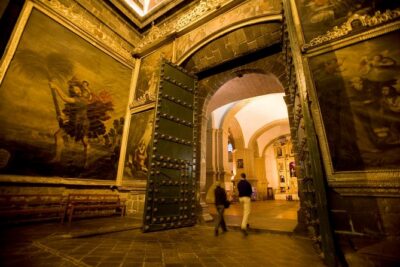
Cusco City Sightseeing and Sacsayhuaman Archeological Park Tour
Read our review →
Horse Riding Chacan Mountain And Temple Of The Moon
Read our review →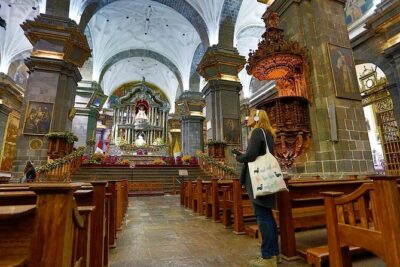
Cusco 4-Hour Private Tour Including Sacsayhuaman and Qenqo
Read our review →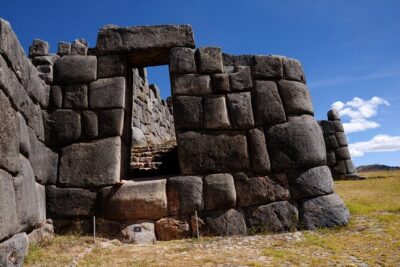
Sacsayhuaman Temple, Tambomachay and Puca Pucara Half-Day Tour
Read our review →Browse the lists this tour appears in