
Reviewed · CUSCO CITY TOURS
Cusco: City Tour | Half-Day Tour to 4 Archaeological Sites
Cusco’s best first lesson in Inca history comes in a busy half-day: begin with the former Temple of the Sun, then climb into the hills for enormous stonework, ceremonial chambers, water channels, and old military posts. I like the wide range of sites and the way guides such as Luis, Maribel, and Fabrisio connect architecture with local culture. I also like the hotel pickup and the mix of short walks with vehicle transfers. The catch is that entry tickets cost extra, and a bilingual group can make explanations take longer.
At $29, this is a strong introduction to Cusco if you want to see several major sites without arranging separate transport. Buy your tickets ahead of time if possible, keep some cash ready, and bring a warm layer. A few departures have run late or lasted longer than four hours, so avoid booking a tight dinner or evening plan.
In This Review
- Key points to know before booking
- Why this four-hour route works so well
- Qoricancha, the Temple of the Sun
- Sacsayhuamán and its massive fitted stones
- Qenqo, a ceremonial site of rock and shadow
- Puca Pucara and the road into the capital
- Tambomachay and the final water channels
- The bilingual guide experience
- Timing, transport, and what the four hours really mean
- Tickets, total cost, and value
- Who should book this Cusco tour?
- Practical tips for a better outing
- Should you book it?
- FAQ
- How long does the Cusco archaeological sites tour last?
- Which archaeological sites are included?
- Is hotel pickup included?
- Is transportation included?
- Is a guide included?
- Are entrance tickets included?
- Can I use a tourist ticket I already purchased?
- Does the tour visit the Cathedral of Cusco?
- Can I cancel for a full refund?
Key points to know before booking
- Five major stops in and around Cusco: The route includes Qoricancha plus Sacsayhuamán, Qenqo, Puca Pucara, and Tambomachay.
- Hotel pickup in Cusco’s historic center: Tourist transport is included, which saves you the trouble of arranging taxis between hilltop sites.
- Guides make the difference: Luis, Maribel, Joel, Yenny, Jessica, and Fabrisio have all been praised for clear explanations, patience, and strong command of Cusco’s past.
- Tickets are separate: Qoricancha costs 20 soles, while the tourist ticket costs between 70 and 120 soles depending on the ticket type.
- The tour is bilingual: English and Spanish are both used, though explanations may take longer in mixed-language groups.
- Afternoon departures can end well: A 2 pm start may finish with a view over Cusco around evening, followed by dinner in the city.
Why this four-hour route works so well
Cusco is not a city where the main archaeological sites sit neatly along one street. Qoricancha is in the center, while Sacsayhuamán, Qenqo, Puca Pucara, and Tambomachay are spread across the hills above town.
That geography makes a guided vehicle tour useful. You can see the main sites in one outing, get context from a bilingual guide, and avoid spending half your day negotiating transport. The route also gives you a helpful sense of how the Inca capital related to the surrounding hills.
The title calls this a tour of four archaeological sites, but the planned route includes five notable stops. Qoricancha is the central temple visit, followed by four sites in the archaeological park area outside the center.
The experience is best understood as an overview, not a slow archaeological study. Four hours is enough to see the main features and learn the basic story, but not enough to explore every wall, passage, and viewpoint at length.
More Cusco city tours:
- Cusco: Half-Day City Tour with Sacsayhuaman and Q’enco
★ 4.6 · 1,129 reviews - City Tour Cusco Qoricancha Sacsayhuaman y Tambomachay
★ 4.7 · 617 reviews - Open Bus Cusco City Tour
★ 4.5 · 219 reviews
Qoricancha, the Temple of the Sun
The tour begins at Qoricancha, once the most important religious center in the Inca world. The name is also written Coricancha, and the site is often called the Temple of the Sun.
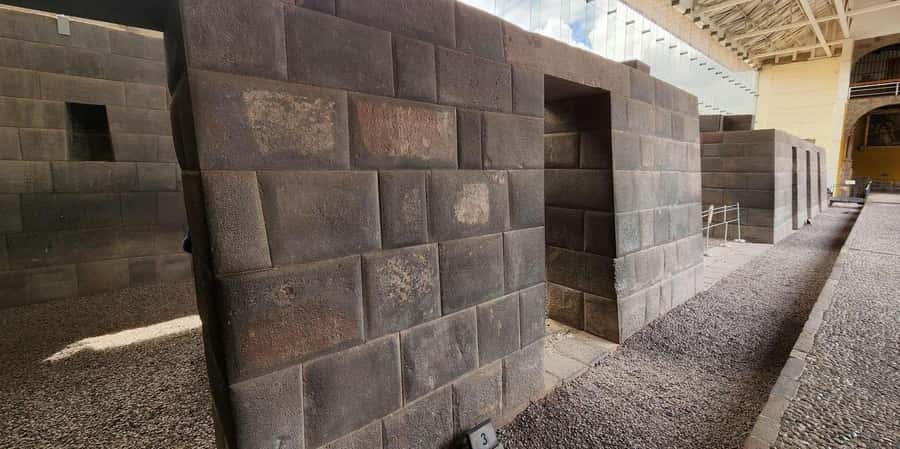
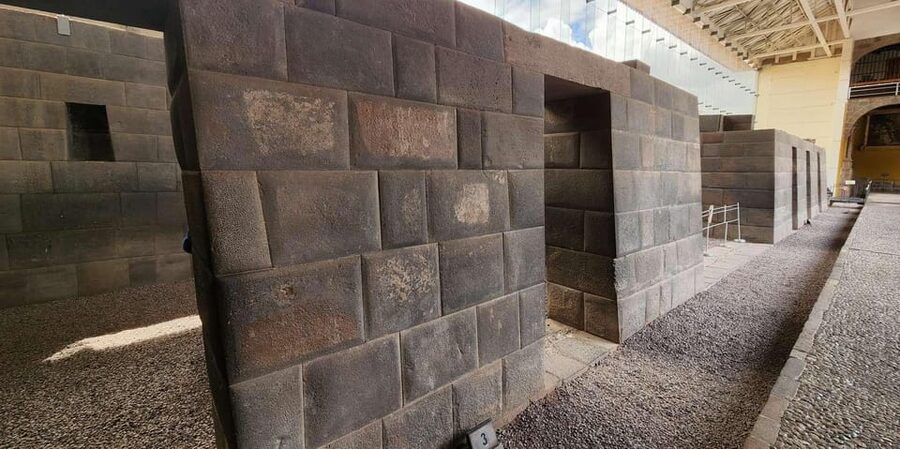
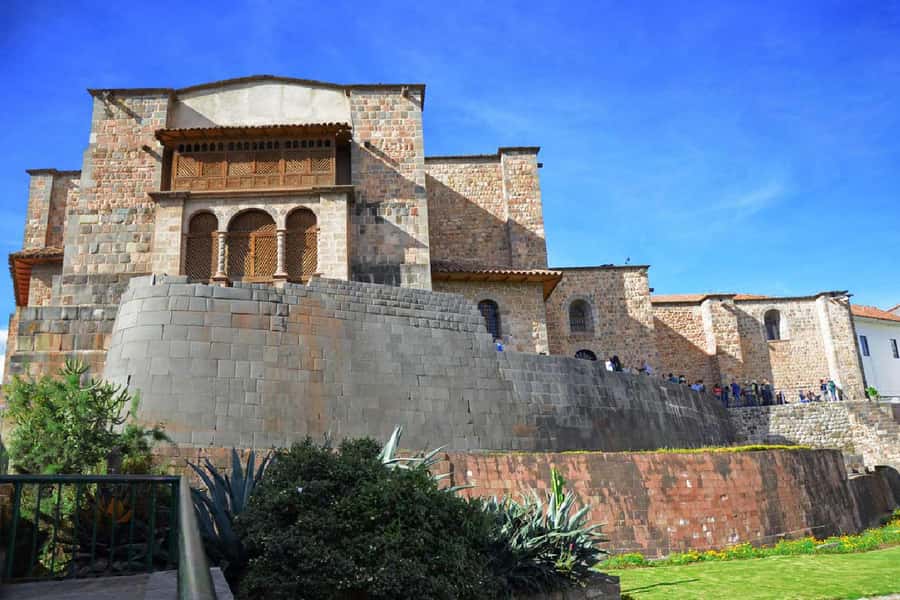
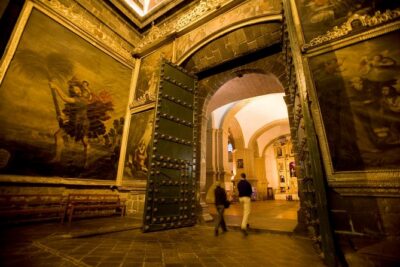
This is where the tour makes the shift from modern Cusco to the Inca capital. You will see carefully fitted stone walls and several temple spaces, along with colonial artwork associated with the Cusquenian School. The Santo Domingo church and convent were built over the Inca complex, so the visit also shows how Spanish colonial construction was placed directly on top of an older sacred center.
I like this stop because it gives you two layers of Cusco at once. The Inca stonework is the main reason to come, but the colonial building above it helps explain the city’s complicated past. Your guide can point out the engineering choices and explain how the site functioned as a religious center.
Admission is not included. The stated cost is 20 soles, and you should confirm the current payment process before going. The larger tourist ticket, called the BTC, is also separate and covers the four outer archaeological sites on this route. One useful tip is to buy the ticket in advance from the office near the central plaza if you can. That can save time at the start of the outing.
The tour description also mentions beginning by Cusco’s main square, but the listed route focuses on Qoricancha rather than a full Plaza de Armas visit. If the square is important to you, plan time to see it separately.
Sacsayhuamán and its massive fitted stones
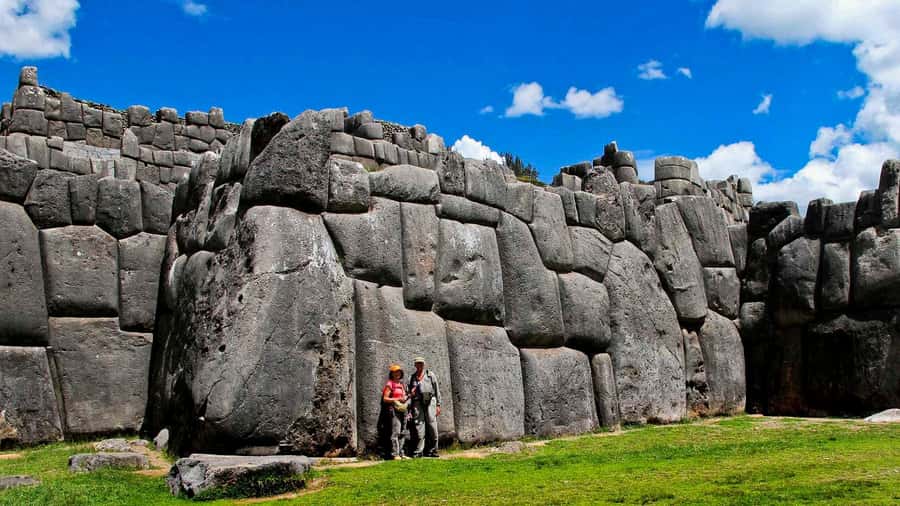
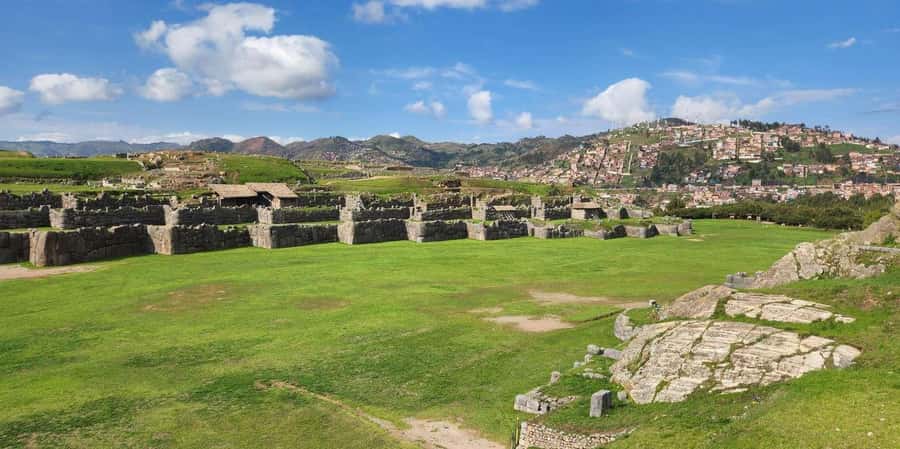
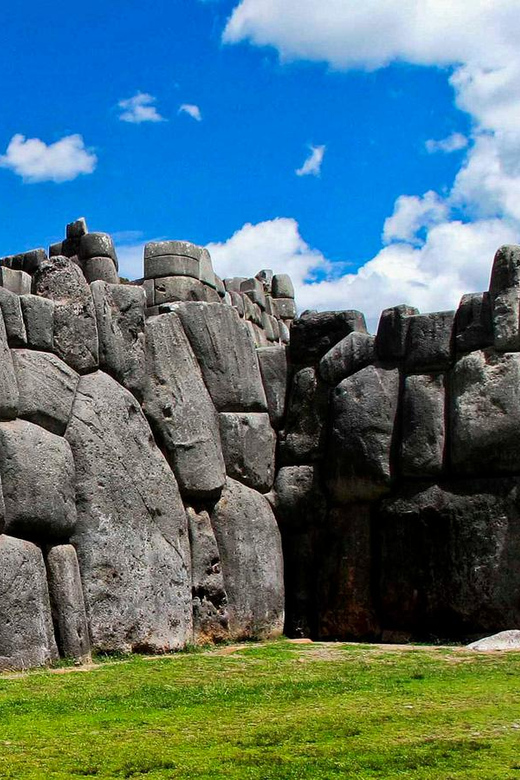
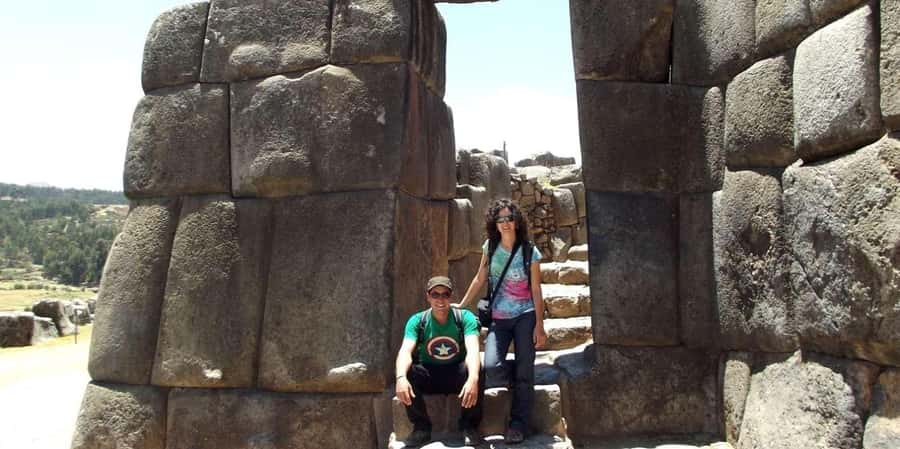
After Qoricancha, the vehicle takes you up to Sacsayhuamán. This is the grandest stop on the route, with huge zigzag walls built from tightly fitted stones.
Some blocks are described as reaching about 9 meters high and weighing more than 350 tons. You do not need to know every theory about Inca construction to appreciate the scale. The stones are the lesson. Their size, angles, and close joins show an extraordinary level of planning and stonework.
Sacsayhuamán also has an important place in modern Cusco. The annual Inti Raymi, or Festival of the Sun, takes place here on June 24. Your guide can give the site a ceremonial and historical setting, rather than leaving you to see it as only a large stone wall.
This stop can be affected by timing. The route includes several locations, and a late pickup or a lengthy stop elsewhere may reduce the time available here. One tour ended with only about 30 minutes before closing, leaving little time to look around. That is not a normal outcome promised by the tour, but it shows why punctual transport and advance tickets matter.
A separate textile market stop has also appeared on at least one outing and took time away from the ruins. Since that stop is not part of the stated route, ask your guide at the beginning if the day’s plan includes any extra shopping visit. If you prefer archaeology over shopping, this is a fair thing to clarify.
Qenqo, a ceremonial site of rock and shadow
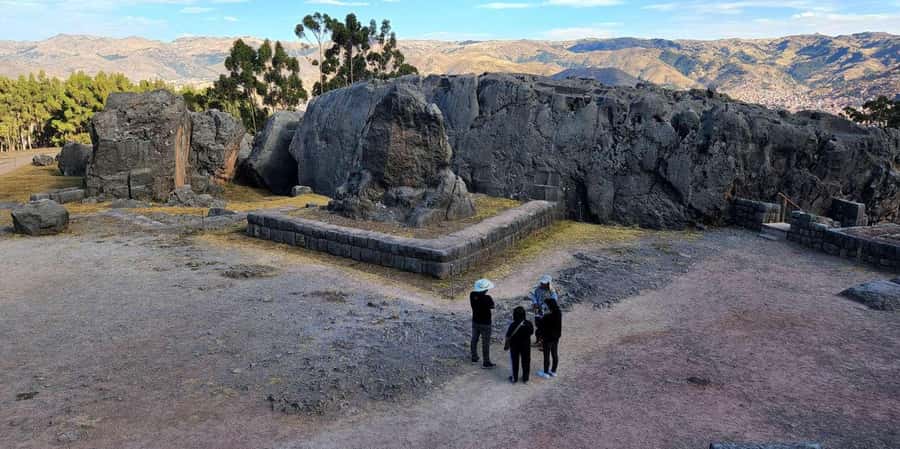
Qenqo is smaller and more mysterious than Sacsayhuamán. Its name is often written Qenqo or Q’enko, and the site includes rocky outcrops, carved surfaces, paths, and spaces connected with Inca ceremonial activity.
The tour presents Qenqo as a religious and ceremonial center, with an amphitheater where sacrifices may have taken place. The word may matters here. Inca archaeology includes accepted evidence, interpretation, and long-standing theories, and your guide may present some ideas with more certainty than the evidence allows.
One useful point from the experience is that guides can be very clear and engaging, but the best explanations should separate known facts from interpretation. If a claim sounds definite, you can ask whether it is documented or theoretical. That usually leads to a more interesting conversation.
Qenqo is a good contrast with Sacsayhuamán. Instead of focusing on giant walls, you pay attention to shaped rock, enclosed spaces, and the way the route moves through the site. Wear shoes that feel secure on uneven stone paths, and keep your hands free for short climbs or steps.
More Inca sites near Cusco:
- Cusco City Sightseeing and Sacsayhuaman Archeological Park Tour
★ 4.5 · 101 reviews - Cusco: Historical Guided City Tour with 4 Inca Ruins
★ 4.5 · 99 reviews - Machu Picchu Private Archaeological and Historical Guided Tour
★ 5.0 · 86 reviews - Cusco: Historic Walking Tour with Pisco Sour and Music Show
★ 4.6 · 65 reviews
Puca Pucara and the road into the capital
Puca Pucara was an Inca surveillance post and entry control point for the capital. Its name is commonly translated as Red Fortress, and its position helped monitor movement along the route into Cusco.
The remains include terraces, walls, and stone steps. Compared with Sacsayhuamán, Puca Pucara is less imposing, but its purpose adds an important piece to the route. The tour is not only showing religious centers. It is also showing how the Inca state watched and managed access to its capital.
This is a quick stop on most half-day schedules. You may have enough time to hear the explanation, walk among the walls, and take photographs, but not linger for a long independent visit. That is reasonable for a four-hour route, though anyone who wants detailed time at every site should consider a private or longer tour instead.
The open setting can feel cool, particularly later in the day. Bring layers rather than relying on a single heavy jacket. Vendors along the route may sell hot tea, which can be welcome when afternoon temperatures drop.
Tambomachay and the final water channels
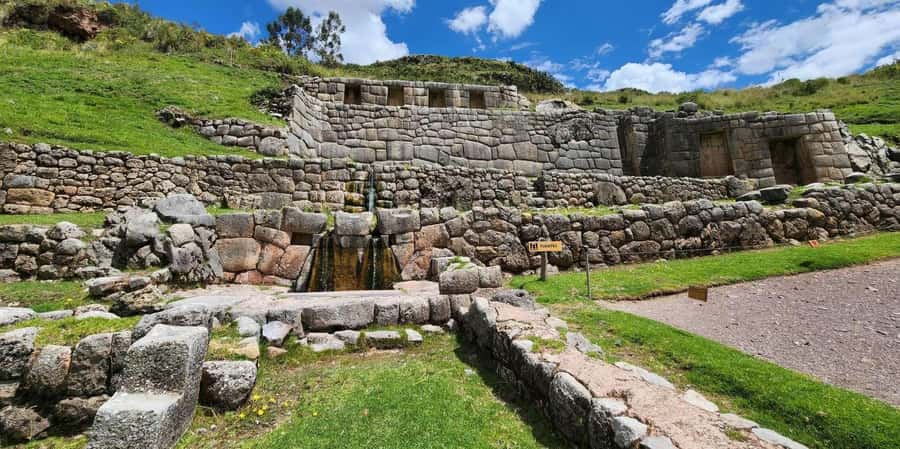
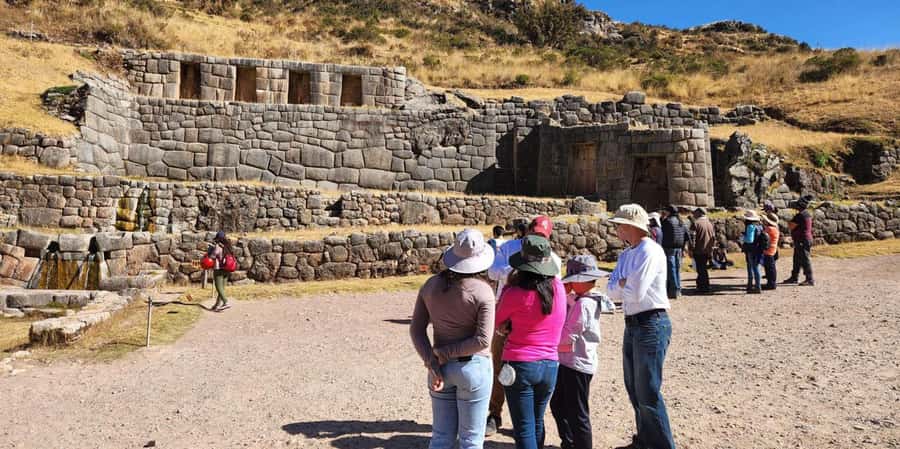
Tambomachay is the last scheduled site. It is associated with water worship and is known for its fountains and channels. The site is sometimes described as the place of eternal youth, a name tied to its flowing water and ceremonial meaning.
Here, the Inca relationship with water becomes easy to see. The stonework directs water through carefully built channels and fountains, turning a practical resource into part of a sacred setting. After the huge walls of Sacsayhuamán and the enclosed spaces of Qenqo, Tambomachay offers a quieter final chapter.
Do not rush this stop. One especially useful tip is to save enough attention for the final viewpoint and surrounding area. An evening departure can finish with an excellent view over Cusco, and the change in light gives the city a different feel from the daytime visit.
The return to central Cusco is planned for around dinner time. That makes the tour convenient for an afternoon start, but you should still allow some flexibility. Transport delays, bilingual explanations, traffic, or an added stop have caused some outings to run to five hours or more.
The bilingual guide experience
The strongest part of this tour is the guide. Luis has been singled out repeatedly for his clear English, patience, and friendly manner, especially when he was leading groups with both English and Spanish speakers. Maribel, Joel, Yenny, Jessica, Fabrisio, and others have also received strong praise for their command of Inca history and local culture.
The tour is conducted in English and Spanish. In a well-managed group, the guide explains each point in one language and then repeats it in the other. Guides such as Luis have been able to keep both groups included without making the outing feel painfully slow.
Still, bilingual touring has a built-in cost. If several people ask questions in one language, you may wait while the guide repeats the answer for the other group. Some visitors have found this format less efficient, while others appreciated the care taken to include everyone.
Group makeup matters. If you are the only English speaker, tell the guide early. The best guides make a point of checking that you are following along, but a quick reminder helps. Also note that one English-speaking visitor reported that questions asked in Spanish were not always repeated in English. That is a management issue, not a reason to dismiss the whole tour, but it is worth knowing.
Timing, transport, and what the four hours really mean
Hotel pickup is included for accommodations in Cusco’s historic center. The benefit is simple: you do not need to find the meeting point or arrange a separate taxi to the first stop.
The weak point can be the pickup process. One report described transportation as slow, and another mentioned a chaotic late start caused by a mix-up. Once the tour was moving, the route generally ran well, but you should not schedule an important appointment immediately afterward.
A four-hour promise is a useful guide, not a guarantee down to the minute. Some departures have finished on time, while others have taken five to five and a half hours. A bilingual format, traffic, weather, site hours, and extra stops can all affect the pace.
The tour usually combines short walks at each archaeological site with vehicle travel between them. That is a sensible arrangement in Cusco, where the outer sites sit above the center. You will still walk on uneven ground and stone steps, so this is not a sit-down sightseeing trip.
Afternoon timing has a clear advantage. A 2 pm departure can bring you to the final stops as the light softens, then return you to the center for dinner and drinks. The tradeoff is cooler weather and a greater need to watch closing times.
Tickets, total cost, and value
The advertised price is $29 per person, which is low for a guided route covering five important locations and including hotel pickup, transport, and a bilingual guide.
That price does not cover admission. Qoricancha costs 20 soles. The tourist ticket costs between 70 and 120 soles, depending on the ticket type, and is used for the outer archaeological sites. You may show a ticket already purchased for another tour if it covers these locations.
For many visitors, the tourist ticket makes sense because it can also include other museums and archaeological sites in Cusco and the Sacred Valley. Check the exact ticket version before buying, since the price range indicates that different options exist.
The real cost is therefore the $29 tour price plus entry fees. Even after adding tickets, the value is good if you want transport and an English-Spanish guide. It is less attractive if you already have a ticket, private transport, and enough time to visit each site on your own.
Cash is important. One direct tip from the experience is that site entry may be cash only, so carry soles rather than assuming a card will work. Buying the BTC near the Plaza de Armas before the tour can also keep the group from waiting while tickets are arranged.
Who should book this Cusco tour?
I would choose this for a first or second day in Cusco, especially if you want a quick orientation before visiting the Sacred Valley or Machu Picchu. The route gives you the basic architecture, religion, military planning, and water systems in one outing.
It also suits you if you prefer a guide who can explain what you are seeing instead of simply dropping you at a ruin. The best guides add local context, answer questions, and keep the group moving.
You may want another option if you dislike bilingual tours or need guaranteed control over the schedule. A private guide would give you more time at Sacsayhuamán, more freedom to ask questions, and less risk that a shopping stop or late pickup affects your plans.
This is also not the right choice for anyone expecting a full walking tour of central Cusco. Qoricancha is the main central stop, while the route’s focus is the outer archaeological sites. Plan a separate visit to the Plaza de Armas and Cusco’s other colonial buildings.
Practical tips for a better outing
- Buy the tourist ticket before departure if you can, and confirm that it covers all four outer sites.
- Carry 20 soles or more for Qoricancha, plus cash for other entry costs.
- Wear comfortable shoes for rocky paths, terraces, and stone steps.
- Bring a light jacket or extra layer, especially for a 2 pm departure.
- Ask at the start if the group will visit any market or extra stop.
- Leave your evening open by at least an hour beyond the advertised four hours.
- Tell the guide which language you prefer, and speak up if you miss part of the explanation.
- Save time for Tambomachay and the final view over Cusco instead of treating the last stop as an afterthought.
Should you book it?
Book this tour if you want a low-cost, well-organized introduction to Cusco’s major Inca sites, and you are comfortable with a bilingual group and separate entrance fees. The route covers a lot, the transport removes a real headache, and guides such as Luis and Maribel can turn a rapid visit into a useful lesson.
Skip it if you need a strict four-hour finish, dislike repeated explanations in two languages, or want long, quiet visits at each ruin. For most first-time visitors, though, this is a sensible way to get your bearings, see the enormous stones at Sacsayhuamán, and understand how the sites around Cusco fit together.
FAQ
How long does the Cusco archaeological sites tour last?
The stated duration is four hours. Some departures have taken longer, including outings lasting about five to five and a half hours, so leave extra time afterward.
Which archaeological sites are included?
The route includes Qoricancha, Sacsayhuamán, Qenqo, Puca Pucara, and Tambomachay.
Is hotel pickup included?
Yes. Pickup is included from hotels in Cusco’s historic center.
Is transportation included?
Yes. Tourist transport between the stops is included in the tour price.
Is a guide included?
Yes. A live bilingual guide is included, with tours offered in English and Spanish.
Are entrance tickets included?
No. Qoricancha admission costs 20 soles, and the tourist ticket costs between 70 and 120 soles depending on the ticket type.
Can I use a tourist ticket I already purchased?
Yes. You can show a ticket already purchased for another tour if it covers the sites on this route.
Does the tour visit the Cathedral of Cusco?
The Cathedral is listed as an optional visit, so it is not part of the standard route unless selected.
Can I cancel for a full refund?
Yes. Free cancellation is available up to 24 hours in advance for a full refund.
Just added around Cusco
- Cusco: Via Ferrata, Skybike, and Rappel Adventure★ 5.0 · 3 reviews
- From Cusco: Maras and Moray and Ollantaytambo Tour★ 5.0 · 3 reviews
- Cusco: Rainbow Mountain Tour at Sunset Without the Crowds★ 4.7 · 3 reviews
- Cusco: Sacred Valley Day Trip with Maras & Moray Salt Mines★ 5.0 · 3 reviews
- Valle Sur Cusco | half day★ 4.3 · 3 reviews
- Salkantay trek to Machu Picchu – 5D/4N – Premium★ 3.3 · 3 reviews
- IN MACHU PICCHU: Private Tour Guide Service★ 5.0 · 3 reviews
- Full-Day Condor Viewpoint & Inca Sites Tour★ 5.0 · 3 reviews
Cusco City Tours, compared.
Half-Day City Tour with Sacsayhuaman and Q’enco
Read our review →
City Tour Cusco Qoricancha Sacsayhuaman y Tambomachay
Read our review →
City Tour in Cusco & visit Museum South American Camelid Private.
Read our review →
Cusco City Sightseeing, San Pedro Market, Cathedral and Qorikancha Temple
Read our review →
Cusco City Sightseeing and Sacsayhuaman Archeological Park Tour
Read our review →
Browse the lists this tour appears in