
Reviewed · MARAS AND MORAY TOURS
From Cusco: Moray, Maras Salt Mines & Chinchero Weavers Half-Day
The most surprising part of this Cusco outing is how much variety fits into one day. You move from Quechua textile traditions in Chinchero to Moray’s great circular farming terraces, then on to the bright salt pools of Maras, all in the high Andes.
I like the way the tour links working traditions with Inca engineering, rather than giving you a day of ruins alone. I also like the careful guiding: Felipe, Julio, Manuel, and Eddie have been praised for clear explanations, good stories, and help with photos. The main drawback is the long road day. A full minibus can feel tight, and there is no planned lunch stop.
In This Review
- Key points to know before booking
- Why this makes a good Cusco side trip
- Chinchero: Quechua weaving at 3,762 meters
- Moray: Inca terraces built for experiments
- Maras: 3,000 salt pools on the mountainside
- The guide can shape the whole day
- Timing, transport, and what to carry
- Is $15.20 a good value?
- Who should book this Cusco half-day?
- Should you book it?
- FAQ
- How long does the tour last?
- What places does the tour visit?
- Is hotel pickup included?
- Are Moray and Maras entrance fees included?
- Are food and drinks included?
- How many people can join the tour?
- Is the tour offered with an English-speaking guide?
- Can I cancel for a full refund?
Key points to know before booking
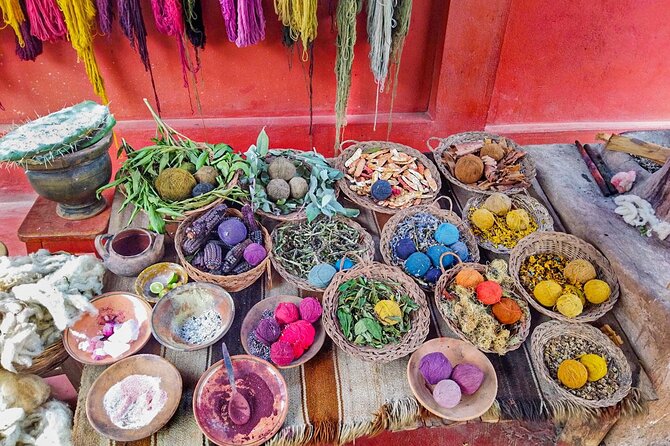
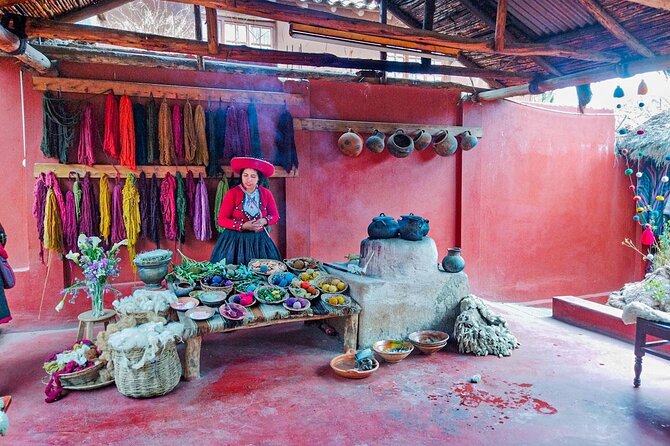
- Chinchero includes a live dyeing demonstration: You see how plants create colors for Andean textiles, and you may meet llamas and alpacas.
- Moray is an Inca farming experiment: Its carved terraces form a huge bowl with different growing conditions at each level.
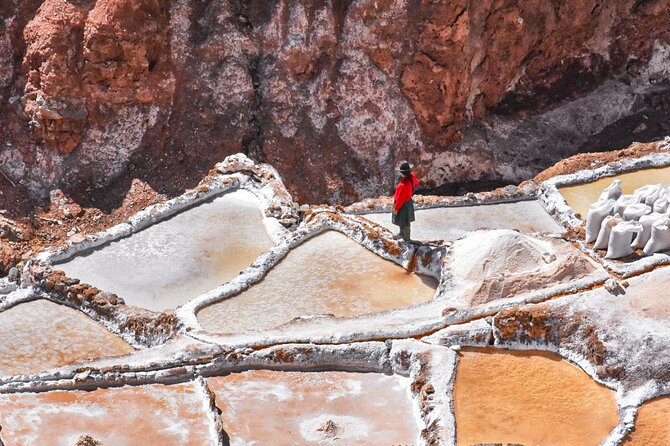
- Maras is still a working salt site: About 3,000 small pools are fed by a natural saltwater spring and maintained by local workers.
- The day begins at high altitude: Chinchero sits at about 3,762 meters, while Moray is around 3,450 meters.
- The price is low, but fees add up: The tour costs $15.20 per person, with Moray and Maras admission charged separately.
- Plan for a late afternoon return: You should reach Cusco near Plaza de Armas around 3:15 pm, though traffic and group timing can affect the schedule.
Why this makes a good Cusco side trip
Cusco gives you fine colonial streets, Inca stonework, and plenty of museums. But the Sacred Valley area shows how people still use old skills and local resources. This excursion gives you three very different views of that world in roughly six or seven hours.
I especially like the balance. Chinchero is about people and craft. Moray is about farming and design. Maras is about labor, water, and trade. You are not simply looking at ancient stones. You are seeing how the region produces food, textiles, and salt.
The trip also works well for a first full day around Cusco. You get a broad introduction without committing to a longer Sacred Valley route or a very early morning departure. The return to Cusco is planned for midafternoon, which can leave you time for lunch, shopping, or an evening flight, provided the group stays on schedule.
This is not a private sightseeing day. The group can reach up to 16 people, and the minibus may feel crowded when every seat is occupied. One part of the route can take longer than expected because everyone must return to the vehicle on time. Bring patience along with your camera.
More Maras salt mine and Moray trips:
- From Cusco: Sacred Valley & Maras Salt Mines Tour with Lunch
★ 4.8 · 2,227 reviews - From Cusco: Moray, Maras Salt Mines & Chinchero Weavers Tour
★ 4.8 · 1,925 reviews - Cusco: Sacred Valley, Pisac, Ollantaytambo, Salt Mines Moray
★ 4.6 · 1,058 reviews
Chinchero: Quechua weaving at 3,762 meters
Pickup from your Cusco hotel is scheduled between 8:20 and 8:40 am. The first drive takes you to Chinchero, a high town at about 3,762 meters. That altitude matters. If you have only just arrived in Cusco, take the morning slowly, drink water, and do not treat the first stop like a race.
The Chinchero visit covers part of the town and an Andean textile center. You see a traditional market where bartering is practiced, then watch a textile demonstration led by local people who maintain Quechua methods. The most useful part is the color lesson. Plants and other natural materials are used to create dyes, and the process helps explain why Andean cloth has such strong, varied colors.
You may also try on Andean clothing for photos and see llamas or alpacas at the center. The demonstrations can be engaging, especially when your guide explains how the work fits into local life. Guides including Felipe and Manuel have been praised for switching clearly between Spanish and English and for explaining both older traditions and modern life in the Cusco region.
Keep your expectations straight, though. This is not an extended walk through all of Chinchero, and it is not a quiet village visit removed from tourism. The textile center also sells handmade goods. You may be shown the dyeing process for a short time before being invited to browse and buy.
That sales element is not automatically a flaw. It can be a useful chance to compare alpaca, llama, and synthetic fibers, particularly since the center may identify when a product contains acrylic. Still, if you prefer a purely cultural stop, this part may feel too commercial. I would listen to the demonstration, ask what the materials are, and buy only if you find something you genuinely want.
Moray: Inca terraces built for experiments
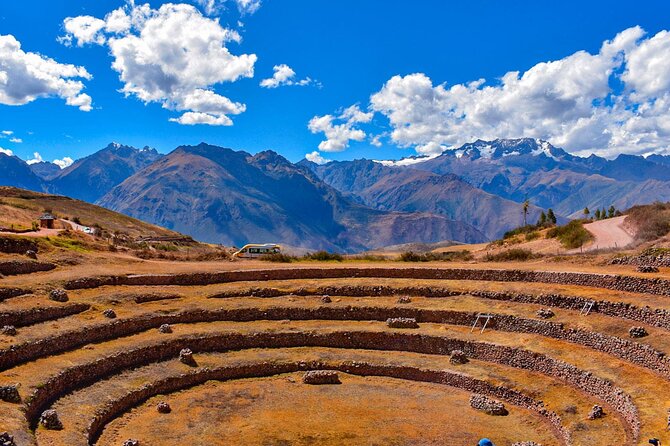
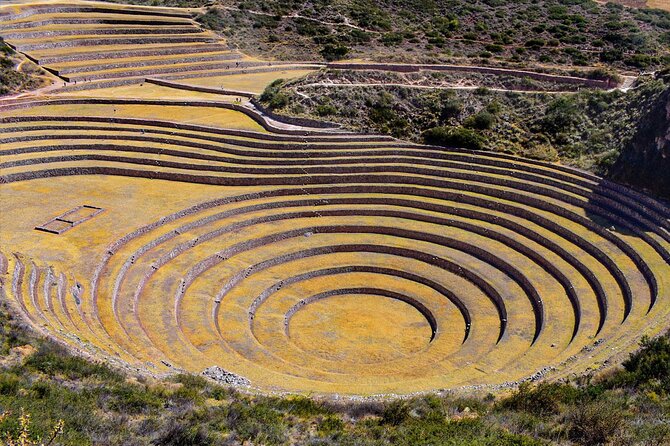
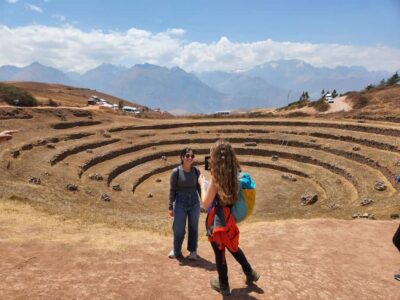
From Chinchero, the vehicle continues to Moray, at about 3,450 meters, or 11,318 feet. The site consists of broad circular terraces cut into a natural depression. From above, the shape is striking. From ground level, the scale becomes clearer as you look across the descending rings.
The terraces have an irrigation system and several levels with different conditions. They are often described as an agricultural testing area, where the Incas could study how crops grew at varying heights and temperatures. The bowl-like design may also have acted as a natural greenhouse, helping crops grow in an environment that would normally be difficult for them.
Your guide is important here. Without context, Moray can look like a set of unusual stone circles. With a good explanation, you begin to see it as practical engineering. The site connects farming, water control, altitude, and crop variety. Several guides have been praised for telling stories on the bus as well as at the stops, which is useful because the drive between sites is part of the day.
The visit lasts about an hour. You should expect scenic viewpoints and some walking around the terraces, but the supplied information does not specify a full walking route or the exact amount of elevation change. Wear shoes that feel secure and keep water handy. At this altitude, even an easy walk can feel more demanding than it looks.
Moray admission is not included. The stated charge is $19, or 70 soles. That is a large extra cost compared with the tour itself, so include it in your budget before deciding that this is a $15.20 excursion.
Maras: 3,000 salt pools on the mountainside
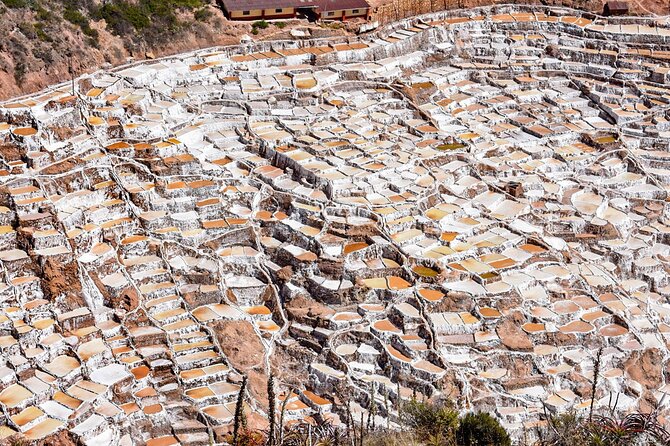
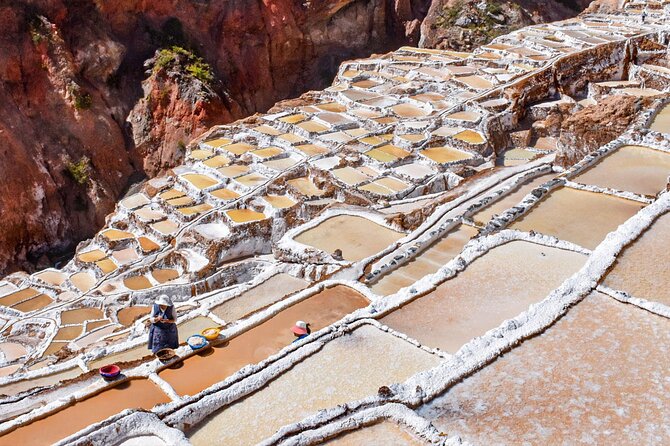
The Maras salt mines are the visual high point for many people. The site contains about 3,000 small pools, arranged across the slope like pale steps. Saltwater from a natural hot spring flows into the pools. During the dry season, workers refill them about every three days, allowing the water to evaporate and leave salt behind.
This is not just an abandoned Inca site. Salt production began before the Inca period and continues today. The salt is ground, treated with iodine, packaged, and sent to regional markets. That working connection gives the stop extra weight. You are looking at a production system, not only a scenic formation.
I like the contrast with Moray. At Moray, the terraces are wide, deep, and built for crops. At Maras, the pools are small, bright, and built for salt. Both places show how people made the most of difficult mountain conditions.
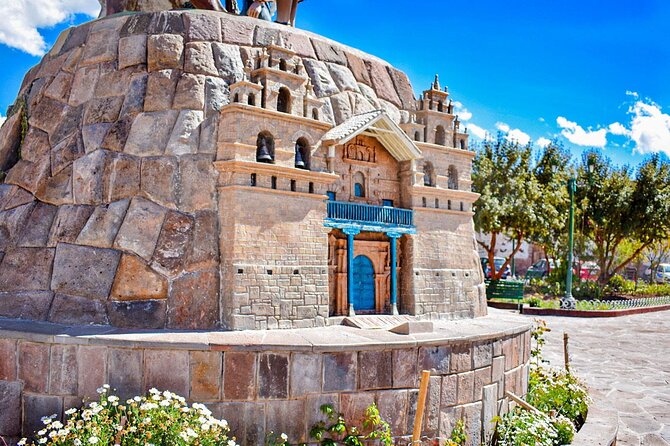
The route also passes through Maras village, where colonial buildings made from thin stone remain. The village is part of the setting rather than a long independent visit, so do not expect a full walking tour of its architecture. The main stop is Salineras, where the dense pattern of pools makes for strong photographs.
Maras admission costs $6, or 20 soles, and is also extra. Together, the Moray and salt mine fees can significantly change the final cost. At $15.20, the transport and bilingual guide are inexpensive, but the complete day is not simply the advertised base price.
More Ollantaytambo and Pisac visits:
- Cusco:Chinchero,Moray & Salt Mines drop-off in Ollantaytambo
★ 4.8 · 793 reviews - Sacred Valley: Chinchero, Moray, Ollantaytambo & Pisac+Lunch
★ 4.8 · 501 reviews - Pisac Indian Market and Ollantaytambo Fortress with Lunch
★ 4.5 · 395 reviews - Cusco:Sacred Valley Pisaq,Ollantaytambo,Chinchero with Lunch
★ 4.8 · 183 reviews
The guide can shape the whole day
The stops are worthwhile on their own, but the guide determines how well they connect. Felipe has been praised for detailed history, local stories, photo help, and sharing coca leaves for visitors to try. Julio has been described as careful and informative in both English and Spanish, while Manuel has been praised for explaining the region’s past and present clearly.
Guide assignments can change, so you should not book on the assumption that one particular person will lead your group. Still, the pattern is clear: the best part of the commentary is its range. You hear about Inca agriculture, modern Peruvian life, weaving methods, natural dyes, salt production, and regional customs.
A bilingual guide also helps a mixed-language group. The pace may slow slightly while information is given in both languages, but that is part of the format. The maximum group size is listed as 16, a manageable number for site explanations. One account describes a group closer to 20, so actual vehicle size may vary. If you dislike group travel, confirm the current arrangement before paying.
The driver matters on this route, too. You spend substantial time on the road, and one driver named Jesus was specifically praised for safe handling. You will see mountain views from the vehicle, but the day is not built around long scenic stops between the main sites.
Timing, transport, and what to carry
Pickup is scheduled for 8:20 to 8:40 am. The return is expected around 3:15 pm near Plaza de Armas. That makes the tour useful if you want a morning that does not begin before dawn, or if you need to keep an evening flight in mind.
Do not count on eating during the excursion. Breakfast and lunch are not included, and there is no planned lunch break. A seven-hour day without food can be uncomfortable, especially at altitude, so carry snacks and water. You can eat independently after returning to Cusco.
Hotel pickup is included, but hotel drop-off is not. The final return is near Plaza de Armas, which is convenient if you are already heading into central Cusco, but less convenient if your hotel is farther out and you have luggage. The tour is near public transportation, and most people can participate, though altitude and walking should be part of your personal decision.
The minibus is the main comfort concern. Some departures may feel fine, while a full vehicle can be cramped. The road time is unavoidable because these sites are spread across the Cusco area. I would choose a seat early when possible, keep valuables close, and avoid booking this immediately before a fixed connection unless you have plenty of time.
Is $15.20 a good value?
At $15.20 per person, the base price is unusually low for hotel pickup, transport, and a bilingual guide across three major stops. The value is strongest if you want an efficient introduction to the Sacred Valley area and do not need a private vehicle.
The real cost includes $19 for Moray and $6 for the salt mines, with the local-currency amounts listed as 70 soles and 20 soles. Tips, meals, and anything you buy at Chinchero are also extra. Even after adding the site fees, the package can be a practical choice, but compare the full amount rather than judging by the headline price alone.
You are paying for convenience and interpretation. A guide who explains why Moray mattered, how salt is collected, and how textile colors are made gives the day more meaning than a simple ride between viewpoints. You are not paying for lunch, hotel return, or a private pace.
Free cancellation is available up to 24 hours before the start time for a full refund. Changes made inside that window are not accepted, and poor weather can lead to a new date or a full refund. Those terms are useful if your Cusco plans are still shifting, but they do not remove the need to plan around altitude and road timing.
Who should book this Cusco half-day?
I would choose this trip if you want to see Moray and Maras without arranging separate taxis, and if you enjoy hearing about local customs as much as taking photographs. It suits first-time visitors, solo visitors who prefer organized transport, and couples looking for a compact day outside Cusco.
It is also a good fit for anyone with limited time. The route covers a lot without requiring the pre-dawn start associated with some mountain excursions. The return near Plaza de Armas can leave you with the afternoon free.
I would think twice if you need a relaxed meal break, dislike sales-oriented textile stops, or want every minute controlled around your own interests. The drive is long, the group must stay together, and the vehicle may be uncomfortable when full. If you have recently arrived in Cusco and are struggling with altitude, a shorter or slower first outing may be wiser.
Should you book it?
Book it if you want three very different Andean experiences in one day at a low starting price. Chinchero gives you living craft traditions, Moray explains Inca farming design, and Maras shows a salt industry that still works today.
Skip it if the extra admission fees, no-lunch schedule, or shared minibus sound frustrating. For most people with one spare day in Cusco, though, the combination is hard to beat for breadth. Bring water, snacks, a little patience, and enough room in your budget for the two site tickets.
FAQ
How long does the tour last?
The experience lasts approximately six to seven hours. Pickup is scheduled between 8:20 and 8:40 am, with a planned return near Cusco’s Plaza de Armas around 3:15 pm.
What places does the tour visit?
The route includes Cusco pickup, Chinchero, Moray, the Maras salt mines, and a return to Cusco. At Chinchero, you visit part of the town and an Andean textile center.
Is hotel pickup included?
Yes. Pickup from your hotel is included. Hotel drop-off is not included, and the planned return is near Plaza de Armas.
Are Moray and Maras entrance fees included?
No. Moray admission is listed as $19, or 70 soles. The Maras salt mines charge $6, or 20 soles. These fees are paid separately from the tour price.
Are food and drinks included?
No. Breakfast and lunch are not included. Since there is no planned lunch stop, bring water and snacks or plan to eat after returning to Cusco.
How many people can join the tour?
The tour has a maximum listed group size of 16 travelers. Vehicle comfort can vary, and a full minibus may feel tight.
Is the tour offered with an English-speaking guide?
Yes. A bilingual tour guide is included. Guides such as Felipe, Julio, and Manuel have led departures with commentary in English and Spanish.
Can I cancel for a full refund?
You can cancel up to 24 hours before the experience start time for a full refund. Cancellations or changes made less than 24 hours before the start are not accepted, and poor weather may result in a different date or a full refund.
More Weaving Workshops
- Cusco: Alpaca and Llama Farm Tour w/ Transfer & Weaving Demo
★ 4.9 · 151 reviews - The Textile Workshop Experience in Cusco Region
★ 5.0 · 118 reviews - Sacred Valley Textile Workshop – Dyeing & Weaving in Cusco
★ 5.0 · 92 reviews - From Cusco: Chinchero Weavers, Moray, Maras Salt Mines Tour
★ 5.0 · 3 reviews
Just added around Cusco
- Cusco: Via Ferrata, Skybike, and Rappel Adventure★ 5.0 · 3 reviews
- From Cusco: Maras and Moray and Ollantaytambo Tour★ 5.0 · 3 reviews
- Cusco: Rainbow Mountain Tour at Sunset Without the Crowds★ 4.7 · 3 reviews
- Cusco: Sacred Valley Day Trip with Maras & Moray Salt Mines★ 5.0 · 3 reviews
- Valle Sur Cusco | half day★ 4.3 · 3 reviews
- IN MACHU PICCHU: Private Tour Guide Service★ 5.0 · 3 reviews
- Salkantay trek to Machu Picchu – 5D/4N – Premium★ 3.3 · 3 reviews
- Full-Day Condor Viewpoint & Inca Sites Tour★ 5.0 · 3 reviews
Maras and Moray Tours, compared.
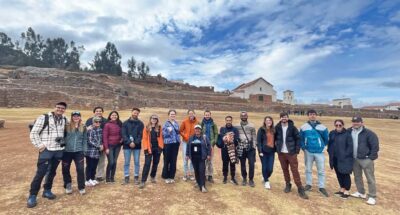
Sacred Valley & Maras Salt Mines Tour with Lunch
Read our review →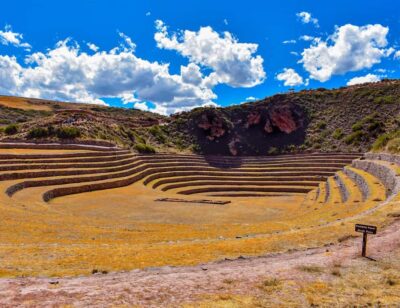
Moray, Maras Salt Mines & Chinchero Weavers Tour
Read our review →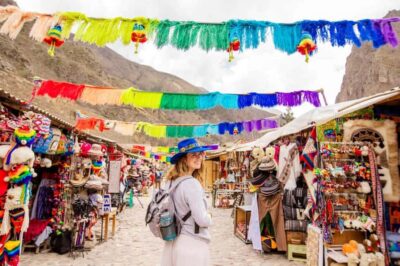
Sacred Valley, Pisac, Ollantaytambo, Salt Mines Moray
Read our review →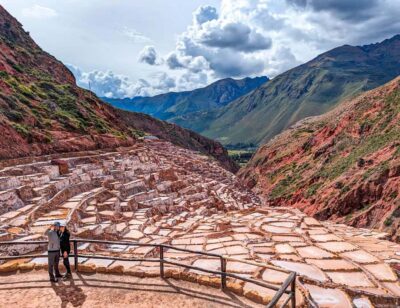
Chinchero,Moray & Salt Mines drop-off in Ollantaytambo
Read our review →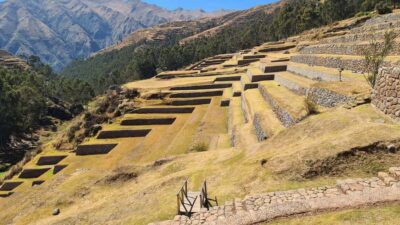

Browse the lists this tour appears in