
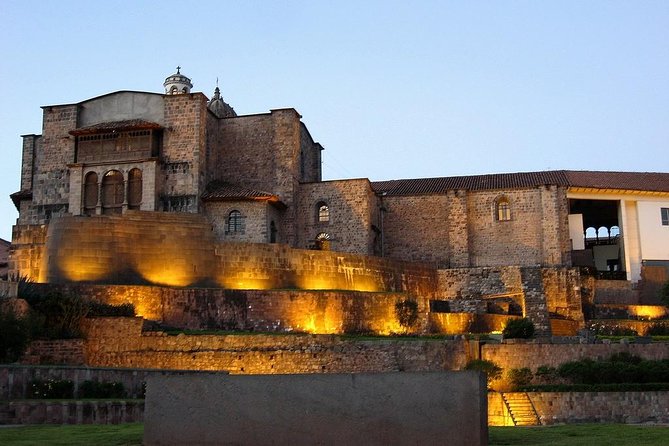
Reviewed · SACSAYHUAMAN AND INCA RUINS
Cusco Half Day City Tour: Four Ruins
Cusco’s four nearby Inca sites tell different parts of the same story. At Sacsayhuaman, you’ll face enormous zigzag walls. At Qenqo, you’ll see a ceremonial space carved from living rock. Puka Pucara explains the road system, while Tambomachay brings the tour to a quiet set of water channels.
I especially like the small maximum of 15 people, which gives the guide room to explain details without turning the visit into a marching line. I also like the mix of military, ritual, road, and water sites. The main caution is altitude and timing: some walking and stairs can feel tough at nearly 3,700 meters, and the actual schedule may run shorter than the advertised six hours.
In This Review
- Four quick reasons to consider this Cusco tour
- Why these four ruins make a smart first look at Cusco
- Sacsayhuaman: Cusco’s most powerful stonework
- Qenqo: a carved rock full of unanswered questions
- Puka Pucara: an Inca roadside station in red earth
- Tambomachay: water, ritual, and a quieter finish
- How the guide shapes the experience
- Timing, walking, and the altitude factor
- What the $45 price really covers
- Who should book this four-ruin route
- Should you book the Cusco Four Ruins tour?
- FAQ
- Where does the tour start?
- What time does the tour begin?
- Where does the tour end?
- Which archaeological sites are included?
- Is transportation included?
- Is a guide included?
- How much does admission cost?
- How many people can join the tour?
Four quick reasons to consider this Cusco tour
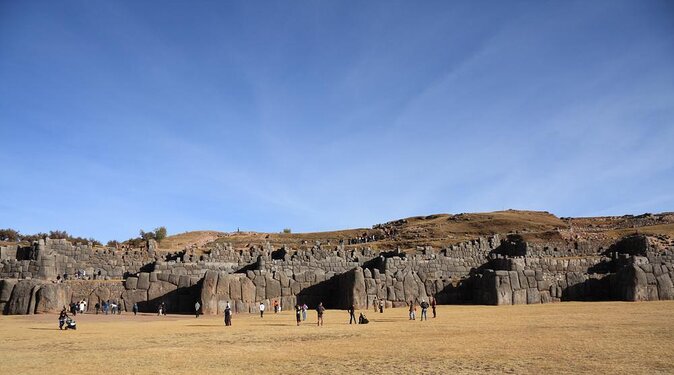
- Sacsayhuaman’s giant stones: See walls built from blocks said to reach up to 90 to 125 tons.
- Four different types of Inca sites: Visit a possible fortress, ceremonial rock temple, roadside outpost, and water shrine.
- A bilingual guide: Explanations are given in English and Spanish, with guides such as Edith and Freddy praised for clear, considerate instruction.
- Useful for a first Cusco day: The route gives you a strong introduction to Inca architecture and sacred traditions close to town.
- A compact group: The group limit is 15 people, though the vehicle may still feel full.
- Extra costs matter: The tour price is $45, but admission to the sites costs PEN70 per person.
Why these four ruins make a smart first look at Cusco
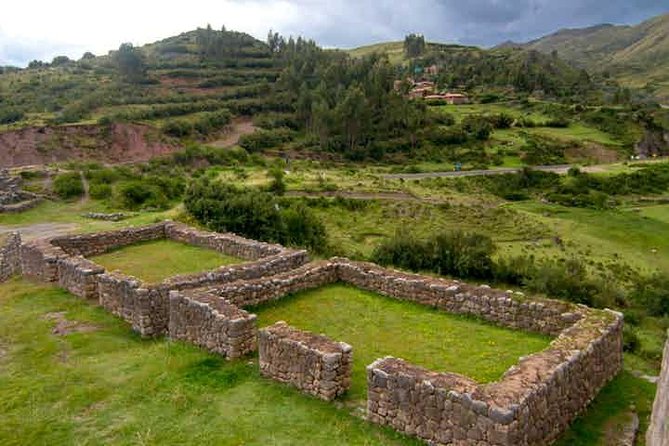
You can visit the four sites in half a day, yet they are not repetitive. Each one has a different job, or at least a different set of theories about its original job. That makes the route useful for building a basic picture of Inca society.
You’ll see how the Incas worked with massive stone, shaped natural rock for ceremonies, supported movement along their road network, and used water in both practical and sacred ways. The guide’s explanations are important because several of these places no longer come with clear written instructions from the people who built them.
The tour begins at 10:00 a.m. at Heidi Travel EIRL, Plateros 324, in central Cusco. It ends back at the same meeting point. Transport between the city and the sites is included, and the group is limited to 15 people.
That small-group promise is useful, but don’t picture an empty minibus. One family found the vehicle comfortable but full, with every seat occupied. The drives between the central plaza and the ruins are fairly short, so the crowded ride is less of a problem than it would be on a long road trip.
More Inca ruins above Cusco:
- Cusco: Half-Day City Tour with Sacsayhuaman and Q’enco
★ 4.6 · 1,129 reviews - City Tour Cusco Qoricancha Sacsayhuaman y Tambomachay
★ 4.7 · 617 reviews - Cusco City Sightseeing, San Pedro Market, Cathedral and Qorikancha Temple
★ 4.5 · 139 reviews
Sacsayhuaman: Cusco’s most powerful stonework
Sacsayhuaman is the big opening act. Its name in Quechua is usually translated as place where the hawk is satiated, a reference to the birds associated with the area. From the site, you get broad views over Cusco and toward peaks such as Ausangate, Pachatusán, and Cinca, all important sacred mountains in Inca belief.
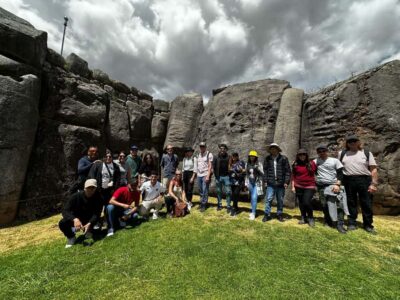
The huge zigzag wall is the reason most people remember this stop. Some stones are up to five meters high and 2.5 meters wide. The scale is hard to grasp in photographs. You need to walk beside the wall to understand how carefully the blocks fit together, with no visible mortar holding them in place.
Spanish forces later called Sacsayhuaman a fortress because of its military appearance. That label may not explain the whole site. The complex also had sacred buildings, towers, homes, shrines, storehouses, roads, and aqueducts. It may have been a ceremonial center as well as a defensive stronghold.
Plan on about an hour here. The site includes uneven ground and some uphill walking. At this altitude, a modest slope can leave you short of breath, especially early in a Cusco visit. The guide can help set a steady pace. One family specifically appreciated that the guide did not pressure anyone to hurry or climb stairs beyond their comfort.
Qenqo: a carved rock full of unanswered questions
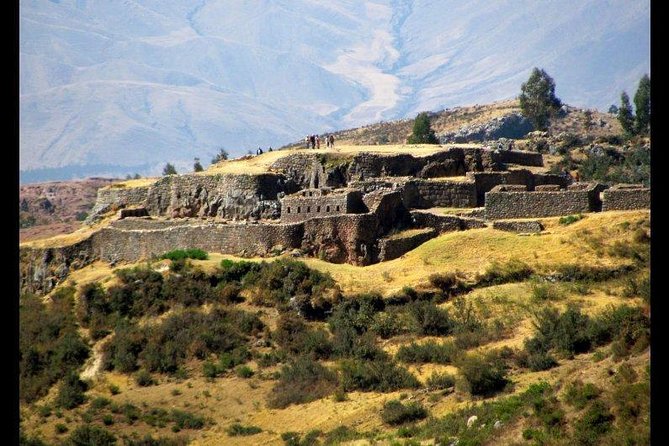
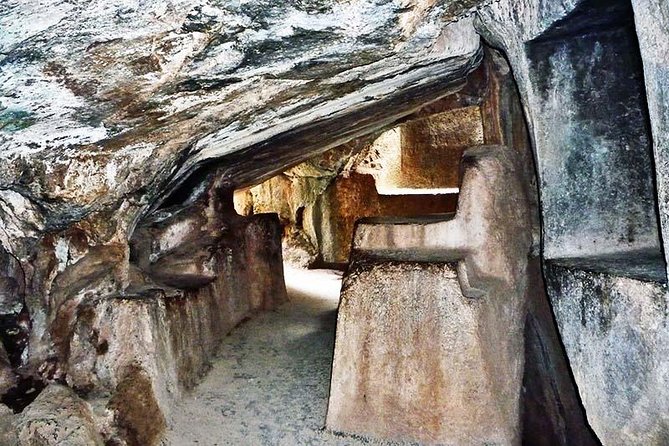
Qenqo is smaller and more mysterious than Sacsayhuaman. The Quechua name refers to a labyrinth or zigzag, likely connected to a crooked channel cut into the rock. The channel carried some kind of liquid, but its exact purpose is not known.
Possible explanations include holy water, chicha, or blood. Those theories point toward ceremonies connected with death, sacrifice, or religious judgment. You’ll hear ideas about embalming bodies or interpreting the path of the liquid as a sign of how a person had lived. Treat these as theories, not settled facts.
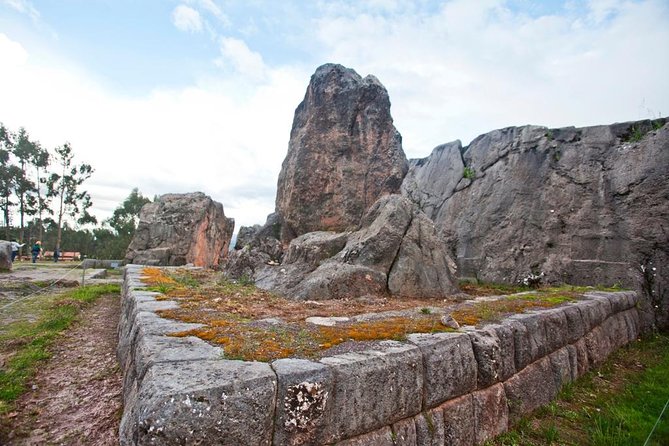
What makes Qenqo special is its construction. The temple was carved from a huge natural monolith, combining tunnels, chambers, and shaped stone. One chamber includes 19 small niches and an amphitheater-like space. Its purpose has also been lost, although many historians connect the area with ceremonies honoring the sun, moon, and stars.
This is a stop where a good guide adds real value. Without explanation, Qenqo can look like a collection of odd cuts in stone. With context, the channels, niches, and chambers become clues to a religious world that the Spanish conquest disrupted.
The scheduled visit lasts about an hour. Since the site is compact, some people may wish for more time to inspect the carved surfaces. The route is not difficult by normal standards, but altitude can make even short walks feel longer.
Puka Pucara: an Inca roadside station in red earth
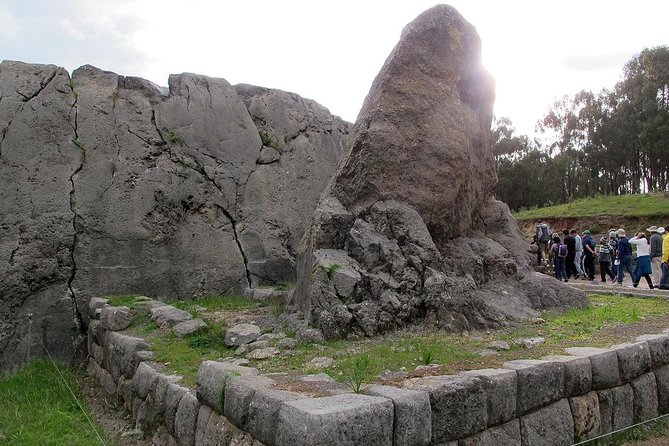
Puka Pucara means red fort. The name relates to the color of the soil and the site’s position. It is built from smaller, rougher stones than the finely fitted blocks at Sacsayhuaman, giving it a less polished appearance.
The ruins include courtyards, canals, aqueducts, baths, rooms, platforms, and an old road linked with the Qhapaq Ñan, the vast Inca road network. Three walls create three levels, with rooms arranged around the natural rock rather than forcing the ground into a tidy grid.
Puka Pucara may have served as a barracks and tambo, or roadside lodging place. According to old accounts, an imperial procession could stop here while the Inca visited the baths at Tambomachay. That practical role helps explain why the site feels different from the grander ceremonial places.
You’ll see trapezoidal doorways and rooms arranged around the central rise. There are also stories of a tunnel connecting Puka Pucara with Tambomachay, though this should be treated as local tradition rather than a confirmed feature you can visit.
The stop lasts around an hour. It is a good place to ask the guide how the Inca road network supported administration, soldiers, messengers, and official travel. The site’s rough masonry is not a sign of poor workmanship. The builders shaped the walls around existing rocks and used the location for function rather than display.
More Cusco city tours:
- Open Bus Cusco City Tour
★ 4.5 · 219 reviews - Cusco: City Tour | Half-Day Tour to 4 Archaeological Sites
★ 4.6 · 206 reviews - City Tour in Cusco & visit Museum South American Camelid Private.
★ 5.0 · 147 reviews - Cusco: Half-Day City Tour
★ 4.2 · 129 reviews
Tambomachay: water, ritual, and a quieter finish
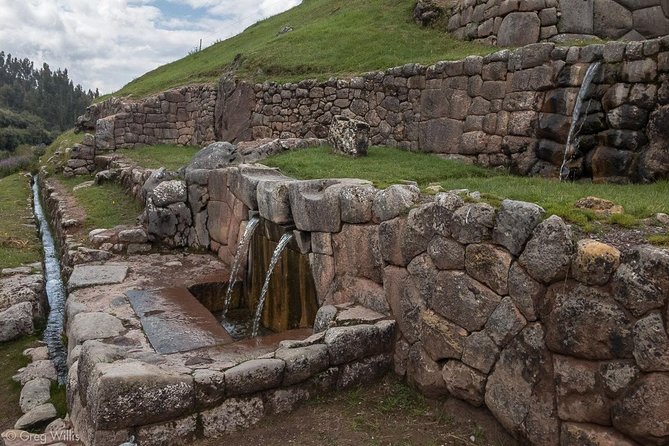
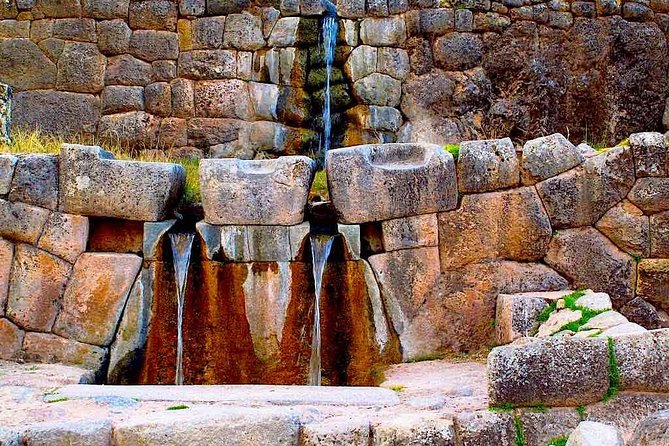
Tambomachay is often called El Baño del Inca, or the Bath of the Inca. It sits on a hill north of Cusco at about 12,150 feet, or 3,700 meters. The setting is calmer than Sacsayhuaman, and the sound of continuously flowing water changes the mood of the tour.
The site consists of three stepped terraces made with precise stonework. Trapezoidal niches appear in the retaining walls, while a natural spring feeds small aqueducts, channels, and waterfalls. The water still gives the place its character.
No single function has been proven. Tambomachay may have been a ceremonial site, a retreat for the Inca ruler and nobility, a military post, or a combination of these uses. Its secluded position and carefully directed spring water support the idea of a royal bathing place, but its religious importance likely went beyond bathing.
You’ll have about 45 minutes here. That is enough to see the terraces and hear the explanation, though anyone interested in Inca water engineering may want more time. Take your time on the approach and stairs. The altitude is highest in this part of the route, and the guide should be able to adjust the pace if needed.
How the guide shapes the experience
The tour is only as useful as the explanations you receive. The best part of this route is not simply reaching four ruins. It is learning how to read them.
Guides Edith and Freddy are specifically associated with strong experiences on this tour. Edith was praised for clear English and Spanish explanations, along with a considerate pace. Freddy was singled out for communicating clearly in English and offering practical ideas for other sights and activities in Cusco.
The bilingual format is helpful if your group includes both English and Spanish speakers. Still, communication at the beginning may not be perfectly smooth. One couple experienced confusion before departure and felt they had been shifted into another group. If you arrive and do not immediately see your guide, ask directly for the Four Ruins tour and confirm the language of the commentary.
The guide may also add a brief stop at an alpaca wool shop. This is not one of the four archaeological sites, but one family found the explanation of different wool materials pleasant and useful. If your main goal is archaeology, consider it a small commercial detour rather than a core part of the tour.
Timing, walking, and the altitude factor
The stated duration is approximately six hours, but the real timing may vary. Some departures have taken closer to four hours, while others have felt well paced. Pickup delays of 35 to 40 minutes have also occurred, so keep your morning flexible.
The tour is advertised to start at 10:00 a.m. and return to Plateros 324. Since the four sites are outside central Cusco, the vehicle saves you from arranging separate taxis and negotiating a route. That convenience is a major part of the $45 value.
Walking is moderate, but altitude is the bigger issue. Cusco itself is high, and Tambomachay reaches roughly 3,700 meters. You may feel breathless on slopes or stairs even if you are normally fit. Drink water, move slowly, and tell the guide if you need a pause. The route is not designed as a race, and a considerate guide should not push you.
The scheduled stop lengths total about three hours, leaving the rest of the six-hour estimate for driving, meeting, and transitions. If the tour runs closer to four hours, you may have more free time afterward, but less time at each ruin. If you want detailed photography or quiet observation, a private tour may suit you better.
What the $45 price really covers
At $45 per person, the tour offers transport and a bilingual English and Spanish guide. For a first visit, that is a fair price, especially if you value not having to organize four separate stops.
The important catch is the entrance fee. Admission to the archaeological sites costs PEN70 per person and is not included. The supplied information also lists PEN20 per person for Qorikancha, though Qorikancha is not one of the four stops described here. Confirm exactly what your guide plans to visit before paying additional fees.
The tour earns its value through interpretation and transport, not through included admissions. Add the entrance cost to your budget from the start. One person specifically wished the admission price had been explained before booking, which is a fair complaint.
If you simply want a cheap ride past the ruins, this may not be the right choice. If you want a guide to explain why the sites differ and how they connect, the price is more reasonable.
Who should book this four-ruin route
I’d choose this tour for a first full day or early part of a Cusco stay. It gives you a clear introduction to Inca stonework, religion, water systems, and travel routes without requiring a full-day trip to a distant valley.
It suits families, couples, and solo visitors who prefer organized transport. The group size is small enough for questions, though the vehicle can still be full. English and Spanish speakers can both participate.
You may want another option if you need exact departure times, long visits at each site, or a very quiet vehicle. It also may not suit anyone still struggling with altitude, since the ruins involve walking and Tambomachay sits high above the city.
Free cancellation is available up to 24 hours before the 10:00 a.m. start time. Changes or cancellations inside that window are not accepted for a refund.
Should you book the Cusco Four Ruins tour?
Book it if you want a practical introduction to Cusco’s Inca sites with transport, a bilingual guide, and a compact group. Sacsayhuaman alone is worth seeing, while Qenqo, Puka Pucara, and Tambomachay add useful variety.
Before you commit, budget PEN70 for admission, ask how long the actual visit should take, and prepare for high-altitude walking. If you can accept a possible delay, a full vehicle, and a pace that may feel brisk, this is a good-value way to get your bearings around Cusco. If time at each ruin matters more than convenience, arrange a private visit instead.
FAQ
Where does the tour start?
The tour starts at Heidi Travel EIRL, Plateros 324, Cusco 08000, Peru.
What time does the tour begin?
The scheduled start time is 10:00 a.m.
Where does the tour end?
The activity ends back at the meeting point at Plateros 324.
Which archaeological sites are included?
The route visits Sacsayhuaman, Qenqo, Puka Pucara, and Tambomachay.
Is transportation included?
Yes. Transport between the meeting point and the archaeological sites is included.
Is a guide included?
Yes. A bilingual guide provides commentary in English and Spanish.
How much does admission cost?
Entrance to the sites costs PEN70 per person and is not included in the tour price. Qorikancha admission is listed separately at PEN20 per person.
How many people can join the tour?
The tour has a maximum group size of 15 people.
More Inca Sites Near Cusco
- Cusco City Sightseeing and Sacsayhuaman Archeological Park Tour
★ 4.5 · 101 reviews - Cusco: Historical Guided City Tour with 4 Inca Ruins
★ 4.5 · 99 reviews - Machu Picchu Private Archaeological and Historical Guided Tour
★ 5.0 · 86 reviews - Cusco: Historic Walking Tour with Pisco Sour and Music Show
★ 4.6 · 65 reviews
Just added around Cusco
- Cusco: Via Ferrata, Skybike, and Rappel Adventure★ 5.0 · 3 reviews
- From Cusco: Maras and Moray and Ollantaytambo Tour★ 5.0 · 3 reviews
- Cusco: Rainbow Mountain Tour at Sunset Without the Crowds★ 4.7 · 3 reviews
- Cusco: Sacred Valley Day Trip with Maras & Moray Salt Mines★ 5.0 · 3 reviews
- Valle Sur Cusco | half day★ 4.3 · 3 reviews
- IN MACHU PICCHU: Private Tour Guide Service★ 5.0 · 3 reviews
- Salkantay trek to Machu Picchu – 5D/4N – Premium★ 3.3 · 3 reviews
- Guide in Machu Picchu★ 5.0 · 3 reviews
Sacsayhuaman and Inca Ruins, compared.
Half-Day City Tour with Sacsayhuaman and Q’enco
Read our review →
City Tour Cusco Qoricancha Sacsayhuaman y Tambomachay
Read our review →
Cusco City Sightseeing, San Pedro Market, Cathedral and Qorikancha Temple
Read our review →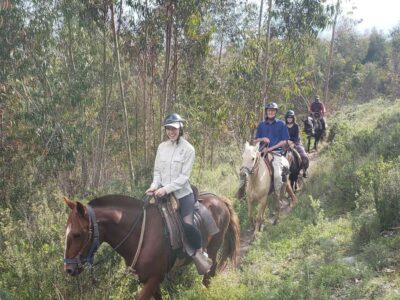
3-Hour Horse Riding Tour to the Temple of the Moon
Read our review →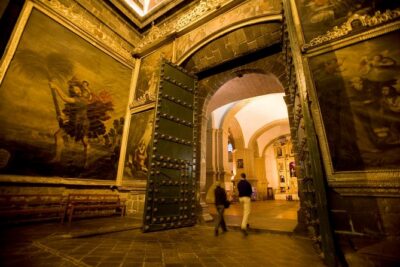
Cusco City Sightseeing and Sacsayhuaman Archeological Park Tour
Read our review →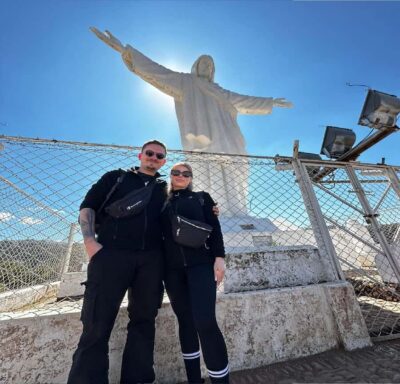
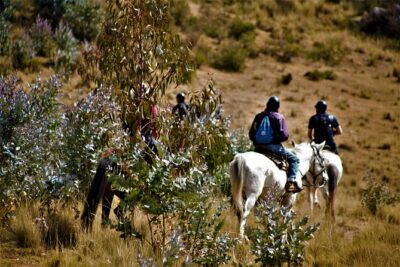
Horse Riding Chacan Mountain And Temple Of The Moon
Read our review →
Cusco 4-Hour Private Tour Including Sacsayhuaman and Qenqo
Read our review →Browse the lists this tour appears in