
Reviewed · SALKANTAY TREKS
Small Group 5 Days Salkantay and Machu Picchu by Llactapata Tour
The great appeal of this five-day trek is the sharp change in scenery. You start among snow peaks at nearly 15,000 feet, cross the Salkantay Pass, then drop through warm forest and coffee country before reaching Machu Picchu by way of Llactapata. It feels like several Peruvian trips packed into one.
I especially like the small maximum group of nine, which gives the guide room to adjust the pace and answer questions. I also like the local coffee visit in Lucmabamba, where you see how beans are grown, dried, roasted, and prepared. The main concern is the demanding first two days, with high altitude and long hiking hours arriving before the easier tropical sections.
In This Review
- Key points to know before booking
- Why this Salkantay route is worth five days
- Day 1: Cusco to Soraypampa and Humantay Lake
- Day 2: The 4,600-meter Salkantay Pass
- Day 3: Forest paths, coffee, cacao, and Lucmabamba
- Day 4: The old Inca path to Llactapata
- Day 5: An early morning inside Machu Picchu
- What the $593 price covers
- Fitness, altitude, and packing decisions
- Who will get the most from this trek
- Should you book the Salkantay and Llactapata trek?
- FAQ
- Where does the trek start?
- How large is the group?
- How high does the route climb?
- Is Humantay Lake included?
- Are meals included?
- Is accommodation included?
- What transport is included after Machu Picchu?
Key points to know before booking
- Salkantay Pass reaches 4,600 meters: The highest and hardest section comes on Day 2.
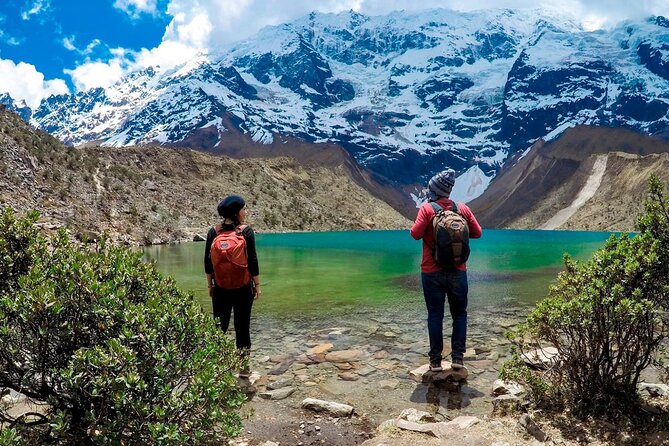
- Humantay Lake is an optional Day 1 hike: You can use it as extra acclimatization or skip it and rest at Soraypampa.
- The route changes climate fast: Snowy mountain country gives way to humid forest, fruit farms, coffee, and cacao.
- Llactapata offers a different view of Machu Picchu: You approach the final destination through Inca ruins and views toward Machu Picchu Mountain.
- The package covers major costs: Camping, meals, a guide, park entrances, a hotel night, train, and return transport are included.
- Pack for altitude and insects: Cold mountain nights, mosquitoes at Collpapampa, and the optional $5-per-day sleeping bag all matter.
Why this Salkantay route is worth five days
The standard appeal of a trek to Machu Picchu is the destination. This route earns its length by making the journey part of the prize. You do not simply walk toward an archaeological site. You pass from the high Andes into warmer valleys, see farming communities, follow an old Inca route, and spend the final night in Aguas Calientes before entering Machu Picchu early.
The group size matters here. With no more than nine people, the guide can keep an eye on different walking speeds and stop to explain plants, ruins, and local traditions. The strongest guide praise centers on people such as Rolando, Jainor, Carlos, Henry, and Dario. You can ask whether one of them is assigned to your departure, but availability is not guaranteed.
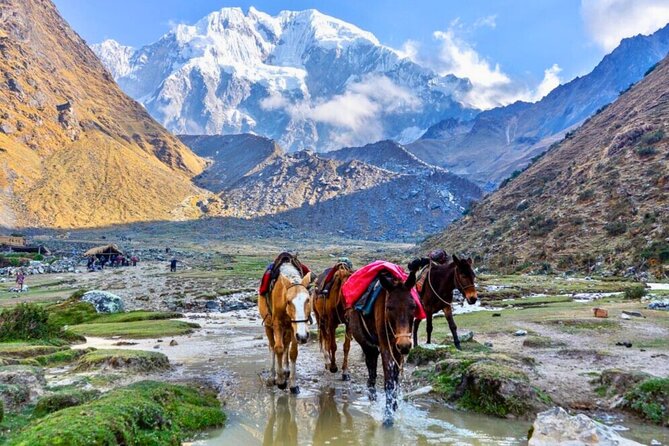
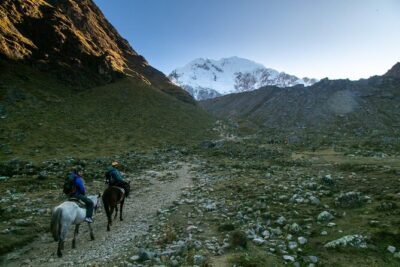
The team also includes a cook and horseman. Meals receive unusually strong praise, including fresh breakfasts, lunches, and dinners made with the limited equipment available on the trail. The horse team carries up to 7 kilograms of your personal gear, which lets you hike with a lighter daypack. There is also an emergency horse between Marcoccasa and Chaullay, a useful safety provision on a high-altitude trek.
More ways to reach Machu Picchu:
- From Cusco: Full-Day Group Tour of Machu Picchu
★ 4.7 · 1,767 reviews - Machu Picchu Day Trip from Cusco
★ 4.5 · 1,644 reviews - Machu Picchu: Full-Day Tour from Cusco with Optional Lunch
★ 4.6 · 927 reviews
Day 1: Cusco to Soraypampa and Humantay Lake
The day begins at 4:00 am at Del Medio 123, by Cusco’s Plaza de Armas. That early departure is not decorative. It gives you time to reach Challacancha and begin hiking before the day becomes too warm or the schedule tightens.
Private transport takes you through Mollepata, at about 3,000 meters. You make a short stop there to stretch and look over the countryside before continuing to Challacancha at 3,400 meters. This is where you meet the horsemen and the rest of the group, and where the walking portion officially begins.
The first hike lasts about three hours. You move through a broad mountain valley with Humantay and Salkantay peaks rising above you. At this point, the route is already high, so the cold air and thin atmosphere can make a moderate climb feel much harder than the distance suggests.
Soraypampa, at 3,700 meters, is your campsite. The setting gives you wide views of the surrounding peaks, but expect a cold night. The package includes camping equipment, a dining tent, tables, and chairs. Breakfast, lunch, and dinner are included on the appropriate trekking days, along with tea and snack time each day.
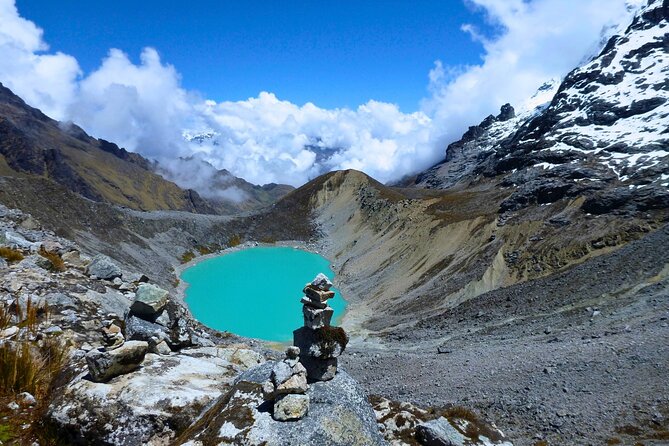
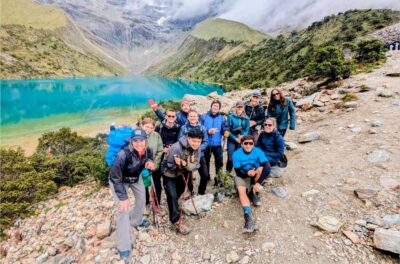
In the afternoon, you can hike to Humantay Lake. The lake is known for its striking turquoise water, set beneath the mountain peaks. The walk is optional, which is important. If you are feeling strong, it gives you an extra scenic reward and helps your body adjust to the altitude. If you are already tired after the morning hike, staying at camp is the sensible choice.
You should not treat Day 1 as a gentle warm-up. The high elevation begins immediately, and the optional lake walk can turn an already full day into a serious effort.
Day 2: The 4,600-meter Salkantay Pass
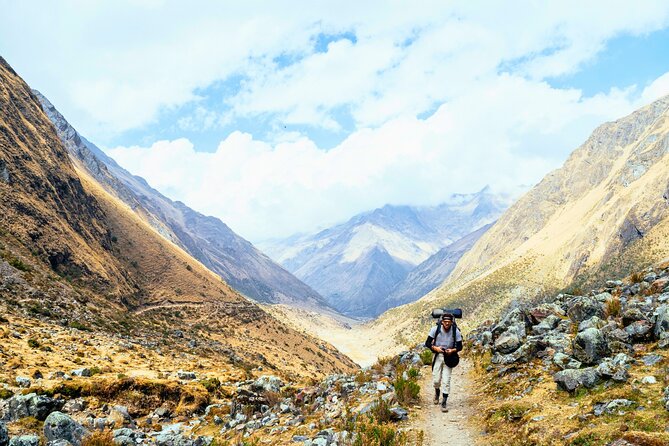
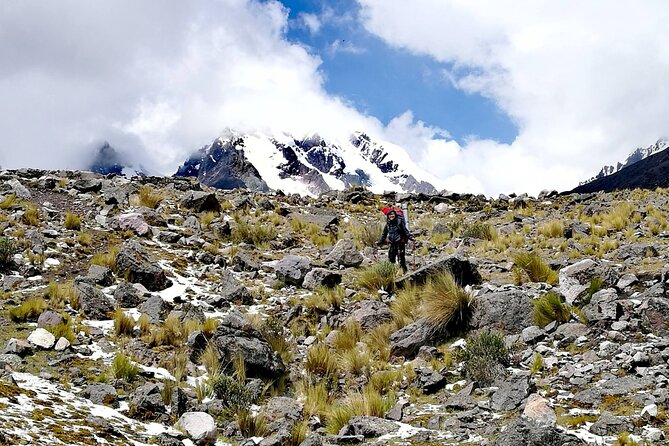
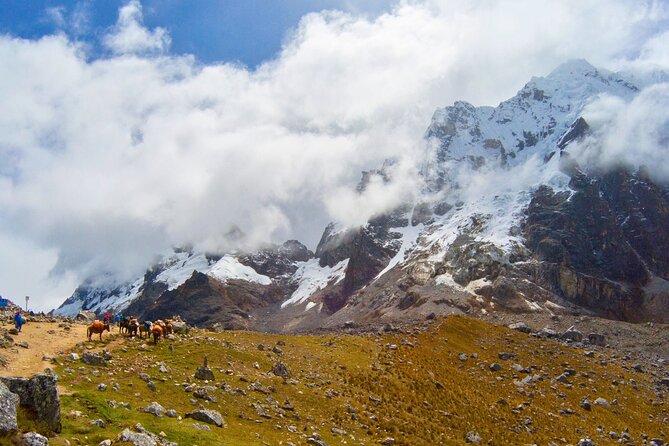
Day 2 is the physical test. After breakfast at Soraypampa, you climb toward Salkantay Pass, reaching about 4,600 meters. The ascent takes roughly four hours, with views toward Salkantay Mountain, which rises to 6,264 meters.
This is the moment to walk slowly and keep your breathing steady. The pass is high enough that fitness alone does not solve the problem. Acclimatization matters, and the guide’s ability to set a patient pace becomes especially important. The emergency horse is available on part of the route, but you should still approach the trek as a strenuous activity.
At the pass, you pause for the views and recovery before beginning a long descent. The change is dramatic. Gray, cold mountain country gradually gives way to greener slopes and then warmer forest. You may notice different plants and wildlife as the altitude drops.
The day ends at Collpapampa, around 3,000 meters. Here, the air is warmer and more humid, and the setting feels very different from Soraypampa. Mosquitoes are specifically noted, so insect repellent and long, light clothing deserve a place in your bag.
The schedule lists about four hours for the final section after the pass. Taken together with the climb and descent, this is a demanding day. One criticism of the route is that the effort is concentrated at the beginning rather than spread evenly across all five days. If your hiking experience is limited, prepare for Day 2 to set the tone.
Day 3: Forest paths, coffee, cacao, and Lucmabamba
Day 3 is where the route becomes more relaxed and more connected to rural life. You continue downhill through forest, with orchids, bromeliads, and other plants appearing along the trail. The setting is humid and warm, a complete contrast to the high pass less than 24 hours earlier.
The route then opens into agricultural areas growing coffee, cacao, and fruit. This is one of the most useful parts of the trek because it puts local work in view. These crops are not just scenery. They support families and form part of the region’s long-standing farming traditions.
You pass through Wiñaypoco and Granadilla before reaching Lucmabamba, at about 2,000 meters. The lower altitude makes this section easier on the lungs, although the heat, humidity, and uneven trail still require effort. The day includes several hours of hiking, but it lacks the severe altitude gain of Day 2.
The highlight is the visit with a rural family connected to coffee production. You see the process from planting and caring for coffee trees to harvesting, drying, roasting, and making a cup. This is the kind of stop that gives the route meaning beyond mountain photographs. You leave with a clearer idea of how much labor sits behind a familiar drink.
Lucmabamba is also a good place to appreciate the work of the support crew. Food is prepared on the trail, and the cook and horseman help keep the camp running. Vegetarian meals are available, but you should state your needs during the pre-trip briefing.
One practical warning concerns the toilet arrangements. Conditions on Day 3 may feel basic, so set your expectations accordingly. This is a mountain trek, not a hotel circuit, and comfort improves only when you reach Aguas Calientes.
More Salkantay departures:
- Salkantay Trek Challenge – 3 Days / 2 Nights
★ 5.0 · 101 reviews - Machu Picchu: 5-Day Salkantay Trek with Panoramic Train
★ 5.0 · 79 reviews - Salkantay Trek 4 Days to Machu Picchu by Glamping Sky Lodge Dome
★ 5.0 · 68 reviews - Salkantay Trek to Machu Picchu in 4 days
★ 4.5 · 50 reviews
Day 4: The old Inca path to Llactapata
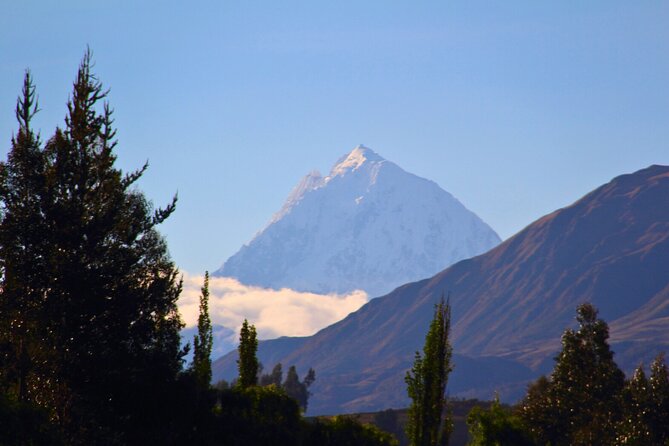
After breakfast, you climb from Lucmabamba toward Llactapata, an archaeological site at about 2,650 meters. The path follows an old Inca route and passes through more forest, with local plants and animals along the way.
Llactapata is not a replacement for Machu Picchu, but it adds useful context. You see terraces and structures that once served a role along the Inca road system. The guide’s explanation matters here because the ruins are less immediately familiar than the main citadel, and the site makes more sense when you understand its position and purpose.
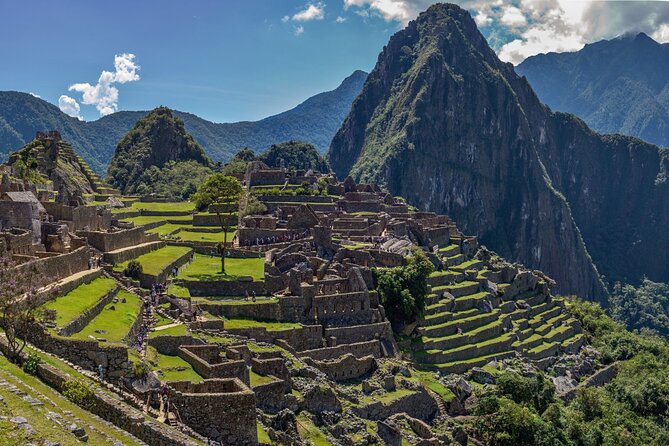
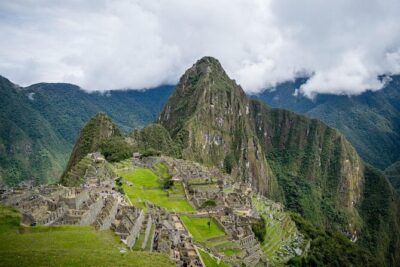
The reward is the view. From Llactapata, you look toward Machu Picchu Mountain and the Vilcanota Canyon. Seeing Machu Picchu from across the valley gives you a sense of its setting before you arrive at the famous ruins themselves.
After the site, you descend toward the Hydroelectric train station, at around 1,950 meters. Equipment and everyone’s larger bags are transported from Lucmabamba to the station, so you are not expected to carry the full load all the way. That small logistical detail can make a big difference after several days on foot.
From Hydroelectric, you continue to Machu Picchu town, also called Aguas Calientes. The walk takes about three hours according to the schedule. You spend the night in a private room with a private bathroom, and breakfast is included. After several nights outdoors, this room is more than a place to sleep. It gives you a chance to shower, charge up, and prepare for the early visit.
You have the evening to eat in town or look around the markets. Lunch in Aguas Calientes on the final day is not included, so keep money aside for it.
Day 5: An early morning inside Machu Picchu
The final morning begins at 5:30 am after breakfast. A tourist bus takes you from Aguas Calientes to Machu Picchu, arriving at roughly 6:00 am. The early start is worthwhile because it places you at the citadel near the beginning of the day, when first light reaches the stonework and the mountain setting is at its most dramatic.
Your professional bilingual guide leads a three-hour visit through the Sanctuary. The value of the guide is not only practical direction. A good explanation can connect the terraces, stonework, ceremonial areas, and Inca society into a story you can follow. Guides such as Jainor have been praised for taking time with questions and moving comfortably between English and Spanish. Ask about your assigned guide at the pre-trip meeting if you have specific language needs.
After the visit, you return to Aguas Calientes. The bus back down is not included and costs $12. You can also walk, but the supplied details only confirm the bus option, so plan your budget around the additional fare.
The train leaves in the afternoon for Ollantaytambo. From there, a vehicle returns you to Cusco’s historic center and the original meeting point. The full return transfer takes much of the day, so do not schedule a tight flight or another major activity that evening.
What the $593 price covers
At $593 per person, the package offers solid value if you want one booking to handle the main pieces of a multi-day trek. Included are private transport from Cusco to Challacancha, the Salkantay and Machu Picchu entrance fees, a bilingual guide, camping gear, meals on the trail, horse and mule support, the Aguas Calientes hotel, the tourist train to Ollantaytambo, and transport back to Cusco.
The dining tent with tables and chairs is a useful inclusion. So are daily tea and snacks, a first-aid kit, and an oxygen bottle. These details do not make the trek easy, but they show that the operator has planned for basic comfort and altitude-related problems.
Budget for the extras. Breakfast on the first day and lunch on the final day are not included, with each meal listed at $30. The Machu Picchu to Aguas Calientes bus costs $12, and a sleeping bag costs $5 per day. Tipping also needs clear discussion. The support crew deserves fair recognition, but the amount and method should be explained during the briefing so the group is not left guessing.
There is a pre-trip briefing at 7:00 pm at the operator’s office one or two days before departure. Use it well. Confirm the packing arrangement, meal needs, tipping expectations, sleeping bag rental, and exactly what you will carry each day.
Fitness, altitude, and packing decisions
You need a strong level of physical fitness for this trip. The biggest challenge is not one isolated climb. It is the combination of an early start, high elevation, several hours of hiking, cold nights, and a major pass on Day 2.
The route begins at 3,400 meters and reaches 4,600 meters before dropping to warmer valleys. You should take the altitude seriously even if you exercise regularly at home. The optional Humantay Lake walk gives you flexibility on Day 1, but it does not remove the need to be ready for the pass.
Your mule allowance is up to 7 kilograms for personal equipment. Keep your daypack light and make sure it holds the items you need while walking. The supplied information confirms camping gear and support animals, but it does not specify a full packing list, so use the briefing to clarify what is provided and what you must bring.
At a minimum, plan around the known conditions: cold at Soraypampa, mosquitoes at Collpapampa, basic toilet facilities, and a possible need for a sleeping bag. The route also moves from dry high country to humid forest, so clothing that handles both temperatures will be more useful than a single heavy layer.
Who will get the most from this trek
I would choose this trip if you want Machu Picchu tied to a real mountain journey rather than reached by train alone. It suits hikers who enjoy changing scenery, local agriculture, camping, and a small group where the guide has time to talk.
It is also a good fit if you value strong food and personal support. The cook, horseman, and guide are central to the experience, not minor background services. The most memorable team combinations have included Rolando with cook Alejandro and horseman José, but you should treat those names as requests, not guarantees.
I would hesitate if you dislike early mornings, steep climbs, humid conditions, insects, or basic camp facilities. I would also think twice if you want an evenly paced trek. The first two days carry most of the physical strain, and the route cannot be changed for personal reasons after booking because the experience is non-refundable.
Should you book the Salkantay and Llactapata trek?
Book it if you want a demanding but varied route with Humantay Lake, the Salkantay Pass, coffee farms, Inca ruins, and Machu Picchu in one five-day plan. The small group, included transport, support animals, meals, and Aguas Calientes hotel make the $593 price reasonable for a well-organized trek.
Choose another option if you want a gentler schedule or more comfort each night. Before paying, confirm the guide, tipping expectations, sleeping bag cost, bus fare, and meal costs. If you are ready for a hard second day and can accept simple camp conditions, this route gives you a memorable way to arrive at Machu Picchu.
FAQ
Where does the trek start?
The meeting point is at Del Medio 123 by the Plaza de Armas in Cusco. The stated start time is 4:00 am.
How large is the group?
The activity has a maximum of nine travelers.
How high does the route climb?
The highest point is Salkantay Pass, at approximately 4,600 meters or 15,092 feet.
Is Humantay Lake included?
The afternoon hike to Humantay Lake on Day 1 is optional. The entrance to the relevant trekking area is included.
Are meals included?
Three breakfasts, three lunches, and three dinners are included, along with tea and snacks each day. Breakfast on Day 1 and lunch on the final day in Aguas Calientes are not included and are listed at $30 each. Vegetarian meals are available.
Is accommodation included?
Camping equipment is included for the trekking nights. The package also includes one night in Aguas Calientes in a private room with a private bathroom, with breakfast.
What transport is included after Machu Picchu?
The tourist train from Machu Picchu to Ollantaytambo and the vehicle from Ollantaytambo to Cusco are included. The bus from Machu Picchu down to Aguas Calientes costs an additional $12.
More Choquequirao and Lares Treks
- Choquequirao Trek 4 days and 3 nights
★ 5.0 · 81 reviews - Ancascocha Trek To Machu Picchu 4 Days And 3 Nights
★ 5.0 · 77 reviews - Classic Choquequirao Trek – 5 Days / 4 Nights
★ 5.0 · 52 reviews - 4-Day Lares Trek to Machu Picchu from Cusco
★ 5.0 · 47 reviews
Just added around Cusco
- Cusco: Via Ferrata, Skybike, and Rappel Adventure★ 5.0 · 3 reviews
- From Cusco: Maras and Moray and Ollantaytambo Tour★ 5.0 · 3 reviews
- Cusco: Sacred Valley Day Trip with Maras & Moray Salt Mines★ 5.0 · 3 reviews
- Valle Sur Cusco | half day★ 4.3 · 3 reviews
- Cusco: Rainbow Mountain Tour at Sunset Without the Crowds★ 4.7 · 3 reviews
- IN MACHU PICCHU: Private Tour Guide Service★ 5.0 · 3 reviews
- Salkantay trek to Machu Picchu – 5D/4N – Premium★ 3.3 · 3 reviews
- Full-Day Condor Viewpoint & Inca Sites Tour★ 5.0 · 3 reviews
Salkantay Treks, compared.
Salkantay Trek 4 Days to Machu Picchu by Glamping Sky Lodge Dome
Read our review →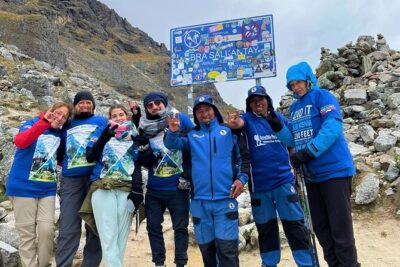
Salkantay Trek To Machu Picchu 5 Days And 4 Nights
Read our review →
5-Day: Salkantay Trek to Machupicchu and Humantay Lake
Read our review →
Browse the lists this tour appears in