
Reviewed · SALKANTAY TREKS
Machu Picchu: 5-Day Salkantay Trek with Panoramic Train
The best part of this five-day Salkantay Trek is the changing scenery. You begin beside turquoise Humantay Lake and snow-covered peaks, cross the 4,630-meter Salkantay Pass, then walk through cloud forest, coffee country, and the Urubamba Valley before reaching Machu Picchu. I especially like the first-night glamping camp beneath Salkantay and the third-night camp at Llactapata, where Machu Picchu appears across the valley.
I also like the human touches: hot coffee or coca tea before the morning hikes, meals prepared by a dedicated cooking team, and a Pachamanca feast with a local coffee visit. The main caution is altitude and effort. Day one reaches 4,200 meters, day two climbs higher, and some days involve several hours of walking, so this is not a casual sightseeing trip.
In This Review
- Key things to know before you book
- What the $655 price really covers
- Day one: Humantay Lake and a cold night at high altitude
- Day two: crossing the 4,630-meter Salkantay Pass
- Day three: coffee, Pachamanca, and your first view of Machu Picchu
- Day four: the railway walk to Aguas Calientes
- Day five: Machu Picchu before the return train
- Camps, food, and support on the trail
- Who should choose this Salkantay trek?
- Should you book the $655 Salkantay Trek?
- FAQ
- How long is the Salkantay Trek to Machu Picchu?
- What is the highest point of the trek?
- Is Humantay Lake included?
- Where do you sleep during the trek?
- Is Machu Picchu entry included?
- Is the panoramic train included?
- Are Huayna Picchu and Machu Picchu Mountain included?
Key things to know before you book
- 4,630-meter Salkantay Pass: The trek reaches its highest point on day two, after a steep morning climb.
- Humantay Lake at 4,200 meters: The turquoise water makes a memorable first-day goal, but altitude can hit hard.
- Llactapata campsite: Sleep with a distant view of Machu Picchu before entering the citadel.
- Pachamanca and coffee: Day three adds a genuine food and farming experience to the walking route.
- Small groups of up to 16: Guides can offer encouragement and adjust the pace more easily than on a large departure.
- Panoramic return by train: You return toward Ollantaytambo on a Vistadome or 360° train before a private van reaches Cusco.
What the $655 price really covers
At $655 per person, this trek offers a lot for five days. The price includes a professional guide, entrance fees for the Salkantay route and Machu Picchu, transport from Cusco, the return bus to the citadel, the panoramic train, camping equipment, a hotel night, meals, snacks, water, and support from muleteers and cooks.
You also receive a duffle bag allowance of up to 7 kilograms, a sleeping pad, pillow, rain poncho, and hand towels. Safety equipment includes a first-aid kit, satellite phone, and oxygen tank. Those details matter on a remote, high-altitude route, where carrying every item yourself would make the walk tougher.
The value is strongest if you want a supported trek rather than a bare-bones camping trip. The cooking team prepares breakfast, lunch, and dinner, and several meals are described as unusually good, with vegetarian choices available. You still need to budget for a sleeping bag, inflatable mattress, and trekking poles if you want to rent them, plus personal expenses and cash along the way.
This is also a practical choice if you prefer not to organize separate transport, permits, camps, and Machu Picchu entry. The tradeoff is that the activity is non-refundable, so you need to be confident about your dates and fitness before paying.
More train routes to Aguas Calientes:
- Cusco: Machu Picchu 2-Day Inca Trail with Panoramic Train
★ 4.9 · 260 reviews - The First Class Machu Picchu Train by Inca Rail
★ 4.0 · 182 reviews - Excursion to the Sacred Valley and Machu Picchu by Panoramic Train
★ 5.0 · 45 reviews
Day one: Humantay Lake and a cold night at high altitude
Your day starts early, with pickup around 4:30 a.m. from a hotel or Airbnb near Cusco’s historic center. A three-hour drive takes you to Mollepata, where you have breakfast and meet the trekking team.
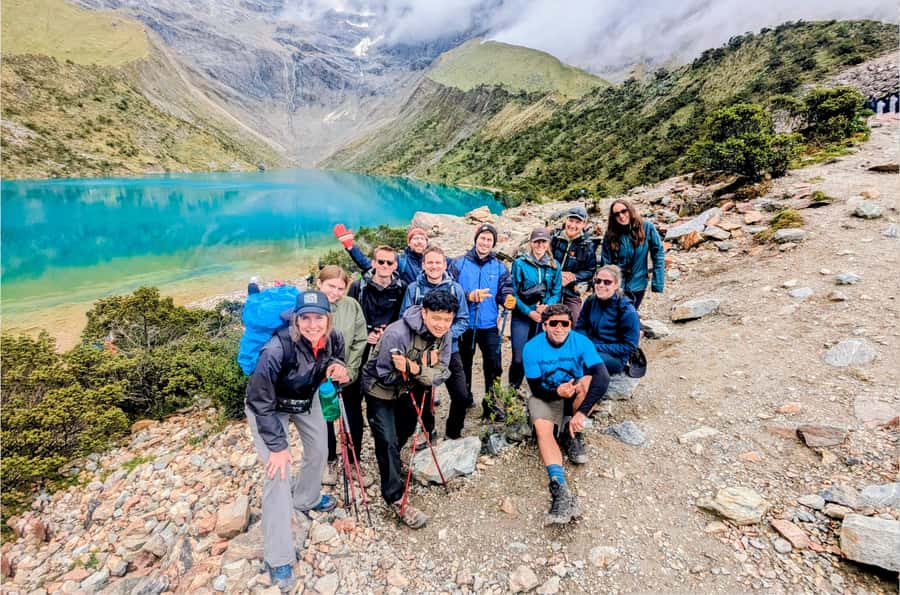
From the trailhead, the hike to Humantay Lake takes about three hours. The destination is famous for good reason: the water has a striking blue-green color, framed by steep mountain slopes and glacial peaks. At 4,200 meters, though, the lake is not an easy stroll. The thin air can make a steady uphill walk feel much harder than the distance suggests.
Take this first climb slowly. Guides such as Cesar, Roger, José, and others have been praised for watching the group closely, offering breaks, checking water intake, and giving practical reminders about warm layers, sunscreen, and bug spray. Altitude sickness is a real concern here, not a minor inconvenience. One person reported severe symptoms during the trek, while another found acetazolamide helpful. Medication decisions belong with your doctor, but acclimatization and a cautious pace are essential.
After time at the lake, you descend to Soraypampa for lunch. The route then continues with a gentler two-hour climb to the Salkantay Glamp campsite at about 4,150 meters. The first night is cold, but the setting is a highlight. Large yurts or comfortable tents place you beneath the mountain, with stars overhead when the sky is clear.
This is a demanding opening day. You start before dawn, spend hours in a vehicle, climb to a high lake, and finish at an even higher camp. The reward is a strong first taste of the route, but you should not arrive expecting a relaxed introduction.
Day two: crossing the 4,630-meter Salkantay Pass
Fresh coffee or coca tea begins the second morning. From camp, you hike toward Salkantay Pass, the highest point of the entire route at 4,630 meters.
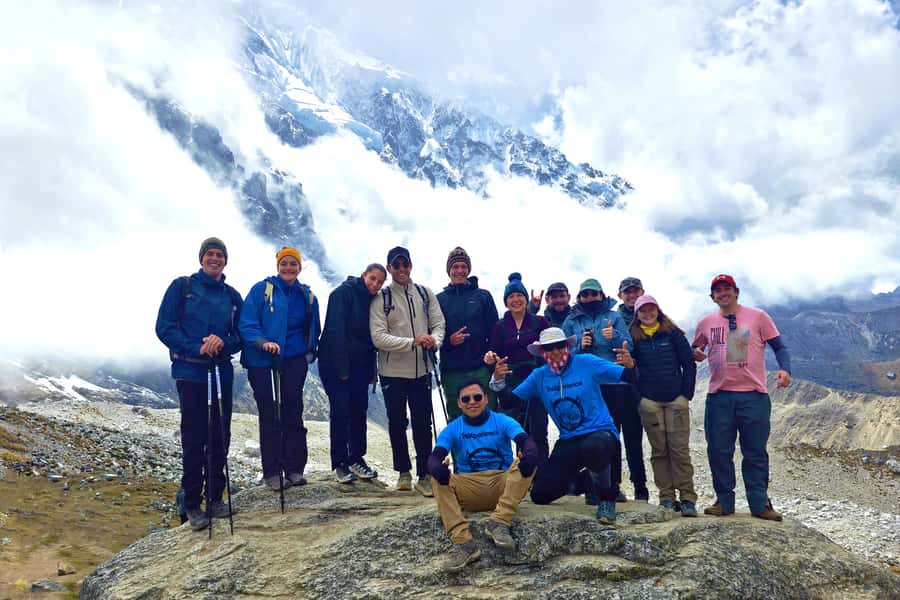
This is the trek’s main physical test. The air is thin, the climb is steady, and the weather can change quickly at high elevation. At the pass, you can look across a dramatic world of rock, ice, and mountain ridges. A nearby glacial lake adds another worthwhile stop before the long descent begins.
After lunch at Wayracmachay, the character of the route changes. You leave the cold highlands and walk downward toward cloud forest. Over the course of the afternoon, the air becomes warmer and the vegetation thicker. That shift is one of the Salkantay route’s great pleasures: you are not seeing one fixed type of scenery for five days.
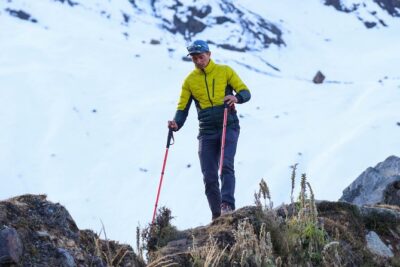
The descent lasts several hours and can be tiring in a different way from the morning climb. Knees and feet take more strain, especially if you are not used to long downhill walks. Trekking poles are not included, but they can be rented and may be useful here.
The night is spent at Collpapampa, around 2,770 meters, in comfortable Andean huts. Compared with the high camp, this should feel warmer and more sheltered. The route has already taken you from glacial terrain to the edge of the forest in only two days.
Day three: coffee, Pachamanca, and your first view of Machu Picchu
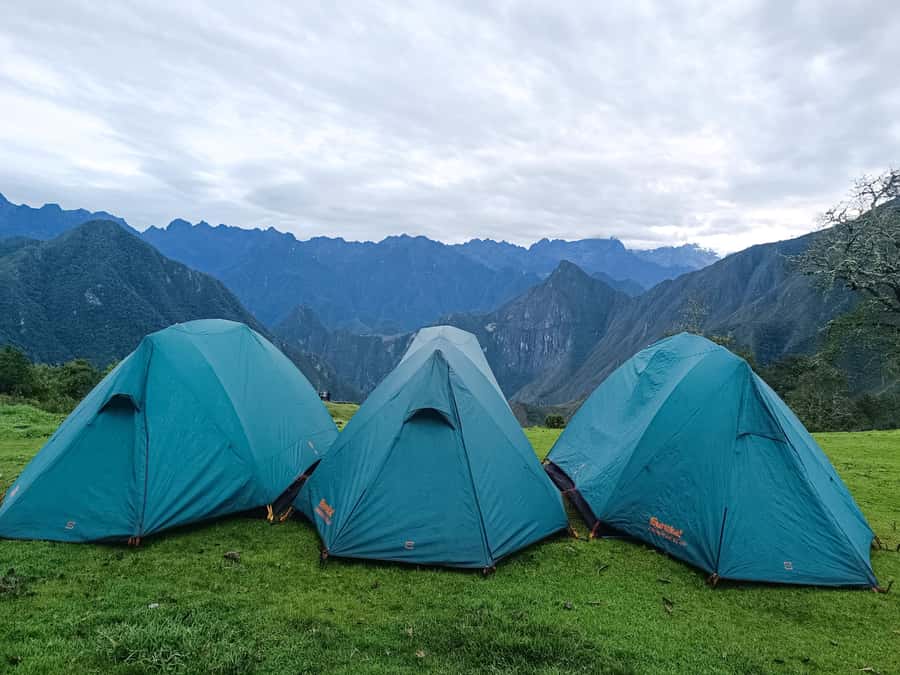
Day three brings the trek’s most distinctive cultural stop. After breakfast, you continue through the warmer foothills, crossing wooden bridges and passing waterfalls, plantations, and small communities on the way to Lucmabamba at about 2,000 meters.
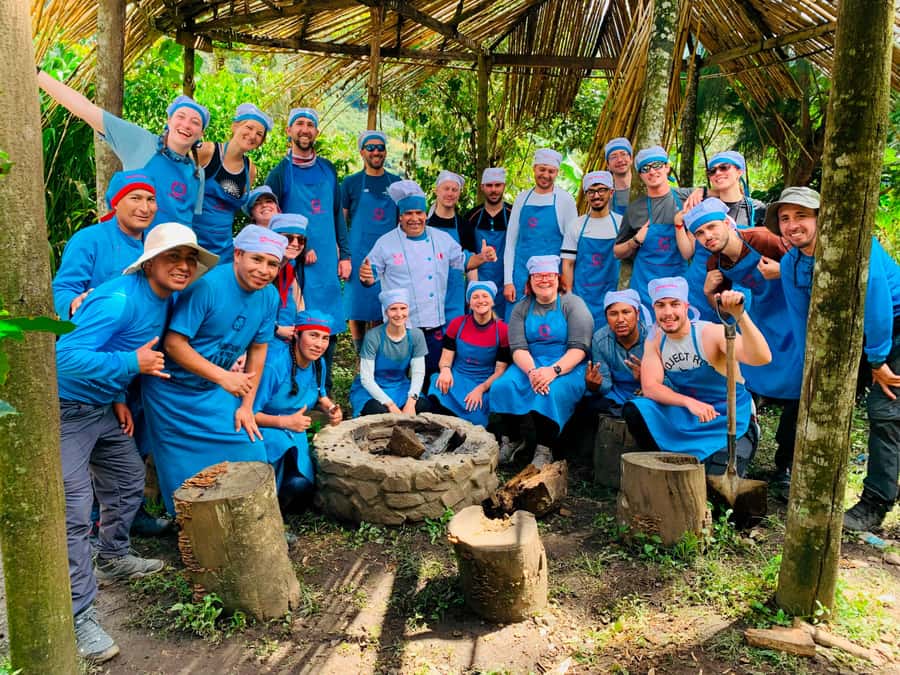
Here, you take part in a Pachamanca cooking experience. Pachamanca is a traditional Andean method of cooking food with heated stones in an earth oven. This is more meaningful than simply sitting down to another included meal because you see a local cooking tradition as part of the journey.
The coffee visit adds another useful connection to the area. You taste freshly brewed coffee and learn about local production at farms near Lucmabamba. The contrast is pleasing: the trek begins in an icy mountain world, then moves into a zone where coffee and tropical plants thrive.
After lunch and the food experience, you follow an Inca Trail section for roughly three hours toward Llactapata. This climb can feel awkward after a full morning and meal, and one practical improvement would be to place the main hike before the Pachamanca feast. Still, the route has a fine payoff.
Llactapata is an Inca site at about 2,750 meters, and the camp is positioned with a distant view of Machu Picchu. Waking up with the citadel in sight is one of the most memorable parts of the trip. You have not yet entered Machu Picchu, but the destination is no longer an idea on a map. It is across the valley.
The camps and food are major strengths here. The cooking teams have been praised for producing several dishes at mealtimes, including strong vegetarian choices. Guides and support staff also provide snacks, hot drinks, and water refills, which can make a noticeable difference after hours on foot.
More ways to reach Machu Picchu:
- From Cusco: Full-Day Group Tour of Machu Picchu
★ 4.7 · 1,767 reviews - Machu Picchu Day Trip from Cusco
★ 4.5 · 1,644 reviews - Machu Picchu: Full-Day Tour from Cusco with Optional Lunch
★ 4.6 · 927 reviews - Cusco: 4-Day Inca Trail to Machu Picchu with Accommodation
★ 4.8 · 432 reviews
Day four: the railway walk to Aguas Calientes
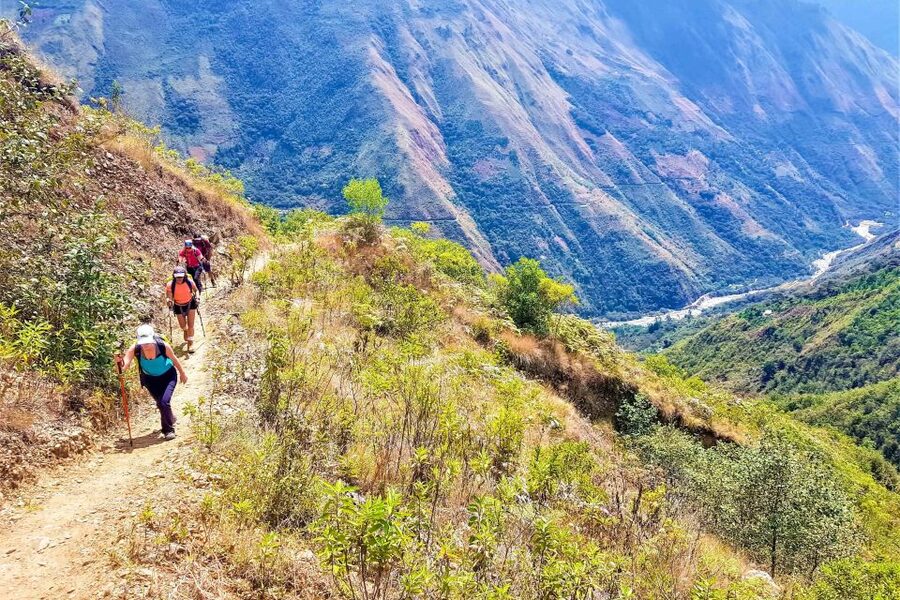
Start day four with coffee and a view from Llactapata. You then descend for about two hours to the hydroelectric station, followed by a final brunch with the team.
From the station, the route follows the railway and the Urubamba River for around three hours toward Aguas Calientes. This section is less wild than the high mountain trail, but it gives you time to appreciate the river valley and the approach to Machu Picchu. Walking beside railway tracks also means you should pay attention to instructions and keep the group together.
A stop at Mandor Botanical Gardens adds orchids and birdlife to the day. It is a welcome pause before the final walk into town. By now, the route has moved from high-altitude hiking to warm, humid valley conditions, so keep insect repellent handy and change into lighter clothing if needed.
In Aguas Calientes, you check into a three-star hotel. This is your first proper indoor night after the camps, and the timing is good. You can explore town, rest, or visit the hot springs before dinner at a local restaurant.
Do not underestimate this day simply because the hardest pass is behind you. The descent from Llactapata and the three-hour railway walk come after several demanding days. Comfortable shoes, foot care, and a sensible pace remain important.
Day five: Machu Picchu before the return train
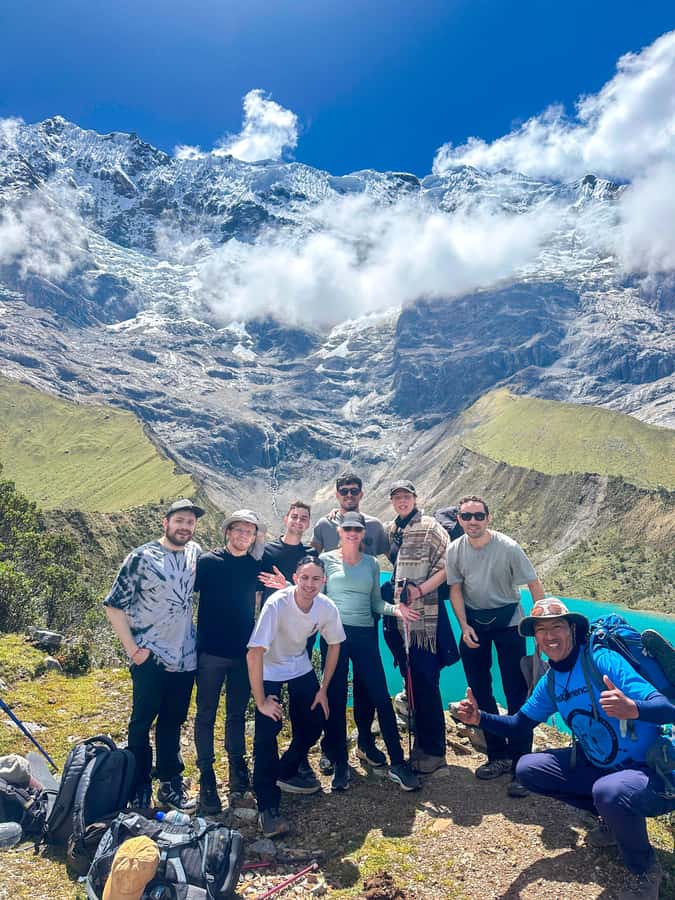
The final morning begins early. After breakfast, you take one of the first buses to Machu Picchu, aiming for an early visit and the chance to see morning light over the citadel.
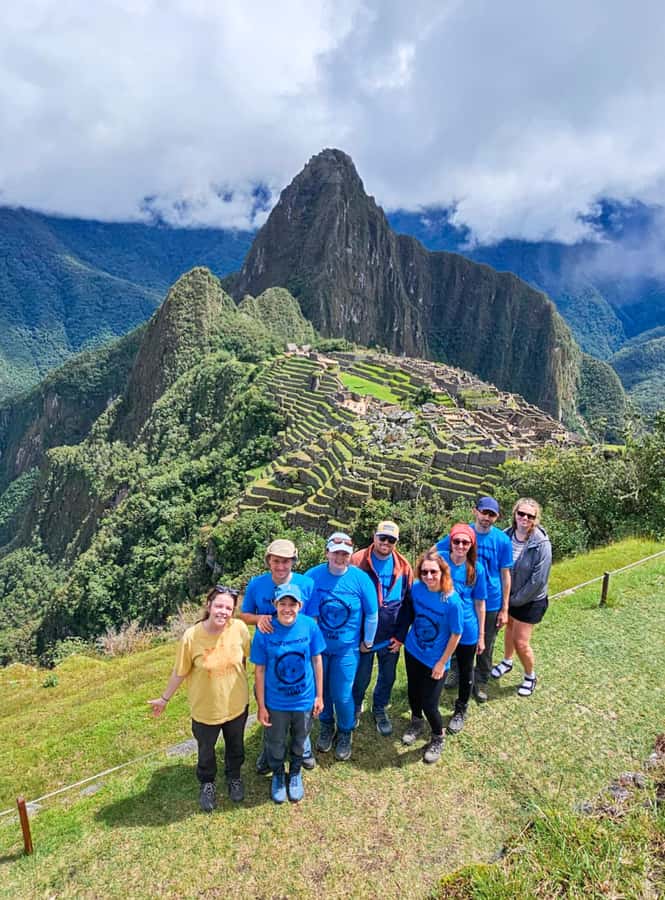
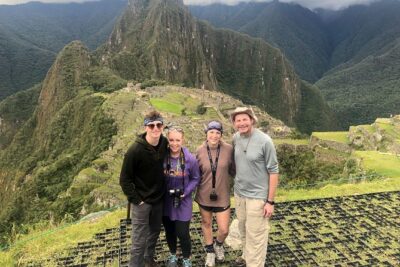
A guided tour lasts around two to three hours. This is where your guide adds real value, explaining the site and helping you understand what you are seeing rather than leaving you to wander through a maze of stone walls. After the guided portion, you have time to explore independently.
You can also hike Huayna Picchu or Machu Picchu Mountain, but either pass must be booked ahead of time and is not included in the base price. If one of those climbs is important to you, arrange it before the trek rather than hoping to add it at the gate.
After Machu Picchu, you return to Aguas Calientes for lunch and board the panoramic Vistadome or 360° train to Ollantaytambo. Large windows and broad views make this a pleasant final chapter, especially after several days of walking. A private van continues to Cusco, with arrival expected around 7:30 p.m.
That makes day five a long one. You have an early start, a major archaeological visit, a meal, a train journey, and a road transfer. It is efficient, but you may feel ready for bed by the time you reach Cusco.
Camps, food, and support on the trail
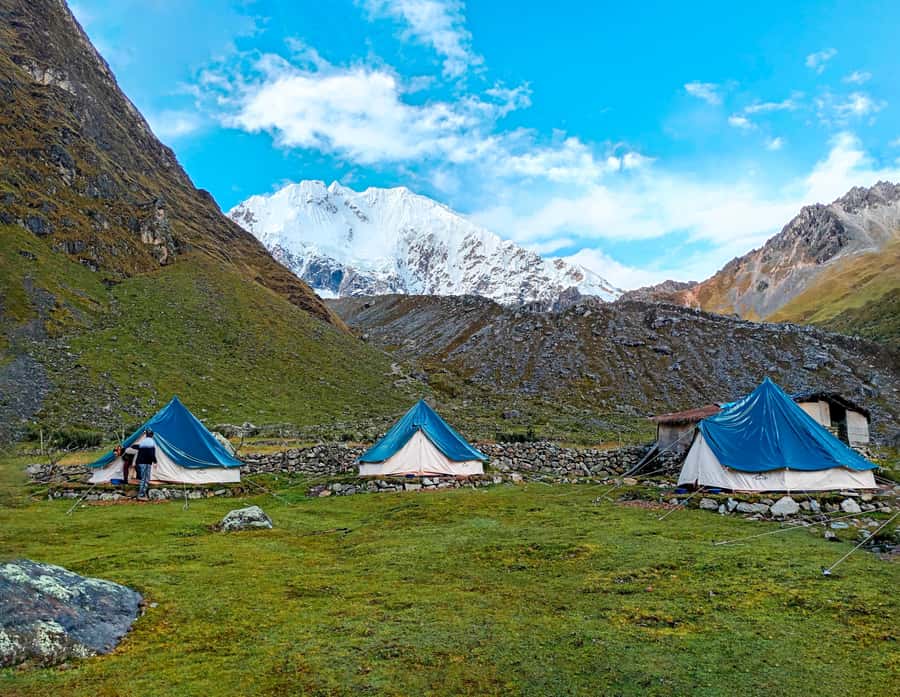
The accommodation is more comfortable than a basic trek. You spend two nights camping, one night glamping at Salkantay, and one night in a three-star hotel in Aguas Calientes. The first high camp uses large yurts or similar tents, while later huts and the Llactapata camp give the route a different feel.
You receive a sleeping pad and pillow, but not a sleeping bag. A sleeping bag and inflatable mattress can be rented. Bring warm layers for the high camps, even if Cusco or Aguas Calientes feels mild.
The meals are one of the strongest reasons to choose a supported departure. Four breakfasts, three lunches, three dinners, snacks, and water are included. Guides and cooks have been praised for making generous, varied food and for keeping meals coming after long walks. The Pachamanca and coffee visit also give the food a local connection rather than making the trek feel like a moving hotel dining room.
Muleteers carry camping gear, while you use the included duffle allowance for personal items. A daypack of no more than 25 liters is recommended, since larger bags cannot be taken into Machu Picchu. Pack only what you need for the day, and leave space for water, rain gear, sun protection, medication, and a head torch.
Who should choose this Salkantay trek?
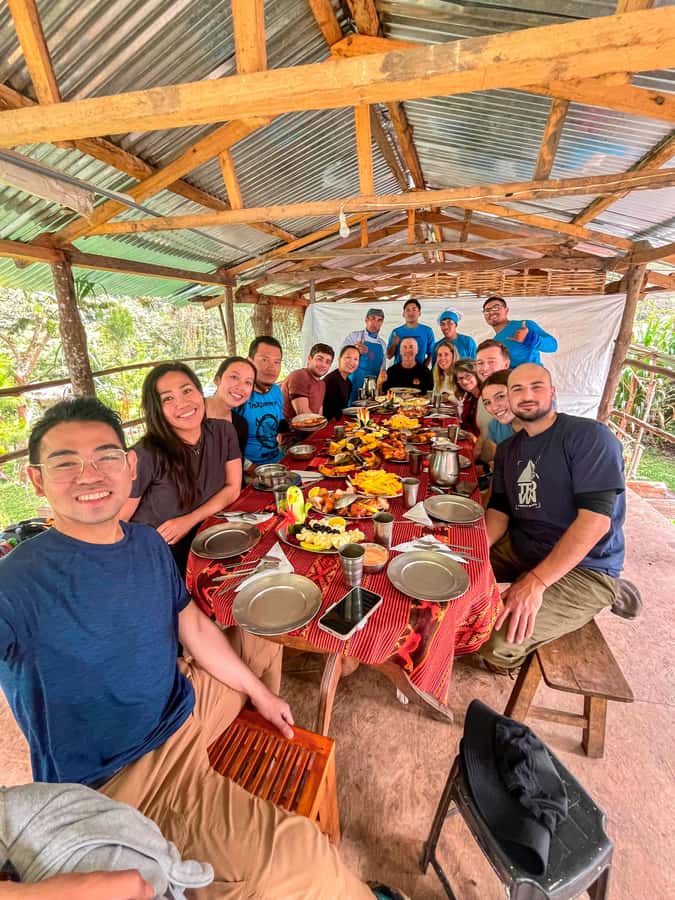
This route suits you if you want a physically demanding way to reach Machu Picchu, with support and cultural stops built in. You should be comfortable with several hours of walking, steep climbs, long descents, and high altitude. One guide advised that casual hikers can manage the trek if they are used to walks of around 25 kilometers, but motivation matters as much as speed.
The small group limit of 16 is useful. A guide can give encouragement, allow short rests, and sometimes let a stronger or slower walker adjust position without making the whole group feel rushed. Several guides, including Cesar, Roger, José, Miguel, and Gilbert, have been praised for humor, patience, historical explanations, and personal care.
This is not suitable for pregnant people, wheelchair users, or people with mobility, heart, or back problems. Children must be accompanied by an adult. Dietary needs can be accommodated if you mention them when booking.
For a smoother trip, bring your passport, hiking shoes, rain gear, warm layers, sun protection, insect repellent, toiletries, personal medicine, tissues or toilet paper, sanitizer, cash, and spare batteries. Cash is especially useful in Peru, so do not assume every stop will accept a card.
Should you book the $655 Salkantay Trek?
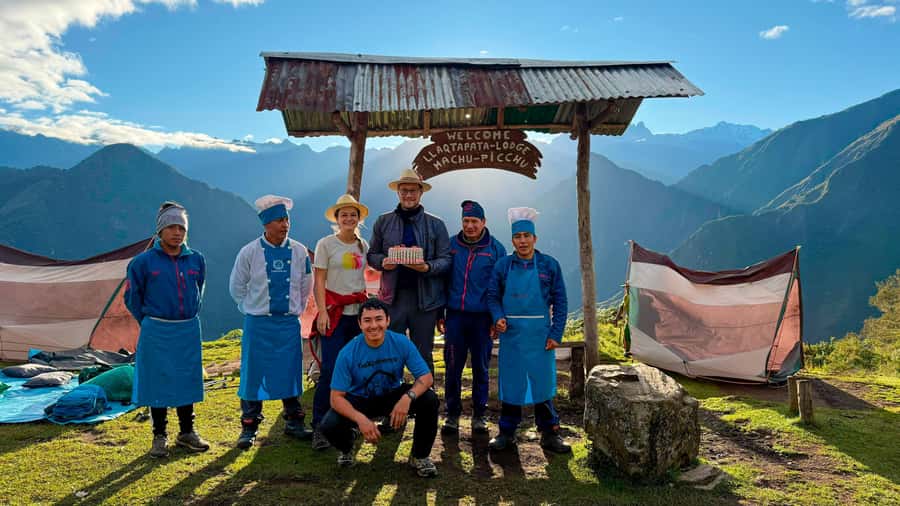
I would choose this trek if you want more than a direct visit to Machu Picchu. The route gives you glacial mountains, Humantay Lake, the Salkantay Pass, forest, coffee, Pachamanca, an Inca site, and a railway walk before the citadel. The camps are thoughtfully placed, and the food and staff support reduce much of the stress that can come with a five-day trek.
I would hesitate if you dislike early starts, high altitude, cold camping, or long walking days. The itinerary is full, and the non-refundable booking policy means you should be sure about your health, dates, and fitness first.
For an active visitor who wants strong logistics without losing contact with Peru’s food, farms, mountains, and local traditions, the value is excellent. Just train for hills, plan for altitude, bring cash, and reserve any Huayna Picchu or Machu Picchu Mountain permit well ahead.
FAQ
How long is the Salkantay Trek to Machu Picchu?
The activity lasts five days, beginning with an early pickup in Cusco and ending with a return to Cusco around 7:30 p.m. on day five.
What is the highest point of the trek?
The highest point is Salkantay Pass at 4,630 meters.
Is Humantay Lake included?
Yes. The first day includes a hike to Humantay Lake at approximately 4,200 meters, followed by a descent and climb to the Salkantay glamping campsite.
Where do you sleep during the trek?
You spend two nights camping, one night glamping at Salkantay, and one night in a three-star hotel in Aguas Calientes.
Is Machu Picchu entry included?
Yes. The Machu Picchu entrance ticket and round-trip bus transportation to the citadel are included.
Is the panoramic train included?
Yes. The return journey includes a panoramic Vistadome or 360° train to Ollantaytambo, followed by a private van to Cusco.
Are Huayna Picchu and Machu Picchu Mountain included?
No. Passes for Huayna Picchu and Machu Picchu Mountain are additional and must be booked in advance.
More Treks From Cusco
- From Cusco: 7 Lakes Ausangate Trek with Breakfast and Lunch
★ 4.8 · 360 reviews - From Cusco: 2-Day Inca Trail to Machu Picchu
★ 4.2 · 244 reviews - Machu Picchu: Inca Trail 2-Day Overnight Guided Tour
★ 4.9 · 203 reviews - Cusco: Rainbow Mountain Tour and Red Valley Hike (Optional)
★ 4.7 · 149 reviews
More Salkantay Treks
- Salkantay Trek Challenge – 3 Days / 2 Nights
★ 5.0 · 101 reviews - Small Group 5 Days Salkantay and Machu Picchu by Llactapata Tour
★ 5.0 · 88 reviews - Salkantay Trek 4 Days to Machu Picchu by Glamping Sky Lodge Dome
★ 5.0 · 68 reviews - Salkantay Trek to Machu Picchu in 4 days
★ 4.5 · 50 reviews
Just added around Cusco
- Cusco: Via Ferrata, Skybike, and Rappel Adventure★ 5.0 · 3 reviews
- From Cusco: Maras and Moray and Ollantaytambo Tour★ 5.0 · 3 reviews
- Cusco: Rainbow Mountain Tour at Sunset Without the Crowds★ 4.7 · 3 reviews
- Cusco: Sacred Valley Day Trip with Maras & Moray Salt Mines★ 5.0 · 3 reviews
- Valle Sur Cusco | half day★ 4.3 · 3 reviews
- IN MACHU PICCHU: Private Tour Guide Service★ 5.0 · 3 reviews
- Salkantay trek to Machu Picchu – 5D/4N – Premium★ 3.3 · 3 reviews
- Guide in Machu Picchu★ 5.0 · 3 reviews
Salkantay Treks, compared.
Small Group 5 Days Salkantay and Machu Picchu by Llactapata Tour
Read our review →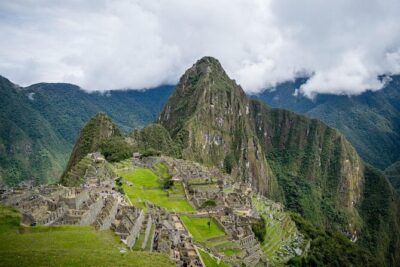
Salkantay Trek 4 Days to Machu Picchu by Glamping Sky Lodge Dome
Read our review →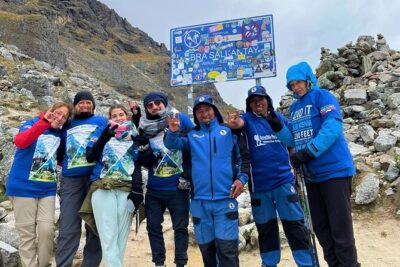
Salkantay Trek To Machu Picchu 5 Days And 4 Nights
Read our review →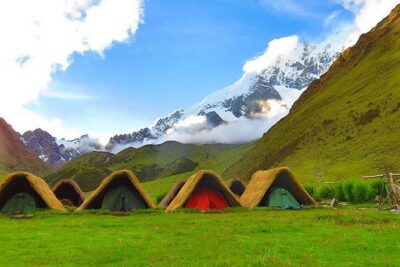
5-Day: Salkantay Trek to Machupicchu and Humantay Lake
Read our review →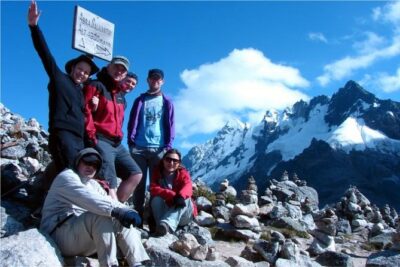
Browse the lists this tour appears in