
Reviewed · SALKANTAY TREKS
From Cusco: Salkantay Trek to Machu Picchu 5D/4N or 4D/3N
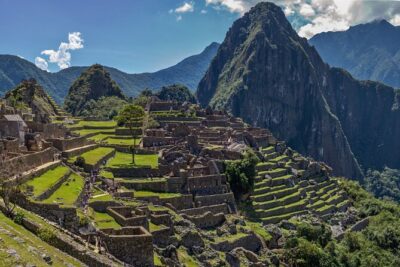
The big draw here is the change of scenery: icy high mountains, a turquoise glacial lake, coffee and fruit country, hot springs, and Machu Picchu all fit into one demanding route. You reach the citadel after walking for four or five days, rather than simply arriving by train.
I like the Humantay Lake and Salkantay Pass combination, two powerful Andean stops on the same trek. I also like the practical support: a horse carries up to 6 kilos of your belongings, cabins replace tents on the mountain nights, and cook Edgar prepares the meals. The main caution is the altitude and the long daily walks, plus several important costs that are not included in the advertised $50 price.
In This Review
- Key points at a glance
- What the $50 price really means
- Day one: from Cusco to Humantay Lake
- Day two: the 4,630-meter Salkantay Pass
- Day three: rainforest trails and the four-day split
- Day four: Llactapata and the walk to Aguas Calientes
- Day five: entering Machu Picchu early
- Food, cabins, luggage, and support
- Who should choose the four-day or five-day route?
- Tickets and circuit checks before you pay
- Should you book the Salkantay Trek?
- FAQ
- How long is the Salkantay Trek to Machu Picchu?
- What is the highest point on the trek?
- How high is Humantay Lake?
- Is Machu Picchu included?
- Which Machu Picchu circuit is included?
- Are meals included?
- Is accommodation included?
- Can I bring less luggage on the trail?
- Are vegetarian and vegan meals available?
- Are sleeping bags and trekking poles included?
Key points at a glance
- Humantay Lake at 4,200 meters: A steep side walk leads to bright turquoise water surrounded by high Andean peaks.
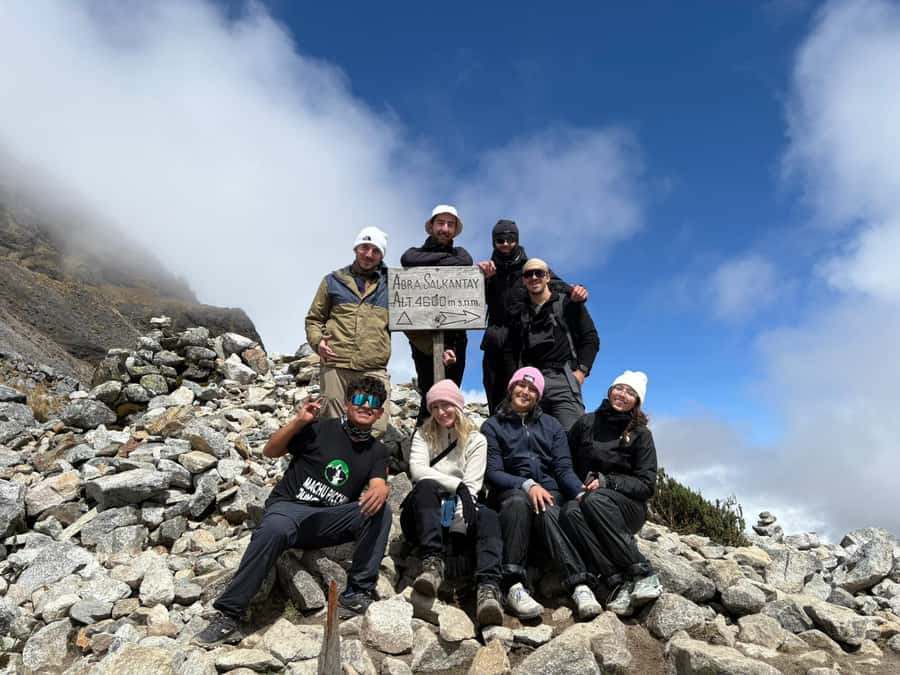
- Salkantay Pass at 4,630 meters: The route reaches its highest point on day two, followed by a long descent through changing climates.
- Two versions of the trek: The 5-day trip adds Cocalmayo hot springs and a slower extra night; the 4-day trip cuts out that stop and uses transport from La Playa to Hidroeléctrica.
- Cabins instead of mountain tents: The 5-day plan includes three cabin nights, while the 4-day plan includes two, plus one hotel night in Aguas Calientes.
- Machu Picchu circuit matters: Circuit 2A or 2B offers the fullest visit, while circuits 3B and 1B provide more limited routes and viewpoints.
- Helpful support on the trail: Guides speak English, Portuguese, and Spanish, and the service team includes guide Fernandez, chef Edgar, and helper Eulogio.
What the $50 price really means
The advertised rate of $50 per person looks remarkably low for a five-day trek, so you should treat it as a starting price rather than your full trip budget. Several required or likely costs sit outside that figure.
You may need to pay for the Humantay entrance fee, listed as PEN 20, and the Machu Picchu entrance. The information gives both PEN 152 and USD 60 in different places, so confirm the current amount and exactly how it will be collected before paying. The operator says it will try to reserve your ticket through the Peruvian government system, with payment handled at the briefing in Cusco.
You also pay separately for the bus between Aguas Calientes and Machu Picchu if you choose it, listed as $12 each way. You can walk up and down instead, but the climb to the main gate already takes about an hour, and you may prefer to save your legs for the citadel visit.
Other possible extras include a sleeping bag at $15, trekking poles at $10, the Humantay fee, hot springs entry and transport on the five-day plan, and transport from La Playa to Hidroeléctrica on the four-day plan. Your first breakfast, final lunch, and final dinner are also excluded.
The value improves because the package includes private transport to the trailhead, meals, a chef, cooking equipment, a guide, cabins, a hotel night, and a 6-kilo duffel allowance. Still, calculate the total with current entrance fees and transport before deciding. A cheap headline price is useful only if you know what you will actually spend.
More ways to reach Machu Picchu:
- From Cusco: Full-Day Group Tour of Machu Picchu
★ 4.7 · 1,767 reviews - Machu Picchu Day Trip from Cusco
★ 4.5 · 1,644 reviews - Machu Picchu: Full-Day Tour from Cusco with Optional Lunch
★ 4.6 · 927 reviews
Day one: from Cusco to Humantay Lake
The day begins early, with pickup at about 4:30 a.m. from your hotel or Airbnb in Cusco’s historic center. A van takes you toward Mollepata and the trailhead, with breakfast included after the first part of the drive.
The route then leads toward Soraypampa at about 3,800 meters. The first major walk takes roughly three hours. That may sound manageable on paper, but the altitude makes every uphill section slower. Keep your pace steady, drink water, and do not spend your energy trying to keep up with the fastest person in the group.
After lunch, you walk for about two hours to Humantay Lake at 4,200 meters. The water is the visual prize of the first day, with a striking blue-green color beneath the high mountain peaks. The climb can feel tough, especially if you have only recently arrived in Cusco.
You return to the trail and continue for roughly two more hours to the first cabin campsite. Dinner follows, and the night sky can be a fine bonus when the weather is clear. Coca tea is served in the morning, while afternoon tea time includes items such as popcorn, cookies, chocolate, and coffee.
The first day combines a long transfer with about seven hours of walking, including the lake visit. It is an attractive start, but not a gentle one. Pack only what you need in your day bag and use the duffel service for heavier items.
Day two: the 4,630-meter Salkantay Pass
Day two is the hardest and highest part of the route. After coca tea or fresh coffee, you hike for about three hours toward Salkantay Pass, reaching 4,630 meters.
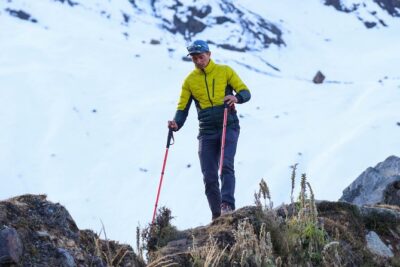
This is where the trek earns its reputation. You get wide mountain views, a nearby lake, and the satisfaction of reaching the highest point on the route. The air is thin, and the cold can be sharp, so bring warm layers even if the lower valleys later feel hot.
After the pass, the route drops for around three hours to Wayracmachay, where lunch is served. The descent is not automatically easy. Loose or uneven ground can tire your knees, and trekking poles are useful if you have them. They can be rented for $10 for the full trip.
The afternoon continues downhill for about three more hours. The scenery shifts as the route loses altitude, moving from high mountain terrain toward warmer country. You finish near Chayllay or Collpapampa, at about 2,770 meters, close to a local village.
This day can take close to nine hours of walking, depending on the group and trail conditions. If you are choosing between the four-day and five-day versions, remember that both include this demanding section. The extra day does not remove the pass. It gives you a more relaxed final approach afterward.
Day three: rainforest trails and the four-day split
On the five-day itinerary, day three takes you through the Santa Teresa area toward Lucmabamba. The route crosses wooden bridges, passes waterfalls, and runs by plantations of bananas, passion fruit, and avocados.
This is one of the most enjoyable changes in scenery on the trek. After the cold and exposed high country, the rainforest feels warmer and more intimate. You see working agricultural areas rather than only famous ruins and viewpoints.
The walk continues to La Playa, where a buffet lunch is served. Five-day hikers then continue with plans for the Cocalmayo hot springs. Entry costs PEN 10, and transport costs depend on how many people are going. The pools offer a chance to rest after two major days on foot, though you should confirm the exact transport arrangement at the briefing.
The evening includes dinner and a group bonfire before you return to your cabin. This extra day is the main reason to choose the five-day version. You get more time in the warmer valley, a hot-springs stop, and less pressure on the final approach.
Four-day hikers leave the route at La Playa and say goodbye to the longer itinerary. Transport to Hidroeléctrica costs extra, with the final price depending on the number of people sharing it. This saves a night and shortens the trip, but it also removes the hot springs and part of the walking experience.
More Salkantay departures:
- Salkantay Trek Challenge – 3 Days / 2 Nights
★ 5.0 · 101 reviews - Small Group 5 Days Salkantay and Machu Picchu by Llactapata Tour
★ 5.0 · 88 reviews - Machu Picchu: 5-Day Salkantay Trek with Panoramic Train
★ 5.0 · 79 reviews - Salkantay Trek 4 Days to Machu Picchu by Glamping Sky Lodge Dome
★ 5.0 · 68 reviews
Day four: Llactapata and the walk to Aguas Calientes
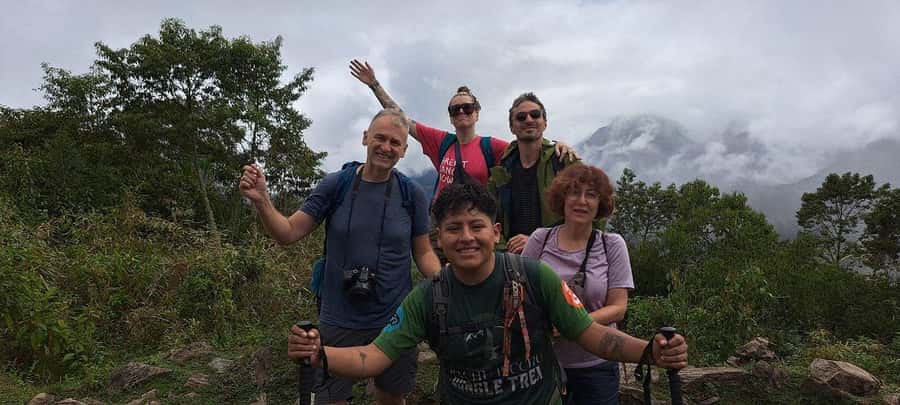
The five-day version begins with breakfast in Lucmabamba, followed by a two-hour climb to Llactapata at roughly 2,700 meters. The archaeological site looks toward Machu Picchu, giving you an early view of the destination before you reach it.
That sight has real value. Machu Picchu is not a surprise that appears only at the end of a train ride. You see where you are heading and understand how the route connects the mountain valleys to the citadel.
From Llactapata, you descend for about two hours to Hidroeléctrica, where lunch is served. The descent can be hard on tired legs, and the warm climate means you will want water, sun protection, and light clothing.
The final walk to Aguas Calientes follows the railway area and takes several hours. Once there, you check into a hotel and meet the group for dinner at about 7:00 p.m. This overnight hotel is a welcome change from the mountain cabins, especially before the early Machu Picchu visit.
For the four-day version, this stage is reached sooner after transport from La Playa to Hidroeléctrica. The route to Aguas Calientes is therefore quicker, but you trade away the Lucmabamba to Llactapata section and the extra time at Cocalmayo.
Day five: entering Machu Picchu early
The final morning starts with breakfast in Aguas Calientes. You then climb stairs for about an hour to the main gate, aiming to arrive near 6:30 a.m. If you have paid for the bus, the ride up costs $12 per person and saves the climb. The return bus is another $12.
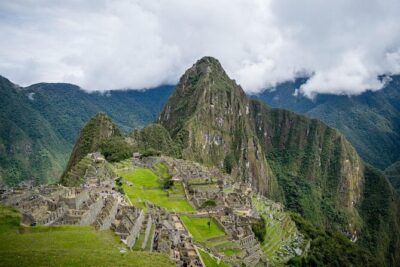
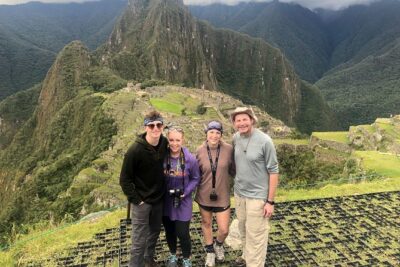
Inside Machu Picchu, the guided visit lasts about two and a half hours. The included guidance is listed for Circuit 2A or 2B, subject to ticket availability. These are the most complete choices in the information provided and usually matter most if you want a broad visit rather than a quick viewpoint and photo.
You need to check your actual circuit before booking. Circuit 2A or 2B is described as a full visit and the most popular option. Circuit 3B covers the lower area, middle viewpoint, and sacred temples. Circuit 1B focuses on the upper terrace and the classic photo.
Those routes are not interchangeable. If seeing the famous wide view is your main goal, Circuit 1B may meet that need. If you want more of the site, ask specifically for 2A or 2B and have the operator confirm what is available in writing.
After your visit, your return depends on your reservation. The car option requires you to walk back to Hidroeléctrica, where transport waits for the journey to Cusco. The other option uses a train from Aguas Calientes to Ollantaytambo, followed by a local car to Cusco. Train times can be purchased according to availability.
Do not assume the Machu Picchu visit ends the day early. The return journey is long, and the exact departure time controls your schedule. Confirm all connections during the briefing.
Food, cabins, luggage, and support
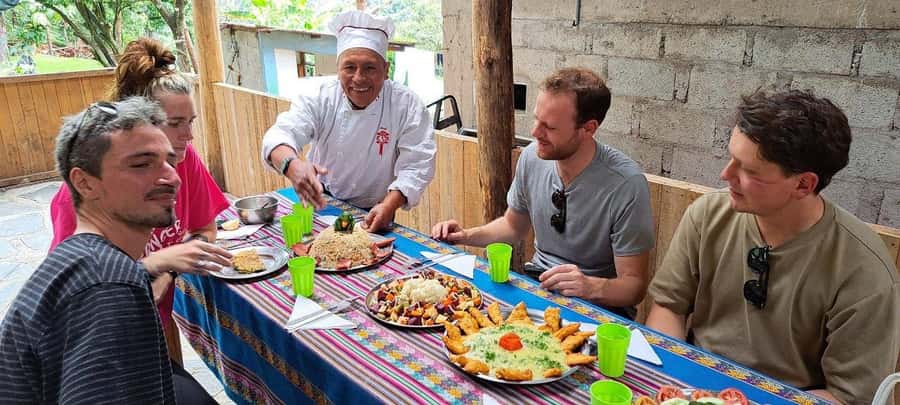
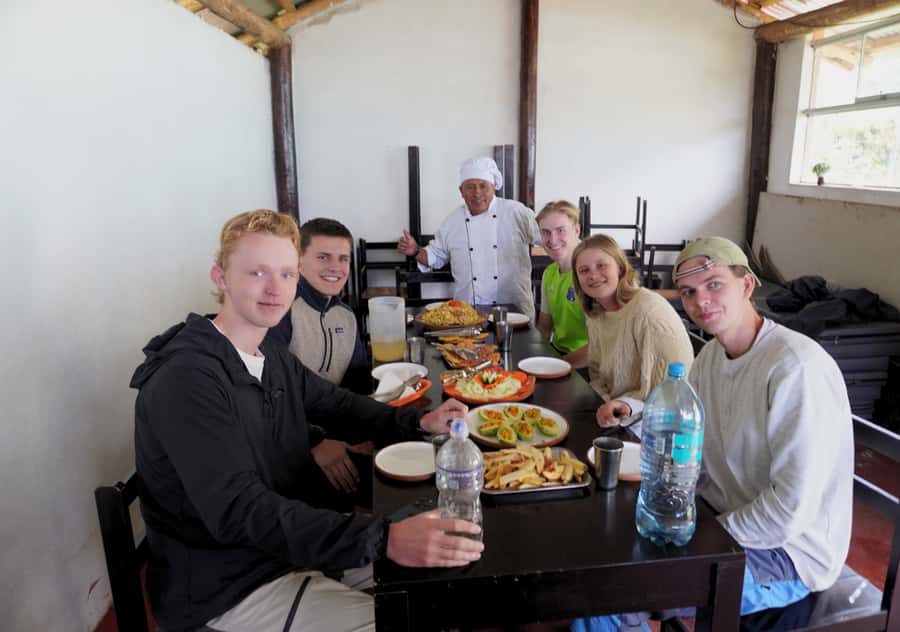
Food is a useful strength of this package. The five-day plan includes four breakfasts, four lunches, and four dinners. The four-day plan includes three of each. A professional chef and cooking equipment are included, and vegetarian and vegan meals are available without an extra charge.
Edgar is identified as the chef, while Fernandez serves as a guide and Eulogio helps with trail support. The service team received especially strong praise for kindness, practical help, and tasty, healthy cooking. That matters on a trek where a warm meal and a calm guide can change your whole evening.
You receive a duffel bag allowance of 6 kilos, with a horse carrying it along with cooking equipment. On the five-day route, luggage transport from Lucmabamba to Aguas Calientes is not included. You can pay to move it by car or carry it yourself.
The sleeping arrangements are cabins for the mountain nights, not a standard tent-based camping setup. The five-day plan includes three cabin nights and one hotel night in Aguas Calientes. The four-day plan includes two cabin nights and the same hotel night.
Bring comfortable shoes, rain gear, a hat, sunscreen, water, and warm clothing for the pass. A sleeping bag is not included. You can rent one for $15, and poles cost $10 if you do not bring your own.
Who should choose the four-day or five-day route?
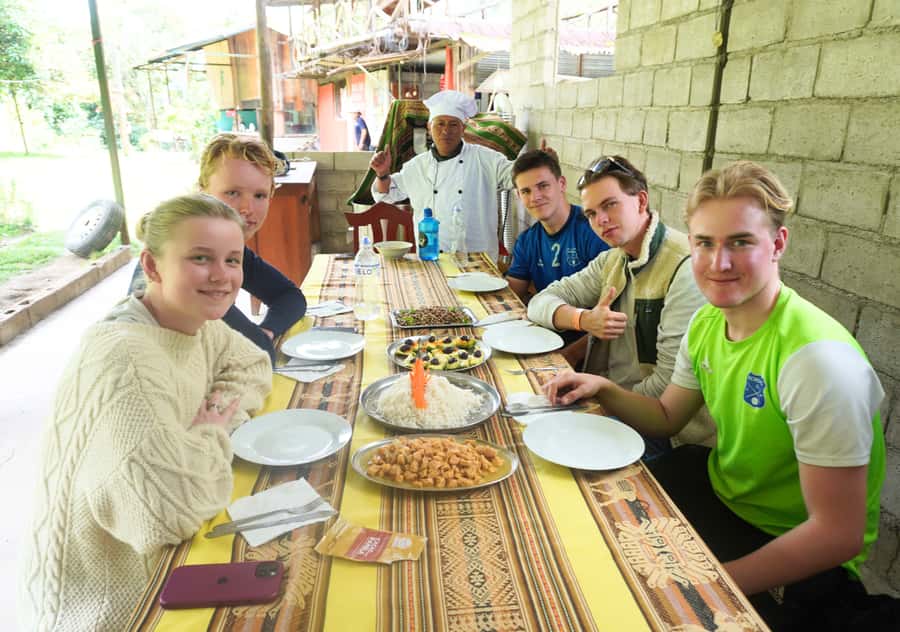
Choose five days if you want the fuller walking experience and can spare the extra night. The rainforest route, Cocalmayo hot springs, and Llactapata viewpoint add variety and give you more time to recover after the pass.
Choose four days if your schedule is tight or you prefer to reduce the number of nights on the trail. You still get Humantay Lake, Salkantay Pass, the approach to Aguas Calientes, and Machu Picchu, but you use transport from La Playa to Hidroeléctrica and skip the hot-springs day.
Neither version is a light sightseeing trip. The route reaches 4,630 meters and includes several long walking days. You should be comfortable with sustained uphill and downhill walking, changing temperatures, early starts, and basic cabin accommodation.
This is a good fit if you want a physical route with varied scenery and a guide-led visit to Machu Picchu. It is less suitable if you want a relaxed holiday, dislike early mornings, or need a fixed low final cost.
Tickets and circuit checks before you pay
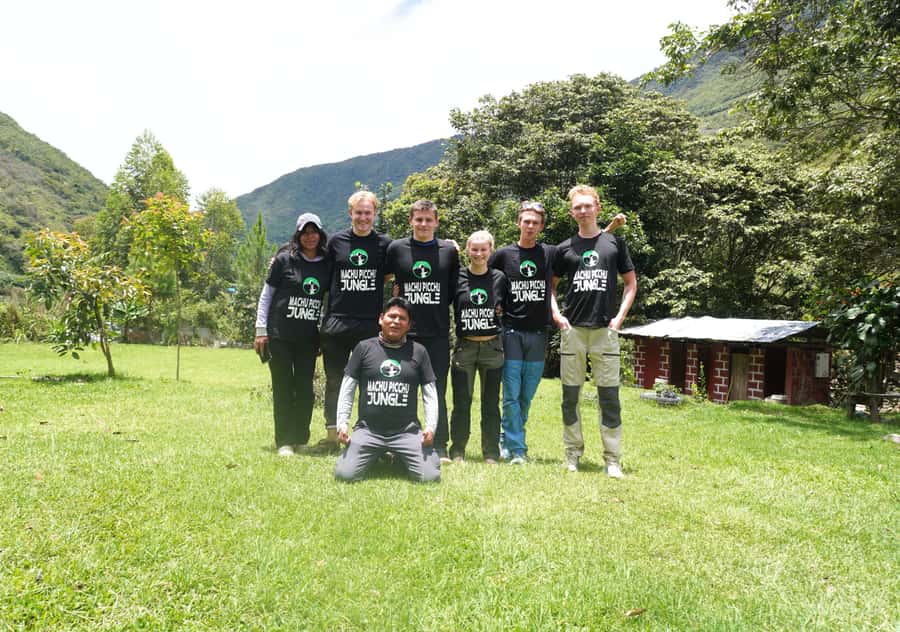
Machu Picchu access is the most important booking issue. The operator recommends reserving two to four months ahead and asks for your passport details so reservations can be processed.
If tickets are available through the government system, the operator says it will purchase them and collect the ticket payment at the pre-trip briefing in Cusco, held at 6:00 p.m. one day before departure. If no sanctuary ticket is available, you may need to buy one in Aguas Calientes in person with your passport.
The information also says 1,000 tickets are sold per day in Aguas Calientes and that you may need to add days to the trip for this purchase. Those extra days do not include meals or accommodation. This is a serious planning point, not a minor detail.
Ask three direct questions before booking:
- Which Machu Picchu circuit is confirmed?
- Is the entrance fee included in the $50 price, or will you pay it separately?
- What happens if the government ticket is unavailable?
The listed details use both PEN 152 and USD 60 for Machu Picchu-related payment, so get the current amount clarified. Also confirm the return transport, especially if you want a train rather than the walk to Hidroeléctrica.
Should you book the Salkantay Trek?
I would choose this trip if you want a demanding mountain route with strong variety and practical support. Humantay Lake, the 4,630-meter pass, rainforest farms, Llactapata, and Machu Picchu give you more than a single famous ruin at the end.
The five-day option offers the better experience if your time and budget allow it. The four-day version is a sensible shortcut, but calculate its added transport costs and accept that you will miss Cocalmayo and part of the final walking route.
Book only after confirming your Machu Picchu circuit, entrance fee, luggage transfer, and return plan. If Fernandez guides your group and Edgar cooks your meals, you can expect the warm, helpful service described in the available feedback. Just remember that the $50 starting price is not the complete cost, and the high-altitude walking deserves serious preparation.
FAQ
How long is the Salkantay Trek to Machu Picchu?
You can choose a four-day, three-night trek or a five-day, four-night trek. The activity information also gives a broad duration range of 12 hours to five days, so confirm the exact option and departure time when checking availability.
What is the highest point on the trek?
The highest point is Salkantay Pass, at approximately 4,630 meters.
How high is Humantay Lake?
Humantay Lake is at approximately 4,200 meters.
Is Machu Picchu included?
The reservation for Machu Picchu is arranged according to ticket availability. The information lists a payment of PEN 152 later at the briefing and also lists USD 60 as an entrance cost, so confirm the current amount and payment arrangement before departure.
Which Machu Picchu circuit is included?
Circuit 2A or 2B is listed for the guided visit, subject to availability. Circuit 3B covers the lower stop, middle viewpoint, and sacred temples. Circuit 1B covers the upper terrace and classic photo viewpoint.
Are meals included?
The five-day plan includes four breakfasts, four lunches, and four dinners. The four-day plan includes three breakfasts, three lunches, and three dinners. Your first breakfast, last lunch, and dinner are not included.
Is accommodation included?
Yes. The five-day route includes three nights in cabins and one night in a hotel in Aguas Calientes. The four-day route includes two cabin nights and one hotel night in Aguas Calientes.
Can I bring less luggage on the trail?
A duffel bag is provided for up to 6 kilos of personal belongings, and a horse carries the duffel and cooking equipment. Transport for luggage from Lucmabamba to Aguas Calientes is not included, so you may need to pay for a car or carry it yourself.
Are vegetarian and vegan meals available?
Yes. Vegetarian and vegan options are available at no extra charge.
Are sleeping bags and trekking poles included?
No. A sleeping bag can be rented for $15 for the full trip, and trekking poles can be rented for $10 for the full trip.
More Treks From Cusco
- Cusco: 4-Day Inca Trail to Machu Picchu with Accommodation
★ 4.8 · 432 reviews - From Cusco: 7 Lakes Ausangate Trek with Breakfast and Lunch
★ 4.8 · 360 reviews - Cusco: Machu Picchu 2-Day Inca Trail with Panoramic Train
★ 4.9 · 260 reviews - From Cusco: 2-Day Inca Trail to Machu Picchu
★ 4.2 · 244 reviews
Just added around Cusco
- Cusco: Via Ferrata, Skybike, and Rappel Adventure★ 5.0 · 3 reviews
- From Cusco: Maras and Moray and Ollantaytambo Tour★ 5.0 · 3 reviews
- Cusco: Rainbow Mountain Tour at Sunset Without the Crowds★ 4.7 · 3 reviews
- Cusco: Sacred Valley Day Trip with Maras & Moray Salt Mines★ 5.0 · 3 reviews
- Valle Sur Cusco | half day★ 4.3 · 3 reviews
- IN MACHU PICCHU: Private Tour Guide Service★ 5.0 · 3 reviews
- Salkantay trek to Machu Picchu – 5D/4N – Premium★ 3.3 · 3 reviews
- Full-Day Condor Viewpoint & Inca Sites Tour★ 5.0 · 3 reviews
Salkantay Treks, compared.
Small Group 5 Days Salkantay and Machu Picchu by Llactapata Tour
Read our review →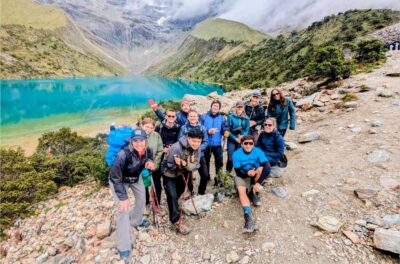
Salkantay Trek 4 Days to Machu Picchu by Glamping Sky Lodge Dome
Read our review →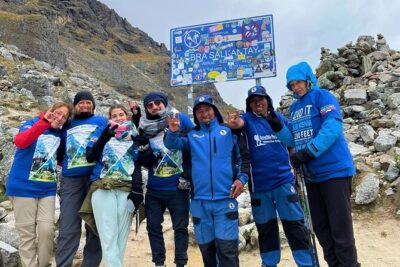
Salkantay Trek To Machu Picchu 5 Days And 4 Nights
Read our review →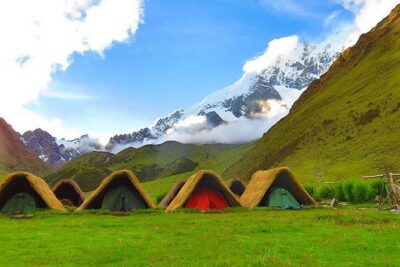
5-Day: Salkantay Trek to Machupicchu and Humantay Lake
Read our review →Browse the lists this tour appears in