
Reviewed · OLLANTAYTAMBO AND PISAC TOURS
Cusco: Pisac, Sacsayhuaman, Q’enqo, and Tambomachay Tour
Pisac gives this six-hour Cusco tour its best rhythm: market stalls and village streets first, then broad Sacred Valley views, followed by the stonework and sacred sites above Cusco. I like that you get both daily Andean life and major Inca monuments in one outing. I also like the private-group format, which gives you more room to ask questions and set a sensible pace. The main caution is the vehicle: one four-person group found it too tight for four adults, so comfort may depend on the assigned car or minibus.
I especially value the guides on this experience. Juan Carlos, a trained archaeologist, explained the sites with clear, evidence-based detail, while Jessica earned praise for her kindness and ability to handle a transportation problem. You should also budget for the separate archaeological-site ticket, which adds about $18.70 for most foreign visitors.
In This Review
- Key points to know before you book
- Why this six-hour route works so well
- Starting with Pisac’s market and village streets
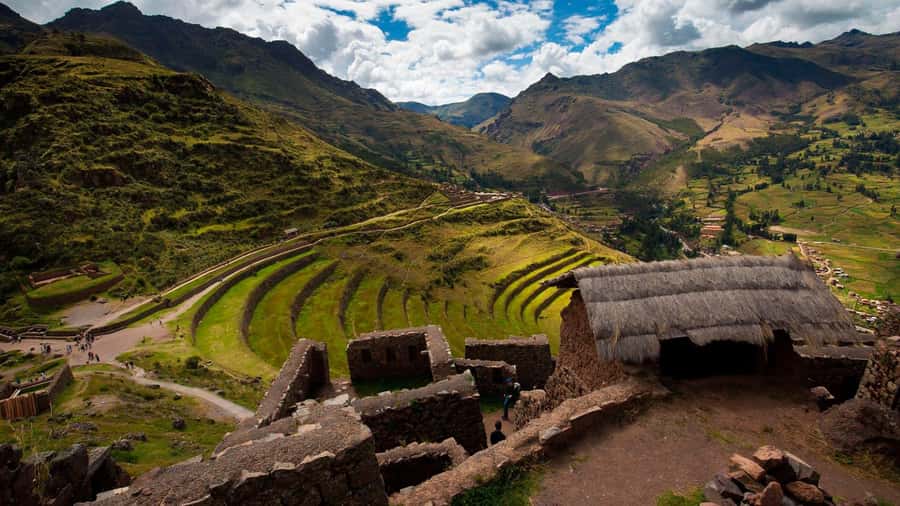
- Reading Pisac’s terraces from the archaeological park
- Taray Viewpoint and the Sacred Valley from above
- Sacsayhuaman and the power of stone
- Q’enqo and the ritual side of Inca Cusco
- Tambomachay and the Inca worship of water
- Puka-Pukara from the road
- What the guides add to the day
- Price, entrance fees, and the real value
- Practical preparation for highland sightseeing
- Who should book this Pisac and Cusco ruins tour?
- Should you book it?
- FAQ
- How long does the tour last?
- What places does the tour visit?
- Is hotel pickup included?
- Are entrance fees included in the price?
- What languages does the guide speak?
- Is this a private tour?
- What should I bring?
- Is the tour suitable for wheelchair users or people with back problems?
Key points to know before you book
- Pisac combines a famous market with an archaeological park, so you get both shopping time and serious Inca history.
- Taray Viewpoint gives you the wide Sacred Valley view, with its long bands of agricultural terraces.
- Sacsayhuaman, Q’enqo, Tambomachay, and Puka-Pukara sit near Cusco, making the return portion packed with major sites.
- The tour is private, with an English or Spanish-speaking guide and hotel pickup within Cusco’s historic center.
- Entrance fees cost extra, at S/70, about $18.70, for foreign visitors and S/40, about $10.70, for Peruvians.
- Allow for a compact vehicle, especially if four adults are sharing the ride.
Why this six-hour route works so well
Cusco has no shortage of day trips, but this route covers a lot without sending you far from the city for an entire day. You begin in the Sacred Valley at Pisac, then return toward Cusco through a chain of important ceremonial, military, and water-related sites.
That variety matters. If you only visit ruins, the day can feel like one stone wall after another. Here, the market gives you a human starting point, Taray gives you the big picture, and the sites near Cusco show different sides of Inca planning.
The itinerary is listed as a full-day experience in the tour description, but the stated duration is six hours. I would treat it as a substantial half-day outing. Your exact start time depends on availability, and the tour ends with drop-off at your Cusco hotel.
Since this is a private group, you are not tied to strangers or a large coach. That can make a real difference at Pisac, where you may want time for the market, and at the ruins, where a good guide can pause to answer questions instead of giving a fixed speech.
More Ollantaytambo and Pisac visits:
- From Cusco: Moray, Maras Salt Mines & Chinchero Weavers Tour
★ 4.8 · 1,925 reviews - Cusco: Sacred Valley, Pisac, Ollantaytambo, Salt Mines Moray
★ 4.6 · 1,058 reviews - Cusco:Chinchero,Moray & Salt Mines drop-off in Ollantaytambo
★ 4.8 · 793 reviews
Starting with Pisac’s market and village streets
Your pickup begins at your hotel in Cusco’s historic center. If your hotel is farther away, the operator arranges a separate meeting point in advance, so check this before booking rather than assuming every Cusco address is covered.
The ride takes you toward Pisac, one of the best-known towns in the Sacred Valley. The town itself is part of the appeal. You can walk along its picturesque streets and browse artisan stalls before turning your attention to the archaeological park.
The market is useful for more than souvenirs. It gives you a quick look at the commercial side of the Sacred Valley, where handmade goods, local crafts, and familiar Peruvian designs share space. I would keep your first visit measured. You have several ruins ahead, and the guide-led archaeological visit is one of the most valuable parts of the day.
Shopping time can also vary with the group and the guide. In a private tour, you can tell your guide if you want a proper look around, but the overall six-hour schedule still places a limit on lingering. If you are mainly interested in buying gifts, make that clear early.
Reading Pisac’s terraces from the archaeological park
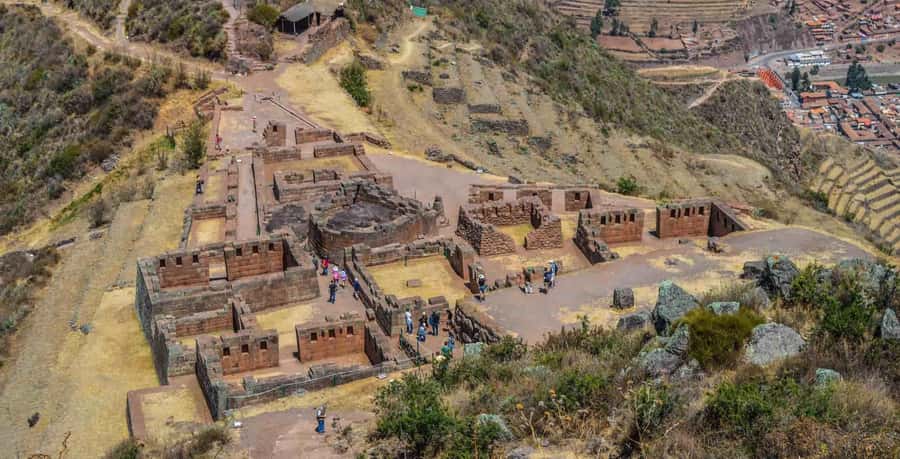
After the market, you visit the Pisac archaeological park with your guide. The site is known for its Inca terraces, which climb and shape the slopes above the valley.
The terraces are not just attractive lines on a hillside. They show the scale of Inca agricultural planning and the effort needed to work steep ground. Seen from the valley, they can look almost decorative. Your guide can help you understand them as part of a larger system of farming, settlement, and control.
This is where a strong guide changes the day. One guide, Juan Carlos, is a trained archaeologist and was praised for explaining the sites in a clear, logical way. His approach is likely to suit you if you prefer evidence and careful interpretation over sweeping legends.
Pisac can also be the most physically demanding stop, depending on how much walking your visit includes. Wear firm, comfortable shoes and expect uneven surfaces. The tour is not suitable for wheelchair users or people with back problems, and anyone who finds steep or irregular ground difficult should think carefully before booking.
Taray Viewpoint and the Sacred Valley from above
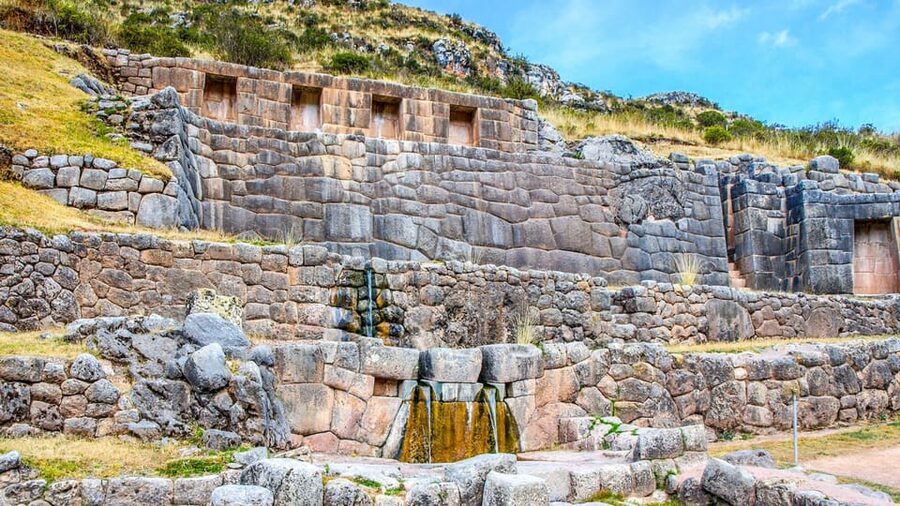
On the way back to Cusco, the tour stops at Taray Viewpoint. This is a short but important pause because it lets you see how the Sacred Valley fits together.
From the viewpoint, you can take in the valley and its many agricultural terraces. The broad view helps connect what you saw at Pisac with the larger region. At the ruins, you study walls and slopes up close. At Taray, you see the pattern from a distance.
Bring your camera, but do not forget to look without it for a moment. The appeal here is the scale: the valley opens below you, with terraces covering far more ground than any single ruin can suggest.
The viewpoint is also a good place to use your hat and sunscreen. Cusco’s high-altitude sun can be strong, and the tour notes warn you to prepare for changing weather. Carry water in the vehicle and take small sips during the day.
More Inca ruins above Cusco:
- Cusco: Half-Day City Tour with Sacsayhuaman and Q’enco
★ 4.6 · 1,129 reviews - City Tour Cusco Qoricancha Sacsayhuaman y Tambomachay
★ 4.7 · 617 reviews - Cusco City Sightseeing, San Pedro Market, Cathedral and Qorikancha Temple
★ 4.5 · 139 reviews - Cusco: 3-Hour Horse Riding Tour to the Temple of the Moon
★ 5.0 · 105 reviews
Sacsayhuaman and the power of stone
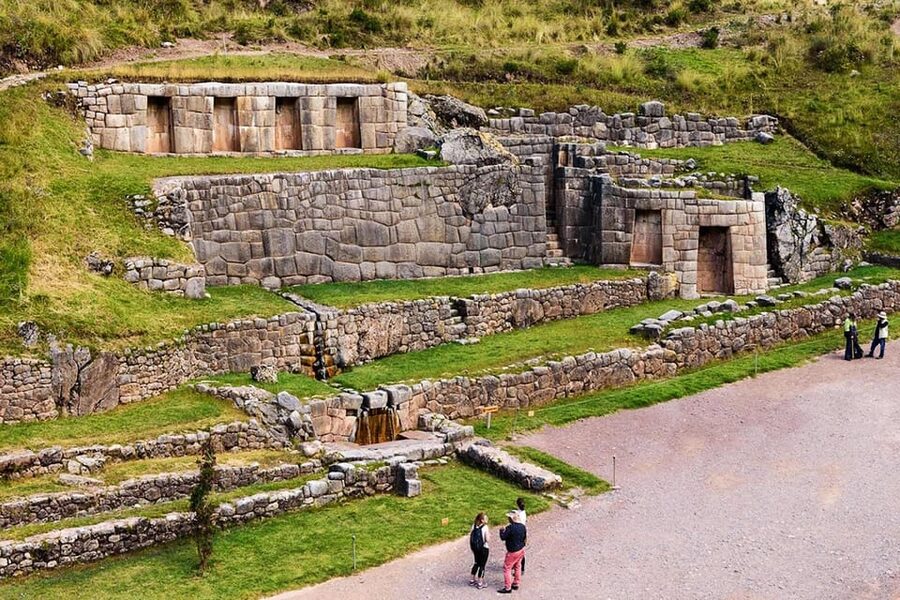
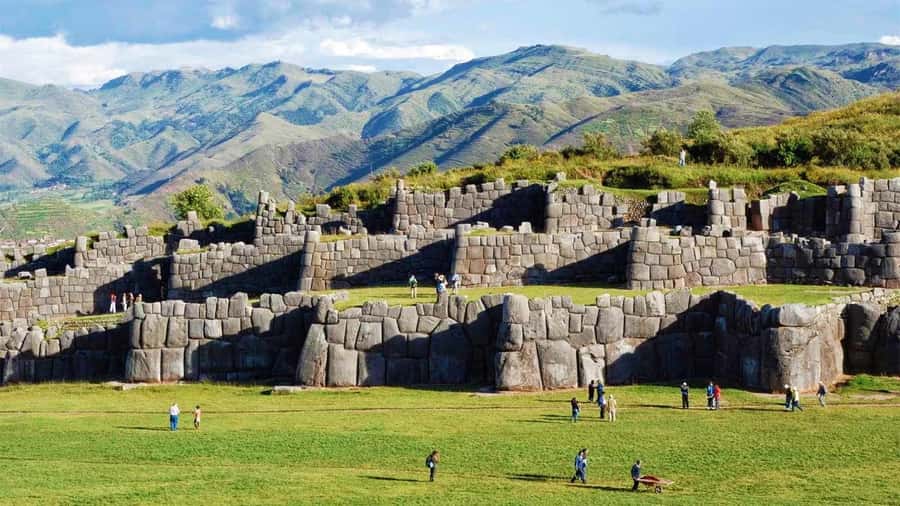
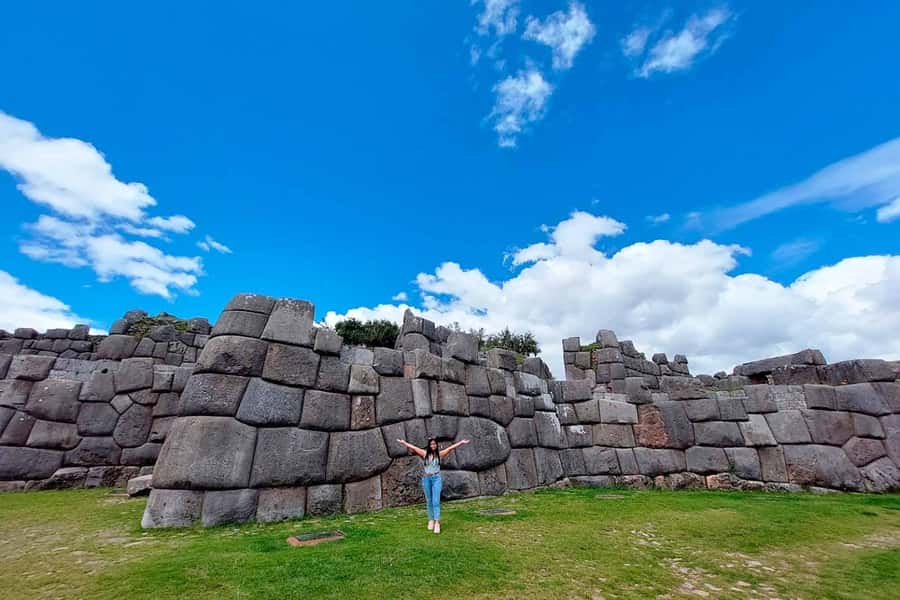
Back near Cusco, you visit Sacsayhuaman, described as a ceremonial fortress of stone monuments. This is one of the tour’s essential stops.
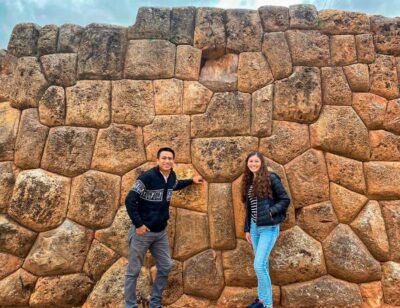
The scale of the masonry is what catches you first. Massive stones form carefully fitted walls, and the site gives you a clear sense of the labor and planning behind Inca construction. Your guide can help separate what is known from what is often repeated as folklore, which is especially useful at a place that attracts many dramatic stories.
Sacsayhuaman also helps explain Cusco’s setting. It is not an isolated ruin in the countryside. The site sits above the city and belongs to the wider system of places that shaped the Inca capital.
You should expect open exposure, walking, and uneven ground. Comfortable shoes matter more here than fashionable ones. If clouds arrive, conditions may feel cool. If the sun comes out, the same visit can feel hot quickly. Layered clothing is a sensible choice, though the tour only specifically requires clothing suitable for walking and protection from the sun.
Q’enqo and the ritual side of Inca Cusco
Q’enqo is a ritual site associated with sacrifices. Compared with Sacsayhuaman, it is smaller and more enclosed, and the focus shifts from monumental walls to ceremonial use.
This stop works best when you listen closely to the guide. Without context, rock-cut features can be hard to interpret. With a good explanation, you begin to see how the site may have supported ritual activity and how religious life shaped the wider Cusco area.
I would not expect Q’enqo to provide the same grand first impression as Sacsayhuaman. Its value is different. It adds a ceremonial layer to the day and keeps the tour from focusing only on military-looking stonework.
The route moves at a fairly brisk pace because four major sites follow one another near Cusco. A private guide can answer questions, but you still have a fixed six-hour window. If you want long photographic stops at every site, this may feel rushed.
Tambomachay and the Inca worship of water
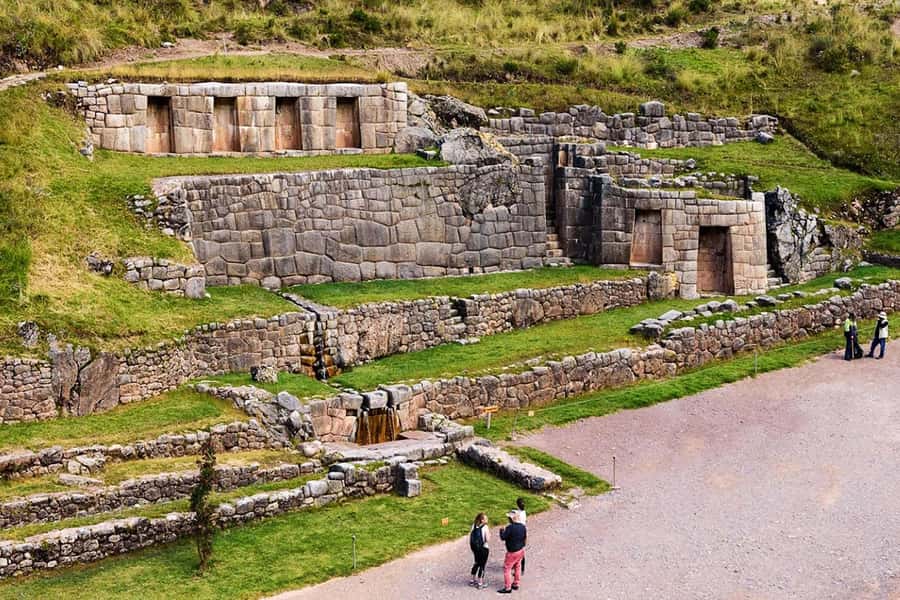
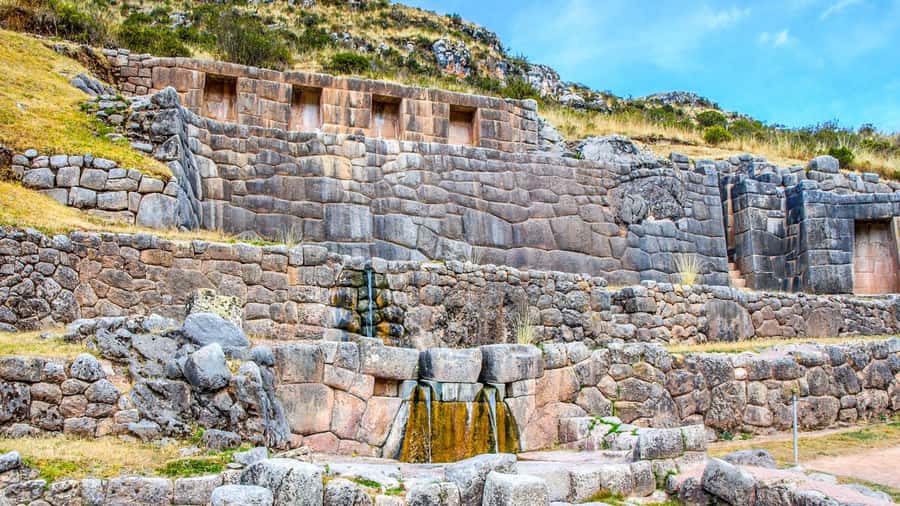
Tambomachay is presented as a temple dedicated to the worship of the God of Water. Water is the central idea here, and the site gives the tour a useful change of subject after the fortifications and ritual setting of the earlier stops.
The visit helps you notice how the Incas worked with natural resources and gave them religious meaning. Instead of looking only at walls, you are considering springs, channels, and the role of water in a highland society.
Tambomachay is a smaller stop, but that does not make it unimportant. I like it because it rounds out the day. Pisac shows farming terraces, Sacsayhuaman shows monumental stone construction, Q’enqo shows ritual practice, and Tambomachay brings water into the picture.
As elsewhere, your experience depends on walking conditions and weather. Bring water for yourself, not simply as a subject for the visit. A hat and sunscreen are strongly worthwhile.
Puka-Pukara from the road
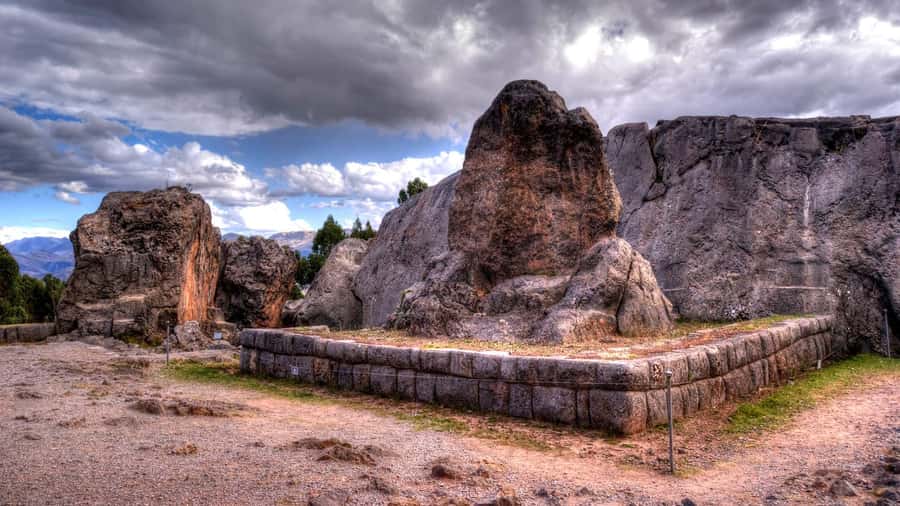
The final site is Puka-Pukara, an ancient tambo, or guard post, along the Inca roads. The tour emphasizes a panoramic view rather than a long exploration of the ruins.
That makes sense within the schedule. Puka-Pukara is close to the other highland sites, and a viewpoint gives you a quick look at its position and purpose. The stop adds the travel and defense network to your understanding of the region.
You may find this visit more introductory than the stops at Sacsayhuaman or Pisac. Still, it is a useful final piece. The Incas did not build important places as disconnected monuments. Roads, guard posts, ceremonial sites, farming areas, and water systems all belonged to a wider network.
After Puka-Pukara, you return to Cusco for hotel drop-off. The tour description says the total time together is six hours, so the order and time at each site may shift with traffic, walking speed, and the group’s interests.
What the guides add to the day
The guide can make or break this route because the sites are familiar from photographs but not always easy to read on your own.
Juan Carlos received especially strong praise for his archaeological training, clear explanations, and ability to answer difficult questions. His style is a good match for you if you want careful facts and context. He also recommended an excellent restaurant near Pisac during one outing, though that restaurant is not listed as a formal part of the tour, so do not assume lunch is included.
Jessica handled both driving and guiding on another outing. Her warm, helpful manner made a strong impression, even after a problem arose with the vehicle arrangement. That detail is worth noting because it shows two sides of the experience: the person leading the tour may be excellent, while the transport supplied for your group may still be less comfortable than expected.
The guide languages are English and Spanish. If you have questions about the Spanish conquest, Inca religion, or the purpose of a site, ask directly. The tour specifically includes history of the Incas and the Spanish conquest, so the day is not limited to architecture.
Price, entrance fees, and the real value
The listed price is $77 per person. For a private six-hour tour with hotel pickup, transport, and an English or Spanish-speaking guide, that can be fair value, especially if you are splitting the attention and transport with a small private party.
The archaeological admission is extra. Foreign visitors pay S/70, about $18.70, while Peruvians pay S/40, about $10.70. That brings the approximate total to $95.70 per foreign visitor before any personal spending at Pisac.
I would judge the value by what you want from the day. If you only need a ride to the ruins and a quick photo stop, the cost may feel high. If you want one person to connect Pisac, the Sacred Valley, and the four sites near Cusco, the private format earns its price.
Transport comfort is the one value concern I would not ignore. A four-adult group reported that the vehicle was not comfortable for their party, and the booking had apparently been treated as a two-person reservation by the transport side even though four adults had paid. If you are booking for four adults, confirm the vehicle size before departure.
Practical preparation for highland sightseeing
Wear comfortable shoes and clothing suitable for walking. You will visit archaeological sites with uneven surfaces, and the tour is not suitable for wheelchair users or people with back problems.
Pack these basics:
- Water
- Sunscreen
- A hat
- A camera
- Comfortable shoes
Prepare for changing weather. The information provided does not promise a particular temperature or forecast, so a light extra layer is sensible. Do not smoke during the tour.
Pickup applies to hotels in Cusco’s historic center. If your hotel sits outside that area, arrange the meeting point with the operator before the day begins. The tour includes hotel drop-off at the end.
The activity allows cancellation up to 24 hours in advance for a full refund, and you can reserve now and pay later. Those policies are useful if your Cusco schedule is still moving, but they do not change the need to check the start time and pickup details.
Who should book this Pisac and Cusco ruins tour?
I would choose this tour if you have limited time in Cusco and want a broad introduction to Inca sites rather than a single long visit. It suits people who value explanation, photography, and a private guide more than a slow market-shopping morning.
It is also a strong choice if your group wants flexibility. You can ask questions directly, request more explanation at a particular ruin, and avoid joining a large bus group.
I would hesitate if you have serious back problems, use a wheelchair, or need a roomy vehicle. I would also look elsewhere if you want a leisurely full day centered only on the Sacred Valley. This itinerary covers many places in six hours, so it favors variety and efficiency.
Should you book it?
Book it if you want Pisac, Taray Viewpoint, and Cusco’s main nearby ruins in one well-organized outing. The combination is smart, and guides such as Juan Carlos can add far more than basic directions and photo stops.
Before paying, confirm that your hotel lies within the pickup zone, budget the S/70 foreign entrance fee, and ask about vehicle space if four adults are going. With those points settled, this is a practical private tour for seeing the Sacred Valley and the Inca sites above Cusco without arranging separate transport.
FAQ
How long does the tour last?
The tour lasts six hours, including pickup and drop-off at your Cusco hotel.
What places does the tour visit?
You visit Pisac town and market, the Pisac archaeological park, Taray Viewpoint, Sacsayhuaman, Q’enqo, Tambomachay, and Puka-Pukara.
Is hotel pickup included?
Yes. Hotel pickup and drop-off are included for hotels within Cusco’s historic center. If your hotel is farther away, a meeting point is arranged in advance.
Are entrance fees included in the price?
No. Archaeological-site admission is paid separately. The stated fee is S/70, about $18.70, for foreigners and S/40, about $10.70, for Peruvians.
What languages does the guide speak?
The live guide service is available in English and Spanish.
Is this a private tour?
Yes. The activity is arranged for a private group.
What should I bring?
Bring comfortable shoes, a hat, sunscreen, water, and a camera. You should also wear clothing suitable for walking and changing weather.
Is the tour suitable for wheelchair users or people with back problems?
No. The tour is not suitable for wheelchair users or people with back problems.
Just added around Cusco
- Cusco: Via Ferrata, Skybike, and Rappel Adventure★ 5.0 · 3 reviews
- From Cusco: Maras and Moray and Ollantaytambo Tour★ 5.0 · 3 reviews
- Cusco: Rainbow Mountain Tour at Sunset Without the Crowds★ 4.7 · 3 reviews
- Cusco: Sacred Valley Day Trip with Maras & Moray Salt Mines★ 5.0 · 3 reviews
- Valle Sur Cusco | half day★ 4.3 · 3 reviews
- IN MACHU PICCHU: Private Tour Guide Service★ 5.0 · 3 reviews
- Salkantay trek to Machu Picchu – 5D/4N – Premium★ 3.3 · 3 reviews
- Guide in Machu Picchu★ 5.0 · 3 reviews
Ollantaytambo and Pisac Tours, compared.
Moray, Maras Salt Mines & Chinchero Weavers Tour
Read our review →
Sacred Valley, Pisac, Ollantaytambo, Salt Mines Moray
Read our review →
Chinchero,Moray & Salt Mines drop-off in Ollantaytambo
Read our review →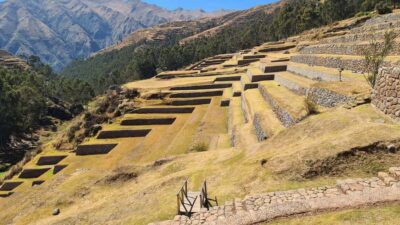
Sacred Valley Pisaq,Ollantaytambo,Chinchero with Lunch
Read our review →
Full-Day Excursion to Sacred Valley, Pisac and Ollantaytambo from Cusco
Read our review →
Moray, Maras Salt Mines & Chinchero Weavers Half-Day
Read our review →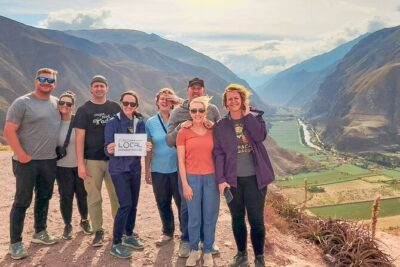
Sacred Valley Full-Day Private Tour from Urubamba & Ollantaytambo
Read our review →Browse the lists this tour appears in