
Reviewed · MARAS AND MORAY TOURS
From Cusco: Moray, Maras Salt Mines & Chinchero Weavers Tour
Moray’s great circular terraces are the star of this outing, but the day gets even more interesting when you connect them with Chinchero’s living weaving tradition and the 3,000 salt pools at Maras. You see how the Inca worked with altitude, water and mountain conditions, then watch modern artisans carry old techniques forward.
I like the well-paced half-day format, which gives you a strong taste of the Sacred Valley without swallowing your entire day. I also like the guides’ personal touch. Felipe, Julio, Jhon, Manuel and others are praised for clear explanations and thoughtful help. The catch is that the $15 price does not include the Moray or salt-mine entrance fees, and several stops include time for shopping.
In This Review
- Key points to know before you go
- Why this half-day route works so well from Cusco
- Chinchero: Quechua weaving you can actually see
- Moray’s circular terraces and high-altitude farming
- Maras village and the road to the salt mines
- The Maras Salt Mines, a working ancient site
- Guides make the difference
- Transport, timing and the real cost
- What to bring for Moray and Maras
- Who should book this Sacred Valley tour?
- Should you book it?
- FAQ
- How long does the tour last?
- What places does the tour visit?
- Are the entrance fees included?
- Is hotel pickup available?
- Is lunch included?
- What languages are available?
- Can I choose a private tour?
Key points to know before you go
- Moray sits at 3,450 meters: Walk around the famous circular terraces while learning how the Inca used altitude for farming experiments.
- Maras has about 3,000 salt pools: The ancient saltworks remain active, producing salt for use and sale in the region.
- Chinchero connects history with living craft: Watch Quechua artisans dye wool with plants and demonstrate Andean weaving.
- The schedule lasts 390 minutes: It works well as a half-day Sacred Valley trip, with enough time to explore but not enough for a full Sacred Valley circuit.
- Extra fees matter: Moray costs 70 soles and the salt mines cost 20 soles, both paid separately.
- Sun and altitude are serious here: Bring water, sunscreen, a hat, comfortable shoes and cash.
Why this half-day route works so well from Cusco
This tour packs three very different experiences into roughly six and a half hours. You begin with Chinchero and its textile traditions, move to the strange geometry of Moray, then finish around Maras and its salt pools before returning to Cusco for lunch on your own.
That order gives the outing a useful rhythm. You are not looking at one archaeological site after another. Instead, you move from craft and community to farming and engineering, then to a working industry tied to mountain water.
I see this as a particularly good choice if you want a Sacred Valley introduction but do not want an all-day trip with four or five major stops. The pace is active, though not punishing. Most site visits last around 40 minutes, and the walking is generally limited to short walks and viewing areas.
The tour is also a practical option before a longer trek. You get altitude exposure, outdoor time and plenty of historical context without spending a full day on the road. Just remember that Moray is already higher than Cusco, and the strong sun can make the outing feel more demanding than the walking distance suggests.
More Maras salt mine and Moray trips:
- From Cusco: Sacred Valley & Maras Salt Mines Tour with Lunch
★ 4.8 · 2,227 reviews - Cusco: Sacred Valley, Pisac, Ollantaytambo, Salt Mines Moray
★ 4.6 · 1,058 reviews - Cusco:Chinchero,Moray & Salt Mines drop-off in Ollantaytambo
★ 4.8 · 793 reviews
Chinchero: Quechua weaving you can actually see
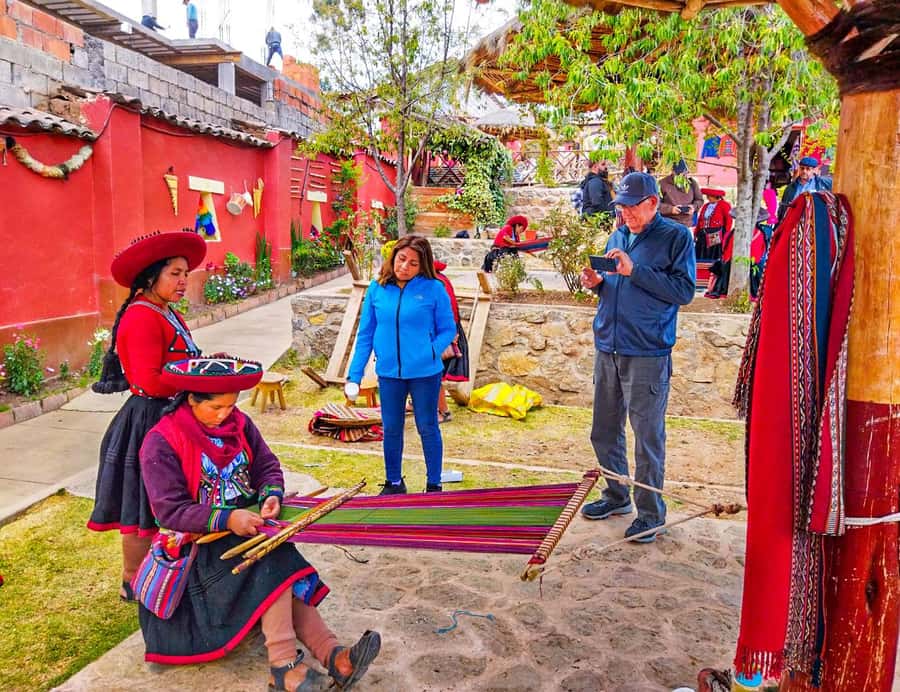
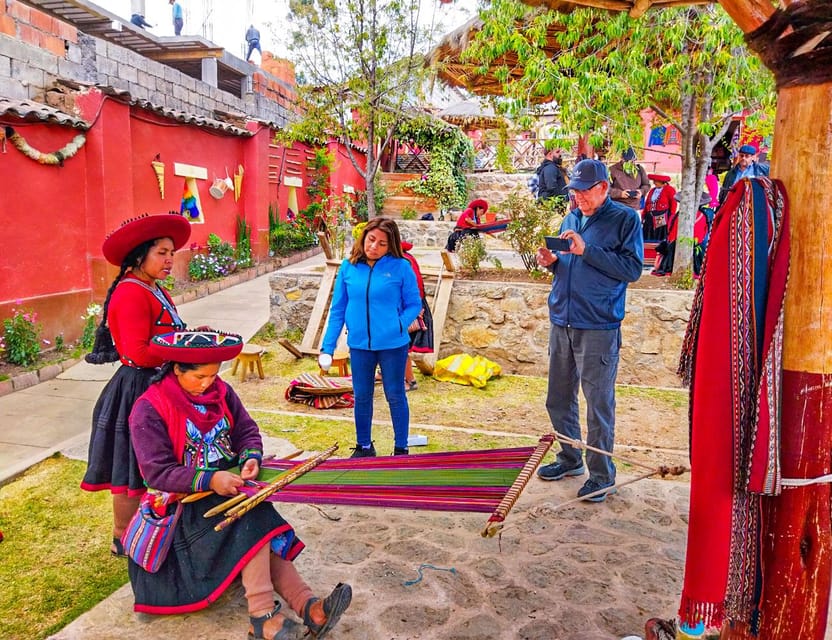
The first main stop is Chinchero District, at about 3,762 meters. Here, you visit a weaving workshop where local artisans continue Quechua textile customs.
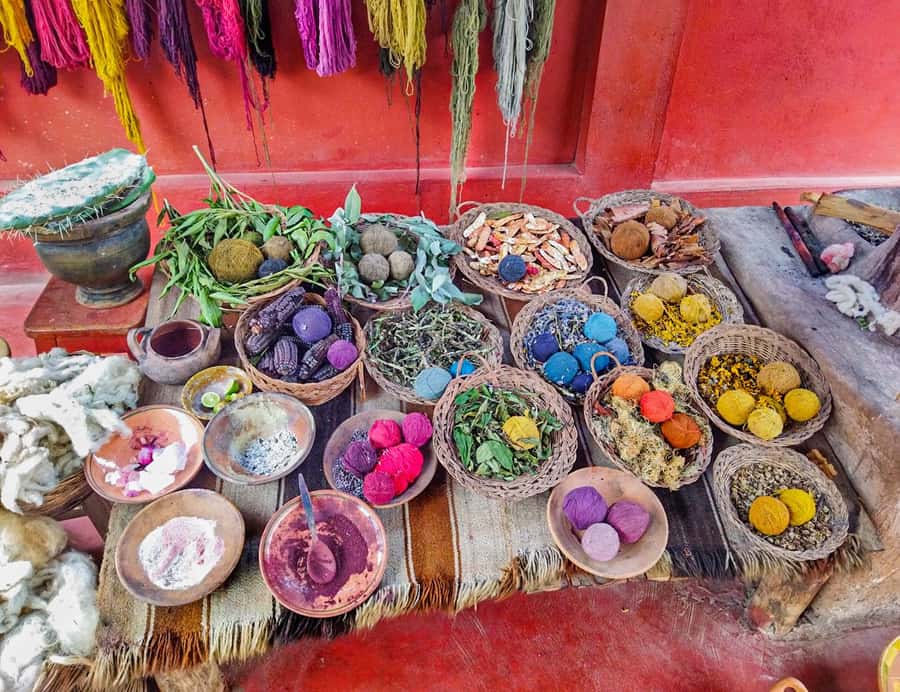
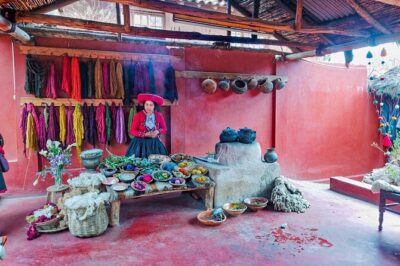
The most useful part of the visit is the dye demonstration. You see how natural plants are used to create colors for Andean artwork and textiles. This turns a shopping stop into a lesson in local materials, technique and tradition.
You may also see alpaca products, including baby alpaca items, and have time to shop. The workshop is scheduled for about an hour, so it is longer than a quick photo stop. That gives the guide time to explain the process and gives you a chance to look closely at the work.
I appreciate this stop because it shows that Andean culture is not confined to ruins. The weaving tradition is active, practical and tied to local households and income. Guides such as Felipe have also included short demonstrations of Inca customs, herbs and ritual practices, which can give the visit more cultural context.
Still, you should know what kind of stop this is. It is both a cultural demonstration and a retail opportunity. If you dislike shopping stops, the hour may feel long. If you are looking for a scarf, hat or alpaca garment, you will have a useful chance to compare products and ask questions about materials.
Moray’s circular terraces and high-altitude farming
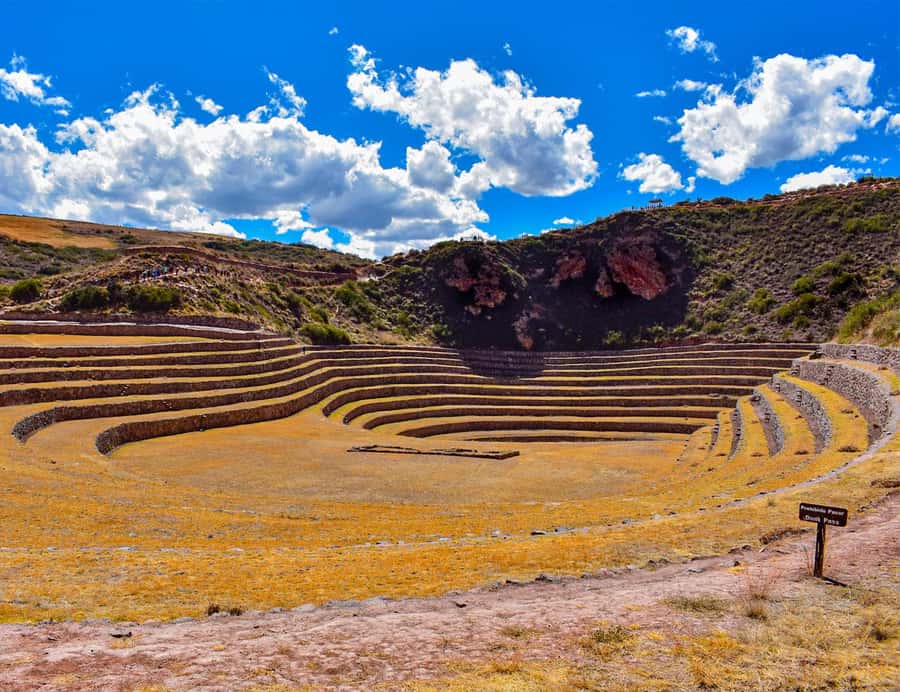
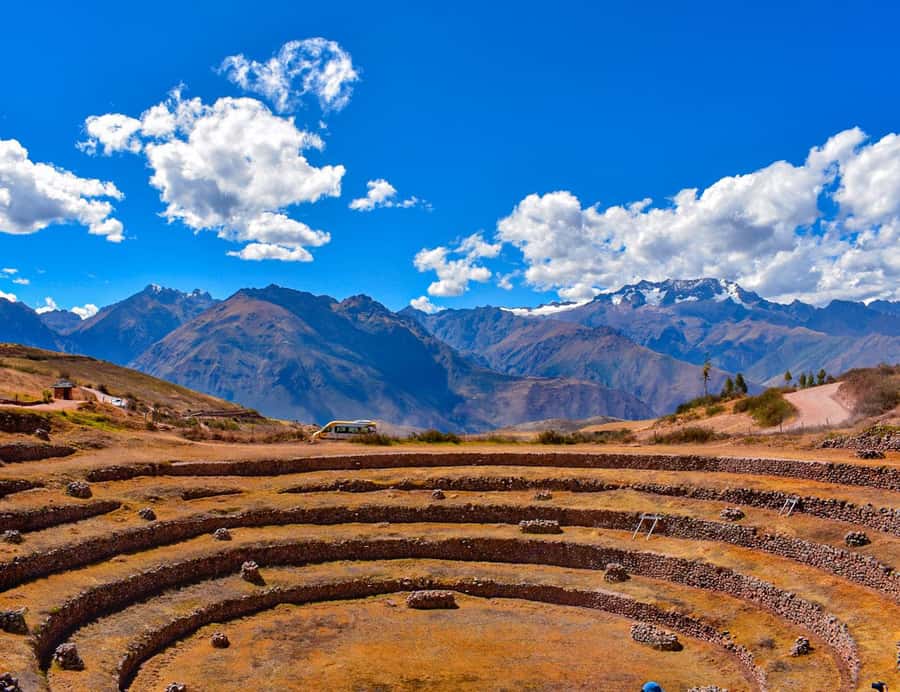
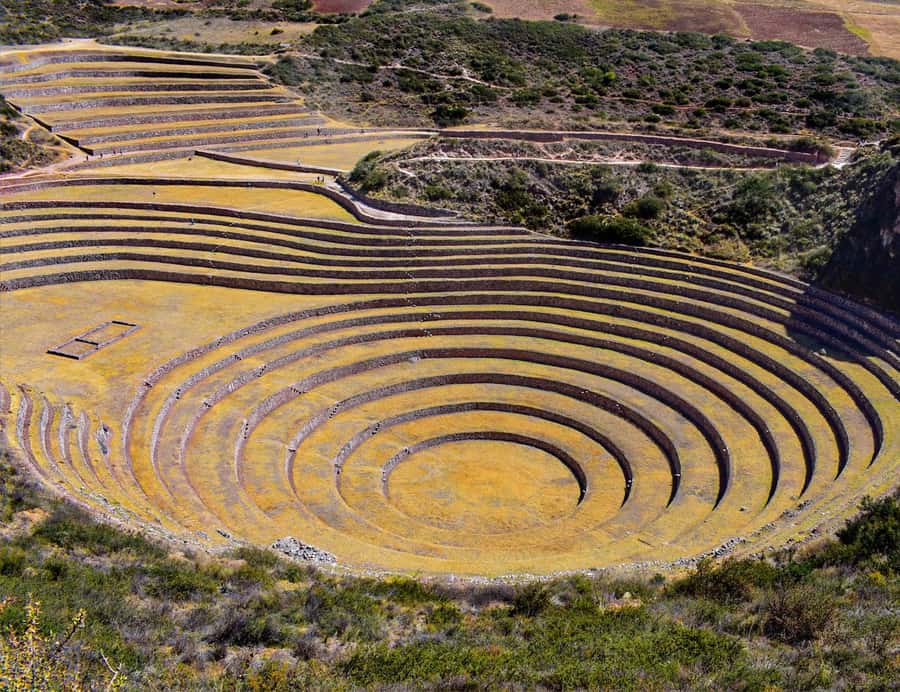
Moray is the most unusual archaeological stop on the route. At 3,450 meters, or 11,318 feet, it consists of enormous circular terraces cut into a natural depression.
From the viewing area, the terraces look almost too carefully shaped to be farmland. Their rings descend toward the center, creating a dramatic pattern that makes for some of the day’s best photographs. The guided visit lasts about 40 minutes and includes time to walk and take pictures.
The key lesson here is agricultural planning. The Inca built terraces and irrigation systems across difficult mountain country, and Moray shows how closely they observed soil, water and altitude. Your guide will explain the site’s farming purpose and place it within the wider story of Inca engineering.
I like Moray because it is easy to understand visually. You do not need a long archaeological lecture to see that this was a planned site. The rings give you an immediate sense of scale, while the guide adds the details that a photograph cannot provide.
The main drawback is the altitude. Even a short walk can feel tiring if you have only just arrived in Cusco or have not adjusted well. Bring water, walk steadily and use the available time rather than trying to rush from one viewpoint to the next.
The entrance fee is not part of the advertised price. Set aside 70 soles for Moray. This changes the real cost of the outing, especially if you are counting every sol, but the site is one of the strongest reasons to take the tour.
Maras village and the road to the salt mines
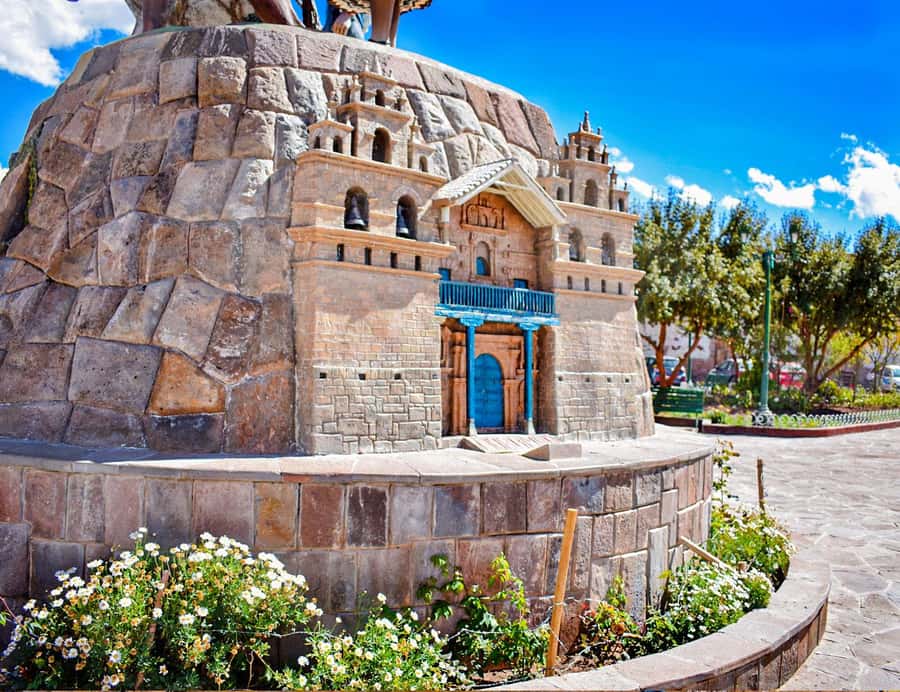
After Moray, the route continues toward Maras Village. The town is noted for preserved colonial architecture and thin-stoned buildings, giving you a brief look at how Spanish-era construction was layered onto an older Andean setting.
This stop includes free time, shopping and another short workshop period, listed at about 20 minutes. It is not a large archaeological visit, so keep your expectations in check. Think of it as a pause between the main sites and a chance to look at local goods.
The road toward the salt mines can be narrow, and the route includes mountain scenery. A careful driver matters here. The tour uses organized transportation, and the driving is one of the practical benefits of booking rather than arranging separate taxis to several high-altitude sites.
Some departures may include quick snack or bathroom breaks. The schedule is designed to keep the day moving without making you feel hurried. If you are prone to motion sickness, the regular stops can help, although the mountain roads may still be uncomfortable for some people.
More Ollantaytambo and Pisac visits:
- Sacred Valley: Chinchero, Moray, Ollantaytambo & Pisac+Lunch
★ 4.8 · 501 reviews - Pisac Indian Market and Ollantaytambo Fortress with Lunch
★ 4.5 · 395 reviews - Cusco:Sacred Valley Pisaq,Ollantaytambo,Chinchero with Lunch
★ 4.8 · 183 reviews - Full-Day Excursion to Sacred Valley, Pisac and Ollantaytambo from Cusco
★ 4.5 · 174 reviews
The Maras Salt Mines, a working ancient site
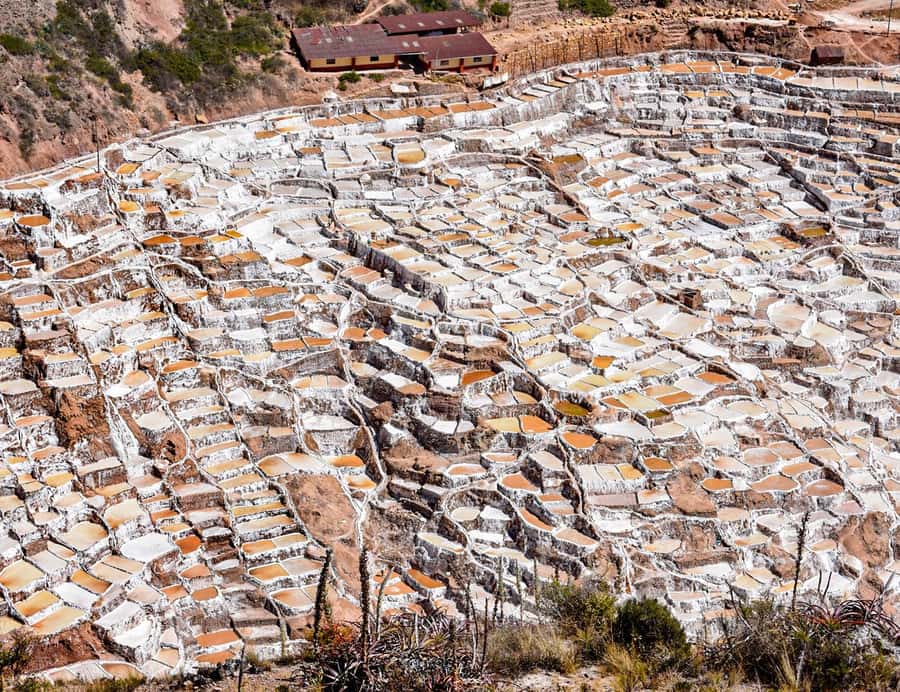
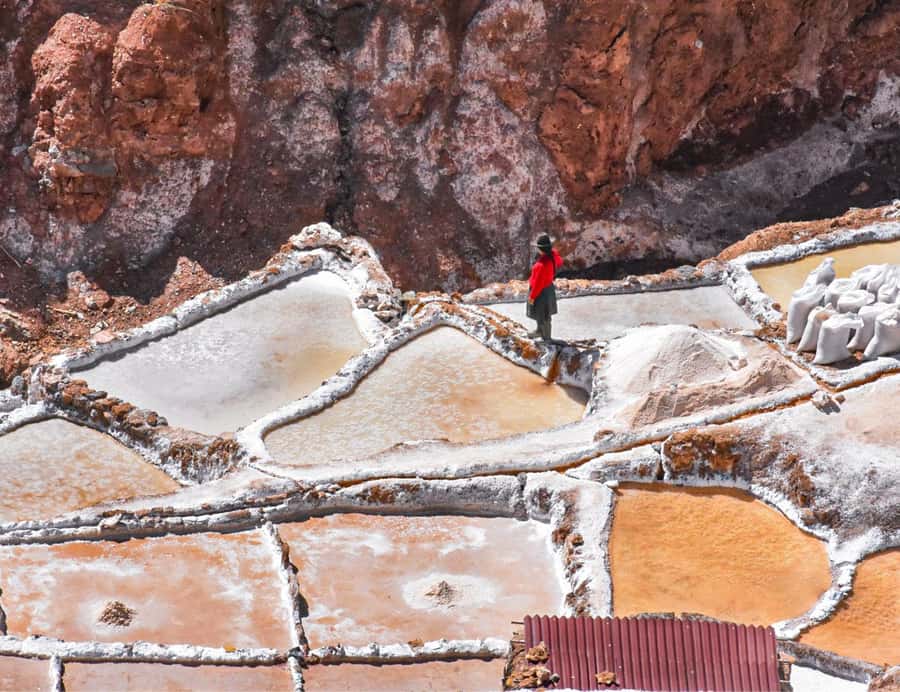
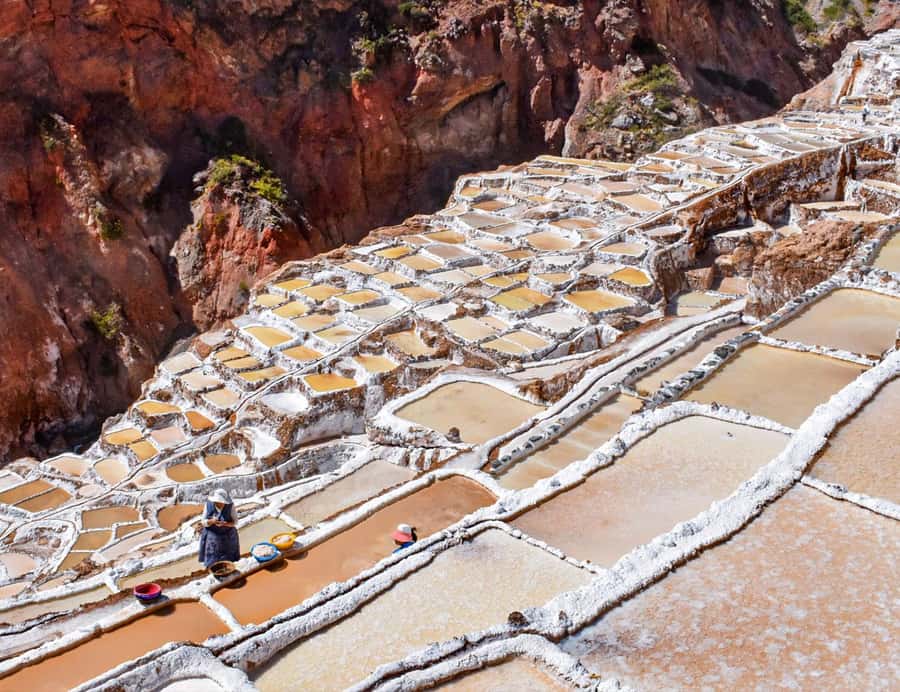
The Salineras are the most immediately surprising stop. Around 3,000 small pools spread across the mountainside, each fed by salt-bearing water.
The sight is striking because the pools form a dense network of pale rectangles on a steep slope. Depending on the light and conditions, the scene can look white, tan or softly colored. You walk around the viewing areas, hear how salt is collected and have time for photographs.
This is not simply a ruin. Salt production continues today, and the site dates back to pre-Inca times. The salt is processed and distributed in the region, so you are seeing an old system that still has a working purpose.
That living connection makes the visit more valuable than a quick scenic stop. Your guide can explain the water flow, the collection process and the role of salt in local life. You can also buy salt afterward if you want a small, useful souvenir rather than another decorative object.
The entrance fee is 20 soles and is paid separately. As at Moray, keep cash ready. The viewing paths may include uneven surfaces, and there is little shade, so comfortable shoes, sunscreen and a hat are not optional extras on a sunny day.
Do not expect to walk through every pool or treat the site like a swimming area. The visit is mainly about viewing the network, learning how it works and taking photographs from designated areas.
Guides make the difference
The strongest part of this experience is the guiding. Felipe is repeatedly praised for explaining Inca culture with energy and for checking that people are managing the altitude and heat. Julio is described as friendly, funny and ready to answer questions about the sites. Jhon, Manuel, John, Roy and Rehider are also singled out for clear explanations, care and good organization.
That matters because Moray and the salt mines can look impressive without being easy to interpret. A guide connects the shapes and stones to farming, water management, local craft and daily life.
The best guides also add small touches. Felipe has explained local herbs, helped with practical problems and shown cultural demonstrations. Guides have helped people take photographs, answered questions in fluent English and kept the group on schedule.
The tour is offered in English or Spanish, with private and small-group choices available. A private departure gives you more flexibility and a more personal pace, while a small group keeps the cost low and still provides an active guide.
Transport, timing and the real cost
The headline price is $15 per person, which is unusually low for transportation, a bilingual guide and several major stops. It is a strong value if you want a compact Sacred Valley outing and do not mind paying site fees separately.
Your additional entry costs are:
- Moray: 70 soles
- Maras Salt Mines: 20 soles
The tour does not include lunch, so you return to Cusco in time to eat on your own. Hotel drop-off is also not included. Pickup is available from hotels outside Cusco’s Centro Histórico, while central pickup and drop-off points include areas around Plaza Regocijo and the historic center. Check the exact meeting point when booking, and wait in the hotel lobby 10 minutes before pickup if hotel service applies.
The advertised duration is 390 minutes, or about six and a half hours. Actual pickup and return timing can vary with traffic, group size and road conditions, so do not schedule a tight connection immediately afterward.
Transportation is included, and the vehicle is described as clean and comfortable. On a warm day, the van may feel hot, especially when full. The journey also gives you mountain views and opportunities for photographs, so a window seat is useful if you can get one.
Free cancellation up to 24 hours ahead and a reserve-now, pay-later option make the booking fairly flexible. The tour runs rain or shine, so pack for changing weather rather than assuming a clear morning will last all day.
What to bring for Moray and Maras
The essentials are simple:
- Passport
- Cash for entry fees and purchases
- Water
- Sun hat
- Sunscreen
- Comfortable walking shoes
- Camera
The sun can be intense at altitude even when the air feels cool. Several people have found the day surprisingly hot, especially during the walks at Moray and the salt mines. Wear light clothing in good weather, but keep a layer handy because mountain conditions can change.
You do not need serious hiking gear. This is not a trek, and the walking is limited, but uneven ground and altitude make sturdy shoes worthwhile. If you tend to get carsick, sit where you usually feel best and use the planned stops to get out and stretch.
Who should book this Sacred Valley tour?
I would recommend it to first-time visitors who want to see Moray and Maras without committing to a full-day Sacred Valley circuit. It also suits solo visitors, couples and families who prefer a guide to handle the roads and explain the sites.
Solo travelers can feel comfortable with the organized pickup and guided schedule. Families may appreciate the variety: colorful textiles, unusual terraces and salt pools are easier to enjoy than a long sequence of similar ruins.
History and archaeology fans will get the most from the explanations at Moray. Shoppers and craft lovers will value Chinchero. Photographers will want the terraces, mountain views and patterned salt pools.
I would be more cautious if you dislike retail stops, have difficulty with high altitude or need a fully private schedule. The group option includes shopping and workshop time, and the low price depends on following a fixed route. Choose the private option if flexibility matters more than saving money.
Should you book it?
Yes, if you want a well-organized half-day that covers three distinct sides of the Cusco region: living Quechua craft, Inca agriculture and an ancient salt industry that still operates today.
The tour is not a complete Sacred Valley experience, and the extra entrance fees raise the final price above $15. Still, the combination of transport, guiding, short walks and varied stops gives you a lot for the time and money.
Book it for the strong mix of Moray and Maras, especially if you have limited time in Cusco. Pack water, sun protection and cash, and treat the shopping stops as part of the cultural visit rather than an unwelcome surprise.
FAQ
How long does the tour last?
The tour lasts 390 minutes, or about six and a half hours. It returns to Cusco in time for you to have lunch on your own.
What places does the tour visit?
The route includes Chinchero District, Moray, Maras Village and the Maras Salt Mines. Chinchero includes a weaving workshop, while Moray and the salt mines include guided walks and photo time.
Are the entrance fees included?
No. Moray costs 70 soles and the Maras Salt Mines cost 20 soles. Bring cash to pay these fees separately.
Is hotel pickup available?
Hotel pickup is available outside Cusco’s Centro Histórico. You should wait in the hotel lobby 10 minutes before your scheduled pickup. Central meeting and drop-off points include the Centro Histórico and Plaza Regocijo area.
Is lunch included?
No. The tour returns to the city in time for lunch, but you arrange and pay for your own meal.
What languages are available?
The live guide service is available in English and Spanish.
Can I choose a private tour?
Yes. Private and small-group options are available. The included services are hotel pickup where applicable, a bilingual guide and transportation, while private service depends on the option selected.
More Weaving Workshops
- Cusco: Alpaca and Llama Farm Tour w/ Transfer & Weaving Demo
★ 4.9 · 151 reviews - From Cusco: Moray, Maras Salt Mines & Chinchero Weavers Half-Day
★ 5.0 · 126 reviews - The Textile Workshop Experience in Cusco Region
★ 5.0 · 118 reviews - Sacred Valley Textile Workshop – Dyeing & Weaving in Cusco
★ 5.0 · 92 reviews
Just added around Cusco
- Cusco: Via Ferrata, Skybike, and Rappel Adventure★ 5.0 · 3 reviews
- From Cusco: Maras and Moray and Ollantaytambo Tour★ 5.0 · 3 reviews
- Cusco: Rainbow Mountain Tour at Sunset Without the Crowds★ 4.7 · 3 reviews
- Cusco: Sacred Valley Day Trip with Maras & Moray Salt Mines★ 5.0 · 3 reviews
- Valle Sur Cusco | half day★ 4.3 · 3 reviews
- IN MACHU PICCHU: Private Tour Guide Service★ 5.0 · 3 reviews
- Salkantay trek to Machu Picchu – 5D/4N – Premium★ 3.3 · 3 reviews
- Full-Day Condor Viewpoint & Inca Sites Tour★ 5.0 · 3 reviews
Maras and Moray Tours, compared.
Sacred Valley & Maras Salt Mines Tour with Lunch
Read our review →
Sacred Valley, Pisac, Ollantaytambo, Salt Mines Moray
Read our review →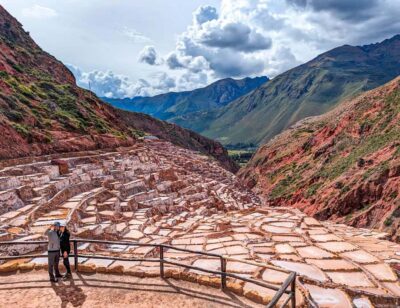
Chinchero,Moray & Salt Mines drop-off in Ollantaytambo
Read our review →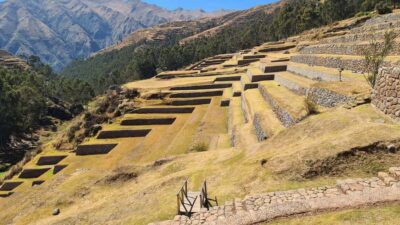

Moray, Maras Salt Mines & Chinchero Weavers Half-Day
Read our review →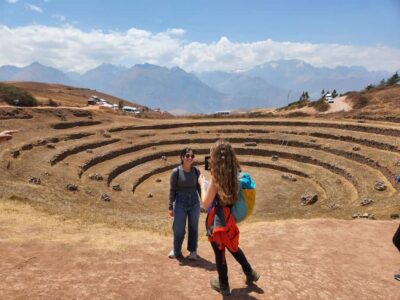
Browse the lists this tour appears in