
Reviewed · MARAS AND MORAY TOURS
Cusco: Sacred Valley, Pisac, Ollantaytambo, Salt Mines Moray
The big appeal here is simple: you cover five major Sacred Valley stops in one day without arranging several separate outings. You see Inca terraces, working salt ponds, a textile demonstration, a market town, and the remarkable stonework of Ollantaytambo, all for a low starting price.
I like the excellent mix of sights and the included buffet lunch in Urubamba. Guides such as Victor, Edith, Rudy, and Samuel have earned especially strong praise for clear English, good timing, and useful historical explanations. The catch is the pace: 12 hours on the road means short visits, and Ollantaytambo or Pisac deserves more time than this schedule allows.
In This Review
- Key points to know before booking
- Why this Sacred Valley day works
- Chinchero textiles and Andean craft
- Moray’s circular terraces and changing climates
- Maras salt ponds, still working today
- Urubamba and the buffet lunch
- Ollantaytambo, the day’s architectural high point
- Pisac ruins and the market town below
- Guides, vehicles, and the pace of the road
- The real cost at $28 per person
- Who should book this tour?
- Should you book the Sacred Valley circuit?
- FAQ
- How long does the Sacred Valley tour last?
- What time and where is the meeting point?
- Which places are included?
- Is lunch included?
- Are the entrance fees included in the price?
- Can I continue to Machu Picchu after the tour?
- What should I bring?
Key points to know before booking
- Five very different stops in one day: Chinchero, Moray, Maras, Ollantaytambo, and Pisac each show a different side of Andean life and Inca engineering.
- A true value tour at $28: Shared transport, a bilingual guide, and buffet lunch are included, but you still pay 70 soles for the tourist ticket and 20 soles for the salt mines.
- Ollantaytambo can be your Machu Picchu connection: With the special option, you can leave the tour around 3:00 p.m. and continue by train to Aguas Calientes.
- The guides make a real difference: Victor, Edith, Rudy, Samuel, Joel, and Christian are among the guides praised for clear explanations, language skills, and careful time management.
- Expect shopping stops: Chinchero includes a textile center, and Maras may include a salt shop. These add cultural context, but they can reduce time at the ruins.
- Bring warm layers and cash: Pisac can feel very cold and windy, and drinks, entry fees, and purchases are extra.
Why this Sacred Valley day works
The Sacred Valley is not one single sight. It is a chain of towns, ruins, farms, terraces, markets, and mountain roads spread across a large area. Seeing it properly usually takes more than a day.
This tour takes the express route. You move between the main points by shared tourist vehicle, with driving legs of about 20 to 100 minutes. The day starts early, generally with hotel pickup between 6:00 and 6:30 a.m. Some departures instead use a 7:20 a.m. meeting point at Cusco’s Plaza de Armas, so confirm your selected option before you book.
That early start matters. It gives the group a chance to reach the first stops before the day gets too crowded and keeps the full circuit possible. The tradeoff is obvious: you will spend a good part of the day sitting on the bus, and the final return to central Cusco is not expected until about 6:30 p.m.
I see this as a high-value overview, not a slow archaeological tour. You get enough time to understand each place, take photographs, and walk around, but not enough time to inspect every wall or browse every market stall.
More Maras salt mine and Moray trips:
- From Cusco: Sacred Valley & Maras Salt Mines Tour with Lunch
★ 4.8 · 2,227 reviews - From Cusco: Moray, Maras Salt Mines & Chinchero Weavers Tour
★ 4.8 · 1,925 reviews - Cusco:Chinchero,Moray & Salt Mines drop-off in Ollantaytambo
★ 4.8 · 793 reviews
Chinchero textiles and Andean craft
Chinchero is the first cultural stop, reached after about 40 minutes by vehicle. Its textile tradition gives you a useful introduction to everyday Andean culture before the day turns toward large archaeological sites.
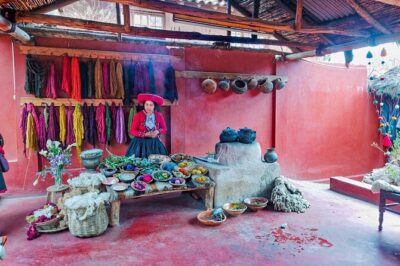
At the textile center, you can see how local makers use natural fibers and dyes made from plants and minerals. The demonstration helps explain how color and fabric are produced rather than treating textiles as simple souvenirs. It also gives you a clearer idea of the skill behind the woven clothing and household goods sold around Cusco.
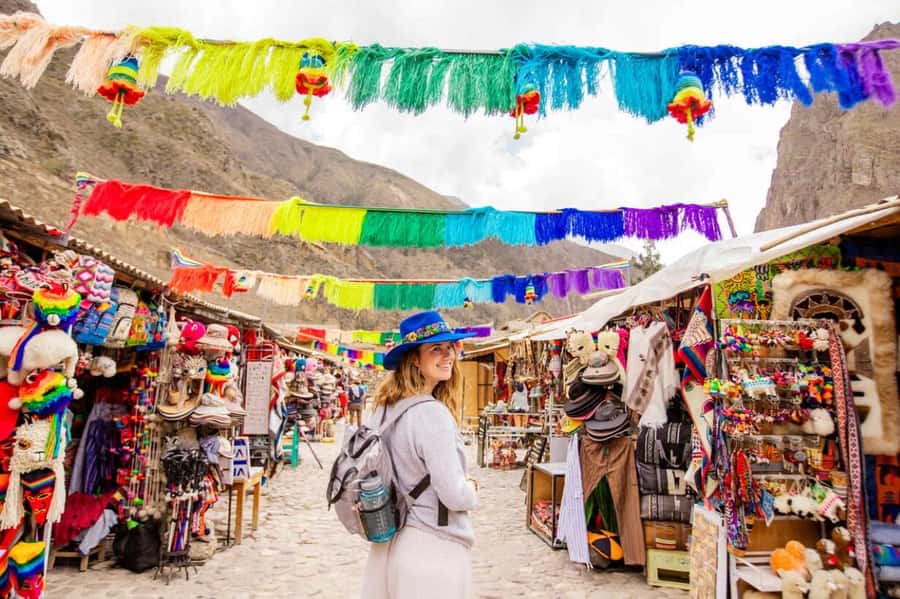
You have roughly 25 minutes here, including the explanation, photographs, and possible shopping. That is enough for the demonstration, but not for a relaxed look at every item. If you dislike sales-oriented stops, keep your expectations in check. The textile visit is part of the program, and it is one of several moments when the tour connects history with present-day work.
I like this stop because it keeps the day from becoming a parade of ruins. You see that Andean traditions are not only something preserved behind museum glass. They remain part of local production and daily life.
Moray’s circular terraces and changing climates
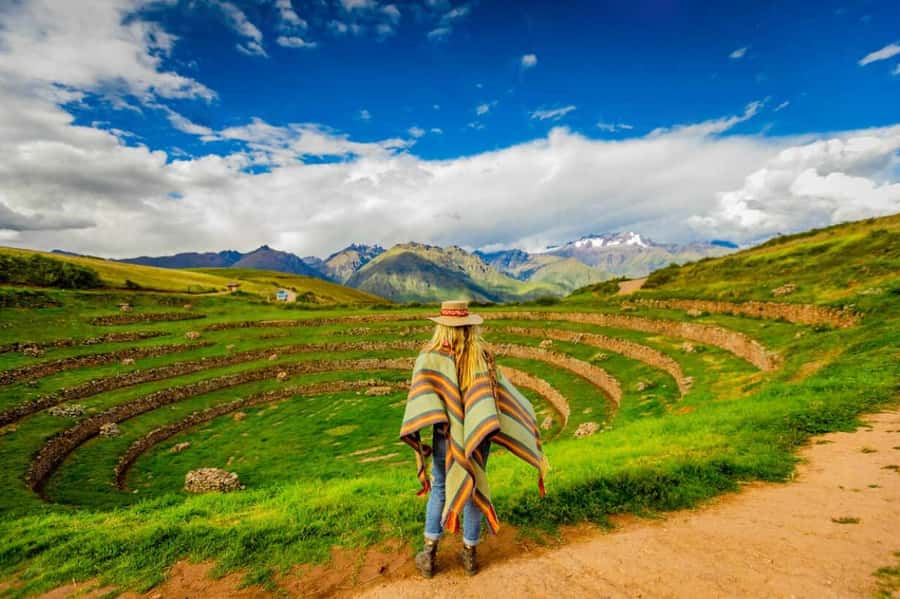
After another 40-minute drive, the group reaches Moray. This is one of the most unusual Inca sites in the region: a series of large, circular terraces dropping into the earth.
The terraces are often explained as an agricultural testing ground. Their different levels created different growing conditions, allowing the Incas to work with varied temperatures and crops. The important point for you is not only the shape. Moray shows how carefully Inca planners observed water, altitude, sunlight, and soil.
The visit is scheduled for about 20 minutes. That is a short window for a place where you may want to stop, look across the whole formation, and understand its scale. Your guide will provide the main explanation, then you will have time for photographs and a quick walk around the viewing area.
Bring sunscreen. The high-altitude sun can be strong even when the air feels cool. Comfortable shoes help, although the listed schedule does not describe a long hike. Moray is visually striking, but the visit is more about seeing the site and grasping its purpose than exploring it at length.
Maras salt ponds, still working today
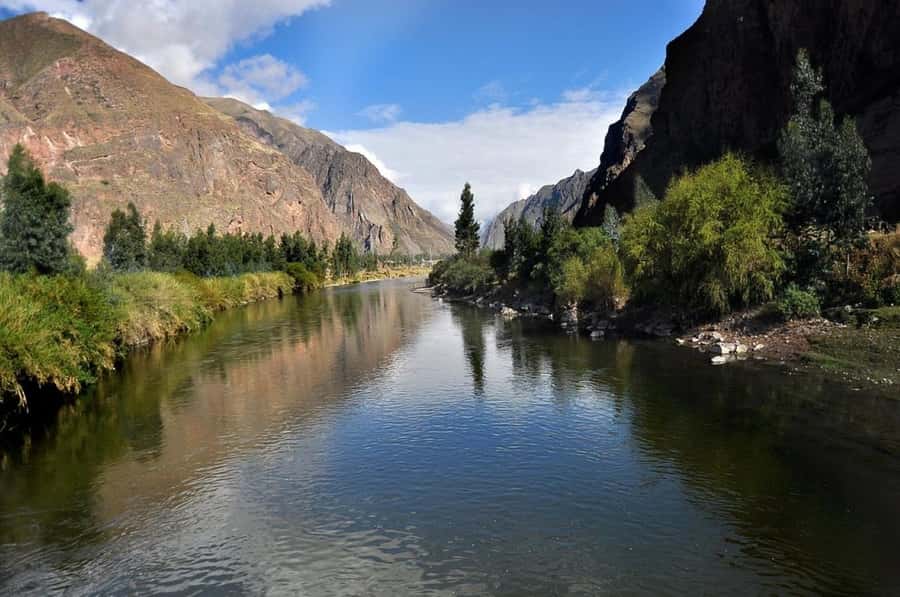
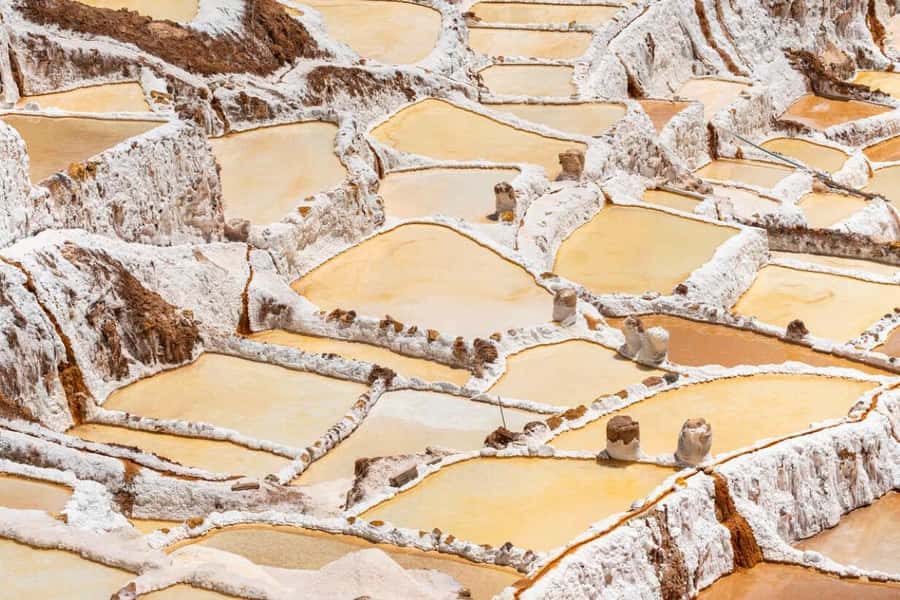
A 25-minute drive brings you to the Maras salt mines. Here, thousands of small pools spread across a steep mountainside, fed by an underground spring. As water flows into the ponds and evaporates, salt is collected.
The site links ancient trade with present-day work. Salt production existed here during the Inca period, and the ponds remain in use. That continuity makes Maras more than a scenic stop. You are seeing a working system that has survived as part of the local economy.
You get about 30 minutes for the visit, guided information, photographs, and possible shopping. The ponds are photogenic, but the ground can be uneven and the setting may feel exposed. Watch your footing and keep cash handy for small purchases, though you are not required to buy anything.
One practical tip: compare prices before purchasing salt or chocolate at a workshop or gift shop. A useful shopping plan is to wait and check the San Pedro or San Blas markets in Cusco, where similar items may cost less. The tour’s shopping stops can be interesting, but they are not always the best place to buy.
The mine entrance costs 20 soles and is not included in the $28 tour price. That fee is easy to overlook when comparing tours, so add it to your budget.
More Ollantaytambo and Pisac visits:
- Sacred Valley: Chinchero, Moray, Ollantaytambo & Pisac+Lunch
★ 4.8 · 501 reviews - Pisac Indian Market and Ollantaytambo Fortress with Lunch
★ 4.5 · 395 reviews - Cusco:Sacred Valley Pisaq,Ollantaytambo,Chinchero with Lunch
★ 4.8 · 183 reviews - Full-Day Excursion to Sacred Valley, Pisac and Ollantaytambo from Cusco
★ 4.5 · 174 reviews
Urubamba and the buffet lunch
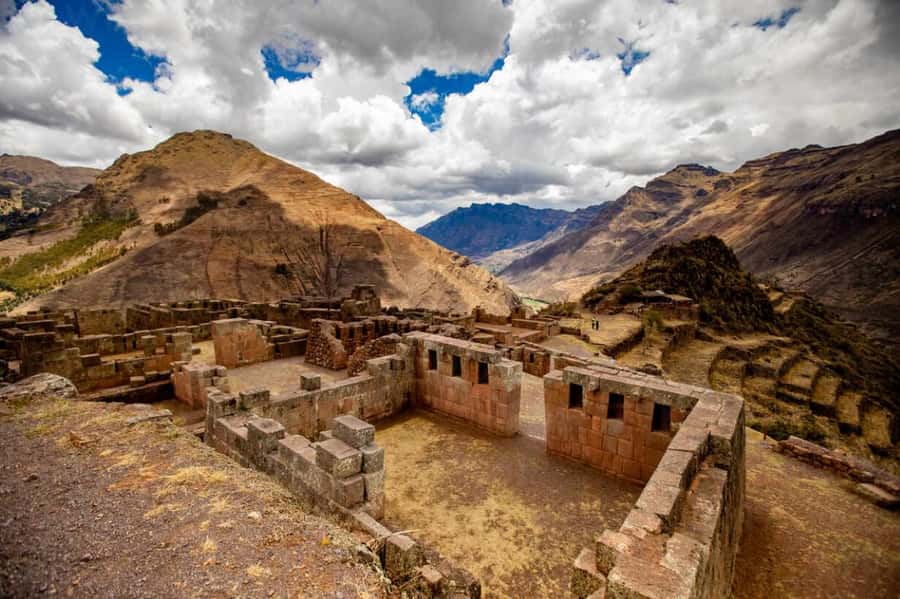
After Maras, the vehicle continues for about 20 minutes to Urubamba, the central town of the Sacred Valley. This is the day’s main break, with approximately 50 minutes set aside for lunch.
The included buffet is one of the strongest practical features of the trip. A hot meal in the middle of a long day saves you from hunting for a restaurant while trying to stay with the group. The meal is served at a scenic venue, and several guides have been praised for the quality and range of the food.
Drinks are extra. Hot beverages may be included at the lunch venue, but cold drinks are available for purchase, so carry cash. You may also have a little time to notice the local setting, but do not expect a long independent visit through Urubamba. This stop is primarily a meal break.
I appreciate the placement of lunch. By this point, you have already seen Chinchero, Moray, and Maras, and a proper pause helps keep the afternoon manageable. Still, 50 minutes is not a leisurely meal if the group is large or service takes time.
Ollantaytambo, the day’s architectural high point
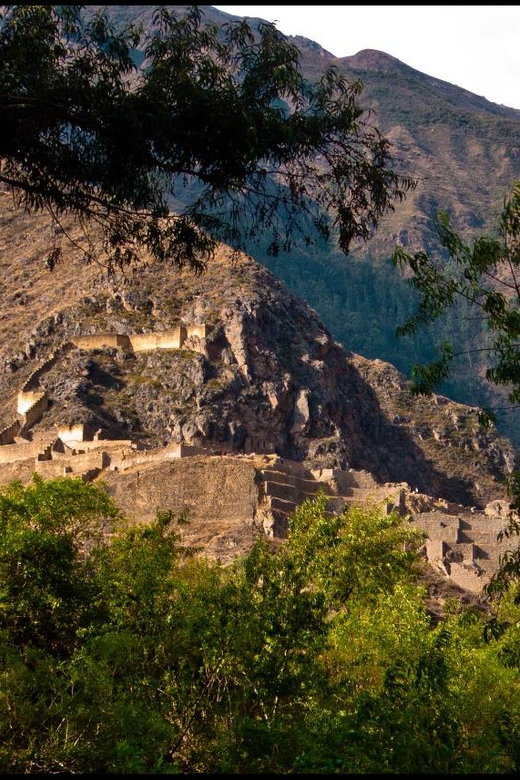
The next drive takes about 30 minutes, leading to Ollantaytambo. For many people, this is the most impressive stop of the day.
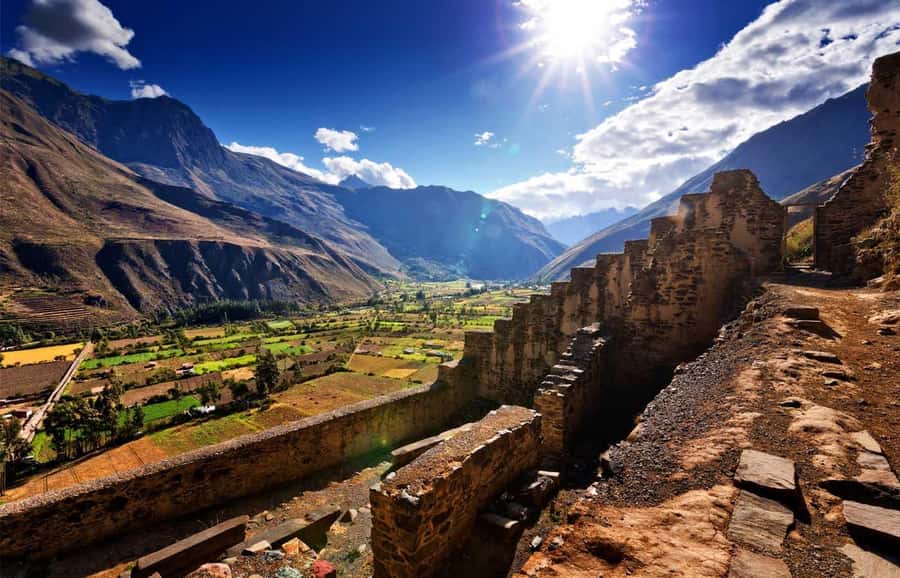
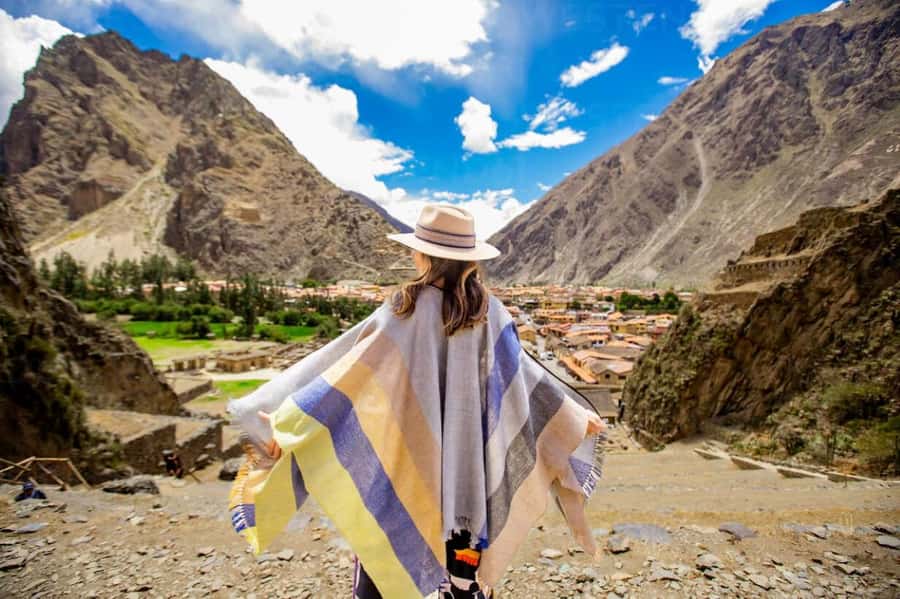
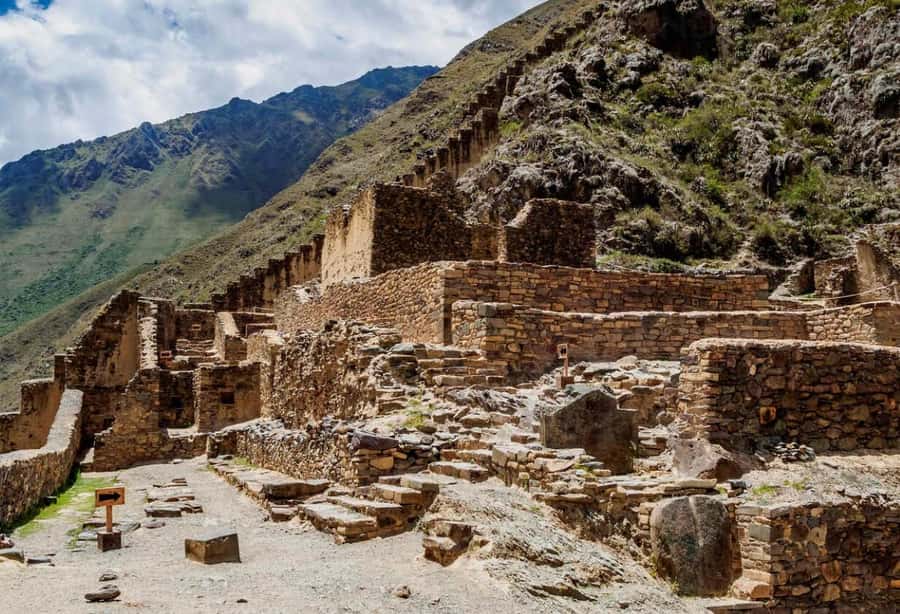
Ollantaytambo is both an archaeological site and a living town. Its cobbled streets and original Inca urban layout remain in use, while the fortress rises above the settlement. Massive stone terraces and temple structures show the scale of Inca construction and the care taken to fit buildings into the mountain setting.
The scheduled visit lasts about one hour. Your guide will explain the main structures, direct you to good viewpoints, and leave some time for photographs. The climb includes steep steps, so this is the stop where the pace can feel demanding, especially if you have asthma, limited mobility, or simply need frequent rests.
The tour keeps moving because Pisac still lies ahead. If you want to study every wall, climb every terrace, and wander the town at leisure, this format will feel rushed. On the other hand, guides such as Edith, Rudy, Samuel, and Joel have been praised for keeping groups on time while still offering useful explanations.
There is also a major planning advantage. If you are continuing to Machu Picchu, choose the option that ends in Ollantaytambo around 3:00 p.m. You can leave with your luggage and board a train to Aguas Calientes. Confirm the exact arrangement in advance, including where your luggage will be handled and how much independent time you will have.
Do not assume that the regular full circuit and the Machu Picchu option provide the same afternoon. The advertised schedule also includes Pisac and a return to Cusco, so the selected option matters.
Pisac ruins and the market town below
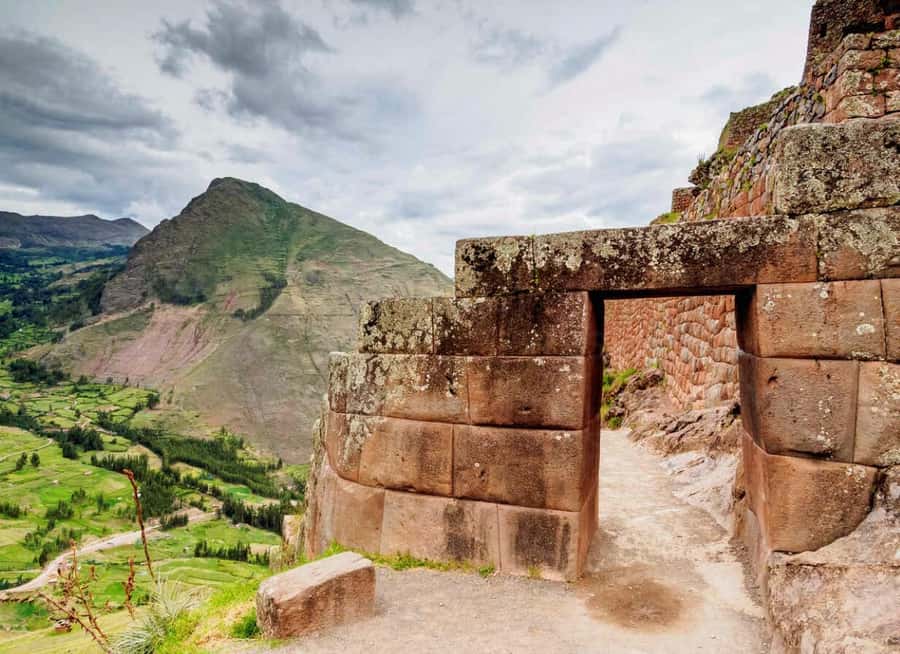
The route then takes about 100 minutes to Pisac, followed by a visit of around one hour. This is the longest drive of the day, and it comes late, when you may already be tired.
Pisac combines hillside Inca ruins with a colonial town below. The elevated setting gives you wide views over the valley, while the stonework and terraces offer another look at Inca planning. The town is also known for its artisan market, though a fast group itinerary may leave little time for browsing.
Pisac can be cold and windy, especially at higher viewpoints. Pack a fleece or light jacket even if Cusco feels mild at breakfast. The late timing can also affect the experience. One departure reached the final site close to closing time, leaving part of it unavailable, so an earlier start would be useful on days when access hours are tight.
This is a good example of the tour’s central compromise. You get to see Pisac rather than cutting it from the day, but you do not get the unhurried market time or full ruin exploration that a dedicated Pisac outing could provide.
Guides, vehicles, and the pace of the road
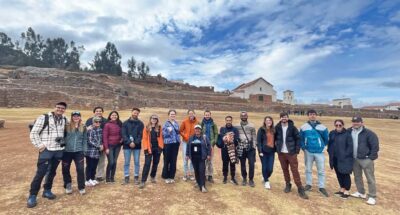
The professional guides speak English and Spanish, and the quality of the guiding is a major reason this tour works. Victor has been praised for making the day fun and clear. Edith is noted for strong explanations, care with solo participants, and keeping the group ahead of crowds. Rudy is particularly good at pointing out photo locations and explaining practical matters such as restroom stops.
Samuel, Joel, Christian, Luis, and other guides have also been praised for calm bilingual explanations and strong command of Inca culture and archaeology. The guide’s job here is not just to recite dates. A good guide helps you understand why Moray was built, how the salt ponds work, and what makes Ollantaytambo different from Pisac.
Transport is shared, though private or small-group options are available. Vehicles have generally been described as comfortable and well driven, but legroom can be tight on a long day. You will spend enough time seated that this is worth considering, especially on the long ride between Ollantaytambo and Pisac.
Hotel pickup is optional on some versions. Narrow Cusco streets may require you to walk to a nearby pickup point, and one meeting option is the Plaza de Armas at 7:20 a.m. Read the pickup instructions closely instead of assuming the vehicle will reach your hotel door.
The real cost at $28 per person
At $28 per person, this is an unusually inexpensive way to cover so much ground. Transport, a bilingual guide, the textile center, and buffet lunch are included. For someone with only one free day in Cusco, the value is strong.
The advertised price is not the complete spending total. You need 70 soles for the tourist entrance ticket, 20 soles for the Maras salt mines, and extra money for drinks and purchases. If you are also visiting other Cusco archaeological sites, check which tourist ticket makes sense. One broader ticket option has been priced at 130 soles and may be better value than buying separate partial tickets, depending on your plans and the current ticket rules.
The tour also creates value through organization. You avoid arranging several vehicles and meals, and a good guide keeps the group moving through a wide area. The price is less impressive if your priority is quiet time at one or two sites, since you are paying for breadth rather than depth.
Who should book this tour?
I would choose this tour if you have only one day for the Sacred Valley and want a broad first look. It suits solo visitors, couples, and small groups who prefer a guide, included lunch, and a fixed route rather than independent transport planning.
It is also a smart option before Machu Picchu if you select the Ollantaytambo ending and coordinate the train carefully. The route introduces you to several types of Inca sites before your main visit to Machu Picchu.
I would choose a slower two-day plan if you want long market visits, extended photography, detailed archaeology, or time to linger in Ollantaytambo and Pisac. You should also think twice if steep steps, cold high-altitude stops, or long bus rides are difficult for you.
Pack your passport, sunscreen, cash, warm layers, water, and comfortable walking shoes. Biodegradable insect repellent is also listed among the suggested items. Weapons, sharp objects, drones, alcohol, and drugs are not allowed.
Should you book the Sacred Valley circuit?
Book it if your goal is to see the main Sacred Valley highlights efficiently and spend very little per person. The combination of Moray, Maras, Ollantaytambo, Pisac, Chinchero, and lunch is hard to match at this price.
Skip it in favor of a slower private plan if you already know the valley’s main sites or want deep time at each one. The best version of this tour depends on your guide and your timing, so confirm the pickup point, language, group size, and Ollantaytambo ending before paying. With realistic expectations about the long day and quick visits, this is a practical, well-organized introduction to the Cusco region.
FAQ
How long does the Sacred Valley tour last?
The full activity lasts about 12 hours. The regular route generally begins early in the morning and returns to central Cusco around 6:30 p.m.
What time and where is the meeting point?
One meeting option is Cusco’s Plaza de Armas at 7:20 a.m., near the water fountain. Some selected options include hotel pickup between 6:00 and 6:30 a.m., or pickup about 15 minutes before departure, so check your booking choice carefully.
Which places are included?
The route includes Chinchero, Moray, the Maras salt mines, Urubamba, Ollantaytambo, and Pisac. Chinchero includes a textile center, and Urubamba is the lunch stop.
Is lunch included?
Yes. A buffet lunch in Urubamba is included. Drinks are not included, although hot beverages may be available with the meal and cold drinks can be purchased.
Are the entrance fees included in the price?
No. The tourist entrance ticket costs 70 soles, and the Maras salt mine entrance costs 20 soles. Both are separate from the $28 tour price.
Can I continue to Machu Picchu after the tour?
Yes, a special option can end in Ollantaytambo around 3:00 p.m., allowing you to continue by train to Aguas Calientes. Confirm the exact option and luggage arrangements before booking.
What should I bring?
Bring your passport, sunscreen, cash, and biodegradable insect repellent. Warm clothing and comfortable walking shoes are also sensible because Pisac can be cold and windy and Ollantaytambo includes steep steps.
More Sacred Valley Tours
- Sacred Valley: Maras & Moray by Quad Bike from Cusco
★ 4.6 · 418 reviews - From Cusco: 2-Day Trip to the Sacred Valley and Machu Picchu
★ 4.6 · 265 reviews - Food and Culture Full day Tour in the Sacred Valley
★ 5.0 · 144 reviews - Private Tour to Sacred Valley and Machu Picchu from Cusco
★ 5.0 · 133 reviews
Just added around Cusco
- Cusco: Via Ferrata, Skybike, and Rappel Adventure★ 5.0 · 3 reviews
- From Cusco: Maras and Moray and Ollantaytambo Tour★ 5.0 · 3 reviews
- Cusco: Rainbow Mountain Tour at Sunset Without the Crowds★ 4.7 · 3 reviews
- Cusco: Sacred Valley Day Trip with Maras & Moray Salt Mines★ 5.0 · 3 reviews
- Valle Sur Cusco | half day★ 4.3 · 3 reviews
- IN MACHU PICCHU: Private Tour Guide Service★ 5.0 · 3 reviews
- Salkantay trek to Machu Picchu – 5D/4N – Premium★ 3.3 · 3 reviews
- Full-Day Condor Viewpoint & Inca Sites Tour★ 5.0 · 3 reviews
Maras and Moray Tours, compared.
Sacred Valley & Maras Salt Mines Tour with Lunch
Read our review →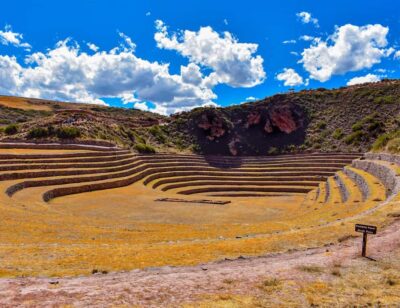
Moray, Maras Salt Mines & Chinchero Weavers Tour
Read our review →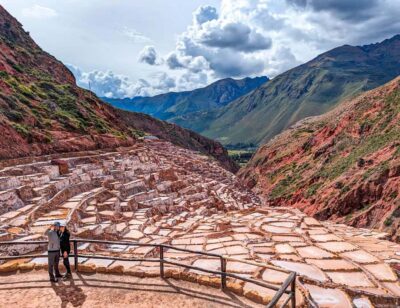
Chinchero,Moray & Salt Mines drop-off in Ollantaytambo
Read our review →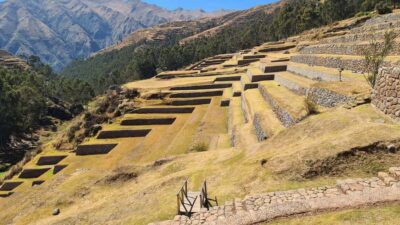


Moray, Maras Salt Mines & Chinchero Weavers Half-Day
Read our review →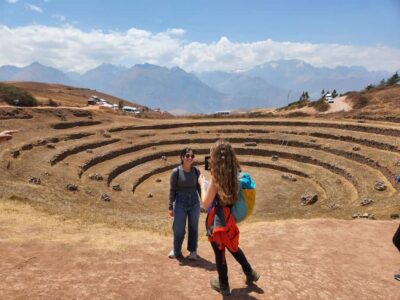
Browse the lists this tour appears in