
Reviewed · SALKANTAY TREKS
Cusco: 5-Day Salkantay Ultimate Trek to Machu Picchu
The big draw here is the route itself: you climb from high Andean peaks to cloud forest and reach Machu Picchu by way of Llactapata, where the ruins offer an unusual first view of the citadel. I like the Humantay Lake hike and the chance to share local coffee-farm life in Lucmabamba. I also like that horses carry equipment and up to 7 kilograms of your belongings.
The catch is the altitude and effort. Salkantay Pass reaches 4,630 meters, and the trek includes long uphill and downhill sections. One verified booking described it as physically and mentally difficult, though well worth it. Take that warning seriously, especially if you have had altitude sickness or back trouble.
In This Review
- Key points at a glance
- Why this Salkantay route earns its place on your Peru trip
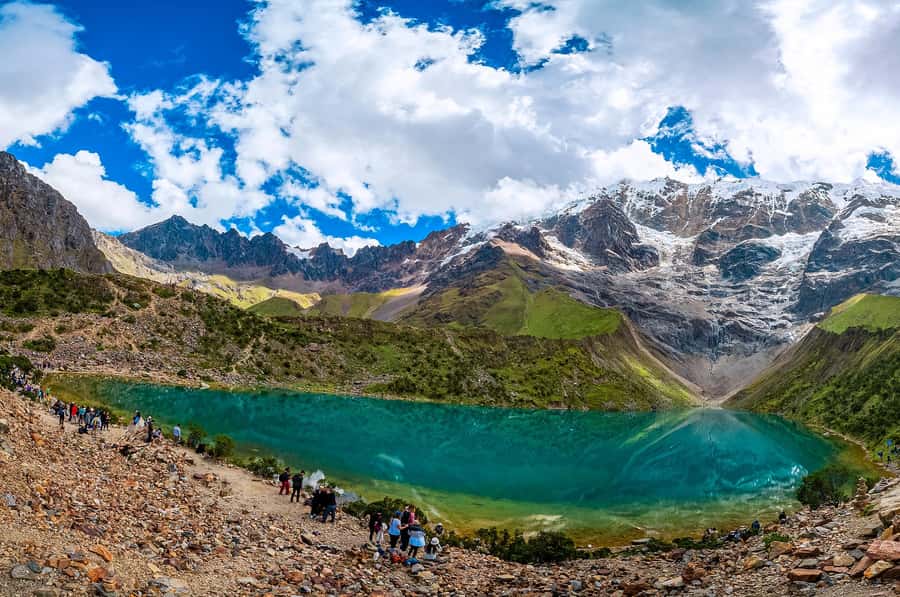
- Day 1: Soraypampa and the blue water of Humantay Lake
- Day 2: The hard climb over Salkantay Pass
- Day 3: Waterfalls, cloud forest, and Lucmabamba
- Day 4: Llactapata and the approach to Aguas Calientes
- Day 5: A guided visit inside Machu Picchu
- What the $669 price really covers
- Camping, horses, meals, and group size
- Altitude, fitness, and what to pack
- How the guides and support team affect the experience
- Who should book this five-day Salkantay trek?
- Should you book it?
- FAQ
- How long is the Salkantay trek to Machu Picchu?
- What is the highest point of the trek?
- How high is Humantay Lake?
- Is camping included?
- Are meals included?
- Is a sleeping bag included?
- Can horses carry personal belongings?
- Is Machu Picchu entrance included?
- Is Huayna Picchu included?
- How many people are in each group?
Key points at a glance
- Humantay Lake at 4,200 meters: A turquoise glacial lagoon beneath the Humantay and Salkantay peaks.
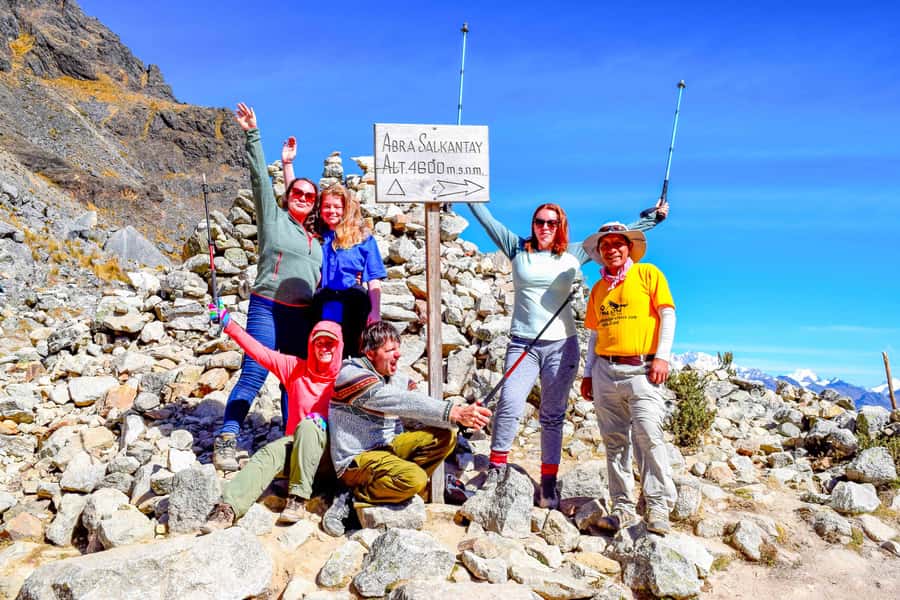
- Salkantay Pass at 4,630 meters: The highest and hardest point, with wide views of snowy summits and valleys.
- Lucmabamba coffee country: Spend time with a local family and learn about coffee farming in the cloud forest.
- Llactapata viewpoint: Reach lesser-visited Inca ruins by an original trail for a distinctive view toward Machu Picchu.
- Small group support: Groups hold no more than 10 people, with an assistant guide added for groups of nine or more.
- A practical price: At $669 per person, the package covers guides, meals, camping support, horses, Machu Picchu entry, bus, and a hotel in Aguas Calientes.
Why this Salkantay route earns its place on your Peru trip
I like this trek because it gives you more than a straight approach to Machu Picchu. In five days, you move through several very different parts of the Cusco Region: cold high mountain country, a stark pass, wet cloud forest, coffee-growing slopes, Inca ruins, and finally the famous citadel.
That change in scenery is the main reward. Day 1 and Day 2 are about altitude, endurance, and huge mountain views. Day 3 and Day 4 feel more botanical and personal, with waterfalls, fruit trees, local farming, and time in Lucmabamba. Day 5 brings the major archaeological visit, with a guide to explain the temples, terraces, ceremonial areas, and storage buildings.
You should also know what this is not. It is not a gentle sightseeing holiday with a little walking added. You camp for four nights of the route, sleep in tents, and tackle high elevations. The support is good, but support does not remove the need for steady fitness and sensible preparation.
The tour receives a top rating from the small number of posted bookings, with particular praise for the scenery, guide, and support crew. That matches the design of the trip. A cook, horses, dining tent, wake-up tea, first aid kit, oxygen bottle, and assistant guide for larger groups all help make a demanding route more manageable.
More ways to reach Machu Picchu:
- From Cusco: Full-Day Group Tour of Machu Picchu
★ 4.7 · 1,767 reviews - Machu Picchu Day Trip from Cusco
★ 4.5 · 1,644 reviews - Machu Picchu: Full-Day Tour from Cusco with Optional Lunch
★ 4.6 · 927 reviews
Day 1: Soraypampa and the blue water of Humantay Lake
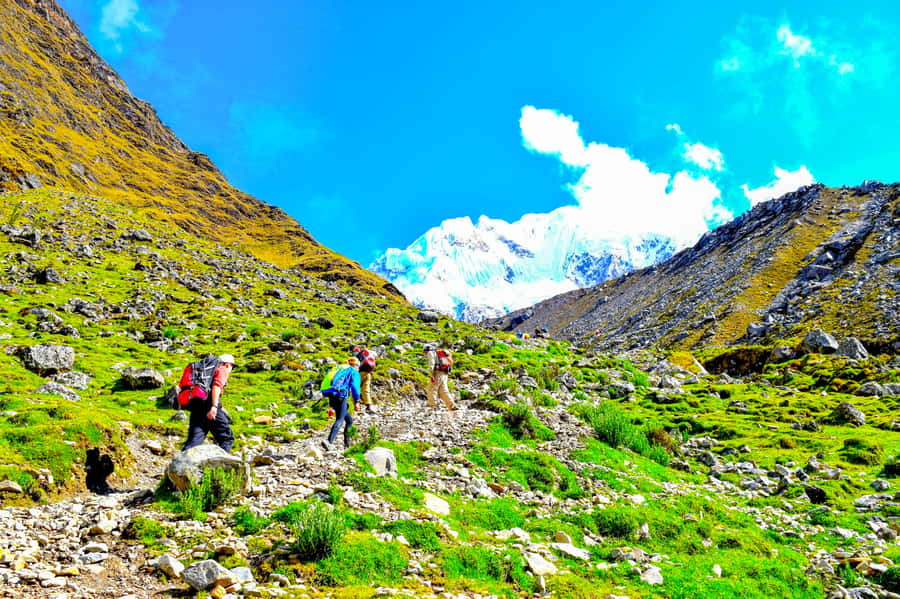
Your first day points toward Soraypampa at 3,800 meters. The mountains are already serious here, with Salkantay rising to 6,271 meters and Humantay forming the high backdrop. The air is crisp, and the trail gives you an early taste of the altitude that will shape the next two days.
The walk to Humantay Lake reaches 4,200 meters. The turquoise water reflects the peaks, making this one of the most memorable stops on the route. It is beautiful, but it is also a real uphill hike at high elevation, not a quick roadside photo stop.
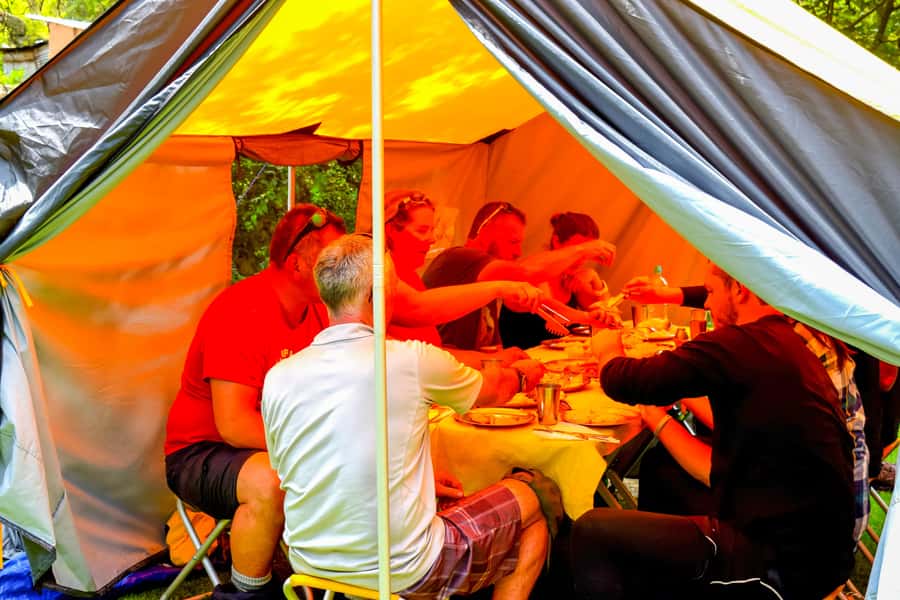
A classic Peruvian lunch is served during the day, followed by more walking before you return to camp. Dinner and a night under the Andean sky finish the day. The package includes afternoon snacks and dinner, as well as a cook and dining tent with tables and chairs.
You need to bring your own water for the first four hours of the trek. After that, water is included. This is an easy detail to miss, so pack enough for that opening stretch rather than assuming the support team supplies it from the first step.
Day 2: The hard climb over Salkantay Pass
Day 2 is the test. You climb to Salkantay Pass at 4,630 meters, the highest point of the trek. At this height, even a modest incline can feel slow. The route rewards your effort with views of snow-capped peaks, sharp ridges, and valleys that run far below.
I would treat this day as a steady-pacing day, not a race. The air is thin, and the pass is the place where altitude can become more than a minor nuisance. The tour is not suitable for people with altitude sickness, and anyone with serious back problems should choose a different way to Machu Picchu.
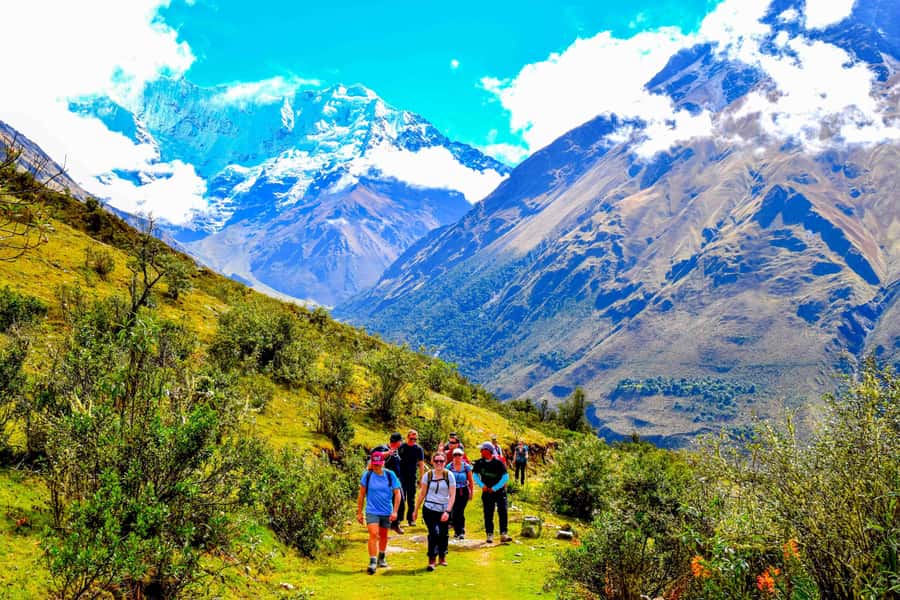
After the pass, the route drops into a high-altitude jungle. That change is striking. Within the same day, you go from icy mountain conditions to more plant life and warmer surroundings. Camp is reached after a long and rewarding day, with dinner and the basic comforts of the organized camp waiting for you.
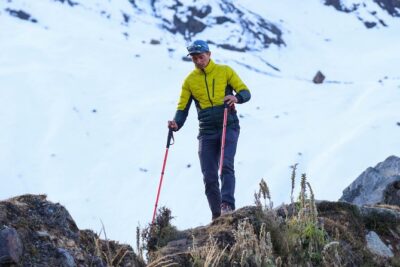
A double-thickness foam mattress is included. Tents are set up for two people in four-person tents, which gives you more room than a tightly packed two-person shelter. A sleeping bag is not included, but you can hire one. Trekking poles can also be hired, and they are worth considering for the steep descents and uneven trail.
Day 3: Waterfalls, cloud forest, and Lucmabamba
The third day changes the character of the trip. You descend through cloud forest for about five hours toward Playa Sahuayaco at 2,200 meters. The trail passes waterfalls, fruit-laden trees, and a wide range of plants and wildlife.
This section can feel easier on your lungs than the pass, but downhill walking has its own cost. Your knees and feet take more pressure, particularly after the long climb the day before. Good shoes, comfortable clothing, and rain gear matter here.
The route then reaches Lucmabamba at 2,000 meters, a coffee-growing area often described as the eyebrow of the Amazon. The experience includes time with a local family and a look at their coffee farm. This is one of the most distinctive parts of the trip because it connects the walking route with everyday rural life, rather than treating the forest as scenery only.
Lucmabamba is also the starting point for an old Inca trail to Llactapata. That sets up the next day and gives the final camp a clear purpose. You are not simply stopping at another campsite. You are positioning yourself for a less common approach to Machu Picchu.
More Salkantay departures:
- Salkantay Trek Challenge – 3 Days / 2 Nights
★ 5.0 · 101 reviews - Small Group 5 Days Salkantay and Machu Picchu by Llactapata Tour
★ 5.0 · 88 reviews - Machu Picchu: 5-Day Salkantay Trek with Panoramic Train
★ 5.0 · 79 reviews - Salkantay Trek 4 Days to Machu Picchu by Glamping Sky Lodge Dome
★ 5.0 · 68 reviews
Day 4: Llactapata and the approach to Aguas Calientes
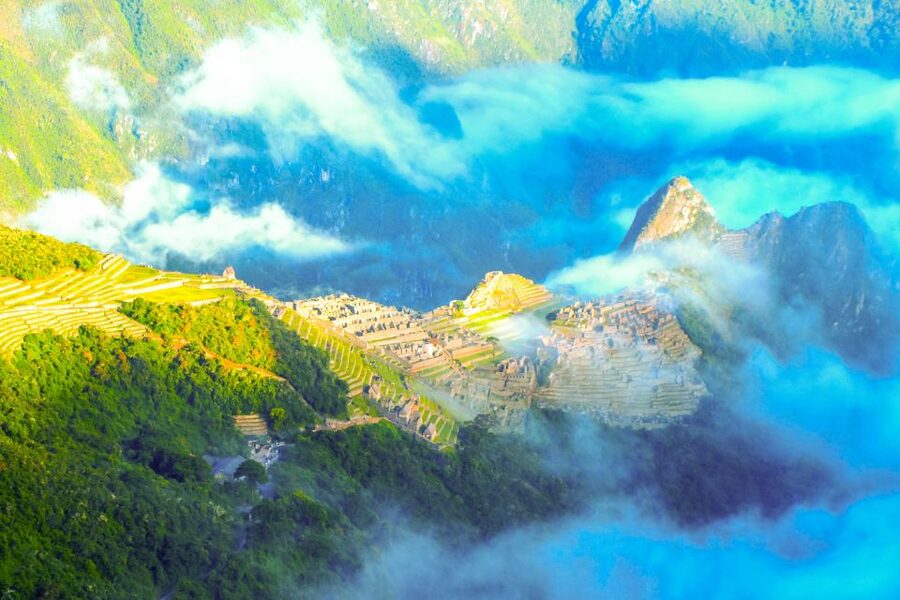
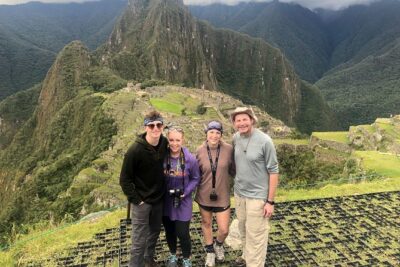
After breakfast, you climb for about two hours along an original Inca trail to Llactapata, at 2,840 meters. The ruins are less visited than Machu Picchu, but their location is the real attraction. From here, you get a first view toward Machu Picchu from a different angle.
I value this stop because it creates a sense of arrival before the main visit. Instead of seeing Machu Picchu only after entering its gates, you first glimpse it from the surrounding mountains. The terraces also help show how the Inca used steep terrain for farming and settlement.
From Llactapata, you descend for about 1.5 hours through cloud forest to the Hydroelectric Station at 1,890 meters. This is a shorter walking section than the earlier days, but it comes after several demanding stages. You then travel to Aguas Calientes at 2,040 meters.
The hotel night in Aguas Calientes is a practical part of the package. After three days of camping and trail walking, a proper room gives you a chance to wash, rest, and prepare for the early visit to Machu Picchu. It also means the final day is focused on the archaeological site rather than another long approach hike.
Day 5: A guided visit inside Machu Picchu
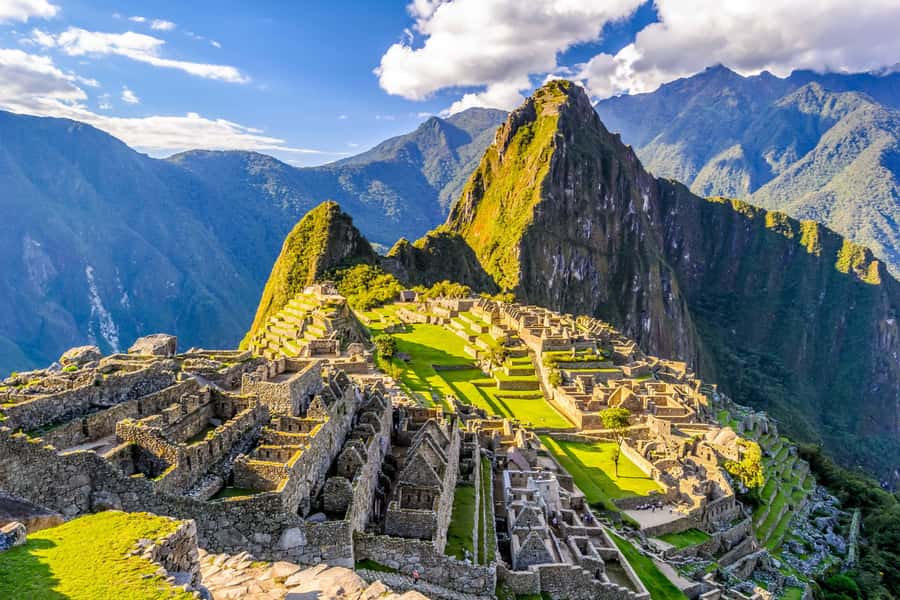
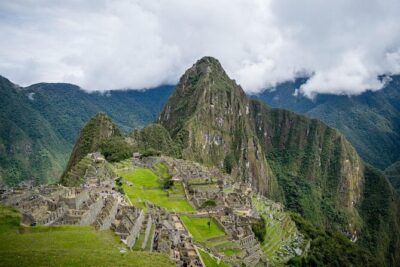
The final morning begins with breakfast and a bus to Machu Picchu at 2,430 meters. Your professional guide leads the visit through the citadel, explaining the temples, ceremonial spaces, terraces, and storage buildings.
This guided portion is important. Machu Picchu can look like a collection of impressive stone walls if you do not have context. A guide helps you understand how the different areas fit together and why the terraces and buildings matter.
After the citadel visit, you may have the option to hike Huayna Picchu or Machu Picchu Mountain. These are separate mountain hikes, and the listed cost for Huayna Picchu is $85. The tour information does not include that fee in the base price, so check availability and budget for it if the extra climb is a priority.
You return to Aguas Calientes for a short rest and lunch, then take a train to Ollantaytambo. A van brings you back to Cusco. Lunch and dinner on Day 5 are not included, so keep money available for those meals.
What the $669 price really covers
At $669, this is not simply a guided walk with a Machu Picchu ticket attached. The price includes a substantial support system:
- Pre-departure briefing and a duffle bag for the trek
- English or Spanish-speaking professional guide
- Assistant guide for groups of nine or more
- Professional cook
- Horses carrying equipment and up to 7 kilograms of personal belongings
- Hotel pickup and transport
- Four breakfasts, four lunches, four afternoon snacks, and four dinners
- Wake-up tea each morning
- Camping equipment, dining tent, and foam mattress
- Oxygen bottle and first aid kit
- Machu Picchu entrance and bus
- Hotel in Aguas Calientes
That package makes the price reasonable for a five-day mountain trip. You are paying not only for guiding, but also for food, portering support, camps, transport, entrance arrangements, and the hotel night.
There are still extra costs. You need a sleeping bag unless you hire one, and trekking poles are optional rentals. Breakfast on Day 1, plus lunch and dinner on Day 5, are yours to cover. Travel insurance is strongly recommended, and the separate Huayna Picchu fee can add considerably to the total.
Camping, horses, meals, and group size
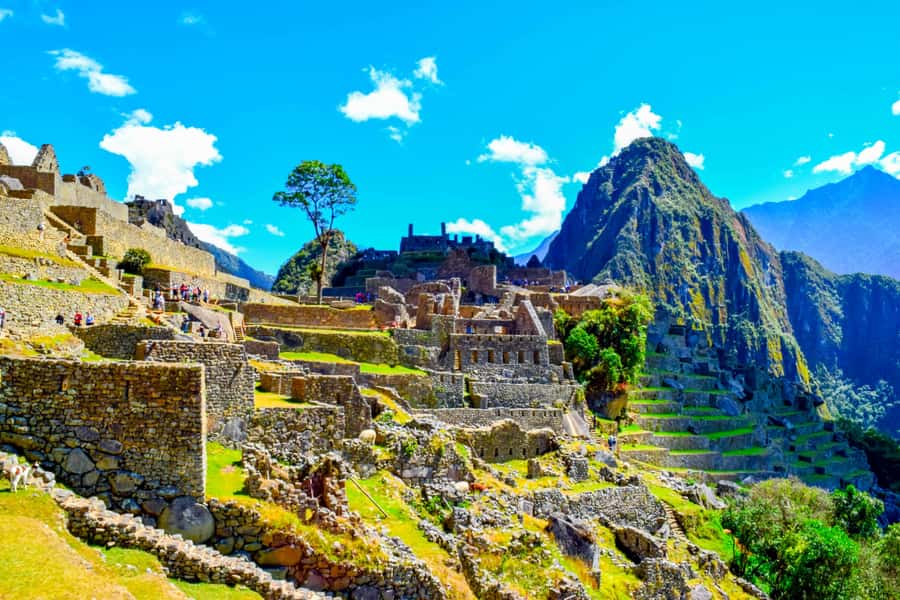
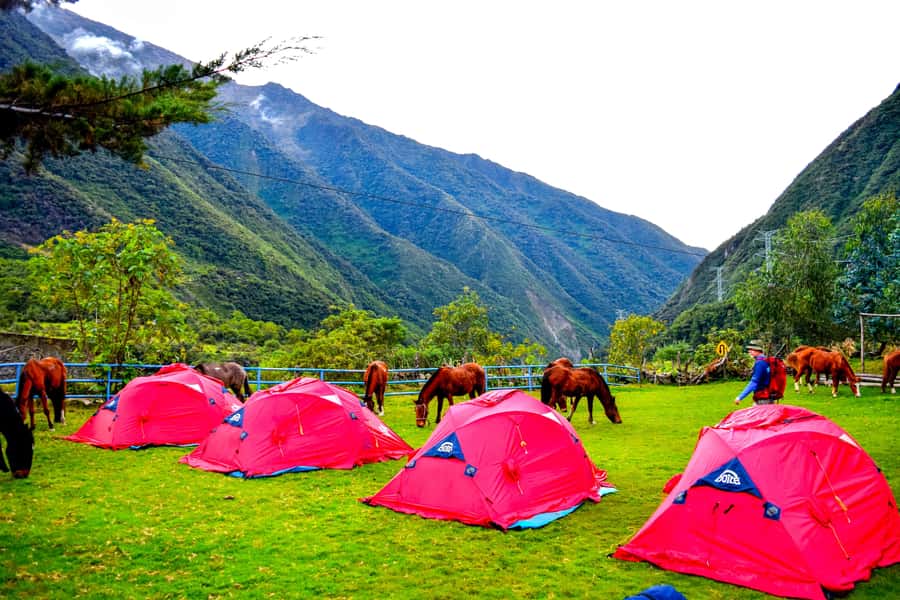
The camping arrangement is organized but basic. You sleep in four-person tents shared by two people, use a double-thickness foam mattress, and eat in a dining tent. Staff bring wake-up tea to your tent each morning, a small service that can feel especially welcome on cold starts.
Horses carry the equipment and up to 7 kilograms of your personal items. That lets you hike with a lighter day pack, but it does not mean you should pack without limits. You still need your own essentials, including a passport or ID card, sun protection, rain gear, and comfortable clothes.
Meals include four breakfasts, lunches, snacks, and dinners. Vegetarian, vegan, and gluten-free requests can be arranged if you tell the supplier when booking and confirm them again at the briefing. Mention allergies clearly.
Groups are limited to 10 people, and the booking type is private group. The tour requires at least two participants. A small group can make the pace and communication easier, though the exact feel will depend on who is booked for your departure.
Altitude, fitness, and what to pack
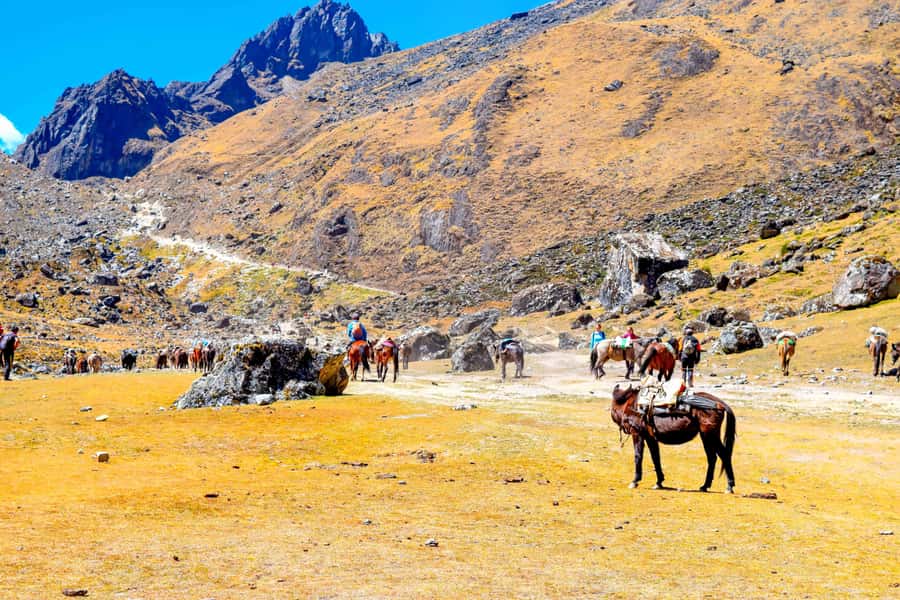
Altitude is the main practical issue. The route reaches 4,630 meters, with Humantay Lake at 4,200 meters and several camps and trail sections above ordinary city elevations. You should not choose this trek if you have known altitude sickness or serious back problems.
The walking is also mentally demanding. One booking described the route as physically and mentally difficult, which is a fair description of the combination of high altitude, long days, camping, and changing weather. You do not need to be an elite hiker, but you do need to be comfortable with sustained uphill and downhill walking.
Bring the required basics:
- Passport or ID card
- Sun hat
- Sunscreen
- Rain gear
- Comfortable clothes
The tour supplies water after the first four hours on Day 1, but bring your own supply for that opening period. A sleeping bag and trekking poles can be hired. You should also keep your passport with you during the tour activities.
Pets, weapons or sharp objects, alcohol, and drugs are not allowed. People over 70 are not considered suitable for this activity, according to the tour conditions.
How the guides and support team affect the experience
The guide is central to this trek. You have a professional English or Spanish-speaking guide throughout the route, plus an assistant guide for groups of nine or more. That matters on a trail with major changes in altitude and terrain.
The support crew also carries much of the practical load. A cook prepares the meals, horses transport gear, and staff handle camp details. This lets you focus more on walking and the surroundings instead of carrying a full camping kit.
The strongest praise attached to this experience centers on the scenery, the guide, and the care from the support team. Those are exactly the areas where a trek like this succeeds or fails. Beautiful mountains do not help much if food, pacing, and camp support are poorly managed, so this is encouraging.
Still, no support team can guarantee perfect weather, easy breathing, or a comfortable body on Day 2. Go in ready for effort, and you are more likely to appreciate the help rather than expect the crew to remove every hardship.
Who should book this five-day Salkantay trek?
I would recommend it to you if you want Machu Picchu as part of a larger mountain journey. You get high-altitude views, a glacial lake, a major pass, cloud forest, coffee farming, lesser-visited ruins, and a guided citadel visit in one trip.
It is also a good fit if you like a small group and want logistics handled for you. The horses, cook, camping equipment, transport, bus, train, and hotel reduce the amount of planning you need to do yourself.
I would not recommend it if you want a relaxed route, dislike camping, or have concerns about altitude. The route is demanding even though the support is well arranged. You should also think twice if you want to spend extra time inside Machu Picchu, since the final day includes the guided visit, return to Aguas Calientes, train to Ollantaytambo, and van transfer to Cusco.
Free cancellation up to 24 hours before departure and reserve-now, pay-later terms make planning less risky. Starting times vary, so check the available date before committing.
Should you book it?
Book this trek if you want the full Salkantay experience rather than the quickest route to Machu Picchu. The combination of Humantay Lake, Salkantay Pass, Lucmabamba, Llactapata, and a guided visit to Machu Picchu gives you a strong range of scenery and culture for $669.
Skip it if high altitude, long walking days, or camping are likely to spoil the trip. For a fit hiker who prepares properly, this is a demanding but rewarding five-day route with practical support and a memorable approach to Peru’s most famous ruins.
FAQ
How long is the Salkantay trek to Machu Picchu?
The tour lasts five days and ends with a guided visit to Machu Picchu.
What is the highest point of the trek?
Salkantay Pass is the highest point, at 4,630 meters or 15,190 feet.
How high is Humantay Lake?
Humantay Lake sits at about 4,200 meters or 13,780 feet.
Is camping included?
Yes. The package includes camping accommodation, four-person tents shared by two trekkers, a dining tent, and a double-thickness foam mattress. You also spend one night in a hotel in Aguas Calientes.
Are meals included?
Four breakfasts, four lunches, four afternoon snacks, and four dinners are included. Breakfast on Day 1 and lunch and dinner on Day 5 are not included.
Is a sleeping bag included?
No. A sleeping bag can be hired separately.
Can horses carry personal belongings?
Yes. Horses carry equipment and up to 7 kilograms of your personal items.
Is Machu Picchu entrance included?
Yes. Entrance to Machu Picchu and the bus to the site are included.
Is Huayna Picchu included?
No. Huayna Picchu requires a separate fee listed as $85.
How many people are in each group?
The group size is limited to a maximum of 10 people. An assistant guide is provided for groups of nine or more.
More Treks From Cusco
- Cusco: 4-Day Inca Trail to Machu Picchu with Accommodation
★ 4.8 · 432 reviews - From Cusco: 7 Lakes Ausangate Trek with Breakfast and Lunch
★ 4.8 · 360 reviews - Cusco: Machu Picchu 2-Day Inca Trail with Panoramic Train
★ 4.9 · 260 reviews - From Cusco: 2-Day Inca Trail to Machu Picchu
★ 4.2 · 244 reviews
Just added around Cusco
- Cusco: Via Ferrata, Skybike, and Rappel Adventure★ 5.0 · 3 reviews
- From Cusco: Maras and Moray and Ollantaytambo Tour★ 5.0 · 3 reviews
- Cusco: Rainbow Mountain Tour at Sunset Without the Crowds★ 4.7 · 3 reviews
- Cusco: Sacred Valley Day Trip with Maras & Moray Salt Mines★ 5.0 · 3 reviews
- Valle Sur Cusco | half day★ 4.3 · 3 reviews
- IN MACHU PICCHU: Private Tour Guide Service★ 5.0 · 3 reviews
- Salkantay trek to Machu Picchu – 5D/4N – Premium★ 3.3 · 3 reviews
- Guide in Machu Picchu★ 5.0 · 3 reviews
Salkantay Treks, compared.
Small Group 5 Days Salkantay and Machu Picchu by Llactapata Tour
Read our review →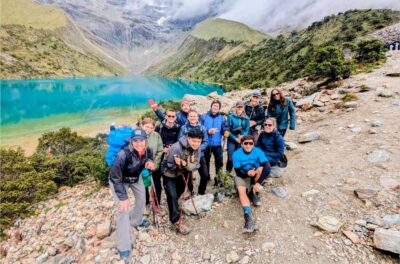
Salkantay Trek 4 Days to Machu Picchu by Glamping Sky Lodge Dome
Read our review →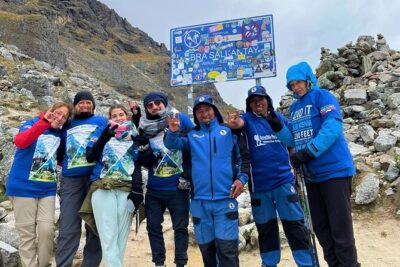
Salkantay Trek To Machu Picchu 5 Days And 4 Nights
Read our review →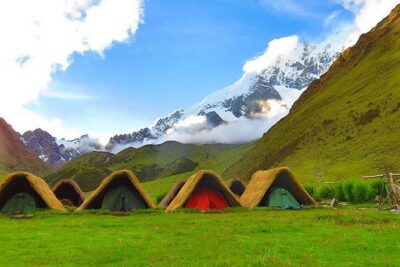
5-Day: Salkantay Trek to Machupicchu and Humantay Lake
Read our review →Browse the lists this tour appears in