
Reviewed · SALKANTAY TREKS
Cusco: 4-Day Salkantay Trek to Machu Picchu, Panoramic Train
The best part of this four-day Salkantay Trek is the sharp change in scenery. You start among high Andean peaks and turquoise water, cross a 4,630-meter mountain pass, then walk down into cloud forest before reaching Machu Picchu. It is a demanding route, but it gives you far more than a quick visit to the ruins.
I like the mix of outdoor comfort and local food. You sleep in glamping tents, Andean huts, and a three-star hotel, while the cooking team serves hearty trail meals, a traditional Pachamanca barbecue, and fresh coffee you prepare yourself. I also like the small-group limit of 16, plus the return on the Vistadome or 360° panoramic train.
The main caution is the second night. The huts and shared facilities at Collpapampa may feel basic, and a warm shower can cost extra. You should also confirm exactly which Machu Picchu entrance ticket is covered before paying, since the details distinguish between included trek access and tickets that must be booked ahead.
In This Review
- Key points to know before you book
- Why the Salkantay route earns four days
- Day one: Humantay Lake and the first night under the Andes
- Day two: The 4,630-meter Salkantay Pass
- Day three: Pachamanca, coffee, and the walk to Aguas Calientes
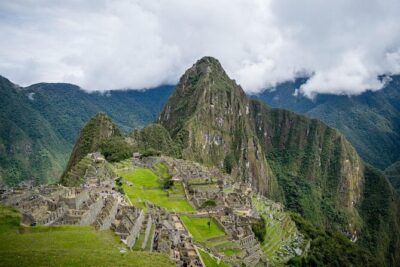
- Day four: Machu Picchu before the train home
- Food, guides, and the small-group advantage
- What the $552 price really buys you
- Who should choose this trek
- Should you book the Salkantay Trek?
- FAQ
- How long is the Salkantay Trek to Machu Picchu?
- What time is pickup in Cusco?
- What happens if my hotel is outside the Cusco district?
- How high is the Salkantay Pass?
- Where do I sleep during the trek?
- Are meals included?
- Is the Pachamanca barbecue included?
- Is the coffee activity included?
- What train returns to Cusco?
- Can I hike Huayna Picchu or Machu Picchu Mountain?
Key points to know before you book
- 4,630-meter Salkantay Pass: Day two is the hardest section, with a two-hour climb to the high point followed by a long descent.
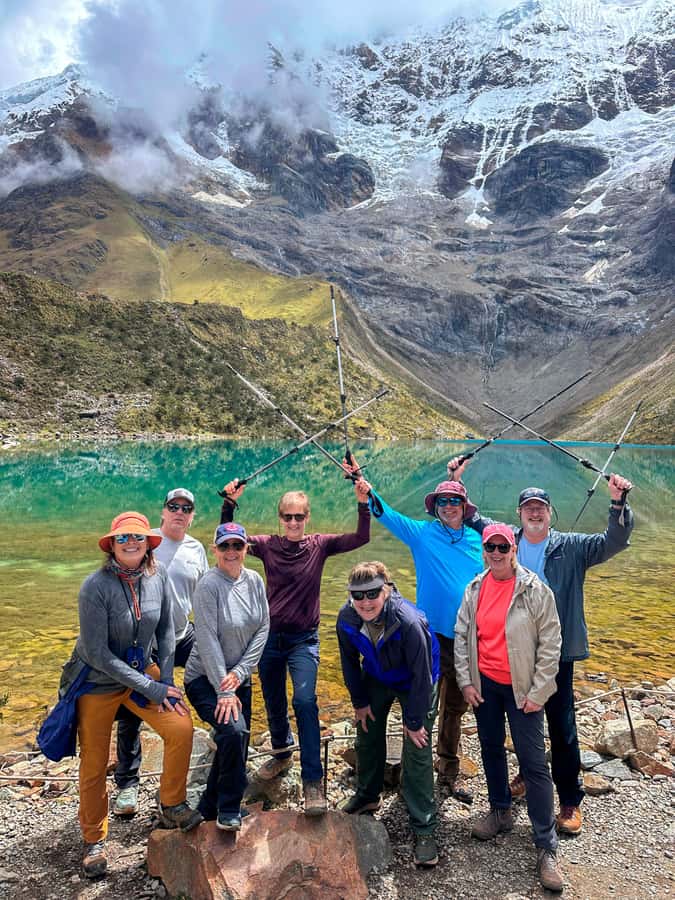
- Humantay Lake at the start: The turquoise lake and mountain setting make day one memorable, but the early start and uphill walk demand energy.
- Three different overnight styles: Sleep in a glamping tent, an Andean hut, and a three-star hotel in Aguas Calientes.
- Pachamanca and coffee in Lucmabamba: You help prepare an underground Andean barbecue and make coffee from locally grown beans.
- Small groups with a support team: Up to 16 people travel with guides, cooks, porters, first-aid supplies, oxygen, and a satellite phone.
- Panoramic train return: Your final ride is on the Vistadome or 360° train rather than a basic train service.
Why the Salkantay route earns four days
The Salkantay Trek suits you if you want Machu Picchu to be the finish of a real mountain journey, not the only event on the schedule. The route gives you glacial peaks, a high pass, farmland, cloud forest, local food, and the Inca citadel in one compact trip.
The tradeoff is effort. This is not a gentle walk between sightseeing stops. You leave Cusco at 4:30 a.m. on the first day, climb at high altitude, and spend several hours walking on both days one and two. A reasonable level of fitness is important, and the route is not suitable for people with mobility impairments, heart problems, back problems, or for pregnant women.
The support helps. You receive a duffle bag allowance of up to 7 kilograms, daily snacks, water, trail meals, a sleeping pad, pillow, rain poncho, and hand towels. Sleeping bags, air mattresses, and trekking poles are available to rent, so you do not need to bring every piece of camping equipment yourself.
More train routes to Aguas Calientes:
- Cusco: Machu Picchu 2-Day Inca Trail with Panoramic Train
★ 4.9 · 260 reviews - The First Class Machu Picchu Train by Inca Rail
★ 4.0 · 182 reviews - Machu Picchu: 5-Day Salkantay Trek with Panoramic Train
★ 5.0 · 79 reviews
Day one: Humantay Lake and the first night under the Andes
Your pickup is scheduled for 4:30 a.m. from accommodation in Cusco’s historic center. That is early even by trekking standards, so pack the night before and be in the lobby 10 minutes ahead of time. If you stay outside the stated Cusco district, you need to meet the group near the main square instead.
The drive passes through Andean valleys before breakfast in Mollepata. You then continue to Challacancha, the trailhead for the walk to Humantay Lake. The lake is known for its striking turquoise water, with steep mountain slopes and snow-capped peaks adding the drama.
This first climb is a useful introduction to the route. It is shorter than the next day’s pass, but the altitude can make it feel tougher than the distance suggests. Walk slowly, drink water, and do not treat the first morning as a race.
After visiting the lake, you descend to Soraypampa for lunch. The descent gives your legs a break from climbing, though downhill walking can still be tiring on knees. From there, you continue to the Salkantaypampa glamping camp.
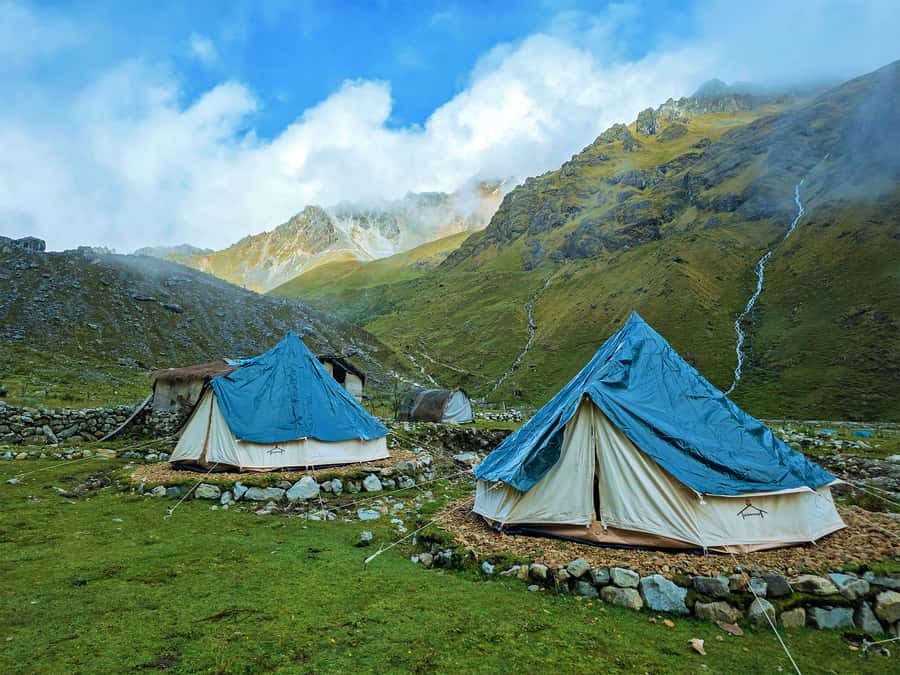
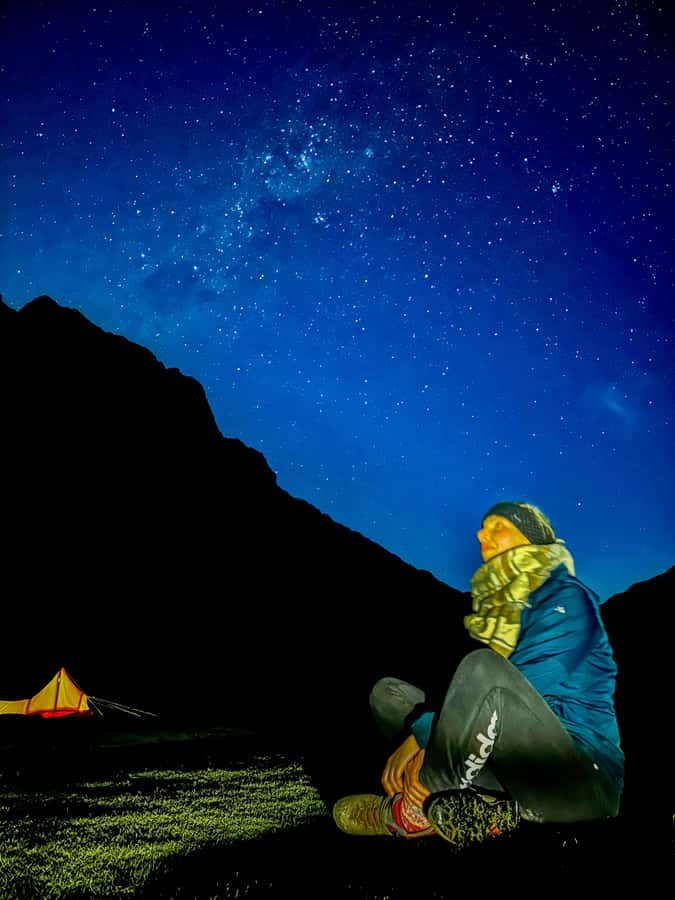
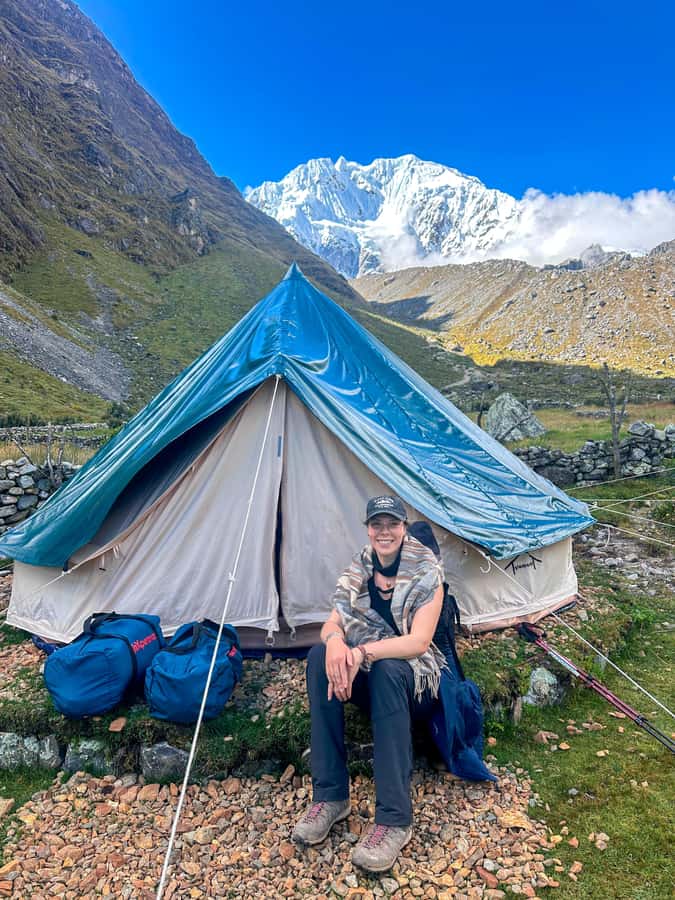
The glamping setup is one of the tour’s strongest comforts. You spend the night in a cozy tent with dinner provided, rather than carrying a full camping load and cooking for yourself. At this altitude, the quiet mountain setting and clear night sky are part of the appeal, but remember that a tent is still a tent. Bring warm, dry clothing and a flashlight.
Day two: The 4,630-meter Salkantay Pass
Day two is the physical heart of the trip. Coffee or coca tea is brought to your tent in the morning, followed by breakfast and the climb toward Salkantay Pass.
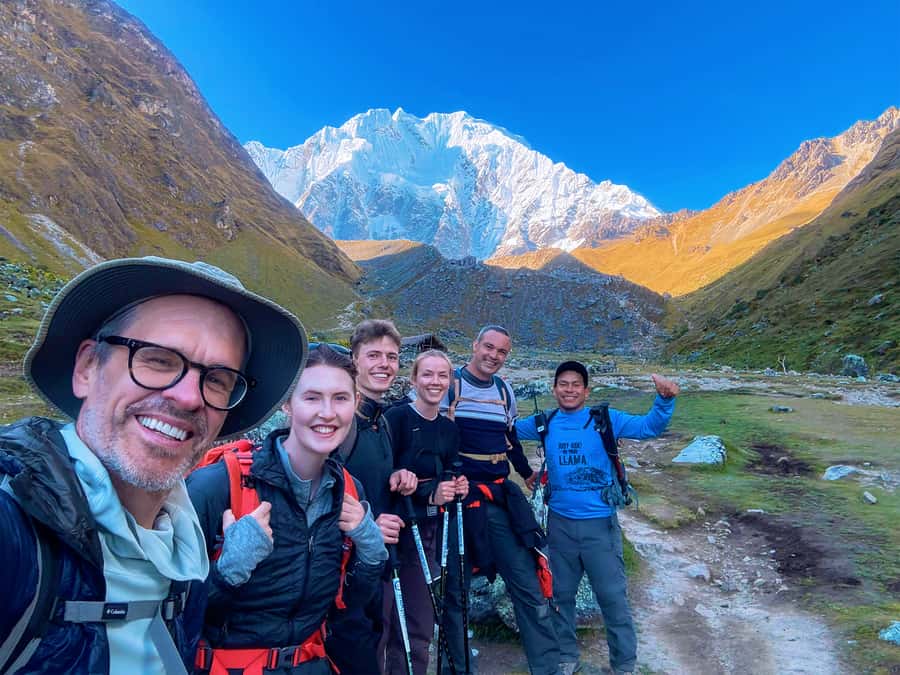
The ascent takes about two hours, leading to 4,630 meters, or 15,190 feet. At the top, you get broad views of snow-covered peaks and the lake below Salkantay Mountain. The altitude is the serious part here. Even strong hikers can feel short of breath, so steady pacing matters more than speed.
The tour’s camp location helps with acclimatization by putting you at a higher point before the pass. That does not remove the effects of altitude, but it gives you a more sensible progression than sleeping low and suddenly climbing high.
After time at the pass, you descend for about three hours to Wayracmachay, where lunch provides a welcome pause. The full day continues with another three-hour walk into cloud forest. This is where the route changes character quickly. High, open mountain views give way to flowers, orchids, hummingbirds, and warmer air.
That long descent is worth planning for. The route is not hardest only because of the climb. Six or more hours of walking, combined with altitude and uneven trail conditions, can leave you tired by evening. Good hiking shoes, hiking pants, rain gear, and a small personal day pack will matter more than fashionable trekking clothes.
You spend the night in Collpapampa in Andean huts. This is the least polished accommodation on the trip. The huts and bathroom facilities are supplied by a local provider, and conditions can be rough. A hot shower may require an extra fee, which is worth knowing before you arrive.
Still, the basic stay has a practical benefit: you are surrounded by the sounds of the forest rather than a busy town. Go in expecting simple shelter, not hotel service, and you are less likely to be disappointed.
Day three: Pachamanca, coffee, and the walk to Aguas Calientes
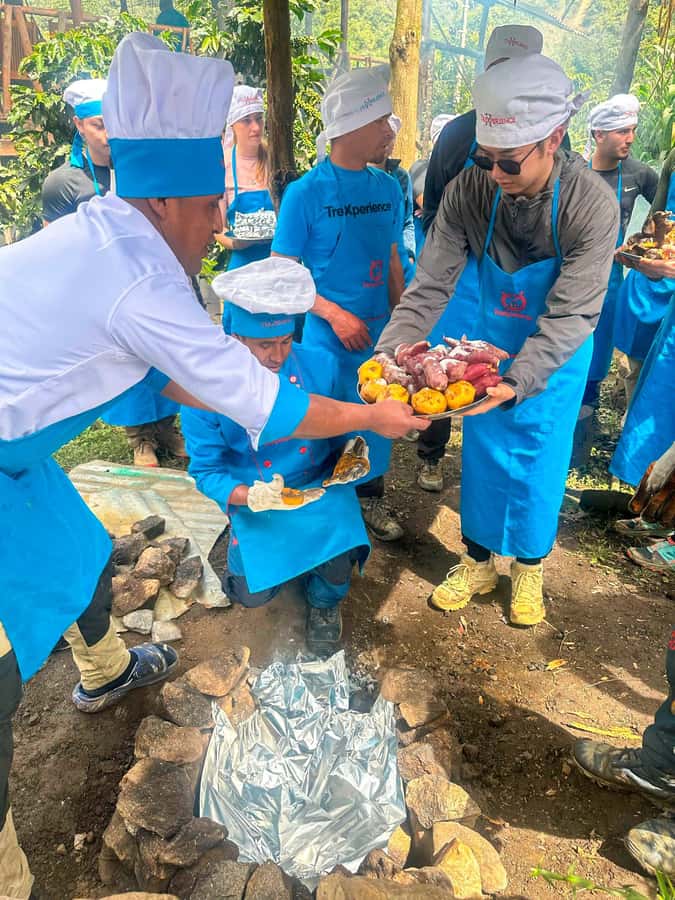
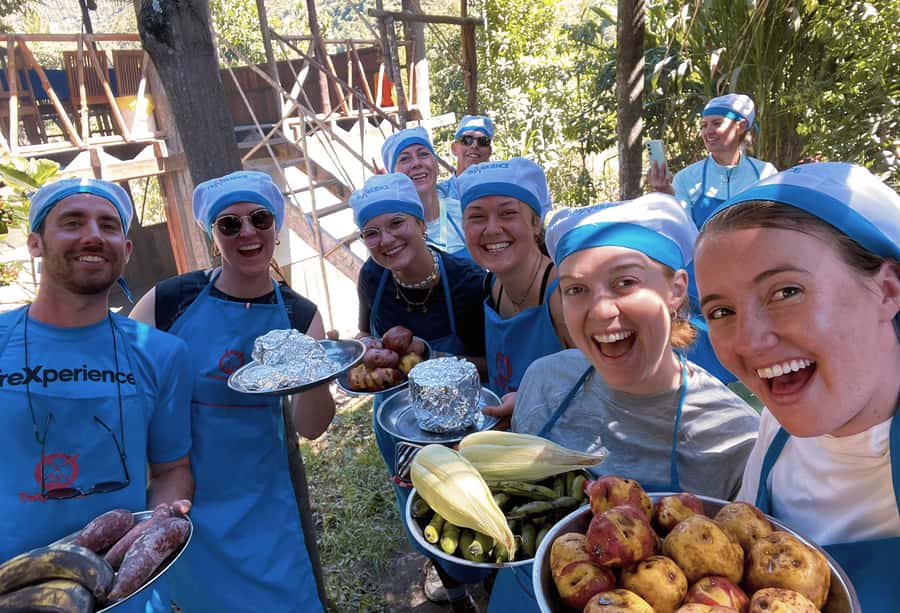
The third day brings the most hands-on cultural stops. After breakfast, you walk for about three hours to Lucmabamba. Here you take part in a Pachamanca barbecue, a traditional Andean cooking method in which vegetables, fruit, and meat are cooked underground with hot stones.
This meal is more interesting than another standard lunch stop because you see how the food is prepared and take part in a local tradition. It also gives you a proper break after the morning walk. The food program is a real strength of the tour overall. Previous groups have praised chefs including Zenobio, Ismael, Felix, and Dionissios for serving fresh, varied meals with enough substance for long hiking days.
Dietary needs should be given when you book. The included meals cover three breakfasts, three lunches, and three dinners, along with water and daily snacks, but the final lunch in Aguas Calientes is not included.
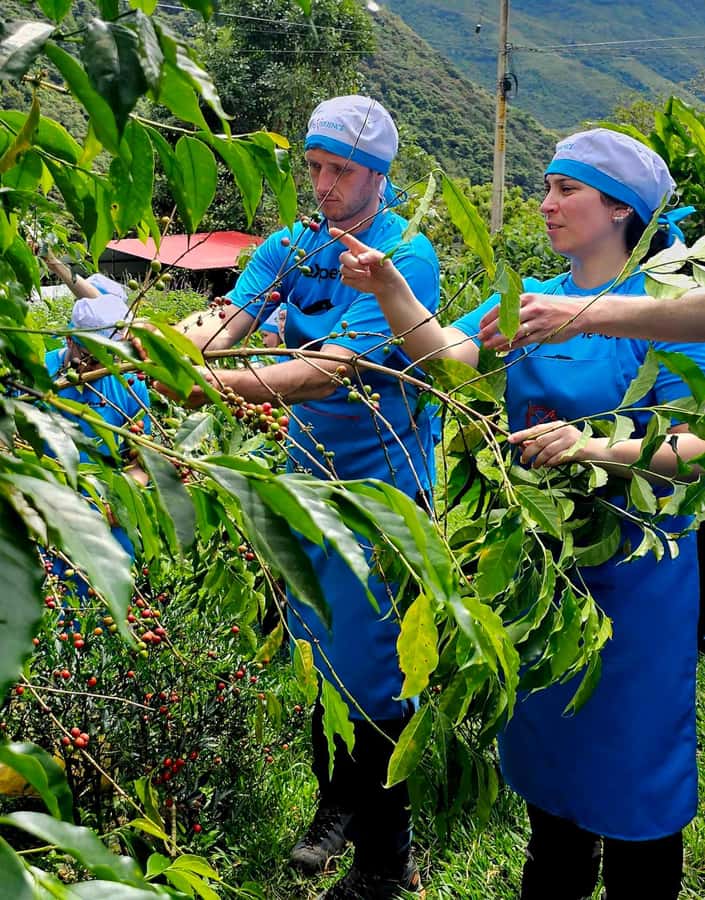
Lucmabamba also brings a coffee experience. You visit a local farm, learn how coffee moves from bean to cup, and prepare your own espresso. If you care about food and farming, this is one of the trip’s most distinctive stops. It connects the walk to the people and crops of the region instead of treating the route as scenery alone.
After the coffee activity, a drive takes you to Hidroeléctrica. From there, you walk for about three hours to Aguas Calientes. This final stretch is much lower and warmer than the pass, with a different feel from the high mountains.
The walk ends in town, where you check into a three-star hotel. Dinner is at a local restaurant, and you have a bed before the early Machu Picchu morning. That change from camping to a hotel comes at the right time. After two long trekking days, a private room and a normal breakfast can make the final morning easier.
More ways to reach Machu Picchu:
- From Cusco: Full-Day Group Tour of Machu Picchu
★ 4.7 · 1,767 reviews - Machu Picchu Day Trip from Cusco
★ 4.5 · 1,644 reviews - Machu Picchu: Full-Day Tour from Cusco with Optional Lunch
★ 4.6 · 927 reviews - Cusco: 4-Day Inca Trail to Machu Picchu with Accommodation
★ 4.8 · 432 reviews
Day four: Machu Picchu before the train home
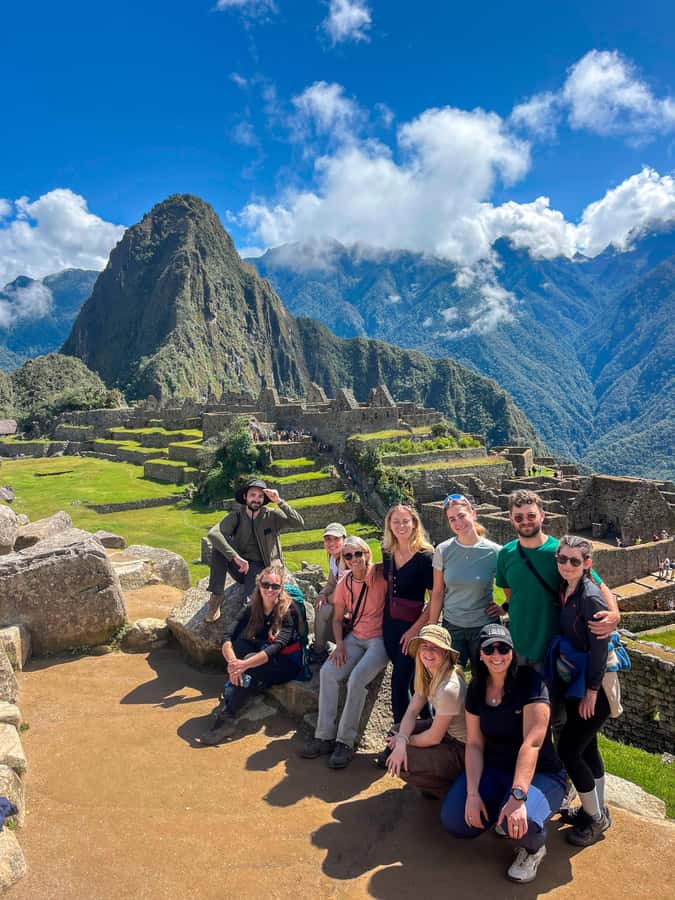
You rise early for one of the first buses to Machu Picchu. The timing gives you a chance to see the mountains in the morning light and begin your visit before the day feels crowded. Exact bus and entry timing can vary, so follow your guide’s instructions closely.
A professional guide leads a two to three-hour visit through the citadel. The default ticket uses Circuit 2, which is the standard choice for seeing many of Machu Picchu’s main areas. If that circuit sells out, Circuit 1 or Circuit 3 may be assigned.
This ticket detail deserves attention. The tour information says entrance tickets for the trek and Machu Picchu are included, but it also says Machu Picchu tickets must be booked ahead. If you want certainty about the circuit, ask the operator to confirm in writing what your $552 payment covers before booking.
Huayna Picchu and Machu Picchu Mountain are not automatic additions. Those require advance booking and separate availability. If one of these climbs matters to you, arrange it early rather than assuming you can add it on the day.
After the guided visit, you return to Aguas Calientes for lunch at your own expense. You then board either the Vistadome or 360° panoramic train for the ride back toward Cusco. The large windows and scenic route make this a pleasant finish after several hard days on foot.
A transfer team waits for you when you return to Cusco and takes you to your hotel. That final transfer is useful because you may be tired, carrying a duffle, and arriving after a long rail journey.
Food, guides, and the small-group advantage
Food is more than fuel on this trip. The cooking team prepares three meals each day on the trail, with local dishes and enough variety to keep the menu from feeling repetitive. The Pachamanca and coffee activities add a sense of place that a standard packed-lunch trek would miss.
The guide makes a big difference on a route with this much altitude and changing terrain. Guides named in the trip’s operating team include Alex, José, Evangelino, Filio, Roger, and William, though your assigned staff can vary. Alex is noted for explaining Inca history and mountain stories while keeping the group informed about the day’s plan. José and Evangelino are described as attentive to pacing, bags, and anyone needing extra help.
Roger is praised for explaining Inca civilization, while William is especially useful for hikers who move more slowly. That matters because a group of 16 rarely walks at one pace. Ask at the start how the guides handle the front and back of the group, and do not feel pressured to match the fastest walker.
The tour carries a first-aid kit, oxygen tank, and satellite phone. These are sensible safety measures in a remote, high-altitude setting, but they are not a substitute for telling the guide when you feel unwell. Share medical concerns before departure and report symptoms early.
What the $552 price really buys you
At $552 per person, this is not the cheapest way to reach Machu Picchu. It is also not simply a four-day hike. The price includes transport from Cusco, the guided trek and Machu Picchu visit, trail meals, three nights of varied accommodation, a duffle allowance, camping gear basics, the Pachamanca and coffee activities, and a panoramic train back.
That package can be good value if you would otherwise need to arrange several separate services. The high-altitude route requires transport, camps, meals, staff, park access, the hotel in Aguas Calientes, and the train. Having one team coordinate the pieces reduces the chance of missing a connection after a tiring hike.
There are extra costs to plan for. Your last-day lunch is not included. Sleeping bags, air mattresses, and trekking poles cost extra if you rent them. Huayna Picchu and Machu Picchu Mountain also require advance booking, and the ticket wording should be clarified before payment.
The activity is non-refundable, so only book once your dates, passport details, fitness, and ticket expectations are settled. English and Spanish guiding are available, and passport information is needed at booking.
Who should choose this trek
I would recommend it to you if you want a physically demanding route with strong food, organized support, and more comfort than a fully basic camping trip. It works especially well for first-time international trekkers who want a clear plan, a guide, and a small group rather than a solo logistics puzzle.
It also suits people who care about variety. You get a lake, mountain pass, cloud forest, local cooking, coffee, Machu Picchu, and a scenic train in four days.
I would hesitate if you dislike early mornings, long descents, basic huts, or high altitude. The second day is not a minor challenge, and the accommodation at Collpapampa may disappoint anyone expecting consistent hotel standards. You should also avoid this route if you have the medical or mobility conditions listed by the operator.
Should you book the Salkantay Trek?
Book this tour if you want the journey to Machu Picchu to feel like an achievement, not just a transfer to a famous site. The strongest reasons are the excellent food program, the well-supported mountain route, the local cooking and coffee stops, and the comfortable finish in Aguas Calientes with a panoramic train ride.
Before paying, confirm the exact Machu Picchu circuit and ticket arrangements, ask about the second night’s facilities, and decide if you need to rent a sleeping bag or trekking poles. If you accept the altitude and basic hut, the $552 package offers a well-organized way to experience one of Peru’s most varied treks.
FAQ
How long is the Salkantay Trek to Machu Picchu?
The activity lasts four days and includes the trek, a guided Machu Picchu visit, and the return journey to Cusco.
What time is pickup in Cusco?
Pickup begins at 4:30 a.m. from accommodation in Cusco’s historic center. You should be in the hotel lobby 10 minutes before the scheduled time.
What happens if my hotel is outside the Cusco district?
You need to meet the group at a designated location near Cusco’s main square.
How high is the Salkantay Pass?
The pass reaches 4,630 meters, or 15,190 feet.
Where do I sleep during the trek?
You spend one night at the Salkantay glamping camp, one night in Andean huts at Collpapampa, and one night in a three-star hotel in Aguas Calientes.
Are meals included?
Three breakfasts, three lunches, three dinners, water, and daily trail snacks are included. Lunch on the final day in Aguas Calientes is not included.
Is the Pachamanca barbecue included?
Yes. The experience includes the Pachamanca barbecue and cooking activity in Lucmabamba.
Is the coffee activity included?
Yes. You visit a local coffee farm, learn about coffee production, and prepare your own espresso.
What train returns to Cusco?
The return is on either the Vistadome or 360° panoramic train.
Can I hike Huayna Picchu or Machu Picchu Mountain?
These optional hikes are available with advance booking. They are not automatically included, so you should arrange them ahead of time.
More Treks From Cusco
- From Cusco: 7 Lakes Ausangate Trek with Breakfast and Lunch
★ 4.8 · 360 reviews - From Cusco: 2-Day Inca Trail to Machu Picchu
★ 4.2 · 244 reviews - Machu Picchu: Inca Trail 2-Day Overnight Guided Tour
★ 4.9 · 203 reviews - Cusco: Rainbow Mountain Tour and Red Valley Hike (Optional)
★ 4.7 · 149 reviews
More Salkantay Treks
- Salkantay Trek Challenge – 3 Days / 2 Nights
★ 5.0 · 101 reviews - Small Group 5 Days Salkantay and Machu Picchu by Llactapata Tour
★ 5.0 · 88 reviews - Salkantay Trek 4 Days to Machu Picchu by Glamping Sky Lodge Dome
★ 5.0 · 68 reviews - Salkantay Trek to Machu Picchu in 4 days
★ 4.5 · 50 reviews
Just added around Cusco
- Cusco: Via Ferrata, Skybike, and Rappel Adventure★ 5.0 · 3 reviews
- From Cusco: Maras and Moray and Ollantaytambo Tour★ 5.0 · 3 reviews
- Cusco: Rainbow Mountain Tour at Sunset Without the Crowds★ 4.7 · 3 reviews
- Cusco: Sacred Valley Day Trip with Maras & Moray Salt Mines★ 5.0 · 3 reviews
- Valle Sur Cusco | half day★ 4.3 · 3 reviews
- IN MACHU PICCHU: Private Tour Guide Service★ 5.0 · 3 reviews
- Salkantay trek to Machu Picchu – 5D/4N – Premium★ 3.3 · 3 reviews
- Full-Day Condor Viewpoint & Inca Sites Tour★ 5.0 · 3 reviews
Salkantay Treks, compared.
Small Group 5 Days Salkantay and Machu Picchu by Llactapata Tour
Read our review →
Salkantay Trek 4 Days to Machu Picchu by Glamping Sky Lodge Dome
Read our review →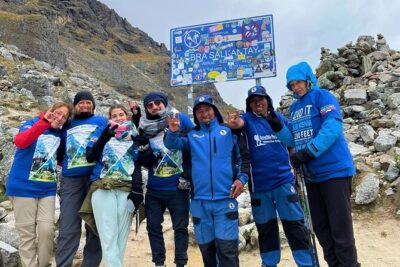
Salkantay Trek To Machu Picchu 5 Days And 4 Nights
Read our review →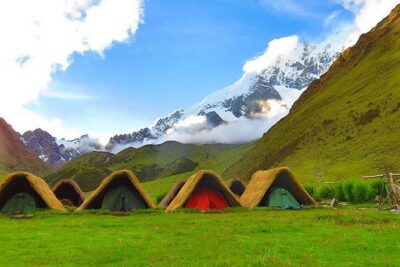
5-Day: Salkantay Trek to Machupicchu and Humantay Lake
Read our review →Browse the lists this tour appears in