
Reviewed · CHOQUEQUIRAO AND LARES TREKS
Cusco: 4-Day Lares Trek to Machu Picchu with Panoramic Train
The best part of this four-day trip is the way it links remote Andean villages with Machu Picchu. You are not simply rushing to the citadel. You spend two nights camping beside mountain lakes, meet weaving families, soak in Lares hot springs, and cross a high pass at 4,750 meters. I especially like the chance to support women-run textile cooperatives, and I like that horses carry the food and camping equipment rather than loading every item onto your back.
I also like the contrast between the quiet Lares route and the grand finish at Machu Picchu. The hot springs on day one and the Vistadome train on day four add comfort where it counts. The main drawback is the altitude: cold nights, thin air, and a long climb make this a serious trek, even though the walking is manageable for a reasonably fit person.
In This Review
- Key points to know before booking
- Why the Lares route feels different
- Day one, from Calca to Blue Lagoon
- Day two, crossing Condor Pass at 4,750 meters
- Day three, dropping into the Sacred Valley
- Day four, Machu Picchu and the Vistadome return
- Food, equipment, and daily comfort
- Guides, pace, and group experience
- Who will get the most from this $690 trip?
- Should you book this Lares Trek?
- FAQ
- How long is the Lares Trek to Machu Picchu?
- What languages are available?
- Is pickup from my accommodation included?
- What does the $690 price include?
- Do I need to bring camping equipment?
- Is lunch on the final day included?
Key points to know before booking
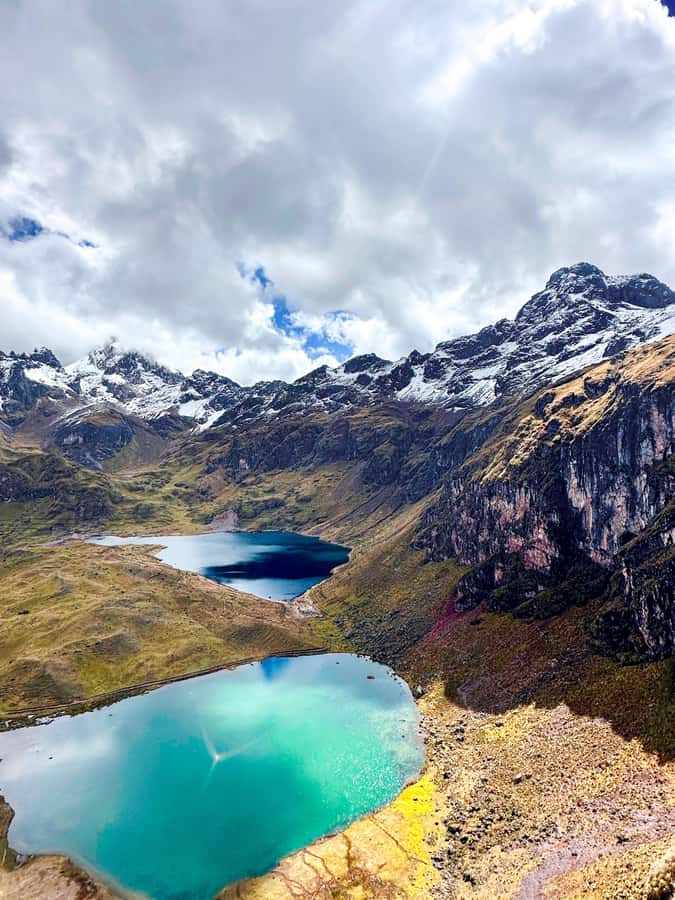
- 4,750-meter Condor Pass: The hardest section brings wide views of snowy peaks and turquoise mountain lakes.
- Lares hot springs: You can relax in warm pools before starting the trek proper.
- Community visits: Weaving cooperatives and Canchacancha families make this more personal than a simple point-to-point hike.
- Two nights under canvas: Camps are scenic, but you need warm clothing and suitable sleeping gear.
- Maras and Ollantaytambo: The route adds two worthwhile Sacred Valley stops before the train to Machu Picchu.
- Comfortable finish: You sleep in a three-star hotel in Aguas Calientes, then return on the Vistadome train.
Why the Lares route feels different
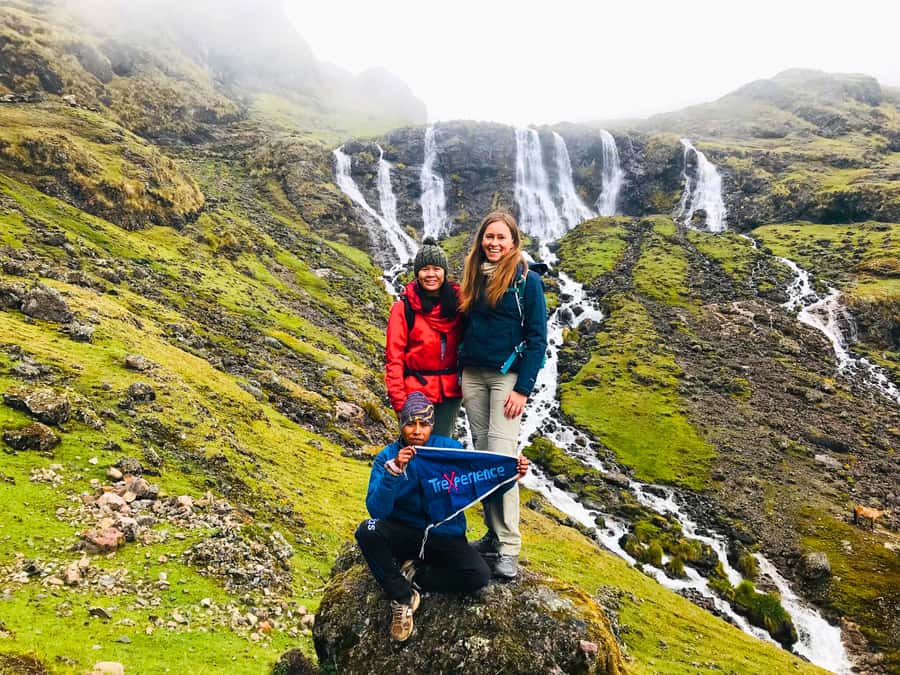
Many trips to Machu Picchu focus almost entirely on the famous ruins. This one gives you two full days in the high Andes first. You walk past potato fields, alpaca herds, waterfalls, lakes, and small settlements where daily life still follows the mountain seasons.
That matters if you want more than a photo at the citadel. The Lares route has a quieter feel than the better-known Inca Trail, with more time spent around local communities and less attention on ancient stonework. You still reach Machu Picchu, but the journey carries much of the meaning.
The tour costs $690 per person. That is not a bargain-basement trek, but the price covers a certified guide, transport, entrance fees, two nights of camping, a hotel night, cooks, muleteers, a personal duffle carried by mule, the Machu Picchu bus, and the Vistadome return train. Once you add those separate costs, the package offers solid value for someone who wants the whole route arranged.
You should still budget for a sleeping bag, air mattress, and trekking poles unless you rent them. Lunch on the final day is also your responsibility, as are travel insurance and optional tickets for Huayna Picchu or Machu Picchu Mountain.
More train routes to Aguas Calientes:
- Cusco: Machu Picchu 2-Day Inca Trail with Panoramic Train
★ 4.9 · 260 reviews - The First Class Machu Picchu Train by Inca Rail
★ 4.0 · 182 reviews - Machu Picchu: 5-Day Salkantay Trek with Panoramic Train
★ 5.0 · 79 reviews
Day one, from Calca to Blue Lagoon
The early pickup from Cusco or the Sacred Valley sets the tone. You need to be ready in your hotel lobby 10 minutes before departure. If your lodging is outside the Cusco district, you will go to a meeting point near the main square instead.
The first stops add useful local context before the hike begins. At Calca’s market, you see the food and goods used in the surrounding valley. At Ancashmarca, an ancient Inca site, your guide can connect the present-day communities with the area’s earlier past.
A high plateau stop introduces you to the puya de Raimondi, a rare Andean plant with an unusual tall flower stalk. It is a small stop, but it breaks up the drive and gives you something distinctive to look for in this high setting.
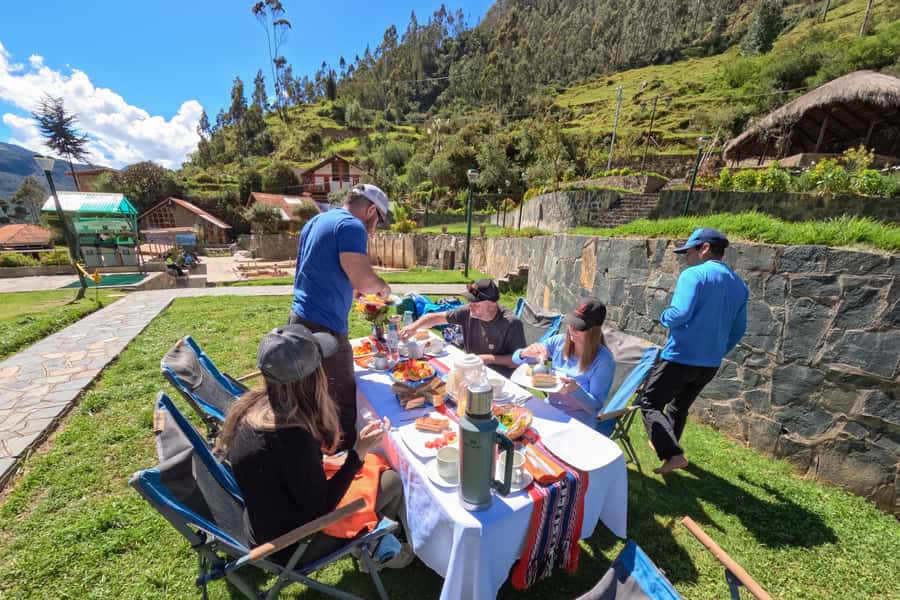
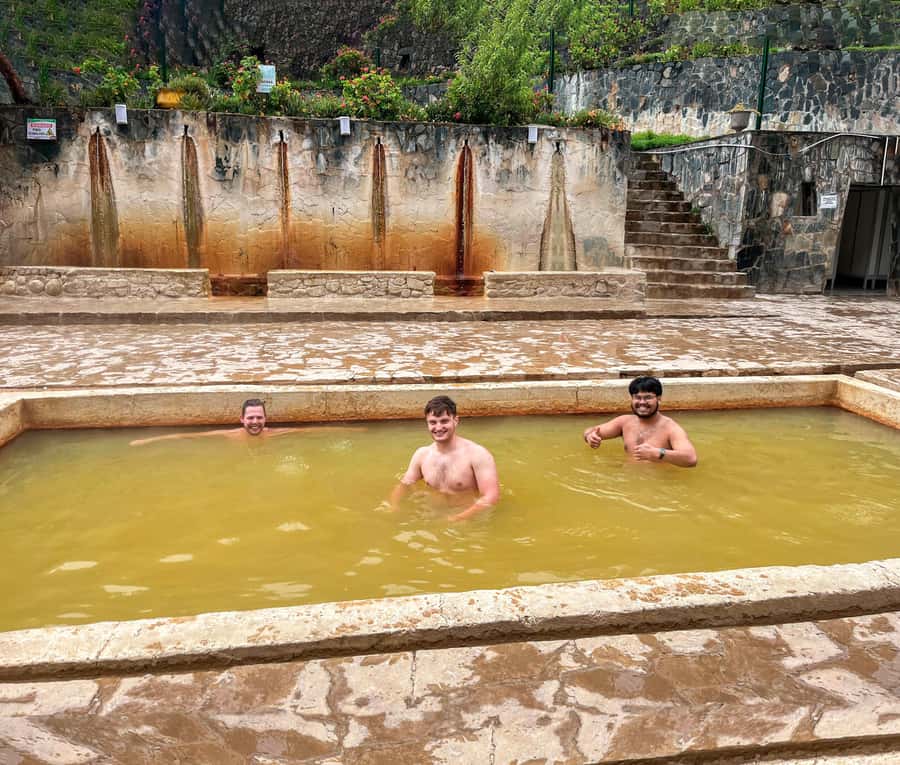
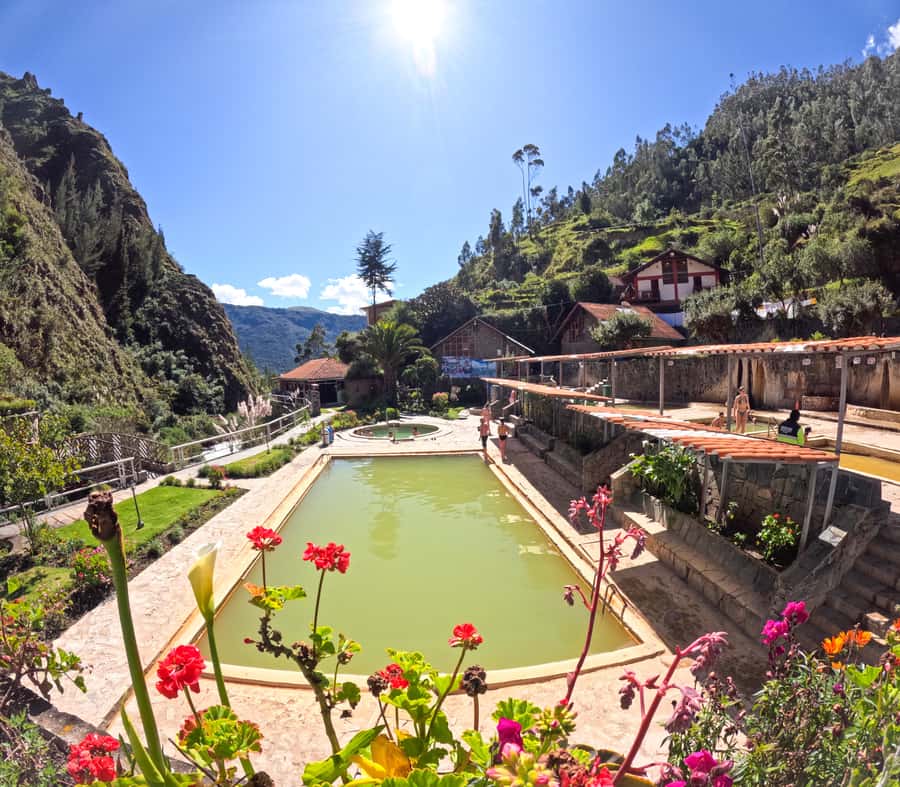
Then comes Lares Hot Springs, one of the day’s smartest design choices. After the early start and mountain roads, you can sit in warm water with mountain views and eat breakfast. This is not a quick roadside pause. It gives your body a chance to adjust before the walking begins.
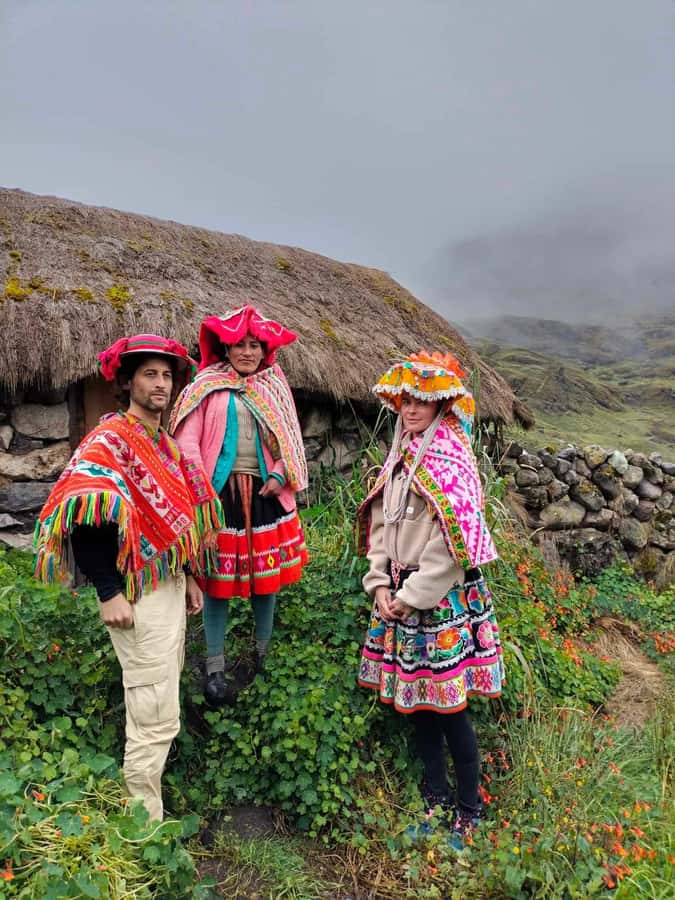
Before reaching the trailhead, you visit a weaving cooperative. Look closely at the patterns, colors, and natural traditions behind the textiles. The visit is more useful than buying a random souvenir because you can see how Andean weaving is taught and sold, while supporting a women-run enterprise.
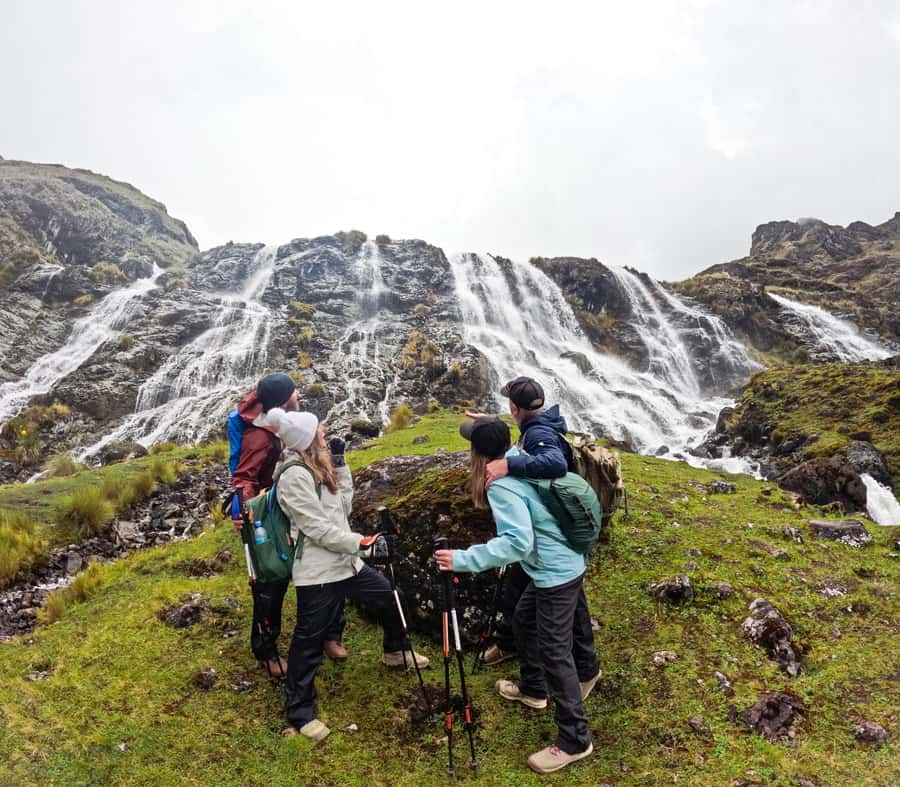
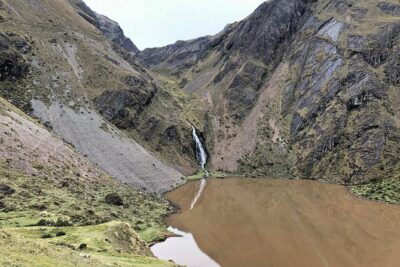
The hike starts at Pampacorral. You walk through valleys dotted with alpacas and fields of potatoes, then stop in Kiswarani for a fresh lunch. The route follows a waterfall toward Blue Lagoon, with the campsite set at about 3,900 meters.
The first night is likely to feel colder than you expect. Coca tea, dinner, and stargazing are included, but neither a tent nor a hot meal replaces proper insulation. Bring warm layers, dry socks, and a sleeping bag suited to high-altitude camping.
Day two, crossing Condor Pass at 4,750 meters
You begin with coca tea or coffee delivered at the tent, followed by breakfast. That small service matters when the air is cold and you are preparing for the toughest climb.
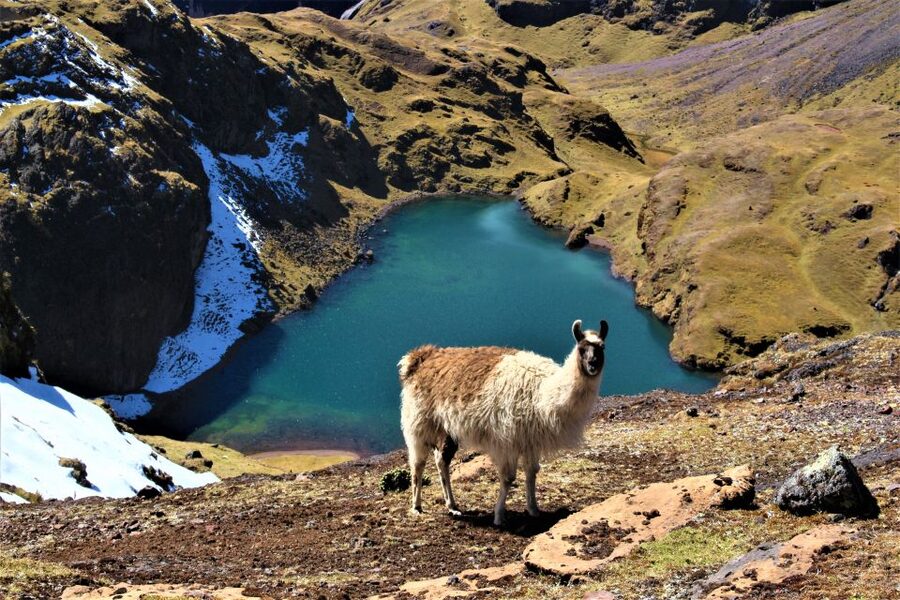
The ascent is steady rather than described as a technical climb, but the altitude changes the effort. You pass mountain lakes and may see Andean wildlife as the trail rises. Take the pace slowly. The guide can adjust the rhythm and allow breaks when needed.
Condor Pass is the day’s major test. At 4,750 meters, the air is noticeably thin, and even fit walkers may need frequent pauses. The reward is a broad view of snowy peaks and turquoise lagoons, with the trail’s high point providing a clear sense of how remote the route feels.
A traditional offering ceremony takes place at the pass before you begin the descent. This gives the stop cultural weight without turning it into a staged performance. Your guide can explain the meaning as you take part respectfully.
After descending, you have a hot lunch in Acopata. The warmth and food should feel well timed. The rest of the day continues through valleys where llamas and alpacas graze, making the second half less punishing than the climb.
You spend the night in Canchacancha at about 3,750 meters. Meeting local families and learning a few Quechua phrases gives you a direct connection to the village rather than leaving you to pass through without contact. Mountain views accompany dinner, and the second camp night lets you settle into the slower rhythm of the trek.
This is also the night to remember that altitude does not disappear after the pass. You are still sleeping high, and cold remains a real issue. One person described the trek as approachable but warned that low oxygen and chilly nights reduce your physical capacity. That is sound advice. You do not need to be an elite hiker, but you should arrive in good condition.
Day three, dropping into the Sacred Valley
Day three begins with a visit around Canchacancha. You can enter homes, see the local school, and donate supplies if you choose. This part requires a respectful attitude. You are not visiting a display village. You are stepping briefly into a community where people live and work.
The four-hour downhill walk into the Sacred Valley is one of the most striking changes on the route. The crops shift as you lose altitude, from potatoes to corn and avocado. That change shows how sharply the climate varies across the Andes, even within a single day of walking.
You finish the hike in Huaran at about 2,700 meters, where a picnic lunch is served. Here you say goodbye to the muleteers and chef who supported the camping section. Their work is easy to overlook, but it is central to the trip. They move food and equipment so you can walk with a lighter day pack.
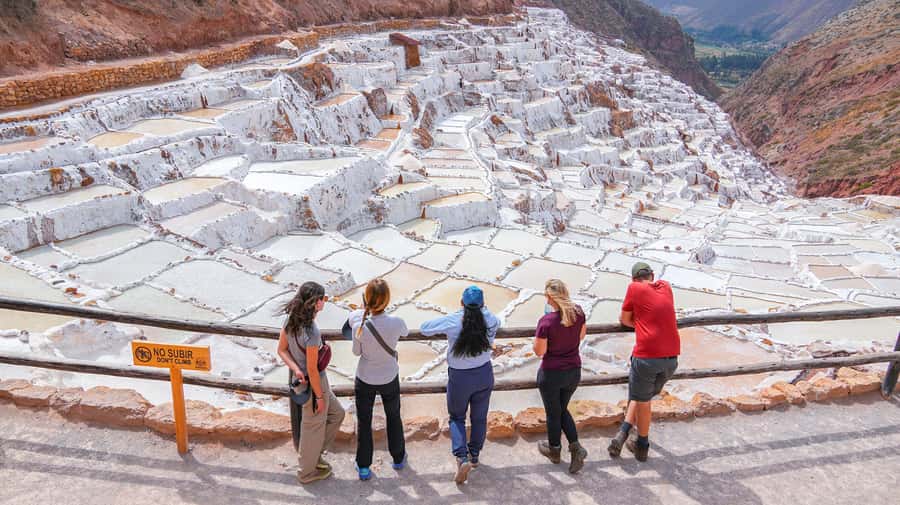
A private van then carries you to the Salineras of Maras. The salt mines are built from many small evaporation pools along the mountainside. Traditional salt harvesting continues here, and your guide explains how the mineral-rich water is directed into the pools and reduced by sun and air.
Maras works well after the trek because it requires much less physical effort. You get a close look at a working local tradition rather than another grand ruin. Watch your footing, though, and keep your camera ready for the bright patterns formed by the salt ponds.
Next comes Ollantaytambo, described as the last living Inca town. Its old street plan and stone buildings still form part of an inhabited town, giving the site a different feel from an isolated archaeological park. You have dinner before boarding the train.
The evening train takes you to Aguas Calientes, also called Machu Picchu Pueblo. You spend the night in a comfortable three-star hotel, a welcome change after two nights in camp. The timing also puts you close to Machu Picchu for the early start on day four.
More ways to reach Machu Picchu:
- From Cusco: Full-Day Group Tour of Machu Picchu
★ 4.7 · 1,767 reviews - Machu Picchu Day Trip from Cusco
★ 4.5 · 1,644 reviews - Machu Picchu: Full-Day Tour from Cusco with Optional Lunch
★ 4.6 · 927 reviews - Cusco: 4-Day Inca Trail to Machu Picchu with Accommodation
★ 4.8 · 432 reviews
Day four, Machu Picchu and the Vistadome return
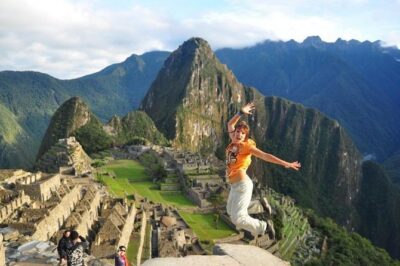
After breakfast, you take the bus up to Machu Picchu. The early arrival is valuable because the first views of the citadel come with morning light, and you avoid turning the visit into a rushed afternoon stop after a long train journey.
Your guide leads a two to three-hour walking tour through key parts of the site. Expect explanations of Inca engineering, daily life, and the purpose of important structures. Pause at the main viewpoints for broad photographs, but give yourself time to look beyond the camera. The stonework, terraces, and mountain setting are easier to appreciate when you are not racing from one angle to the next.
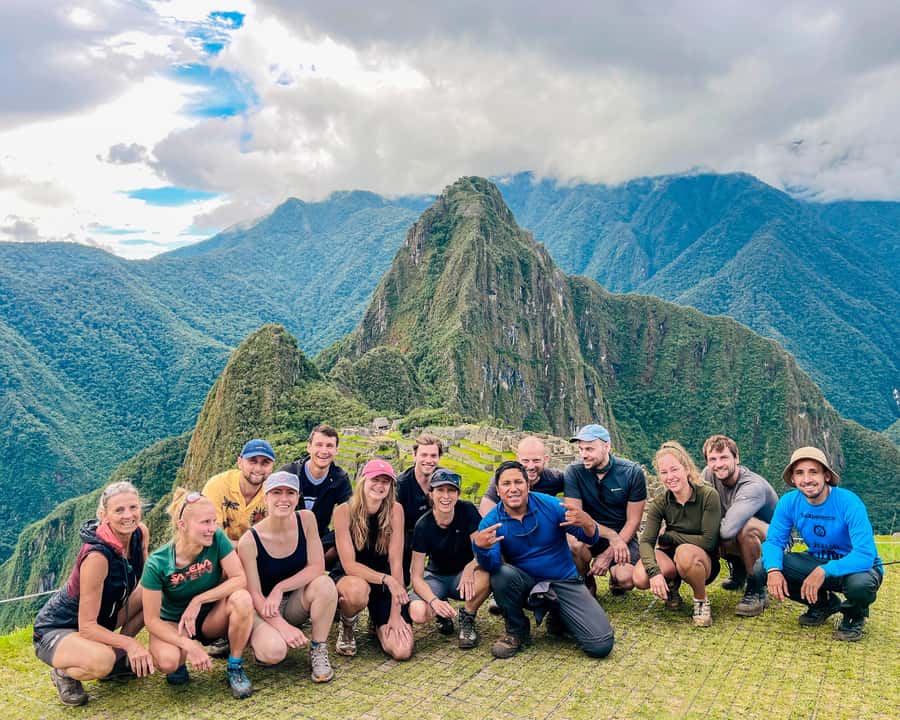
Machu Picchu is the trip’s famous finish, but it is not the only reason this route works. You have already spent two days seeing how people farm, weave, travel, and live in high valleys. That background helps you understand the citadel as part of a wider Andean world.
After the visit, you return to Aguas Calientes for lunch and free time. Lunch is not included, so keep cash available. You then board the Vistadome train to Ollantaytambo. Its large windows and panoramic design make the return journey part of the experience rather than a simple transfer.
A private vehicle takes you from Ollantaytambo back to Cusco, with arrival expected by evening. The final day is long, but the transport is arranged, and you are not asked to hike back out of the mountains.
Food, equipment, and daily comfort
The trekking cooks provide four breakfasts, three lunches, and three dinners. The food is a major practical advantage on a remote route, where carrying and preparing meals yourself would add considerable work.
Special diets should be stated when you book. Vegan meals have been handled successfully, but you should not wait until the first campsite to explain your needs.
A mule team carries food and equipment, and you receive a personal duffle with a limit of 7 kilograms, or 11 pounds, for camping gear. You still need a day pack for items you want during the hike, such as water, rain gear, sunscreen, snacks, and a camera.
You need comfortable hiking shoes, warm and weather-appropriate clothing, hiking pants, rain gear, sun protection, insect repellent, toiletries, and hand sanitizer or tissues. Bring your passport, since passport details are required at booking and the document is needed for the Machu Picchu portion.
Sleeping bags, air mattresses, and trekking poles are not included, but they can be rented on request. Ask about those rentals before departure rather than discovering at camp that your own gear is not suitable.
Guides, pace, and group experience
The tour is led in English or Spanish by a certified professional guide. Guides named in past departures include Manolo and Filio. Manolo was singled out for patient, attentive leadership, while Filio led a departure that happened to have only one booking party. Group size can therefore vary, and you should not assume a large or fixed group.
The guide’s role matters most on day two. At 4,750 meters, the ability to slow down and schedule pauses is more useful than a fast pace. One family found the difficulty manageable but emphasized the need for reasonable fitness. That is the right way to judge this trip.
You should not book it if you are pregnant, have serious back or heart problems, or have mobility limitations. It is not suitable for wheelchair users, and children must be accompanied by an adult. These limits are sensible given the altitude, uneven paths, camping, and long transport days.
The activity is non-refundable, so confirm your dates, fitness, and equipment before paying. Travel insurance is recommended, especially for a physically demanding trip at altitude.
Who will get the most from this $690 trip?
I would choose this route if you want Machu Picchu but also care about the journey through the Andes. It suits hikers who like mountain scenery, local encounters, basic camping, and a planned schedule that removes the need to arrange separate buses, trains, guides, meals, and entrance tickets.
It is also a strong choice for families with older children or groups of friends who are comfortable being active. The walking is described as manageable for people in good condition, but the altitude and cold make it more demanding than the distance alone suggests.
I would think twice if your main goal is a relaxed Machu Picchu holiday. Two high camps, a 4,750-meter pass, and early starts are part of the bargain. If you dislike cold nights or have not prepared for mountain walking, the hotel night will not compensate for the tougher first two days.
The strongest reasons to book are the community contact, hot springs, high-pass views, capable food support, and polished finish at Machu Picchu. The main costs are physical effort, limited luggage, extra gear rentals, and a strict non-refundable booking condition.
Should you book this Lares Trek?
Book it if you want a real four-day route, not just a transfer to Machu Picchu. The combination of weaving communities, Lares hot springs, Blue Lagoon, Condor Pass, Maras, Ollantaytambo, and the Vistadome train gives you a fuller picture of the Cusco Region than a direct visit to the ruins.
Skip it if altitude, cold, or steep mountain walking may limit you. For a fit person who packs warmly and accepts the early mornings, $690 is a fair price for the guide, cooks, mule support, camping, hotel, admissions, and transport included.
FAQ
How long is the Lares Trek to Machu Picchu?
The activity lasts four days. It includes two nights of scenic camping, one hotel night in Aguas Calientes, the Lares route, Machu Picchu, and return transport to Cusco.
What languages are available?
The tour is available with a live guide in English or Spanish.
Is pickup from my accommodation included?
Yes. Pickup and drop-off are included for accommodations in Cusco and the Sacred Valley. If your hotel is outside the Cusco district, you must go to a meeting point near the main square.
What does the $690 price include?
It includes a certified guide, entrance fees to Machu Picchu, Maras Salt Mines, and Lares Hot Springs, camping, a three-star hotel night, meals during the trek, horses and muleteers, a 7-kilogram personal duffle, Machu Picchu buses, the Vistadome return train, and private transfers.
Do I need to bring camping equipment?
Sleeping bags, air mattresses, and trekking poles are not included. They are available to rent upon request. You should also bring warm clothing, hiking shoes, rain gear, sun protection, toiletries, and other personal items.
Is lunch on the final day included?
No. Lunch in Aguas Calientes on the final day is not included, so you should plan and pay for that meal yourself.
More Treks From Cusco
- From Cusco: 7 Lakes Ausangate Trek with Breakfast and Lunch
★ 4.8 · 360 reviews - From Cusco: 2-Day Inca Trail to Machu Picchu
★ 4.2 · 244 reviews - Machu Picchu: Inca Trail 2-Day Overnight Guided Tour
★ 4.9 · 203 reviews - Cusco: Rainbow Mountain Tour and Red Valley Hike (Optional)
★ 4.7 · 149 reviews
More Choquequirao and Lares Treks
- Small Group 5 Days Salkantay and Machu Picchu by Llactapata Tour
★ 5.0 · 88 reviews - Choquequirao Trek 4 days and 3 nights
★ 5.0 · 81 reviews - Ancascocha Trek To Machu Picchu 4 Days And 3 Nights
★ 5.0 · 77 reviews - Classic Choquequirao Trek – 5 Days / 4 Nights
★ 5.0 · 52 reviews
Just added around Cusco
- Cusco: Via Ferrata, Skybike, and Rappel Adventure★ 5.0 · 3 reviews
- From Cusco: Maras and Moray and Ollantaytambo Tour★ 5.0 · 3 reviews
- Cusco: Rainbow Mountain Tour at Sunset Without the Crowds★ 4.7 · 3 reviews
- Cusco: Sacred Valley Day Trip with Maras & Moray Salt Mines★ 5.0 · 3 reviews
- Valle Sur Cusco | half day★ 4.3 · 3 reviews
- IN MACHU PICCHU: Private Tour Guide Service★ 5.0 · 3 reviews
- Salkantay trek to Machu Picchu – 5D/4N – Premium★ 3.3 · 3 reviews
- Full-Day Condor Viewpoint & Inca Sites Tour★ 5.0 · 3 reviews
Choquequirao and Lares Treks, compared.
Small Group 5 Days Salkantay and Machu Picchu by Llactapata Tour
Read our review →
Ancascocha Trek To Machu Picchu 4 Days And 3 Nights
Read our review →
Browse the lists this tour appears in