
Reviewed · CUSCO CITY TOURS
City Tour Cusco
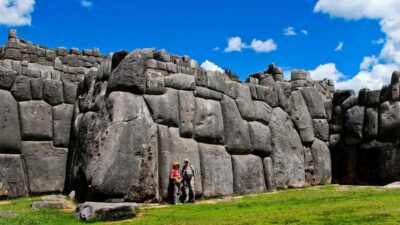
Sacsayhuaman is the star here: huge fitted stones, high above Cusco, with the city and surrounding hills spread below. You’ll see the Inca capital through its ceremonial walls, then connect that achievement with smaller sites tied to worship, water, and defense. The scale of the stonework and the changing views make this a strong first tour in Cusco.
I like the five-hour format, which gives you several major sites without taking your whole day. I also like the guide-led approach, since the details at Q’enqo and Tambomachay are easy to miss on your own. The main catch is that entrance tickets are not included, and the uneven sites are not suitable for people with mobility impairments.
In This Review
- Key points to know before you go
- Why this half-day tour works well in Cusco
- Sacsayhuaman and the colossal stones above Cusco
- Q’enqo and the ritual side of Inca culture
- Tambomachay and the living water sources
- Puca Pucará and the watchtower over the valley
- The guide, transport, and pickup details
- What the $15 price includes, and what it does not
- Who should book this Cusco circuit
- Practical preparation for the five-hour visit
- Should you book City Tour Cusco?
- FAQ
- How long does City Tour Cusco last?
- What sites does the tour visit?
- Where does the tour start?
- Where does the tour finish?
- Is transportation included?
- Are entrance tickets included?
- What languages are available?
- What should I bring?
Key points to know before you go
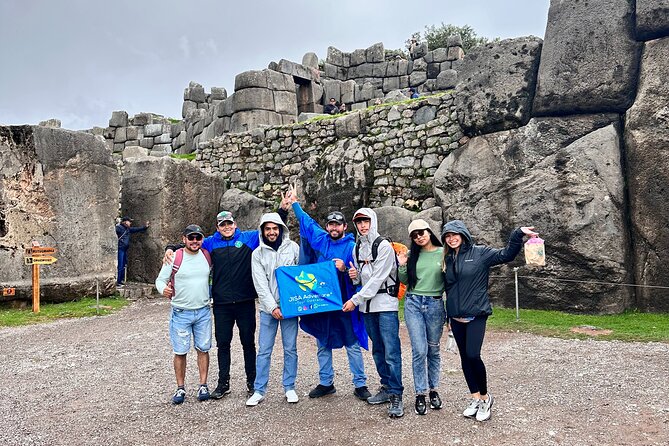
- Sacsayhuaman gives you the grandest view of Inca Cusco, with colossal stone walls and broad views over the city.
- Q’enqo adds a ceremonial side to the visit, including an interior altar connected with sacrifice and Pachamama.
- Tambomachay shows the importance of water in Inca belief and engineering, with springs that still flow through the site.
- Puca Pucará explains Cusco’s defensive network, thanks to its position overlooking the valley and imperial city.
- Transport and a professional guide are included, but entrance tickets, food, drinks, and insurance are extra.
- Hotel pickup can be arranged, though collection may also be coordinated from a neutral meeting point.
Why this half-day tour works well in Cusco
Cusco can feel like two cities at once. Spanish colonial buildings line the central square, while Inca walls form their foundations and side streets. This tour takes you beyond the center and shows how the capital worked as a ceremonial, religious, and defensive center.
You’ll visit four important sites in one outing. That makes the tour useful early in your stay, especially if you want a clear introduction before visiting larger Inca sites elsewhere in Peru. It also gives you a way to connect architecture with belief: Sacsayhuaman represents power and ceremony, Q’enqo ritual, Tambomachay water, and Puca Pucará watchfulness.
At $15 per person, the price is low for a five-hour guided outing with tourist transportation. The value depends on the entrance tickets, which you must pay separately. Before booking, check the current ticket cost and ask the provider which sites are covered by the required ticket arrangement.
The published duration is five hours, while the detailed schedule describes about five and a half hours. That difference is small, but I would confirm the exact pickup and return time if you have a train, flight, meal reservation, or another tour later in the day.
More Cusco city tours:
- Cusco: Half-Day City Tour with Sacsayhuaman and Q’enco
★ 4.6 · 1,129 reviews - City Tour Cusco Qoricancha Sacsayhuaman y Tambomachay
★ 4.7 · 617 reviews - Open Bus Cusco City Tour
★ 4.5 · 219 reviews
Sacsayhuaman and the colossal stones above Cusco
Your first major stop is Sacsayhuaman, the large ceremonial fortress above the city. The setting matters as much as the masonry. From here, you can look across Cusco and the surrounding hills, gaining a quick sense of why the Inca chose this high position.
The site has three levels to explore. In the upper part, you’ll see the bases of the great towers that once dominated Cusco during Inca times. The remaining walls are enough to show the ambition of the original complex, even though the site has changed over the centuries.
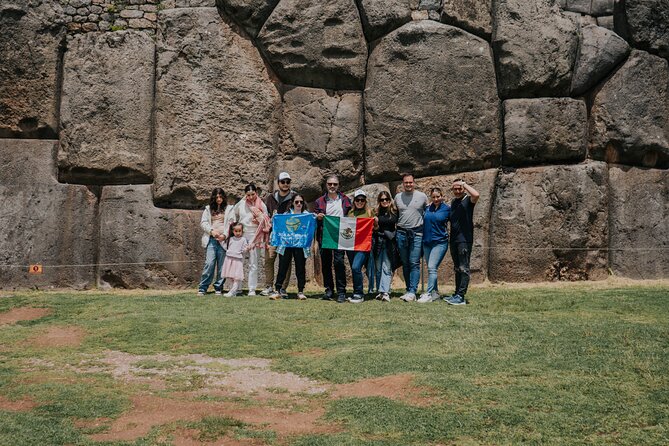
The most striking feature is the stonework. Massive blocks were cut and fitted with great care, creating walls that appear to lock together. A guide can help you notice the angles, joints, and changes in elevation that a quick walk might miss.
This is where the tour’s guide becomes important. The site is visually powerful, but without context, it can become a short photo stop. A well-prepared guide can explain the ceremonial role of the complex, point out the three levels, and help you understand how Sacsayhuaman related to the city below.
Give yourself room for walking and looking up. The site is not a flat museum floor, and the combination of stone surfaces, steps, and open ground is one reason the tour is not suitable for people with mobility impairments.
Q’enqo and the ritual side of Inca culture
The next stop is Q’enqo, described as an ancient shrine of the Puma. Its name and design connect it with the animal symbolism found across Andean culture, where the puma was linked with strength and the earthly world.
Q’enqo offers a different experience from Sacsayhuaman. Instead of focusing on huge walls and wide views, you’ll look at a ceremonial space cut into and arranged around stone. Inside is an altar associated with sacrifices and Pachamama, or Mother Earth.
The interior setting gives the visit a more enclosed, serious mood. Your guide can explain how the space was used and how it fits within the Andean view of nature, worship, and community. This is one of the stops where a few clear explanations can add much more than a quick look at the rocks.
You should also expect the visit to be interpretive rather than grand in scale. Q’enqo does not have the same immediate impact as Sacsayhuaman, but it adds meaning to the day. The tour is stronger because it includes both monumental construction and smaller sacred spaces.
Take care around uneven surfaces and confined areas. Large bags and luggage are not allowed, so bring only what you need for the outing. Your passport or identification card is required.
Tambomachay and the living water sources
Tambomachay brings water to the center of the story. This Inca monument is known for its carefully built channels and spring water sources, which still irrigate fields and terraces associated with the city.
The site is also described as one of the pillars of the Andean cosmovision. That phrase points to a view of the world in which water, land, mountains, people, and ritual are closely connected. You are not simply looking at an old fountain. You are seeing how practical engineering and spiritual meaning could share the same place.
I find this stop especially useful after Sacsayhuaman and Q’enqo. Sacsayhuaman shows authority through scale. Q’enqo shows ritual through stone. Tambomachay shows how water could support daily life while also carrying religious importance.
The spring sources are the key detail to watch for. Ask your guide to point out the channels and explain how the water moved through the site. Since the description promises views on the way between stops, the ride itself also helps you see the area around Cusco as part of the Inca capital’s wider system.
As with the other sites, conditions are not designed for easy, level access. If stairs, rough ground, or walking on uneven stone are difficult for you, this circuit may be frustrating. The tour provider specifically says it is not suitable for people with mobility impairments.
Same base, a completely different day in the Andes:
- Cusco: Humantay Lake Tour with Breakfast and Buffet Lunch
★ 4.9 · 2,976 reviews - From Cusco: Sacred Valley & Maras Salt Mines Tour with Lunch
★ 4.8 · 2,227 reviews - From Cusco: Moray, Maras Salt Mines & Chinchero Weavers Tour
★ 4.8 · 1,925 reviews - From Cusco: Full-Day Group Tour of Machu Picchu
★ 4.7 · 1,767 reviews
Puca Pucará and the watchtower over the valley
The final stop is Puca Pucará, a strategic site that overlooks the valley and the imperial city. Its position gives it a defensive and supervisory role within the wider network around Cusco.
The name is often translated as Red Fortress, though the important point here is its function. From this elevated position, you can understand how the Inca watched movement through the surrounding routes. It is less about one grand building and more about location, sightlines, and control.
Puca Pucará works well as the closing stop because it brings the day back to the wider geography. After seeing ceremony, worship, and water management, you finish by considering how the capital was protected and connected.
The site also gives you another chance to enjoy the views. The tour description specifically includes scenic views on the way, and this stop is designed around a commanding position. Keep your camera ready, but listen for the explanation of how the site related to Cusco rather than treating it as only a viewpoint.
The guide, transport, and pickup details
A professional tourist guide leads the visits in English or Spanish. The guide is scheduled to provide explanations at the sites for about five hours, which is the heart of the experience.
The only detailed assessment available describes the outing as pleasant and the guide as kind and very well prepared, with strong knowledge of different subjects. The guide’s name is not provided, so you should not expect to select a particular guide when booking.
Tourist transportation is included. Pickup can be arranged from your hotel, with a collection schedule provided. The operator may also coordinate pickup from a neutral point and adjust the meeting time, so give clear hotel details and confirm the final location before the day of the tour.
The itinerary begins with two pickup options connected to the Plaza de Armas and ends at Cusco’s Main Square. Since the central square is both a practical meeting point and a busy part of town, confirm whether you are being collected at your hotel or asked to reach a neutral point.
The group size is not specified. That matters because a smaller group usually makes it easier to ask questions and hear the guide at busy sites, while a larger vehicle may feel less personal. Ask before booking if group size is important to you.
What the $15 price includes, and what it does not
The $15 price covers the transportation, the professional guide, guided visits, and agency assistance available around the clock. For a half-day circuit covering four sites outside central Cusco, that is a sensible base price.
Entrance tickets are not included. This is the most important cost to add when comparing the tour with other options. Meals, drinks, snacks, and travel insurance are also excluded.
You do not need to plan a full meal during the tour based on the information provided, but carry anything you personally need only if it fits the no-large-bag rule. The safest plan is to confirm ticket arrangements, bring identification, and keep your belongings light.
The tour offers free cancellation up to 24 hours before departure for a full refund. You can also reserve now and pay later, which is useful if your Cusco plans may change. These flexible terms add value, but they do not remove the need to check the ticket cost and pickup time.
Who should book this Cusco circuit
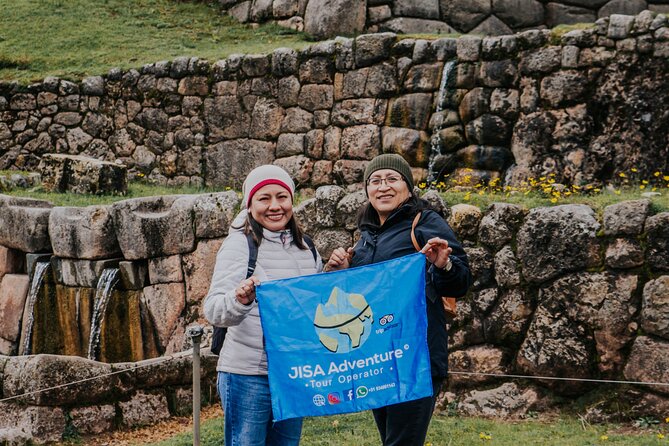
I would recommend this tour to a first-time Cusco visitor who wants a guided introduction to the city’s Inca surroundings. It gives you four distinct sites in one morning or afternoon and helps you understand how they fit together.
It also suits you if you want transportation included rather than arranging taxis between separate archaeological sites. The five-hour length leaves time for other plans, though you should allow for the stated schedule difference of five to five and a half hours.
This is a good choice for people interested in architecture, Andean beliefs, water engineering, and the relationship between Cusco and its surrounding hills. It is less suitable if you want a slow, private visit with lots of time at each site, since four stops must fit into one circuit.
You should skip it if you have significant mobility limits. The sites involve uneven ground and are not listed as suitable for people with mobility impairments. You should also think twice if you dislike extra costs revealed after booking, since entrance tickets are separate.
Practical preparation for the five-hour visit
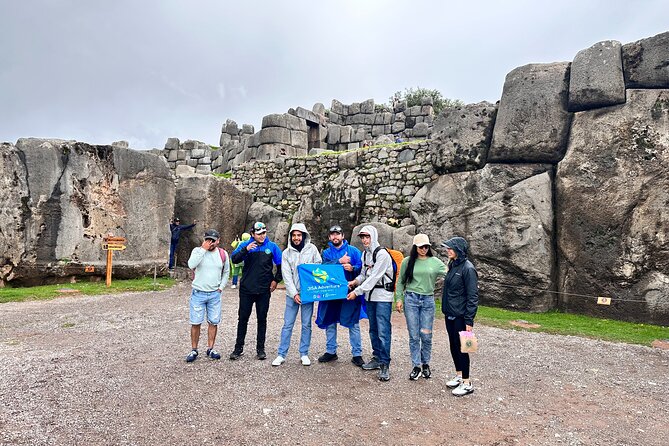
Bring your passport or ID card, as required for the activity. Leave luggage and large bags behind, since they are not allowed.
Wear footwear that you can use comfortably on uneven archaeological surfaces. This is practical advice based on the site conditions and the stated mobility restriction, not a promise that special walking equipment is provided.
Confirm these points before departure:
- Your hotel pickup time or neutral meeting point
- The exact return time, since the schedule may run five to five and a half hours
- Which entrance ticket you need and its current price
- Whether your tour will be conducted in English or Spanish
- The final drop-off point in or near Cusco’s Main Square
The provider offers 24-hour assistance, so keep its contact details available on the day. A little checking in advance can prevent the usual Cusco confusion of standing at the wrong plaza entrance with a day bag and no clear pickup message.
Should you book City Tour Cusco?
Book it if you want an affordable, guided introduction to four important Inca sites and prefer included transportation. Sacsayhuaman supplies the memorable scale, Q’enqo adds ritual, Tambomachay explains water and Andean belief, and Puca Pucará finishes with defense and views.
The strongest reasons to choose it are the low $15 starting price, the five-hour format, English or Spanish guidance, and the reported kind, well-prepared guide service. The main reasons to hesitate are the separate entrance tickets, unknown group size, possible five-and-a-half-hour timing, and difficult access for anyone with mobility limits.
For a first look at Cusco’s Inca foundations, I think it is a practical choice. Just confirm the extra ticket cost and pickup details before paying, and you’ll know what this inexpensive tour really costs and how it fits into your day.
FAQ
How long does City Tour Cusco last?
The activity is advertised as five hours. The detailed schedule describes a visit of about five and a half hours, so confirm the exact timing before booking other plans.
What sites does the tour visit?
The tour visits Sacsayhuaman, Q’enqo, Tambomachay, and Puca Pucará, with guided visits and scenic views along the way.
Where does the tour start?
Pickup can be arranged from your hotel. The activity also lists Cusco’s Plaza de Armas as a pickup location, and collection may be coordinated from a neutral meeting point.
Where does the tour finish?
The tour finishes at Cusco’s Main Square, also known as the Cuzco Main Square.
Is transportation included?
Yes. Tourist transportation is included, along with a professional tourist guide and guided visits at the sites.
Are entrance tickets included?
No. Entrance tickets are not included in the $15 price and must be paid separately.
What languages are available?
The live tour guide is available in English or Spanish.
What should I bring?
Bring your passport or identification card. Luggage and large bags are not allowed, so carry only what you need for the tour.
Just added around Cusco
- Cusco: Via Ferrata, Skybike, and Rappel Adventure★ 5.0 · 3 reviews
- From Cusco: Maras and Moray and Ollantaytambo Tour★ 5.0 · 3 reviews
- Cusco: Rainbow Mountain Tour at Sunset Without the Crowds★ 4.7 · 3 reviews
- Cusco: Sacred Valley Day Trip with Maras & Moray Salt Mines★ 5.0 · 3 reviews
- Valle Sur Cusco | half day★ 4.3 · 3 reviews
- IN MACHU PICCHU: Private Tour Guide Service★ 5.0 · 3 reviews
- Salkantay trek to Machu Picchu – 5D/4N – Premium★ 3.3 · 3 reviews
- Guide in Machu Picchu★ 5.0 · 3 reviews
Cusco City Tours, compared.
Half-Day City Tour with Sacsayhuaman and Q’enco
Read our review →
City Tour Cusco Qoricancha Sacsayhuaman y Tambomachay
Read our review →
City Tour | Half-Day Tour to 4 Archaeological Sites
Read our review →
City Tour in Cusco & visit Museum South American Camelid Private.
Read our review →
Cusco City Sightseeing, San Pedro Market, Cathedral and Qorikancha Temple
Read our review →
Cusco City Sightseeing and Sacsayhuaman Archeological Park Tour
Read our review →Browse the lists this tour appears in