
Reviewed · SACRED VALLEY TOURS
Sacred Valley Textile Workshop – Dyeing & Weaving in Cusco
The best part of this Cusco textile workshop is that you do not just watch an artisan work. You collect leaves, prepare natural dyes, spin wool, and use a backstrap loom to make your own bracelet, bookmark, or headband. Ruth Pimentel, an Indigenous master weaver honored by UNESCO, and other weavers from the Sacred Valley guide you through the process.
I like the workshop for two clear reasons: the hands-on work gives you real respect for Andean textile making, and the time around the lunch table lets you meet the people who keep these traditions alive. The countryside drive from Cusco is also beautiful, with stops for photos along the way.
The main drawback is the distance. The ride to the workshop can take about an hour and a half, so this is an all-day outing, not a quick morning class. The weaving also takes patience, and much of the work is done seated on the floor.
In This Review
- Key points to know before you book
- From Cusco to the Sacred Valley by private car
- Meeting Ruth Pimentel and the weaving community
- Collecting plants for natural dyes
- Preparing alpaca wool and learning to spin
- Dyeing your own yarn with ancestral methods
- Lunch around the family table
- Sitting at the backstrap loom
- Traditional clothing, dancing, and the workshop shop
- What the $420 price includes
- Who should book this workshop
- Should you book the Sacred Valley textile workshop?
- FAQ
- How long does the textile workshop last?
- What time does the activity start?
- Is transportation from Cusco included?
- What will I make during the workshop?
- Do I get to dye yarn myself?
- Is lunch included?
- Can I cancel for a full refund?
Key points to know before you book
- You make a textile piece yourself: Choose a bracelet, bookmark, headband, or similar small item, with patient help from the weavers.
- Natural dyeing begins outdoors: Walk with the artisans to collect leaves and other plant material used for color and, in some cases, traditional medicine.
- Ruth Pimentel leads a family textile tradition: Her work preserves Andean techniques passed through generations of Quechua women.
- The day includes lunch and local conversation: A home-style meal is shared with the weaving team, along with coffee or tea.
- Private transport starts in Cusco: Pickup is offered at about 8:30 am, with a countryside ride to the workshop near Calca.
- Plan for a full day: The workshop lasts about eight hours, but the road time makes the outing longer.
From Cusco to the Sacred Valley by private car
Your day begins around 8:30 am with hotel pickup in Cusco. Private transport makes the start easy, especially if you are still finding your bearings in the city or do not speak Spanish. Drivers such as Pedro have also been praised for being punctual, friendly, and helpful during the ride.
The road trip is part of the appeal. You pass through the countryside on the way toward Calca, with time for scenic photo stops. It is not simply a transfer from one activity to another. You get a look at the rural setting where these textile traditions developed.
Still, plan honestly for the timing. The trip can take more than an hour each way, and one account put the drive at about an hour and a half. Add the eight-hour workshop and you have a very full day. I would not schedule a major afternoon activity in Cusco afterward.
The long ride may actually help you adjust to the day’s pace. This is a quiet cultural outing rather than a rush from one sight to the next. If you have just arrived in Cusco, the slower schedule can be a pleasant way to acclimate, though you should still take altitude concerns seriously and tell your operator if you feel unwell.
More Sacred Valley days out of Cusco:
- From Cusco: Sacred Valley & Maras Salt Mines Tour with Lunch
★ 4.8 · 2,227 reviews - Cusco: Sacred Valley, Pisac, Ollantaytambo, Salt Mines Moray
★ 4.6 · 1,058 reviews - Sacred Valley: Chinchero, Moray, Ollantaytambo & Pisac+Lunch
★ 4.8 · 501 reviews
Meeting Ruth Pimentel and the weaving community
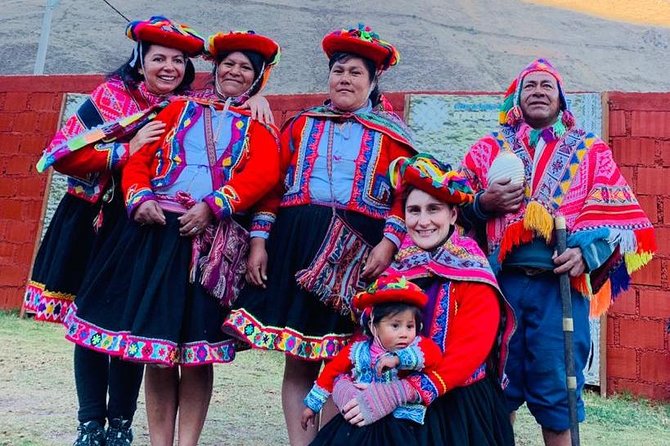
At the workshop, you are welcomed by Ruth Pimentel and other experienced weavers. Ruth is presented as Peru’s only UNESCO-awarded Indigenous master weaver, and the introduction explains her family background and the role of the workshop’s social-impact work.
The important point is that the craft is not treated as a costume or a photo backdrop. The day focuses on the labor, skill, and cultural meaning behind the textiles. You learn from the women who practice the work, not just from a guide giving a short talk.
Names of the people leading the day can vary. Nayda has served as a translator and facilitator, while Delia, Dalia, Julia, Maria, Martina, Marilus, Ruth, Selena, and Natividad have all been identified as teachers or members of the weaving team at different times. Nayda is especially useful if you speak little or no Spanish. She translates explanations and helps you through each practical step.
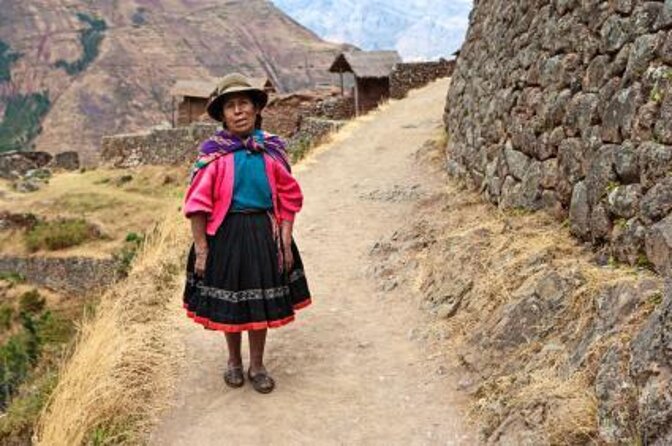
The tone is warm and personal. You may learn a few Quechua words, hear about local customs, and spend time talking with the family and artisans. That human contact is a major reason to choose this workshop over a standard demonstration at a souvenir stop.
Collecting plants for natural dyes
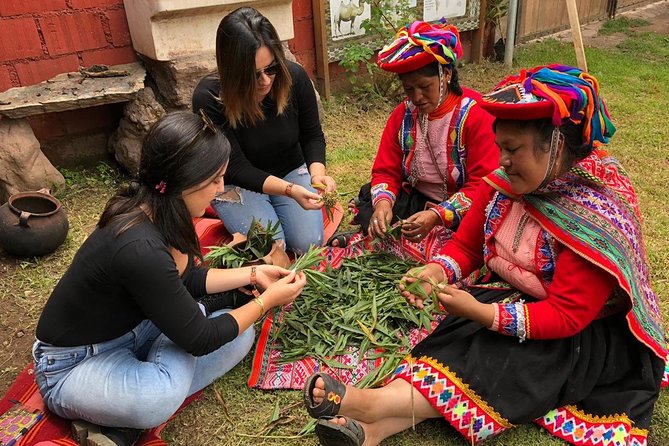
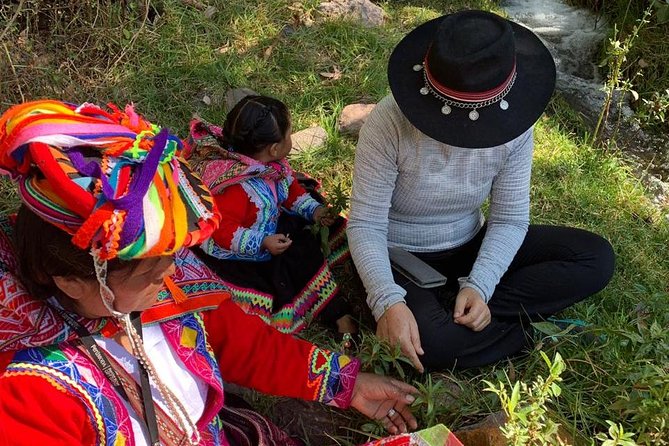
The first work begins with plants. You walk outside with the weavers to gather leaves and other natural materials for the dye bath. The plants are explained not only as sources of color, but also as part of local knowledge about traditional remedies.
This short walk gives the dyeing process useful context. Instead of seeing a finished skein and hearing that it was dyed naturally, you see the material at its starting point. You also learn that color comes from careful preparation, not from a single dramatic trick.
The exact plants and colors depend on what is available during the season. The workshop description refers to seasonal botanicals, so do not expect a fixed menu of colors on every date. That variation is part of the point: Andean textile work responds to the local environment and the materials at hand.
You may also be offered a snack or a drink made with local herbs. One account describes collecting herbs for tea, while other parts of the day include coffee or tea. The schedule has a relaxed rhythm, with short breaks between activities.
Preparing alpaca wool and learning to spin
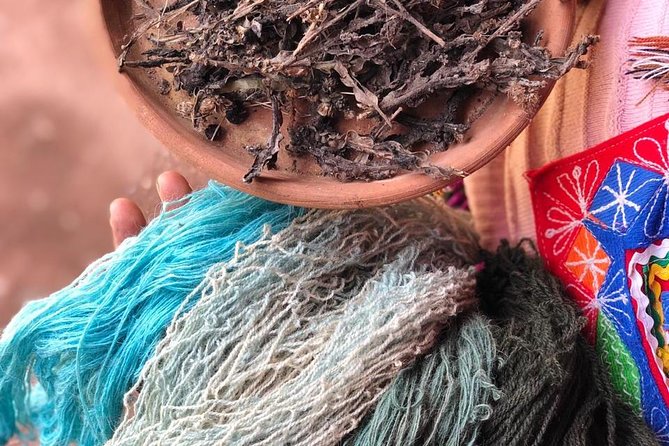
The workshop takes you further back than dyeing. You may learn how alpaca wool becomes yarn, including basic preparation and spinning. The focus is on the handwork that comes before the loom.
This is where the price begins to make more sense. You are not paying only for a finished souvenir. You are paying for access to several stages of a traditional process, taught by people with years of practical skill.
Spinning looks simple until you try it. Keeping the fiber even and creating a steady thread requires control. The same is true of winding the yarn into usable balls. These small tasks show why larger Andean textiles take so much time.
The instruction is adjusted to your ability. If you have textile experience, you can ask more technical questions. If you have never handled wool, the guides provide close assistance. Either way, do not expect to master the craft in one day. The goal is to understand the process and complete a small piece with help.
More weaving and textile visits:
- From Cusco: Moray, Maras Salt Mines & Chinchero Weavers Tour
★ 4.8 · 1,925 reviews - Cusco: Alpaca and Llama Farm Tour w/ Transfer & Weaving Demo
★ 4.9 · 151 reviews - From Cusco: Moray, Maras Salt Mines & Chinchero Weavers Half-Day
★ 5.0 · 126 reviews - The Textile Workshop Experience in Cusco Region
★ 5.0 · 118 reviews
Dyeing your own yarn with ancestral methods
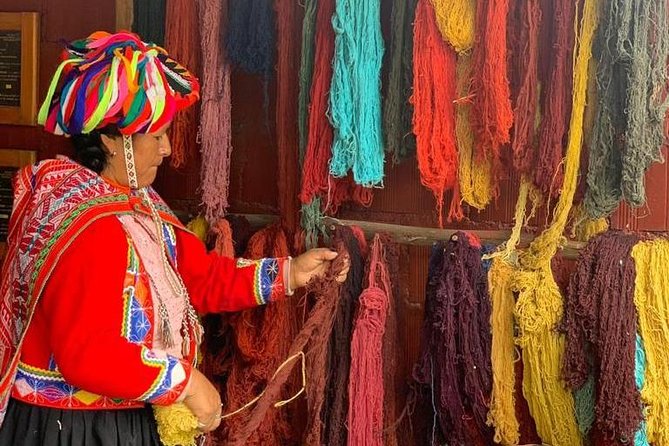
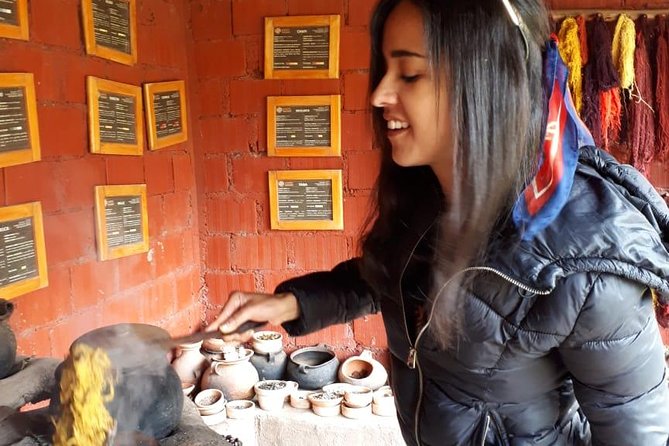
Once the plant materials are gathered and prepared, you help make the dye bath and color the alpaca yarn. You handle the yarn and see how natural materials change it.
The result may not look as uniform as factory-dyed wool. That is not a flaw. Natural dyeing can produce subtle variation, and the color is tied to the material collected that day. You also take home yarn that you helped dye, which gives you a useful souvenir even if your woven item is small.
The guides explain which materials create different shades and how the dyeing process fits into Andean textile traditions. This is one of the clearest educational parts of the workshop because you can connect the plant, the liquid dye, the wool, and the final color in one sitting.
I would wear clothes and shoes suitable for a country setting. The information provided does not specify a dress code, but the day includes an outdoor walk and practical craft work. Avoid bringing anything you would worry about near plant dyes.
Lunch around the family table
Lunch is included, and it is more than a break between craft lessons. You eat with the weavers and the people guiding the workshop. The meal has been described as home-cooked, generous, wholesome, and delicious, with fruit and local ingredients appearing in some meals.
This shared table is one of the strongest parts of the day. Conversation continues through the meal, and the translator can help you speak with the artisans. You learn about one another, not just about weaving.
Food can vary, so do not treat any one reported dish as guaranteed. One account mentions guinea pig as a local delicacy during a flexible stop, while others describe fruit, yucca, avocado, pineapple, papaya, and passion fruit. If you have dietary needs, ask when booking because the supplied information does not state how special diets are handled.
Coffee or tea is included as well. A short snack break may come before lunch, especially after the plant walk. The pace gives you time to rest, enjoy the setting, and continue talking without feeling pushed along.
Sitting at the backstrap loom
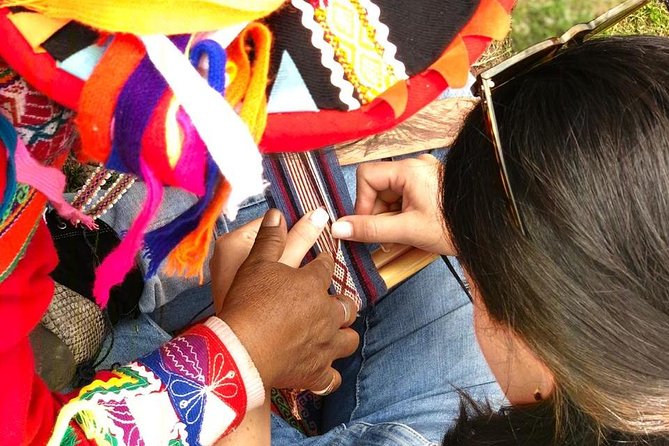
After lunch, the main lesson begins: backstrap weaving. This traditional loom is compact, but the technique is not easy. You work close to the floor, and the process requires attention to tension, pattern, and repeated movements.
The weavers first show you how the loom is set up and how the threads are controlled. Then you begin your own piece with guidance. Bracelets are a common choice, while bookmarks and headbands, including a traditional bincha, have also been made during the workshop.
You should expect assistance. The finished pattern depends on precise placement, and beginners often need the weavers or translator to correct their hands. That support does not make the piece meaningless. It shows how much skill is packed into work that trained artisans perform quickly.
The weaving can be tiring because you sit on the floor for a few hours. Anyone with mobility concerns should ask about the setup before booking. The practical information says most people can participate, but it does not promise chairs or an alternative loom arrangement.
By the end, you gain a better sense of the effort behind the larger textiles sold in the region. A small bracelet may take significant concentration. A large patterned cloth represents many more hours of spinning, dyeing, planning, and weaving.
Traditional clothing, dancing, and the workshop shop
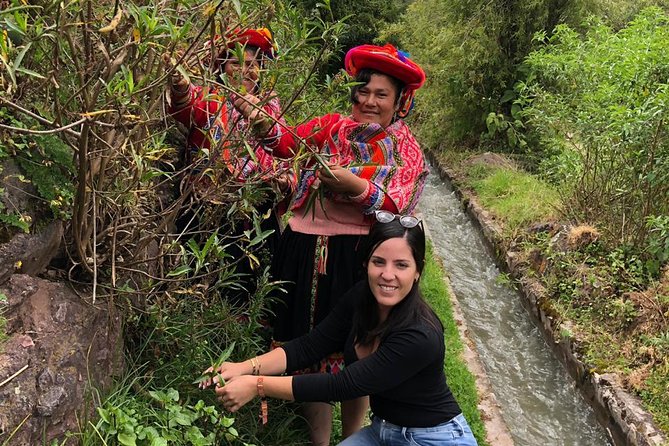
The day may close with an explanation of traditional clothing. The guide can help dress you in local garments, followed by a dance with the group. This is a light, social ending after the careful concentration of the loom.
It is also a reminder that textiles are worn objects, not only decorative art. Clothing communicates place, identity, family tradition, and community ties. Seeing the garments after spending hours working with wool makes the explanation more meaningful.
There is time to browse the workshop shop. Prices have been described as more reasonable than expected, and purchases are made directly from the women who create the goods. This gives you a chance to buy a larger textile while supporting the artisans rather than purchasing an anonymous factory item.
You should feel free to browse without treating shopping as an obligation. The strongest souvenir is often the piece you made yourself, along with the dyed yarn you take home. Your finished item is typically packaged neatly and may include a signed provenance card, according to the workshop description.
What the $420 price includes
At $420 per person, this is an expensive day compared with a basic Sacred Valley sightseeing tour or a short textile demonstration. The cost is easier to justify if you value private transport, a full day of instruction, included food, translation, and direct time with master weavers.
You are also buying a small-group or private format. The activity is listed as private, though one account describes another participant joining on the day. Group arrangements can vary, so confirm the exact setup if privacy matters to you.
The value is strongest for people who want participation rather than a quick explanation. You help gather materials, spin, dye, and weave. You also leave with something you worked on, plus a clearer understanding of the labor behind Andean cloth.
For someone mainly interested in ruins, views, or a low-cost half-day, the price may feel high. For a textile artist, craft hobbyist, cultural traveler, or family seeking a meaningful day with local artisans, the cost covers a rare level of access and instruction.
Free cancellation is available up to 24 hours before the start time for a full refund. Changes or cancellations inside that window are not accepted, and poor weather can lead to a new date or a full refund.
Who should book this workshop
I would choose this for anyone who enjoys making things with their hands. Textile designers, knitters, weavers, macramé artists, and curious beginners all have something to gain, but you do not need prior craft experience.
It also suits solo travelers. The hosts and facilitators create a social setting, and the shared meal gives you an easy way to connect. Families can take part too, though younger children may find the long weaving session demanding.
This is a good choice if you want to get beyond Cusco’s main sights and spend time in a rural community. It is less suitable if you dislike long drives, floor seating, slow instruction, or activities where the final result may look modest compared with the work of a master.
Service animals are allowed, and the activity is near public transportation, though private pickup is offered. Most people can participate according to the supplied accessibility information, but ask ahead about floor seating if that could be a concern.
Should you book the Sacred Valley textile workshop?
Book it if you want a thoughtful, hands-on day built around Andean craft, local food, and conversation. The strongest reasons are the patient instruction from Ruth and the other weavers, the chance to collect and use natural dye plants, and the honest look at how much work goes into traditional cloth.
Skip it if you are looking for a short activity close to central Cusco or a polished art class with quick results. The road takes time, the loom is challenging, and the work is physical in a quiet, unhurried way.
For the right person, this can be one of the most memorable cultural activities near Cusco. Bring curiosity, patience, and clothes you can work in. You will return with a small textile, dyed yarn, and a far greater respect for the hands that make Andean weaving possible.
FAQ
How long does the textile workshop last?
The workshop itself lasts about eight hours. With hotel pickup, the drive from Cusco, and the return journey, you should plan for a full day.
What time does the activity start?
Pickup and the start of the experience are scheduled for about 8:30 am.
Is transportation from Cusco included?
Hotel pickup by private transport is offered. The drive to the workshop near Calca can take about an hour to an hour and a half.
What will I make during the workshop?
You may make a bracelet, bookmark, headband, or similar small textile piece. The exact choice can depend on the workshop arrangements and the materials available.
Do I get to dye yarn myself?
Yes. You help collect plant materials, prepare natural dyes, and dye alpaca yarn using traditional methods. Dyed yarn can be taken home.
Is lunch included?
Yes. Lunch and coffee or tea are included. The meal is shared with the weaving team.
Can I cancel for a full refund?
You can cancel at least 24 hours before the start time for a full refund. Cancellations or changes made less than 24 hours before the activity are not accepted, and poor weather may result in a different date or a full refund.
Just added around Cusco
- Cusco: Via Ferrata, Skybike, and Rappel Adventure★ 5.0 · 3 reviews
- From Cusco: Maras and Moray and Ollantaytambo Tour★ 5.0 · 3 reviews
- Cusco: Rainbow Mountain Tour at Sunset Without the Crowds★ 4.7 · 3 reviews
- Cusco: Sacred Valley Day Trip with Maras & Moray Salt Mines★ 5.0 · 3 reviews
- Valle Sur Cusco | half day★ 4.3 · 3 reviews
- IN MACHU PICCHU: Private Tour Guide Service★ 5.0 · 3 reviews
- Salkantay trek to Machu Picchu – 5D/4N – Premium★ 3.3 · 3 reviews
- Full-Day Condor Viewpoint & Inca Sites Tour★ 5.0 · 3 reviews
Sacred Valley Tours, compared.
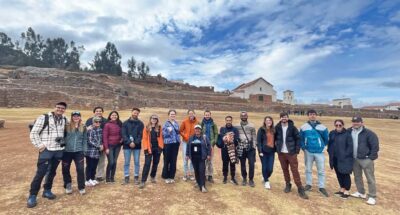
Sacred Valley & Maras Salt Mines Tour with Lunch
Read our review →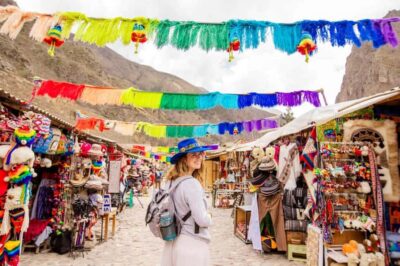
Sacred Valley, Pisac, Ollantaytambo, Salt Mines Moray
Read our review →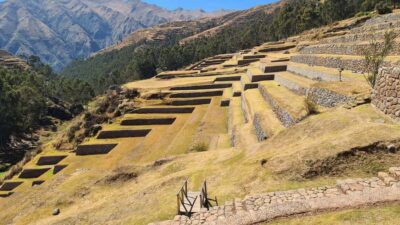

2-Day Trip to the Sacred Valley and Machu Picchu
Read our review →
Sacred Valley Pisaq,Ollantaytambo,Chinchero with Lunch
Read our review →
Full-Day Excursion to Sacred Valley, Pisac and Ollantaytambo from Cusco
Read our review →
Food and Culture Full day Tour in the Sacred Valley
Read our review →Browse the lists this tour appears in