
Reviewed · SACSAYHUAMAN AND INCA RUINS
Horseback Riding Plus Tour to Sacsayhuaman, Quenqo, Puka Pucara and Tambomachay
The best part of this half-day outing is the change of pace: you move from Cusco’s stone ruins to open mountain country on horseback, then return to major Inca sites by private car. I like the mix of history and activity, and I like that the horses are matched to your confidence, so beginners can feel secure while experienced riders may get a little more speed.
The main catch is that the riding takes about an hour, sometimes reported as roughly an hour and a half, rather than most of the four-hour tour. You also pay separately for the archaeological entry ticket, and snacks are advertised but were not provided on every departure.
In This Review
- Key points to know before you book
- Four Inca sites, one horseback ride
- Sacsayhuaman and the scale of Inca stonework
- Q’enqo and the ceremonial side of Cusco
- Puka Pukara, the red fortress above the road
- Tambomachay and water shaped for ceremony
- What the Vieja Estancia Ranch ride is really like
- Guides make the difference at the ruins
- What the $95 price covers, and what it does not
- Clothing, altitude, and riding comfort
- Who will enjoy this half-day outing
- Booking advice and cancellation terms
- Should you book the Sacsayhuaman horseback tour?
- FAQ
- How long does the tour last?
- How long is the horseback ride?
- Which archaeological sites are included?
- Does the tour include the archaeological entry ticket?
- Is hotel transportation included?
- Is the tour suitable for beginners?
- What is the minimum age?
- Is there a weight limit?
- What should I wear?
- Are snacks included?
- What happens if the weather is poor?
Key points to know before you book
- The ride is about an hour: The rest of the tour uses a private car to reach four important Inca sites.
- Four sites in one morning: Sacsayhuaman, Q’enqo, Puka Pukara, and Tambomachay each offer a different look at Inca engineering and religion.
- Good for first-time riders: Horses are assigned by experience, and a muleteer stays with the group to care for them.
- Benny, Jenny, and Hogler have led past tours: The guide you receive is not guaranteed, but strong English-language guiding has been a recurring feature.
- The archaeological ticket costs extra: Budget for the government-run Cusco Tourist Ticket in addition to the $95 tour price.
- Bring practical clothing: Wear long pants and closed shoes, carry water and sun protection, and take a rain jacket if showers are possible.
Four Inca sites, one horseback ride
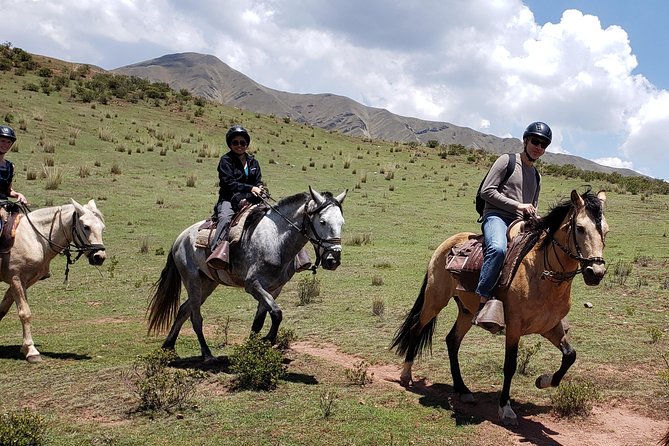
This experience works because it joins two things that are often sold separately in Cusco: a guided circuit of the nearby ruins and a short ride through the hills. You are not on horseback for the whole excursion. Instead, the private car handles the longer transfers, while the horses provide a scenic break in the middle.
That arrangement also protects the archaeological sites. You do not ride through Sacsayhuaman or the other major ruins. Horses can damage the soil and paths, so the riding takes place at and around Vieja Estancia Ranch, with some smaller ruins and open countryside along the route.
The tour lasts about four hours. The exact rhythm can vary, but the usual pattern is visits to some sites by car, a transfer to the ranch, the horseback ride, and a stop at the remaining ruins before returning to Cusco. Guides have been praised for keeping explanations clear and for avoiding long, drawn-out talks at each stop.
More Inca ruins above Cusco:
- Cusco: Half-Day City Tour with Sacsayhuaman and Q’enco
★ 4.6 · 1,129 reviews - City Tour Cusco Qoricancha Sacsayhuaman y Tambomachay
★ 4.7 · 617 reviews - Cusco City Sightseeing, San Pedro Market, Cathedral and Qorikancha Temple
★ 4.5 · 139 reviews
Sacsayhuaman and the scale of Inca stonework
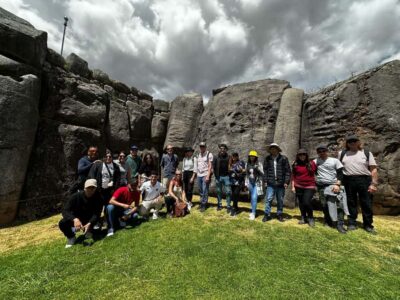
Sacsayhuaman is the heavyweight of the circuit. Its enormous fitted stones make the Inca talent for construction easy to grasp, even if you know little about Andean history. Your guide explains the site’s role, architecture, and religious customs, then gives you time to look closely at the walls and the broad views around Cusco.
This is not a small ruin tucked into a corner. The scale is the point. You can see why Sacsayhuaman is one of the essential stops near Cusco, and why a guide matters here. Without context, it is easy to take a few photographs and move on without understanding how the stonework relates to Inca power and ceremony.
Bring sun protection even on a cloudy day. At Cusco’s elevation, bright conditions are not required for the sun to burn you. One couple specifically regretted skipping sunscreen during an overcast tour.
Q’enqo and the ceremonial side of Cusco
Q’enqo offers a different mood from Sacsayhuaman. The site is associated with ritual and religious practice, and your guide explains the carved stone features and customs connected with the place. It is a useful counterpoint to the large walls at Sacsayhuaman because the focus shifts from monumental construction to ceremony.
The visit is not designed as a long archaeological walk. You see the key features, hear the explanation, and continue. I like this brisk approach on a four-hour tour, especially if you want several sites without giving up the riding portion.
The spelling appears in several forms, including Q’enqo and Quenqo. Do not let that confuse you when checking maps or asking your hotel for directions.
Puka Pukara, the red fortress above the road
Puka Pukara is a compact hilltop site with a practical position along the old route through the Cusco area. Its name is commonly translated as red fortress, and the site gives you a good sense of how the Inca used high ground and connected places along important roads.
The attraction here is partly the setting. You get open views toward the mountains and a chance to see how the surrounding terrain shaped movement and defense. Your guide ties the stones to the wider Inca road system and explains what the site meant within the larger group of royal and ceremonial places around Cusco.
Puka Pukara is generally a shorter stop than Sacsayhuaman. That is useful if you prefer a varied half-day outing, but it may feel too brief if you want a slow, detailed archaeological study.
More horseback rides near Cusco:
- Cusco: 3-Hour Horse Riding Tour to the Temple of the Moon
★ 5.0 · 105 reviews - Cusco: Half-Day Horseback Riding at Devil’s Balcony
★ 4.9 · 89 reviews - Horse Riding Chacan Mountain And Temple Of The Moon
★ 5.0 · 78 reviews - Horseback Tour in cusco to Temple of the Moon & Hidden temples
★ 5.0 · 54 reviews
Tambomachay and water shaped for ceremony
Tambomachay is known for its channels and fountains, making water the star of this stop. The site shows how the Inca treated water as both a practical resource and a sacred element. Your guide discusses the religious meaning of the site along with the stonework and water features.
It is a fitting final archaeological stop because it feels quieter and more intimate than Sacsayhuaman. You are not simply looking at walls. You are seeing how engineering, belief, and the mountain environment worked together.
The order can change, and one past route placed Tambomachay at the end, after the horseback ride. Do not worry if your driver takes a different sequence. The important point is that all four sites are included, while the horses remain off the protected archaeological ground.
What the Vieja Estancia Ranch ride is really like
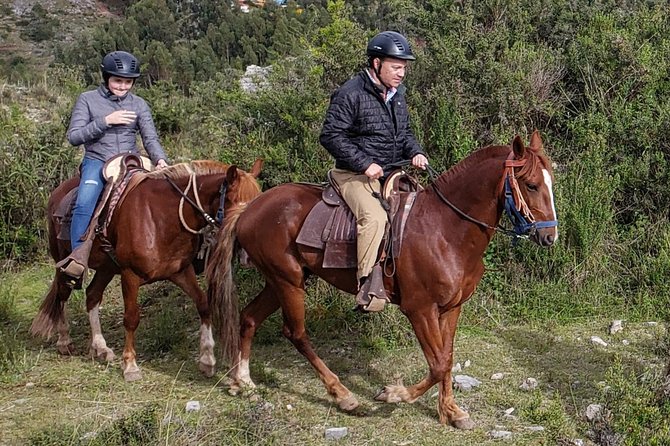
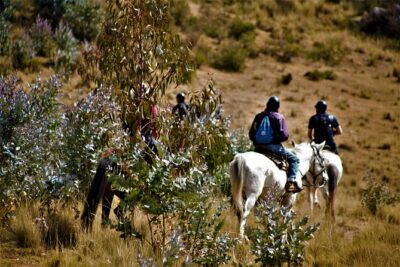
At the ranch, you meet the horses, receive a saddle and safety helmet, and are paired with a mount suited to your experience. The staff has handled complete beginners as well as riders who wanted to trot and move faster for short stretches.
If this is your first ride, tell the staff plainly. The horses are described as calm and well cared for, and the guide keeps the group moving at the pace of the least experienced rider. That makes this a sensible choice for families, couples with mixed abilities, and people who want an introduction rather than a technical riding lesson.
Experienced riders should set expectations carefully. This is a guided scenic ride, not a full equestrian excursion. You may have the chance to open up the pace a little, but the group stays together and safety comes first.
The scenery is the reward. You ride through open mountain country, with fields, sheep, striking views, and a few smaller ruins visible along the way. Several riders described the setting as the emotional highlight of the day, and that makes sense: the open route gives you a view of Cusco beyond its streets and masonry.
The length is the point to clarify before paying. The advertised experience is about four hours overall, but the riding section is around one hour. Some departures have lasted closer to an hour and a half. If you are booking because you want a long day in the saddle, choose a dedicated riding tour instead.
Guides make the difference at the ruins
This tour depends heavily on the guide. The strongest departures have featured guides such as Benny, Jenny, and Hogler, with clear explanations of Inca architecture, history, and religious customs. Benny has been especially effective at answering awkwardly phrased questions in plain English, which is exactly what you want at complicated sites.
A good guide also controls the tempo. The stops are short enough to keep the day moving but long enough to explain the main features. You can ask questions without turning every ruin into a lecture.
The guide is also your safety contact during the ride. A first aid kit is carried for emergencies, though the guide is not authorized to provide medication outside basic first-aid procedures. That is a normal but useful detail to know before you leave.
The maximum group size is 15 people. That is not a private ride, but it is small enough for the guide to keep an eye on the group and answer questions. Transport is by private car, with pickup and drop-off at hotels included.
What the $95 price covers, and what it does not
The price is $95 per person. Included are round-trip transport, a professional guide, the saddle, a helmet, a muleteer to care for the horses, and mineral or natural water.
That is a fair package if you value having the car and the archaeological circuit organized around the ride. You are paying for a driver, horse care, riding equipment, guide service, and transfers, not just an hour in a saddle.
The main extra cost is the Cusco Tourist Ticket, which covers entry to the archaeological sites. It is not included because the sites are managed by the Peruvian government. The provider gives an approximate cost of $20, while one past departure reported paying 70 soles, so confirm the current fee and accepted payment method before setting out.
Snacks are listed among the tour highlights, but they were not supplied on every departure. Bring a small snack of your own, especially if you are sensitive to altitude, get hungry between meals, or are traveling with children.
Clothing, altitude, and riding comfort
Wear long pants, preferably jeans, and closed shoes with rubber soles or proper walking shoes. Shorts can leave your legs rubbing against the saddle, while open footwear is a poor match for stirrups and uneven ground.
Carry a rain jacket if the forecast shows a real chance of rain. Cusco weather can shift quickly, and the tour requires decent conditions. If poor weather forces cancellation, you can choose another date or receive a full refund.
Leave jewelry and valuables behind. They can catch on riding equipment or fall somewhere along the trail. Bring only what you need, such as a phone, sunscreen, water, and a small amount of cash for the entry ticket.
The maximum weight is 200 pounds, or 90 kilograms. The minimum age is six. Most people can take part, including riders with little or no experience, but you should be comfortable sitting on a horse and following basic instructions.
The route is near public transportation, though the included hotel pickup makes that less important. Ask about pickup coverage if your accommodation is outside the usual Cusco hotel area.
Who will enjoy this half-day outing
I would choose this tour for a family with older children or teenagers, a couple with one confident rider and one beginner, or anyone who wants culture without spending an entire day walking from ruin to ruin. The combination keeps the day active and gives you four important sites in a single outing.
It also suits a first horseback ride. The pace is controlled, the horses are matched to ability, and the muleteer provides extra support. The ride offers enough movement and mountain scenery to feel like an adventure without requiring advanced skills.
I would hesitate to book it if your main goal is serious riding. The horse portion is limited, and the rest of the day is a standard guided archaeological circuit by car. I would also think twice if you dislike group pacing or want a long, quiet visit at each site.
The tour is also less appealing if you want every cost settled in advance. The separate government ticket is easy enough to plan for, but it does make the $95 headline price look lower than the final amount.
Booking advice and cancellation terms
This experience is often reserved about 28 days ahead, so book early if your Cusco dates are fixed. Confirmation is provided at booking, and the maximum group size is 15.
You can cancel at least 24 hours before the local start time for a full refund. Cancellations or changes made inside 24 hours are not refunded or accepted. Since the activity depends on good weather, a provider cancellation for poor conditions gives you the choice of another date or a full refund.
Should you book the Sacsayhuaman horseback tour?
Book it if you want a well-paced introduction to four major Inca sites, plus a scenic ride that breaks up the sightseeing. The guides, especially those with the clear teaching style associated with Benny, Jenny, and Hogler, can turn a collection of stones into a readable story about Inca building, ritual, roads, and water.
Skip it if you expect hours on horseback or an all-inclusive price. Set aside money for the Cusco Tourist Ticket, bring your own snack, and understand that the horses do not carry you into the ruins.
For most people, the best reason to book is the balance. You get culture, mountain views, gentle riding, hotel transport, and a manageable four-hour schedule. That is a strong half-day choice in Cusco, provided you arrive ready for sun, changing weather, and a shorter ride than the title might suggest.
FAQ
How long does the tour last?
The full experience lasts approximately four hours.
How long is the horseback ride?
The ride is about one hour. Some past departures have lasted roughly an hour and a half, but horseback riding is not the majority of the four-hour tour.
Which archaeological sites are included?
The tour visits Sacsayhuaman, Q’enqo, Puka Pukara, and Tambomachay.
Does the tour include the archaeological entry ticket?
No. The Cusco Tourist Ticket is not included and must be paid separately.
Is hotel transportation included?
Yes. Round-trip transportation from hotels by private car is included.
Is the tour suitable for beginners?
Yes. Participants with little or no horseback-riding experience can take part, and horses are matched to the rider’s experience and confidence.
What is the minimum age?
The minimum age is six years old.
Is there a weight limit?
Yes. The maximum weight is 200 pounds, or 90 kilograms.
What should I wear?
Wear long pants, preferably jeans, and closed shoes with rubber soles or walking shoes. Bring a rain jacket if rain is likely.
Are snacks included?
Snacks are described as part of the experience, but they were not provided on every departure. Bringing your own snack is a sensible precaution.
What happens if the weather is poor?
If the tour is canceled because of poor weather, you can choose a different date or receive a full refund. You must cancel at least 24 hours before the start time to receive a full refund for a personal cancellation.
Just added around Cusco
- Cusco: Via Ferrata, Skybike, and Rappel Adventure★ 5.0 · 3 reviews
- From Cusco: Maras and Moray and Ollantaytambo Tour★ 5.0 · 3 reviews
- Cusco: Rainbow Mountain Tour at Sunset Without the Crowds★ 4.7 · 3 reviews
- Cusco: Sacred Valley Day Trip with Maras & Moray Salt Mines★ 5.0 · 3 reviews
- Valle Sur Cusco | half day★ 4.3 · 3 reviews
- IN MACHU PICCHU: Private Tour Guide Service★ 5.0 · 3 reviews
- Salkantay trek to Machu Picchu – 5D/4N – Premium★ 3.3 · 3 reviews
- Full-Day Condor Viewpoint & Inca Sites Tour★ 5.0 · 3 reviews
Sacsayhuaman and Inca Ruins, compared.
Half-Day City Tour with Sacsayhuaman and Q’enco
Read our review →
City Tour Cusco Qoricancha Sacsayhuaman y Tambomachay
Read our review →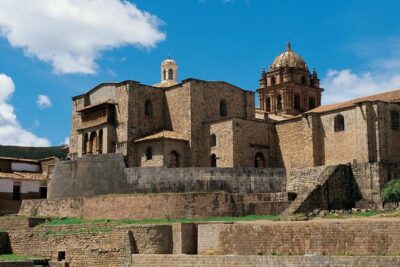
Cusco City Sightseeing, San Pedro Market, Cathedral and Qorikancha Temple
Read our review →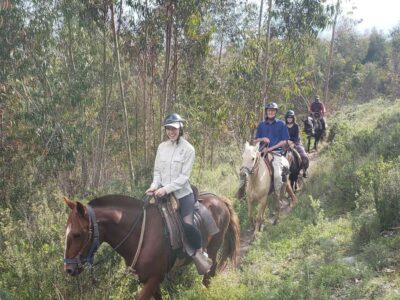
3-Hour Horse Riding Tour to the Temple of the Moon
Read our review →
Cusco City Sightseeing and Sacsayhuaman Archeological Park Tour
Read our review →
Horse Riding Chacan Mountain And Temple Of The Moon
Read our review →
Cusco 4-Hour Private Tour Including Sacsayhuaman and Qenqo
Read our review →Browse the lists this tour appears in