
Reviewed · HISTORICAL TOURS
Historic/music Cusco FreeWalkingTour “free drink” Group Tour
Cusco’s best introduction may be on foot, moving from the grand Main Square to the Inca walls and narrow lanes of San Blas. This two-hour cultural walk packs major sights, local music, a luthier visit, and a final Pisco Sour or Chicha Morada into a small group of about 10.
I like the route’s mix of famous landmarks and human-scale stops, especially the Andean instrument performance and the chance to see a working artisan. I also like the way the walk links Spanish colonial buildings with Inca stonework instead of treating them as separate stories.
The $2 booking price is not the real cost. You should budget about 30 soles, or $10, for the required guide gratuity, and bring your own water. One practical concern is that a loudspeaker has not always worked well, so you may miss some commentary in a noisy street.
In This Review
- Key points to know before you book
- Starting in Cusco’s Main Square
- Qoricancha and the meeting of two eras
- Cusco’s famous balcony and angled stones
- The Andean Trilogy on an Inca wall
- Walking up to artistic San Blas
- Andean music with a view over Cusco
- 7 Borreguitos Street and the final drink
- What the $2 price really means
- How the two-hour timing affects the route
- Who will get the most from this walk
- Should you book the Historic Music Cusco walk?
- FAQ
- Where does the tour meet?
- How long does the walking tour last?
- What languages are available?
- Is the Pisco Sour included?
- Is the guide gratuity required?
- Is water included?
- Is the tour wheelchair accessible?
Key points to know before you book
- The route begins at the Inca Fountain: Meet in Cusco’s Main Square at coordinates -13.5167681, -71.9787795.
- Qoricancha gives the walk its historical center: You’ll hear why the Sun Temple mattered to the Inca world.
- San Blas adds a local, artistic side of Cusco: The route includes a luthier and Andean music with city views.
- You see several signature details in one outing: Look for Cusco’s famous balcony, 12 and 13 angled stones, and the Andean Trilogy.
- The final drink is your choice: Pick a Pisco Sour or non-alcoholic Chicha Morada.
- Plan for the true price: The advertised $2 is followed by a required gratuity of around 30 soles or $10.
Starting in Cusco’s Main Square
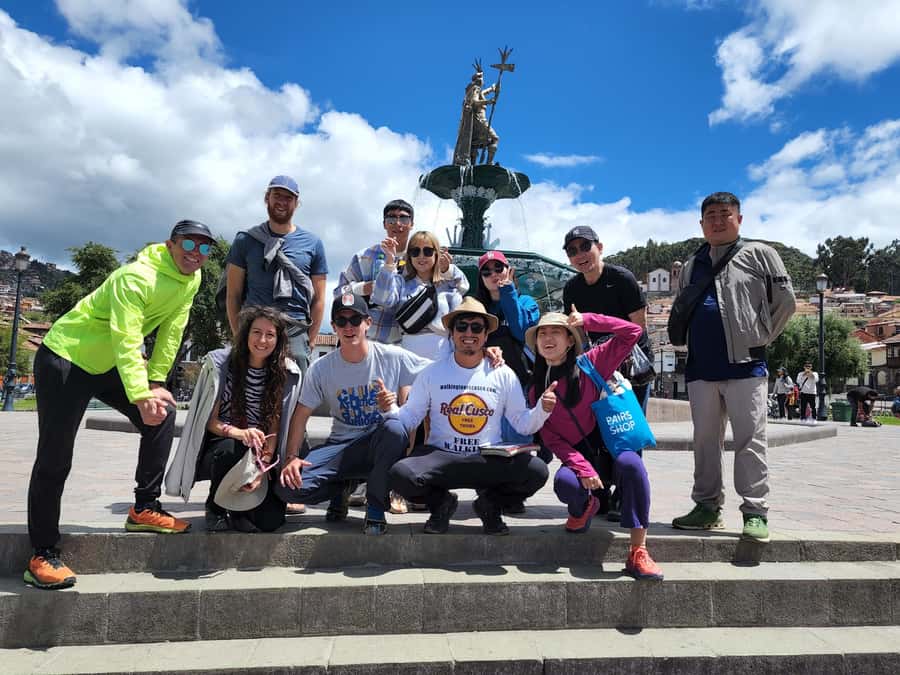
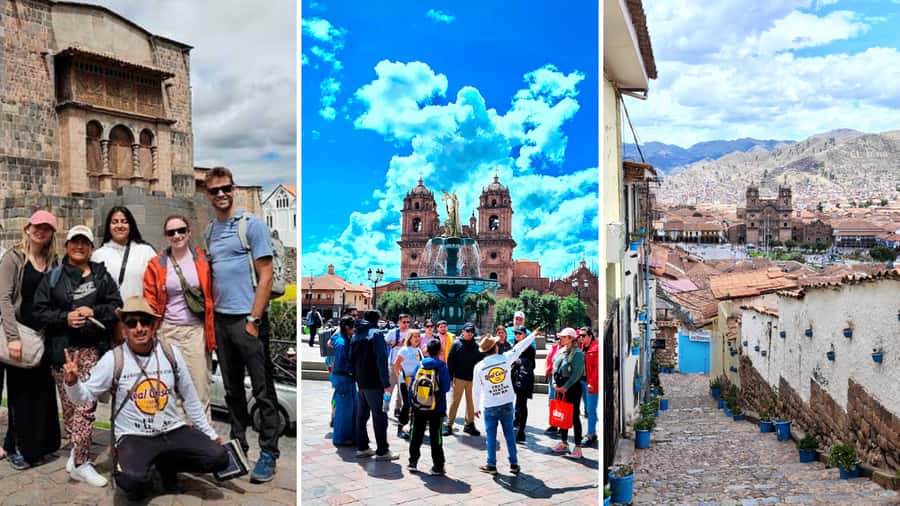
The meeting point is the Inca Fountain in the middle of Cusco’s Plaza de Armas. This is a useful place to begin because you are immediately surrounded by the city’s main colonial showpieces, and the guide can set the scene before the walking begins.
You’ll look toward the Cathedral and the Company of Jesus, two buildings that frame the square and show the scale of Spanish colonial Cusco. The Cathedral gives the plaza its formal, imposing feel, while the Company of Jesus is known for its striking architecture and position beside the square.
This opening stop is more than a photo pause. It introduces the layered story that continues through the tour. Cusco is not a city where one period simply replaced another. Spanish buildings occupy an Inca center, and the walk helps you notice how those layers sit beside each other.
The exact meeting point matters. The Main Square is large and can be busy, so use the Inca Fountain coordinates rather than simply wandering toward the plaza. The tour is offered in English and Spanish, and you should confirm the available starting time when booking.
More walking tours in Cusco:
- Cusco: Historic Walking Tour with Pisco Sour and Music Show
★ 4.6 · 65 reviews - Cusco: Walking Tour Cusco
★ 3.4 · 6 reviews - Cusco: Walking Tour with a Local Guide
★ 4.3 · 5 reviews
Qoricancha and the meeting of two eras
From the square, the route continues to Qoricancha, the famous Sun Temple. This is one of the most meaningful stops because it gives the guide a chance to explain the place’s role in Inca society and religion.
The name is often translated as a temple of gold, and the site is closely tied to the Inca worship of the sun. The tour focuses on its historical importance, helping you understand why Qoricancha is not just another old wall in Cusco.
You should pay attention to the contrast between the carefully fitted Inca masonry and the later colonial construction. The route is designed to show how Cusco’s past remains visible in the stone itself. This is the kind of context that can be easy to miss if you simply walk from one attraction to the next with a map.
The activity information does not say that an entrance ticket to Qoricancha is included. Treat this as a guided stop and check the day’s arrangements if entering the site is important to you. The value here comes from having someone explain what you are looking at, rather than trying to identify every wall on your own.
Cusco’s famous balcony and angled stones
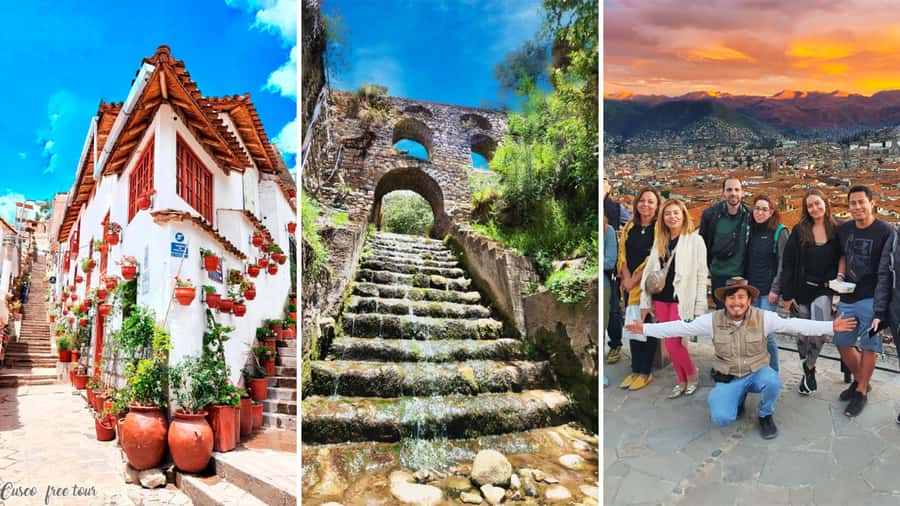
The walk also points out what is described as the city’s most beautiful balcony. That detail adds a change of pace after the major monuments. Instead of looking only at grand churches and temples, you’ll notice the smaller architectural features that give Cusco its character.
The route then brings you to the celebrated 12 and 13 angled stones. These stones are a favorite example of Inca masonry because their edges fit tightly with the surrounding blocks. The craftsmanship is impressive even if you know nothing about architecture.
Your guide’s explanation is especially useful here. Without context, the stones can become a quick photo stop. With a good explanation, you begin to see why their shape, fit, and survival matter.
One of the strongest themes of the tour is this shift between scale. You get the large public buildings of the Main Square and Qoricancha, then smaller details tucked into ordinary streets. I like that balance because it keeps the walk from feeling like a checklist of only the most famous sights.
The Andean Trilogy on an Inca wall
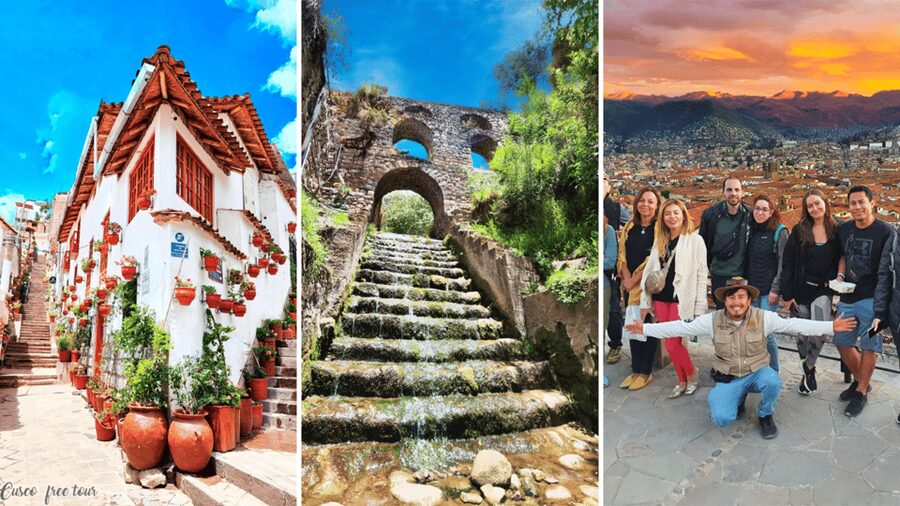
Another distinctive stop is the Andean Trilogy, represented by the condor, puma, and snake carved into an ancient Inca wall. These animals carry symbolic meaning in Andean culture, and the guide explains how they relate to different parts of existence and the world as understood by the Inca.
This is a good place to listen rather than rush for a photograph. The carving is interesting on its own, but the story gives it weight. The tour’s cultural explanations are one of its main strengths, and several comments about the experience single out the guides for clear historical teaching.
The exact pace can depend on the group and street conditions. A group of about 10 is small enough for an engaging walk, but it is not a private tour. If you want to ask many questions at every stop, keep an eye on the time so the group can reach San Blas and the music visit.
More Inca sites near Cusco:
- Cusco: City Tour | Half-Day Tour to 4 Archaeological Sites
★ 4.6 · 206 reviews - Cusco City Sightseeing and Sacsayhuaman Archeological Park Tour
★ 4.5 · 101 reviews - Cusco: Historical Guided City Tour with 4 Inca Ruins
★ 4.5 · 99 reviews - Machu Picchu Private Archaeological and Historical Guided Tour
★ 5.0 · 86 reviews
Walking up to artistic San Blas
The route continues through San Blas, one of Cusco’s most appealing neighborhoods for a slow wander. Its streets have an artistic feel, and this part of the walk shifts attention from major historical sites to local craft and neighborhood atmosphere.
You should expect some walking on uneven streets and possibly uphill sections. The tour is not suitable for wheelchair users, and the city’s stone surfaces can be tiring even for able walkers. Anyone over 95 is also listed as unsuitable for the activity, so consider the physical demands before booking.
San Blas is a fitting setting for the artisan visit. You’ll meet a luthier, a craftsperson who makes stringed instruments, and hear an Andean musical performance. The instruments are described as authentically made, and the music is a memorable part of the route.
This stop gives the tour a personal edge. A church or Inca wall tells you about the past, but a working luthier shows how Andean culture continues through hands-on skill and sound. It also breaks up the historical commentary with something you can hear and watch.
Andean music with a view over Cusco
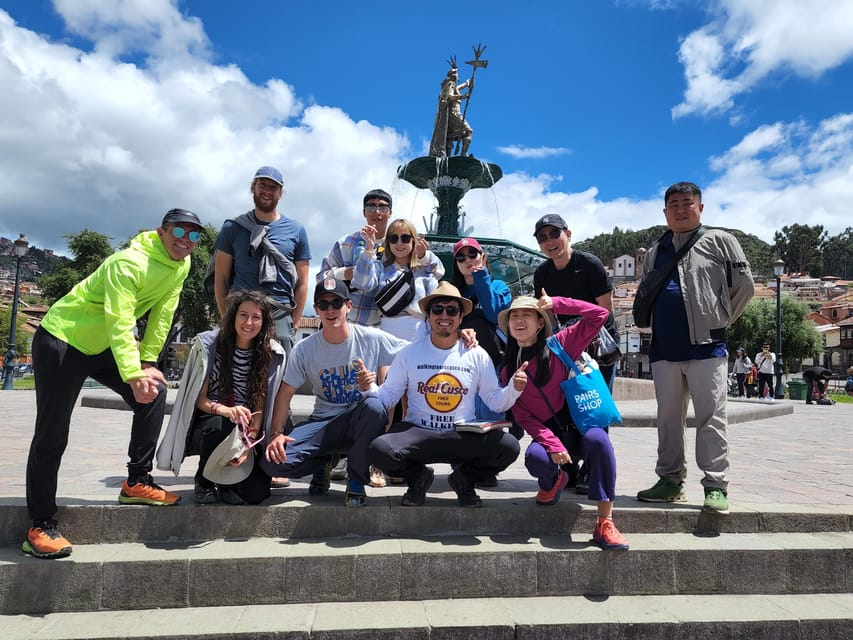
The musical performance takes place with panoramic views of the city. That pairing works well. You get a visual pause after walking through narrow streets, while the instruments connect the modern city to regional traditions.
The music visit is not described as a full concert, so keep your expectations measured. Think of it as a short cultural presentation within a walking tour. Its value is in seeing the instruments up close and hearing how they sound, not in replacing a dedicated evening music program.
This is also a place where group size matters. With around 10 participants, you should have a better chance of seeing the instruments and hearing the explanation than you would in a very large crowd. Still, the loudspeaker problem reported for one outing is worth remembering. Stay close to the guide, especially if the street is noisy.
The guides are a major part of the experience. Erick is specifically praised for combining history with humor, while other guide feedback highlights clear explanations and strong local knowledge. Guide quality can vary from day to day, but the tour’s design gives the guide plenty of useful material to work with.
7 Borreguitos Street and the final drink
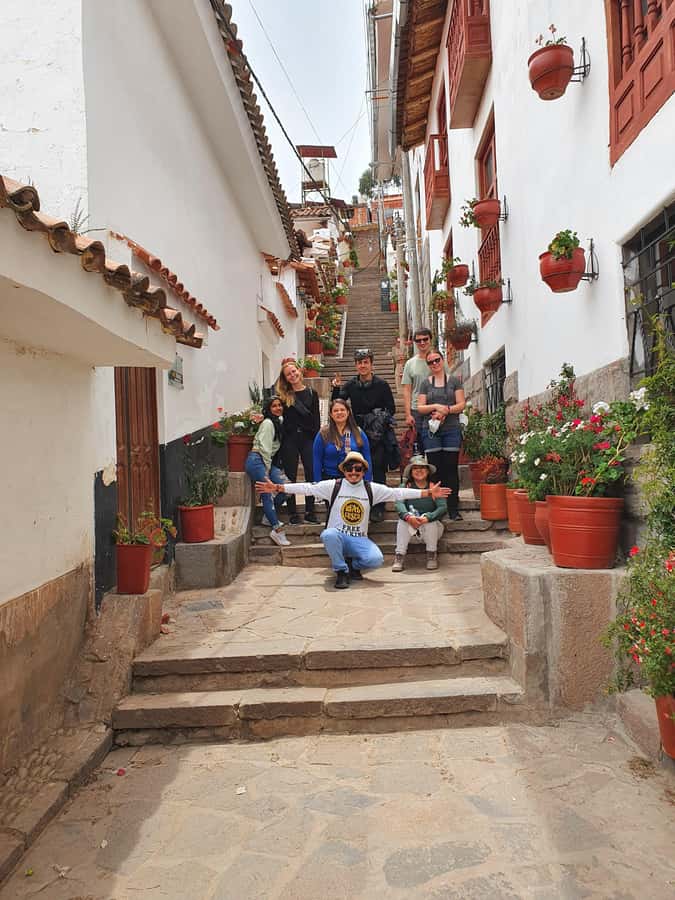
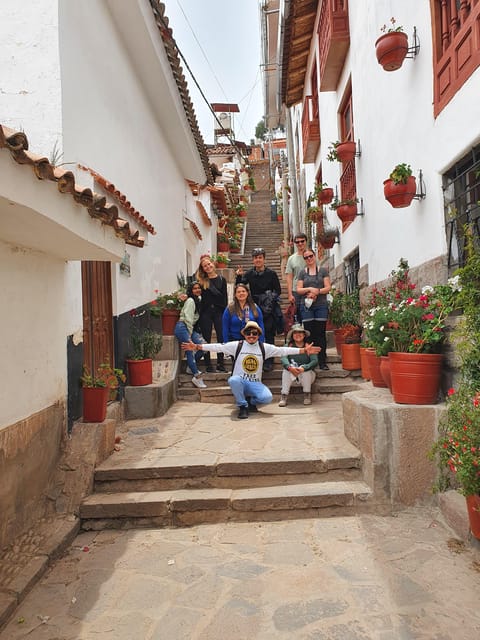
Before the walk ends, you’ll reach 7 Borreguitos Street, known here as Cusco’s most picturesque thoroughfare. This is the kind of stop that suits a camera, but it also gives you a chance to appreciate the shape of the neighborhood and its narrow urban spaces.
The tour finishes at the Temple of the First Inca Ruler, Manco Capac. Ending there gives the route a clear historical closing point. You have moved from the colonial Main Square, through Inca masonry and Andean symbols, into San Blas craft traditions, then back to the story of Cusco’s earliest rulers.
The final refreshment is included as a choice between a Pisco Sour and Chicha Morada. Pisco Sour is Peru’s national drink and contains alcohol, while Chicha Morada is a popular non-alcoholic option. If you do not drink alcohol, choose the Chicha Morada rather than assuming the Pisco Sour is the only option.
The drink is a pleasant way to finish, but it should not be the main reason you book. The historical route and artisan visit provide the substance. Think of the drink as a small social finish after two hours on foot.
What the $2 price really means
At $2 per person, the booking price looks almost symbolic. The important catch is that a gratuity of around 30 soles or $10 for the guide service is required. That makes the practical cost much higher, so include the gratuity when comparing this walk with paid city tours.
Even at roughly $12 total, the value can be good if you want a guided introduction to central Cusco. You receive live commentary in English or Spanish, a route through several well-known areas, a luthier visit, an Andean music presentation, and a choice of drink.
The wording around the gratuity matters. This is not a purely pay-what-you-wish walk where you decide at the end if you want to tip. The stated amount is required as part of the guide’s service. Bring enough cash or confirm accepted payment methods before setting out, since personal expenses and water are not included.
The tour does not include your water, so carry a bottle. Cusco walking can feel demanding, and stopping for a drink is more important than the tiny booking price suggests. Personal purchases are also extra, including anything you may want from the artisan visit.
How the two-hour timing affects the route
Two hours is enough for a useful orientation, but not enough for long visits at every sight. The tour works best as a first look at Cusco, giving you names, locations, and context so you can return later to the places that interest you most.
Expect a steady route rather than a museum-style visit. You will move between the Main Square, Qoricancha, historic walls, San Blas, the artisan stop, 7 Borreguitos Street, and the Manco Capac temple. The exact amount of time at each place can change with the group.
I would book this early in your Cusco stay. The route can help you understand the city’s layout and point out places you may want to revisit independently. It also gives you a practical first walk through the central area without requiring transport between stops.
The tradeoff is depth. If you want extended time inside Qoricancha, the Cathedral, or another monument, a two-hour group walk may feel brief. This experience is better for connections and orientation than for detailed study of one building.
Who will get the most from this walk
This tour suits you if you want a compact introduction with both major landmarks and local culture. First-time visitors will get the most from the route, especially if they want history explained in plain language rather than only taking photographs.
It is also a good fit if you enjoy meeting a local artisan and hearing live Andean instruments. The luthier visit gives the walk something different from a standard plaza-and-church route.
You should think twice if you need step-free access, dislike walking on uneven streets, or want a private pace. The activity is not suitable for wheelchair users, and the age restriction lists people over 95 as unsuitable.
Bring water, comfortable walking shoes, and a way to hear the guide clearly. Staying near the guide is sensible if the loudspeaker is not working well. The tour is available in English and Spanish, but you should confirm your preferred language and start time when reserving.
Free cancellation is available up to 24 hours before the activity for a full refund, and you can reserve now and pay later. Those policies help if your Cusco plans are still shifting, but they do not remove the required gratuity from your budget.
Should you book the Historic Music Cusco walk?
I would book it as a first-day orientation to Cusco, provided you understand the real cost and can manage a two-hour walk. The strongest elements are the clear historical route, the small group of about 10, the San Blas artisan visit, and the Andean music presentation.
The tour is less suitable if you want lengthy monument visits, guaranteed perfect audio equipment, or a fully accessible route. The required 30 soles or $10 gratuity also means the $2 headline price needs careful reading.
Book this if you want the city’s famous stones and temples explained alongside living craft and music. Skip it if you prefer to explore at your own pace and spend your time inside individual sites. For many people arriving in Cusco, it offers a useful, lively start without taking up half a day.
FAQ
Where does the tour meet?
The meeting point is the Inca Fountain in Cusco’s Main Square, or Plaza de Armas. The listed coordinates are -13.5167681, -71.9787795.
How long does the walking tour last?
The tour lasts two hours. Starting times depend on availability when you book.
What languages are available?
The live guide is available in English and Spanish.
Is the Pisco Sour included?
A complimentary final drink is included. You can choose between a Pisco Sour and Chicha Morada, a non-alcoholic Peruvian drink.
Is the guide gratuity required?
Yes. You should budget around 30 soles or $10 for the guide service gratuity.
Is water included?
No. Water and personal expenses are not included, so bring your own bottle.
Is the tour wheelchair accessible?
No. The activity is not suitable for wheelchair users. People over 95 are also listed as unsuitable.
Just added around Cusco
- Cusco: Via Ferrata, Skybike, and Rappel Adventure★ 5.0 · 3 reviews
- From Cusco: Maras and Moray and Ollantaytambo Tour★ 5.0 · 3 reviews
- Valle Sur Cusco | half day★ 4.3 · 3 reviews
- Cusco: Rainbow Mountain Tour at Sunset Without the Crowds★ 4.7 · 3 reviews
- Cusco: Sacred Valley Day Trip with Maras & Moray Salt Mines★ 5.0 · 3 reviews
- IN MACHU PICCHU: Private Tour Guide Service★ 5.0 · 3 reviews
- Salkantay trek to Machu Picchu – 5D/4N – Premium★ 3.3 · 3 reviews
- Full-Day Condor Viewpoint & Inca Sites Tour★ 5.0 · 3 reviews
Historical Tours, compared.
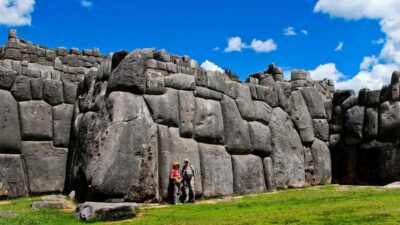
City Tour | Half-Day Tour to 4 Archaeological Sites
Read our review →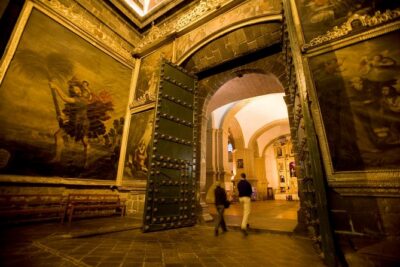
Cusco City Sightseeing and Sacsayhuaman Archeological Park Tour
Read our review →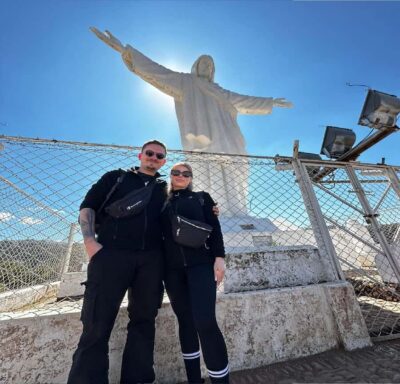
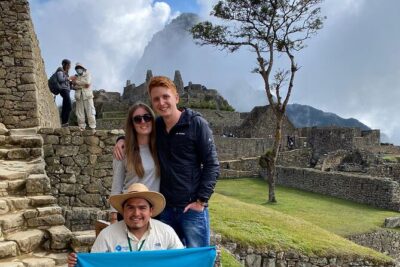
Machu Picchu Private Archaeological and Historical Guided Tour
Read our review →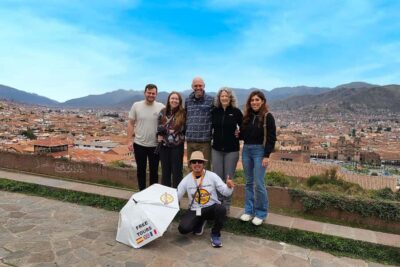
Historic Walking Tour with Pisco Sour and Music Show
Read our review →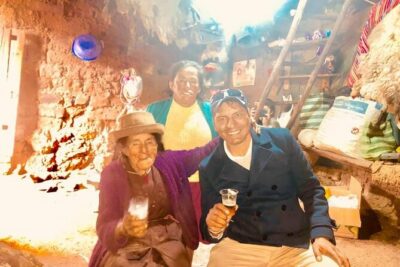
Private Ollantaytambo, Pisac Ruins Tour with Farm Visit, Gourmet Picnic Lunch
Read our review →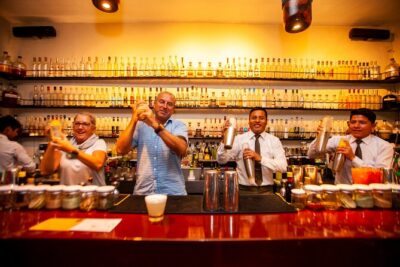
Pisco Sour Secrets: Hands-On Mixology in Historic Cusco
Read our review →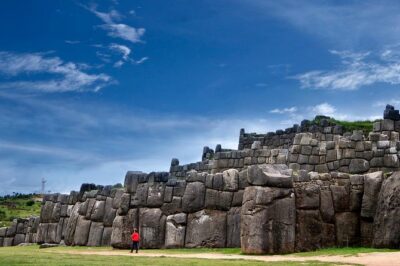
Browse the lists this tour appears in