
Reviewed · WALKING TOURS
Cusco: Walking Tour Cusco
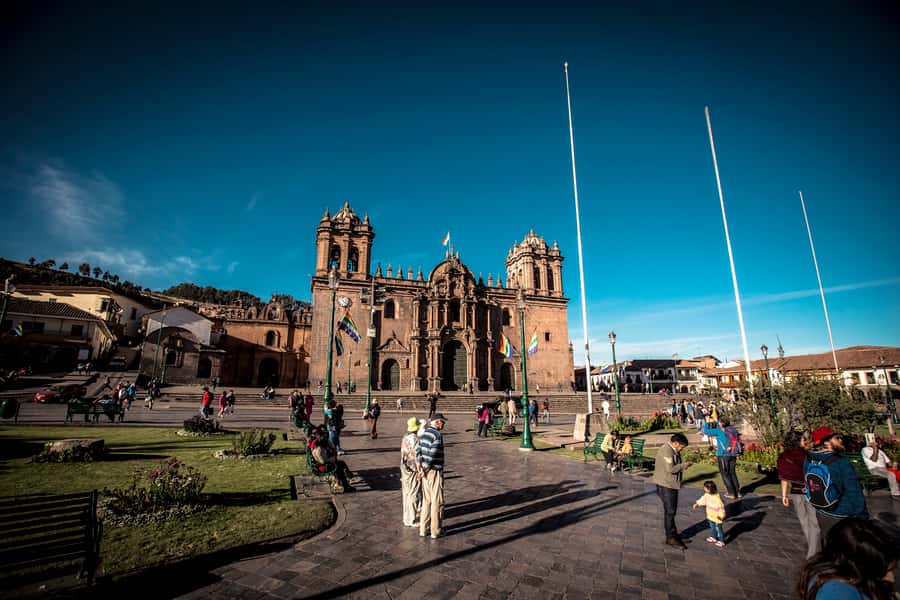
Cusco’s best introduction comes on foot, and this three-and-a-half-hour walk connects the city’s major sights in a sensible route. You begin at the Main Square, pass the Inca stonework and artisan quarter of San Blas, then finish among the produce, grains, meats, and regional goods of San Pedro Market.
I like the mix of famous monuments and ordinary city life. The Twelve Angled Stone gives you a quick lesson in Inca masonry, while San Pedro Market lets you see what people buy and eat today. The main consideration is that admissions are not included, and the route has slopes, steps, and uneven stone streets, so it is not suitable for wheelchair users.
In This Review
- Key points to know before you go
- Why this walking route works in Cusco
- Starting at Cusco’s Main Square
- The Twelve Angled Stone and Inca masonry
- San Blas, the former Inca nobility quarter
- Coricancha, the Temple of the Sun
- Plaza Regocijo and the old public city
- Plaza San Francisco and the final approach
- San Pedro Market, where the route comes alive
- What the $29 price really covers
- Timing, language, and walking comfort
- Who will get the most from this walk
- Booking, cancellation, and meeting advice
- Should you book Walking Tour Cusco?
- FAQ
- Where does the Cusco walking tour meet?
- How early should I arrive?
- How long does the tour last?
- Which languages are available?
- Does the tour include hotel pickup and drop-off?
- Are admissions included in the price?
- What should I bring?
- Is the tour suitable for wheelchair users?
Key points to know before you go
- The route ends at San Pedro Market, a sensory stop filled with products from across the Cusco region.
- San Blas adds an artisan side of Cusco, with old stone buildings and workshops linked to the city’s craft tradition.
- Coricancha explains the Inca religious center, where the sun god Inti received homage.
- The meeting point is exact: the Inca monument in Plaza de Armas, near Calle Portal Belén.
- Guide Juan received especially strong praise, though your assigned guide may be someone else.
- The $29 price covers the guide, but not admissions, food, drinks, hotel transfers, or personal spending.
Why this walking route works in Cusco
Cusco can feel confusing at first. Streets change names, old Inca walls appear under colonial buildings, and the city center rises and falls more than a map suggests. This tour gives you a clear first look without asking you to arrange several separate stops.
The route also has a useful shape. It starts in the grand civic center, climbs toward San Blas, then descends through the historic core toward Coricancha, Plaza Regocijo, Plaza San Francisco, and San Pedro Market. You get architecture, religion, public squares, craft traditions, and food culture in one outing.
At 210 minutes, this is not a rushed photo stop. You have time to listen, look closely, and ask questions. Still, it is a walking tour rather than a full museum visit. If you want long interior visits at the Cathedral or Coricancha, you should confirm what admission is available and budget extra time and money.
The walk makes the most sense early in your Cusco stay. It can help you understand the city before you return to the Main Square on your own, and it shows you where several central streets and plazas fit together.
More walking tours in Cusco:
- Cusco: Historic Walking Tour with Pisco Sour and Music Show
★ 4.6 · 65 reviews - Historic/music Cusco FreeWalkingTour “free drink” Group Tour
★ 4.9 · 11 reviews - Cusco: Walking Tour with a Local Guide
★ 4.3 · 5 reviews
Starting at Cusco’s Main Square
Your meeting point is the Plaza de Armas, beside the monument to the Inca, near Calle Portal Belén. Arrive 15 minutes early. This matters because the tour does not include pickup, and you need to reach the square on your own.
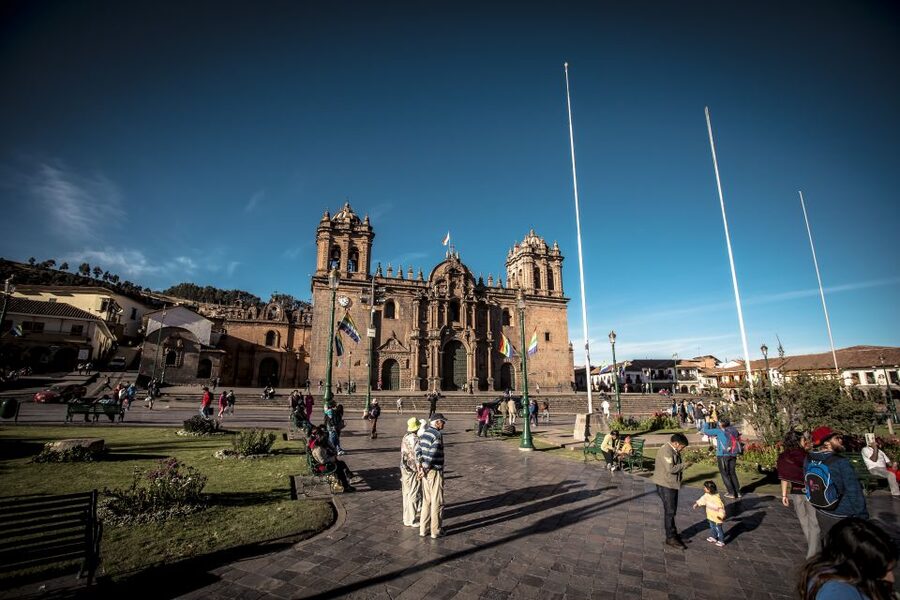
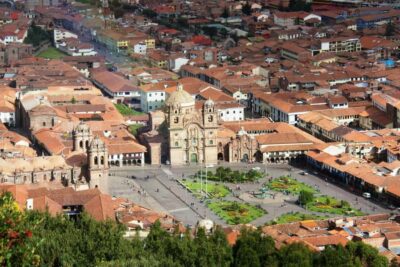
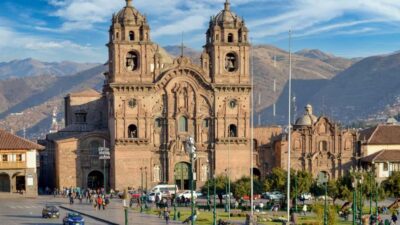
The Main Square is an excellent place to begin. The Cathedral occupies one side, while La Compañía de Jesús brings another grand colonial church into view. Shops and restaurants line the surrounding arcades, so you can return here later for a meal or a slower look.
Your guide will use the square to frame Cusco’s layered past. The city center is not simply Inca or Spanish. It is a place where Inca foundations, colonial churches, and modern businesses share the same few blocks.
The square can be busy and distracting, especially when several groups meet there. Look for the Inca monument and keep your phone available if the operator sends meeting instructions. Since there is no hotel transfer, allow extra time if you are staying outside the central area.
The Twelve Angled Stone and Inca masonry
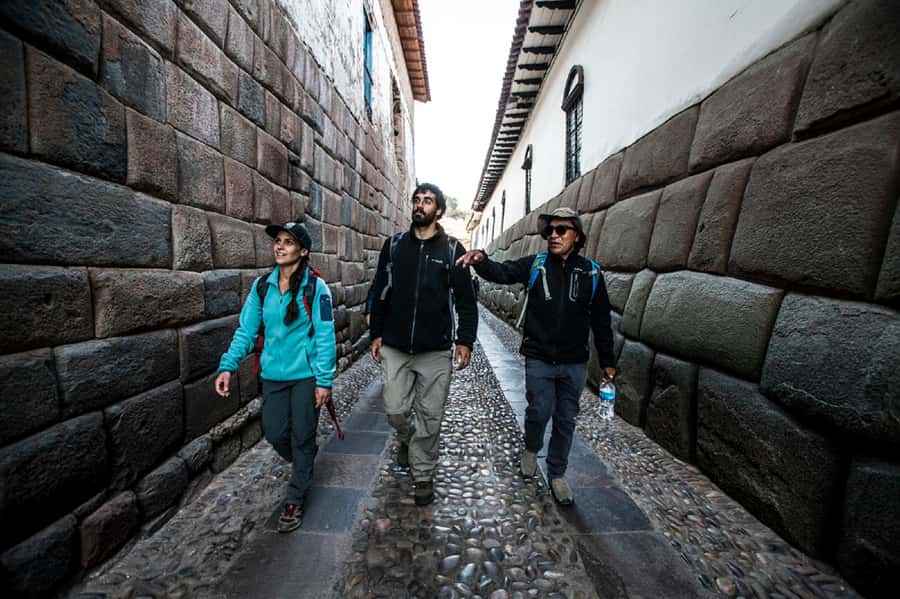
From the square, the route passes along the street famous for the Twelve Angled Stone. Its importance is easy to miss if you only glance at it. The stone has twelve carefully shaped corners and sides, fitted into the surrounding wall with remarkable precision.
This is a small stop, but it carries a big lesson. Inca walls were built from individually shaped stones, and the tight joins helped create strong structures without the kind of mortar you might expect in European masonry. Your guide can point out the exact edges, which are difficult to appreciate in a quick walk-by.
You should not expect a large monument or a long visit here. The stone is part of a living street, not an isolated exhibit. People pass through, local businesses operate nearby, and the narrow setting can make close viewing awkward when several groups gather.
That is also part of its appeal. You see the Inca wall in the setting where it has remained part of daily Cusco, rather than behind glass or on a museum pedestal.
San Blas, the former Inca nobility quarter
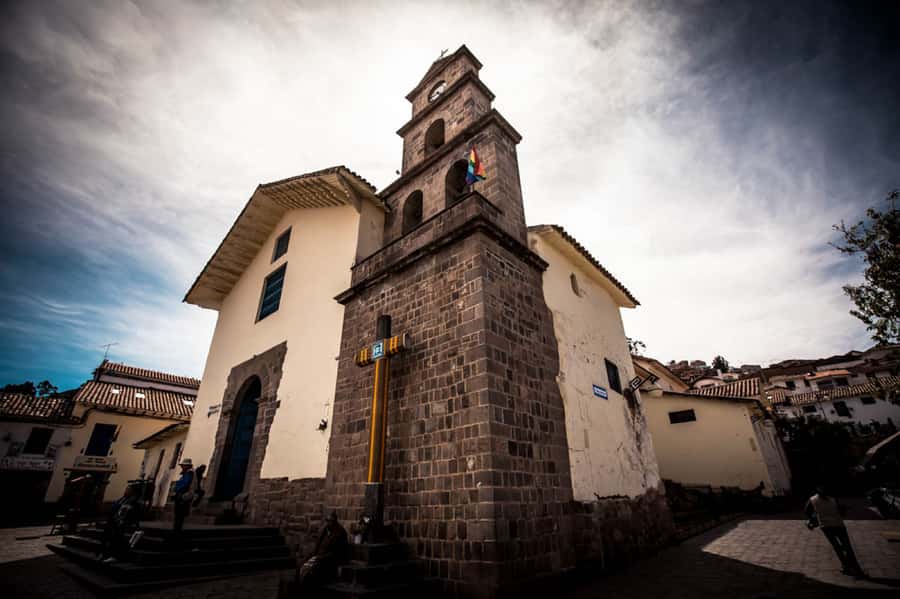
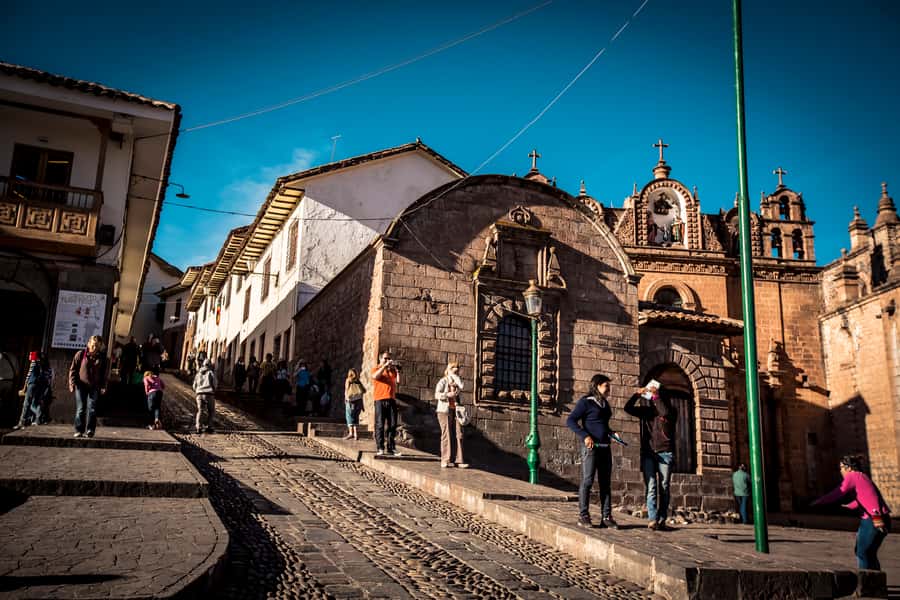
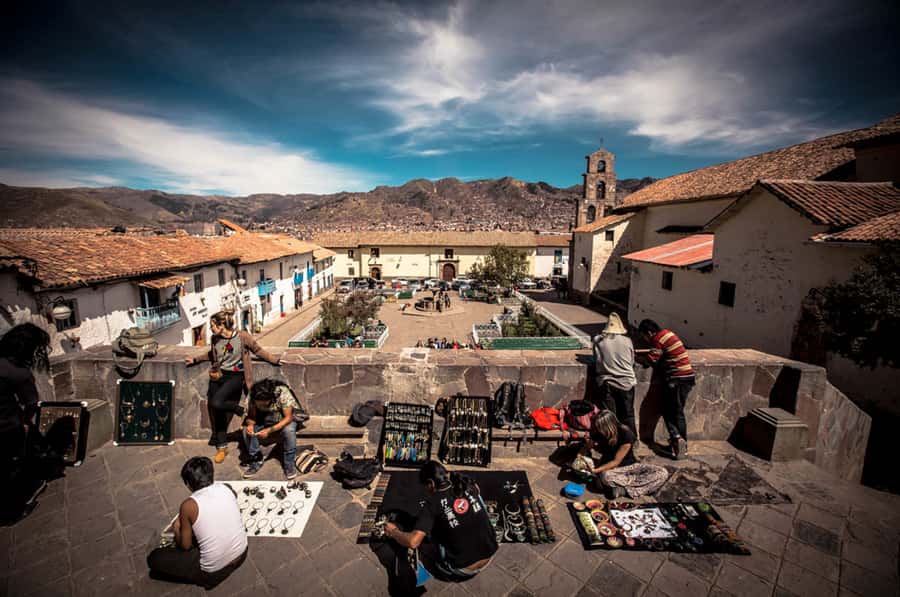
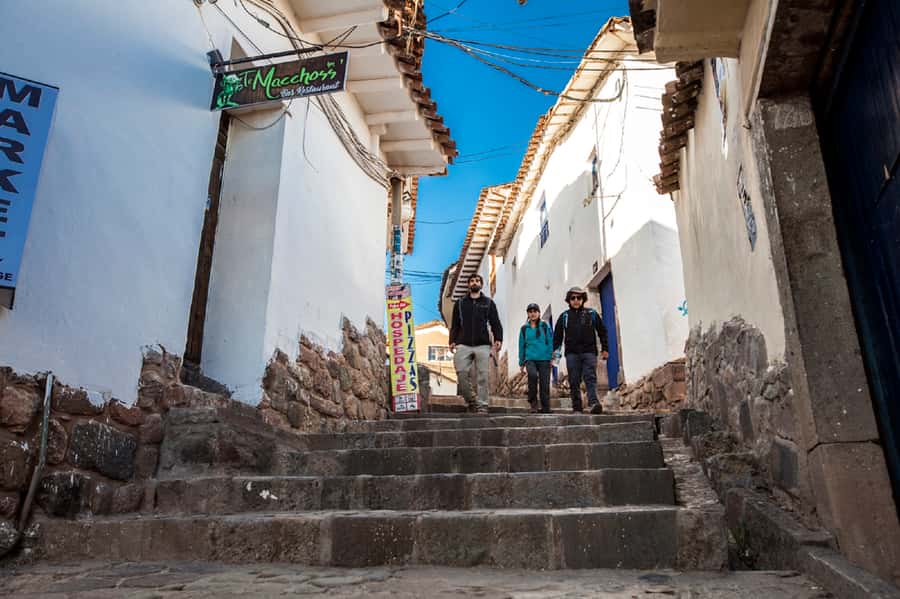
The route continues uphill toward San Blas, originally associated with Inca nobility. Today, the district is known for artisan workshops and old stone buildings, giving it a different feel from the formal Main Square.
San Blas rewards a slower pace. Its streets are narrower and more irregular, and the stone construction gives the area a distinct look. The tour’s guide can help you read the buildings rather than treating the neighborhood as a simple viewpoint or photo stop.
The artisan identity is central here. The district hosts some of Cusco’s most respected workshops, so you might find craft shops and working studios along the route. The tour does not promise a workshop class or a purchase, but it gives you the setting and context to understand why San Blas is associated with local art.
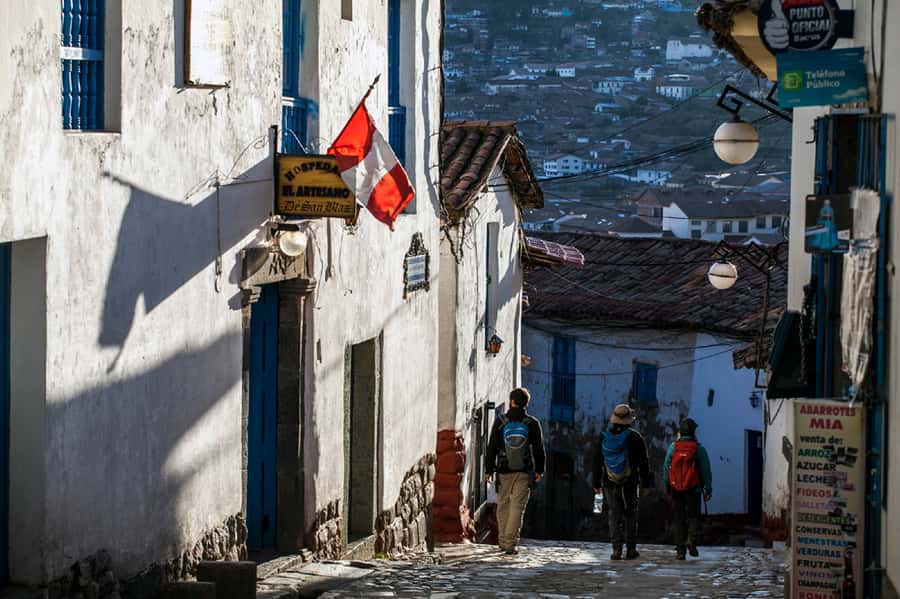
The climb is the main practical issue. Cusco sits at high altitude, and even a moderate uphill walk can feel harder than expected when you have just arrived. Wear comfortable shoes, take the pace steadily, and do not treat the 210-minute duration as proof that the route will be physically easy.
The San Blas Church is one of the highlighted sights. It adds a religious landmark to the neighborhood’s stone streets and artisan character. Ask your guide whether the schedule allows an interior visit, since admissions are not part of the listed price.
Same base, a completely different day in the Andes:
- Cusco: Humantay Lake Tour with Breakfast and Buffet Lunch
★ 4.9 · 2,976 reviews - From Cusco: Sacred Valley & Maras Salt Mines Tour with Lunch
★ 4.8 · 2,227 reviews - From Cusco: Moray, Maras Salt Mines & Chinchero Weavers Tour
★ 4.8 · 1,925 reviews - From Cusco: Full-Day Group Tour of Machu Picchu
★ 4.7 · 1,767 reviews
Coricancha, the Temple of the Sun
After San Blas, the walk descends toward Coricancha, also known as the Temple of the Sun. During the Inca Empire, this was a major religious center where people paid homage to Inti, the sun.
Coricancha is one of the most useful stops on the route because it connects the city’s architecture with its belief system. You are not only looking at old walls. You are learning why the site mattered and how central the sun was to Inca religious life.
The name Coricancha is often translated as a golden enclosure or golden place. The provided tour information identifies it as the Temple of the Sun and focuses on its role in honoring Inti. Your guide can supply the fuller explanation, but you should keep expectations clear: the tour price does not include admissions.
That may mean you view the site from outside unless you choose to pay separately. If entering Coricancha is a priority, ask before the walk begins how the group handles the visit. This is one of the places where a little planning can prevent disappointment.
The descent is welcome after San Blas, but downhill streets can still be uneven. Keep your footing on the stone paving, especially if you are wearing smooth-soled shoes.
Plaza Regocijo and the old public city
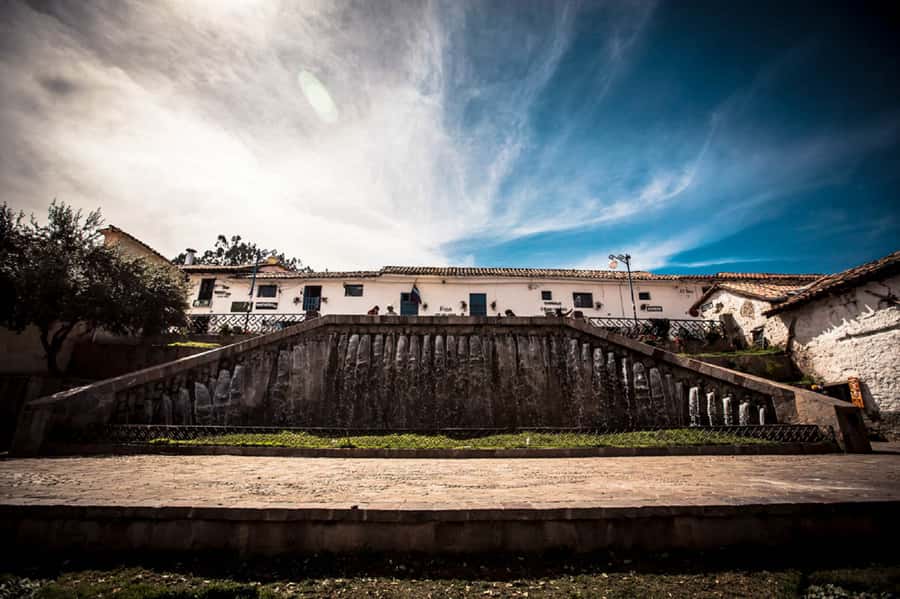
The route then reaches Plaza Regocijo, a smaller square whose name comes from the Quechua word Cusipata, meaning patio of joy. Public events, including bullfights, were once held here.
That detail gives the square a social history beyond its buildings. Cusco’s plazas were not only decorative spaces. They were places for ceremony, spectacle, and public gatherings. A guide can make the square feel less like a pause between major sights and more like part of the city’s civic story.
Colonial houses surround the plaza, including the Casa de Garcilaso de la Vega. The buildings help you see the contrast between the open Main Square and this quieter urban space.
I like this section because it slows the route down. After the famous stone and major religious sites, Plaza Regocijo gives you a chance to look at the city’s domestic and civic architecture. You may find that it is easier to appreciate Cusco when you move between large landmarks and smaller public spaces.
Do not expect a long scheduled break here unless your guide builds one into the pace. The tour continues on foot toward Plaza San Francisco, so carry water and use the square as a chance to catch your breath.
Plaza San Francisco and the final approach
Plaza San Francisco is another central stop before the market. Its position helps connect the colonial center with the practical, commercial side of Cusco.
The transition is one of the tour’s strengths. You move from churches and colonial houses toward a market where regional products take center stage. This makes the itinerary feel like a walk through a functioning city, not a string of disconnected monuments.
The route does not include hotel drop-off. After the final stop, the information says you will return to your hotel, but the activity details also make clear that transfers are not included. Treat this as a guided walk ending in the central area, and confirm the exact end arrangements when booking.
San Pedro Market, where the route comes alive
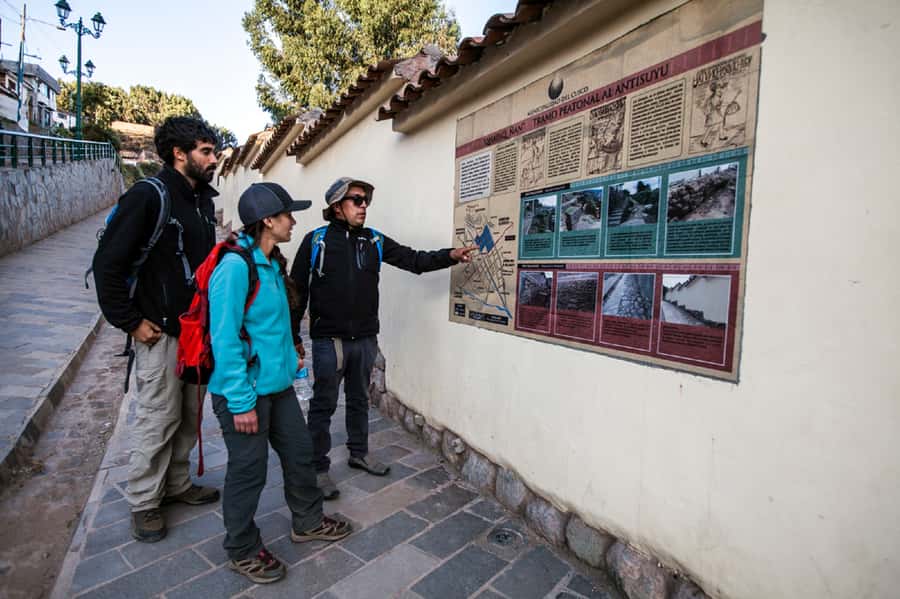
The final major stop is San Pedro Market, a pantry of thousands of products from different parts of the Cusco region. This is where the tour moves furthest from postcard Cusco and into everyday shopping and food culture.
You can expect a broad display of regional goods. The information specifically describes the market as something you experience with all your senses, and that is the right way to approach it. Look at the colors and textures, notice the smells, and listen to the activity around the stalls.
The market is more valuable with a guide than as a quick independent walk-through because you can ask what products are, where they come from, and how they fit into life in the region. The tour does not include snacks or beverages, so any tasting or purchase comes from your own budget.
Food-sensitive visitors should be cautious with anything they buy. The tour gives you a chance to see the market, but it does not promise a food tasting program or provide a meal. Bring your own water, and do not assume refreshments are included in the $29 fee.
Ending here is practical. You can continue browsing, buy something small, or walk back toward the Main Square after the guide finishes. If you have a tight onward schedule, leave a little time for finding your way out of the market.
What the $29 price really covers
At $29 per person, the tour is priced as a guided orientation to central Cusco. The main value is the route and the live explanation across several neighborhoods and landmarks. You are paying for a professional guide in English, Spanish, or Portuguese, not for transport or full admission coverage.
The price does not include:
- Hotel pickup or drop-off
- Admissions
- Snacks or drinks
- Personal expenses
That makes the tour good value if you want structure during your first days in Cusco. It is less useful if you already know the center well and prefer to visit each church or archaeological site at your own speed.
The guide quality matters a great deal. Juan is the guide specifically praised for excellent work, and another strong rating describes the walk as a very good overview of the city. One solo participant ended up having the tour alone and found that Cusco deserved several days of attention. Your group and guide may differ, but those details show what the experience can do at its best: provide a clear introduction rather than attempt to cover all of Cusco in one morning.
The overall rating is 3.4 from six ratings, so I would book with sensible expectations. Most of the available feedback is positive about the guide and interest of the route, but one serious scheduling problem was reported. A morning booking at 8:00 was missed, and a private afternoon tour was offered instead on the same day. That replacement worked out, but a missed start is still an avoidable inconvenience.
Timing, language, and walking comfort
The duration is 210 minutes, and starting times depend on availability. The tour runs with a live guide in English, Spanish, or Portuguese. Select the language you can follow easily, since much of the value comes from explanations at the walls, churches, plazas, and market.
This is not a bus tour. You must reach Plaza de Armas yourself, and the route includes a climb toward San Blas followed by a descent. Comfortable shoes are essential, as are comfortable clothes and sunscreen.
Cusco’s altitude makes pacing important. The activity information does not give an altitude warning, so I will not assign a health rule to you, but you should be honest about your energy level. A long city walk can be tiring even when the distance looks modest.
Children must be accompanied by an adult, and unaccompanied minors are not allowed. Pets are not allowed. The activity is not suitable for wheelchair users because of the walking conditions and route.
Who will get the most from this walk
I would choose this tour if you want a first look at Cusco’s historic center without spending a full day on a large excursion. It suits you especially well if you want a guide to explain the relationship between Inca walls, colonial churches, craft neighborhoods, public squares, and local food.
It is also useful for solo visitors. The route gives you company and a clear meeting point, and the experience can become more personal if the group is small. One reported outing was effectively private, which allowed the guide to give more individual attention.
You may want something else if your priority is interior access. Since admissions are excluded, the tour may only introduce Coricancha, the Cathedral, or San Blas Church from the outside unless you pay separately or receive different arrangements.
It may also be a poor fit if you need a completely flat route, private transport, or a guaranteed early start. The scheduling problem connected with one morning departure is worth keeping in mind. Confirm the meeting time and location before you set out.
Booking, cancellation, and meeting advice
You can cancel up to 24 hours in advance for a full refund, and the reserve-now, pay-later option keeps your plans flexible. Those terms help if your Cusco schedule may change.
On the day, arrive 15 minutes early at Plaza de Armas. Go to the Inca monument near Calle Portal Belén rather than waiting for hotel pickup. Since transfers are not included, make your own way to the square and keep the operator’s contact details available in case you cannot find the guide.
If you are Peruvian, or if you are a foreign passenger who has stayed in Peru for more than 60 days, the quoted rate may not apply. Sales taxes are not included for those cases and may be collected by the local operator.
Should you book Walking Tour Cusco?
Book it if you want a well-shaped introduction to central Cusco at a reasonable price. The combination of San Blas, the Twelve Angled Stone, Coricancha, the historic plazas, and San Pedro Market gives you more than a simple square-and-church stroll.
I would schedule it near the start of your stay, wear sturdy shoes, and budget separately for admissions and market purchases. I would also confirm the departure time and guide details, especially if you are counting on an early morning slot.
Skip it if you need wheelchair access, hotel transport, or a fully inclusive ticket. For most able-bodied visitors who want context, orientation, and a taste of daily Cusco in one half-day walk, it is a practical choice, with the caveat that guide quality and scheduling deserve attention.
FAQ
Where does the Cusco walking tour meet?
Meet your guide in Cusco’s Plaza de Armas, at the monument to the Inca. The reference point is Calle Portal Belén.
How early should I arrive?
Arrive 15 minutes before the tour begins.
How long does the tour last?
The walking tour lasts 210 minutes, or three and a half hours.
Which languages are available?
The live guide can conduct the tour in English, Spanish, or Portuguese.
Does the tour include hotel pickup and drop-off?
No. Transfers are not included, so you must make your own way to the meeting point.
Are admissions included in the price?
No. Admissions are not included.
What should I bring?
Bring comfortable shoes, sunscreen, and comfortable clothes. Snacks and beverages are not included.
Is the tour suitable for wheelchair users?
No. The activity is not suitable for wheelchair users. Children must be accompanied by an adult, and pets and unaccompanied minors are not allowed.
Just added around Cusco
- Cusco: Via Ferrata, Skybike, and Rappel Adventure★ 5.0 · 3 reviews
- From Cusco: Maras and Moray and Ollantaytambo Tour★ 5.0 · 3 reviews
- Cusco: Rainbow Mountain Tour at Sunset Without the Crowds★ 4.7 · 3 reviews
- Cusco: Sacred Valley Day Trip with Maras & Moray Salt Mines★ 5.0 · 3 reviews
- Valle Sur Cusco | half day★ 4.3 · 3 reviews
- IN MACHU PICCHU: Private Tour Guide Service★ 5.0 · 3 reviews
- Salkantay trek to Machu Picchu – 5D/4N – Premium★ 3.3 · 3 reviews
- Full-Day Condor Viewpoint & Inca Sites Tour★ 5.0 · 3 reviews
Walking Tours, compared.
Historic Walking Tour with Pisco Sour and Music Show
Read our review →
Historic/music Cusco FreeWalkingTour “free drink” Group Tour
Read our review →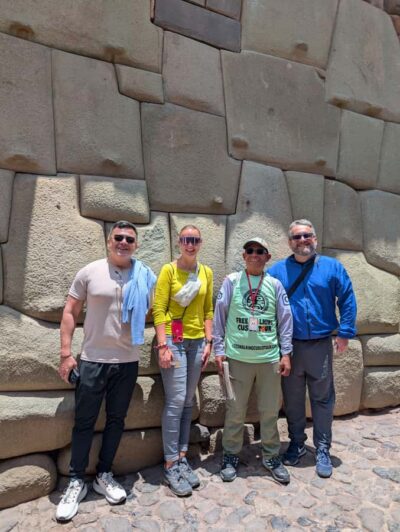
Browse the lists this tour appears in