
Reviewed · WALKING TOURS
Cusco: Walking Tour with a Local Guide
Cusco’s best stories are layered into its streets, and this 150-minute walking tour gives you a useful first look at those layers. You move from the grand Plaza de Armas to Inca stonework, colonial buildings, working artisan shops, and the hillside streets of San Blas.
I like the sensible route and the local guide’s historical context. I also like that the tour reaches places you could easily pass without understanding, especially Loreto Street, the Qoricancha, and the narrow lanes around San Blas. The main caution is reliability: one booking had no guide turn up, so confirm the meeting details before setting out.
In This Review
- Key points at a glance
- Starting beside the Plaza de Armas
- Loreto Street and the city’s stonework
- Qoricancha and the importance of the Sun
- Cusicancha and the Inca palace setting
- Inka Roca Street and ordinary city life
- San Blas: workshops, churches, and a hillside finish
- What the guide adds to the walk
- Is $15 good value in Cusco?
- How to prepare for the 150-minute route
- Who should book this Cusco walk?
- Should you book it?
- FAQ
- How long does the Cusco walking tour last?
- How much does the walking tour cost?
- Where does the tour meet?
- Where does the tour finish?
- Which languages are available?
- Does the tour include hotel pickup?
- What places does the route visit?
- What should I bring?
- Is the tour wheelchair accessible?
Key points at a glance
- A $15 introduction to central Cusco: The price is low for 150 minutes with a professional guide.
- Qoricancha explains Inca sun worship: You learn why the Sun held such a central place in Inca culture.
- San Blas adds everyday Cusco: Artisan workshops, colonial churches, and local street life replace the grand plaza setting.
- Enrique received special praise: One guest found his pace just right and valued the sights they would have missed alone.
- Expect steady walking uphill and over cobblestones: Comfortable shoes, water, a hat, and sunscreen matter.
- The tour ends at Mirador de San Blas: That gives you a useful point for continuing your afternoon in the neighborhood.
Starting beside the Plaza de Armas
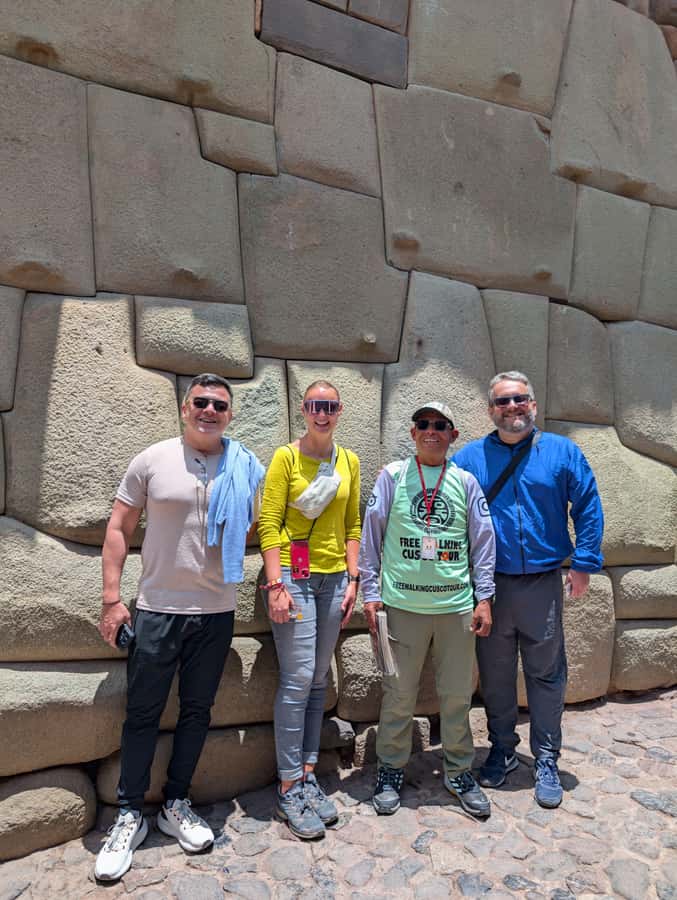
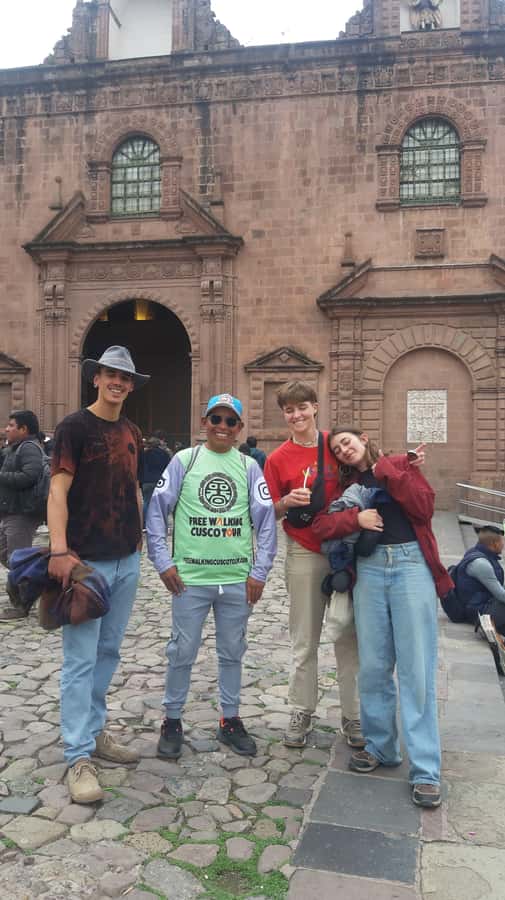
Meet between Calle del Medio and Cusco’s Plaza de Armas. Look for the green T-shirt, and use the listed coordinates, -13.5170627, -71.9795113, if you want to check the exact meeting area before leaving your hotel.
This is a practical starting point. The plaza is easy to recognize, and it puts you right in the middle of Cusco’s main historic zone. You do not need a transfer or hotel pickup, but you do need to reach the meeting point yourself. That is an important detail if you are staying outside the center or arriving with luggage.
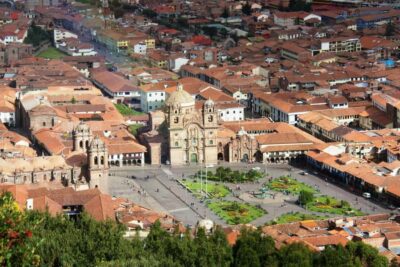
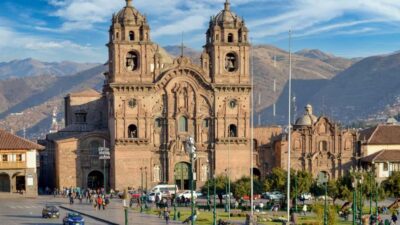
Your guide begins by explaining the plaza, its colonial buildings, and the Inca legends tied to the city. The Plaza de Armas is not simply a place to take photographs. It is the point from which Cusco’s Spanish colonial identity and Inca foundations are easiest to compare.
Take a moment to look around before the walk moves on. The broad square can feel formal and grand, while the route ahead quickly becomes narrower and more intimate. That change is part of the appeal. You get both the city’s ceremonial face and its ordinary streets.
The experience is described as a private walking tour, while the booking information also presents it through a free walking tour provider. If the size and arrangement of your group matter to you, confirm that detail before booking.
More walking tours in Cusco:
- Cusco: Historic Walking Tour with Pisco Sour and Music Show
★ 4.6 · 65 reviews - Historic/music Cusco FreeWalkingTour “free drink” Group Tour
★ 4.9 · 11 reviews - Cusco: Walking Tour Cusco
★ 3.4 · 6 reviews
Loreto Street and the city’s stonework
From the plaza, the route continues to Loreto Street. This is one of the strongest parts of the walk for anyone interested in how Cusco was built and rebuilt.
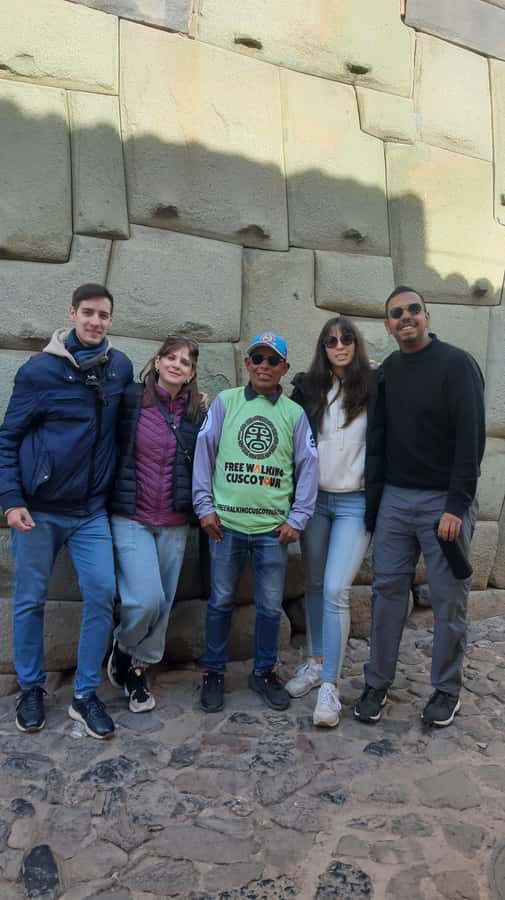
Here, you can expect narrow streets, colonial architecture, local shops, and artisan workshops. The setting gives your guide a chance to explain how Spanish-era buildings sit alongside Inca construction rather than replacing every trace of it.
Look closely at the walls as you walk. The value of having a guide here is not just knowing a building’s name. It is understanding why the stonework matters, what the street reveals about earlier Cusco, and how local businesses now occupy these old urban spaces.
The shops and workshops also make this stretch feel less like a sequence of monuments. You are still in the historic center, but you can see people working and shopping as part of daily city life. If you want photographs, pause rather than holding up the group. The streets are narrow, and the walking surface is uneven.
Qoricancha and the importance of the Sun
The next major stop is Qoricancha, also called the Temple of the Sun. This is the central historical stop on the route, and it gives the walk a clear theme: the role of the Sun in Inca culture.
Your guide explains why the Sun was so important to the Inca world and points out the surviving Inca architecture. That context can make a short visit far more useful than simply arriving, looking at stone walls, and leaving again.
Qoricancha is also a place where the city’s different eras meet. The walk presents it as an Inca palace and temple site connected to later colonial use. You get a chance to think about how sacred and political spaces changed under Spanish rule.
Check the admission arrangements before you go. The activity includes a professional guide and advertises a way to skip the ticket line, but food, drinks, transport, and entrance costs are not listed as included. The exact access available during your visit may depend on the site’s current rules.
Flash photography is not allowed, so bring a camera but use it with care. More important, listen to the explanation. The Sun’s importance is the part that gives the building meaning.
Cusicancha and the Inca palace setting
The route then reaches the Inka Palace Cusicancha, described as an Inca palace and temple that is now a church. This stop adds another useful example of how Cusco’s old religious and civic spaces have been reused.
You will not be looking at one isolated period. Instead, the guide helps connect the Inca palace setting with the colonial city around it. That is one reason this walk works well early in a Cusco visit. It gives you a framework for understanding later sights you may explore on your own.
The listed itinerary does not provide a long stop-by-stop timing breakdown. Since the total duration is 150 minutes, expect the guide to keep the group moving and explain the key points rather than offer extended interior visits at every location.
That pace may suit you if you want orientation without spending half a day on one attraction. It may feel quick if you prefer detailed archaeological discussion or long photography stops. The strongest approach is to treat this as a city introduction, not a replacement for every museum and historic site in Cusco.
Same base, a completely different day in the Andes:
- Cusco: Humantay Lake Tour with Breakfast and Buffet Lunch
★ 4.9 · 2,976 reviews - From Cusco: Sacred Valley & Maras Salt Mines Tour with Lunch
★ 4.8 · 2,227 reviews - From Cusco: Moray, Maras Salt Mines & Chinchero Weavers Tour
★ 4.8 · 1,925 reviews - From Cusco: Full-Day Group Tour of Machu Picchu
★ 4.7 · 1,767 reviews
Inka Roca Street and ordinary city life
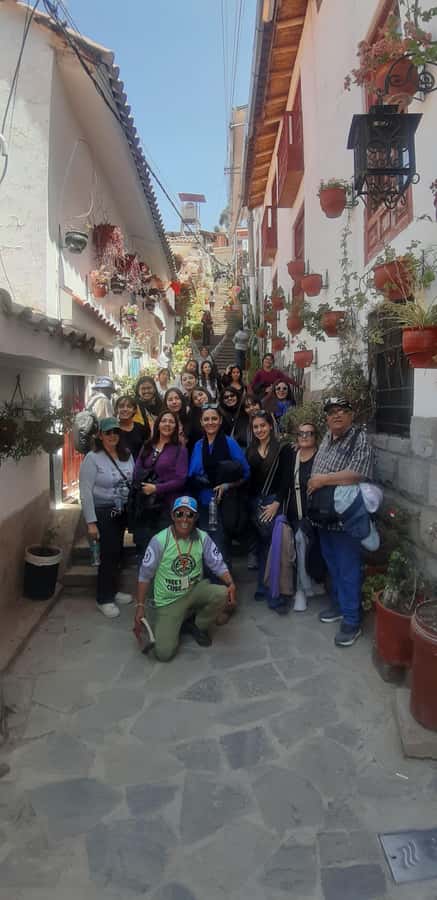
After the palace area, the walk continues down Inka Roca Street. The setting changes again. You see a narrow cobblestone street, colonial houses, and signs of local life.
This is where the tour earns its price in a quiet way. Famous squares and major ruins are easy to find. Streets such as this are harder to interpret without someone pointing out what you are seeing and why the buildings fit together as they do.
The cobblestones are attractive but not forgiving. Wear shoes with a firm sole and good grip. Sandals or smooth city shoes could make the walk less comfortable, especially if you are still adjusting to Cusco’s altitude or have already spent the day sightseeing.
The activity calls for a moderate level of fitness. That does not mean a demanding hike, but you should be ready for about two and a half hours on foot, uneven paving, and the gradual climb toward San Blas. People with mobility impairments and wheelchair users are not considered suitable for this route.
San Blas: workshops, churches, and a hillside finish
The final neighborhood is San Blas, one of Cusco’s most appealing areas for a slow wander. The tour takes you past artisan workshops, colonial churches, and the daily life of Cusqueños.
This part gives the experience its strongest local feel. The Plaza de Armas shows you the city’s public center, while San Blas lets you see a more residential and creative side. You might find workshops where handmade goods are produced or displayed, though the information does not promise a hands-on craft activity or a purchase stop.
The neighborhood also gives your guide room to talk about colonial churches and the way people live among older buildings. Keep in mind that San Blas is hilly. The route ends at the Mirador de San Blas, so you finish with a viewpoint rather than returning to the original meeting point.
That ending is useful. You can stay in San Blas afterward, browse its workshops, continue walking, or make your own way back to the center. The tour does not include drop-off, so plan your onward route before you start.
What the guide adds to the walk
The guide is the main reason to choose this experience instead of following a map on your phone. The route itself is compact, but the meaning behind the streets is not always obvious.
The guide speaks Spanish or English. If you need English commentary, select or confirm that language when booking. Enrique is the only guide named in the available information. One guest specifically praised his pace, saying it made the walk comfortable and revealed sights they would not have found or understood alone.
That detail matters. A good walking tour should not leave you racing from one stop to another. It should allow enough time to look, ask questions, and keep up without turning every explanation into a lecture. The feedback about Enrique suggests that the pace can work well, though a different guide may lead your departure.
There is also a practical warning. One confirmed booking reported that no guide arrived and that messages received no response. That is a serious service failure, even though the overall score is 4.3 from five ratings and other feedback was very positive. I would save the meeting point, wear the green T-shirt instruction in mind, and contact the provider if the guide is not clearly present at the start time.
Is $15 good value in Cusco?
At $15 per person, this is an inexpensive way to get a guided introduction to central Cusco. For two and a half hours, you cover the main square, Inca and colonial streets, Qoricancha, Cusicancha, and San Blas. That makes the cost attractive if you want historical orientation before exploring more deeply.
The value comes from the route and explanation, not from included extras. Pickup, drop-off, food, and drinks are not included. Admission arrangements for sites should also be checked, since the listed inclusions name only the professional guide and fun.
You should compare the price with what you want from the day. If you need hotel transport, a meal, private vehicle, or a long archaeological lecture, this is not the right product. If you want a low-cost walk that helps you understand the city’s layout and points out places to revisit, the price is sensible.
The flexible booking terms help. You can reserve now and pay later, and cancellation is allowed up to 24 hours in advance for a full refund. Still, the reported no-show means flexibility is useful only if the provider responds and the departure is properly confirmed.
How to prepare for the 150-minute route
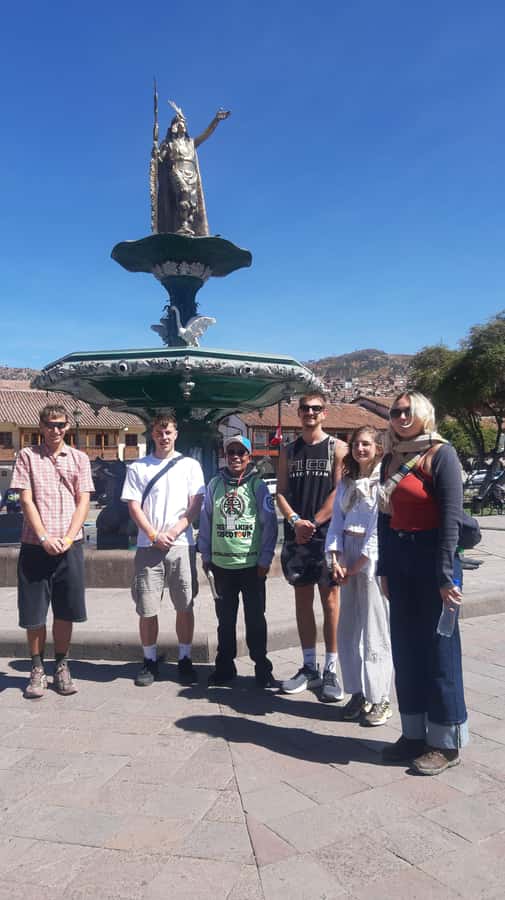
Cusco’s sun can be strong, and the walk includes open plazas as well as streets with limited shade. Bring water, a hat, and sunscreen.
Wear comfortable shoes. The route includes cobblestones, narrow streets, and a moderate amount of walking. You do not need specialist hiking gear, but flimsy footwear will make the experience less pleasant.
Smoking and flash photography are not allowed. Respect those rules, particularly at religious and historic sites.
The tour is not wheelchair accessible and is not suitable for people with mobility impairments. If stairs, steep streets, or uneven paving are a concern, ask the provider for precise route details before reserving. The available information confirms a moderate fitness requirement but does not give a full step count or grade for every section.
Give yourself enough time to reach the meeting point. Since there is no pickup, a late arrival could mean missing the group at the plaza. The green T-shirt is the main visual clue, and the coordinates are useful if you are unsure which side of the square to use.
Who should book this Cusco walk?
I would choose this for a first day in Cusco, especially if you want to learn the shape of the historic center before visiting more sites on your own. It also suits anyone who likes mixing major landmarks with local streets and workshops.
It is a good match for:
- First-time visitors who want a clear introduction to Inca and colonial Cusco
- Budget-conscious visitors looking for a guided walk
- People who prefer seeing neighborhoods rather than only entering monuments
- English- or Spanish-speaking walkers with moderate fitness
- Visitors who want to finish in San Blas and continue exploring there
I would think twice if you need guaranteed door-to-door service, a fully accessible route, or a very slow and highly detailed archaeological tour. I would also confirm the departure carefully because of the reported no-show.
Should you book it?
Book this tour if you want a short, low-cost orientation to Cusco with a route that moves beyond the obvious postcard stops. The combination of Plaza de Armas, Qoricancha, Inka Roca Street, and San Blas gives you a useful look at the city’s past and present.
The main reasons to pause are the moderate walking demands, lack of transport and refreshments, unclear admission coverage, and one troubling report of a missing guide. If you confirm the meeting details and arrive prepared for cobblestones and hills, the experience offers good value, particularly for first-time visitors.
FAQ
How long does the Cusco walking tour last?
The tour lasts 150 minutes, or two and a half hours.
How much does the walking tour cost?
The listed price is $15 per person.
Where does the tour meet?
The meeting point is between Calle del Medio and Plaza de Armas in Cusco. Look for a guide wearing a green T-shirt. The listed coordinates are -13.5170627, -71.9795113.
Where does the tour finish?
The walk finishes at the Mirador de San Blas.
Which languages are available?
The live guide is available in Spanish and English.
Does the tour include hotel pickup?
No. Pickup and drop-off are not included, so you must reach the meeting point and make your own way onward after the tour.
What places does the route visit?
The route includes Plaza de Armas, Loreto Street, Qoricancha, the Inka Palace Cusicancha, Inka Roca Street, and the San Blas neighborhood.
What should I bring?
Bring comfortable shoes, a hat, sunscreen, and water.
Is the tour wheelchair accessible?
No. The activity is not suitable for wheelchair users or people with mobility impairments, and a moderate level of fitness is required.
Just added around Cusco
- Cusco: Via Ferrata, Skybike, and Rappel Adventure★ 5.0 · 3 reviews
- From Cusco: Maras and Moray and Ollantaytambo Tour★ 5.0 · 3 reviews
- Cusco: Rainbow Mountain Tour at Sunset Without the Crowds★ 4.7 · 3 reviews
- Cusco: Sacred Valley Day Trip with Maras & Moray Salt Mines★ 5.0 · 3 reviews
- Valle Sur Cusco | half day★ 4.3 · 3 reviews
- IN MACHU PICCHU: Private Tour Guide Service★ 5.0 · 3 reviews
- Salkantay trek to Machu Picchu – 5D/4N – Premium★ 3.3 · 3 reviews
- Full-Day Condor Viewpoint & Inca Sites Tour★ 5.0 · 3 reviews
Walking Tours, compared.
Historic Walking Tour with Pisco Sour and Music Show
Read our review →
Historic/music Cusco FreeWalkingTour “free drink” Group Tour
Read our review →
Browse the lists this tour appears in