
Reviewed · SACSAYHUAMAN AND INCA RUINS
Cusco: Sacsayhuaman Guided Tour and 1-Hour Horseback Ride
Sacsayhuaman is the star here: a huge Inca fortress complex of precisely fitted stone above Cusco. I like that this tour pairs its archaeology with a one-hour ride through the surrounding high country, rather than keeping you among ruins all morning. I also like the small group limit of 10 and the chance to see Qenqo, Tambomachay, and Pucapukara in one outing.
The main drawback is cost control. The $90 price does not include entrance fees or the Cusco Tourist Ticket Site Pass, so your final bill will be higher. You also need to be comfortable on a horse and able to handle high-altitude sites and uneven ground.
In This Review
- Key points at a glance
- Why this four-hour outing works well in Cusco
- Sacsayhuaman and the scale of Inca engineering
- Qenko and the meaning of a huaca
- One hour on horseback near Sacsayhuaman
- Tambomachay and the old Inca water system
- Pucapukara, the red fortress
- What the $90 price really covers
- Guides, vehicles, and the feel of the outing
- Who should book this Cusco horseback tour
- Practical advice before you go
- Should you book this experience?
- FAQ
- How long does the Cusco Sacsayhuaman and horseback riding tour last?
- What sites are included in the tour?
- How long is the horseback ride?
- Is hotel pickup included?
- Are entrance fees included in the price?
- What languages are available?
- Is riding equipment provided?
- What should I wear?
- Who cannot take this tour?
Key points at a glance
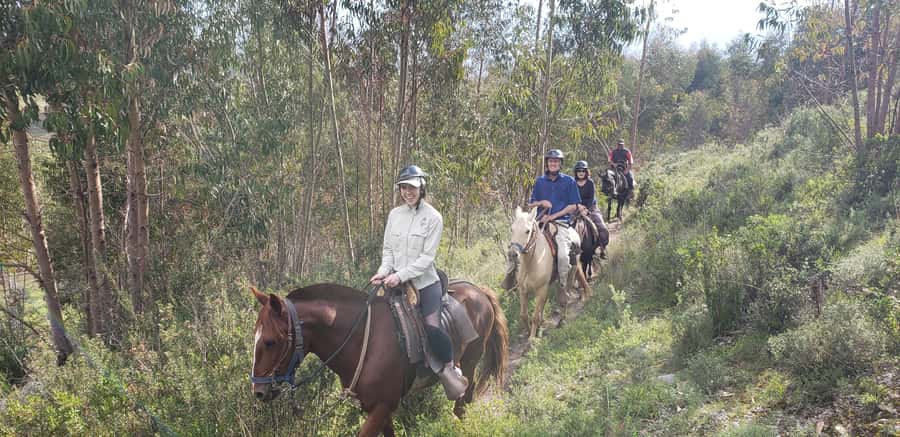
- Sacsayhuaman’s immense stonework: Study one of the finest examples of Inca engineering just outside Cusco.
- A real one-hour horseback ride: Follow mountain paths past potato farms, excavations, temples, and possible llama or alpaca sightings.
- Four major archaeological stops: Visit Sacsayhuaman, Qenqo, Tambomachay, and Pucapukara in one compact tour.
- Useful riding support: A guide gives a short safety briefing, while a muleteer accompanies the ride.
- Small-group format: The group is limited to 10 people, though some departures may feel even more personal.
- Good guide potential: Guides such as Beny have provided excellent English, clear explanations, and attentive help with questions.
Why this four-hour outing works well in Cusco
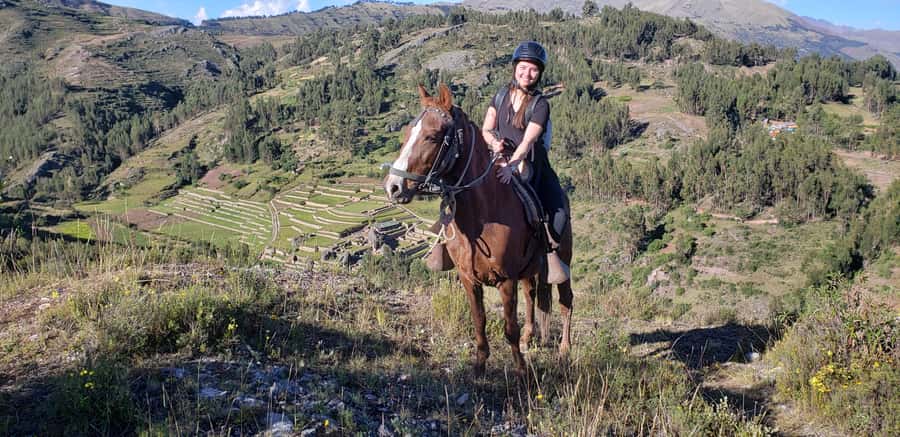
Cusco gives you no shortage of ways to spend a morning. You can focus on museums, churches, markets, or major ruins. This experience takes a different route by combining four archaeological sites with time outdoors on horseback.
I like the balance. You get guided context at the ruins, then a change of pace in the hills. The ride is not simply transport between monuments. It is a separate one-hour activity in the Sacsayhuaman National Park, a large area of roughly 6,000 acres.
The tour begins with pickup from a central Cusco hotel. You are asked to wait in the lobby or at the hotel entrance for the guide. Transport then takes you toward the archaeological sites outside the city, followed later by a return transfer to Cusco.
The group size is limited to 10. That matters at ruins such as Sacsayhuaman, where a smaller group makes it easier to hear the guide and ask questions. One particularly personal outing had just two participants, guide Beny, and a chauffeur. You should not assume every departure will be that private, but the format can be more intimate than a large coach tour.
More Inca ruins above Cusco:
- Cusco: Half-Day City Tour with Sacsayhuaman and Q’enco
★ 4.6 · 1,129 reviews - City Tour Cusco Qoricancha Sacsayhuaman y Tambomachay
★ 4.7 · 617 reviews - Cusco City Sightseeing, San Pedro Market, Cathedral and Qorikancha Temple
★ 4.5 · 139 reviews
Sacsayhuaman and the scale of Inca engineering
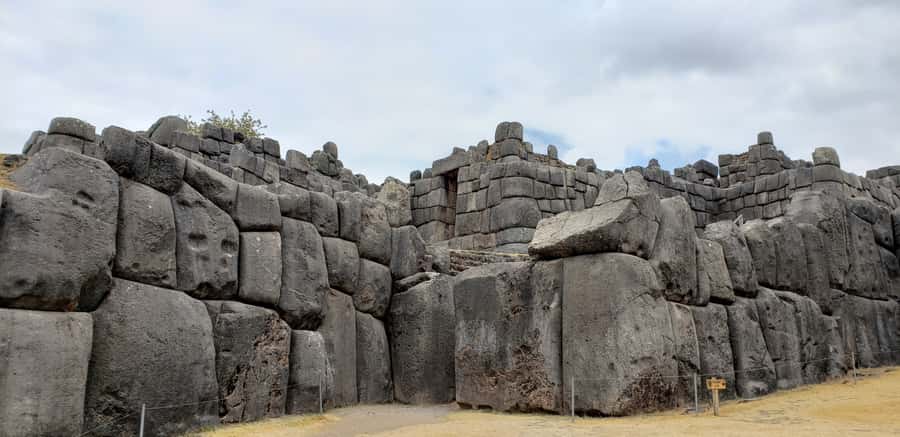
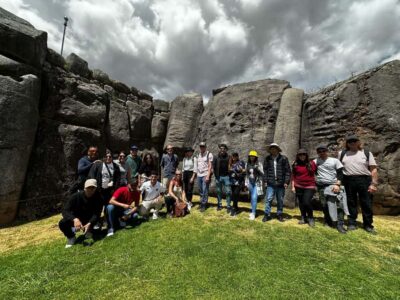
Your first main stop is Sacsayhuaman, often written as Saksaywaman. The site sits above Cusco and gives you a strong introduction to the power and planning of the Inca state.
The guided visit lasts about 25 minutes. That is enough for a focused explanation of the site’s architecture, function, and importance, but not enough for a slow, open-ended exploration of every corner. If you like tightly organized sightseeing, this works well. If you want to linger over stones and views for hours, you may find the visit short.
The great appeal is the masonry. Huge blocks were fitted together with remarkable precision, creating walls that remain one of the clearest examples of Inca construction skill. Your guide helps explain why the site mattered and how its design reflects the wider Inca capital below.
Bring your attention to the stonework, not just the photo opportunity. The real value is in seeing how the walls were made and understanding why Sacsayhuaman is treated as one of the key sites around Cusco.
The altitude also matters. Cusco already sits high, and the archaeological sites above the city can feel demanding if you have just arrived. Walk at a steady pace, drink the provided water, and do not treat the first stop like a race.
Qenko and the meaning of a huaca
From Sacsayhuaman, the tour continues to Qenko, also written Q’enco or Qenqo. The visit lasts about 25 minutes and focuses on the site’s role as a huaca, an Inca sacred place.
Qenko is valuable because it shifts the tour away from military and political power. Here, your guide explains religious practice and the treatment of deceased Inca royalty. A cave at the site was connected with mummification, giving you a more direct look at how the Inca viewed death, ritual, and royal identity.
This is one of the more useful stops for visitors who know the Inca mainly through walls and roads. You begin to see that these sites were not just fortresses or settlements. They also had ceremonial purposes tied to sacred places and important people.
The stop is short, so listen closely to the explanation. Qenko is the kind of place that can seem modest at first glance. Without context, you may walk through it quickly. With a good bilingual guide, the carved stone and cave gain a clearer purpose.
One hour on horseback near Sacsayhuaman
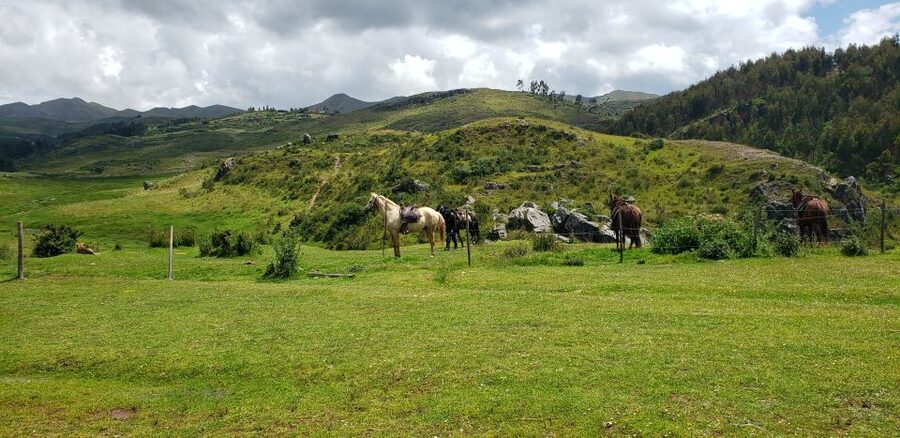
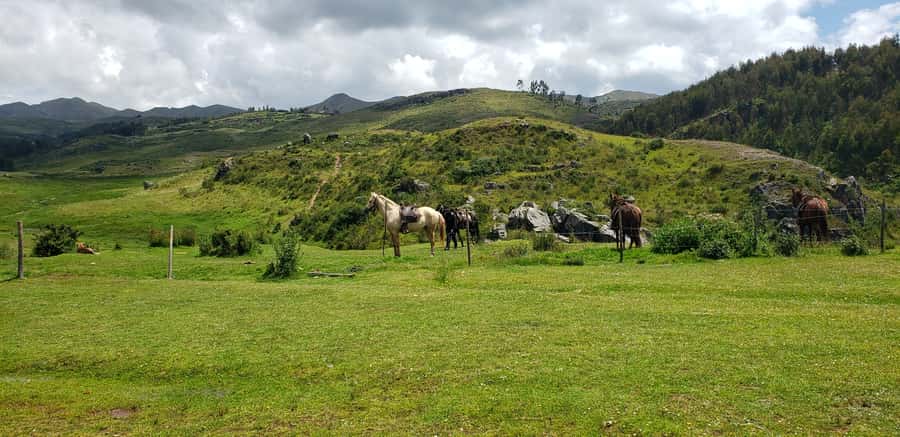
The horse ride is the feature that makes this outing different from a standard ruin circuit. You head to a ranch near Sacsayhuaman, meet the horses and muleteers, and receive a short introduction to riding and safe handling.
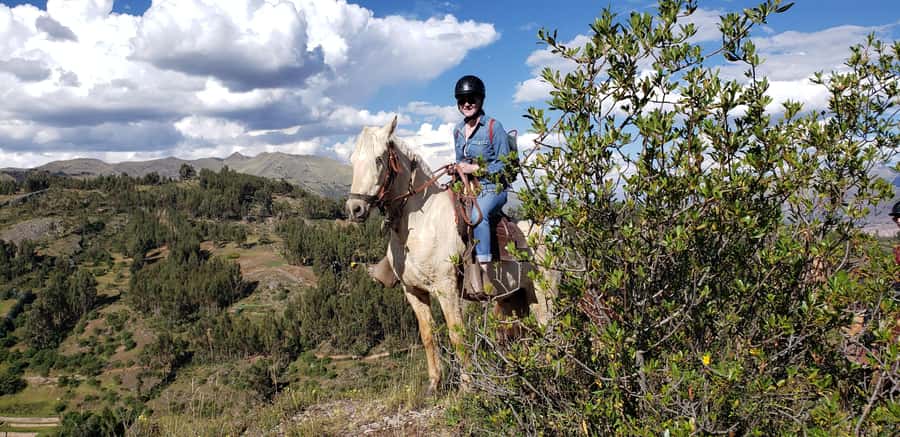
Horses are selected according to your experience and comfort. That is useful for first-time riders, while experienced riders can explain what they are hoping to do. The ride includes a saddle and safety helmet, and a muleteer accompanies the group.
You then ride for about one hour through the Sacsayhuaman National Park. The route can include views of the surrounding mountains, potato farms, new excavations, and local animals such as llamas and alpacas if conditions are favorable.
A useful detail from one especially successful outing is that the horses were described as well behaved and well cared for. The two riders were also able to trot and gallop according to their wishes. That does not mean every group will ride at the same pace, but it shows that the experience can suit more than complete beginners.
Your riding ability affects the timing. The stated duration is four hours, but the tour notes that the total time depends on the participants’ experience. A group learning basic control may move more slowly. Stronger riders may cover more ground.
Wear long pants and closed-toe shoes. This is not the place for sandals, short clothing, or footwear that slips easily. A helmet is included, but you should still dress for practical riding and changing highland weather.
The ride is outdoors, but it is not presented as a long-distance horseback expedition. Think of it as a one-hour scenic ride added to a guided archaeological tour. That makes it a good choice if you want a taste of riding without giving up most of the day.
More horseback rides near Cusco:
- Cusco: 3-Hour Horse Riding Tour to the Temple of the Moon
★ 5.0 · 105 reviews - Cusco: Half-Day Horseback Riding at Devil’s Balcony
★ 4.9 · 89 reviews - Horse Riding Chacan Mountain And Temple Of The Moon
★ 5.0 · 78 reviews - Horseback Tour in cusco to Temple of the Moon & Hidden temples
★ 5.0 · 54 reviews
Tambomachay and the old Inca water system
After the ride, the group visits Tambomachay, an ancient temple linked with water. The guided stop lasts about 25 minutes.
Tambomachay adds another kind of Inca site to the morning. At Sacsayhuaman, you focus on stone construction and power. At Qenko, the subject is sacred ritual and mummification. At Tambomachay, the attention turns to water and the ceremonial importance of flowing springs.
This visit is brief, so your guide’s explanation does much of the work. Look closely at the channels, stonework, and setting. The attraction is not only the structure itself, but also the way the Inca built a ceremonial site around water.
You should also expect the pace to feel brisk. Four archaeological sites and a horse ride are a lot for four hours, especially once driving time is included. I see Tambomachay as a concise introduction rather than a full archaeological study.
Pucapukara, the red fortress
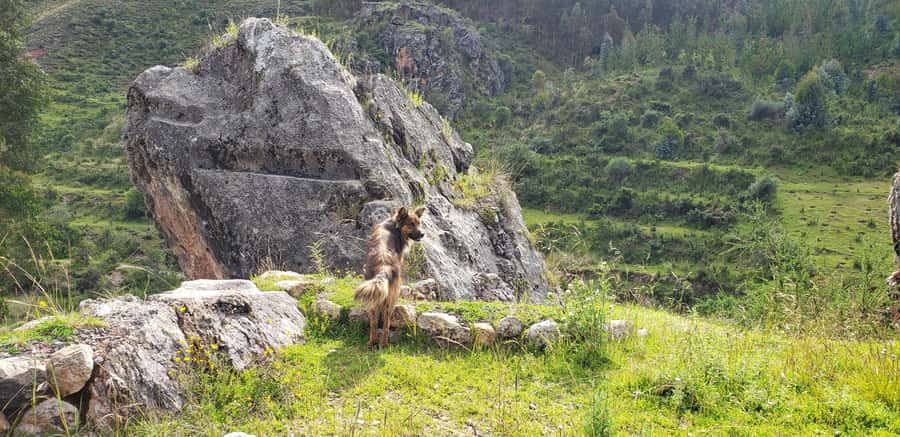
The final archaeological stop is Pucapukara, an Inca fortress complex. The name is often translated as Red Fortress, and the site provides a useful contrast with Tambomachay.
Your guided visit lasts about 25 minutes. Pucapukara is associated with defense and the control of movement near Cusco, while Tambomachay is linked with water and ceremony. Seeing them together helps you understand how the sites around the imperial capital served different purposes.
Again, the stop is short. You will get an explanation and time to look around, but you should not expect an unhurried walk through every feature. The advantage is coverage: this tour lets you see four important sites without arranging separate transport or negotiating several taxi rides.
After Pucapukara, you return to Cusco by transfer. The full outing is scheduled for four hours, though riding ability and group pace can affect the exact timing.
What the $90 price really covers
At $90 per person, this is not the cheapest way to see the four sites. The price does not include entrance fees or the Cusco Tourist Ticket Site Pass, and that is the most important budgeting detail.
What you are paying for is the combination of transport, a bilingual English or Spanish guide, four guided archaeological visits, a one-hour horse ride, saddle, helmet, muleteer, snacks, and water. Central hotel pickup and drop-off are also included.
The value improves if you want all these pieces in one booking. Arranging a private vehicle, guide, ranch visit, and separate horse ride could take more effort and may cost more, especially if you are traveling alone or with a small group.
The value is less clear if you already have a Cusco transportation plan and only want to visit Sacsayhuaman. In that case, a simple archaeological tour may suit you better. This experience earns its price through variety, not through long visits at any one ruin.
The small-group limit helps. You are not paying for a huge group with little chance to speak to the guide. And the option to reserve now and pay later, along with free cancellation up to 24 hours before the activity, gives you some planning flexibility.
Guides, vehicles, and the feel of the outing
The tour is offered in English and Spanish. A strong guide matters here because the archaeological visits are short. You need clear explanations that connect each site to the next, rather than a list of dates and names.
Beny is one guide who has handled the outing particularly well. Her English was described as excellent, she answered questions willingly, and she combined the ruins, horse ride, and transport into a smooth four-hour day. Holger also received direct praise for being a great guide.
The transport setup can vary. One outing included a dedicated chauffeur, which made it feel almost private even though the activity is advertised as a small group. Do not count on having a private driver every time, but central pickup and return are part of the plan.
Snacks and water are included. That is a modest benefit, but it is welcome at altitude and during a morning that moves between walking, driving, and riding. You should still bring anything else you personally need, since no larger meal is included in the supplied details.
Who should book this Cusco horseback tour
I would suggest this tour to you if you want a mixed-activity morning and do not want to spend all four hours walking through ruins. The horse ride breaks up the archaeology and gives you a closer look at the highland setting around Cusco.
It is also a good fit for riders who want a short outing rather than a full-day trek. Beginners can receive an introduction and have a horse selected according to their experience. More confident riders may have the chance to trot or gallop, depending on the group and the guide’s judgment.
Families with older children may find it appealing. One successful outing included a 17-year-old and a parent. The experience is not suitable for pregnant women, people with mobility impairments, or anyone over 200 pounds, or 91 kilograms, according to the stated restrictions.
You should think twice if you dislike horses, want extensive time at each ruin, or are trying to keep entrance costs low. The schedule is active, the stops are short, and the extra ticket fees are separate.
Altitude is another consideration. The tour reaches high terrain, and the riding conditions described in one outing were around 3,800 meters above sea level. That is a serious height. If you have just arrived in Cusco, consider how you are feeling before committing to a morning that includes both walking and riding.
Practical advice before you go
Wear long pants and closed-toe shoes. These are required for comfort and safety around the horses.
Wait in your central Cusco hotel lobby or at the entrance for pickup. Hotels outside central Cusco may not be covered, since the included pickup is specifically for central locations.
Check the entrance fee situation before departure. The archaeological admissions and Cusco Tourist Ticket Site Pass are not included in the $90 price. Add those costs when comparing this tour with other options.
Be honest about your riding experience. Horses are assigned with your ability and preference in mind, and the pace depends on the participants. A confident rider should not assume the group will gallop, while a beginner should not feel pressured to ride beyond their comfort.
Bring water even though some is provided, especially if you are sensitive to altitude. Keep your schedule flexible by a little, since the stated duration can change with group riding ability.
Should you book this experience?
Book it if you want four major sites, a one-hour ride, round-trip transport, and a bilingual guide in one compact outing. The mix is the real strength. You see Inca engineering, sacred ritual, water architecture, and defensive construction, then spend time outside among farms, mountain views, and possible llamas or alpacas.
Skip it if your priority is a slow archaeological visit or the lowest possible price. Entrance fees are extra, and four hours leaves little room to linger.
For the right person, this is a lively and practical way to see the sites above Cusco. Choose it after you have considered the altitude, the riding restrictions, and the added ticket cost. If you are comfortable in the saddle and enjoy variety, the combination is hard to beat.
FAQ
How long does the Cusco Sacsayhuaman and horseback riding tour last?
The scheduled duration is four hours. The total time can change depending on the horse riding skills and experience of the participants.
What sites are included in the tour?
The tour visits Sacsayhuaman, Qenko, Tambomachay, and Pucapukara. Each archaeological stop includes a guided visit of about 25 minutes.
How long is the horseback ride?
The horseback ride lasts one hour.
Is hotel pickup included?
Yes. Pickup and drop-off are included from hotels in central Cusco. You should wait in the hotel lobby or at the entrance for the guide.
Are entrance fees included in the price?
No. Entrance fees and the Cusco Tourist Ticket Site Pass are not included.
What languages are available?
The tour is offered with a live guide in English or Spanish.
Is riding equipment provided?
Yes. A saddle and safety helmet are included. A muleteer also accompanies the horseback ride.
What should I wear?
Wear long pants and closed-toe shoes.
Who cannot take this tour?
The experience is not suitable for pregnant women, people with mobility impairments, or people over 200 pounds, or 91 kilograms.
Just added around Cusco
- Cusco: Via Ferrata, Skybike, and Rappel Adventure★ 5.0 · 3 reviews
- From Cusco: Maras and Moray and Ollantaytambo Tour★ 5.0 · 3 reviews
- Cusco: Rainbow Mountain Tour at Sunset Without the Crowds★ 4.7 · 3 reviews
- Cusco: Sacred Valley Day Trip with Maras & Moray Salt Mines★ 5.0 · 3 reviews
- Valle Sur Cusco | half day★ 4.3 · 3 reviews
- IN MACHU PICCHU: Private Tour Guide Service★ 5.0 · 3 reviews
- Salkantay trek to Machu Picchu – 5D/4N – Premium★ 3.3 · 3 reviews
- Full-Day Condor Viewpoint & Inca Sites Tour★ 5.0 · 3 reviews
Sacsayhuaman and Inca Ruins, compared.
Half-Day City Tour with Sacsayhuaman and Q’enco
Read our review →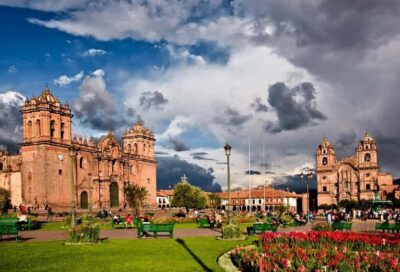
City Tour Cusco Qoricancha Sacsayhuaman y Tambomachay
Read our review →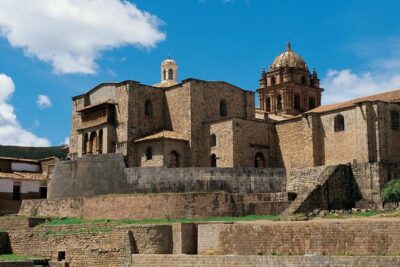
Cusco City Sightseeing, San Pedro Market, Cathedral and Qorikancha Temple
Read our review →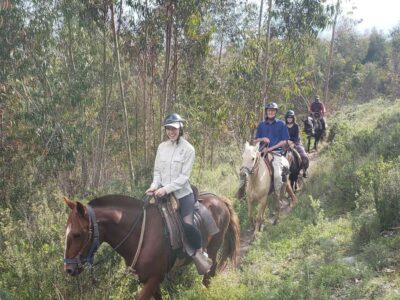
3-Hour Horse Riding Tour to the Temple of the Moon
Read our review →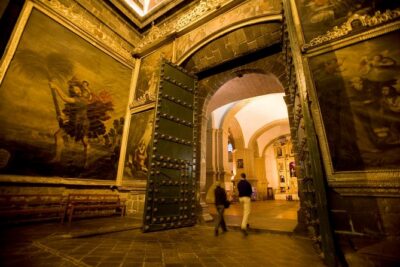
Cusco City Sightseeing and Sacsayhuaman Archeological Park Tour
Read our review →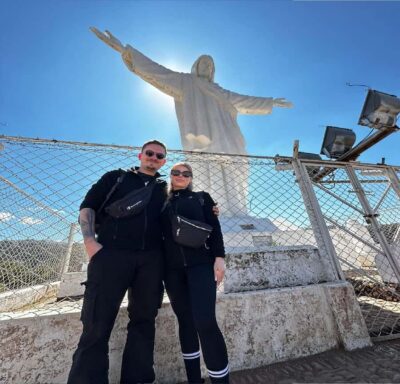
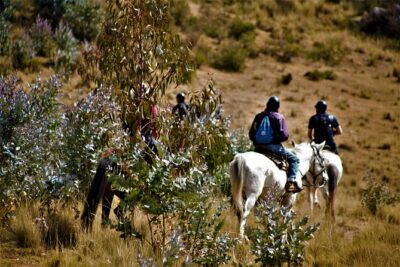
Horse Riding Chacan Mountain And Temple Of The Moon
Read our review →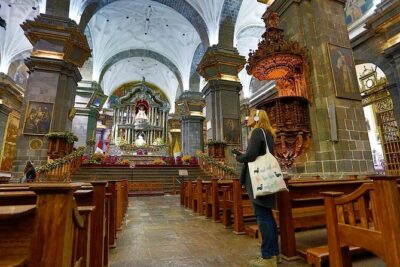
Cusco 4-Hour Private Tour Including Sacsayhuaman and Qenqo
Read our review →Browse the lists this tour appears in