
Reviewed · LAKE TITICACA TRIPS
Titicaca Lake 2 Day 1 Night from Cusco to Puno
The heart of this trip is Lake Titicaca’s living islands, where layers of totora reeds form the floating Uros communities and Taquile’s residents preserve distinctive Andean customs. You also cross the high Andes by bus, with colonial art, Inca-era sites, mountain views, and a full day on the lake packed into one economical trip.
I like two things right away: the tourist bus turns a long transfer from Cusco to Puno into a sightseeing day, and the island boat trip gives you more than a quick lakeside viewpoint. The visits to Andahuaylillas, Raqchi, La Raya, and Pukara add real substance to the journey.
The tradeoff is stamina. You leave Cusco at 6:30 a.m., spend most of the next day on the lake, then board a bus at 9:15 p.m. and reach Cusco around 5:00 a.m. The trip is advertised as two days and one night, but you should plan for one hotel night plus one night sleeping on the bus.
In This Review
- Key points to know before booking
- What this Cusco to Puno trip actually involves
- Andahuaylillas and the first morning on the road
- Raqchi and the Temple of Wiracocha
- Lunch in Sicuani and the climb to La Raya
- Pukara, the final stop before Puno
- Uros, islands made from totora reeds
- Taquile Island and lunch by the lake
- Guides, buses, and how the handoffs work
- The overnight return to Cusco
- Is $269 a fair price?
- Who should book this experience?
- Final verdict: a useful route with one tiring night
- FAQ
- How long does the tour last?
- Where does the tour begin?
- Where does the tour end?
- Is accommodation in Puno included?
- Which islands does the boat visit?
- Is lunch included on both days?
- How high is La Raya Pass?
- What should I bring?
- How many people can join the tour?
Key points to know before booking
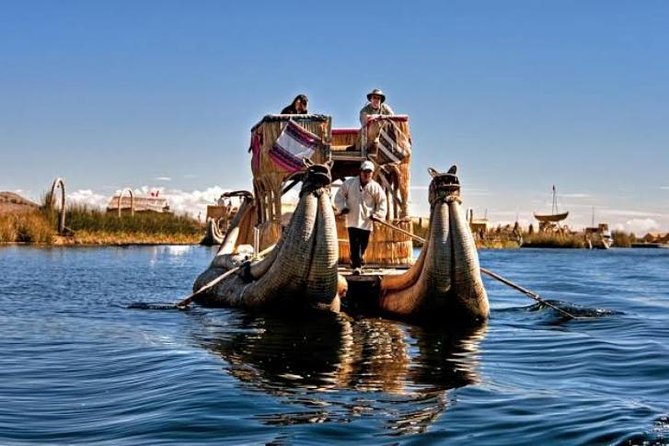
- Uros and Taquile in one day: The boat visits two very different island communities on Lake Titicaca.
- A sightseeing transfer: Stops at Andahuaylillas, Raqchi, La Raya, and Pukara break up the ride from Cusco to Puno.
- A full high-altitude schedule: The route reaches La Raya Pass at 4,338 meters, so acclimatization matters.
- One night in Puno: Accommodation is included, but the exact property should be confirmed before departure.
- Small group size: The maximum is 15 people, with guides and several organized handoffs along the route.
- Strong value at $269: Bus transport, guides, the boat, one hotel night, and some meals are bundled together.
What this Cusco to Puno trip actually involves
At $269 per person, this is not a relaxed escape with long mornings and free afternoons. It is a practical two-day route for seeing several major sights while moving between Cusco and Puno.
You begin with hotel pickup in Cusco at 6:30 a.m. The tourist bus follows the traditional Route of the Sun toward Puno, stopping at cultural and archaeological sites along the way. You reach Puno around 5:30 p.m., check into your accommodation, and have the evening there.
The next morning starts early again, with pickup around 6:45 a.m. for the Lake Titicaca boat trip. You visit the Uros floating islands and Taquile Island, eat lunch on the lake, and return to Puno around 5:00 p.m. There is then some time to return to the hotel or see Puno independently before the overnight bus departs at 9:15 p.m.
That schedule makes this useful if you are already planning to travel between Cusco and Puno. You are not adding a separate round trip just to reach the lake. You are turning the route itself into part of the experience.
More Lake Titicaca trips from Cusco:
- Cusco: Scenic Route of the Sun to Puno with Buffet Lunch
★ 4.8 · 101 reviews - Full Day Lake Titicaca Tour from Cusco
★ 4.5 · 91 reviews - From Cusco: 2-Day Lake Titicaca Tour
★ 4.4 · 74 reviews
Andahuaylillas and the first morning on the road
The first major stop is the Church of San Pedro de Andahuaylillas, visited for about 40 minutes. The church dates from the 16th century and was built by Jesuits on a site considered sacred before the Spanish arrived.
The building is often called the Sistine Chapel of America because of its elaborate interior decoration. The comparison is a little grand, but it points you toward the right idea: this is a small church with far more visual detail than you might expect from its plain exterior.
Your guide helps explain the meeting of Spanish Catholic and Andean traditions. That context is important here. The church was not built in an empty place. It was placed on a huaca, a sacred Inca site, as part of the wider effort to replace local religious practice with Christianity.
You get roughly 40 minutes, so this is a focused visit rather than a slow study of every painting and altar. Keep your attention on the explanation and the details inside, since the stop passes quickly.
Raqchi and the Temple of Wiracocha
Raqchi is the most substantial archaeological stop on the road. The complex contains several areas with different purposes, including the Temple of Wiracocha, its most important structure.
Allow about 50 minutes. Your guide should help you make sense of the site rather than simply point out scattered stone and earth. Raqchi includes ceremonial and practical areas, and the remains show how a large Inca center was organized.
The scale of the temple is what gives this stop its force. Even with ruins and missing sections, the surviving walls suggest a major building dedicated to Wiracocha. You will also see the orderly design that appears across many Inca sites.
The visit is short for a site of this size, but it works well as part of a moving route. If you prefer spending hours at one archaeological complex, this tour will feel rushed. If you want a well-chosen introduction while heading toward Puno, Raqchi earns its place.
Lunch in Sicuani and the climb to La Raya
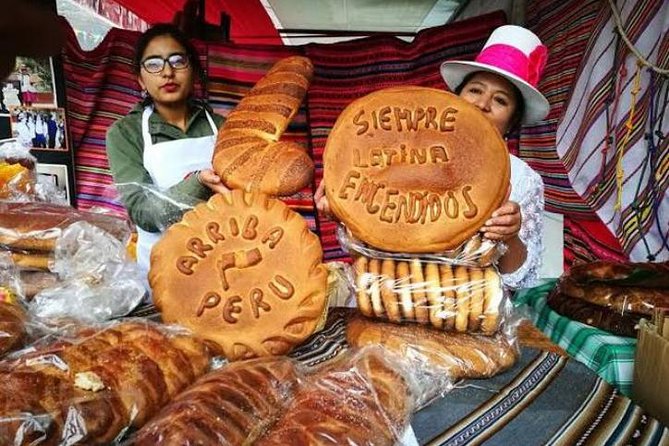
Around midday, the bus stops in Sicuani for a buffet lunch, with about an hour set aside. Lunch is included on the first day, which helps keep the schedule simple and avoids the need to search for food during a tightly managed route.
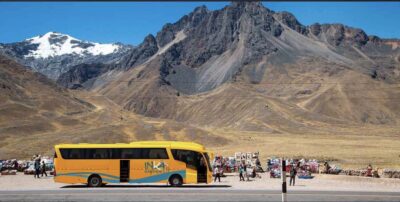
After lunch comes La Raya Pass, the boundary between the Cusco and Puno regions. At 4,338 meters above sea level, it is the highest point on this route. The stop lasts only about 10 minutes, but the Andes views can be dramatic, especially toward the snow-covered peaks.
This is also where altitude becomes more than a scenic detail. You may feel the thin air even if you have handled Cusco comfortably. Bring warm clothing, move slowly, and take the advice to acclimatize before the trip seriously. Coca tea is suggested as a local aid, though you should also follow your own medical advice.
The short stop is enough for photographs and a breath of cold mountain air. It is not enough for a walk, hike, or long exploration. Think of La Raya as a viewpoint and a quick physical reminder of how high this route climbs.
A few more Cusco departures worth comparing
- Cusco: 4-Day Inca Trail to Machu Picchu with Accommodation
★ 4.8 · 432 reviews - From Cusco: 2-Day Trip to the Sacred Valley and Machu Picchu
★ 4.6 · 265 reviews - Cusco: Machu Picchu 2-Day Inca Trail with Panoramic Train
★ 4.9 · 260 reviews - From Cusco: 2-Day Inca Trail to Machu Picchu
★ 4.2 · 244 reviews
Pukara, the final stop before Puno
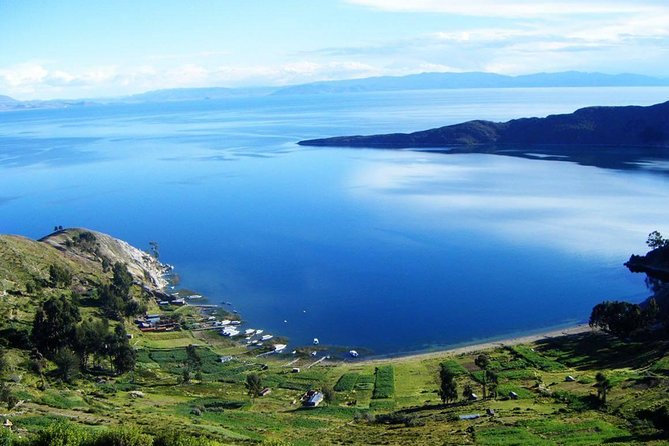
The last archaeological stop is Pukara, visited for about 30 minutes. The site is associated with monolithic sculptures and pottery featuring geometric, animal, and human forms.
Pukara gives you a glimpse of an older Andean culture before the Inca period. The objects and carvings help connect the route’s separate stops into a longer story of settlement, ritual, art, and regional power.
Half an hour is enough for an introduction, but not a detailed archaeological visit. You will likely leave with the broad character of the site rather than a full understanding of its chronology. That is a fair exchange on a route designed to reach Puno the same evening.
You arrive in Puno around 5:30 p.m. The included accommodation gives you a place to settle before the early lake departure. The type and location of the hostel or hotel are not clearly specified, so confirm those details if your lodging needs are particular.
Uros, islands made from totora reeds
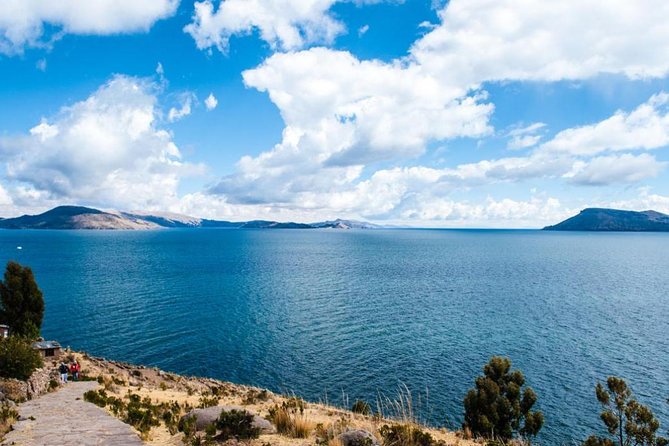
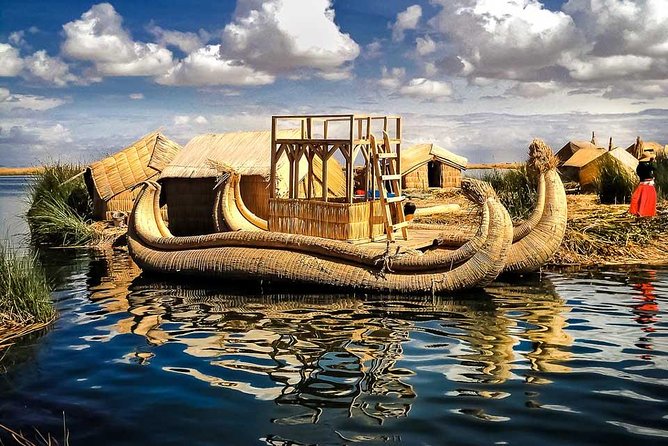
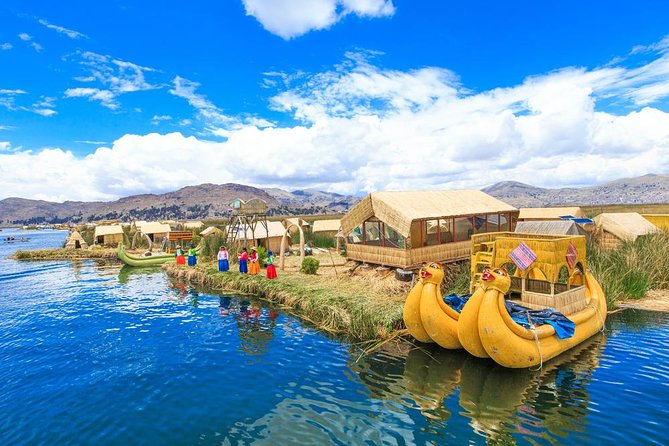
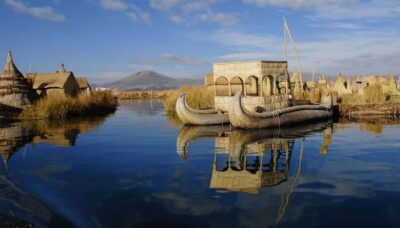
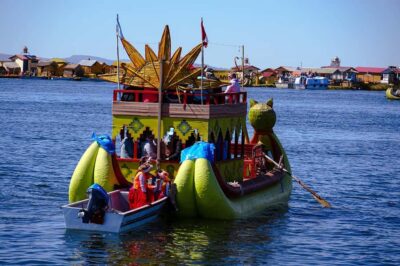
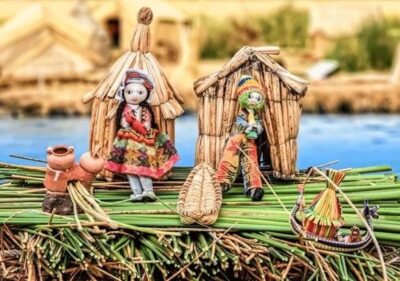
The second day begins with the lake, and this is the part most people remember. The boat heads to the Uros floating islands, artificial surfaces built from totora, a reed that grows in Lake Titicaca.
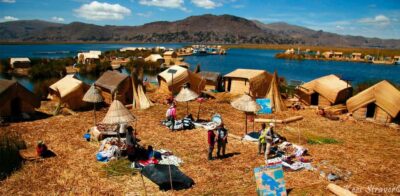
The islands are made by layering woven reeds over blocks of totora roots. The surface must be maintained as new reeds are added over time. That simple fact makes the visit more than a photo stop. You are seeing a settlement shaped by a specific plant, a specific lake, and a long tradition of adaptation.
The Uros people are an ancestral community, and the visit offers a look at how island life has been organized. You should listen carefully to your guide and to the local explanation of the islands rather than treating the stop as a quick novelty.
About an hour is scheduled here. The time allows you to walk on the reed surface, see the construction, and hear about daily life. The setting is unusual, but the community should be approached with respect. This is a lived place, not merely a display.
The lake itself is a major part of the experience. Titicaca stretches along the Peru and Bolivia border and is known as the world’s highest navigable lake. Its calm water and bright reflections can make the boat ride feel almost unreal, while the Titicaca National Reserve protects rare aquatic species, including giant frogs.
Taquile Island and lunch by the lake
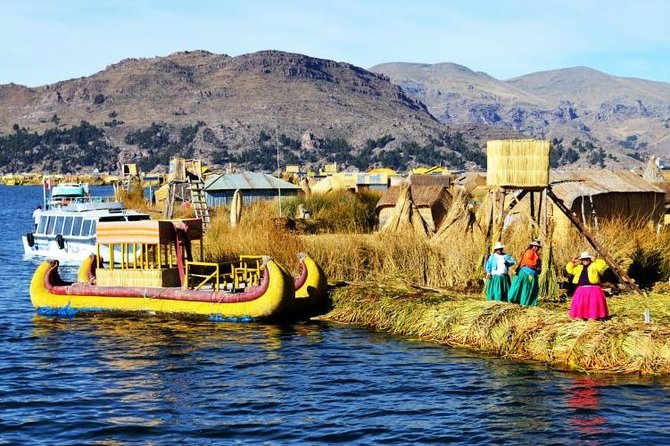
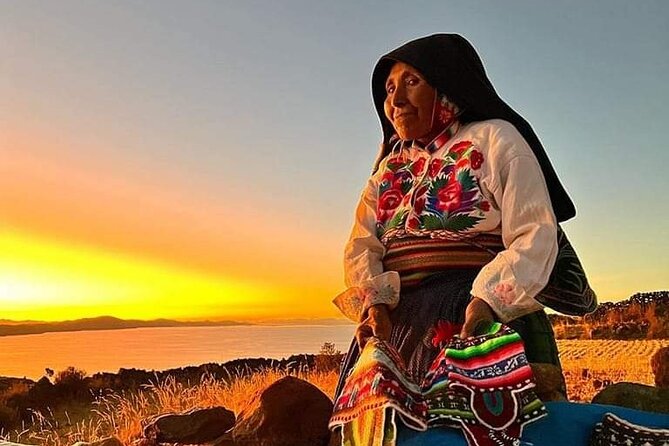
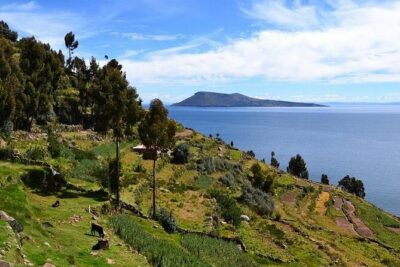
Taquile is different from Uros. It is a natural island community where the main interest is contact with local customs, work, beliefs, and rituals.
The visit lasts about an hour, but the island is not just a scenic stop. You are there to understand something about the people who live on Taquile and the way their traditions connect to place. The surrounding hills are regarded as protective Apus, or sacred mountain spirits, and remain part of local belief.
The scheduled program refers to experiential tourism, so expect the guide to focus on customs and community life. The visit is best approached with patience. You may find that the most meaningful details are small: how people describe their routines, the role of the hills, or the way local traditions continue alongside tourism.
Lunch on Taquile lasts about an hour and features lake trout. The meal is not included in the listed price, so carry extra money in Peruvian soles. This is one of the few clear additional costs in an otherwise bundled trip.
The boat day lasts about 10 hours in total. That is a long time on the move, but it is necessary to reach both island communities and return to Puno. Bring sunscreen, sunglasses, a hat, water or energy bars, and a rain jacket or poncho. Weather on the high lake can shift, and there is little value in being caught unprepared.
Guides, buses, and how the handoffs work
A professional guide is included, but the trip uses several guides and transport handoffs. That is normal for a route connecting Cusco, archaeological sites, Puno, and the lake, though it means you should pay attention to instructions at each transition.
The strongest feedback centers on the organization, comfortable buses, attentive guides, and clear transfers. Manuel is one guide specifically praised for his care and ability to explain the experience. Other guides have also been described as pleasant and well informed.
Guide quality can vary. One first-day guide reportedly spent too much time on chakras, numerology, and aliens when the preference was for more history. That is a useful warning: ask direct questions if you want archaeology, Andean religion, or colonial history explained in greater detail.
The group maximum is 15 people, which is a reasonable size for managing hotel pickups, site visits, and boat transfers. It is not a private tour, but it should be more manageable than a large coach group.
The overnight return to Cusco
After returning to Puno around 5:00 p.m., you can go back to the accommodation or spend time seeing Puno independently. The return bus leaves at 9:15 p.m. and reaches Cusco around 5:00 a.m. the following morning, ending at the Cusco bus terminal.
This is the trip’s biggest practical drawback. The schedule saves you the cost and time of another hotel night, but sleeping on a bus is not the same as sleeping in a bed. If you have a morning flight, a long hike, or an important appointment after arrival, allow plenty of recovery time.
The description of the tour can also make the duration sound shorter than it feels. In practical terms, plan on two nights away from a normal bed: one night in Puno and one overnight bus ride back to Cusco.
That arrangement suits flexible schedules and people who value seeing more places over comfort. It is less suitable if you want a restful lake holiday or dislike night buses.
Is $269 a fair price?
The price includes the tourist bus from Cusco to Puno, the archaeological stops, a first-day buffet lunch, guides, the boat visits to Uros and Taquile, accommodation in Puno, and the return bus to Cusco.
You still pay for tips if you choose to give them, and lunch on Taquile is not included. The exact accommodation also deserves clarification before booking. Those points matter because the price looks all-inclusive at first glance, but it is more accurate to call it broadly bundled.
I see good value here if you want convenience. Arranging the Route of the Sun bus, site admissions, Puno lodging, lake transport, island visits, and the overnight return separately would take more planning. The main thing you are buying is coordination.
You pay for speed and coverage, not luxury. The itinerary fits colonial art, Inca ruins, mountain scenery, two islands, and a cross-country transfer into a tight window. At $269, that is a fair package for an active schedule.
Who should book this experience?
I would recommend it to you if you have limited time in Peru, want to travel from Cusco to Puno overland, and prefer a planned route with guides. It is especially useful if you want both cultural sites and Lake Titicaca without arranging several separate bookings.
You should also be comfortable with early starts, high altitude, long bus rides, and a night spent on the return bus. A moderate fitness level is requested, and the altitude at La Raya makes prior acclimatization important.
I would look for a slower Lake Titicaca itinerary if you want more time with island communities, more rest, or a clearer choice of hotel. This tour gives you a strong first look, but it does not linger.
Booking confirmation is provided at the time of purchase, and pickup is offered. Free cancellation is available up to 24 hours before the local start time. After that point, cancellations and changes are not accepted for a refund.
Final verdict: a useful route with one tiring night
I like this tour because it makes a complicated journey simple and fills the road between Cusco and Puno with worthwhile stops. The Uros reeds, Taquile traditions, Raqchi ruins, Andahuaylillas church, and high pass give the trip variety instead of one long bus ride.
Book it if your priority is seeing a lot with transport, guides, meals, accommodation, and boat fares handled for you. Skip it if sleeping on a bus sounds miserable or if you want a calm, unhurried stay beside Lake Titicaca.
FAQ
How long does the tour last?
The organized sightseeing takes two days, but the return bus arrives in Cusco around 5:00 a.m. the next day. In practical terms, you spend one night in Puno and one night on the bus.
Where does the tour begin?
Pickup is offered from your hotel in Cusco at approximately 6:30 a.m. on the first day.
Where does the tour end?
The return journey ends at the Cusco bus terminal at approximately 5:00 a.m.
Is accommodation in Puno included?
Yes. Hostel or hotel accommodation in Puno is included, though the specific property is not identified in the available details.
Which islands does the boat visit?
The boat visits the Uros floating islands and Taquile Island on Lake Titicaca.
Is lunch included on both days?
A buffet lunch in Sicuani on the first day is included. Lunch on Taquile Island, including the lake trout meal, is not included.
How high is La Raya Pass?
La Raya Pass reaches 4,338 meters above sea level and marks the boundary between the Cusco and Puno regions.
What should I bring?
Bring a small backpack, hiking shoes, warm clothing, rain protection, a hat, sunscreen, sunglasses, personal medication, energy bars, a plastic bag, a camera, and extra money in Peruvian soles.
How many people can join the tour?
The maximum group size is 15 people.
Just added around Cusco
- From Cusco: Maras and Moray and Ollantaytambo Tour★ 5.0 · 3 reviews
- Cusco: Via Ferrata, Skybike, and Rappel Adventure★ 5.0 · 3 reviews
- Cusco: Rainbow Mountain Tour at Sunset Without the Crowds★ 4.7 · 3 reviews
- Cusco: Sacred Valley Day Trip with Maras & Moray Salt Mines★ 5.0 · 3 reviews
- Valle Sur Cusco | half day★ 4.3 · 3 reviews
- IN MACHU PICCHU: Private Tour Guide Service★ 5.0 · 3 reviews
- Salkantay trek to Machu Picchu – 5D/4N – Premium★ 3.3 · 3 reviews
- Full-Day Condor Viewpoint & Inca Sites Tour★ 5.0 · 3 reviews
Lake Titicaca Trips, compared.
Scenic Route of the Sun to Puno with Buffet Lunch
Read our review →
From Cusco to Lake Titicaca: 2-Day Homestay Tour
Read our review →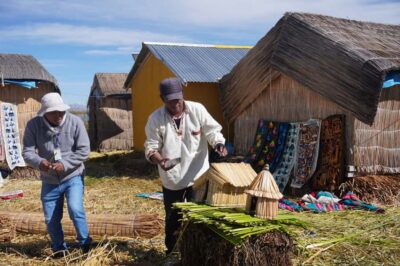
Browse the lists this tour appears in