
Reviewed · LAKE TITICACA TRIPS
Cusco: Scenic Route of the Sun to Puno with Buffet Lunch
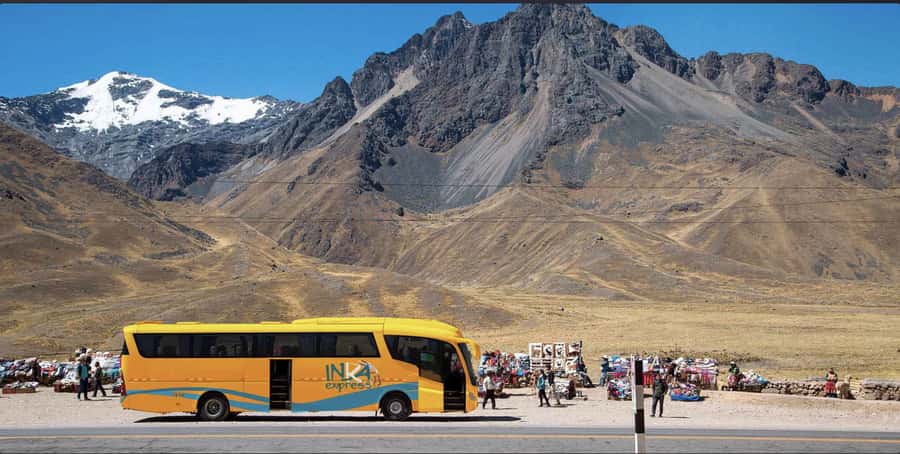
The best thing about this Cusco to Puno bus ride is that it turns a long transfer into a full day of sightseeing. Instead of watching Peru pass through a bus window, you stop at a painted colonial church, an impressive Inca temple, a high Andean pass, and an ancient Pucara museum.
I especially like Raqchi’s huge Temple of Wiracocha and the chance to see the Andes change as you climb toward Abra La Raya. I also like the practical comfort: a clean bus, bathroom, hot drinks, snacks on some departures, and a buffet lunch. The drawback is the early start and the long 11-hour day. Entrance fees are extra, and the church visit can change if Andahuaylillas is closed.
In This Review
- At a glance
- Why take a sightseeing bus from Cusco to Puno?
- Andahuaylillas and the painted church
- Raqchi and the 15-meter Temple of Wiracocha
- Lunch in Marangani and the Sicuani area
- Abra La Raya at the regional divide
- Pucara Museum and the earliest Andean societies
- The bus, guide, and pace
- What the $44 price really covers
- Who should book this route?
- Should you book the Route of the Sun?
- FAQ
- How long does the Cusco to Puno Route of the Sun tour take?
- Where does the bus leave from in Cusco?
- What stops are included?
- Is lunch included in the price?
- Are entrance tickets included?
- What languages are available on the tour?
At a glance
- Four substantial sightseeing stops: Visit Andahuaylillas, Raqchi, Abra La Raya, and the Pucara Museum on the way to Puno.
- Raqchi’s 15-meter walls: See the remains of one of the most striking Inca religious sites in southern Peru.
- A high point above the clouds: Abra La Raya marks the natural divide between the Cusco and Puno regions.
- Lunch is part of the fare: The buffet includes meat, chicken, fish, side dishes, salads, desserts, and herbal drinks.
- Comfort for a full day: The bus has reclining-style spacious seats, heating and air conditioning, power outlets on some buses, a bathroom, and oxygen onboard.
- Budget carefully: The $44 fare does not include about 53 soles, roughly $13, for entrance tickets.
Why take a sightseeing bus from Cusco to Puno?
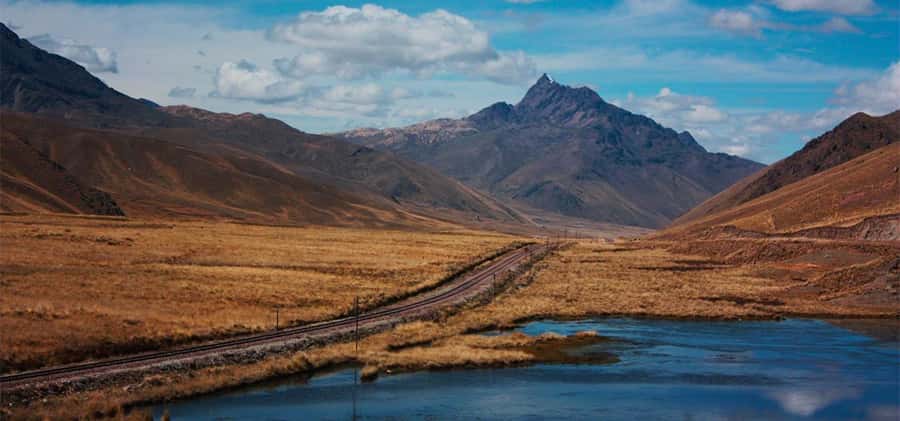
A direct bus gets you from one city to the other. This service gives you a guided introduction to the highlands along the way. That difference matters because the road between Cusco and Puno crosses an area filled with old ceremonial sites, colonial churches, farming villages, and broad mountain views.
You leave Cusco at about 6:40 AM from the terminal at Av. Alameda Pachacuteq 499-B. The day ends at the Terminal Terrestre in Puno at about 5:30 PM. You should arrive at the departure terminal 30 minutes early. The supplied meeting information lists 6:10, but also contains a conflicting reference to 6:10 PM. Confirm the exact departure time when you book, and use the morning schedule as the working assumption.
The bus is one of the main reasons this option makes sense. You are not changing vehicles between each sight, and you have a bathroom onboard. Heating and air conditioning help with changing temperatures, while an oxygen tank is available for an emergency. Several departures have also included drinks and small morning treats, though breakfast itself is not included.
More Lake Titicaca trips from Cusco:
- Full Day Lake Titicaca Tour from Cusco
★ 4.5 · 91 reviews - From Cusco: 2-Day Lake Titicaca Tour
★ 4.4 · 74 reviews - From Cusco: Titicaca Lake – Full day tour with sleeper bus
★ 3.9 · 72 reviews
Andahuaylillas and the painted church
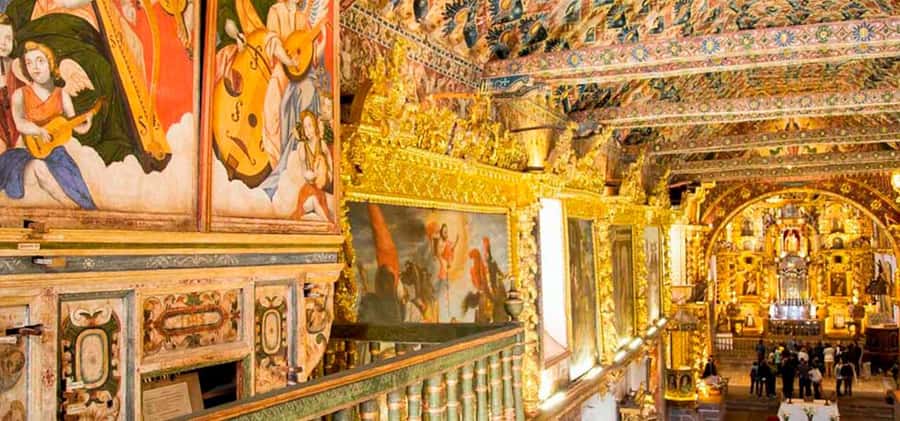
The first sightseeing stop is Andahuaylillas, about 45 minutes. The Church of Saint Peter the Apostle is a 16th-century Jesuit church built on an older Inca sacred site. Inside, painted walls, elaborate frescoes, and gold leaf decoration create a startling contrast with the plain highland village outside.
The nickname Sistine Chapel of the Americas is a little grand, but you will understand why the church attracts attention. This is not a vast building. Its appeal comes from the density of decoration and the mixture of Catholic and Andean visual traditions.
Your guide explains what you are seeing, which is useful here. Without context, the painted scenes can look like a busy collection of religious images. With an explanation, you begin to notice how the church was used to teach Catholic stories to local communities.
There is one important qualification. Andahuaylillas has sometimes been closed because of concerns after earthquake damage. On those occasions, the tour has substituted another church in a nearby village, also with striking wall paintings. That backup can still be worthwhile, but you should not treat the exact church visit as guaranteed.
Raqchi and the 15-meter Temple of Wiracocha
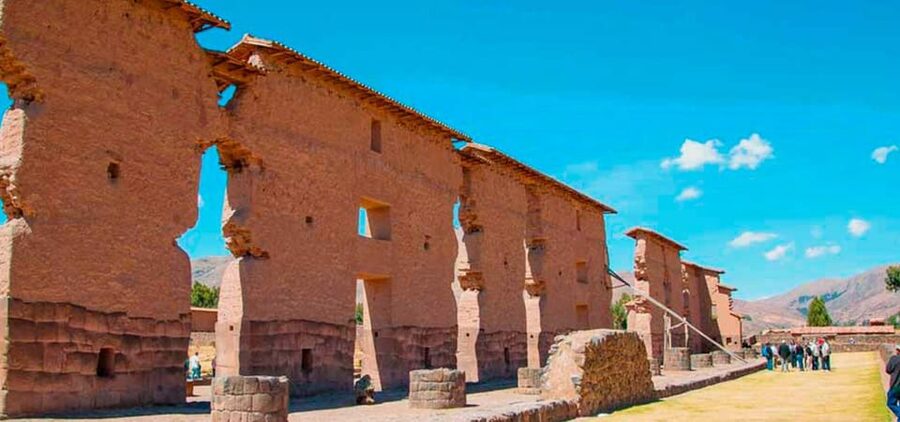
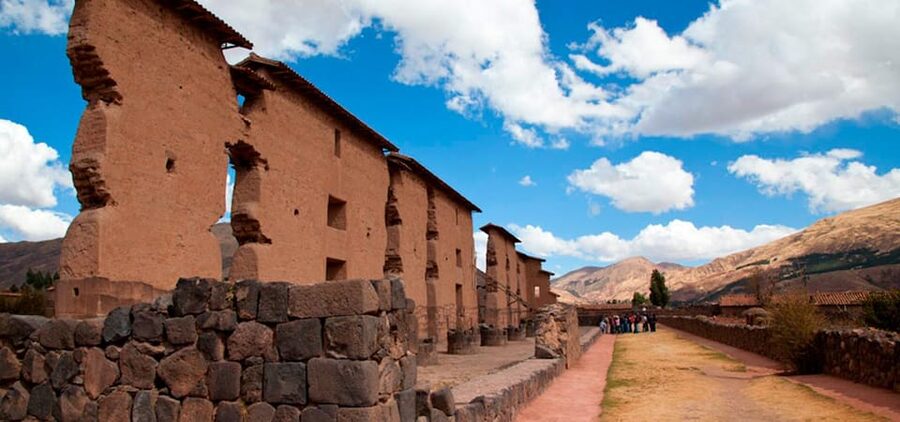
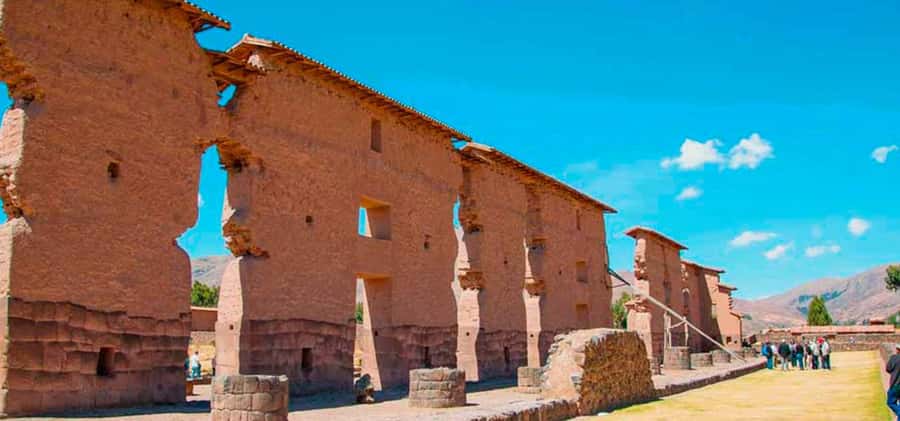
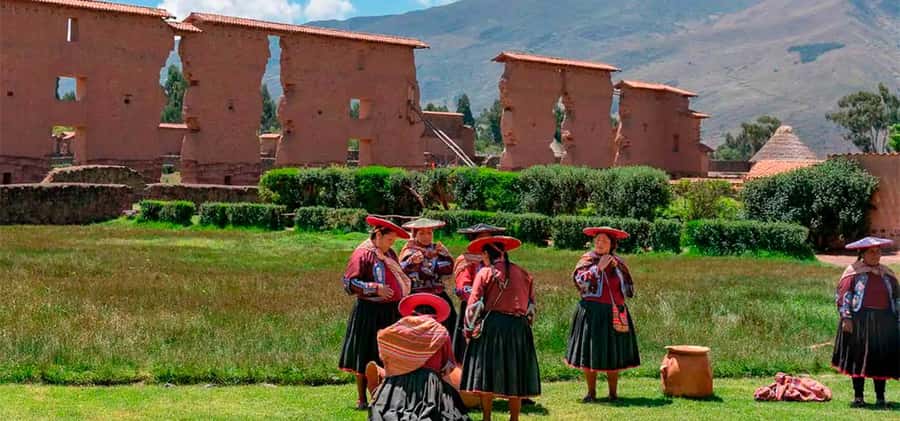
Raqchi is the strongest archaeological stop of the day for many people. You spend about an hour here, walking through the remains of a large Inca religious and administrative center. The main sight is the Temple of Wiracocha, built to honor the invisible superior deity of the Andean world.
The temple’s surviving walls rise about 15 meters. Even in ruins, that scale gives you a better feel for Inca building than a small collection of foundations would. Look at the proportions, the long lines of the structure, and the open space around it. The site makes sense as a planned ceremonial place, not simply as scattered stones.
Your guide also helps put the ruins into the wider story of the region. Raqchi was not only a temple. Priests, artisans, and other workers were part of the settlement, and the remains show how religion, government, and daily work overlapped in the Inca world.
The one-hour visit is enough for a guided look and photographs, but not for a slow archaeological study. If you want to examine every wall or wander independently, the schedule may feel tight. For a transfer day, though, the stop is well judged. You get a clear explanation, time to stretch your legs, and a memorable site without adding another separate excursion.
Lunch in Marangani and the Sicuani area
Around 11:35 AM, the bus stops for a buffet lunch in the Marangani and Sicuani area. The meal includes beef, chicken, fish, hot side dishes, raw and warm salads, desserts, and herbal infusions. Tea, coffee, coca tea, and other hot drinks are available, along with mineral water, Coca-Cola, and Inca Kola.
The meal is more useful than it may sound. You are several hours into a long day, and a proper stop gives you time to eat, use facilities, and reset before the highest part of the drive. The dining room has been described as clean, and the meal has drawn especially warm praise. At least one account calls it simple but pleasant, while other descriptions make it sound like a surprisingly generous buffet. Expect practical tour lunch quality, not a destination restaurant.
Coca tea and other herbal infusions are a sensible touch at altitude, though they are not a cure for altitude sickness. If you need breakfast, eat before departure or bring food with you. Breakfast is not included, and the early departure leaves little room for a leisurely morning meal.
Same base, a completely different day in the Andes:
- Cusco: Humantay Lake Tour with Breakfast and Buffet Lunch
★ 4.9 · 2,976 reviews - From Cusco: Sacred Valley & Maras Salt Mines Tour with Lunch
★ 4.8 · 2,227 reviews - From Cusco: Moray, Maras Salt Mines & Chinchero Weavers Tour
★ 4.8 · 1,925 reviews - From Cusco: Full-Day Group Tour of Machu Picchu
★ 4.7 · 1,767 reviews
Abra La Raya at the regional divide
At about 2:15 PM, you stop at Abra La Raya for roughly 10 minutes. This is the high point of the road and the natural boundary between the Cusco and Puno regions. Snow-topped peaks and rolling highland hills spread out around the viewpoint.
Ten minutes goes quickly. This is a photo stop, not a hike, and you should be ready to step off the bus, take your pictures, and return when called. Bring a warm layer. The stop is exposed, and the combination of altitude and wind can make it feel much colder than Cusco.
Abra La Raya is also a good moment to notice how the scenery has changed. The road has moved from the Cusco side of the Andes toward the high plain associated with Puno. The broad views are less about one famous monument and more about scale. You see why this route is worth taking during daylight.
If you are prone to altitude discomfort, take this stop seriously. The tour provides an oxygen tank onboard, but you should still pace yourself, avoid rushing, and tell the guide if you feel unwell. The information provided does not give the exact altitude, so do not assume that a short photo stop will feel effortless.
Pucara Museum and the earliest Andean societies
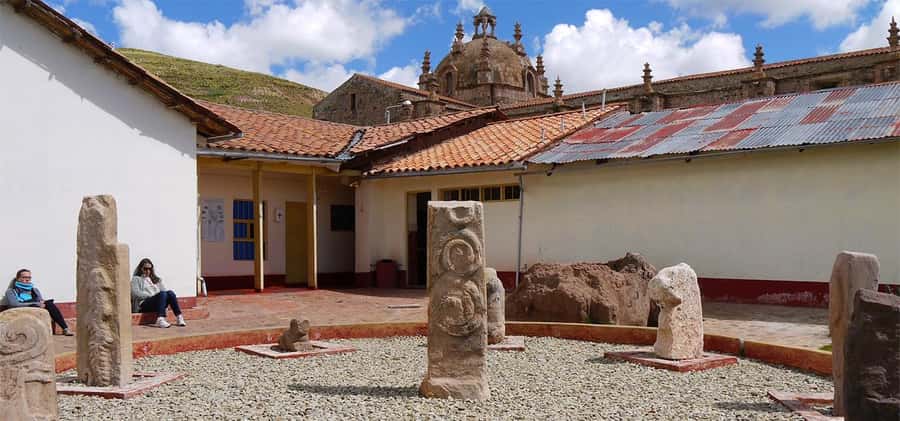
The final main stop is the Lithic Museum of Pucara, visited for about 45 minutes at roughly 3:20 PM. Pucara was an important center from about 500 BC to AD 200, long before the Inca Empire. The museum introduces the priests, craftspeople, and warriors connected with this early Andean culture.
This stop gives the day a useful time span. Andahuaylillas shows colonial Peru, Raqchi shows Inca power, and Pucara reaches back to an earlier period of Andean civilization. You leave with a broader sense that the Inca were part of a much older chain of cultures, rather than the beginning of Peruvian history.
The museum visit is not large enough to replace a major archaeological museum in Cusco. Its value comes from being on the route and from the guide’s explanation. The schedule also allows a practical break. On some departures, guides have split the group into English and Spanish sections so one group could visit the museum while the other used the bathroom and got coffee.
That kind of organization matters on a long bus day. A bilingual guide may lead in both languages, so explanations can take longer than a monolingual tour. Guides named in feedback include Manuel, Mateo, Mathias, Shelma, Elizabeth, Alfredo, and Juan Carlos. Names and staffing vary, but the service is designed for English and Spanish speakers.
The bus, guide, and pace
This is a guided coach trip, not a luxury rail journey. Still, the bus is an important part of the value. It is described as clean, comfortable, and free of rattles, with spacious seats and, on some vehicles, power outlets. A bathroom onboard means you are not dependent on every roadside stop.
The driver and guide work as a team. Several guides have been praised for fluent English, clear explanations, and careful attention to the schedule. Drivers have also been singled out for smooth handling and safe driving. One useful detail is that a driver has slowed down at points where passengers wanted a better look at the scenery.
You should expect a full day seated, broken up by four guided visits and lunch. The stops are well spaced, but this is still a transfer of about 10 to 11 hours. A small bag with water, layers, medication, sunscreen, and a phone charger will make the day easier. Keep valuables with you, especially when leaving the bus.
The group size can vary. One departure had only three passengers going all the way to Puno, while other departures had enough people to divide English and Spanish groups. A small group can feel personal, but you should not book expecting a private tour.
What the $44 price really covers
At $44 per person, the fare is good value if you already need to get from Cusco to Puno. You are paying for transport, a bilingual guide, four guided stops, lunch, onboard drinks, and the convenience of not arranging separate taxis or local tours.
Add the entrance tickets, about 53 soles, or roughly $13, paid directly at the sites. That brings the practical total to around $57 per person, before breakfast and personal spending. The extra fee is not hidden, but it should be included in your budget.
The comparison is simple. A direct bus may be cheaper or faster, but it gives you no guided access to Raqchi, Pucara, or Andahuaylillas. A private car with separate guides would give you more control and more time, but would usually cost much more. This coach is the middle ground: fixed schedule, shared transport, and a strong amount of sightseeing for the price.
Free cancellation up to 24 hours before departure and reserve now, pay later terms add flexibility. They do not change the long day itself, so check your energy level and your arrival plans in Puno before booking.
Who should book this route?
I would choose this tour if you want to travel between Cusco and Puno during daylight and prefer history and scenery to a quick point-to-point ride. It suits first-time visitors who want a guided introduction to southern Peru without planning four separate stops.
It is also a good fit if you value comfort. The bathroom, lunch, drinks, heating, air conditioning, and careful driving make a major difference over 11 hours. The guides named above have also been praised for answering questions and helping with luggage.
I would hesitate if you want a relaxed start, long museum visits, or freedom to stop whenever you see a good view. The day begins early, the Abra La Raya visit is brief, and the schedule leaves little spare time. You should also consider a direct service if you have already seen these sites or if you need to reach Puno at a specific hour.
Should you book the Route of the Sun?
Book it if the journey from Cusco to Puno is already part of your plan and you want the road itself to be one of the highlights. Raqchi is the main reason I would pick this service, while the church, Pucara Museum, mountain pass, and included lunch make the price easier to justify.
Before paying, confirm the morning departure time, check whether Andahuaylillas is open, and set aside the 53 soles for entrance tickets. If you can accept an early start and a long day, InkaExpress gives you a practical and worthwhile way to cross the Andes.
FAQ
How long does the Cusco to Puno Route of the Sun tour take?
The activity lasts about 11 hours. It departs from Cusco at about 6:40 AM and arrives at the Puno bus terminal at about 5:30 PM.
Where does the bus leave from in Cusco?
The departure point is the terminal at Alameda Pachacuteq 499-B, also listed as Av. Alameda Pachacuteq 499-B. You should arrive 30 minutes before departure.
What stops are included?
The guided stops are Andahuaylillas, Raqchi, Abra La Raya, and the Lithic Museum of Pucara. The tour also includes a buffet lunch in the Marangani and Sicuani area.
Is lunch included in the price?
Yes. The buffet includes beef, chicken, fish, side dishes, salads, desserts, and herbal infusions. Breakfast is not included.
Are entrance tickets included?
No. Entrance tickets for Andahuaylillas, the Raqchi Complex, and Pucara Museum cost 53 soles in total, approximately $13, and are paid in person.
What languages are available on the tour?
The tour has live guides in English and Spanish. Guides may divide the group by language during some visits.
Just added around Cusco
- Cusco: Via Ferrata, Skybike, and Rappel Adventure★ 5.0 · 3 reviews
- From Cusco: Maras and Moray and Ollantaytambo Tour★ 5.0 · 3 reviews
- Cusco: Rainbow Mountain Tour at Sunset Without the Crowds★ 4.7 · 3 reviews
- Cusco: Sacred Valley Day Trip with Maras & Moray Salt Mines★ 5.0 · 3 reviews
- Valle Sur Cusco | half day★ 4.3 · 3 reviews
- IN MACHU PICCHU: Private Tour Guide Service★ 5.0 · 3 reviews
- Salkantay trek to Machu Picchu – 5D/4N – Premium★ 3.3 · 3 reviews
- Full-Day Condor Viewpoint & Inca Sites Tour★ 5.0 · 3 reviews
Lake Titicaca Trips, compared.
From Cusco to Lake Titicaca: 2-Day Homestay Tour
Read our review →
Browse the lists this tour appears in