
Reviewed · MARAS AND MORAY TOURS
From Cusco: Chinchero, Moray, Maras, Ollantaytambo and Pisaq
The big appeal here is simple: for $35, you can see five major Sacred Valley sights in one long day, with transport, a guide, and buffet lunch included. You move from Chinchero’s weaving traditions to Moray’s strange circular terraces, Maras’s salt pools, the great Inca center at Ollantaytambo, and the mountain ruins of Pisaq.
I like the wide range of sites and the fact that you do not need to arrange several separate rides. I also like the strong guiding reported from Carlos and Henry, who gave clear explanations in English and Spanish and added useful advice during the day.
The catch is the clock. This is an ambitious route, and some stops may last only 10 to 30 minutes. Shopping visits can also take time from the archaeological sites, with Pisaq especially vulnerable to a late arrival.
In This Review
- Key points to know before booking
- What this $35 Cusco tour really offers
- Chinchero: weaving, church, and Inca foundations
- Moray’s circular terraces are the day’s odd surprise
- Maras salt pools: a working site with extra costs
- Urubamba buffet lunch and the middle of the day
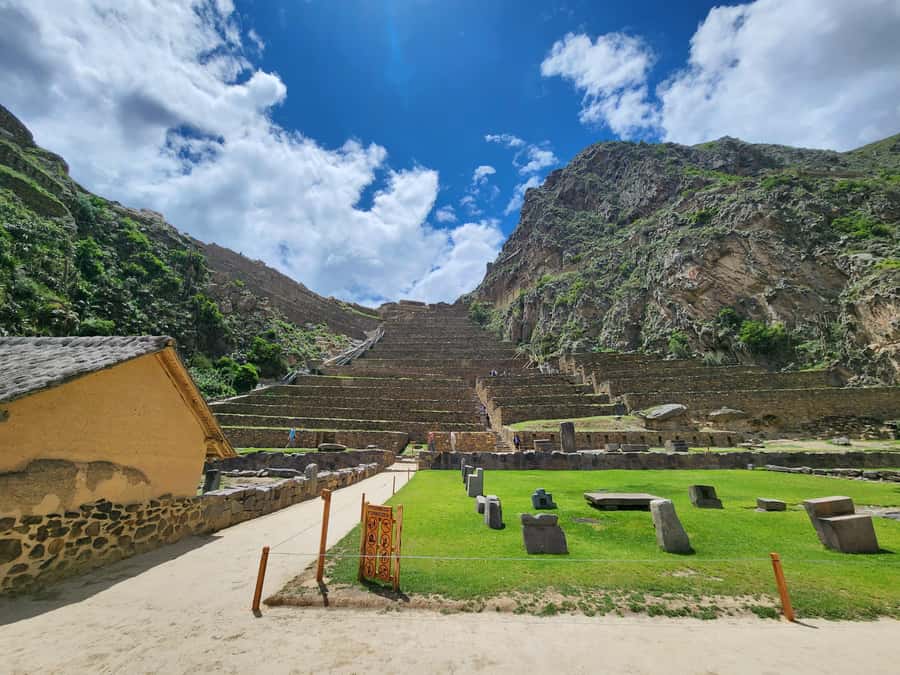
- Ollantaytambo gives you the clearest sense of Inca power
- Pisaq can be beautiful, but timing matters
- Why the guide can make or break this itinerary
- The hidden cost is not only the entrance tickets
- How to prepare for the altitude and long day
- Who should book this Sacred Valley route?
- Should you book it?
- FAQ
- How much does the Sacred Valley tour cost?
- How long does the tour last?
- Which places does the tour visit?
- Is hotel pickup included?
- Is lunch included?
- What languages does the guide speak?
- What should I bring?
- Are drones allowed?
Key points to know before booking
- Five major Sacred Valley stops in one day: Chinchero, Moray, Maras, Ollantaytambo, and Pisaq are all included in the route.
- Ollantaytambo gets the strongest sightseeing time: You have about 40 minutes to see its terraces, temples, and ceremonial area.
- Pisaq may be rushed: The schedule allows about 30 minutes, and late arrival can leave you close to closing time.
- Lunch is included: A 45-minute buffet stop takes place in Urubamba.
- Entry fees are extra: Budget 70 soles for the tourist ticket and 20 soles for the Maras entrance.
- Shopping stops may be part of the day: Expect a weaving cooperative and possible salt or silver shopping visits.
What this $35 Cusco tour really offers
At this price, you are buying coverage rather than a slow, detailed visit. The van links a chain of sites that are spread across the Sacred Valley, so the value comes from seeing the broad picture without having to negotiate transport yourself.
The day runs from early morning until late afternoon or early evening. Pickup begins in Cusco, and the tour ends at Plaza Regocijo rather than necessarily returning you to your hotel. Confirm your final drop-off point before setting out, especially if you have evening plans.
Transport is by van, with several rides lasting from 20 minutes to one hour. Those drives are not wasted time. They give you changing views of the Andes and a chance to rest between walks, though the full schedule can feel tiring at altitude.
The guide is central to the experience. Carlos received especially strong praise for explaining the meaning behind each place, while Henry handled a bilingual group well despite having to switch between English and Spanish. If your group is large or mixed-language, explanations may take longer and leave less time for walking.
More Maras salt mine and Moray trips:
- From Cusco: Sacred Valley & Maras Salt Mines Tour with Lunch
★ 4.8 · 2,227 reviews - From Cusco: Moray, Maras Salt Mines & Chinchero Weavers Tour
★ 4.8 · 1,925 reviews - Cusco: Sacred Valley, Pisac, Ollantaytambo, Salt Mines Moray
★ 4.6 · 1,058 reviews
Chinchero: weaving, church, and Inca foundations
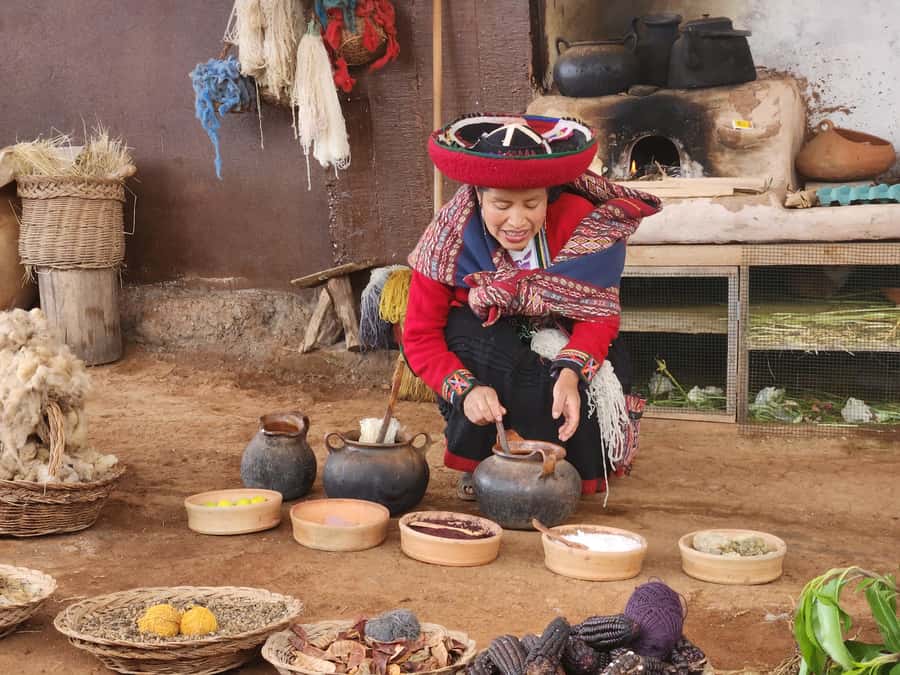
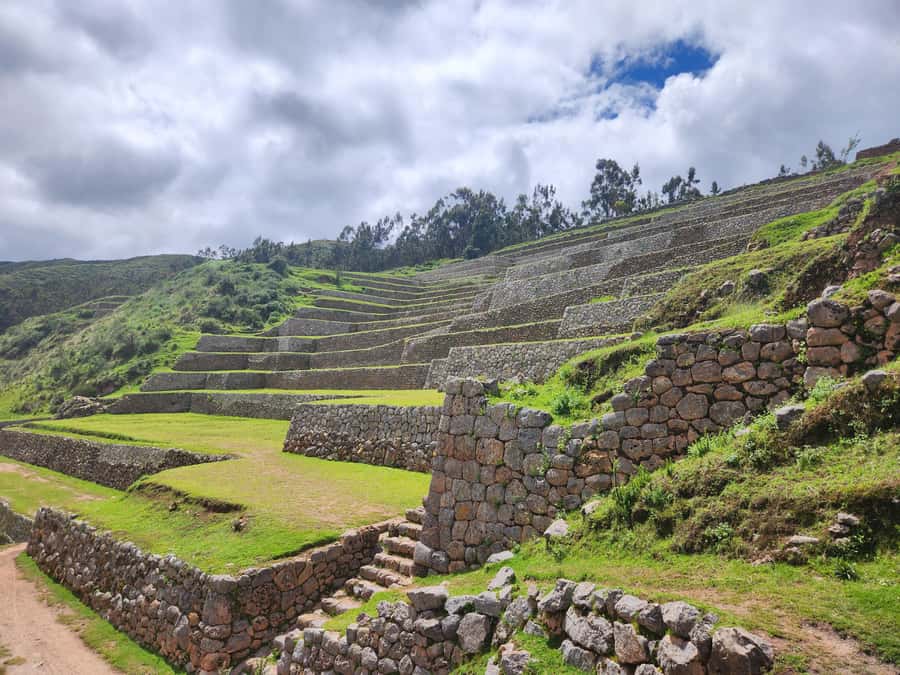
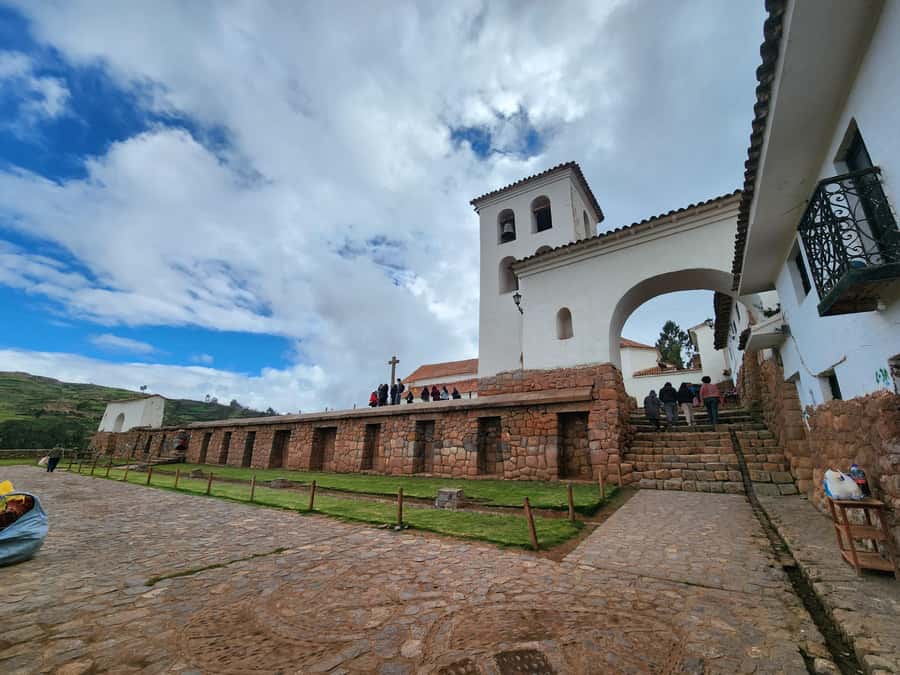
After roughly 40 minutes by van, the first visit is Chinchero. This village combines Spanish colonial architecture, nearby Inca remains, and living Andean weaving traditions.
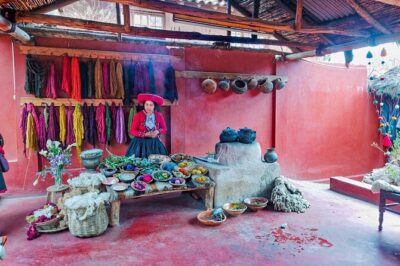
The stop usually includes the colonial church and archaeological area, followed by a visit to a local weaving cooperative. The cooperative demonstration is useful because it connects the textiles sold in the Sacred Valley with actual techniques and cultural practice. You can see how traditional Andean weaving is presented, rather than treating the products as simple souvenirs.
This is also the first point where you should watch the clock. Some organized tours give more attention to shopping than expected, and one stop is reasonable, but several commercial visits can chip away at the ruins later in the day.
Bring small amounts of local currency if you want to buy something or tip. You do not need to purchase anything, and the practical value of the stop is highest when you pay attention to the weaving process and the explanation.
Moray’s circular terraces are the day’s odd surprise
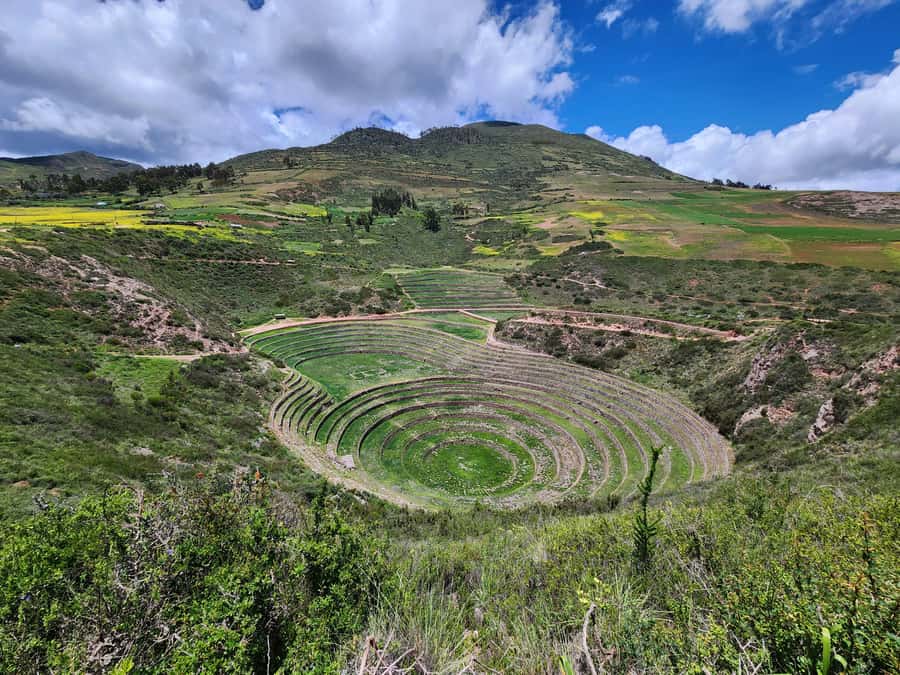
Moray is one of the most unusual Inca sites in the region. Its huge circular terraces drop into a bowl-like formation, creating a pattern that looks almost engineered for a modern art park.
The common explanation is that the Incas used the terraces to study crops at different temperatures and altitudes. The exact purpose remains discussed, but the design clearly shows careful control of soil, water, and growing conditions.
The scheduled visit is about 30 minutes. That is enough to reach the viewing area, take photographs, and hear a basic explanation, but it is not enough for a leisurely exploration. One visitor reported spending less than 20 minutes here, which gives you a realistic idea of how quickly the day can move if the van is behind schedule.
Wear shoes with a good grip. The tour requires walking at several sites, and the combination of uneven ground, strong sun, and changing altitude can make a short visit feel more demanding than it looks.
Maras salt pools: a working site with extra costs
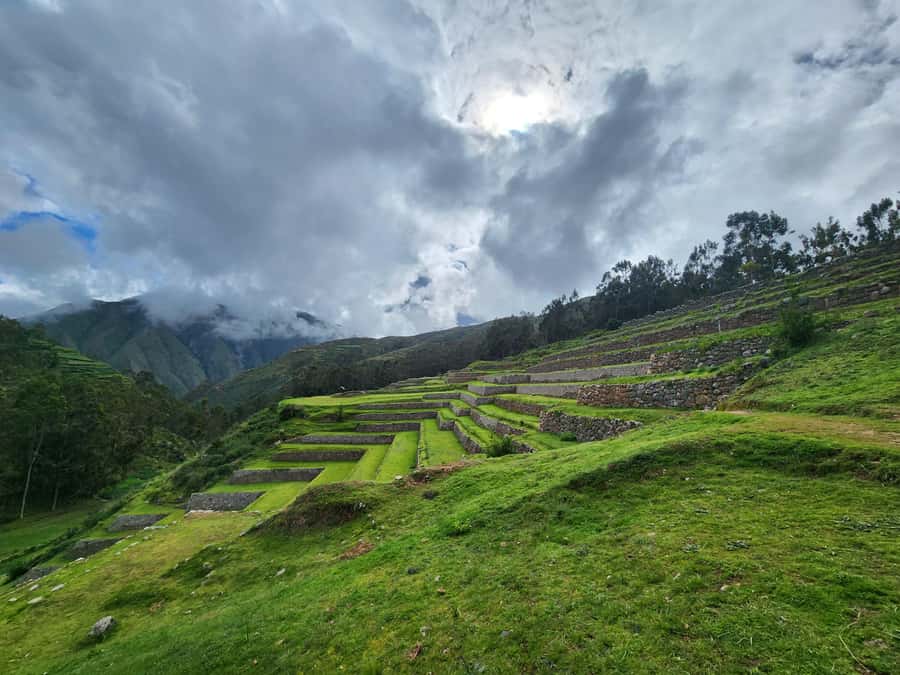
From Moray, the van continues to Maras. Here, thousands of small salt pools cover the slope, fed by natural brine that flows through the site.
Salt has been collected here since Inca times. The pools are not simply an old monument, though. Their stepped arrangement and bright mineral colors make this one of the most photogenic stops, while the working nature of the site gives it a useful connection to local production.
The tour allows about 30 minutes. You can look across the pools, take photographs, and learn how the salt is gathered, but you should not expect a long walk through every section.
Maras has a separate entrance fee of 20 soles, not included in the tour price. Keep this in mind when comparing the advertised cost with your actual spending. You should also carry water and sun protection because exposed areas can feel hot even when Cusco’s morning was cool.
A salt-related shopping stop may also be included. That can be interesting if you want to compare local products, but it becomes less appealing when combined with the weaving and silver stops reported during some departures.
More Ollantaytambo and Pisac visits:
- Cusco:Chinchero,Moray & Salt Mines drop-off in Ollantaytambo
★ 4.8 · 793 reviews - Sacred Valley: Chinchero, Moray, Ollantaytambo & Pisac+Lunch
★ 4.8 · 501 reviews - Pisac Indian Market and Ollantaytambo Fortress with Lunch
★ 4.5 · 395 reviews - Cusco:Sacred Valley Pisaq,Ollantaytambo,Chinchero with Lunch
★ 4.8 · 183 reviews
Urubamba buffet lunch and the middle of the day
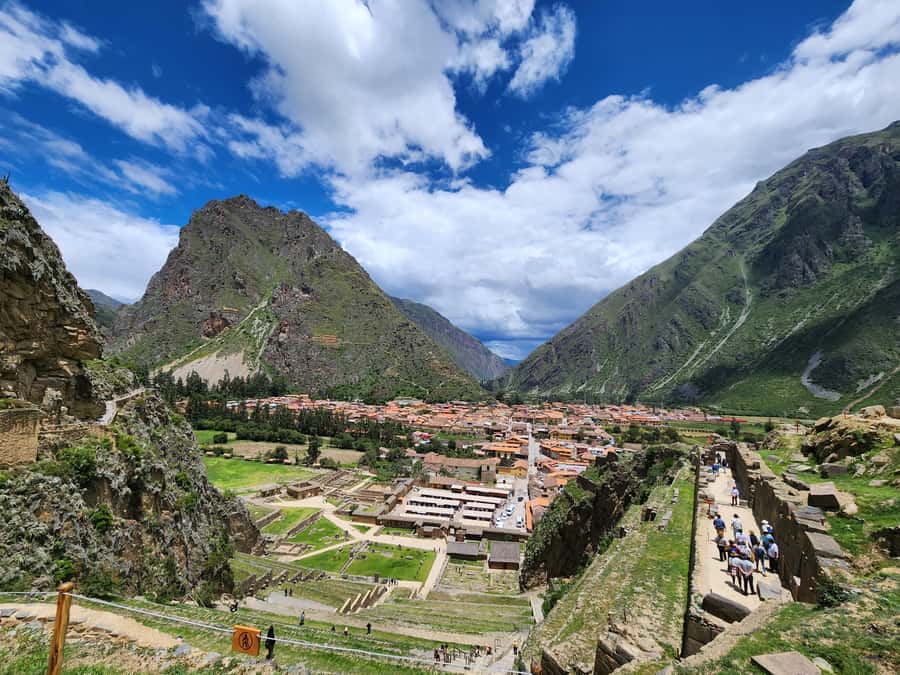
Lunch takes place in Urubamba and lasts about 45 minutes. The buffet is included, and it has been described as delicious and complete, a useful benefit on such a packed route.
Do not expect a long restaurant break. Forty-five minutes gives you time to eat, but not much time to linger. One person wished for more time at the buffet, which is understandable after an early pickup and several short visits.
The stop also marks the practical midpoint of the day. Eat enough to keep going, refill your water bottle, and use the break to rest your legs. You will still have Ollantaytambo and Pisaq ahead, with more walking and another hour-long ride back toward Cusco after the final ruins.
Ollantaytambo gives you the clearest sense of Inca power
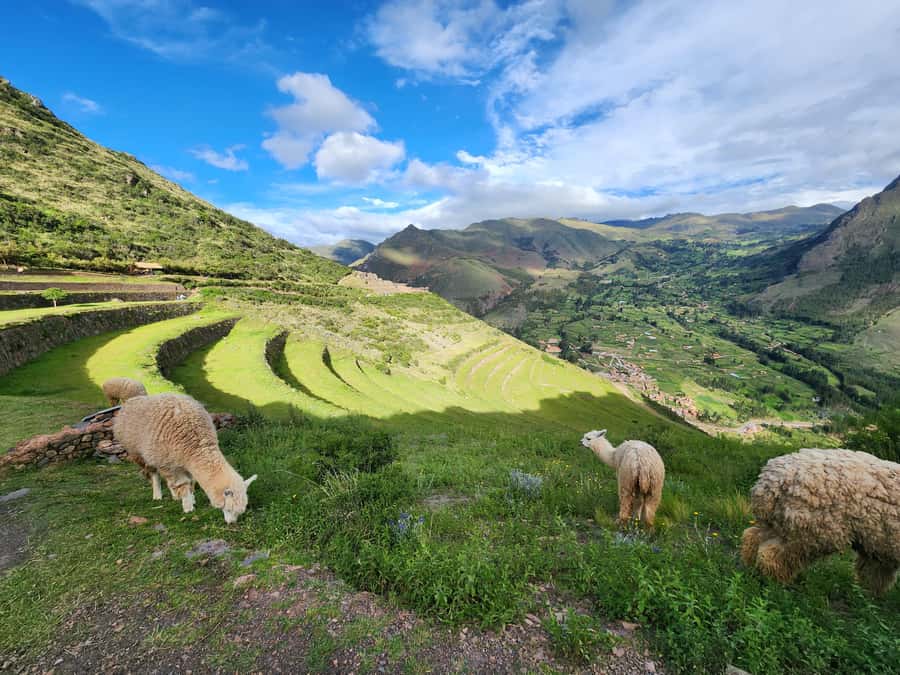
Ollantaytambo is the strongest archaeological visit on this route for many people. The town retains an Inca street plan, and the hillside complex includes broad terraces, temples, and a ceremonial center.
Its position helps explain its importance. The site controlled a key route through the valley and combined administrative, religious, and defensive functions. Looking up at the massive stonework and terraces, you get a more direct feel for the scale of Inca construction than at the smaller stops.
The schedule allows about 40 minutes, which is still short but more workable than the time given to Moray or Pisaq. Your guide can point out the main structures and explain how the town fit into the wider Inca Empire.
You should stay close to the guide at the start, then use any free minutes for photographs. The site has enough detail to reward a longer visit, so if Ollantaytambo is your main reason for visiting the Sacred Valley, a separate tour or overnight stay would give you much more time.
Pisaq can be beautiful, but timing matters
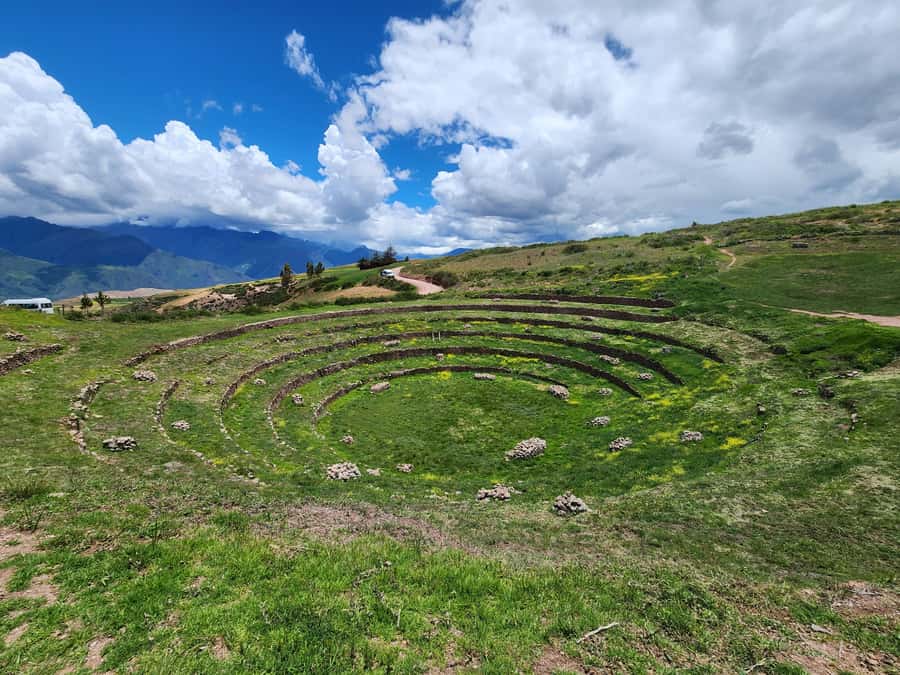
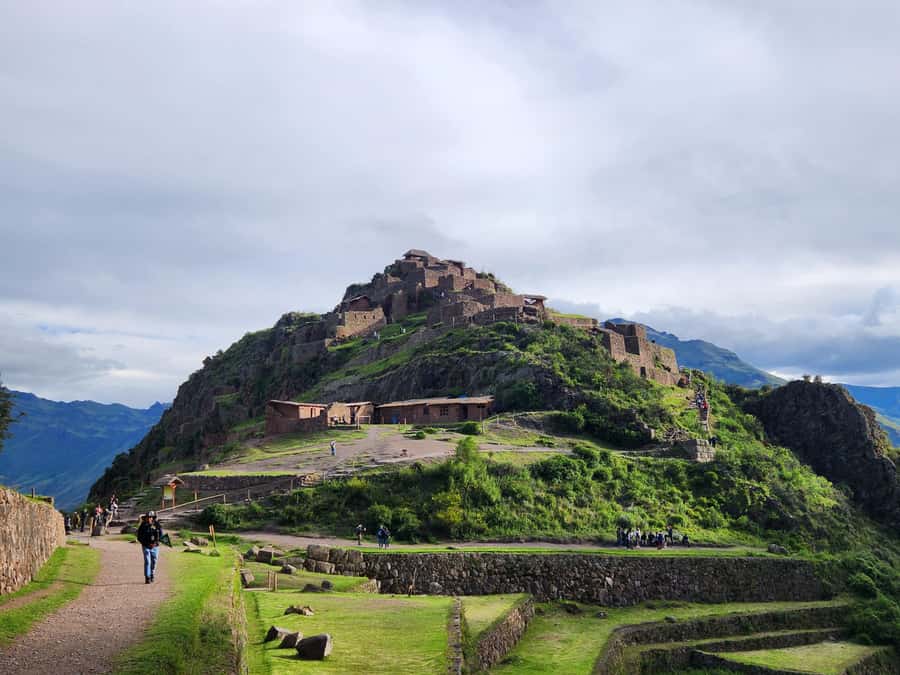
Pisaq is the final major archaeological stop. Its ruins include terraces, tombs, and religious structures set against steep Andean mountains.
The setting is dramatic, and the site is extensive. That is also the problem: 30 minutes is not much time for a complex spread across the slopes. The schedule includes a one-hour van ride from Ollantaytambo, and late arrival can bring you close to closing time.
One departure reached Pisaq with only about 10 minutes before closing. The group was still allowed to walk around, but that is a poor use of the tourist ticket and leaves little room to understand the site.
If Pisaq matters most to you, ask about the day’s timing at pickup. You cannot control traffic or delays, but you can stay ready when the guide calls the group together. Keep your ticket accessible and avoid spending too long at earlier shopping stops.
Why the guide can make or break this itinerary
Five archaeological and cultural sites in one day require firm time management. A good guide does more than name the stones. The guide needs to explain why each place matters, keep the group moving, and handle questions without allowing one stop to swallow the rest of the day.
Carlos was praised for detailed explanations about Inca culture and the purpose of each location. Henry was also singled out for strong guiding, though switching between English and Spanish can make the commentary slower.
The best approach is to treat the guided explanation as the main lesson and your own walking time as a quick visual survey. Listen carefully at each stop, then take photographs and note which place deserves a longer return visit.
This tour is offered in English and Spanish. If you need a particular language, select it when booking and confirm it before departure. A bilingual tour may still be practical, but you should expect the guide to divide speaking time between languages.
The hidden cost is not only the entrance tickets
The $35 price is low for a full day of transport and guiding across the Sacred Valley. The included buffet lunch adds real value, since buying lunch separately would make the day more expensive and less predictable.
You must add 70 soles for the tourist ticket and 20 soles for Maras. The exact total in your currency will change, but these fees are essential to your budget. You should also allow money for drinks, tips, and personal purchases.
Shopping stops are the main value question. A weaving demonstration can be worthwhile, and some visitors found the goods fairly priced and of good quality. Still, three commercial stops can feel excessive when the main promise is a day among major Inca sites.
For a low-cost overview, the numbers work well. For a relaxed archaeological visit, the price does not solve the time problem.
How to prepare for the altitude and long day
Start with comfortable walking shoes, a hat, sunscreen, and a full water bottle. The tour crosses areas at varying altitudes, and you may feel the effects more during repeated walks than during any single stop.
Wear clothing that works for changing weather. Cusco mornings can be cool, while open archaeological sites may be sunny later. A camera is worth bringing, especially for Moray, Maras, Ollantaytambo, and the mountain views around Pisaq.
Drones are not allowed. Carry local currency for the 20-sol Maras entrance, the 70-sol tourist ticket, tips, and any personal expenses.
The early pickup is important. The day is already tightly packed, and a late start makes Pisaq even more vulnerable to a rushed visit. Keep breakfast practical and arrive ready for the first van ride.
Who should book this Sacred Valley route?
I would choose this tour if you have only one free day from Cusco and want to see the main names quickly. It suits first-time visitors who value transport, a guide, and a buffet lunch more than long independent walks.
It also works for budget-minded people. Paying $35 for the vehicle, guide, and lunch is strong value once you accept the extra entrance fees and fast pace.
I would not choose it if Pisaq or Ollantaytambo is a personal priority and you want time to explore. A slower plan would be better, especially for anyone who dislikes group schedules, commercial stops, or short photography windows.
Should you book it?
Book this tour for breadth, convenience, and price. You will see a large portion of the Sacred Valley in one day, receive useful historical context, and avoid the headache of arranging transport between distant sites.
Skip it if you want depth. The most important warning is Pisaq: a late arrival can reduce a major archaeological site to a hurried look. Ask the operator how much time is normally protected for Pisaq and whether shopping stops are included before you pay.
For many visitors, this is a good first survey of the valley. Use it to identify the places you want to revisit slowly, rather than expecting a quiet, detailed examination of every ruin.
FAQ
How much does the Sacred Valley tour cost?
The tour costs $35 per person. The tourist ticket costing 70 soles and the Maras entrance costing 20 soles are not included.
How long does the tour last?
It lasts one full day, beginning with an early pickup in Cusco and finishing in the late afternoon or early evening.
Which places does the tour visit?
The route includes Chinchero, Moray, Maras, Urubamba for lunch, Ollantaytambo, and Pisaq.
Is hotel pickup included?
Yes. Hotel pickup in Cusco is included. The stated finish point is Plaza Regocijo.
Is lunch included?
Yes. A buffet lunch in a traditional local restaurant in Urubamba is included. The lunch stop lasts about 45 minutes.
What languages does the guide speak?
Live guiding is available in English and Spanish.
What should I bring?
Bring comfortable walking shoes, a hat, sunscreen, water, a camera, and local currency for entrance fees, tips, and personal expenses.
Are drones allowed?
No. Drones are not allowed on this activity.
Just added around Cusco
- Cusco: Via Ferrata, Skybike, and Rappel Adventure★ 5.0 · 3 reviews
- From Cusco: Maras and Moray and Ollantaytambo Tour★ 5.0 · 3 reviews
- Cusco: Rainbow Mountain Tour at Sunset Without the Crowds★ 4.7 · 3 reviews
- Cusco: Sacred Valley Day Trip with Maras & Moray Salt Mines★ 5.0 · 3 reviews
- Valle Sur Cusco | half day★ 4.3 · 3 reviews
- IN MACHU PICCHU: Private Tour Guide Service★ 5.0 · 3 reviews
- Salkantay trek to Machu Picchu – 5D/4N – Premium★ 3.3 · 3 reviews
- Full-Day Condor Viewpoint & Inca Sites Tour★ 5.0 · 3 reviews
Maras and Moray Tours, compared.
Sacred Valley & Maras Salt Mines Tour with Lunch
Read our review →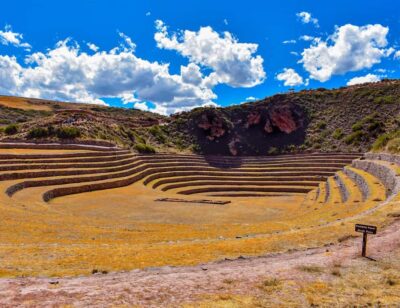
Moray, Maras Salt Mines & Chinchero Weavers Tour
Read our review →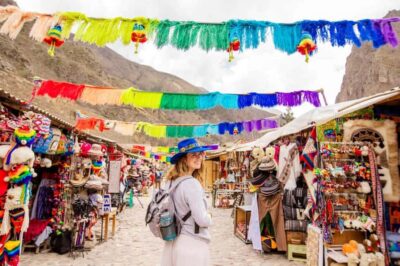
Sacred Valley, Pisac, Ollantaytambo, Salt Mines Moray
Read our review →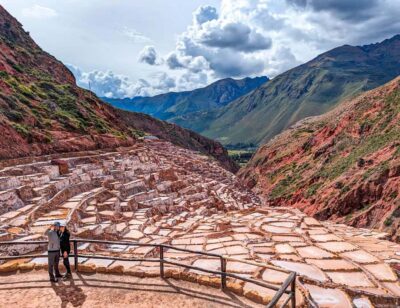
Chinchero,Moray & Salt Mines drop-off in Ollantaytambo
Read our review →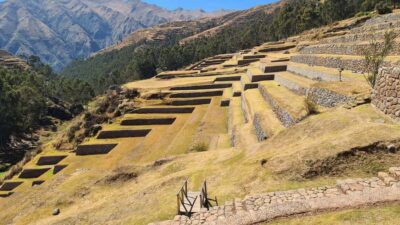


Moray, Maras Salt Mines & Chinchero Weavers Half-Day
Read our review →Browse the lists this tour appears in