
Reviewed · MACHU PICCHU TOURS
From Cusco: 2-Day Sacred Valley and Machupicchu by Train
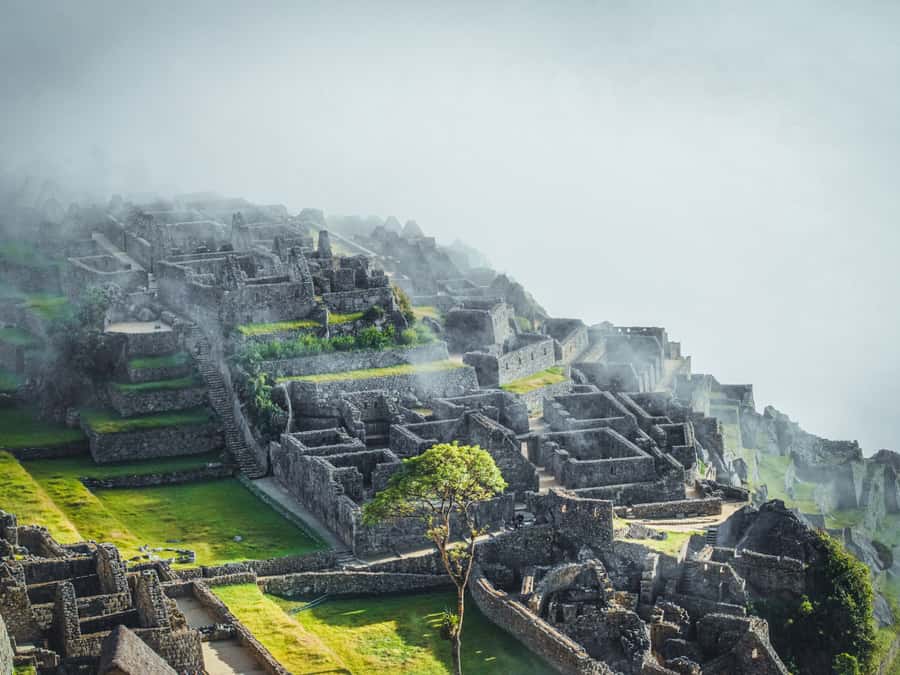
Machu Picchu gets the spotlight, but the best part of this two-day Cusco tour is the route leading there. You move through the Sacred Valley at a useful pace, stopping at Pisac, Urubamba, and Ollantaytambo before taking the train into Aguas Calientes. That gives you far more context than flying straight in for a rushed day trip.
I like the careful organization and the small-group limit of 10. I also like the overnight stay, since it avoids trying to squeeze the Sacred Valley and Machu Picchu into one punishing day. Guides such as Justino and Judy have received especially warm praise for their clear explanations and steady handling of the schedule.
The main drawback is that Day 1 includes sales-oriented stops at an alpaca textile shop and a jewelry-making shop. You may also find the extra charge for the Vistadome 360 train hard to justify, since the regular train offers much the same route and views.
In This Review
- Key points to know before booking
- Why two days work better than one
- Awana Kancha: useful culture with a sales pitch
- Taray viewpoint and the first Sacred Valley views
- Pisac: terraces, temples, and a famous market
- Urubamba lunch and the rhythm of the valley
- Ollantaytambo and the final Inca site
- The afternoon train to Aguas Calientes
- Overnight at Inti Punku Machupicchu Hotel
- Machu Picchu with a dedicated guide
- Lunch, the return train, and Cusco arrival
- What $499 includes, and what it does not
- Guides, group size, and organization
- The drawbacks you should weigh
- Who should book this two-day itinerary?
- Should you book it?
- FAQ
- How long is the tour?
- What train route is included?
- Is accommodation included?
- Is Machu Picchu entrance included?
- Are meals included?
- Are Pisac and Ollantaytambo entrance fees included?
- What passenger information is needed?
Key points to know before booking
- A full Sacred Valley route: Visit Awana Kancha, the Taray viewpoint, Pisac, Urubamba, and Ollantaytambo before the train.
- One night in Aguas Calientes: Sleep at the three-star Inti Punku Machupicchu Hotel & Suites or a similar hotel.
- Machu Picchu entrance and buses included: Your package covers the sanctuary ticket and the bus between Aguas Calientes and the ruins.
- Two different guide experiences: Day 1 covers the Sacred Valley, while a separate guide leads the Machu Picchu visit.
- $499 can be good value: The price includes transport, trains, hotel, breakfast, entrance, and guiding, but not lunch, dinner, or Pisac and Ollantaytambo entry fees.
- Passport details are required: Provide each passenger’s full name, passport number, birth date, and nationality after booking.
Why two days work better than one
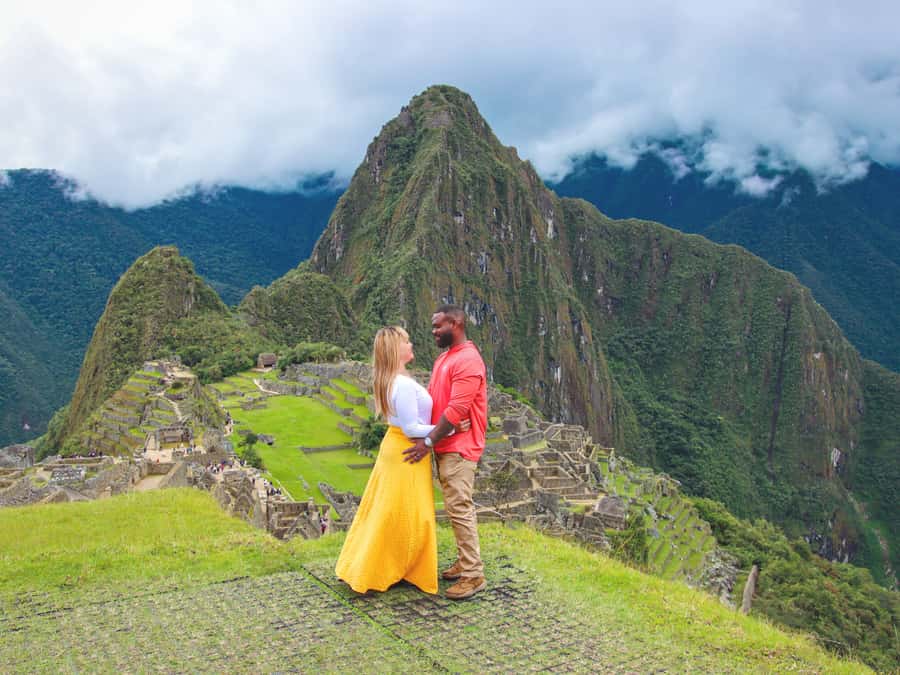
The Sacred Valley and Machu Picchu are often sold as a single long day from Cusco. That can be done, but it is a rough bargain with your energy. This two-day plan gives you time to see several major Inca sites, take the train in the late afternoon, sleep in Aguas Calientes, and enter Machu Picchu early the next morning.
You start with a hotel pickup in Cusco at about 7:45 in the morning. Breakfast is taken at your hotel before departure, and the tour includes one additional breakfast at the Aguas Calientes hotel.
The route does not stop at Sacsayhuamán, Qenqo, or PucaPucara, but you pass by them as the vehicle leaves Cusco. The first actual stop is Awana Kancha, followed by a viewpoint and the main archaeological sites of the Sacred Valley.
That structure matters. You are not just being driven to Machu Picchu. You are seeing the farming terraces, market traditions, mountain towns, and defensive sites that make the destination easier to understand.
More ways to reach Machu Picchu:
- From Cusco: Full-Day Group Tour of Machu Picchu
★ 4.7 · 1,767 reviews - Machu Picchu Day Trip from Cusco
★ 4.5 · 1,644 reviews - Machu Picchu: Full-Day Tour from Cusco with Optional Lunch
★ 4.6 · 927 reviews
Awana Kancha: useful culture with a sales pitch
Awana Kancha is a roughly 30-minute stop focused on Andean textiles and weaving. You can see llamas, alpacas, and vicuñas, take photographs, and learn how local cloth is made.
For many people, this will be a pleasant introduction to the animals and textile traditions of the Andes. The short visit also gives you a break from the vehicle early in the day.
You should know that the stop has a strong shopping element. The presentation may lead toward alpaca sweaters, textiles, or other purchases. One practical tip is to decide before you arrive whether you want to shop. If you do not, a polite and firm no thanks will save time and money.
This does not ruin the visit, but it changes the character of the stop. Think of it as part cultural presentation and part retail stop, not as a quiet rural farm visit.
Taray viewpoint and the first Sacred Valley views
At the Taray viewpoint, you get the classic broad view over the Sacred Valley. The Urubamba River runs below, with agricultural terraces and mountain slopes stretching beyond it.
This is a good place for photographs because you see the valley as a whole before entering its individual towns and ruins. The stop also helps you understand the practical reason the Incas valued this area: fertile valley floors, water from the river, and high terraces that made farming possible at different elevations.
Keep your camera ready, but also take a moment to look beyond the obvious photo. The terraces are not decoration. They show how carefully the Incas worked with the steep terrain and changing climate.
Pisac: terraces, temples, and a famous market
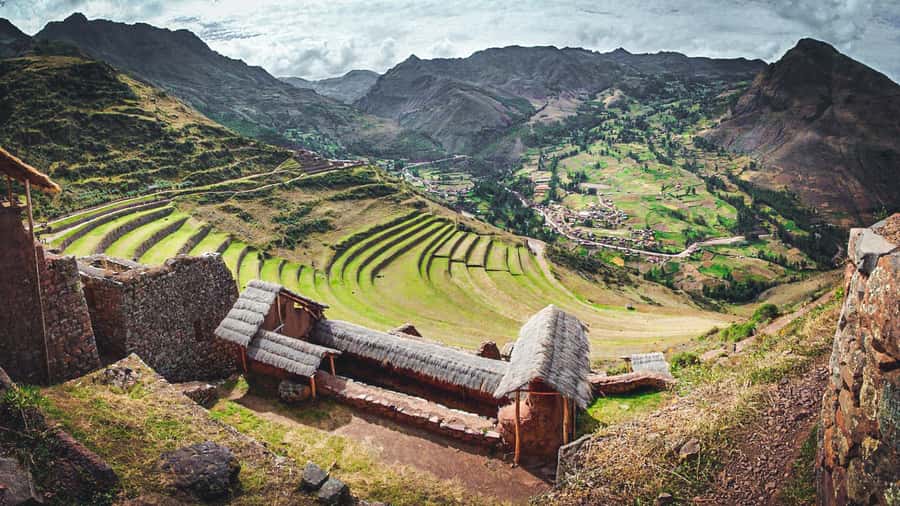
The vehicle takes you up to the Pisac archaeological site, where you can look over the valley from the high ruins. The complex includes temples, residences, altars, channels, and agricultural terraces.
Pisac is especially useful early in the tour because it shows how an Inca settlement combined practical farming with religious and residential spaces. Your guide explains the agricultural methods, so this is a place where a guided visit adds real value.
After the ruins, you go down to the town of Pisac and its traditional market. You can browse pottery, jewelry, textiles, and souvenirs while seeing a more commercial version of local craft production.
The market is famous and heavily visited, so it is not an untouched village experience. Still, it gives you a chance to interact with local sellers and compare handmade goods before reaching Machu Picchu. If you plan to buy gifts, this may be the easiest place in the itinerary to do it.
One cost detail is easy to miss. The archaeological entry fees for Pisac and Ollantaytambo are not included. The provided information lists this combined archaeological ticket at $20. Set that money aside so the additional charge does not catch you by surprise.
More Sacred Valley days out of Cusco:
- From Cusco: Sacred Valley & Maras Salt Mines Tour with Lunch
★ 4.8 · 2,227 reviews - Cusco: Sacred Valley, Pisac, Ollantaytambo, Salt Mines Moray
★ 4.6 · 1,058 reviews - Sacred Valley: Chinchero, Moray, Ollantaytambo & Pisac+Lunch
★ 4.8 · 501 reviews - Sacred Valley: Maras & Moray by Quad Bike from Cusco
★ 4.6 · 418 reviews
Urubamba lunch and the rhythm of the valley
Around 1:00 in the afternoon, you stop in Urubamba for a buffet lunch. Vegetarian choices are available, but lunch itself is not included in the tour price.
A buffet makes sense here because the group has a train to catch later. You do not have to wait for each dish to be prepared, and you can choose how much you need after a busy morning.
This is also the point where the day begins to feel tightly timed. You have already seen Awana Kancha, the viewpoint, Pisac, and the market. Keep an eye on the departure time, especially if you are shopping or eating slowly.
Dinner is not included either. Since you arrive in Aguas Calientes in the evening, plan to pay for that meal separately.
Ollantaytambo and the final Inca site
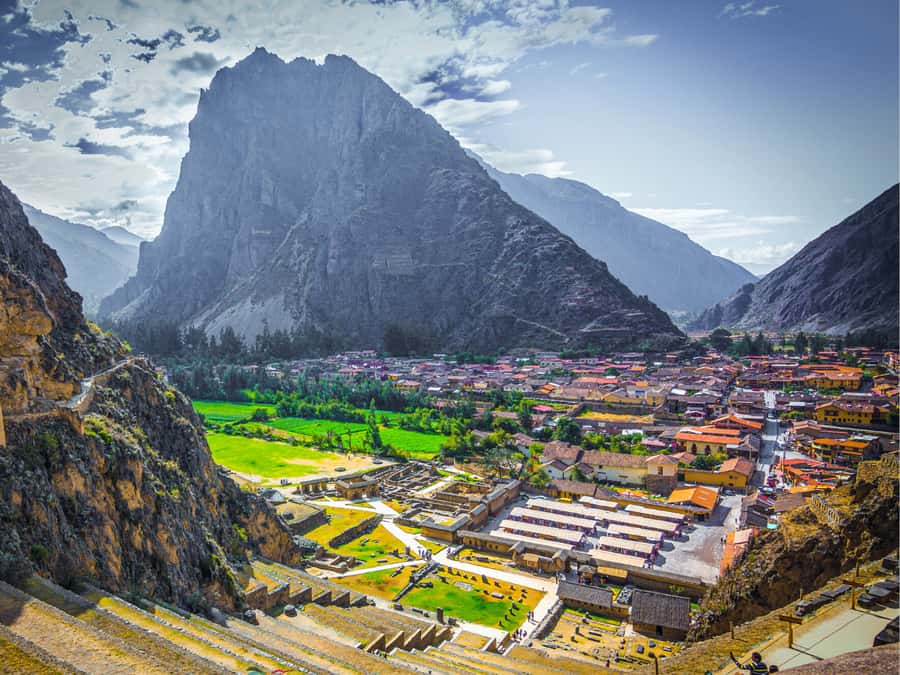
The afternoon visit to Ollantaytambo is scheduled for about 2:40. This is one of the most memorable stops on the route, with steep terraces and large stone ruins rising above the town.
Ollantaytambo was heavily protected because it guarded the route toward Machu Picchu. Its strategic role gives the site a different feel from Pisac. Here, the terraces and high walls make the defensive purpose easier to see, and the town below still follows an old street pattern.
Your guide also explains the part Ollantaytambo played during the Spanish invasion. That context turns a climb among stones into a story about control of roads, farming land, and access to the eastern valleys.
The visit is relatively short because you need to reach the train station. This is one reason the extra $20 archaeological ticket is worth considering. You are paying for two important sites, not just a quick photo stop.
The afternoon train to Aguas Calientes
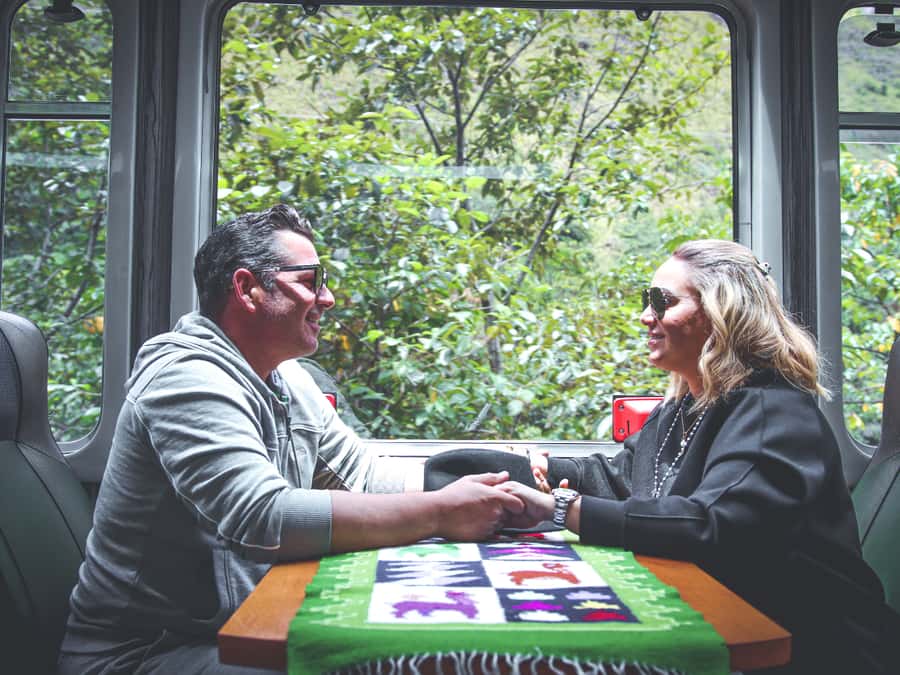
After Ollantaytambo, you board the selected train for the roughly one-hour-and-45-minute ride to Aguas Calientes. The route follows mountainous country and gives you a change of pace after the road journey.
The booking offers a normal train or the Vistadome 360 panoramic option. The upgraded train is marketed around larger windows and a better viewing experience, but the distinction may be less dramatic than expected. You still travel through the same valleys and mountain scenery, and the regular train may provide nearly the same views.
My advice is simple: choose the standard train unless the upgraded service itself matters to you. Ask exactly what the price difference provides before paying more. A bigger window does not necessarily mean a much better journey.
You arrive at about 6:10 in the evening. A representative meets you outside the station and takes you to the hotel. After check-in, the evening is yours.
That free time is valuable. Aguas Calientes is the staging point for Machu Picchu, and you can use the evening to rest, eat, and prepare for the early start. The schedule does not include a planned evening activity, so do not expect another guided tour that night.
Overnight at Inti Punku Machupicchu Hotel
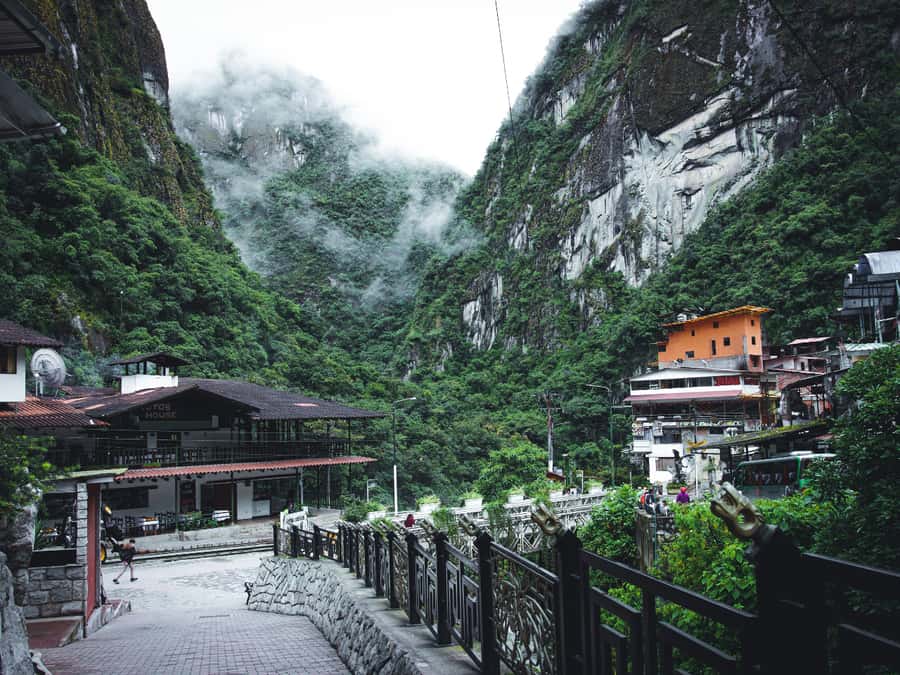
The package includes one night at the three-star Inti Punku Machupicchu Hotel & Suites or a similar property. A hotel upgrade or extra night costs extra.
The main benefit is location in the town where the Machu Picchu buses depart. You are not returning to Cusco after the Sacred Valley, then coming back before dawn. Instead, you are already near the sanctuary.
The overnight stay also gives the tour a more human pace. You can finish the first day, have dinner on your own, and get some sleep before the main visit. Accommodation standards can vary when a similar hotel is substituted, so an upgrade may be worth asking about if your room matters as much as the itinerary.
Machu Picchu with a dedicated guide
After breakfast, the group heads to the bus station at about 7:00 in the morning. The included bus takes you from Aguas Calientes to the entrance of the Historic Sanctuary of Machu Picchu.
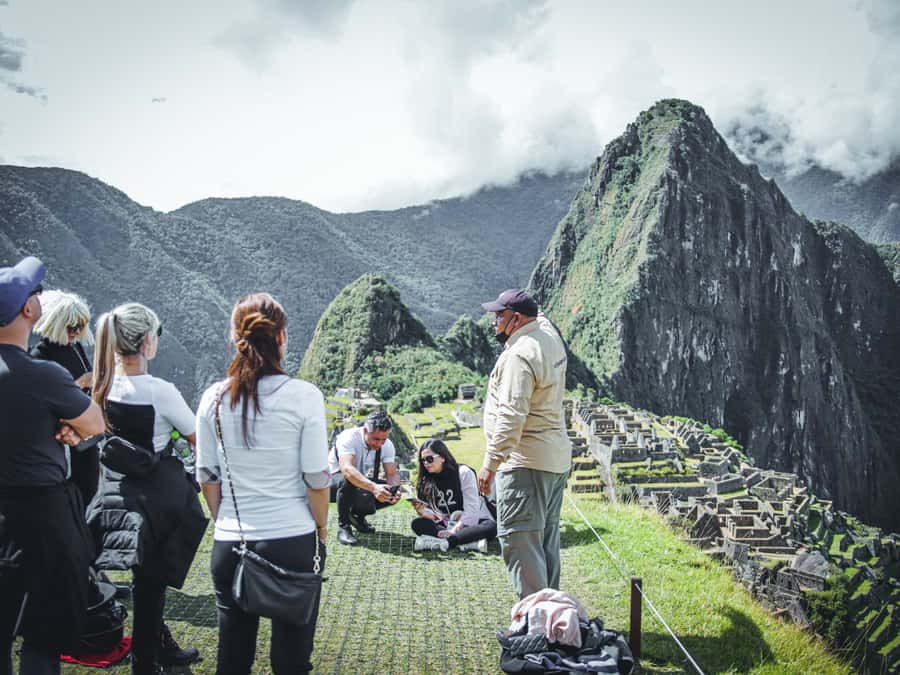
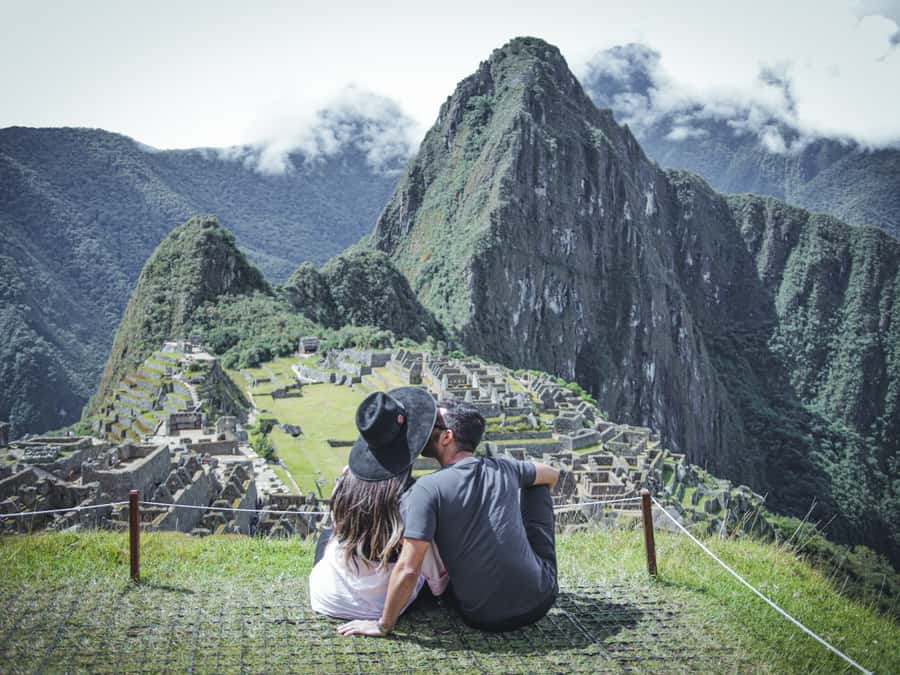
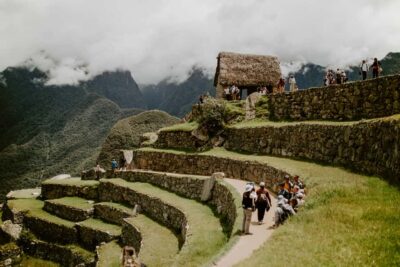
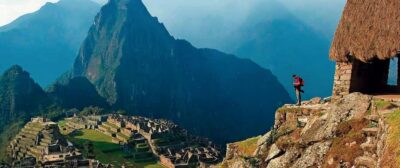
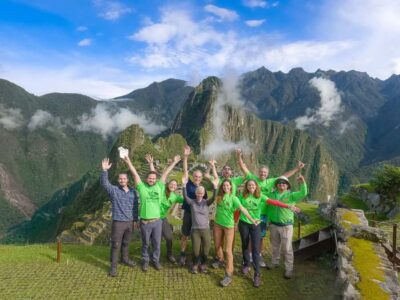
The Machu Picchu entrance ticket is included, as is a guided visit in English or Spanish. Portuguese is also listed as an available tour language. You first take the classic photograph from the higher part of the site, then continue through the lower section.
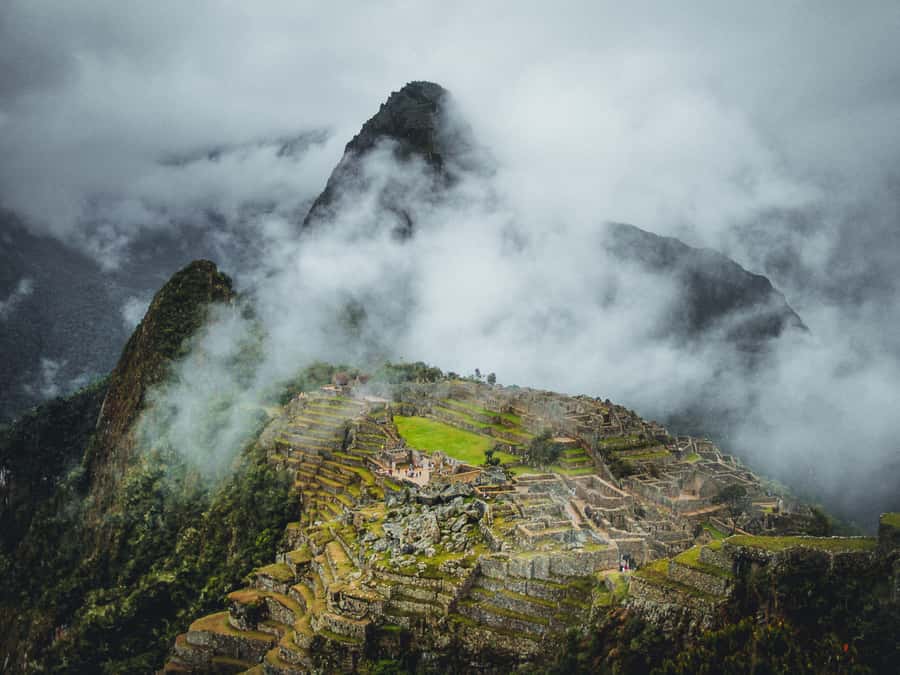
That order gives you the big view before the details. You see the citadel spread across the mountain setting, then walk through its walls, buildings, and terraces while the guide explains what you are seeing.
A separate Machu Picchu guide handles Day 2. Judy has been singled out for an excellent guiding performance, while Justino has been praised for covering both the Sacred Valley and Machu Picchu with strong explanations. Other guides named in connection with the operation include Ivone and Martín.
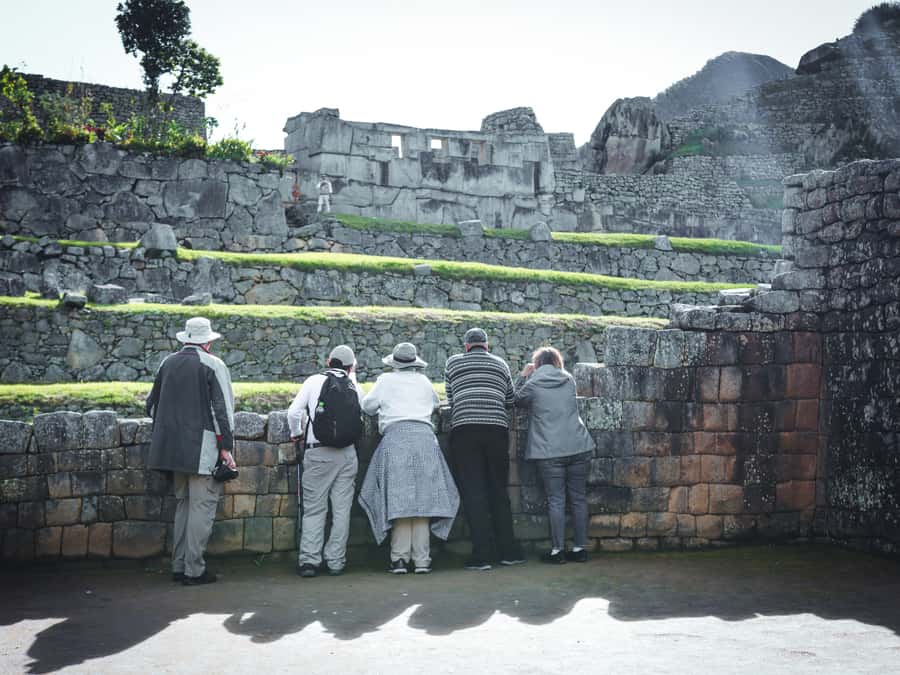
The guide is particularly useful here because the ruins can look like a maze of stone walls without context. A good explanation helps you distinguish ceremonial areas, homes, terraces, channels, and other parts of the site.
Wayna Picchu is not included. The separate ticket costs $30, must be requested several months ahead, and is only provided if available. Do not assume you can add it at the last minute.
Lunch, the return train, and Cusco arrival
After your Machu Picchu visit, you take the bus back to Aguas Calientes. Lunch is on your own and is not part of the package.
At the assigned time, you board the train back to Ollantaytambo. Your transport meets you at the station and drives you to your Cusco hotel, with an estimated arrival around 6:30 in the evening.
This return arrangement is one of the practical strengths of the tour. You do not need to find a taxi at Ollantaytambo or work out the connection back to Cusco after a long day. Door-to-door pickup and drop-off are included.
The schedule is still a long one. You have the sanctuary visit, bus transfers, train ride, and road transfer all in the same day. The overnight stay makes it manageable, but you should still be ready for a full second day.
What $499 includes, and what it does not
At $499 per person, the price is not cheap, but it can be good value for a two-day guided Machu Picchu package. The cost includes:
- Hotel pickup and drop-off
- A Sacred Valley guide
- A Machu Picchu guide
- One night in a three-star hotel or similar
- Round-trip train tickets between Ollantaytambo and Aguas Calientes
- Bus tickets between Aguas Calientes and Machu Picchu
- Machu Picchu entrance
- One breakfast
- A bottle of water
- A pre-departure briefing
You still pay for lunch, dinner, the Pisac and Ollantaytambo archaeological entry ticket, personal expenses, and any hotel upgrade. International and domestic flights are also outside the price.
The value is strongest if you want one company to handle the moving parts. Train tickets, Machu Picchu buses, entrance tickets, hotel transfer, and the final ride to Cusco are easy to mishandle when booked separately.
If you are an experienced independent planner and want maximum control over train times, restaurants, hotels, and site duration, you may prefer to arrange the pieces yourself. You will probably have more flexibility, but you will also carry the responsibility for every connection.
Guides, group size, and organization
The group is limited to 10 people, and the available languages are English, Spanish, and Portuguese. Some bookings have operated more like private guided trips, with a guide and driver on the first day and a different guide on the second. Do not assume every departure will be private, but the small-group limit should keep the experience from feeling like a large coach tour.
The organization is a major reason this itinerary works. A pre-departure briefing provides tickets and a detailed step-by-step schedule, and the operator can answer questions before you leave Cusco.
That briefing matters because the trip involves several handoffs: hotel pickup, Sacred Valley transport, archaeological visits, train boarding, hotel transfer, Machu Picchu buses, the return train, and the road trip back to Cusco.
Transport has also been praised for using newer, smaller vehicles than some competing services. That is a modest detail, but it matters after a full day on winding roads.
The drawbacks you should weigh
The sales stops are the clearest weakness. Awana Kancha is interesting for its animals and weaving, but the shopping pressure can feel strong. The jewelry stop has also been described as more commercial than cultural.
The itinerary is busy. You see a lot in two days, but you will not have unlimited time at Pisac or Ollantaytambo. If you want long walks, slow photography, or quiet time at each site, this is not the ideal format.
The tour is also non-refundable, so make sure your dates and passport information are correct before reserving. Full name, passport number, date of birth, and nationality are required for every passenger after booking, since train and Machu Picchu arrangements depend on those details.
Finally, the Vistadome 360 upgrade deserves a careful look. The panoramic train may sound like a major improvement, but the practical difference can be small. I would put the money toward lunch, dinner, souvenirs, or a hotel upgrade instead unless the special train experience is important to you.
Who should book this two-day itinerary?
I would choose this tour if you are visiting Cusco for the first time and want the main Sacred Valley sites plus Machu Picchu without handling every reservation yourself.
It suits you especially well if:
- You want an overnight stay instead of a rushed one-day schedule.
- You prefer a guide at both the Sacred Valley and Machu Picchu.
- You value hotel pickup, train tickets, buses, and return transport in one package.
- You are comfortable with a busy itinerary and scheduled departures.
- You want a small group rather than a large bus.
- You speak English, Spanish, or Portuguese.
I would look elsewhere if you want a slow, flexible Sacred Valley visit, dislike shopping stops, or want to choose every train and hotel detail yourself.
Should you book it?
Yes, if your priority is a well-organized two-day route that covers the major sights with minimal planning. The overnight in Aguas Calientes is the smart feature, and the included Machu Picchu entrance, buses, trains, hotel, and guides make $499 a reasonable package price.
Before booking, confirm the exact train class, hotel, guide language, and archaeological entry charges. Be ready for the two sales stops, budget separately for meals and the $20 site ticket, and do not pay extra for the panoramic train without checking what you truly receive.
For a first visit to the Cusco region, this is a practical way to connect the Sacred Valley with Machu Picchu while keeping the travel arrangements under control.
FAQ
How long is the tour?
The tour lasts two days, starting with pickup in Cusco at about 7:45 in the morning on Day 1 and returning to your Cusco hotel at an estimated 6:30 in the evening on Day 2.
What train route is included?
The package includes round-trip train tickets between Ollantaytambo and Aguas Calientes. You can choose between a normal train and the Vistadome 360 panoramic train when booking.
Is accommodation included?
Yes. One night is included at the three-star Inti Punku Machupicchu Hotel & Suites or a similar hotel in Aguas Calientes.
Is Machu Picchu entrance included?
Yes. The Machu Picchu entrance ticket and the bus between Aguas Calientes and the sanctuary are included.
Are meals included?
Breakfast is included once at the hotel in Aguas Calientes. Lunch and dinner are not included, including lunch in Urubamba and lunch after the Machu Picchu visit.
Are Pisac and Ollantaytambo entrance fees included?
No. The archaeological entry ticket for Pisac and Ollantaytambo is listed as an additional $20.
What passenger information is needed?
You must provide the full name, passport number, date of birth, and nationality for every passenger after making the reservation.
Just added around Cusco
- Cusco: Via Ferrata, Skybike, and Rappel Adventure★ 5.0 · 3 reviews
- From Cusco: Maras and Moray and Ollantaytambo Tour★ 5.0 · 3 reviews
- Cusco: Sacred Valley Day Trip with Maras & Moray Salt Mines★ 5.0 · 3 reviews
- Valle Sur Cusco | half day★ 4.3 · 3 reviews
- Cusco: Rainbow Mountain Tour at Sunset Without the Crowds★ 4.7 · 3 reviews
- IN MACHU PICCHU: Private Tour Guide Service★ 5.0 · 3 reviews
- Salkantay trek to Machu Picchu – 5D/4N – Premium★ 3.3 · 3 reviews
- Full-Day Condor Viewpoint & Inca Sites Tour★ 5.0 · 3 reviews
Machu Picchu Tours, compared.
4-Day Inca Trail to Machu Picchu with Accommodation
Read our review →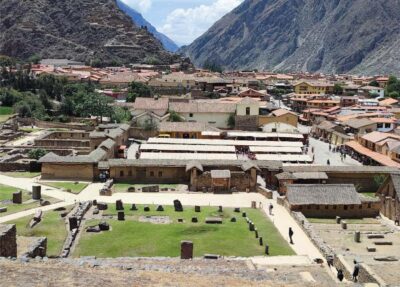
2-Day Trip to the Sacred Valley and Machu Picchu
Read our review →
Machu Picchu 2-Day Inca Trail with Panoramic Train
Read our review →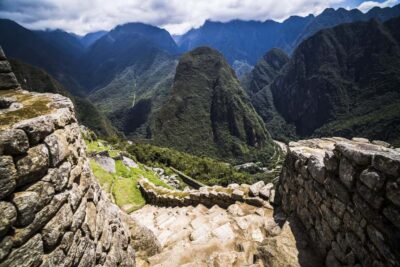
Browse the lists this tour appears in