
Reviewed · INCA TRAIL TREKS
4 Day Inca Trail To Machu Picchu – Private Service
The best part of this trek is the way Machu Picchu arrives at the end of a real mountain journey. You walk ancient stone paths through the Andes, pass Inca ruins most visitors never see, and reach the citadel through the Sun Gate instead of simply arriving by train.
I like the private guide service, since your pace, questions, and rest stops receive individual attention. I also like the strong camp support: cooks prepare three meals a day, porters carry shared equipment, and a personal porter can carry up to 7 kilograms of your gear.
The catch is the physical demand. Dead Woman’s Pass reaches 4,200 meters, and the trail includes long climbs and many stone steps. The price is also high at $1,395 per person, and the non-refundable booking terms mean you should be certain of your dates before paying.
In This Review
- Key points to know before you book
- Why the four-day Inca Trail still earns its reputation
- Day one: Piscacucho, Patallacta, and Wayllabamba
- Day two: Dead Woman’s Pass and the hardest climb
- Day three: Phuyupatamarca, Intipata, and Wiñay Wayna
- Day four: the Sun Gate and Machu Picchu
- Private guiding and the people behind the trek
- What to pack and what the price really covers
- Who should choose this four-day route
- Should you book the private Inca Trail?
- FAQ
- How long is the private Inca Trail tour?
- Where does the tour start?
- What is the highest point on the trek?
- What level of fitness do I need?
- Is this a private tour?
- What meals are included?
- Is camping equipment provided?
- Is a personal porter included?
- Can I climb Huayna Picchu?
- Is the tour refundable if I cancel?
Key points to know before you book
- The second day is the test: You climb to Dead Woman’s Pass at 4,200 meters, then descend and climb again toward Runkurakay.
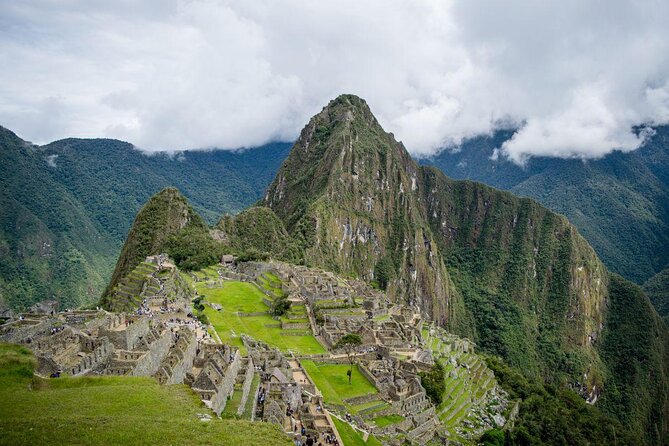
- Your arrival is special: Day four reaches Machu Picchu through Intipunku, the Sun Gate, with your first major view of the citadel from above.
- Private means personal attention: Only your group participates, so your guide can adjust explanations and pacing to your needs.
- Camp life is well supported: A cook, dining tent, sleeping mattress, shared tents, porters, and drinking water are provided.
- The guides make a real difference: Guides including Victor, Guido, Guillermo, Aldo, Rene, Hugo, Felipe, and Wilber Ramos have led groups on this route.
- Check the fine print: A single supplement costs $60, Huayna Picchu is extra, gratuities are not included, and the cancellation policy is strict.
Why the four-day Inca Trail still earns its reputation
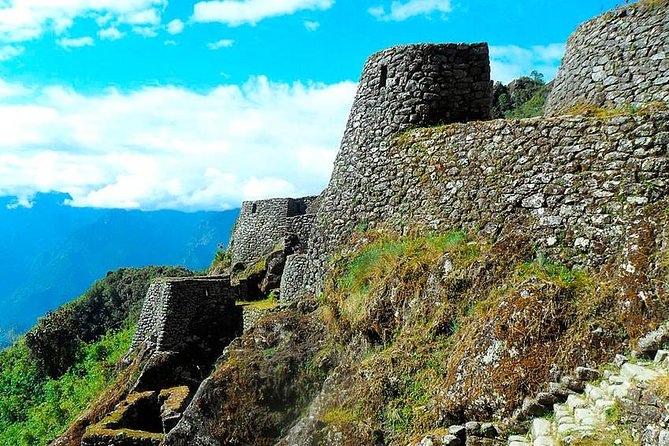
The classic Inca Trail is not simply a walking route to a famous ruin. It is a four-day passage through several Andean zones, with old stonework, ceremonial sites, farm terraces, cloud forest, and high mountain passes packed into a short distance.
This private version is designed for people who want the full route but do not want to be one face in a large group. Your party walks with its own professional bilingual guide. That matters most on a trail where the meaning of a wall, terrace, or shrine can be easy to miss without explanation.
The experience begins in Cusco with a very early pickup, listed around 4:00 to 4:30 am. Transport takes you toward Kilometer 82 and Piscacucho, where permits and passports are checked before you start walking. The Inca Trail has limited access, so this checkpoint is more than a formality. You need your passport and trail documents ready.
At $1,395 per person, this is not a budget trek. Still, the price covers transport to the trailhead, a train toward Ollantaytambo after the hike, camp equipment, most meals, a guide, porters, a cook, and a bus from Machu Picchu to Aguas Calientes. For a private four-day service, that bundle can be good value if you want support rather than a bare-bones camping trip.
More ways to reach Machu Picchu:
- From Cusco: Full-Day Group Tour of Machu Picchu
★ 4.7 · 1,767 reviews - Machu Picchu Day Trip from Cusco
★ 4.5 · 1,644 reviews - Machu Picchu: Full-Day Tour from Cusco with Optional Lunch
★ 4.6 · 927 reviews
Day one: Piscacucho, Patallacta, and Wayllabamba
The first walking day covers about seven hours, beginning at roughly 2,720 meters near Piscacucho. Before setting out, you can use the restrooms, apply sunscreen, and put on insect repellent. Bring water for this first morning. The team provides drinking water later, using water that has been boiled first.
The trail follows the Vilcanota River, which stays to your right as the route enters the Andean valley. The early section gives you time to settle into your rhythm. You are not yet facing the hardest climb, but the day is long, and the altitude makes even moderate walking feel different from a stroll at home.
One of the first major sights is Huillca Raccay, an Inca fortress set above the route. You also reach Patallacta, a large archaeological site with terraces and structures spread along the valley. This is an excellent early stop because it shows how the Incas used the terrain for farming, settlement, and movement.
The views widen toward the Urubamba range. On a clear day, you might spot Veronica, also called W’akay Willca, rising to 5,860 meters. The trail then turns more sharply into cloud forest, with changing vegetation and cooler, wetter conditions.
You spend the night near Wayllabamba at about 3,000 meters. The listed nighttime temperature is around 5 Celsius, though conditions vary by month. The sleeping arrangement is a four-person tent shared by two people, with a foam mattress. A dining tent with tables and chairs gives you a place to eat and rest without sitting inside your sleeping tent.
The first day is a good measure of how your body handles the route. It is not the hardest day, but seven hours on uneven ground after a pre-dawn start can leave you tired. I would treat this evening as an early night, not a chance to socialize late.
Day two: Dead Woman’s Pass and the hardest climb
Day two begins around 5:30 am after breakfast prepared by the cooks. This is the key physical day. You climb for several hours toward Abra de Warrmihuañusca, better known as Dead Woman’s Pass, at 4,200 meters.
The name is dramatic, but the practical issue is altitude and sustained uphill walking. The climb can be slow. Your guide should help set a pace that you can keep, and the private format makes it easier to stop when you need to without worrying about a larger group’s schedule.
Reaching the pass is a genuine accomplishment. You gain wide views across the mountains, but the main reward is getting over the highest point of the route. At this elevation, cold, wind, and thin air can make a short pause feel demanding. Carry warm layers where you can reach them quickly.
From the pass, the trail drops toward Pacaymayu at about 3,550 meters. Downhill is not necessarily easier. The stone path can be hard on knees, and several people find the descent more tiring than the uphill. If you use trekking poles, bring your own, since walking sticks are not included.
The area around Pacaymayu offers chances to see hummingbirds and other bird species. You also pass polylepis trees, which grow in the high cloud forest. These details are easy to overlook when you are focused on your feet, so this is where a good guide adds value.
After lunch, the route climbs again for about two hours toward Runkurakay Pass, close to 4,000 meters. You camp around 5:00 pm, at a site where nighttime temperatures are listed around 4 Celsius.
This is the day to judge your fitness honestly. The tour calls for moderate physical fitness, but that phrase should not be confused with easy. You need to be comfortable walking for hours, climbing steep paths, and handling repeated elevation changes.
Day three: Phuyupatamarca, Intipata, and Wiñay Wayna
Day three covers about 10 kilometers in roughly five hours. Compared with day two, the walking is shorter, but the route still includes climbs, descents, and a long run of stone steps.
A gentle climb takes you to Phuyupatamarca, the Town in the Clouds, at about 3,680 meters. The site is known for its terraces, stone structures, and mountain views. Canyons and high peaks spread around the route, giving this part of the trek a strong sense of place.
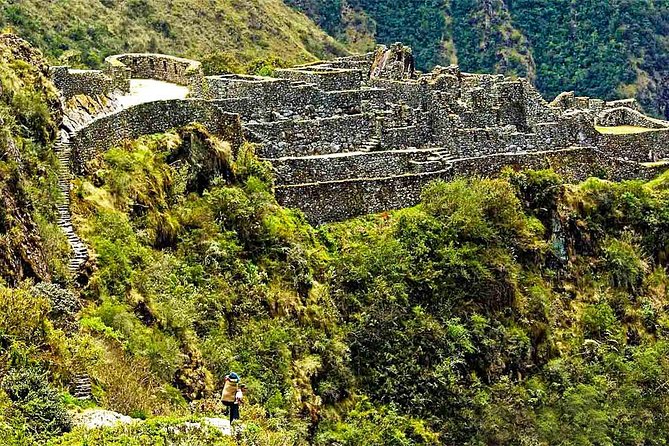
The trail then continues through cloud forest toward Intipata. The route includes around 3,000 steps, so your legs may feel the previous day. Intipata is an agricultural Inca site, and its terraces show how carefully the Incas worked with steep mountain slopes.
You reach the third campsite at Wiñay Wayna around lunchtime, after four or five hours of walking. At 2,680 meters, it is lower than the previous camps and usually feels less harsh than the high passes. The archaeological site of Wiñay Wayna is close to camp and is one of the trip’s essential stops.
Wiñay Wayna means Forever Young. Its terraces and stairways cling to the mountainside, and the site feels more intimate than Machu Picchu. You have time to see it before the final morning, though the exact order of the visit depends on the group’s pace and the guide’s plan.
This is often the most rewarding archaeological day. You are walking through sites that are part of the route itself, not visiting a single ruin by bus. I like that gradual build. Each stop gives you a clearer sense of how the Inca road connected ceremonial and agricultural places.
More Inca Trail departures:
- Cusco: 4-Day Inca Trail to Machu Picchu with Accommodation
★ 4.8 · 432 reviews - Cusco: Machu Picchu 2-Day Inca Trail with Panoramic Train
★ 4.9 · 260 reviews - From Cusco: 2-Day Inca Trail to Machu Picchu
★ 4.2 · 244 reviews - Machu Picchu: Inca Trail 2-Day Overnight Guided Tour
★ 4.9 · 203 reviews
Day four: the Sun Gate and Machu Picchu
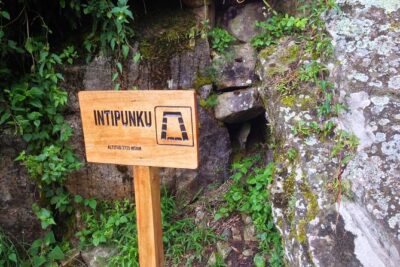
The final morning starts early, with about five kilometers of walking and roughly two hours on the trail. The goal is Intipunku, the Sun Gate, at approximately 2,730 meters, before sunrise.
From the Sun Gate, you get your first major view of Machu Picchu from above. The citadel sits at about 2,400 meters below, surrounded by steep peaks and deep valleys. Weather can affect the view, so sunrise is not guaranteed to be clear. Even so, entering by this route gives the arrival a strong sense of completion.
After reaching Machu Picchu, you have the main guided visit. The supplied schedule lists about three hours for the Machu Picchu portion, though the exact timing can depend on permits and site rules. The guide explains the Inca buildings, purpose, and setting, helping you make sense of what you are seeing after four days on foot.
The package includes the bus from Machu Picchu down to Aguas Calientes. It also includes the train back toward Ollantaytambo and collection from the Ollantaytambo station on day four. Read the transport details carefully, since the train service is listed to Ollantaytambo rather than directly to Cusco.
Breakfast on the final day, lunch, and dinner are not included. Plan for that gap, especially after an early start and a full visit to Machu Picchu. Huayna Picchu is also not included. If you want to climb it, permits must be arranged well ahead, with entry sessions listed at 7:00 to 8:00 am or 10:00 to 11:00 am.
A 7:00 am Huayna Picchu permit may conflict with the guided Machu Picchu visit. That is an important choice: keep the standard guided visit, or add a steep extra climb and accept a tighter schedule.
Private guiding and the people behind the trek
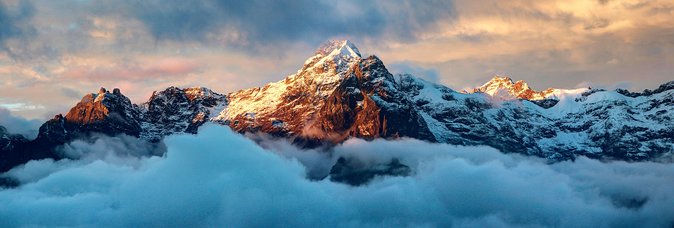
Private service is the main reason to choose this package over a standard group departure. Your guide can explain the Incas at the sites that interest you most, answer questions without rushing, and help your group manage its pace.
Several guides are associated with this service, including Victor, Guido, Guillermo, Aldo, Rene, Hugo, Felipe, Genrri, Nico, and Wilber Ramos. Victor is described as warm, steady, and deeply informed about Peru and Inca culture. Guido is praised for clear English, trail experience, and a lively way of explaining the route. Guillermo and Hugo are also noted for strong historical explanations and patient answers.
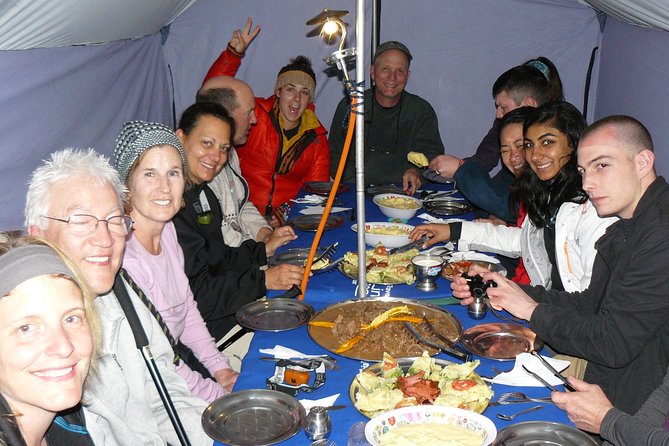
The service team matters just as much. Cooks prepare breakfast, lunch, and dinner on the first three days, and the camp setup includes a dining tent, tables, and chairs. Several accounts describe the food as a highlight, with cooks such as Gregorio, Wilfredo, Felix, and Fernando receiving special praise. One cook even prepared a birthday cake on the trail.
Porters carry cooking and camping equipment. You should remember that porters work hard at high altitude, and gratuities are not included. The package says a personal porter can carry 7 kilograms of personal belongings, but the exclusions also list this porter service as not included. Treat that as a point to confirm before booking, rather than assuming it is covered in the $1,395 price.
What to pack and what the price really covers
You receive a sleeping mattress, shared four-person tent, dining tent, meals for the first three days, drinking water after the first morning, and basic emergency support. An oxygen bottle and first aid kit are also listed.
You still need personal clothing and trail essentials. Bring a passport, warm layers, rain protection, sunscreen, insect repellent, sturdy footwear, personal medication, and a refillable water bottle. Walking sticks are not included, so pack or rent them if you find poles useful on long descents.
The $1,395 price makes the most sense for people who value organization and personal service. You are paying for permits and transport as well as the labor of the guide, cook, and porters. Compared with arranging each element separately, the package reduces the number of moving parts.
It is less attractive if you already own camping equipment, do not need a private guide, or are comfortable joining a larger group. You should also budget for the $60 single supplement if you want your own tent arrangement, gratuities, travel insurance, and meals not listed as included.
The booking is non-refundable and cannot be changed for any reason. Confirmation arrives within 48 hours, subject to availability, but do not treat that as permission to book flights around an unconfirmed departure. The trail has limited access, and the permit process makes dates important.
Who should choose this four-day route
I would recommend it to an active adult, family with children aged 10 or older, or small group that wants a personal guide and full trail support. It suits people who care about the journey as much as the final sight of Machu Picchu.
It is also a strong choice for a group with mixed interests. One person may want detailed explanations about architecture, another may care about birds and plants, and another may simply need a slower pace. A private guide can work with those differences better than a fixed large group.
I would not choose it if you are looking for a relaxed holiday. The early mornings, high altitude, steep climbs, cold camps, and long stone stairways are central to the experience. The tour is also a poor fit if you need flexible cancellation, since the payment cannot be refunded or amended.
Should you book the private Inca Trail?
Book this trek if you want to reach Machu Picchu by foot, value individual guiding, and are prepared for the physical work. The route delivers the full classic sequence: Patallacta, Dead Woman’s Pass, Phuyupatamarca, Intipata, Wiñay Wayna, the Sun Gate, and Machu Picchu.
The strongest reasons to choose it are the private format, capable guide team, excellent camp support, and well-covered transport. The main reasons to pause are the price, strict cancellation terms, extra costs, and demanding altitude.
Before paying, confirm three things in writing: the exact pickup time, whether the 7-kilogram personal porter is included, and your final train and pickup arrangements. If those details suit you and you are ready for the climb, this is a well-supported way to walk into Machu Picchu rather than simply arrive there.
FAQ
How long is the private Inca Trail tour?
The tour lasts approximately four days.
Where does the tour start?
Pickup is offered from your hotel in Cusco, with the meeting time listed around 4:00 to 4:30 am.
What is the highest point on the trek?
The highest point is Dead Woman’s Pass, also called Abra de Warrmihuañusca, at 4,200 meters or 13,779 feet.
What level of fitness do I need?
You should have a moderate level of physical fitness. The trek includes steep climbs, long walking days, high altitude, and many stone steps.
Is this a private tour?
Yes. Only your group participates. An assistant guide is included for groups of nine or more people.
What meals are included?
Breakfast, lunch, and dinner are included for the first three days. The first breakfast, final-day lunch, and final-day dinner are not included.
Is camping equipment provided?
Yes. The package includes a four-person tent shared by two people, a foam sleeping mattress, and a dining tent with tables and chairs.
Is a personal porter included?
The information lists a personal porter for up to 7 kilograms, but it also lists this service under exclusions. Confirm this detail before booking.
Can I climb Huayna Picchu?
Huayna Picchu is not included. Separate permits are required, with entry sessions listed from 7:00 to 8:00 am or 10:00 to 11:00 am, and tickets should be booked well in advance.
Is the tour refundable if I cancel?
No. The experience is non-refundable and cannot be changed for any reason after cancellation or an amendment request.
More Treks From Cusco
- From Cusco: 7 Lakes Ausangate Trek with Breakfast and Lunch
★ 4.8 · 360 reviews - Cusco: Rainbow Mountain Tour and Red Valley Hike (Optional)
★ 4.7 · 149 reviews - Cusco: Full-Day Rainbow Mountain & Red Valley Trekking Tour
★ 4.5 · 121 reviews - Short Inca trail to MachuPicchu || 2days – 1nigth ||
★ 5.0 · 103 reviews
Just added around Cusco
- From Cusco: Maras and Moray and Ollantaytambo Tour★ 5.0 · 3 reviews
- Cusco: Via Ferrata, Skybike, and Rappel Adventure★ 5.0 · 3 reviews
- Cusco: Rainbow Mountain Tour at Sunset Without the Crowds★ 4.7 · 3 reviews
- Cusco: Sacred Valley Day Trip with Maras & Moray Salt Mines★ 5.0 · 3 reviews
- Valle Sur Cusco | half day★ 4.3 · 3 reviews
- IN MACHU PICCHU: Private Tour Guide Service★ 5.0 · 3 reviews
- Salkantay trek to Machu Picchu – 5D/4N – Premium★ 3.3 · 3 reviews
- Full-Day Condor Viewpoint & Inca Sites Tour★ 5.0 · 3 reviews
Inca Trail Treks, compared.
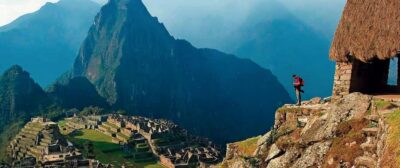
4-Day Inca Trail to Machu Picchu with Accommodation
Read our review →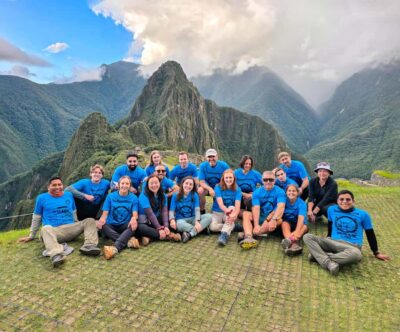
Machu Picchu 2-Day Inca Trail with Panoramic Train
Read our review →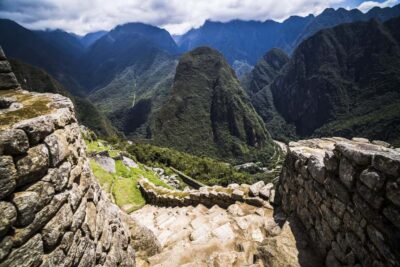
Short Inca trail to MachuPicchu || 2days – 1nigth ||
Read our review →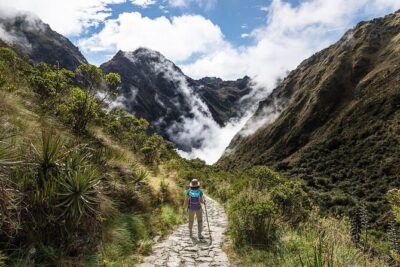
4 Day Inca Trail Trek to Machu Picchu Multi day tour
Read our review →
Browse the lists this tour appears in