
Reviewed · MACHU PICCHU TOURS
2-Day Sacred Valley & Machu Picchu Group Tour from Cusco
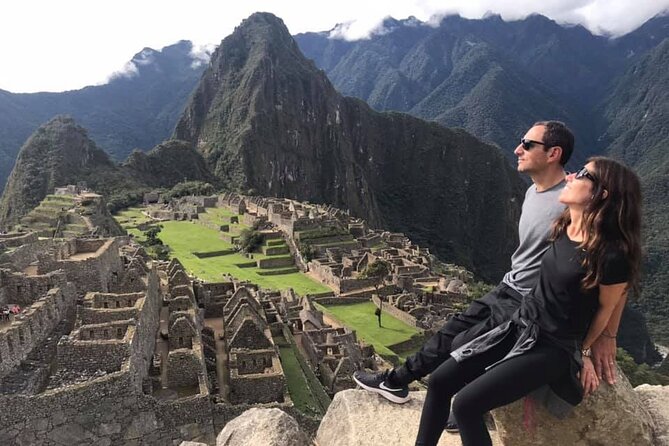
The big draw here is the two-day route from Cusco to Machu Picchu, with the Sacred Valley packed into day one and an overnight in Aguas Calientes. You see Inca terraces, salt ponds, a living Inca town, and the citadel itself without arranging each train, hotel, and bus separately.
I like the practical all-in-one setup, especially the round-trip train and Machu Picchu entrance. I also like the small maximum group of 15, plus the chance to work with guides such as Willie, who is praised for fluent English and thoughtful service. The trade-off is a fast first day, with several stops, train timing, and extra entrance fees to manage.
In This Review
- Key things to know before booking
- Why this two-day plan works
- Chinchero, where textiles meet Inca foundations
- Moray and the Inca agricultural experiment
- Salinas de Maras and 3,000 salt ponds
- Ollantaytambo, the day’s strongest Inca stop
- The train to Aguas Calientes
- Early morning at Machu Picchu
- Guides, group size, and service
- What the $520 price really covers
- Who should choose this tour
- Should you book it?
- FAQ
- How long is the tour?
- What Sacred Valley sites are included?
- Is the Sacred Valley entrance fee included?
- Is the Machu Picchu entrance ticket included?
- Which train route is included?
- Is Huayna Picchu included?
- How much luggage can I take?
Key things to know before booking
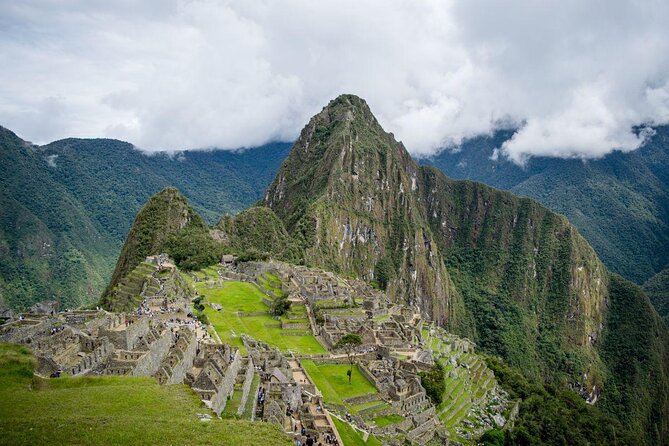
- Four Sacred Valley sites in one day: Chinchero, Moray, Salinas de Maras, and Ollantaytambo form a varied introduction to Inca culture and Andean agriculture.
- Aguas Calientes overnight: Sleeping near Machu Picchu makes the second morning easier than returning to Cusco the same night.
- Machu Picchu circuit depends on availability: Circuit 2 may be secured when you book two or three months ahead, but Circuit 1 or 3 may be assigned instead.
- The Sacred Valley admission costs extra: Budget PEN90 per person for Chinchero, Moray, Maras, and Ollantaytambo.
- The train limits luggage: Each person may take one bag weighing up to 8 kilograms.
- A compact group of up to 15: This is small enough for personal attention, but still a shared tour with fixed timing.
Why this two-day plan works
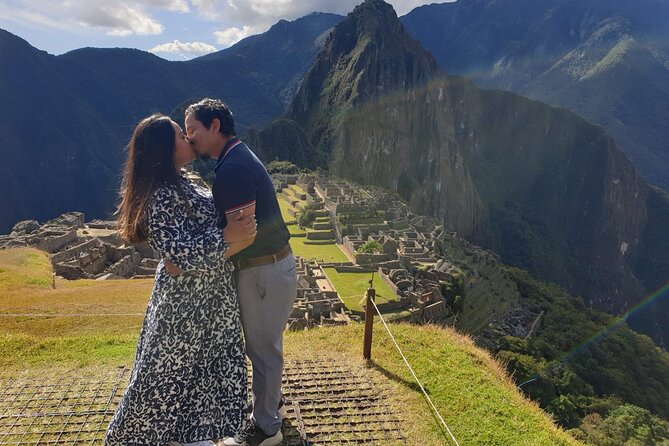
Machu Picchu is the star, but the first day gives you useful context. You are not simply whisked from Cusco to a famous ruin. You see how the Inca worked with crops, water, stone, textiles, and mountain terrain before reaching their best-known site.
That said, this is not a leisurely Sacred Valley stay. Four stops must fit before an afternoon train from Ollantaytambo, and the tour ends around 7:00 pm on day two. I would choose it for efficient sightseeing, not for slow village exploration or long meals.
The price is $520 per person. That is a substantial outlay, but it covers the major moving parts: a professional guide and driver, hotel, train from Ollantaytambo to Aguas Calientes and back, shuttle buses to Machu Picchu, the Machu Picchu entrance, breakfast, and hotel pickup and drop-off. Once you add those pieces separately, the value becomes easier to understand.
You still pay for the Sacred Valley admission, listed as PEN90 per person. Lunches, dinners, breakfast on day one, tips, and the optional Huayna Picchu ticket are also extra. Huayna Picchu costs $65 when available and must be requested ahead of time.
More ways to reach Machu Picchu:
- From Cusco: Full-Day Group Tour of Machu Picchu
★ 4.7 · 1,767 reviews - Machu Picchu Day Trip from Cusco
★ 4.5 · 1,644 reviews - Machu Picchu: Full-Day Tour from Cusco with Optional Lunch
★ 4.6 · 927 reviews
Chinchero, where textiles meet Inca foundations
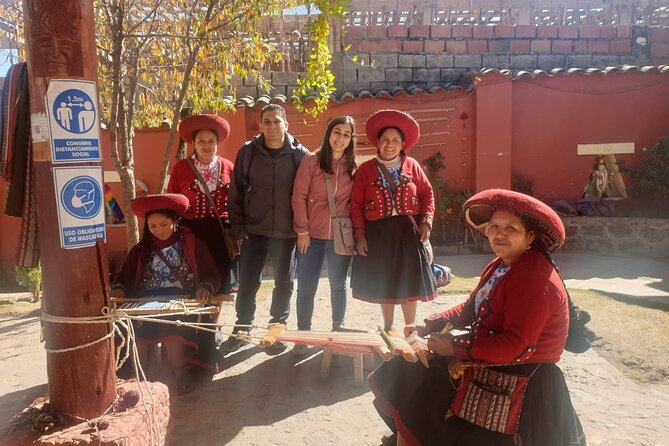
Chinchero begins the Sacred Valley portion with two sides of local life. At the archaeological site and market, you can see how natural colors are made from materials used to dye wool. Textiles are available to buy, but purchasing is optional.
I like this stop because it gives the day a human scale. Stones and terraces can feel distant when you only hear dates and royal names. Watching the textile process connects the old agricultural and craft traditions with work that still has a place in the region.
The visit lasts about an hour, and admission is not included in the tour price. Keep that extra PEN90 Sacred Valley charge in mind rather than treating each site as fully covered.
Moray and the Inca agricultural experiment
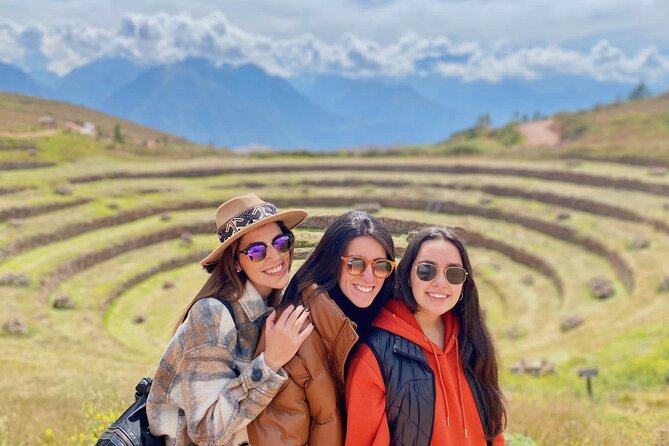
Moray is one of the more unusual stops. Its large natural hollows contain terraces that descend in broad rings, creating an archaeological site unlike the usual walls, temples, and plazas.
The important point is not just the shape. The terraces show the Inca interest in testing and managing crops at different levels. Your guide explains the site and places it within the wider story of Andean farming.
You have about an hour here. That is enough to see the terraces and hear the explanation, though the schedule does not leave much room to linger. If Moray is high on your list, stay close to the guide and listen early rather than assuming you can wander for a long time afterward.
Salinas de Maras and 3,000 salt ponds
The Salinas de Maras are a sharp change from Moray. Around 3,000 small ponds spread across the slope, each averaging about five square meters. Salty spring water moves through the upper ponds, and as it evaporates during the dry season, salt gradually forms.
The site is especially interesting because it is both scenic and practical. This is not a dead monument. It is a working system shaped by water, sun, and careful maintenance.
The tour allows about an hour. Conditions vary with the season, and the description specifically explains the dry-season process, so you should not expect every visit to look identical. Admission is part of the separate Sacred Valley charge.
More Sacred Valley days out of Cusco:
- From Cusco: Sacred Valley & Maras Salt Mines Tour with Lunch
★ 4.8 · 2,227 reviews - Cusco: Sacred Valley, Pisac, Ollantaytambo, Salt Mines Moray
★ 4.6 · 1,058 reviews - Sacred Valley: Chinchero, Moray, Ollantaytambo & Pisac+Lunch
★ 4.8 · 501 reviews - Sacred Valley: Maras & Moray by Quad Bike from Cusco
★ 4.6 · 418 reviews
Ollantaytambo, the day’s strongest Inca stop
Ollantaytambo is more than a quick ruin stop. It is described as one of the last living Inca towns, with streets that retain their original Inca lines. The archaeological complex served military, religious, and agricultural purposes.
For me, this is the stop that makes the first day feel complete. Chinchero shows craft, Moray shows farming, Maras shows salt production, and Ollantaytambo brings those ideas into a powerful stone settlement with strategic importance.
The visit lasts about three hours, and the Sacred Valley tour ends around 3:00 pm. After that, you go to the station for a train scheduled between roughly 3:30 and 4:30 pm. The narrow gap matters. Keep your belongings together, follow the guide, and do not plan an independent side trip in Ollantaytambo.
One detail deserves attention: the general highlights refer to Pisaq, but the supplied day-one schedule names Chinchero instead. If Pisac is essential to your plans, ask the operator to confirm the exact route before paying. Do not assume both are included.
The train to Aguas Calientes
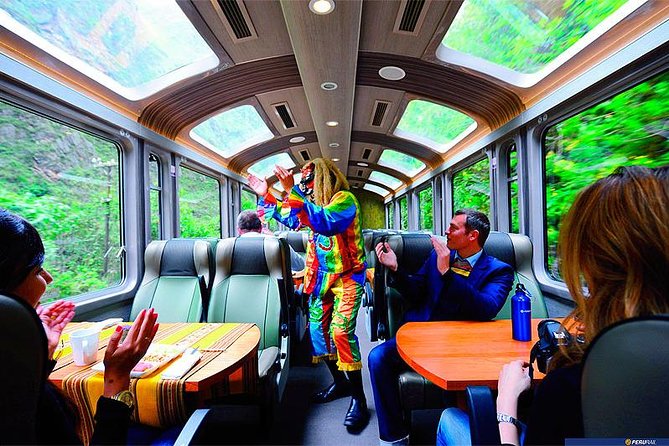
The train from Ollantaytambo to Aguas Calientes is included, as is the return journey the next day. This is a major convenience because train planning can be one of the trickier parts of a Machu Picchu visit.
The luggage rule is strict in practical terms: one bag of up to 8 kilograms per person. Pack a small overnight bag and leave larger luggage in Cusco if that is possible for you. The tour information does not promise storage, so confirm arrangements for anything you cannot take on the train.
You spend the night in a three-star category hotel in Aguas Calientes. Possible hotels include Terrazas de Luna and Ferre Boulevard. The exact property can matter, and one reported hotel issue was fixed quickly by Tania, so contact the operator promptly if your assigned room creates a problem.
The overnight is a good design choice. You avoid a punishing same-day return from Machu Picchu to Cusco and wake close to the mountain. Breakfast is included on day two, but dinner and day-one breakfast are not.
Early morning at Machu Picchu
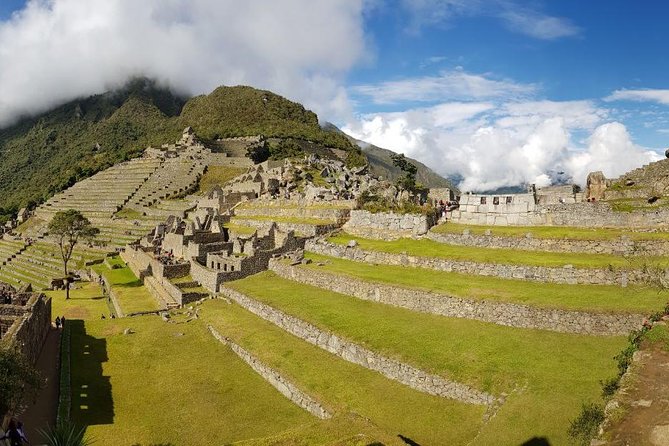
On the second morning, you eat breakfast and meet your guide at the hotel. Together you take the bus from Aguas Calientes up to Machu Picchu. The bus up and down is included, which removes another ticket and queue from your list of tasks.
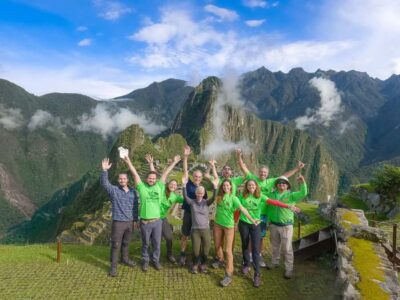
The guided visit lasts about three hours. That is enough for a structured introduction to the citadel, its stonework, terraces, and setting, but it is not an open-ended day. Your guide provides the story of the Inca empire and explains the site as you move through the assigned circuit.
The circuit is a crucial detail. If you book two or three months ahead, the operator says it can secure Circuit 2 when available. If not, you may receive Circuit 1 or Circuit 3, depending on availability. These routes are not interchangeable, so ask which circuit has been assigned before you build expectations around a particular view or section.
One review describes an especially early entry, with time to enjoy sunrise and take photographs before the site grew busy. That is a useful reason to value the overnight plan, although the exact entry time depends on the ticket and operating schedule. The guide Willie is also specifically praised for fluent English, strong local knowledge, and good photographs.
After the guided visit, you take the bus back to Aguas Calientes and have free time for lunch. Lunch is not included, so keep both time and money for it. Then you board the train back to Ollantaytambo, where the waiting vehicle takes you to Cusco.
The estimated arrival is about 7:00 pm. That makes day two long, and you should avoid scheduling an important evening connection unless you have plenty of margin.
Guides, group size, and service
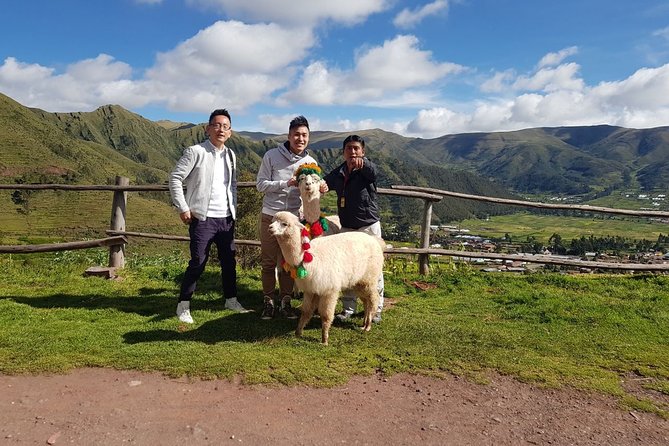
The tour uses professional English and Spanish guides, along with a driver. Willie is the clearest named guide associated with the experience, and his fluent English and photography skills are useful strengths for English-speaking visitors. Tania appears to handle coordination and customer care, including fixing a hotel problem quickly.
The maximum group size is 15. That is not a private tour, but it is a reasonable size for a busy route. You should be able to hear explanations more easily than in a large coach group, while still benefiting from shared transport costs.
The service emphasis matters here because the itinerary has several handoffs: hotel pickup, Sacred Valley transport, Ollantaytambo station, train arrival, hotel meeting, Machu Picchu bus, return train, and the ride to Cusco. A responsive coordinator can make those transitions far less stressful.
Pickup and drop-off are described as door to door. The tour is also near public transportation, and most people can participate. Specific accessibility details are not provided, so ask before booking if you need assistance with steps, uneven ground, or boarding.
What the $520 price really covers
At $520, this is best viewed as a convenience package rather than a budget excursion. The included items cover the expensive core of a Machu Picchu visit:
- Sacred Valley guide and driver
- Machu Picchu entrance ticket
- Train from Ollantaytambo to Aguas Calientes and back
- Bus between Aguas Calientes and Machu Picchu
- One night in a three-star category hotel
- Breakfast on day two
- English and Spanish professional guide
- Pickup and drop-off
You must add PEN90 for the Sacred Valley sites. You also pay for day-one breakfast, both lunches, dinners, tips, and any Huayna Picchu ticket. The $65 Huayna Picchu option is not automatic and depends on availability.
I like the value if you want one company to coordinate the difficult pieces. I would compare prices if you are comfortable arranging trains, hotels, tickets, and transfers yourself. The key question is not simply whether $520 is cheap. It is whether avoiding those separate bookings is worth the premium for you.
Who should choose this tour
This works best for you if you have only two days, want both the Sacred Valley and Machu Picchu, and prefer a guide to manage transport. It also suits people who want an overnight near the ruins rather than a rushed day trip from Cusco.
The plan is less suitable if you want a quiet Sacred Valley itinerary, a guaranteed Circuit 2, a private guide, or a flexible return time. The first day moves quickly, and the second day has a fixed sequence from breakfast to Machu Picchu, lunch, train, and Cusco.
A minimum of two people per booking is required. The maximum group is 15, so solo visitors cannot book alone under the stated terms. The experience is often booked about 43 days ahead, which is a useful signal to plan early, especially if your priority is the Machu Picchu circuit or Huayna Picchu.
Should you book it?
Book this tour if efficiency, included transport, and a guided Machu Picchu visit matter more to you than a slow pace. Willie’s fluent English, Tania’s quick problem solving, the small group limit, and the overnight in Aguas Calientes are meaningful advantages.
Think twice if you need complete flexibility or want every Sacred Valley stop confirmed in advance, especially since the highlights mention Pisaq while the detailed route lists Chinchero. The non-refundable policy also means you should confirm dates, hotel expectations, luggage limits, extra fees, and the Machu Picchu circuit before booking.
FAQ
How long is the tour?
The experience lasts approximately two days. Day one ends with an overnight stay in Aguas Calientes, and day two is estimated to finish in Cusco around 7:00 pm.
What Sacred Valley sites are included?
The detailed route includes Chinchero, Moray, Salinas de Maras, and Ollantaytambo. The general highlights also mention Pisaq, so confirm whether Pisaq is part of your specific departure.
Is the Sacred Valley entrance fee included?
No. Admission for Chinchero, Moray, Salineras, and Ollantaytambo is listed separately at PEN90 per person.
Is the Machu Picchu entrance ticket included?
Yes. The Machu Picchu entrance ticket is included, along with the bus between Aguas Calientes and Machu Picchu.
Which train route is included?
The included train runs from Ollantaytambo to Aguas Calientes on day one and returns from Aguas Calientes to Ollantaytambo on day two.
Is Huayna Picchu included?
No. A Huayna Picchu ticket costs $65 per person when available and must be requested in advance.
How much luggage can I take?
Each person is allowed one bag weighing up to 8 kilograms on the train.
Just added around Cusco
- Cusco: Via Ferrata, Skybike, and Rappel Adventure★ 5.0 · 3 reviews
- From Cusco: Maras and Moray and Ollantaytambo Tour★ 5.0 · 3 reviews
- Cusco: Rainbow Mountain Tour at Sunset Without the Crowds★ 4.7 · 3 reviews
- Cusco: Sacred Valley Day Trip with Maras & Moray Salt Mines★ 5.0 · 3 reviews
- Valle Sur Cusco | half day★ 4.3 · 3 reviews
- IN MACHU PICCHU: Private Tour Guide Service★ 5.0 · 3 reviews
- Salkantay trek to Machu Picchu – 5D/4N – Premium★ 3.3 · 3 reviews
- Guide in Machu Picchu★ 5.0 · 3 reviews
Machu Picchu Tours, compared.
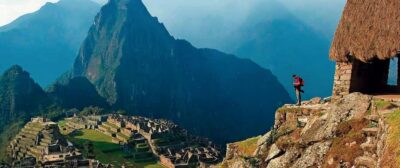
4-Day Inca Trail to Machu Picchu with Accommodation
Read our review →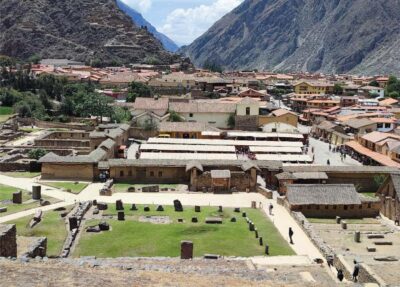
2-Day Trip to the Sacred Valley and Machu Picchu
Read our review →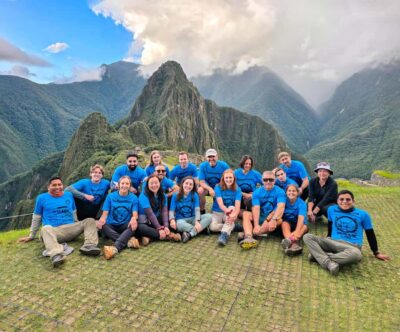
Machu Picchu 2-Day Inca Trail with Panoramic Train
Read our review →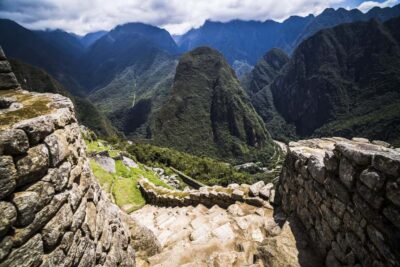
Browse the lists this tour appears in