
Reviewed · SACRED VALLEY TOURS
Sacred Valley (VIP) – Full Day Trip
The best thing about this Sacred Valley day tour is how much Inca country you can see in one long sweep. From high Chinchero and its old stonework to the terraces of Moray, the salt pools of Maras, and the grand ruins at Ollantaytambo and Pisac, the day gives you a broad first look at the valley without arranging several separate trips.
I like the buffet lunch in Urubamba, which includes a vegan option, and I like the guides who make the history easier to follow. Guides named Irving, Jhonnatan, Richard, and Warner have been singled out for keeping groups informed, friendly, and on schedule. The catch is the pace: five major stops in about 12 hours can feel rushed, and the $55 price does not include 90 soles in required admissions.
In This Review
- Key points to know before booking
- A long day that covers the Sacred Valley
- Chinchero at 3,765 meters
- Moray’s circular farming terraces
- Maras and the salt pools
- Urubamba lunch and the middle of the day
- Ollantaytambo, the day’s big archaeological stop
- Pisac’s towers, terraces, and Intihuatana
- Guides, transport, and the VIP label
- Who will get the most from this tour?
- Should you book the Sacred Valley VIP day?
- FAQ
- How long does the Sacred Valley VIP tour last?
- What locations does the tour visit?
- Is hotel pickup included?
- What is included in the $55 price?
- What additional entrance fees should I budget for?
- How many people can join the tour?
- Can I cancel for a full refund?
Key points to know before booking
- Five major Sacred Valley stops in one day: Chinchero, Moray, Maras, Ollantaytambo, and Pisac give you a wide mix of ruins, farming terraces, village life, and mountain views.
- The two extra fees matter: Plan on 70 soles for the Partial Tourist Ticket and 20 soles for the Maras salt mines.
- Urubamba lunch is included: The buffet has a vegan option, a useful break during a very full sightseeing day.
- Expect a small-group vehicle, not a private outing: The stated maximum is 19 people.
- Ollantaytambo deserves your attention: Its terraces, fortress, and old village are among the most rewarding parts of the route.
- Commercial stops may appear: Some departures include visits connected with alpaca goods, salt, drinks, or jewelry, which can cut into time at the ruins.
A long day that covers the Sacred Valley
This is the sort of trip you choose when your time in Cusco is limited and you want to see the main sights in one go. Pickup from Cusco hotels is included, but pickup from a private residence is not. The day lasts about 12 hours, so you should be ready for an early start, long road stretches, steps, and quick visits.
The tour costs $55 per person before entrance fees. Add 70 soles for the Partial Tourist Ticket and 20 soles for the Maras salt mines. That makes the tour a fair deal for transportation, a bilingual guide, guided sightseeing, and lunch, but it is not an all-in price. Bring cash and treat the extra 90 soles as part of your real budget.
The group limit is 19 people. That is smaller than a large coach tour, but it is not the same as having a private guide. Group size can affect how quickly you move through a site, how easy it is to hear explanations, and how much freedom you have for photographs.
The experience is recommended by 92 percent of those who rated it, with an overall score of 4.7 from 71 ratings. That strong result matches the tour’s main strength: you see a great deal in a single day. It also comes with a clear warning, the itinerary is packed tightly.
More Sacred Valley days out of Cusco:
- From Cusco: Sacred Valley & Maras Salt Mines Tour with Lunch
★ 4.8 · 2,227 reviews - Cusco: Sacred Valley, Pisac, Ollantaytambo, Salt Mines Moray
★ 4.6 · 1,058 reviews - Sacred Valley: Chinchero, Moray, Ollantaytambo & Pisac+Lunch
★ 4.8 · 501 reviews
Chinchero at 3,765 meters
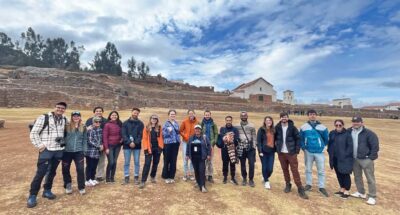
Your first major stop is Chinchero, a small Andean village high on the plains of Anta, about 30 kilometers from Cusco. At roughly 3,765 meters, it can feel cold, exposed, and windy. Bring a layer even if Cusco feels mild when you leave.
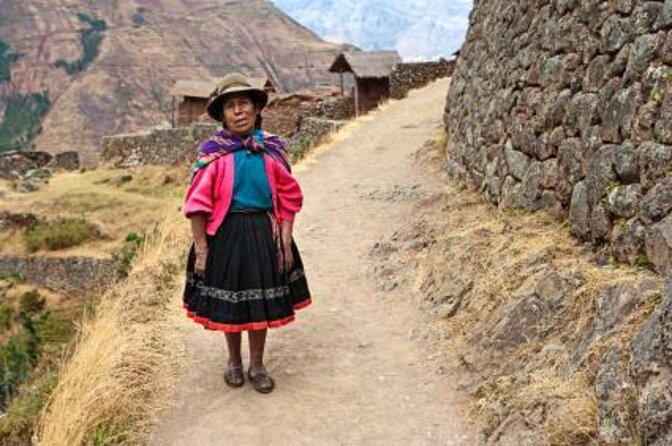
Chinchero is linked with the Andean story of the rainbow’s birthplace. The village is made up largely of adobe homes, and traditional dress remains part of daily life. If you visit on a Sunday, the local market is known for feeling less arranged for tourism than the market in Pisac, though this tour’s timing does not guarantee a Sunday market visit.
The most striking sight is the Inca stone wall in the main plaza. Its ten trapezoidal niches show the careful stonework used in imperial buildings. Nearby terraces are still used for farming, which helps you see that Inca agriculture was not just an old idea preserved in ruins. It remains part of the working countryside.
You get about an hour here. That is enough to see the central remains and take in the views toward the Sacred Valley, the Vilcabamba range, and snow-capped Salkantay. It is not enough for a slow village visit, an extended market browse, and a long archaeological walk all at once.
Moray’s circular farming terraces
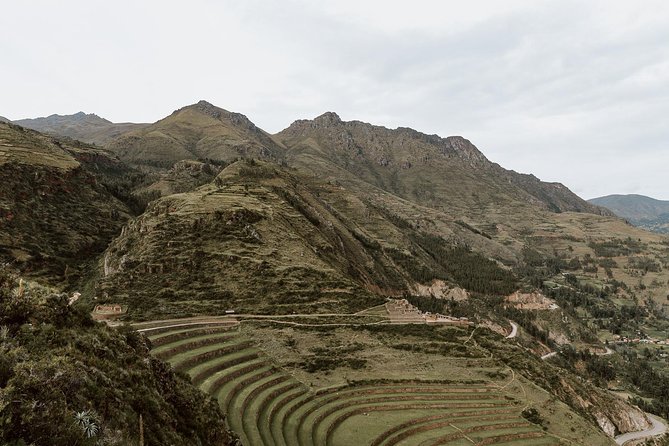
Moray is one of the most unusual stops on the route. Instead of straight agricultural terraces climbing a slope, you see huge circular depressions cut into the earth. The terraces reach depths of up to about 330 feet and are linked by retaining walls and irrigation systems.
The site is often described as an Inca crop laboratory. The different levels created small changes in temperature and growing conditions, allowing farmers to test or produce different crops. You do not need to accept every modern explanation to appreciate the basic achievement: the Incas shaped difficult mountain ground into an organized farming system.
The visit lasts about 45 minutes. That gives you time to look into the main terraces and hear the guide explain how water and temperature shaped the site. It also means you will need to keep moving if you want photographs and a full explanation.
The listed information identifies no admission charge at the individual stop, but the Partial Tourist Ticket is not included in the tour price. Ask how the ticket applies before the day begins so you are not surprised when the group reaches the archaeological sites.
Maras and the salt pools
Maras brings a sharp change of scenery. The salt pools sit in the rural community of Pichingoto, where hundreds of small evaporation pools spread across the mountainside. Water carrying salt flows through the system, and each pool collects minerals as the water evaporates.
This is a particularly good place for photographs. The pools create bands of white and tan against the surrounding slopes, and their appearance can change with light and season. The area also connects with walking and mountain biking routes toward Tarabamba and Pichingoto, although this full-day trip does not give you time to treat the stop as an extended hike.
The salt mine entrance costs 20 soles per person, separate from the 70-soles Partial Tourist Ticket. Keep cash handy. The tour information specifically warns you to budget for this admission.
You have about 45 minutes. That is enough for a look and photographs, but not a long walk through the surrounding communities. Some departures also include a salt-related commercial stop. That can be useful if you want to learn about local products, but if your priority is the site itself, listen for how much time is available before you start shopping.
A nearby colonial church, the Sanctuary of Tiobamaba, may also interest you. It is built of adobe and holds paintings from the Cusco school, including a version of The Last Supper. The schedule is tight, so do not assume the group will have time for every nearby sight.
A few more Cusco departures worth comparing
- From Cusco: Full-Day Group Tour of Machu Picchu
★ 4.7 · 1,767 reviews - Machu Picchu: Full-Day Tour from Cusco with Optional Lunch
★ 4.6 · 927 reviews - Full-Day Excursion to Sacred Valley, Pisac and Ollantaytambo from Cusco
★ 4.5 · 174 reviews - Food and Culture Full day Tour in the Sacred Valley
★ 5.0 · 144 reviews
Urubamba lunch and the middle of the day
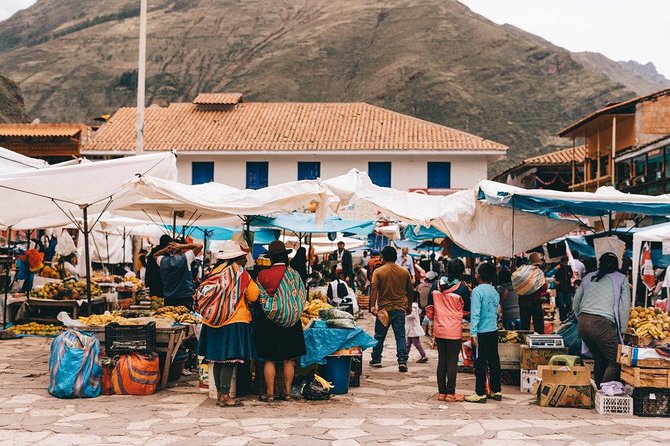
The included buffet lunch takes place in Urubamba, the main town in the Sacred Valley. After the morning’s high-altitude sites and walking, a sit-down meal is more than a convenience. It gives you a chance to refuel before the larger ruins later in the day.
A vegan option is available. If you have other dietary needs, the supplied information does not specify additional choices, so ask when booking or before the meal.
A buffet also helps a group of up to 19 people move along faster than ordering individual dishes. The trade-off is that the meal is designed for efficiency, not for a long, leisurely lunch. Keep an eye on the departure time.
Ollantaytambo, the day’s big archaeological stop
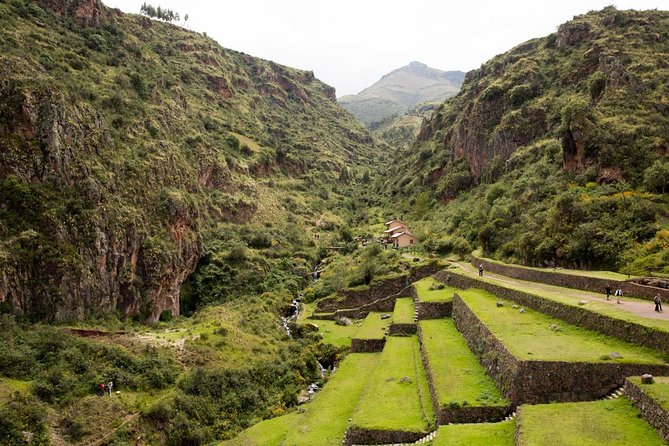
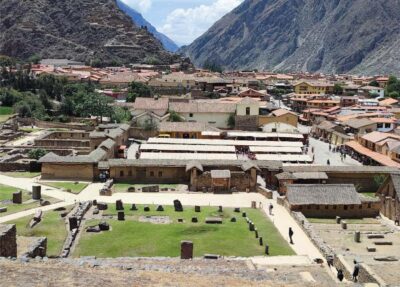
Ollantaytambo is the place where the scale of Inca engineering becomes hard to ignore. The village still follows much of its old Inca design, with stone streets, walls, and buildings laid out in a pattern that feels different from a modern Peruvian town.
Above it rises the fortress and ceremonial complex. Terraces climb the hillside in steep steps, and reaching the upper areas requires effort. The stones, the height, and the narrow stairways make this a stop where sensible shoes matter. You will also want to save some energy for it, since it comes after several earlier visits.
The complex includes areas linked with water worship, the Temple of Inti, ceremonial structures, the baths of the Ñustas, and steep agricultural terraces. The fortress guarded the entrance to the valley between two mountains, giving the site both religious and military importance.
Across the way, Pinculluna, also called Tunupa, holds Inca remains that appear to have served as storehouses. You may also notice the funerary towers of Cachiccata. Together, these features show that Ollantaytambo was not simply a ceremonial hill. It was part of a larger settlement and supply system.
You get about an hour here. That is a reasonable allocation compared with the smaller stops, but it remains short for a site of this size. One of the most useful things your guide can do is point out the major structures first, so you do not spend the whole visit wondering which stairway leads where.
Ollantaytambo is also a meeting place for nearby communities. People from Willoc, known for red and black ponchos and hats, come into the area, giving the village a connection with living Andean culture rather than only ruins.
Pisac’s towers, terraces, and Intihuatana
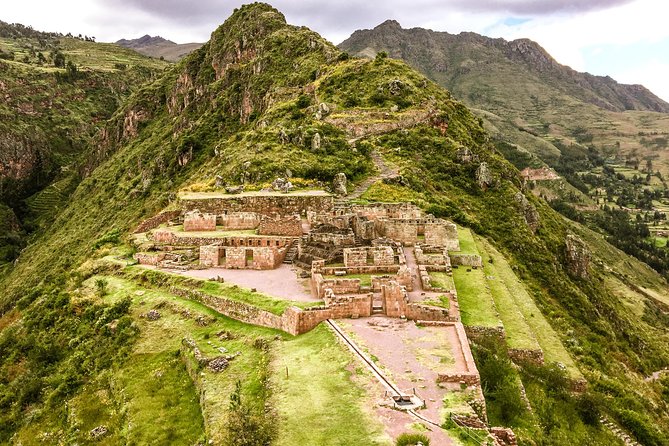
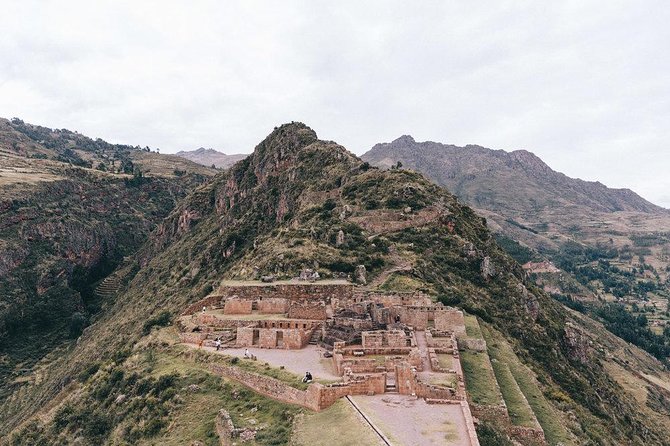
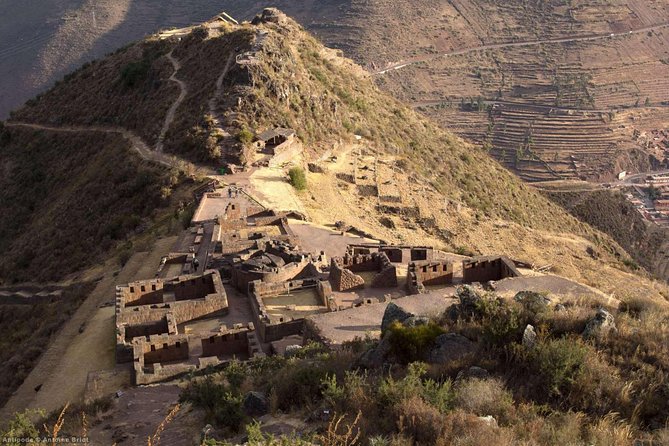
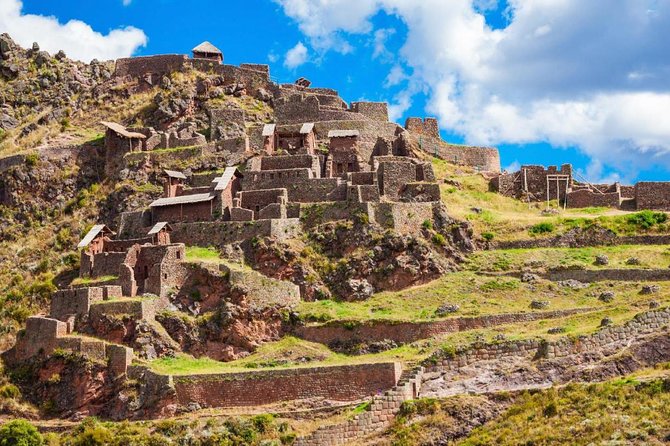
Pisac closes the sightseeing loop with another major Inca complex. Its carefully fitted stone walls, terraces, ceremonial buildings, palaces, towers, and defensive features run along the mountainside above the valley.
The name Pisac comes from a Quechua word for partridge, a bird associated with the area. Inca ruler Pachacutec may have used the site as a royal estate. The arrangement of buildings and terraces suggests a place with several roles, including farming, ceremony, residence, and defense.
At the upper part of the complex, the Intihuatana is the key ceremonial feature. Its name is commonly translated as sundial or hitching post of the sun. The finely cut stonework and its relationship to the sun at the June solstice point to the Inca interest in astronomy and seasonal timing.
Pisac is also called the City of the Towers because of the many towers placed along the mountain edges. Water channels still run through parts of the complex. The combination of terraces, towers, and valley views makes this a rewarding final stop, but the one-hour visit can feel tight after a full day on the road.
A local legend tells of Inquill Chumpi, the daughter of the chief of Pisac, and the prince Asto Rimac. The prince was asked to build a bridge in one night before he could marry her. She was told not to look back while climbing the hill, but when she turned, both were turned to stone. The rock formation called the Enchanted Princess is linked to this story.
One practical warning: a past departure arrived late at Pisac after transport problems and had little time there, while still stopping at a jewelry shop afterward. That is an unusually serious complaint, but it points to a useful rule: if the schedule slips, ask the guide whether any shopping stop can be dropped so the archaeological site gets its proper time.
Guides, transport, and the VIP label
The strongest part of this experience is the guiding. Irving was praised for clear explanations and good time management. Jhonnatan was noted for lively bilingual presentation, while Richard was described as friendly, helpful with photographs, and well informed. Warner was also praised for his care and warm manner.
The guide works in English and Spanish. That matters on a route with many sites, since a good explanation helps connect terraces, temples, water systems, and village life instead of leaving you with a string of impressive stones.
The VIP name should not lead you to expect a private car or a slow custom itinerary. The group can include up to 19 people, and the day follows a fixed route. One past booking had a severe organization problem involving a much larger family group, a change of guide, missed passengers, and a damaged tire. The company issued a full refund in response. This appears to have been an exceptional failure, but it is still sensible to confirm the pickup and group arrangements in advance.
Other complaints focused on a noisy vehicle, rushed timing, and sales stops. The operator responded that it would review the pace, bus condition, and commercial visits. I would treat those points as real considerations, especially because the tour spends most of the day on the road and at open-air sites.
Who will get the most from this tour?
I would choose this outing if you have only one free day for the Sacred Valley and want a broad introduction. It is also a good match if you value a bilingual guide, included hotel pickup, and a buffet lunch more than long stretches of independent exploring.
You should be comfortable with a full schedule and plenty of walking. Ollantaytambo and Pisac involve steps, and Chinchero sits at high altitude. The activity information says most people can participate, but it does not promise an easy route or a relaxed pace.
I would not choose it if you want deep time at one or two sites, a private guide, or a day built around local shopping and village contact. You might prefer separate visits if photography, hiking, or careful archaeological study matters more than covering the most ground.
The cancellation terms are simple: you can receive a full refund if you cancel at least 24 hours before the local start time. Cancellations or changes made inside that window are not refunded or accepted.
Should you book the Sacred Valley VIP day?
Book it if you want maximum coverage for a modest base price and can accept a fast-moving day. The combination of Chinchero, Moray, Maras, Ollantaytambo, and Pisac gives you a useful picture of Inca farming, religion, defense, and village life.
Before paying, add the 90 soles in admissions, confirm hotel pickup, and ask whether commercial stops are part of your departure. If you do that and arrive ready for stairs, road time, and a long day, this is a practical way to see the Sacred Valley in one shot. If you want time to linger, choose a slower itinerary instead.
FAQ
How long does the Sacred Valley VIP tour last?
The experience lasts approximately 12 hours.
What locations does the tour visit?
The route includes Chinchero, Moray, Maras, Ollantaytambo, and Pisac.
Is hotel pickup included?
Pickup from Cusco hotels is included. Pickup from private residences is not included.
What is included in the $55 price?
The price includes Cusco hotel transfer, a bilingual English and Spanish-speaking guide, guided sightseeing, and buffet lunch in Urubamba. A vegan lunch option is available.
What additional entrance fees should I budget for?
You need to pay 70 soles per person for the Partial Tourist Ticket and 20 soles per person for entrance to the Maras salt mines.
How many people can join the tour?
The maximum group size is 19 people.
Can I cancel for a full refund?
Yes. You must cancel at least 24 hours before the experience start time for a full refund. Cancellations or changes made less than 24 hours before the start are not accepted.
Just added around Cusco
- Cusco: Via Ferrata, Skybike, and Rappel Adventure★ 5.0 · 3 reviews
- From Cusco: Maras and Moray and Ollantaytambo Tour★ 5.0 · 3 reviews
- Cusco: Sacred Valley Day Trip with Maras & Moray Salt Mines★ 5.0 · 3 reviews
- Valle Sur Cusco | half day★ 4.3 · 3 reviews
- Cusco: Rainbow Mountain Tour at Sunset Without the Crowds★ 4.7 · 3 reviews
- IN MACHU PICCHU: Private Tour Guide Service★ 5.0 · 3 reviews
- Salkantay trek to Machu Picchu – 5D/4N – Premium★ 3.3 · 3 reviews
- Full-Day Condor Viewpoint & Inca Sites Tour★ 5.0 · 3 reviews
Sacred Valley Tours, compared.
Sacred Valley & Maras Salt Mines Tour with Lunch
Read our review →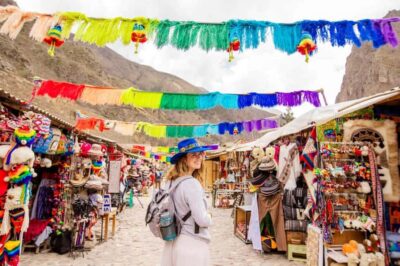
Sacred Valley, Pisac, Ollantaytambo, Salt Mines Moray
Read our review →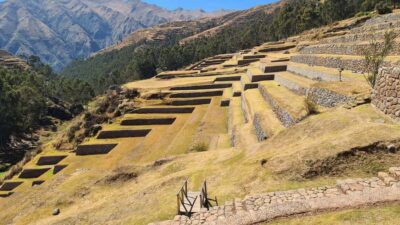

2-Day Trip to the Sacred Valley and Machu Picchu
Read our review →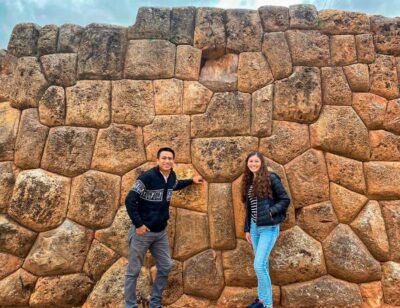
Sacred Valley Pisaq,Ollantaytambo,Chinchero with Lunch
Read our review →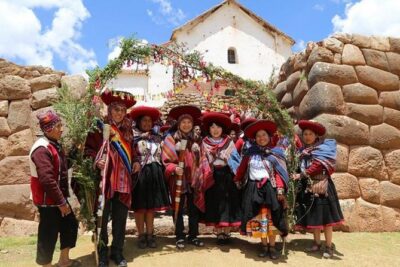
Full-Day Excursion to Sacred Valley, Pisac and Ollantaytambo from Cusco
Read our review →
Food and Culture Full day Tour in the Sacred Valley
Read our review →Browse the lists this tour appears in