
Reviewed · MACHU PICCHU TOURS
Machu Picchu: Group Guided Tour
The best thing about this three-hour Machu Picchu tour is that it treats the citadel as more than a famous photo stop. Guides such as Eric, Julio, Gregory, and Erick explain the engineering, temples, social life, and meaning of the site, then help you capture good photos without rushing you through the views.
I like two details in particular: the guides use printed photos and albums to make the explanations easier to follow, and the group is limited to 10 people. The $30 guide fee is also fair for a major archaeological site, though you must budget separately for the 152-sol entrance ticket and the $24 bus fare up and down.
In This Review
- Key points at a glance
- Why a guide helps at Machu Picchu
- Meeting Eric in Aguas Calientes
- The bus ride and sanctuary entrance
- The first platforms are photo time
- Temples, palaces, and the main plaza
- A small group makes a practical difference
- What the guides do best
- Price, timing, and what you actually pay
- Who should book this tour
- Should you book it?
- FAQ
- Where does the tour start?
- How long does the Machu Picchu tour last?
- Is the Machu Picchu entrance ticket included?
- Is the bus included?
- Which languages are available?
- Can the guide take photos?
Key points at a glance
- Local Andean guides: The team comes from the Cusco and Machu Picchu region and includes English, Spanish, and Portuguese speakers.
- Photo help built in: Guides take photos and videos with your phone or their own phone, including posed shots at the main viewing platforms.
- Small group size: The tour limits participation to 10 people, making it easier to ask questions and keep a comfortable pace.
- A full citadel walk: Depending on your circuit, you visit major places such as the Temple of the Three Windows, Sacred Rock, Condor Temple, Main Plaza, and commoners’ houses.
- About three hours on site: The plan allows roughly 2.5 to 3 hours inside Machu Picchu, including the initial walk uphill.
- Flexible booking terms: You can cancel up to 24 hours before the tour for a full refund and reserve without paying immediately.
Why a guide helps at Machu Picchu
Machu Picchu gives you plenty to look at, but not much written explanation once you are inside. Stone walls, terraces, stairways, and ceremonial spaces can blur together if you do not know what you are seeing. A good guide gives each area a purpose and helps you notice how the site fits together.
This team studied archaeology and history at a university in Cusco. That background matters most when you ask questions. Guides can explain the difference between ceremonial buildings, royal spaces, working areas, and ordinary homes instead of offering only a string of dates and names.
The strongest part of the guiding style is its mix of explanation and patience. Eric is repeatedly praised for clear English, careful pacing, and using pictures to explain details. Julio is described as friendly, funny, and especially good at keeping an early tour lively. Gregory, Eric’s brother, has also guided groups through the site and is praised for answering questions without making people feel hurried.
You should still keep your expectations realistic. This is a group tour, not a private archaeology seminar. The guide needs to balance several people’s interests and follow the route allowed by your entrance ticket. If one part of Inca construction fascinates you, ask about it early so the guide can spend time there when possible.
More ways to reach Machu Picchu:
- Machu Picchu: Tour Guide Service & Entrance Ticket Circuit-2
★ 4.6 · 90 reviews - Cusco: One Day Tour to Machu Picchu with Train Transfers
★ 4.8 · 28 reviews - Machu Picchu: historical and photographic guided tour
★ 4.9 · 27 reviews
Meeting Eric in Aguas Calientes
The stated meeting point is Plaza Manco Capac, the main plaza in Aguas Calientes. Look for a large tag marked ERIC and arrive with enough time to find the guide before the planned departure.
The pickup information allows for help at your hotel or train station, and the team has also coordinated meetings at accommodations, the bus line, and the Machu Picchu entrance. Because those details can vary by booking, confirm the exact point and time before the morning of your tour. One useful feature of the service is direct communication before the visit, including a message to confirm the plan.
From Aguas Calientes, you board the bus to the sanctuary entrance. The bus ticket is not part of the $30 tour price. The stated cost is $24 for the ride up and down, while the Machu Picchu entrance ticket costs 152 soles. These separate charges make the final outing more expensive than the headline price, but the guide fee itself remains modest for a three-hour visit at one of Peru’s most tightly managed attractions.
The bus ride and sanctuary entrance
The bus brings you from Aguas Calientes to the entrance of Machu Picchu. At the gate, you show your passport or identification and your Machu Picchu ticket. Bring the same identity document used for the booking, since it is required for entry.
After entering, the group walks uphill for about 10 minutes to reach the highest point allowed by its circuit. This first climb is short, but it comes before the main platforms and may feel demanding if you have just arrived by train or are adjusting to the altitude. The guide is there to keep the group together and provide help, but you should move at a pace that feels safe for you.
The experience is listed as wheelchair accessible, yet the route includes an uphill walk and an archaeological site with different circuits. If you use a wheelchair or need mobility assistance, ask the operator to confirm exactly how your assigned route works before booking. The available information supports accessibility, but it does not describe every path or surface.
The first platforms are photo time
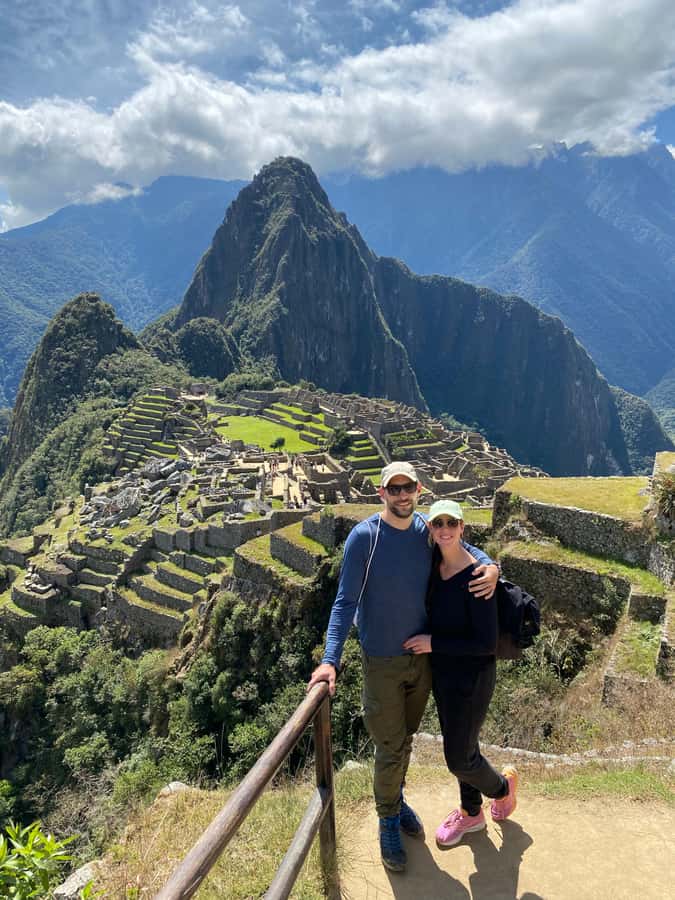
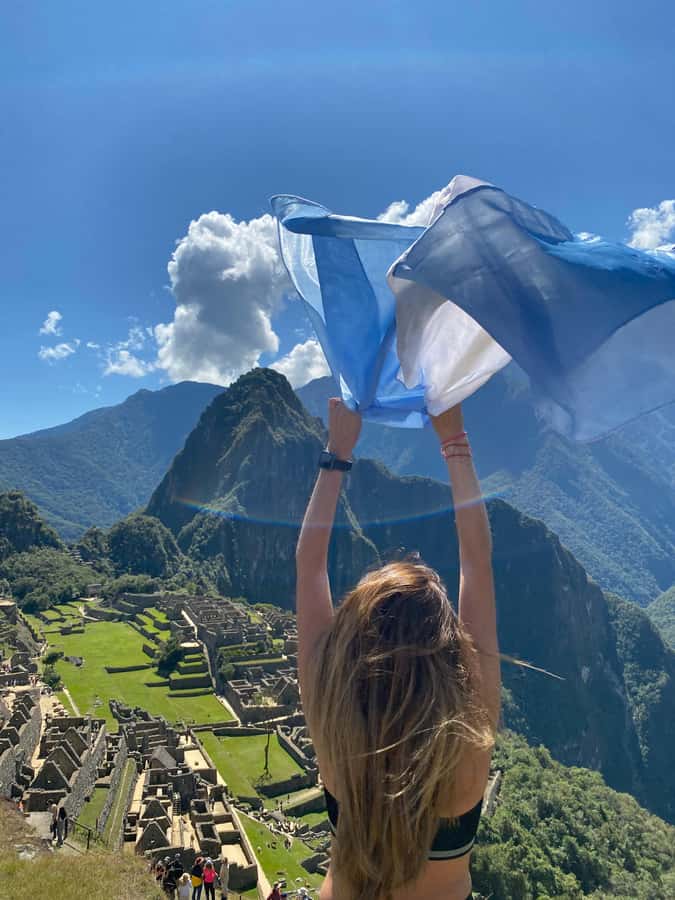
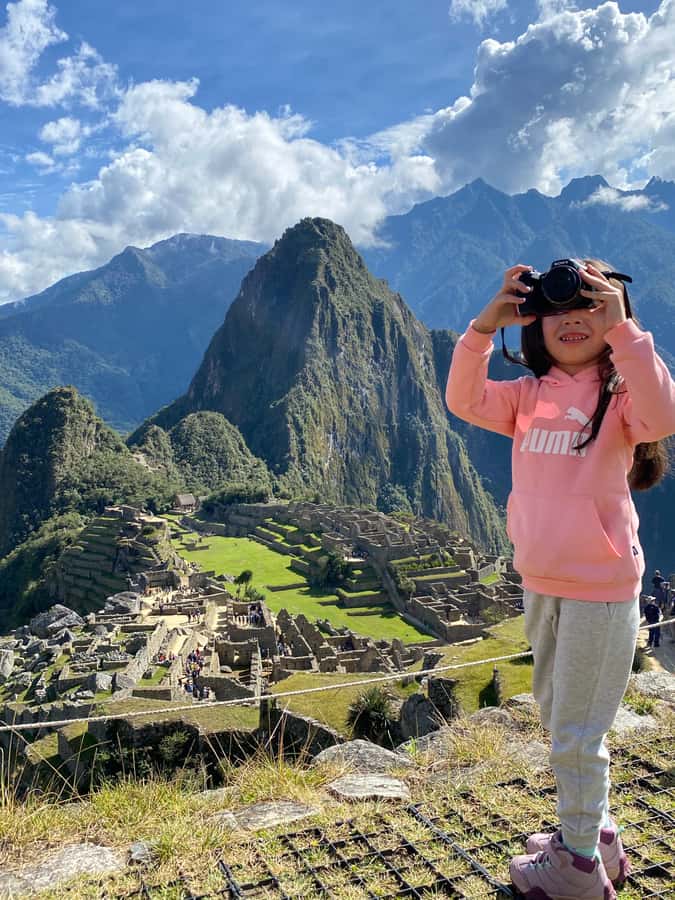
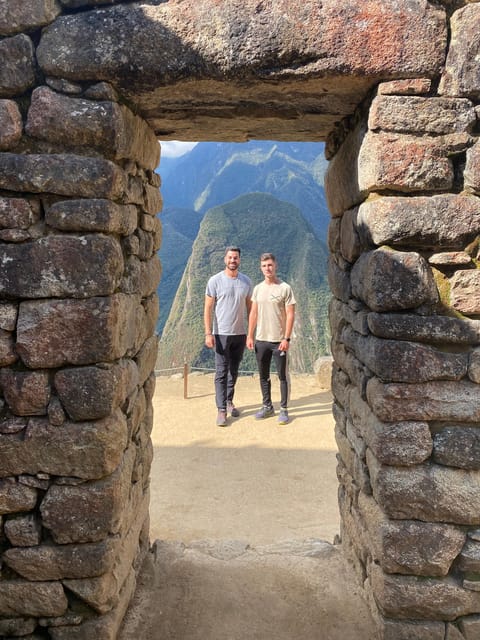
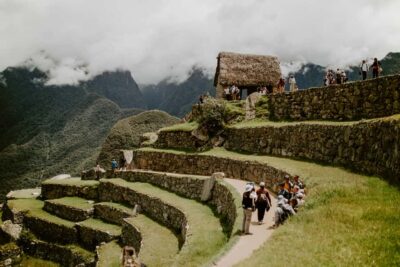
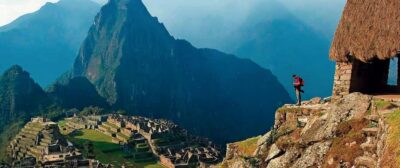
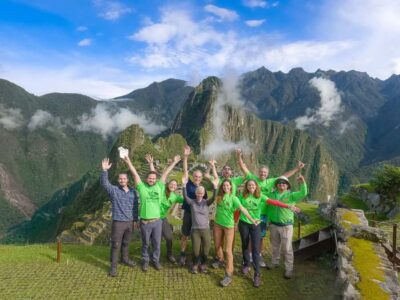
The main platforms are where you get the classic view of Machu Picchu. This part of the tour is not treated as an afterthought. Guides point out useful places to stand, help with posing, and take photos of couples, families, and small groups.
You may use your own phone or the guide’s phone. The guide team also takes videos, which is useful if you want more than a single portrait. Eric, Erick, Andre, Carlos, Emerson, Roberto, and others are praised for producing strong photos and for knowing where to position people.
This service has real value. Many visitors can frame a decent picture of the ruins, but getting a photo with everyone in the group takes planning. A guide can watch the light, find a clear angle, and make sure you are not left with only selfies. It also lets you put your phone away for part of the visit.
Still, the photographic help should not be confused with a dedicated professional camera session. The included photos are taken with phones, either yours or the guide’s. If image quality is your top reason for booking, ask how the photos will be shared and which phone will be used.
Same base, a completely different day in the Andes:
- Cusco:Sacred Valley Pisaq,Ollantaytambo,Chinchero with Lunch
★ 4.8 · 183 reviews - From Cusco: Chinchero, Moray, Maras and Ollantaytambo
★ 4.5 · 83 reviews - from Urubamba & Ollantaytambo:Sacred Valley Full-Day Private
★ 4.9 · 31 reviews - 4 days/3 nights: Inka Jungle Trek to Machu Picchu
★ 4.7 · 25 reviews
Temples, palaces, and the main plaza
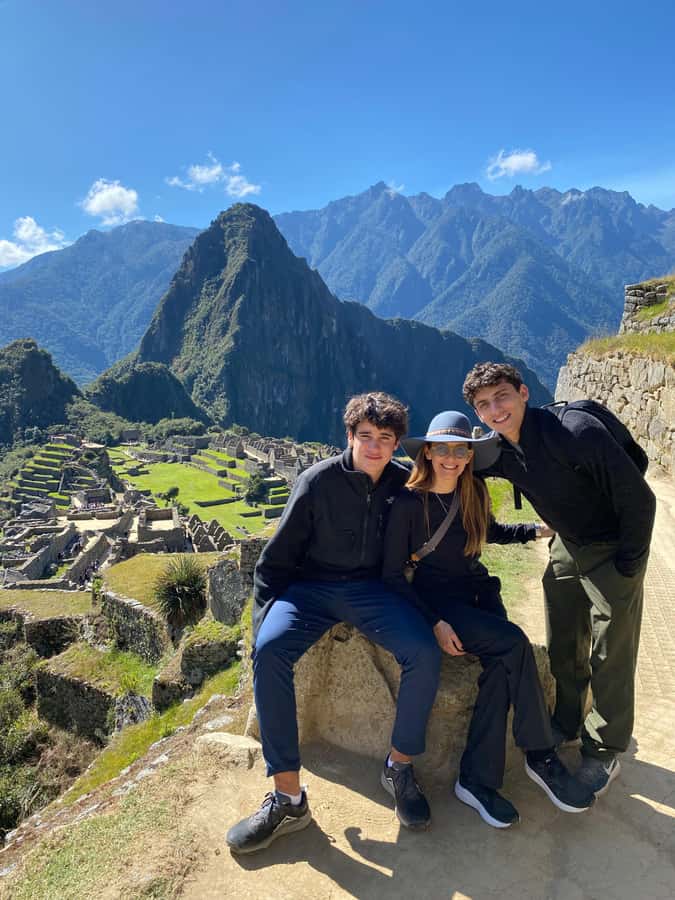
Once the photo time is over, the group continues into the citadel. The exact sequence depends on the circuit printed on your ticket, but the tour aims to cover the most important areas permitted by the route.
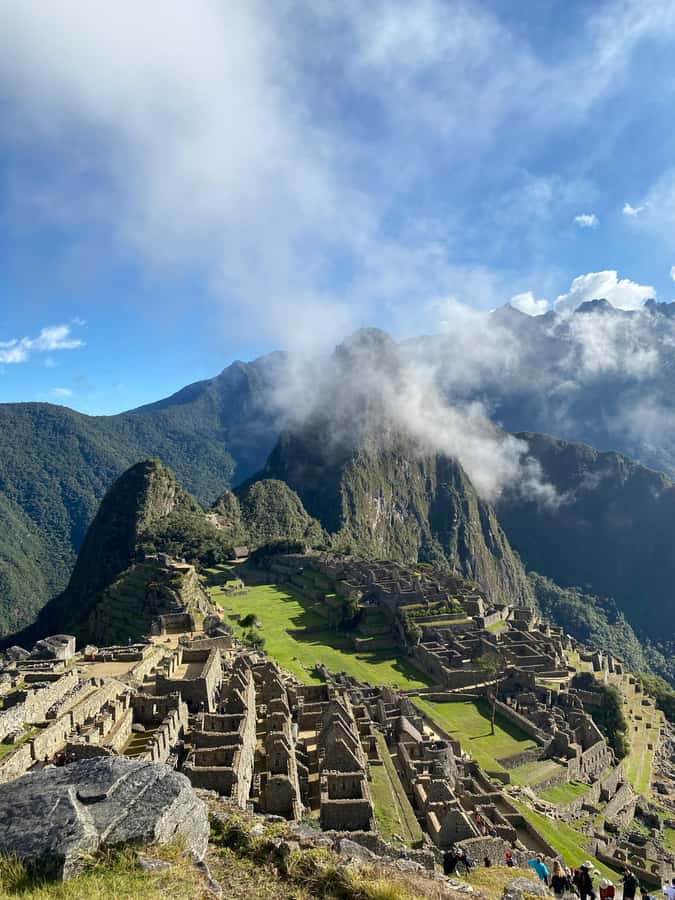
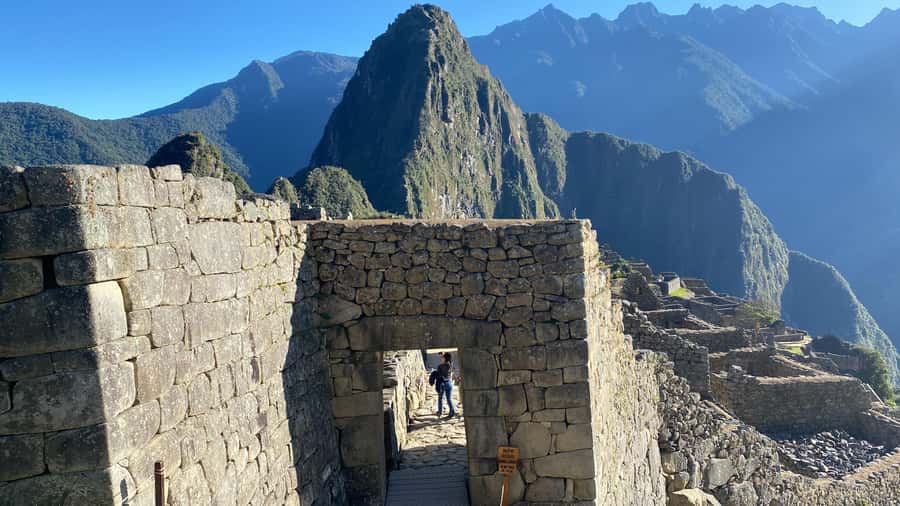
The Temple of the Three Windows is one of the major stops. Its carefully cut stonework gives the guide a chance to discuss Inca building methods and the role of ceremonial architecture. The Main Plaza helps you understand the scale of the settlement and how open spaces connected different parts of the complex.
You also visit palaces and important temples, along with the Sacred Rock. These places are more rewarding when you look at their relationship to the mountains and surrounding viewpoints rather than treating each stone structure as a separate attraction. Your guide can point out how the Incas used the natural setting in planning the site.
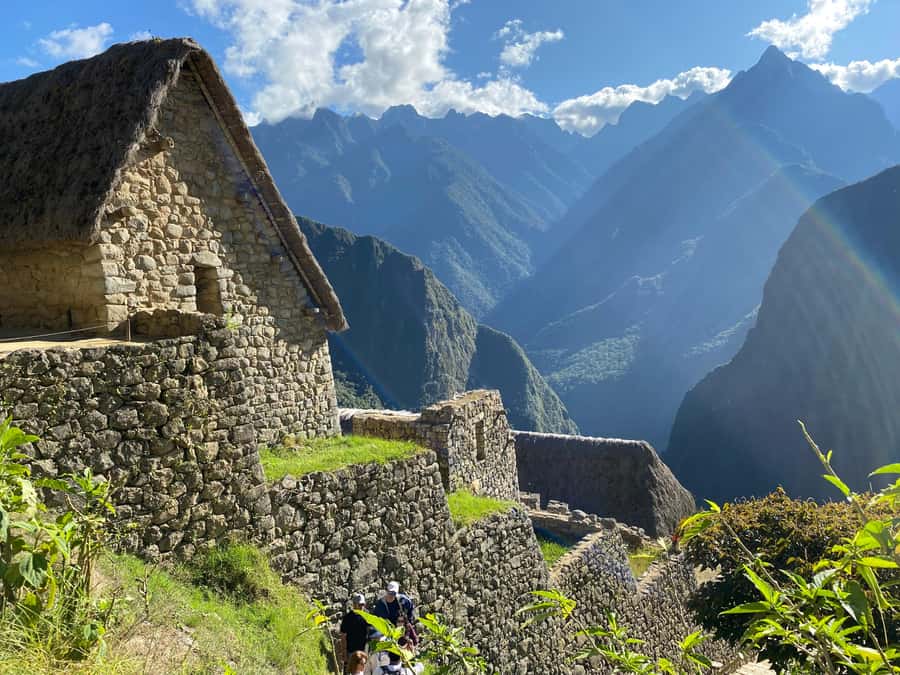
The tour includes the House of the Commoners, an especially useful stop because it shifts attention away from rulers and religious buildings. Here, the focus turns to everyday life and the people who lived and worked at Machu Picchu. That broader view makes the citadel feel less like a collection of grand monuments and more like a functioning community.
The Condor Temple is another highlight. Its stone form resembles a condor, and the guide uses the site to explain Inca beliefs and symbolic design. Interpretation is important here because the meaning is easy to miss if you simply walk past the rock formations.
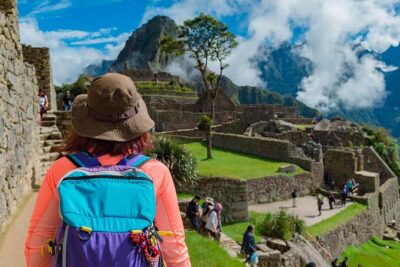
You can expect a steady walk with frequent stops for explanations and questions. The guides are described as patient, and several have waited for people completing a climb or slowed the pace when a rest was needed. Even so, the site is busy and the route is regulated, so you may not be able to linger wherever you wish.
A small group makes a practical difference
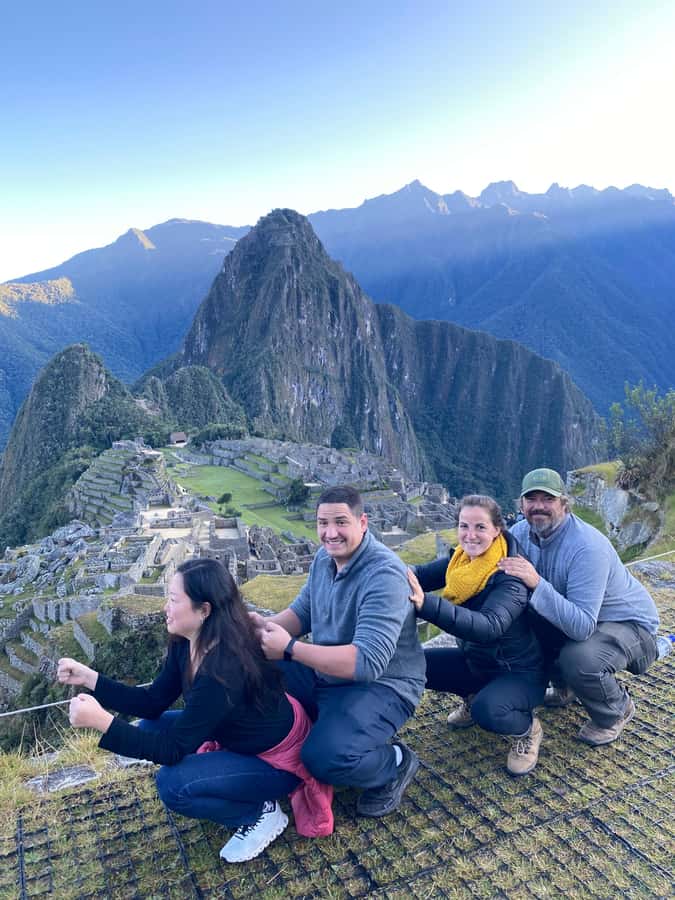
A maximum of 10 participants is a useful middle ground. You pay far less than you would for a private guide, yet the group is small enough for questions and personal assistance. The guide can usually hear you, keep track of the group, and help with photos without the feel of a large flag-following crowd.
The tradeoff is that you share the guide’s attention. Couples who want long photo sessions may need to take turns, and a group with different walking speeds may move more slowly than a private party. The tour works best when you are comfortable with a social outing and willing to share the best viewing points.
The pace appears to be one of the service’s strengths. Several guides are praised for not rushing people, while also keeping the visit moving through the circuit. For a place where every minute inside matters, that balance is valuable.
What the guides do best
The most consistent strength is explanation. Eric is praised for clear English, detailed answers, and a cheerful manner. Julio receives similar praise for his command of history and culture, with humor that helps during an early start. Guides including Erick, Andre, Carlos, Emerson, Fred, Elvis, Juan, William, and Paul Alexander are also described as friendly, clear, and helpful.
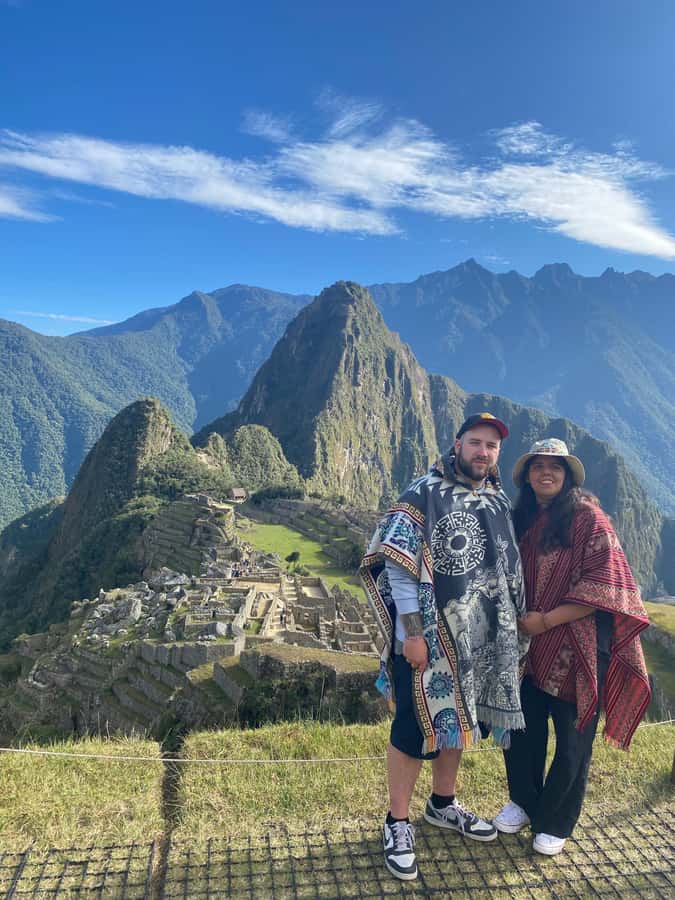
The second major strength is photography. This is not a guide who points at the view and leaves you to manage your own phone. The team regularly helps with poses, angles, photos, and short videos. That is particularly useful for couples and families who want a record of the day together.
The third is patience. Juan is praised for knowing when the group needed to rest, and other guides have waited when people took longer on a climb. Machu Picchu can be physically tiring, so a calm guide is more useful than one who simply recites facts and pushes ahead.
Languages are English, Spanish, and Portuguese. English communication is a clear priority for many visitors, and the guides named in the feedback are repeatedly praised for speaking clearly. If you are booking for a mixed-language group, confirm the language you need when arranging the tour.
Price, timing, and what you actually pay
The tour costs $30 per person. That covers the guided visit, assistance, photo help, and the album or printed visual material used during the explanations. It does not cover entry to Machu Picchu, the bus, meals, or drinks.
Your basic additional costs are:
- Machu Picchu ticket: 152 soles
- Bus ticket up and down: $24
- Food and drinks: not included
The value is strongest if you want context and photos but do not need a private guide. A self-guided visit costs less in guiding fees, but you lose the explanations, route help, and someone to take photos of the whole group. At $30, this tour also avoids the much higher cost of arranging a private specialist.
The three-hour duration is long enough to see key areas without turning the visit into an all-day march. It includes the uphill walk, photo time, and the citadel tour. Your exact route and access depend on the circuit assigned with your ticket, so do not assume every booking includes the same viewpoints or mountain hikes.
One past booking included Circuit 3 with a Huayna Picchu hike, but that should not be treated as a standard part of this group tour. Check your ticket and route carefully. The guide can explain the site according to your circuit, but the guide cannot add areas your ticket does not permit.
Who should book this tour
I would choose this tour if you want a clear introduction to Machu Picchu, enjoy asking questions, and would like help taking photos. It suits couples, families, first-time visitors, and anyone who prefers a small group over wandering alone.
It is also a good fit if English is not your first language. Clear speech and visual material can make the temples and architectural details easier to understand. Portuguese and Spanish are available as well.
You might prefer a private guide if you want to set every stop and spend a long time on one subject. You may also want a different arrangement if your main goal is a mountain climb rather than a citadel tour. The standard plan focuses on Machu Picchu itself and lasts about three hours.
Bring your passport or ID card. Pets, alcohol, and drugs are not allowed. Since the tour includes walking and an uphill section, wear practical footwear and carry only what you need, though the supplied details do not specify a required clothing list.
Should you book it?
Book this tour if you want history, patient guiding, and useful photos at a reasonable guide fee. The team has a strong record for clear explanations, friendly service, good English, and photo help, with Eric, Julio, Gregory, Erick, and other guides each receiving strong praise.
The main caution is the separate cost of the entrance ticket and bus, plus the limits of a group route. Confirm your meeting point, language, and circuit before you go. If those details suit your plans, this is a practical way to make Machu Picchu more than a quick look at a postcard view.
FAQ
Where does the tour start?
The stated meeting point is Plaza Manco Capac in Aguas Calientes. Look for a large tag marked ERIC. Pickup help from a hotel or train station may also be available, so confirm your exact meeting details in advance.
How long does the Machu Picchu tour last?
The tour lasts about three hours. The time inside Machu Picchu is expected to be about 2.5 to 3 hours, including the initial uphill walk, photo time, and the guided visit.
Is the Machu Picchu entrance ticket included?
No. The Machu Picchu ticket costs 152 soles and must be purchased separately.
Is the bus included?
No. The bus ticket for travel up and down from Machu Picchu costs $24 and is separate from the $30 tour price.
Which languages are available?
The live tour is offered in English, Spanish, and Portuguese.
Can the guide take photos?
Yes. The guides take professional-style photos and videos with your phone or their own phone. They also help you find photo locations and poses at the main platforms.
Just added around Urubamba
- Sun and Moon Tour★ 4.5 · 3 reviews
- Sacred Valley Tour 1 Day★ 5.0 · 3 reviews
- Classic Sacred Valley full day★ 5.0 · 3 reviews
- 1 Day – Humantay Lake★ 3.1 · 3 reviews
- Cusco | Visit Maras, Moray, Chinchero, Pisac | Valle Vip★ 4.4 · 3 reviews
- From Cusco:Chinchero, Moray, Maras, Ollantaytambo with lunch★ 5.0 · 3 reviews
- From Cusco: Salkantay trek 5 days/4 nights meals included★ 4.0 · 3 reviews
- From Cusco: Sacred Valley VIP Tour with Buffet Lunch★ 4.7 · 3 reviews
Machu Picchu Tours, compared.
4-Day Inca Trail to Machu Picchu with Accommodation
Read our review →
2-Day Trip to the Sacred Valley and Machu Picchu
Read our review →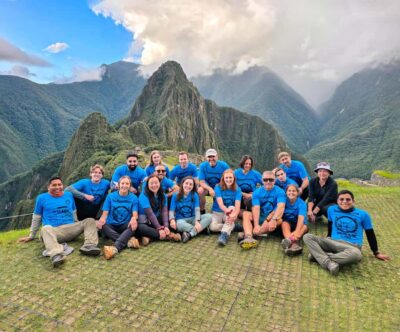
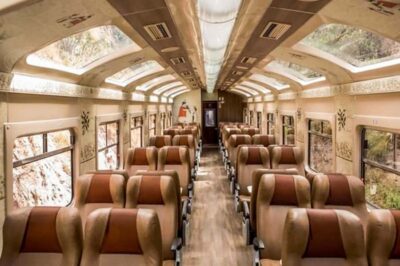
Machu Picchu 2-Day Inca Trail with Panoramic Train
Read our review →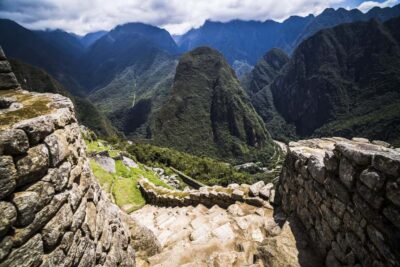
Browse the lists this tour appears in