
Reviewed · SACRED VALLEY TOURS
Cusco: Full-Day Sacred Valley History Tour
The best part of this full-day Sacred Valley tour is its range. In one long day, you see Inca terraces and stonework, follow the Urubamba River, browse Pisac, and watch Chinchero artisans turn wool into colorful textiles. It gives you a useful first look at the valley without needing to arrange several separate trips.
I like the small group limit of 15, which keeps the van and walking stops more manageable. I also like the bilingual guiding. Guides such as Eddy and Manuel have been praised for explaining Cusco, Inca culture, and local customs clearly in both English and Spanish.
The main drawback is the schedule. Pickup can be slow, lunch may take longer than expected, and the day runs roughly from 7:30 AM to 7:00 PM. You should also check exactly which entrance fees your booking includes, since the S/70 tourist ticket is not part of the base price.
In This Review
- Key points at a glance
- Why this Sacred Valley day works
- El Mirador and the first view into the valley
- Pisac ruins, terraces, and market color
- Urubamba lunch and the long middle of the day
- Following the Urubamba River to Ollantaytambo
- Chinchero and the living textile tradition
- The guide and group size make a real difference
- Timing, transport, and the true cost
- Who should book this day tour?
- Should you book the Cusco Sacred Valley tour?
- FAQ
- How long does the Sacred Valley tour last?
- Where does pickup take place?
- Which languages are available?
- Is lunch included?
- Are entrance fees included?
- How large is the group?
- Is the tour suitable for wheelchair users?
Key points at a glance
- A full sweep of the Sacred Valley: Visit El Mirador, Pisac, Urubamba, Ollantaytambo, and Chinchero in one 11-hour outing.
- Pisac combines ruins and market time: See terraces and stonework, then look for jewelry and handmade goods in town.
- Ollantaytambo is the strongest Inca stop: Its massive construction and unusual rock forms give the site real visual weight.
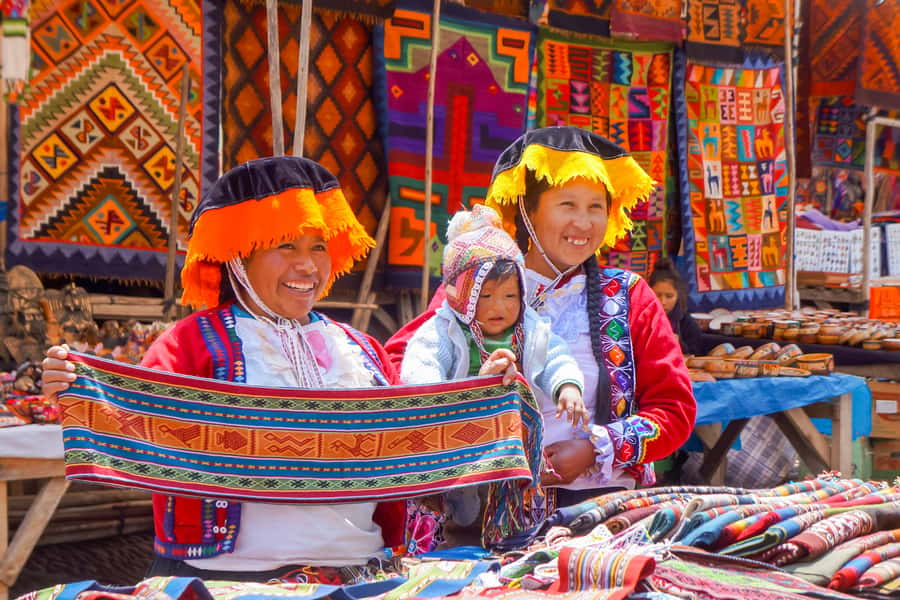
- Chinchero keeps old textile methods alive: Watch natural dyes being made and learn how alpaca and sheep wool become cloth.
- Lunch is included, but timing varies: The buffet in Urubamba saves you from finding food on your own, though it may take up to 75 minutes.
- Budget carefully for entrance fees: The $45 price covers transport and lunch, but the S/70 tourist ticket is extra unless your selected option says otherwise.
Why this Sacred Valley day works
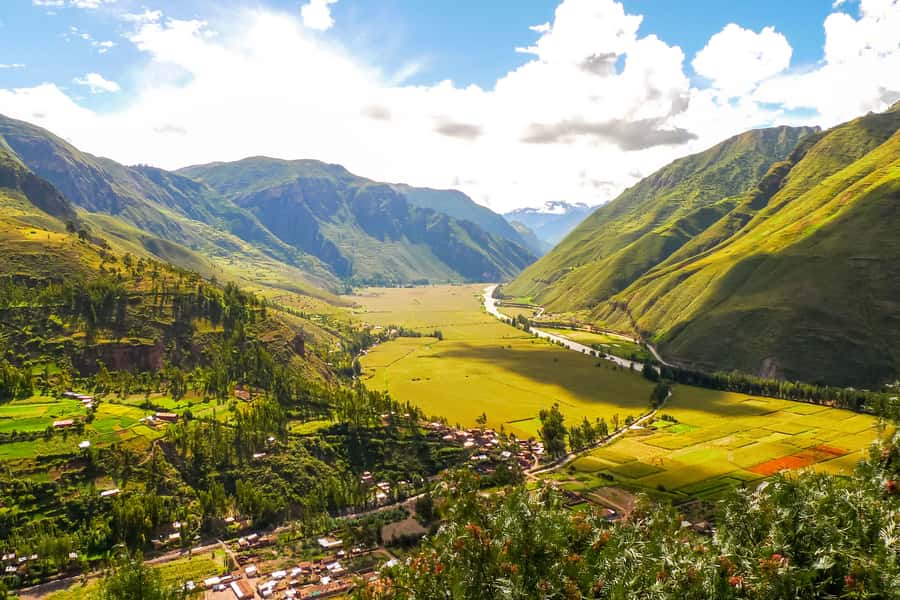
The Sacred Valley is not just a collection of ruins scattered around the Andes. It was one of the main areas settled by the Inca because its fertile plains offered food, water, and room for farming at high altitude. As you leave Cusco, you begin to see why this valley mattered.
The road winds through the mountains north of the city. The trip itself is part of the lesson, since your guide can explain how Cusco connected with the settlements below. You pass rural villages and may see llamas and alpacas along the way, with steep mountain slopes rising around cultivated ground.
This tour suits you if you want context as well as photographs. It is not simply a transport service to the famous ruins. A bilingual guide travels with the group and explains the places in English and Spanish. The group size is limited to 15, though the actual feel of the day depends on how efficiently pickup and stops are handled.
You should expect a busy route, not a slow village walk. Five major stops, lunch, road time, and return transport fill the day. That makes the tour good value for a first visit, but tiring if you prefer to linger at each site.
More Sacred Valley days out of Cusco:
- From Cusco: Sacred Valley & Maras Salt Mines Tour with Lunch
★ 4.8 · 2,227 reviews - Cusco: Sacred Valley, Pisac, Ollantaytambo, Salt Mines Moray
★ 4.6 · 1,058 reviews - Sacred Valley: Chinchero, Moray, Ollantaytambo & Pisac+Lunch
★ 4.8 · 501 reviews
El Mirador and the first view into the valley
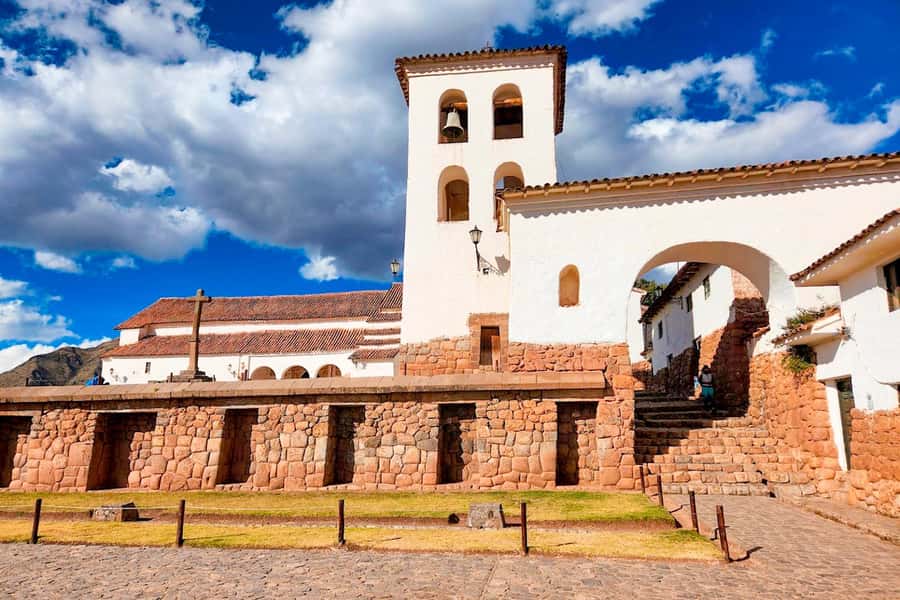
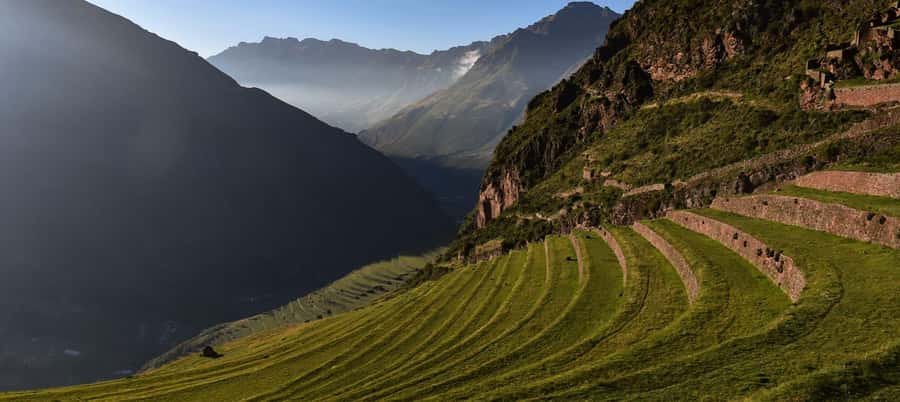
Your first proper stop is El Mirador, a lookout above the Sacred Valley. From here, the valley opens below you, with fertile plains cut by fields and mountain slopes marked by broad Inca terraces.
This viewpoint gives the rest of the day a useful frame. At Pisac and Ollantaytambo, you will see individual ruins. At El Mirador, you understand the larger plan: the Inca shaped hillsides for farming and built irrigation channels to move water across difficult ground.
Allow yourself time to look beyond the nearest village or road. The important sight is the relationship between the flat valley floor and the steep slopes around it. You can also use this stop to get your bearings before the tour becomes more site-focused.
The lookout may be less rewarding in poor weather, since clouds can cover the distant peaks. Still, it is an efficient opening stop and gives your guide a natural place to introduce the Inca settlement of the valley.
Pisac ruins, terraces, and market color
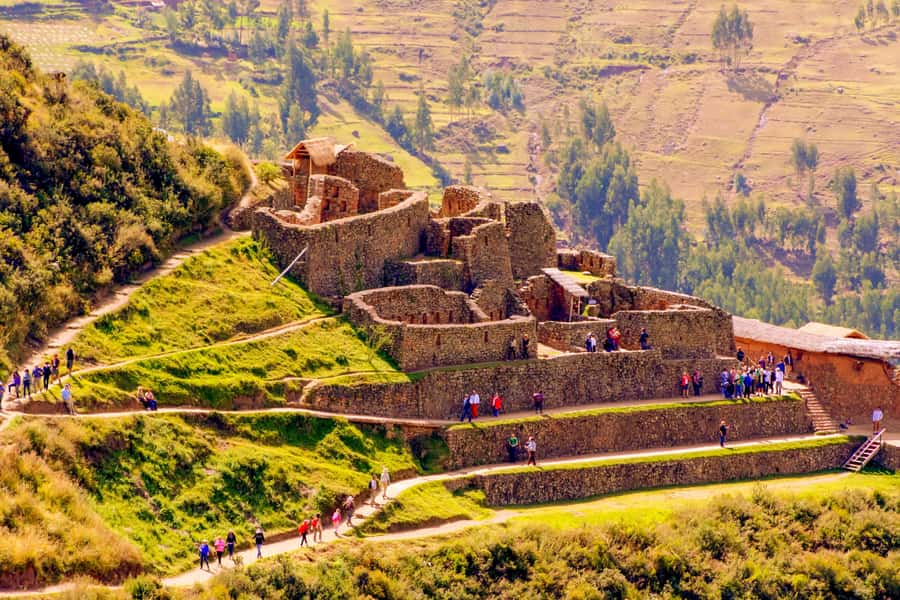
The tour then heads toward Pisac, one of the most useful stops for seeing how Inca engineering and local commerce fit together. The ruins include impressive agricultural terraces and carefully worked stone. Your guide explains the site and its role in Inca culture while you move among the remains.
The terraces are the main feature to watch. They are not decorative steps. They turned steep ground into usable farmland and helped manage water and soil. From higher parts of the ruins, you can see how much work went into shaping the slopes.
Pisac also adds a more modern, social side to the day. The colorful market gives you a chance to browse local goods after seeing the archaeological site. You may also stop at a jewelry shop connected with Inca-inspired designs. This part can feel more commercial than the ruins, so keep your spending choices clear and do not feel pressured to buy.
If you want handmade alpaca goods, bring cash. One detailed account of the day singled out the quality of the alpaca textiles, and that is useful advice for shoppers. The tour gives you a quick look rather than a long, unhurried market session, so decide in advance if you care more about browsing, buying, or staying with the guide.
Pisac can be a physically demanding stop because the ruins sit above the town and involve uneven ground. Comfortable shoes are specifically recommended. The tour is not suitable for wheelchair users, and the combination of archaeological paths, steps, and a full day on the road makes mobility an important consideration.
Urubamba lunch and the long middle of the day
After Pisac, you continue to Urubamba for a buffet lunch. This is included in the tour price, which is helpful because you do not need to search for a restaurant while keeping up with a fixed schedule.
The meal has received mixed reactions. The restaurant setting can be pleasant, but the buffet may seem plain or bland to some diners. More important, lunch can take about an hour and 15 minutes, from roughly 1:30 PM to 2:45 PM, depending on the day and group.
That timing matters. If breakfast was early and the morning stops took longer than planned, you may be very hungry by the time food arrives. A small snack in your day bag is sensible, provided you follow any transport rules and keep it simple.
A long lunch is not entirely bad. It gives you a real break after the morning ruins, time to use facilities, and a chance to sit down rather than eat while rushing between stops. Still, if you prefer a quick meal and more time at the archaeological sites, this is the part of the itinerary most likely to test your patience.
A few more Cusco departures worth comparing
- From Cusco: Full-Day Group Tour of Machu Picchu
★ 4.7 · 1,767 reviews - Machu Picchu: Full-Day Tour from Cusco with Optional Lunch
★ 4.6 · 927 reviews - Full-Day Excursion to Sacred Valley, Pisac and Ollantaytambo from Cusco
★ 4.5 · 174 reviews - Food and Culture Full day Tour in the Sacred Valley
★ 5.0 · 144 reviews
Following the Urubamba River to Ollantaytambo
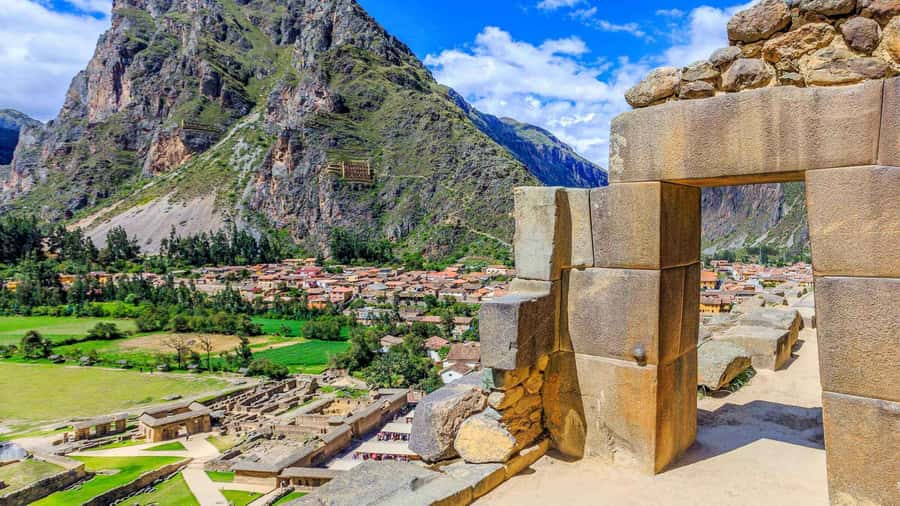
After lunch, the vehicle follows the Urubamba River toward Ollantaytambo. This section links the valley’s farming areas with one of its most important Inca settlements. You are not just moving between attractions, since the river corridor helps explain why settlements developed here.
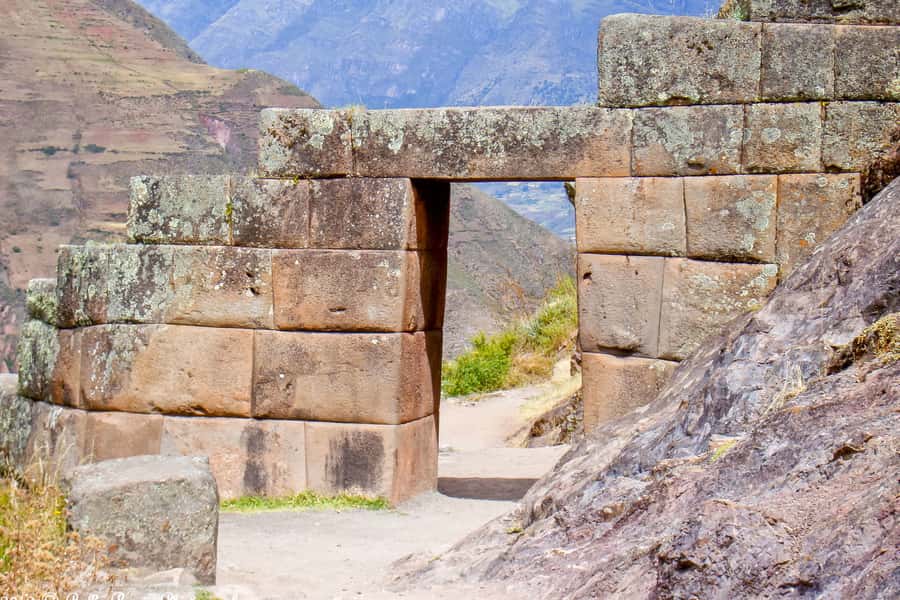
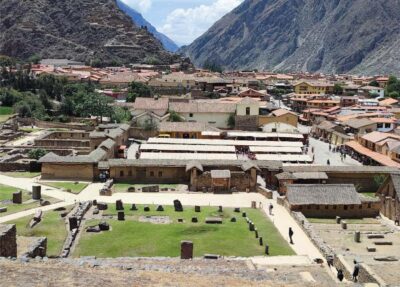
Ollantaytambo is usually the day’s most powerful ruin. The site contains large-scale Inca construction, steep terraces, and stonework that makes the builders’ skill plain. The ruins also include rock formations associated with Wiracocha, an important Inca god.
Look closely at the scale. Pisac helps you understand terraces and settlement planning, but Ollantaytambo shows construction on a more imposing level. Massive stones, high slopes, and the remains of a major center create a stronger sense of ceremony and defense.
The stop has one practical complication. Some people in the vehicle may have booked packages that end at Ollantaytambo because they are catching a train to Machu Picchu. Others continue to Chinchero and Cusco. That means the group can change during the day, and the vehicle may be managing different plans at the same time.
This does not remove Ollantaytambo from your route, but it can make the schedule feel less uniform. Listen carefully when the guide explains where to meet and what happens after the visit. If Ollantaytambo is your final destination for a separate Machu Picchu connection, confirm those arrangements before booking this particular outing.
Chinchero and the living textile tradition
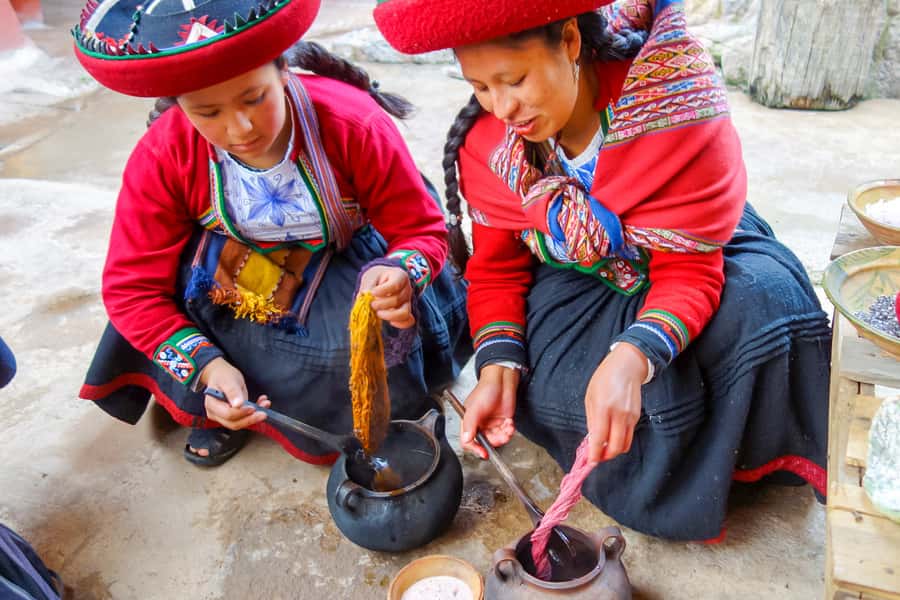
The final major stop is Chinchero, a town where local textile traditions remain central to daily life. Here you learn how natural dyes are made and how artisans use old dyeing and knitting techniques for textiles made from alpaca and sheep wool.
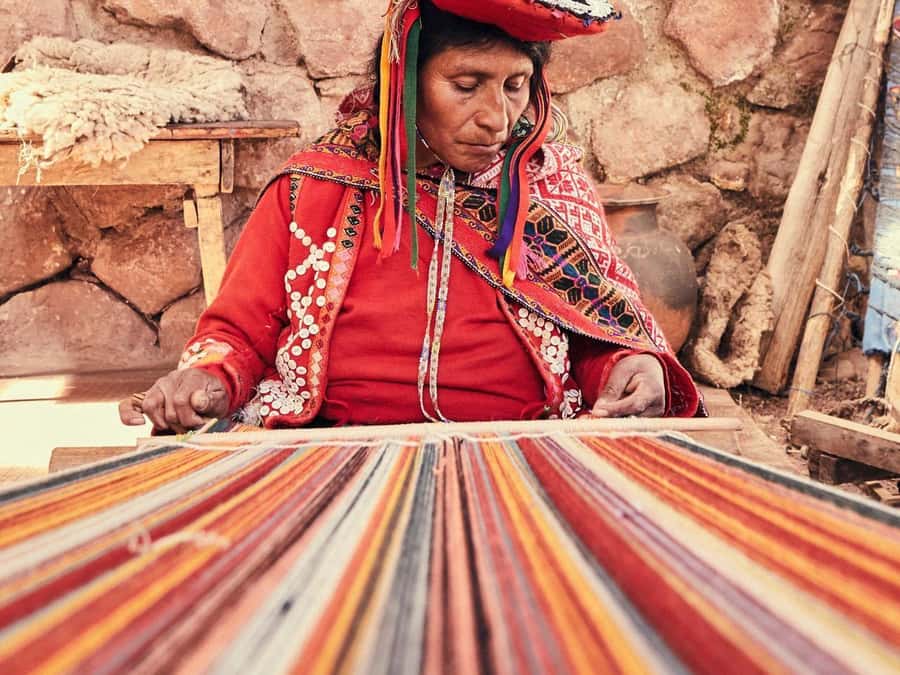
This is one of the more human stops on the route. Pisac and Ollantaytambo focus on stone and engineering. Chinchero shows skills passed through families and communities. Residents wear multicolored clothing, speak Quechua, and maintain customs that connect present life with earlier generations.
Pay attention to the dyeing demonstration. The value is not just in the finished scarf or hat. You see the process behind the colors and gain a clearer idea of the time and skill involved in traditional cloth.
Chinchero is also a good place to shop, but keep your budget in mind. Beautiful textiles can cost more than mass-produced souvenirs, and you should ask about materials before buying. If you want genuine alpaca items, cash is useful.
Because Chinchero comes late in the day, you may be tired by this point. That is a fair trade for seeing a part of Andean culture that is not limited to ruins. The stop gives the tour a stronger connection to living communities and keeps the day from becoming a sequence of stones and viewpoints.
The guide and group size make a real difference
A bilingual guide can make or break a day with this much driving. The guide needs to explain history twice, keep the group moving, answer questions, and manage several stops in two languages.
The guiding has been a major strength of this experience. Eddy has been singled out for explaining Cusco, its people, and local culture during the drive, while Manuel has been praised for clear explanations at the archaeological sites and textile demonstration. Guide assignments can change, so you should not book on the assumption that one particular person will lead your departure.
The small-group limit is useful. With up to 15 people, you have a better chance of hearing the guide and getting back to the van on time than you would with a large coach. It is still a shared tour, not a private experience. The guide may need to balance English and Spanish, and one departure had only two English speakers among a mostly Spanish-speaking group.
That language mix did not prevent clear guiding, but it can affect the pace. If you need long English explanations at every stop, ask about the language arrangement before reserving. If you are comfortable sharing time between languages, the bilingual format can work well.
Timing, transport, and the true cost
The tour costs $45 per person, which is a reasonable starting price for roughly 11 hours of transport, a bilingual guide, and buffet lunch. You are covering a wide area in one day, and arranging a private vehicle for the same route would normally require more planning and expense.
The price needs one important adjustment. The S/70 tourist ticket is not included. Entrance to the ruins is included only if you choose the option that includes it, so check the exact booking choice rather than assuming every archaeological entrance is covered.
Pickup is offered from hotels in Cusco’s historic center, beginning around 7:30 AM. The day ends with drop-off at Plaza Regocijo at about 7:00 PM, not necessarily at your hotel. That final detail matters if you are carrying luggage or have an evening reservation outside the center.
The first hour may not run like clockwork. Pickup involves collecting people from several hotels, and the van may spend additional time at a tourist transport area before setting off. Build a little patience into your morning and avoid booking a tight activity immediately after the return.
You get transportation throughout the route, but expect a long day in a vehicle. Wear shoes that can handle uneven ruins, bring water, use sun protection, and carry a light snack. The tour information specifically calls for comfortable shoes, and that is the minimum sensible preparation.
Free cancellation up to 24 hours before departure and the option to reserve without paying immediately add flexibility. They do not change the basic demands of the day: early pickup, a full schedule, walking at ruins, and a late return.
Who should book this day tour?
I would choose this tour if you have limited time in Cusco and want to see the major Sacred Valley highlights without arranging several transfers. It is especially useful for first-time visitors who want a guide to connect the views, farming terraces, Inca buildings, and Quechua traditions.
It also suits you if you value variety. In a single day you get a lookout, ruins, a market, a river journey, lunch, and a textile demonstration. Few stops receive a very long visit, but the route gives you a broad sense of the region.
I would think twice if you dislike early starts, shared vans, or fixed meal times. The tour can lose time at pickup, and lunch may be longer than you want. It is also a poor fit if you use a wheelchair or need easy access at archaeological sites.
If Machu Picchu is next on your schedule, pay close attention to the Ollantaytambo arrangements. Some participants leave the group there for the train, while others continue to Chinchero and Cusco. The different packages can be convenient, but only if your own transport plan is clear.
Should you book the Cusco Sacred Valley tour?
Book it if you want strong coverage for a modest price and can accept a long, shared day. Pisac, Ollantaytambo, and Chinchero each contribute something different, while the bilingual guides and small group help keep the experience personal enough for a scheduled tour.
Skip it if you want to explore one site slowly, avoid shopping stops, or need a precise timetable. For most visitors with one open day, though, the combination of Inca engineering, river scenery, village life, and textile traditions makes this a sensible introduction to the Sacred Valley. Just confirm the entrance-fee option, carry cash for crafts, and leave room in your evening schedule for a late return.
FAQ
How long does the Sacred Valley tour last?
The tour lasts about 11 hours. Pickup begins around 7:30 AM, and return to Cusco is expected at about 7:00 PM.
Where does pickup take place?
Pickup is included from hotels in the historic center of Cusco. Drop-off is at Plaza Regocijo.
Which languages are available?
The live guide service is available in English and Spanish. The guide explains the tour bilingually.
Is lunch included?
Yes. A buffet lunch in Urubamba is included. Other meals are not included unless specifically stated.
Are entrance fees included?
Entrance to the ruins is included if you select the option that includes it. The S/70 tourist ticket is listed as an additional cost, so check your chosen option carefully.
How large is the group?
The tour is limited to 15 participants. It is a shared small-group tour rather than a private excursion.
Is the tour suitable for wheelchair users?
No. The tour is not suitable for wheelchair users, and comfortable shoes are recommended for the archaeological sites and walking stops.
Just added around Cusco
- Cusco: Via Ferrata, Skybike, and Rappel Adventure★ 5.0 · 3 reviews
- From Cusco: Maras and Moray and Ollantaytambo Tour★ 5.0 · 3 reviews
- Cusco: Rainbow Mountain Tour at Sunset Without the Crowds★ 4.7 · 3 reviews
- Cusco: Sacred Valley Day Trip with Maras & Moray Salt Mines★ 5.0 · 3 reviews
- Valle Sur Cusco | half day★ 4.3 · 3 reviews
- IN MACHU PICCHU: Private Tour Guide Service★ 5.0 · 3 reviews
- Salkantay trek to Machu Picchu – 5D/4N – Premium★ 3.3 · 3 reviews
- Guide in Machu Picchu★ 5.0 · 3 reviews
Sacred Valley Tours, compared.
Sacred Valley & Maras Salt Mines Tour with Lunch
Read our review →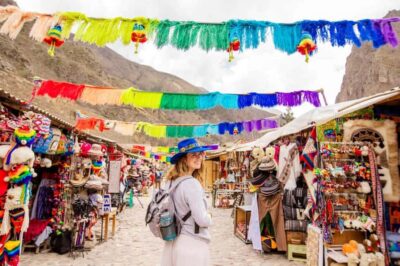
Sacred Valley, Pisac, Ollantaytambo, Salt Mines Moray
Read our review →

2-Day Trip to the Sacred Valley and Machu Picchu
Read our review →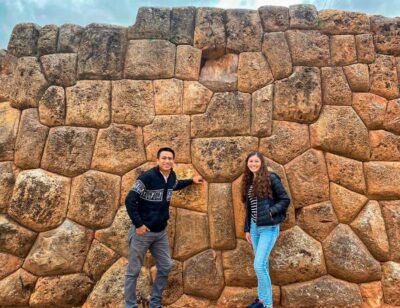
Sacred Valley Pisaq,Ollantaytambo,Chinchero with Lunch
Read our review →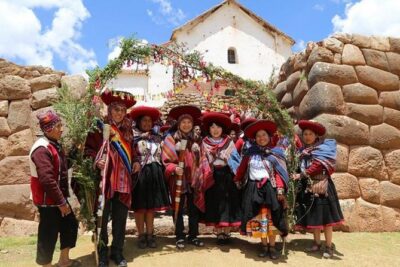
Full-Day Excursion to Sacred Valley, Pisac and Ollantaytambo from Cusco
Read our review →
Food and Culture Full day Tour in the Sacred Valley
Read our review →Browse the lists this tour appears in