
Reviewed · AUSANGATE AND SEVEN LAGOONS TREKS
Ausangate Trek 5 Days
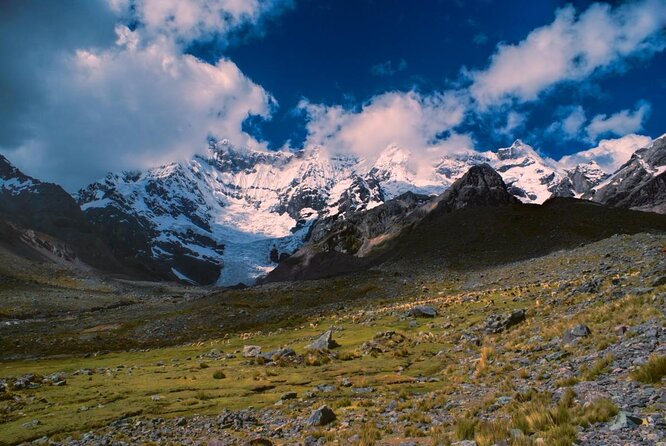
The Ausangate Trek is a high-altitude walk around one of Peru’s great sacred mountains, with turquoise lakes, glaciers, alpacas, hot springs, and long stretches where you may see few other people. This is not a gentle introduction to the Andes. You sleep as high as 4,630 meters and cross Palomani Pass at 5,200 meters, so the setting is spectacular partly because it asks real effort from you.
I like the small maximum group of 10, which gives the guide room to adjust the pace and explain the area. I also like the practical mix of scenery and culture: you soak in Upis and Pacchanta, eat hot meals in camp, and finish with a local family showing food, traditions, and weaving. The main caution is altitude. Even fit walkers can find seven or eight hours of hiking at these heights tiring, and the cold at night should be taken seriously.
In This Review
- Key points before you book
- Why Ausangate feels different from Cusco’s famous day trips
- Day 1: From Rondoca to Upis hot springs
- Day 2: Arapa Pass, Puqa Q’ocha, and Apacheta Pass
- Day 3: Palomani Pass at 5,200 meters
- Day 4: Blue lagoons and the Pacchanta hot springs
- Day 5: Local food, weaving, and the return to Cusco
- Food, equipment, and the people who make camp work
- What $660 buys you
- Cold nights, high passes, and realistic preparation
- Who should choose this trek?
- Should you book the Ausangate Trek?
- FAQ
- Where does the Ausangate Trek begin?
- How high does the trek go?
- How many people can join the group?
- Are meals included?
- Is a sleeping bag included?
- Is the entrance fee included?
- What happens if bad weather cancels the trek?
Key points before you book
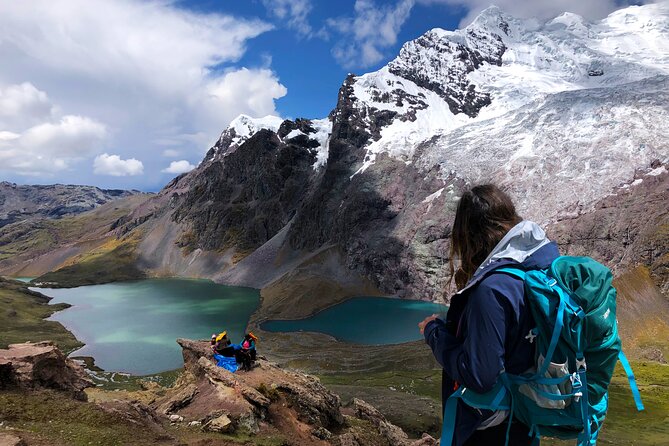
- 5,200-meter high point: Palomani Pass is the hardest and highest section of the trek.
- Four nights camping: You spend nights at roughly 4,200 to 4,630 meters, often in very cold conditions.
- Small groups: The tour accepts a maximum of 10 people, useful on a demanding route.
- Meals are part of the plan: Five lunches, four dinners, and four breakfasts are included.
- Two hot-spring stops: Upis and Pacchanta offer welcome comfort after long days.
- Strong local focus: The final day includes food, cultural traditions, and weaving with a local family.
Why Ausangate feels different from Cusco’s famous day trips
Cusco is the starting point, but this trek quickly leaves the city and its busy sightseeing circuit behind. After an early 5:00 a.m. pickup, private transport takes you toward Tinke, where you can buy last-minute supplies and have breakfast before continuing to Rondoca.
The first impression is scale. Ausangate is treated as an Apu, a sacred mountain spirit in Andean belief, and the peak remains part of the view through much of the route. The trip is not only about taking pictures. Your guide may explain the mountain’s spiritual role, local customs, wildlife, and how people have lived in this high country for generations.
The route also feels less crowded than many better-known Peruvian treks. That matters when you are walking beside glacial lakes or climbing a pass. You get more quiet, more open views, and fewer interruptions from large groups.
That quiet comes with a trade-off. There is less shelter, fewer services, and less room for an easy exit once you are in the mountains. You should choose this trek because you want a demanding high-altitude route, not simply because you have five spare days in Cusco.
More Ausangate and seven-lagoon days:
- From Cusco: 7 Lakes Ausangate Trek with Breakfast and Lunch
★ 4.8 · 360 reviews - Excursion to Ausangate & 7 lakes with Coca Ceremony |Private|
★ 5.0 · 80 reviews - Full-Day Tour to Ausangate 7 Lakes
★ 5.0 · 56 reviews
Day 1: From Rondoca to Upis hot springs
The first day begins with road time, shopping, breakfast, and a short introduction to the cook and horse driver who support the trek. At Rondoca, you start walking toward the first camp, with about three to four hours on foot and roughly 8 kilometers listed for the day.
This is a useful opening day because it is shorter than the days ahead. You walk toward Upis at elevations rising from about 3,800 to 4,200 meters, giving your body some time to settle into the altitude. You will already see Ausangate, and lunch is served along the route.
The highlight is Upis, where you can soak in hot springs while drinking coca tea. After a morning on the trail, the combination is more than a pleasant extra. It gives tired legs a break before dinner and the first night in camp.
Your campsite is at about 4,200 meters, or 13,780 feet. That number is worth taking seriously. The day is short on paper, but altitude can make a modest climb feel slow. Walk steadily, drink what your guide recommends, and do not use the hot springs as proof that you are ready to push harder the next day.
Day 2: Arapa Pass, Puqa Q’ocha, and Apacheta Pass
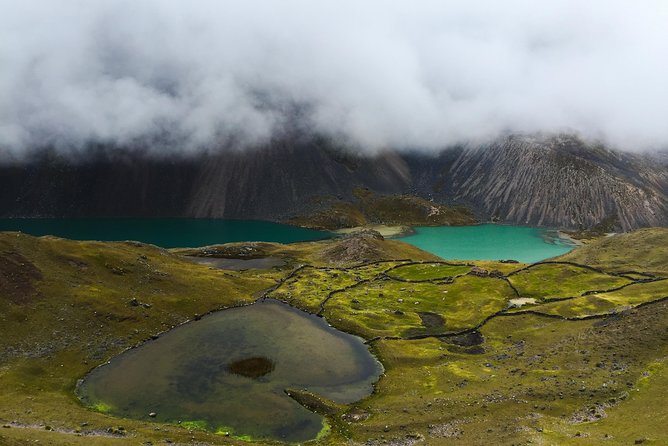
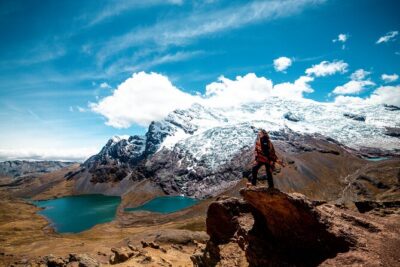
Day two is where the trek begins to feel properly alpine. You wake to hot coca tea, eat breakfast, and climb to Arapa Pass at 4,850 meters. The route then drops for about two and a half hours through the valley, passing green Puqa Q’ocha before reaching turquoise Jatun Puqa Q’ocha.
Lunch beside Jatun Puqa Q’ocha should be one of the day’s memorable pauses. You have views toward Ausangate, time to explore near the shore, and a strong sense of how much the scenery changes with elevation and light.
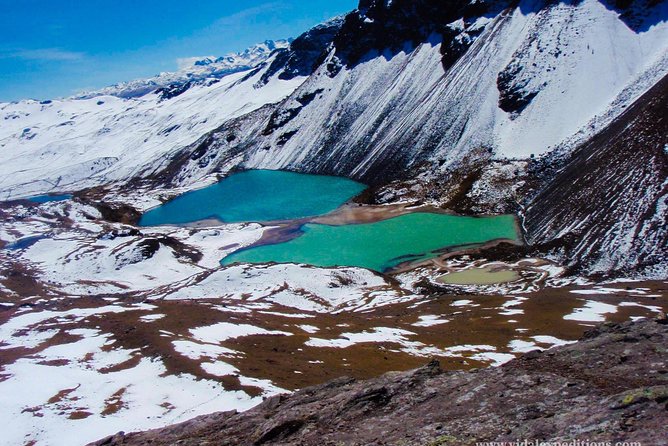
The second major climb is Apacheta Pass at about 4,980 meters. Below it lies another blue-green lake, fed by snowmelt from Ausangate. You then descend for about an hour to Ausangate Qocha, where you camp for the second night.
The figures tell the story: around 12 kilometers, seven hours of hiking, and an elevation range that reaches close to 4,930 meters. The challenge is not just the uphill sections. Descending after a high pass can be hard on your knees, and the cold campsite at roughly 4,630 meters may affect sleep.
This is also the day when good support matters. Vidal Expeditions uses horses to carry equipment, and the cook prepares the included meals in camp. You still carry what you need for the day, but you are not hauling the complete camping load over two high passes.
Day 3: Palomani Pass at 5,200 meters
Day three reaches the trek’s highest point. From camp, you climb for about two hours to Palomani Pass, at 5,200 meters or 17,060 feet. This is the section that will decide how much you enjoy the route, so you need to respect the pace and your own condition.
At the pass, the guide holds a ceremony for Apu Ausangate. This gives the climb a cultural meaning beyond reaching a number on an elevation profile. The high Andes are not simply a backdrop here. The mountain is part of a living belief system, and the ceremony helps connect the physical route with local tradition.
After the pass, you descend for about an hour to Uchuy Phinaya for lunch. The afternoon continues for several hours toward the next campsite. The day covers about 13 kilometers, with six to seven hours of hiking and elevations ranging from about 4,600 to 5,200 meters before dropping to camp near 4,500 meters.
You should expect this to be the toughest day, even if day two has more than one major pass. The climb is high, the air is thin, and the descent does not instantly restore your energy. If you develop serious altitude symptoms, tell your guide promptly. A moderate fitness level is required, but fitness cannot remove the effects of altitude.
Guides connected with this trek include Guillermo and Urbano, also called Chino. Their roles go beyond keeping the group on the route. The experience is stronger when your guide explains the mountain, local wildlife, and customs instead of treating the walk as a silent march from camp to camp.
More treks starting in Cusco:
- Cusco: 4-Day Inca Trail to Machu Picchu with Accommodation
★ 4.8 · 432 reviews - Cusco: Machu Picchu 2-Day Inca Trail with Panoramic Train
★ 4.9 · 260 reviews - From Cusco: 2-Day Inca Trail to Machu Picchu
★ 4.2 · 244 reviews - Machu Picchu: Inca Trail 2-Day Overnight Guided Tour
★ 4.9 · 203 reviews
Day 4: Blue lagoons and the Pacchanta hot springs
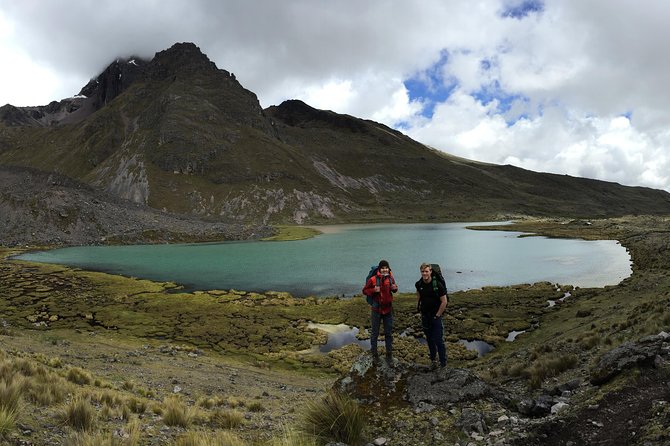
The fourth day turns toward comfort. There is one pass to cross, followed by a route through deep blue lagoons and glacial lakes in several colors. Ausangate remains visible, but you see it from a new angle, with the Pacchanta Valley opening below.
The listed distance is about 15 kilometers, with the route descending from roughly 4,300 meters. Six hours of walking may sound easier after Palomani, but a longer distance can still leave you tired. The attraction is that the day is shaped around the lakes and the final hot springs rather than another sequence of very high passes.
You may be tempted to jump into one of the cold lakes. That is your call, but the better reward is Pacchanta’s hot springs. The pools give you a place to warm up and relax while looking back toward Ausangate.
The itinerary describes Pacchanta as the goal for the day, with a hot-spring soak and views of the mountain above. Camp details are less specific here than on the earlier nights, so ask your operator how the fourth night is arranged. The important point is that you should not assume a hotel-style night simply because the trek reaches a developed hot-spring area. Camping equipment is included, and a sleeping bag is not.
Day 5: Local food, weaving, and the return to Cusco
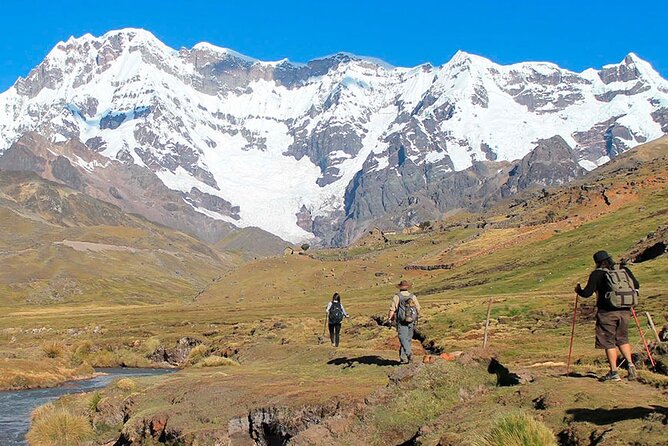
The final morning is short on foot, with about three hours listed. After breakfast, you meet a local family who demonstrates traditional food preparation, cultural practices, and weaving techniques.
This closing visit is valuable because it gives the trek a human focus. For four days, the mountain scenery dominates. On day five, you get a closer look at the skills and customs that belong to the communities around Ausangate. It is also a better way to finish than simply walking to a vehicle and heading back to town.
After the visit, a bus takes you to Cusco. The return ride is part of the day, so do not plan a tight connection or an important evening activity without checking the actual schedule with Vidal Expeditions.
Food, equipment, and the people who make camp work
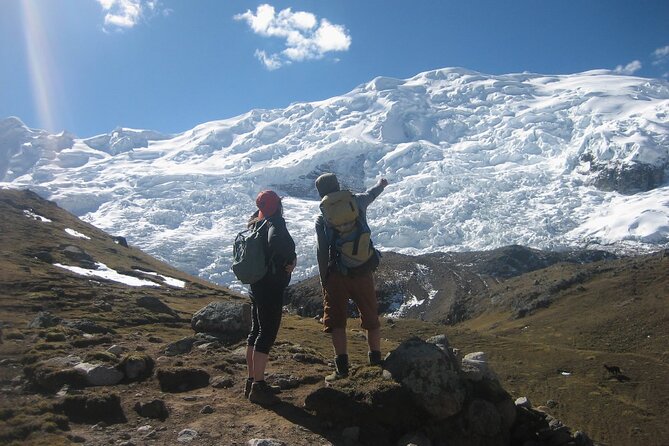
The price includes five lunches, four dinners, and four breakfasts. That covers the main trail meals, and the strongest part of the camp experience is the cooking. Benigno is associated with the expedition’s kitchen team, and the food is described as varied, hot, and plentiful despite the remote setting.
That can make a major difference. A demanding day at altitude is easier when you have a real breakfast, a proper lunch, and a warm dinner waiting. The listed inclusion says lunch five times, which fits the five-day schedule, while breakfast and dinner are included for four days.
Camping equipment and horses for equipment are included. The horse driver helps move tents and supplies, allowing you to hike with a lighter day pack. You should still clarify what camping gear is supplied, since a sleeping bag is specifically excluded.
The crew structure matters here. The guide handles pacing, route information, and cultural explanations. The cook handles food, while the horse driver manages the support load and camp equipment. People who value a comfortable, organized camp routine will likely appreciate this setup more than independent hikers who prefer to carry everything themselves.
What $660 buys you
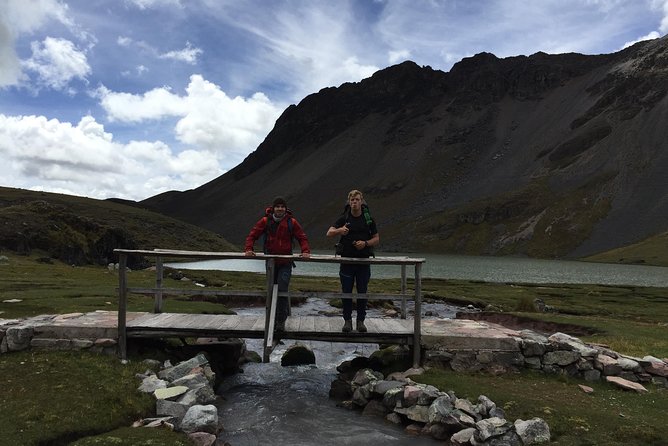
At $660 per person, this is not a cheap day excursion, but it covers five days in a remote, high-altitude area. You are paying for transport from Cusco, guides, camp equipment, horse support, and most meals, not just for access to a marked trail.
The small-group limit strengthens the value. A group of no more than 10 is easier to manage on steep passes and more pleasant at camp than a large walking procession. It also gives you a better chance to ask questions about Andean culture and the meaning of Apu Ausangate.
The price becomes less attractive if you already own camping gear, have your own transport, and prefer to cook for yourself. It becomes more attractive if you want a supported trip with food and equipment handled for you.
Budget separately for the 20-sol entrance fee and a sleeping bag. Also allow for last-minute purchases in Tinke. Since the trek begins at 5:00 a.m., organize your clothing and small essentials the night before rather than trying to pack at dawn.
Cold nights, high passes, and realistic preparation
The key preparation issue is altitude, not technical climbing. The tour calls for moderate physical fitness, but you should be comfortable walking six to eight hours on steep, uneven ground before choosing it.
The camps sit at extreme elevations:
- Upis: about 4,200 meters
- Ausangate Qocha: about 4,630 meters
- Third camp: about 4,500 meters
Night temperatures can feel severe. Bring the warmest mountain clothing you can manage, including strong insulation for camp, dry layers, gloves, and a warm hat. A sleeping bag is not included, so arrange one before departure.
Your day pack should hold water, rain protection, sun protection, snacks, and an extra warm layer. The supplied information does not specify a packing list, so confirm the equipment details with the provider before you leave Cusco.
The 5:00 a.m. start is another practical factor. Early departures are normal for remote mountain routes, but you should be ready for a long transfer before the hike begins. The first day is shorter, which helps, yet you may still feel the combined effect of an early wake-up and rapid altitude gain.
Who should choose this trek?
You should consider it if you want dramatic mountain scenery with a strong chance of solitude, enjoy long hiking days, and like the idea of learning about Andean beliefs and local traditions along the way.
It suits hikers who are comfortable with basic camping and who see hot springs, good meals, and horse support as worthwhile comforts rather than luxuries. It also fits people who would rather spend five days around one great mountain than rush through several unrelated stops.
You should think twice if you dislike cold nights, have little experience with high altitude, or want reliable indoor accommodation. The highest pass is 5,200 meters, and even the camps are higher than many mountain towns. This is a serious trek wrapped in a well-supported format.
Vidal Expeditions has received a perfect 5 rating from 74 reviews, with 100 percent recommending the experience. The strongest praise centers on the crew, food, organization, cultural explanations, and the feeling of being far from the usual tourist route. Guides named in connection with the trek include Guillermo, Urbano, and Chino, while Benigno is linked with the cooking team and Angel with horse support.
Should you book the Ausangate Trek?
Book this tour if you want high Andean scenery, quiet trails, hot springs, and local culture in one demanding five-day route. The $660 price is reasonable for a small, supported expedition that includes camping equipment, horses for gear, transport, and nearly all meals.
Do not book it casually. Prepare for thin air, long days, cold camps, and a sleeping bag that you must supply yourself. If you arrive ready for those conditions, the reward is a route that feels more personal and less crowded than Peru’s most famous treks, with Ausangate appearing again and again as both mountain and sacred presence.
Free cancellation is available up to 24 hours before the start time for a full refund. Weather or minimum-group issues may lead to another date or a full refund.
FAQ
Where does the Ausangate Trek begin?
The tour begins with a 5:00 a.m. pickup in Cusco. Private transportation takes you to Tinke and then to Rondoca, where the hike starts.
How high does the trek go?
The highest point is Palomani Pass at 5,200 meters, or about 17,060 feet.
How many people can join the group?
The maximum group size is 10 travelers.
Are meals included?
Yes. The tour includes five lunches, four dinners, and four breakfasts.
Is a sleeping bag included?
No. A sleeping bag is not included, so you need to arrange one separately.
Is the entrance fee included?
No. The entrance fee costs 20 soles and is paid separately.
What happens if bad weather cancels the trek?
If poor weather causes a cancellation, you will be offered a different date or a full refund. A full refund is also available if the required minimum number of people is not reached and the tour is canceled.
Just added around Cusco
- From Cusco: Maras and Moray and Ollantaytambo Tour★ 5.0 · 3 reviews
- Cusco: Via Ferrata, Skybike, and Rappel Adventure★ 5.0 · 3 reviews
- Cusco: Rainbow Mountain Tour at Sunset Without the Crowds★ 4.7 · 3 reviews
- Cusco: Sacred Valley Day Trip with Maras & Moray Salt Mines★ 5.0 · 3 reviews
- Valle Sur Cusco | half day★ 4.3 · 3 reviews
- IN MACHU PICCHU: Private Tour Guide Service★ 5.0 · 3 reviews
- Salkantay trek to Machu Picchu – 5D/4N – Premium★ 3.3 · 3 reviews
- Full-Day Condor Viewpoint & Inca Sites Tour★ 5.0 · 3 reviews
Ausangate and Seven Lagoons Treks, compared.
7 Lakes Ausangate Trek with Breakfast and Lunch
Read our review →
Excursion to Ausangate & 7 lakes with Coca Ceremony |Private|
Read our review →
Ausangate and Rainbow Mountain Trek – 3 Days / 2 Nights
Read our review →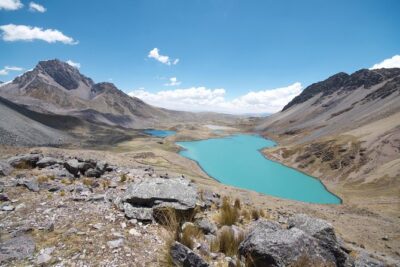
6 day Rainbow Mountain x Ausangate Trek – FlashpackerConnect
Read our review →
Browse the lists this tour appears in