
Reviewed · AUSANGATE AND SEVEN LAGOONS TREKS
Qampa Climbing 2 Days in Ausangate
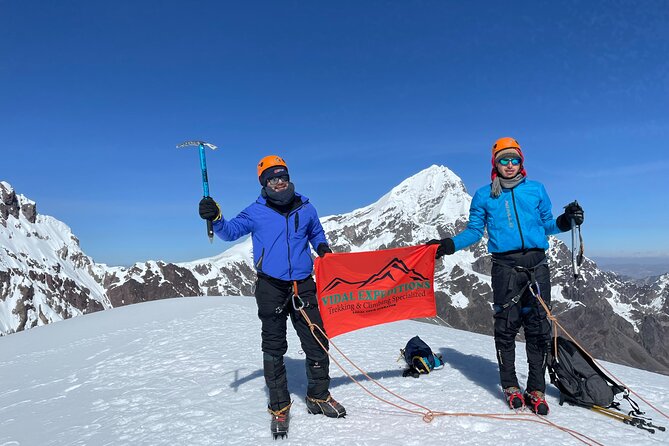
Qampa gives you a real high-mountain summit without committing to a long expedition. In two demanding days, you travel from Cusco to the Ausangate region, sleep at 4,680 meters, put on glacier gear before dawn, and climb to about 5,520 meters. The summit view can reach across the Andes toward Salkantay, more than 200 kilometers away.
I like two things right away: the small maximum group of six, and the fact that the guide handles the technical gear and instruction. I also like the practical camp setup, with tents prepared before you arrive and horses carrying extra duffel bags when arranged. The main caution is altitude. The route may be considered approachable for beginners, but 5,520 meters is serious high-altitude travel, even when the climbing itself is relatively straightforward.
In This Review
- Key points before you book
- What Qampa offers that ordinary trekking does not
- Leaving Cusco at 6 a.m. for Pacchanta
- The two-hour walk to Azulccocha
- Sleeping at 4,680 meters in base camp
- The 2:30 a.m. start and glacier ascent
- Reaching Qampa’s summit
- Pacchanta hot springs and the ride back to Cusco
- What the $380 price really covers
- Who should book this climb
- Practical preparation for the two days
- Should you book Qampa?
- FAQ
- Where does the Qampa climbing tour start?
- Where does the tour end?
- How long is the Qampa climb?
- How high is Qampa Mountain?
- Do I need mountaineering experience?
- How many people can join the tour?
- What meals are included?
- Is water included?
- Can I cancel for a full refund?
Key points before you book
- A genuine 5,520-meter summit: Qampa is a high peak near Ausangate, not simply a scenic day hike.
- Glacier travel is part of the climb: You receive high-mountain equipment and instruction before reaching the ice.
- A very early summit morning: Breakfast is served around 2:30 a.m., followed by roughly two hours of climbing to the top.
- Small groups matter here: The stated maximum is six people, useful when the pace and safety decisions become personal.
- The camp is high and cold: You sleep at 4,680 meters, so acclimatization in Cusco is important.
- Hot springs finish the effort: After returning to Pacchanta, you can soak while looking toward Ausangate.
What Qampa offers that ordinary trekking does not
Qampa, also written as Campa or Jampa in some trip descriptions, is often presented as Cusco’s easiest popular mountain climb. That description needs a little context. It means the mountain is suitable for people without previous mountaineering experience when conditions are good and a trained guide is present. It does not mean the outing is easy.
You still hike on high, exposed ground, sleep above 4,600 meters, cross a glacier, and climb to an altitude where the air is thin. Depending on the season, the final route can include a small rock-climbing section or steeper steps. Your guide decides how to handle the route and provides the necessary instruction.
The appeal is clear. You get the feeling of a proper alpine expedition in a compact two-day format. The group is small, the camp support is organized, and you do not need to carry every item yourself. It is a good introduction to mountaineering for someone who has already spent time hiking at altitude and wants to try crampons, glacier travel, and a summit push.
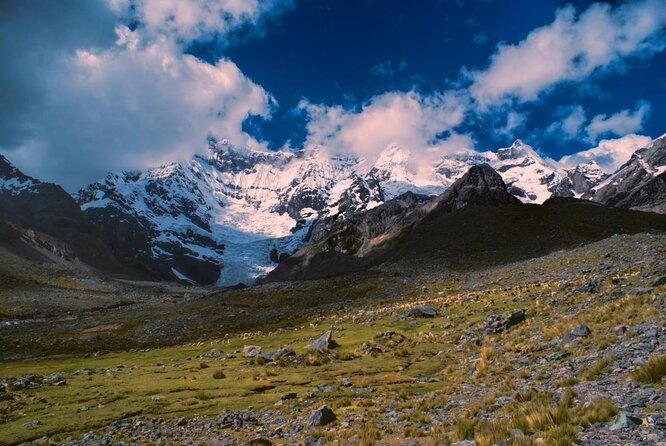
The summit is the prize. From Qampa, the view opens toward the surrounding snow peaks and can reach as far as Salkantay to the northwest. At this height, weather can change quickly, so the view is never guaranteed. That uncertainty is part of mountain travel, not a flaw in the trip.
More Ausangate and seven-lagoon days:
- From Cusco: 7 Lakes Ausangate Trek with Breakfast and Lunch
★ 4.8 · 360 reviews - Excursion to Ausangate & 7 lakes with Coca Ceremony |Private|
★ 5.0 · 80 reviews - Ausangate Trek 5 Days
★ 5.0 · 74 reviews
Leaving Cusco at 6 a.m. for Pacchanta
Pickup is scheduled from your Cusco hotel at about 6 a.m. The day begins early, but this is useful because the drive to the Ausangate region takes time and the walking begins at high altitude. The first major stop is Tinki, a small town on the Interoceanic Highway, after roughly two and a half hours on the road.
You have about 30 minutes in Tinki. Use it well. You can take breakfast, look around, or buy supplies for the mountain. Breakfast on the first morning is not included in the stated package, so this is the practical place to eat and pick up anything you still need, especially drinking water.
The road continues to Pacchanta, at about 4,060 meters. This village is the trailhead area, not the base camp. The jump from Cusco to Pacchanta is substantial, and that is why time spent acclimatizing in Cusco before the trip is more than a nice idea. You should be comfortable with altitude before starting this climb.
The transfer is part of the experience. You move from city streets to the broad, high Andean country around Ausangate. The scenery begins to feel remote well before you put on climbing gear. The drawback is simple: the first day starts with a long drive after an early wake-up, so you should not plan a late night before departure.
The two-hour walk to Azulccocha
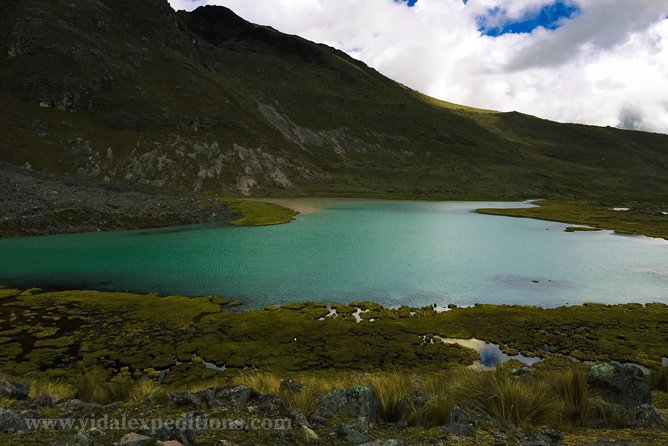
From Pacchanta, the first hike takes about two hours to Azulccocha. This is a trekking approach, not yet the technical climb. You walk toward the mountain camp through high country, with views of snow-covered peaks around you.
Lunch is served at Azulccocha. The setting is one of the strong points of the first day. Instead of eating in a roadside restaurant, you stop beside the mountain route with the peaks in view. That pause also breaks up the approach and gives you a chance to assess how your body is handling the altitude.
The official package includes two lunches, dinner, and breakfast, although the first-day breakfast is described separately as your responsibility. Water is not included, so plan to buy or carry your supply before leaving Pacchanta or Tinki. Some organized departures have had plenty of food and water available, but the listed inclusions are the safer guide when you prepare.
The walking distance itself may not sound extreme. The altitude is what makes it tiring. You can expect a slower pace, more frequent pauses, and a need to keep breathing steadily. Do not treat this as a race to camp. Saving energy for the summit morning is one of the smartest things you can do.
Sleeping at 4,680 meters in base camp
After lunch, you continue to base camp at approximately 4,680 meters. Your tents are set up before arrival, which removes a tiring chore at the end of the approach. You have dinner at camp and spend the night there.
The camp arrangement receives some of the strongest praise attached to this trip. Sleeping bags and tents have been prepared for climbers on some departures, and extra duffel bags can be carried by horses. That means you can keep your daypack focused on personal essentials rather than hauling every piece of camping equipment uphill.
Still, do not expect a comfortable lodge. At 4,680 meters, the night can be cold, and sleep may be broken by the altitude or the early alarm. The camp is functional and well placed for the summit attempt, not luxurious. A warm layer, gloves, and careful packing make a real difference.
Dinner is more important than it sounds. You need calories for a pre-dawn climb, and the cooking team has earned repeated praise for making substantial meals in a remote camp. One especially memorable touch reported on some trips was cake after the summit return. That is the kind of small reward that feels well timed when you have been awake since the middle of the night.
A few more Cusco departures worth comparing
- Rock Climbing full day
★ 5.0 · 47 reviews - From Cusco: Via Ferrata and Sky Lodge Zipline
★ 5.0 · 16 reviews - Cusco: Extreme Sky Bike and Rappelling Adventure
★ 4.4 · 10 reviews - From Cusco: Via Ferrata & Zip Line with lunch
★ 5.0 · 5 reviews
The 2:30 a.m. start and glacier ascent
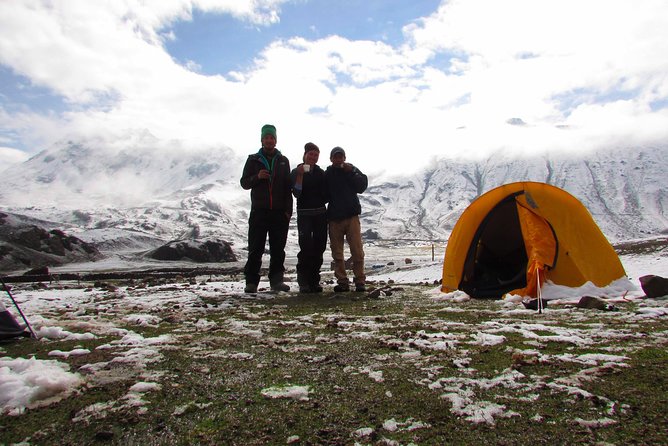
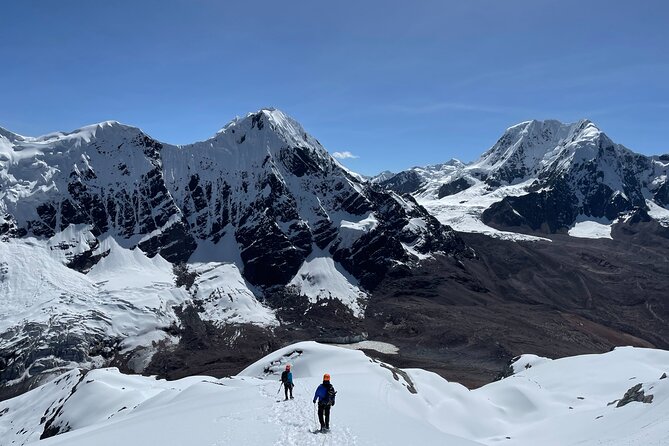
Day two begins around 2:30 a.m. with breakfast. This early start is standard for the summit schedule: you climb the moraine, reach the glacier, and aim to get up and down before conditions become less favorable later in the day.
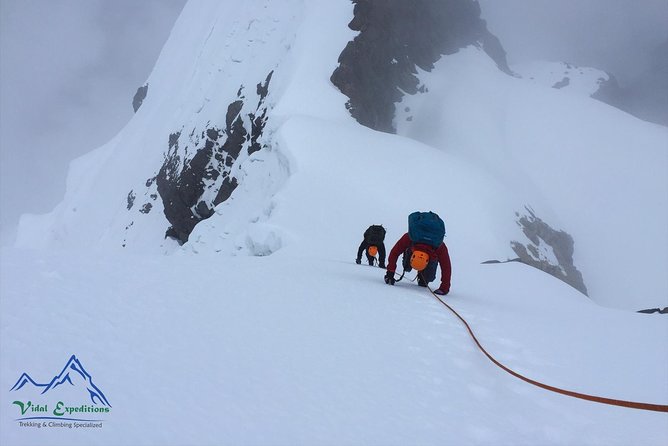
The guide supplies the high-mountain gear and explains how to use it. The route then changes character. You are no longer only trekking on a trail. You are moving onto glacier terrain, with the guide controlling the pace and showing you how to manage the equipment.
The climb to the summit takes about two hours according to the planned schedule. There are steps and, depending on the season, possibly a short rock section. The exact feel of this part depends on snow, ice, weather, and your group’s ability. A first-time climber can learn the basic techniques here, but you should not confuse no previous experience required with no physical preparation required.
Guides named in past departures include Flavio, Chino, Angel, Carlos, Sergio, Raul, Julian, and Vinerson. The guide assigned to your date may be different. What matters most is that your high-mountain guide is responsible for the route, equipment briefing, pace, and safety decisions. Several guides have been singled out for staying close to inexperienced climbers and making the ascent feel manageable.
The altitude is the real test. At 5,520 meters, every step costs more effort than it would at sea level. Published trip descriptions sometimes give the summit as 5,532 or 5,560 meters, but the scheduled itinerary lists 5,520 meters. Use the general figure of roughly 5,500 meters when judging the challenge.
Reaching Qampa’s summit
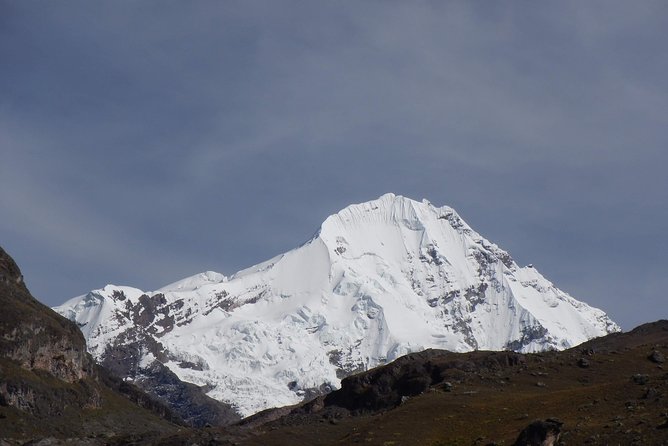
At the top, the reward is not a monument or a built attraction. It is space, silence, and a broad view across the high Andes. On a clear day, you can see the surrounding snow peaks and the distant direction of Salkantay, more than 200 kilometers to the northwest.
Summit time may be brief. Wind and cold can make it uncomfortable, and your guide will decide how long the group should stay. Take photographs, look around, and enjoy the achievement, but keep your gloves on and follow instructions. At this elevation, simple tasks can become surprisingly slow.
The descent returns you to base camp for lunch. This is a sensible arrangement because the summit push is finished before you pack up and leave. You can eat, collect your belongings, and recover before making the longer return hike to Pacchanta.
A successful summit is not guaranteed. Weather, glacier conditions, health, or group pace can change the plan. A responsible mountain guide should place safety ahead of the summit, and you should accept that possibility before booking. The value of the trip lies in the whole alpine experience, not only in a photograph at the highest point.
Pacchanta hot springs and the ride back to Cusco
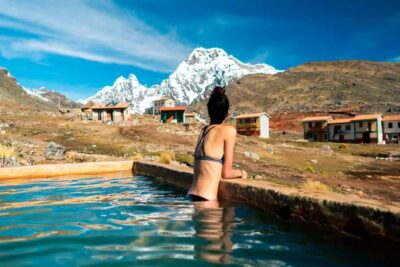
After returning to Pacchanta, you have the option to soak in the hot springs. This is an excellent finish to a physically demanding morning, especially with Ausangate visible nearby. The hot springs are optional, so confirm any entrance cost or practical arrangements with the operator before setting out.
The bus returns to Cusco in the afternoon. This makes the trip efficient, but it also creates a long second day. You wake before dawn, climb the mountain, descend to camp, hike to Pacchanta, possibly use the hot springs, and then ride back to the city. You may be tired when you arrive.
That schedule is the trade-off for completing Qampa in only two days. A three-day extension has been arranged on some departures, which can make the experience less rushed. If you have flexibility and want more recovery time, ask Vidal Expeditions about that option before booking.
What the $380 price really covers
At $380 per person, this is not a budget hike. You are paying for a small-group mountain operation rather than a basic transport-and-walking excursion. The package includes transport from Cusco and back, guide support, high-mountain equipment, camping arrangements, dinner, breakfast, and two lunches.
The group limit of six improves the value. On a technical route, a guide can pay closer attention to your equipment and pace when the party is small. Some departures have also had support from a cook, horse drivers, and an assistant, though the exact team can vary.
The price is less attractive if you only want a scenic trek. For that, there are cheaper options around Cusco. Qampa makes financial sense if you specifically want a guided glacier climb and a summit near 5,500 meters without arranging camping, transport, gear, food, and support on your own.
Budget separately for water, tips, and first-day breakfast. The stated inclusions do not cover these items. Also check the hot-spring arrangements, since the soak is described as an option rather than a core included service.
Who should book this climb
I would recommend Qampa to you if you have:
- Previous hiking experience at altitude
- A moderate to strong level of physical fitness
- A real interest in trying mountaineering
- Two days available for a demanding trip from Cusco
- Patience for early starts, cold camping, and changing mountain weather
You do not need prior mountaineering experience, but you should be honest about your fitness and altitude response. The route is popular with beginners because guides provide instruction and equipment. That support helps, but it cannot remove the effects of thin air.
This is not the right choice if you want a relaxed sightseeing tour, dislike camping, or have not allowed time to adjust to Cusco’s altitude. You should also think twice if you need a guaranteed summit or a fixed weather plan. Mountains do not offer either.
Vidal Expeditions has a strong published record for this outing, with a 5 out of 5 rating from 27 ratings and a 100 percent recommendation figure. The praise centers on guide care, organization, food, equipment, and the way first-time climbers are supported. A separate practical strength is the stated free cancellation policy up to 24 hours before the start time. Inside that window, the payment is not refunded.
Practical preparation for the two days
Keep your personal load light. Use the daypack for water, warm layers, gloves, sun protection, and anything you need during the climb. If a horse-supported duffel arrangement is confirmed for your departure, place heavier camping items there rather than carrying them on the approach.
Clarify the equipment list before you go. The guide is scheduled to provide high-mountain gear, and past organized trips have included tents and sleeping bags, but you should know exactly what is supplied for your date. Do not assume that water is included.
Plan to eat in Tinki or carry breakfast from Cusco. You will have little spare time after pickup, and the stop lasts about 30 minutes. Arrive ready for a long transfer, then use the stop for food and last-minute supplies.
Finally, treat acclimatization as part of the climb. The itinerary moves from Cusco to 4,060 meters, then to a 4,680-meter camp and a roughly 5,520-meter summit. That profile demands respect even if the technical climbing is described as accessible.
Should you book Qampa?
Book this experience if your goal is to try real high-altitude mountaineering in a compact, supported format. You get a glacier ascent, a small group, organized camp logistics, substantial meals, and a memorable summit setting around Ausangate. The guides and support crew are the strongest reason to choose an organized departure rather than attempting the route independently.
Skip it if you want an easy two-day escape from Cusco. Qampa is accessible for a beginner climber, but it is not gentle on the body. Give yourself time at altitude, bring enough water, prepare for a very cold night, and accept that weather may control the summit decision. For the properly prepared, $380 buys a serious mountain experience with much of the difficult planning already handled.
FAQ
Where does the Qampa climbing tour start?
The tour starts in Cusco, Peru, with hotel pickup scheduled around 6 a.m. The ticket redemption point is Vidal Expeditions Peru in the Santiago area of Cusco.
Where does the tour end?
The activity ends back at the meeting point in Cusco after the return drive from Pacchanta.
How long is the Qampa climb?
The experience lasts approximately two days and one night. A three-day version has also been arranged on some departures.
How high is Qampa Mountain?
The planned summit elevation is about 5,520 meters above sea level. Some descriptions give slightly different figures, including 5,532 and 5,560 meters.
Do I need mountaineering experience?
No previous mountaineering experience is required. The route includes glacier travel, and the high-mountain guide provides equipment and instructions. You should still have a moderate level of physical fitness.
How many people can join the tour?
The maximum group size is six people.
What meals are included?
The package includes dinner, breakfast, and two lunches. Breakfast on the first day in Tinki is not included and must be paid for separately.
Is water included?
No. Water is listed as not included, so you should plan to buy or carry your own supply.
Can I cancel for a full refund?
Yes, if you cancel at least 24 hours before the experience start time. Cancellations made less than 24 hours before departure are not refunded.
Just added around Cusco
- Cusco: Via Ferrata, Skybike, and Rappel Adventure★ 5.0 · 3 reviews
- From Cusco: Maras and Moray and Ollantaytambo Tour★ 5.0 · 3 reviews
- Cusco: Rainbow Mountain Tour at Sunset Without the Crowds★ 4.7 · 3 reviews
- Cusco: Sacred Valley Day Trip with Maras & Moray Salt Mines★ 5.0 · 3 reviews
- Valle Sur Cusco | half day★ 4.3 · 3 reviews
- IN MACHU PICCHU: Private Tour Guide Service★ 5.0 · 3 reviews
- Salkantay trek to Machu Picchu – 5D/4N – Premium★ 3.3 · 3 reviews
- Guide in Machu Picchu★ 5.0 · 3 reviews
Ausangate and Seven Lagoons Treks, compared.
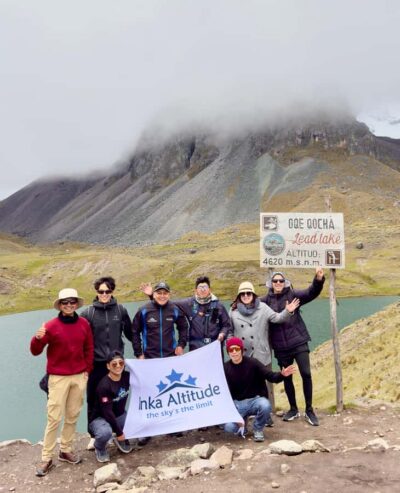
7 Lakes Ausangate Trek with Breakfast and Lunch
Read our review →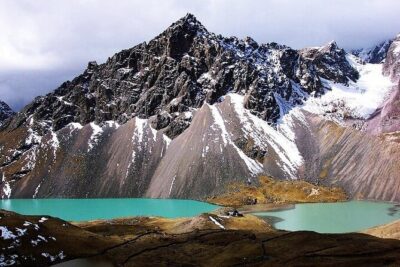
Excursion to Ausangate & 7 lakes with Coca Ceremony |Private|
Read our review →
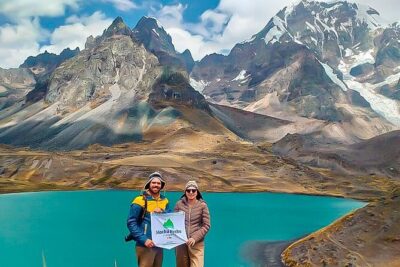
Ausangate and Rainbow Mountain Trek – 3 Days / 2 Nights
Read our review →
6 day Rainbow Mountain x Ausangate Trek – FlashpackerConnect
Read our review →
Browse the lists this tour appears in