
Reviewed · INCA JUNGLE TREKS
From Cusco: 4-Day Inca Jungle Adventure to Machu Picchu
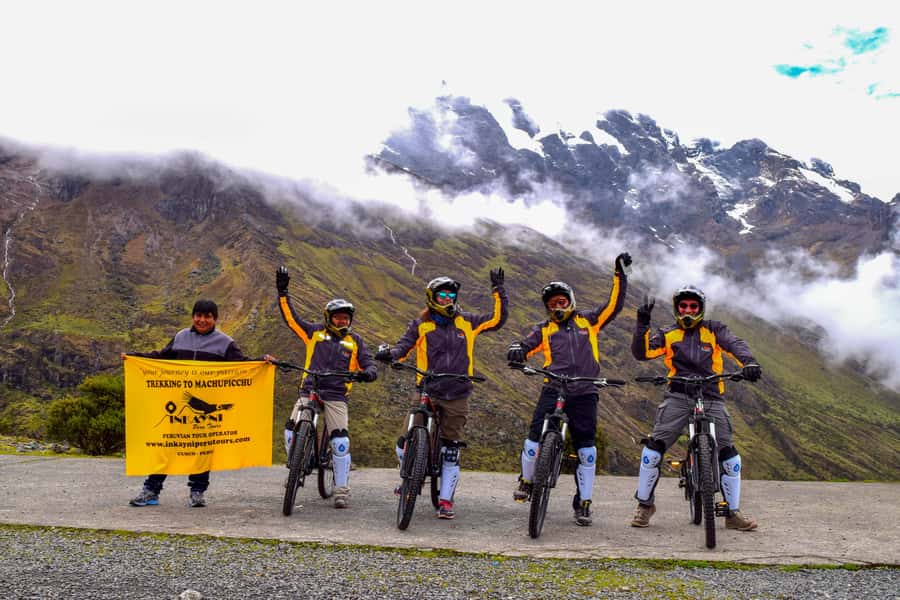
The big appeal here is variety. You reach Machu Picchu by mountain bike, raft, foot, train, and bus, not by simply sitting in a van and waiting for the famous ruins. I especially like the 3-hour bike descent from Malaga Pass and the walk through coffee, banana, and coca farms, where the route connects you with everyday life in the Cusco region.
I also like the small group size, limited to 10 people, and the strong guide service. Guides such as Wilbert, Freddy, Jonny, and others are praised for their warmth, organization, photography, translation, and Inca knowledge. The trade-off is simple: this is an active trip with an early start, basic lodging for two nights, and a long walk beside train tracks on Day 3.
In This Review
- Key points to know before booking
- Why this route feels different from a standard Machu Picchu trip
- Day 1: From 4,350-meter Malaga Pass to Santa Maria
- Day 2: Coffee farms, an old Inca route, and Cocalmayo hot springs
- Day 3: Zipline choices and the railway walk to Aguas Calientes
- Day 4: First buses, Route 2, and the Machu Picchu visit
- What the $519 price really covers
- Fitness, packing, and practical comfort
- Who will enjoy this four-day adventure most
- Should you book the Inca Jungle Adventure?
- FAQ
- How long is the Inca Jungle Adventure from Cusco to Machu Picchu?
- What activities are included?
- Is the rafting suitable for beginners?
- Are the hot springs included in the price?
- Are Huayna Picchu and Machu Picchu Mountain included?
- What accommodation is provided?
Key points to know before booking
- Malaga Pass to the jungle: Begin at 4,350 meters, then cycle downhill for about three hours through changing scenery.
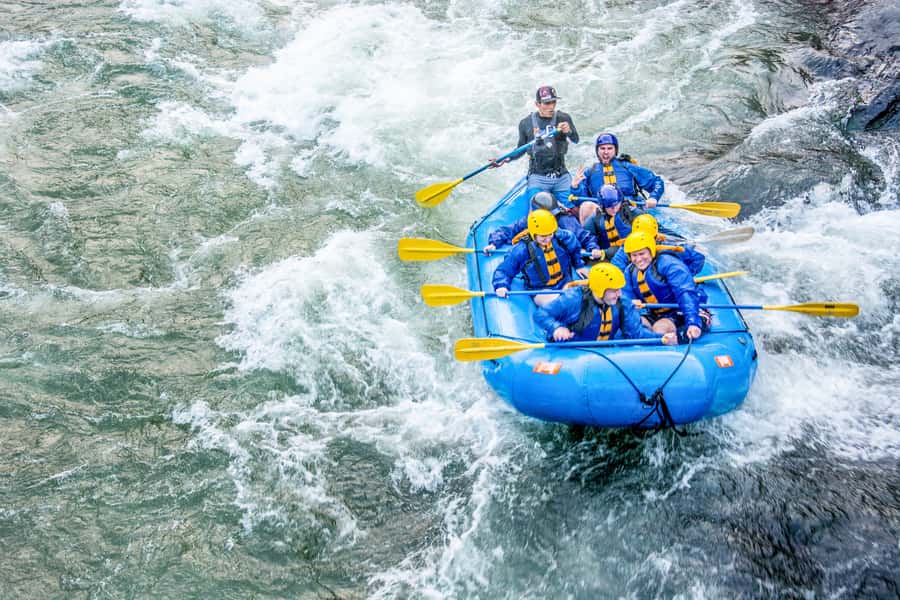
- Several ways to reach Machu Picchu: Bike, optional Class III and IV rafting, hiking, ziplining, train, and bus all play a part.
- Real local contact: Visit a family home, taste regional fruit, and pass coffee, banana, and coca plantations.
- Ancient route with a modern finish: Walk part of an Inca road toward Santa Teresa, then follow the railway to Aguas Calientes.
- Small group and bilingual support: Groups cap at 10, with English and Spanish guides and an assistant guide for groups of eight or more.
- Strong overall value: At $519 per person, transport, lodging, meals, activities, Machu Picchu entry, and the return train are bundled together.
Why this route feels different from a standard Machu Picchu trip
The Inca Jungle Adventure is designed for you if Machu Picchu is the goal, but the journey matters almost as much as the destination. The route links the high Andes with the warmer Urubamba valley and jungle edge. In four days, you move from cold mountain air to tropical vegetation, with plenty of physical activity along the way.
You are not following the famous four-day Classic Inca Trail. Instead, you walk sections of an older route associated with the connection between Machu Picchu and Vilcabamba, then continue through roads, farms, jungle paths, and railway tracks. That makes this a more varied route, but it also means the walking surfaces and daily rhythm change often.
A small group can make a real difference here. You have several transfers, activity briefings, meals, and lodging changes to manage. A guide who keeps everyone informed can turn a complicated trip into a relaxed one. Wilbert is particularly praised for his historical knowledge, humor, safety, and ability to introduce people to local families. Freddy is also noted for making the four days feel easy and companionable, while Jonny is praised for being both helpful and informative.
More ways to reach Machu Picchu:
- From Cusco: Full-Day Group Tour of Machu Picchu
★ 4.7 · 1,767 reviews - Machu Picchu Day Trip from Cusco
★ 4.5 · 1,644 reviews - Machu Picchu: Full-Day Tour from Cusco with Optional Lunch
★ 4.6 · 927 reviews
Day 1: From 4,350-meter Malaga Pass to Santa Maria
The first day begins early, with hotel pickup at 5:30 a.m. from central Cusco and surrounding areas. The drive to Malaga Pass takes about three and a half hours, so you should be ready for a long morning before the first activity begins.
At 4,350 meters, Malaga Pass is the highest point of the trip. The air can be cold, and you should bring a warm jacket, hat, gloves, and waterproof clothing even though the route later becomes hot and humid. This quick change in climate is one reason smart packing matters more than packing light.
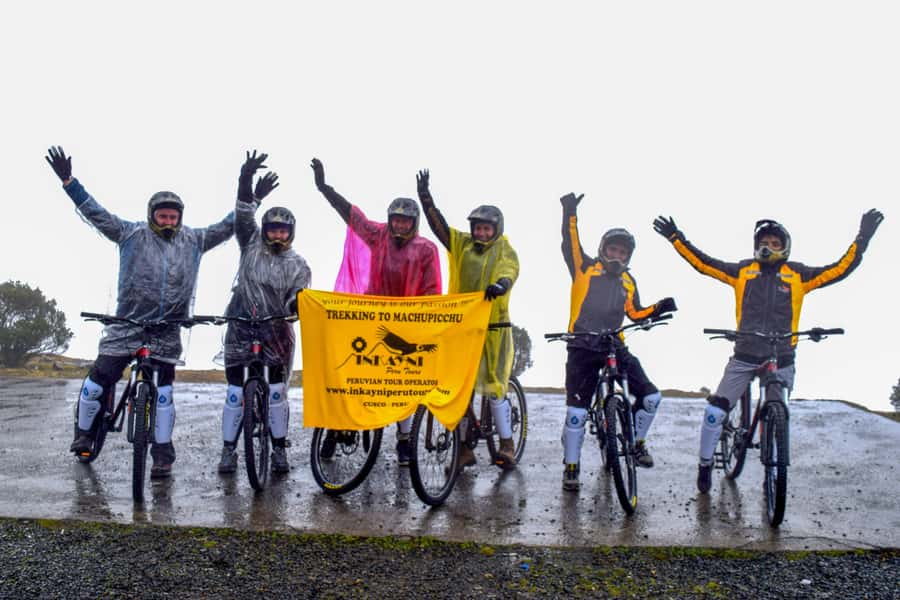
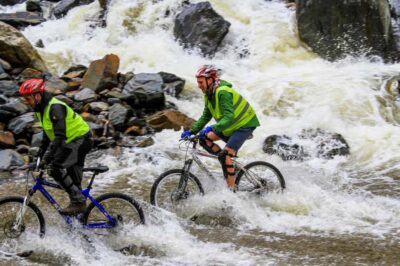
The main activity is a roughly three-hour mountain bike descent. Full-suspension bikes, helmets, and gloves are supplied. You pass forests, rivers, and small Andean villages as the road drops toward Huamanmarca. The downhill direction makes this more approachable than a long uphill cycling route, but you still need confidence on a bike and enough stamina for a full activity day.
The route ends at Huamanmarca for lunch. From there, you can choose an optional two-hour rafting trip on Class III and IV rapids. This is the most intense part of the itinerary, and it suits you if you want a serious burst of activity rather than a quiet first afternoon. Rafting equipment and safety gear are provided, but you should bring swimwear and take the physical demands seriously.
The day finishes with dinner and an overnight stay in Santa Maria. The first day combines a very early pickup, a lengthy drive, cycling, and possibly rafting, so it is not a gentle introduction. If you are hoping for a relaxed sightseeing trip, this pace may feel demanding.
Day 2: Coffee farms, an old Inca route, and Cocalmayo hot springs
After breakfast, you begin with about two hours of walking through plantations growing coffee, bananas, and coca. This is one of the most interesting parts of the trip because the route gives you something beyond mountain scenery. You see how crops shape daily life in the area and stop at a local family home to taste regional fruit and learn about traditional farming.
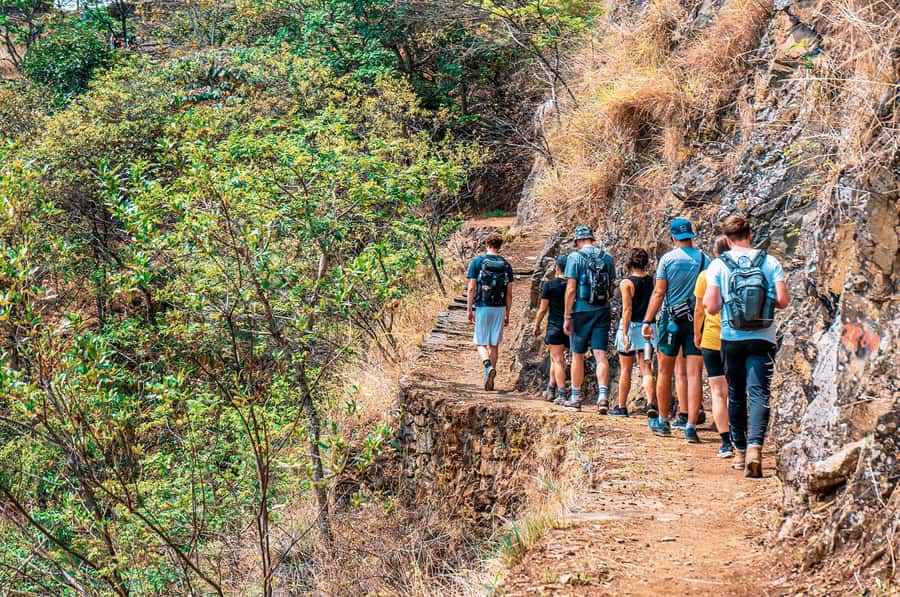
The trail then reaches an ancient Inca route connected with the old network between Machu Picchu and Vilcabamba. You walk along mountain ridges with views toward Huancarccasa Canyon. This section is valuable because the guide can explain the route’s place in the wider Inca world, rather than treating the trail as just a pretty walk.
The walk descends toward Quellomayo, where lunch and hammocks offer a useful pause. You should welcome the break. Day 2 is not built around speed, but it is still a substantial walking day, with uneven ground and changing temperatures.
The afternoon ends at Cocalmayo hot springs before dinner in Santa Teresa. The entrance fee is not included and costs PEN 20. Bring swimwear and a small towel if needed, along with a way to keep dry clothes separate from damp ones. The thermal pools provide a welcome rest after the morning’s walking, though you should not assume the stop replaces proper recovery. You still spend the night in Santa Teresa in basic accommodation.
The two nights outside Aguas Calientes are in basic hostels. That is an important point for your expectations. This is an adventure route, not a hotel-based holiday. You receive beds, meals, and organized transport, but comfort is secondary to the route and activities.
Day 3: Zipline choices and the railway walk to Aguas Calientes
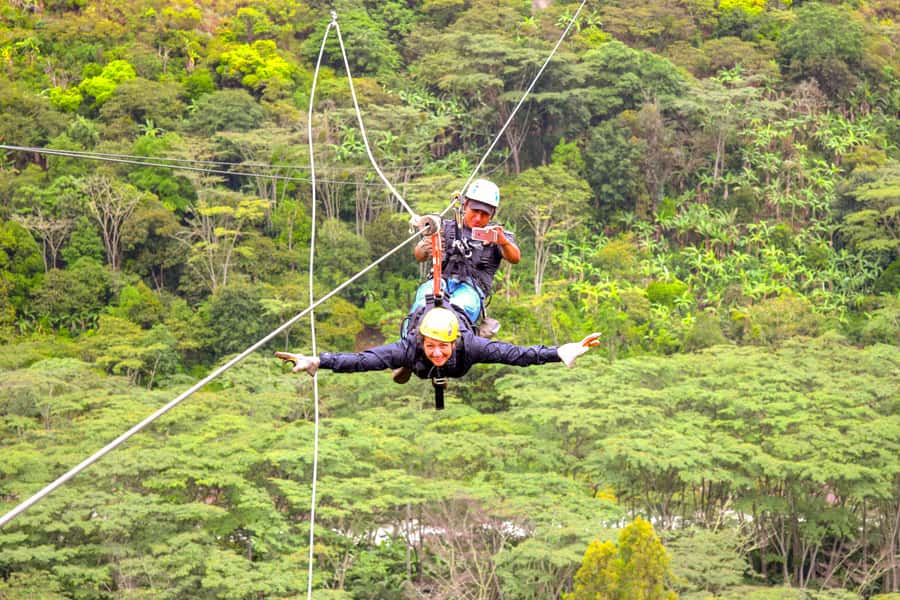
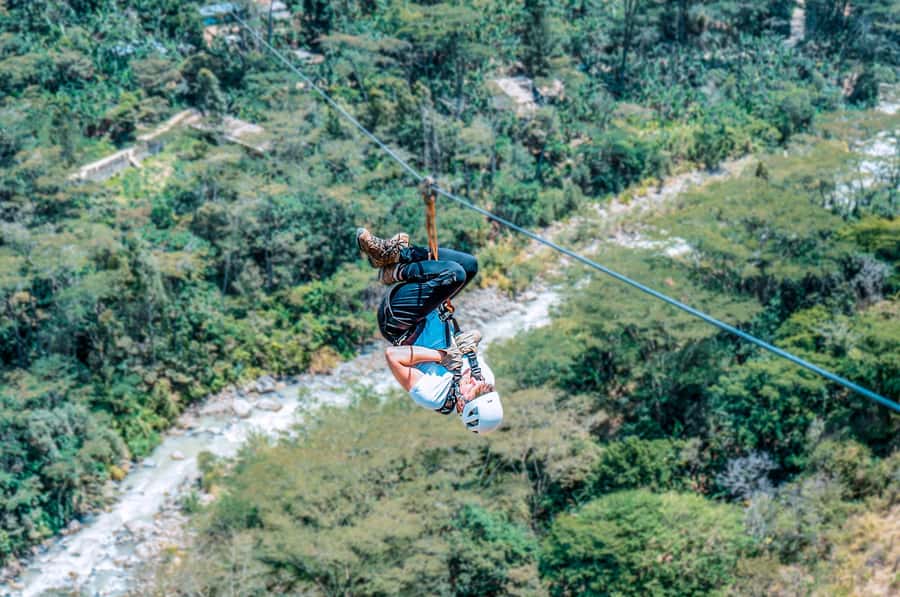
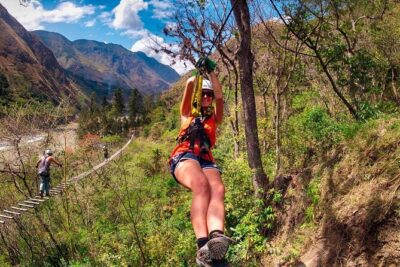
Day 3 opens with an optional ziplining session over the jungle valleys. It gives you another way to see the area, this time from above. The activity is included in the trip arrangements, but the itinerary presents it as optional, so you can decide based on energy, comfort, and interest.
You then travel to the Hydroelectric checkpoint, where lunch comes before the final walk. From here, expect about three hours on foot along the train tracks to Aguas Calientes. Waterfalls and dense jungle accompany the route, but the railway walk is not a polished hiking trail. Wear sturdy walking boots, keep your attention on the route, and carry water where possible.
This section is also the least romantic part of the trip for some people. The train tracks are practical rather than scenic in the classic postcard sense, and three hours of walking after two active days can test tired legs. Still, the route gives you a gradual approach to Machu Picchu and avoids making the entire trip a series of vehicle transfers.
You reach Aguas Calientes in the late afternoon and check into the three-star Golden Sunrise Hotel. Compared with the basic lodging in Santa Maria and Santa Teresa, this is a more comfortable base for the night before Machu Picchu. At dinner, your guide explains the next morning’s timing, entry arrangements, and meeting details.
This briefing is worth paying attention to. Machu Picchu visits run on fixed entry rules and timed circuits, so you benefit from knowing exactly where to go and when. The group dinner also gives you a chance to sort out clothing, tickets, cameras, and snacks before the early start.
More Inca Jungle runs to Machu Picchu:
- 4-Day Inca Jungle Adventure, Mountain Biking, Rafting and Zipline
★ 5.0 · 60 reviews - 4 Days Inca Jungle to Machu Picchu Standard
★ 4.5 · 48 reviews - Inca Jungle Premium to Machu Picchu 4-Day and 3-Nights
★ 5.0 · 40 reviews - Inca Jungle 4-Day Tour: Full Adventure to Machu Picchu Included
★ 5.0 · 38 reviews
Day 4: First buses, Route 2, and the Machu Picchu visit
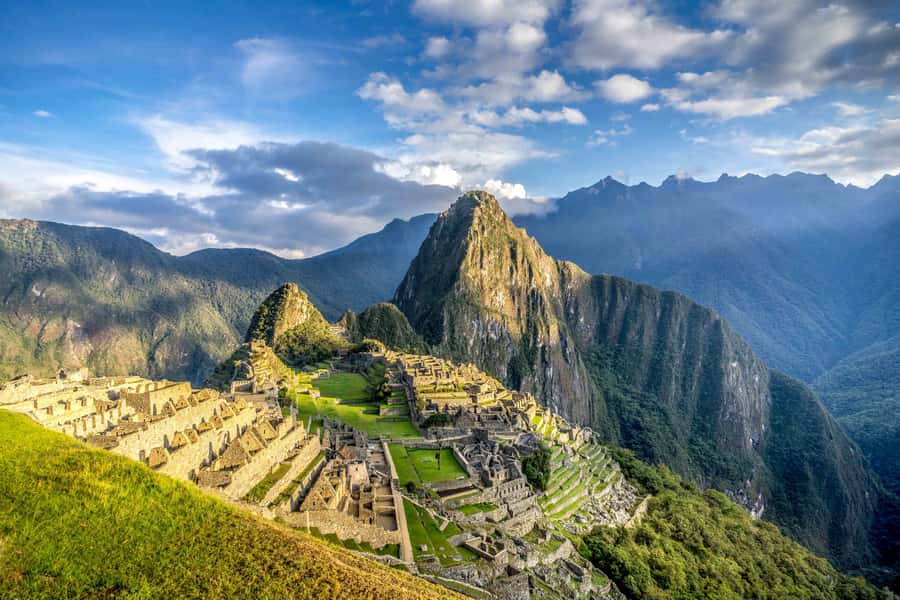
You rise early and take one of the first buses from Aguas Calientes to Machu Picchu. The site sits at about 2,430 meters, while Aguas Calientes is around 2,040 meters. Arriving early means you see the terraces and temples as morning light reaches the stonework, and you avoid leaving the main visit until the hottest part of the day.
A local guide leads you through the most important parts of the citadel and explains its purpose and significance. A guided visit is a major advantage here. Without context, Machu Picchu can become a series of impressive walls and terraces. With a good guide, the layout, engineering, religious features, and setting begin to make sense.
The route ticket reported for this trip is Route 2, organized in advance. You should still confirm the circuit assigned to your booking, since Machu Picchu access is controlled by ticket type and set routes. You may explore at your own pace after the guided portion, within the rules of your entry ticket.
Huayna Picchu and Machu Picchu Mountain are possible additions, but they require separate tickets. These must be reserved months ahead because numbers are limited. Huayna Picchu rises to about 2,720 meters, while Machu Picchu Mountain reaches roughly 3,082 meters. Do not treat either hike as a casual last-minute extra.
After Machu Picchu, you return to Aguas Calientes for lunch, which is not included. In the afternoon, you take the train to Ollantaytambo, followed by a private van back to Cusco. The train ride gives you a scenic final look at the valley, but the return is still a long travel day. Plan to arrive tired, especially after getting up early and spending the morning at the ruins.
What the $519 price really covers
At $519 per person, the cost is strong for an active four-day route because so many major expenses are included. You receive transportation throughout, two nights in basic lodging, one night in a three-star hotel, three breakfasts, three lunches, three dinners, the bike and safety equipment, rafting equipment, ziplining, Machu Picchu entry, the guided visit, the one-way bus, and the train to Ollantaytambo.
You also receive transport from Ollantaytambo to Cusco, an experienced bilingual guide, and an assistant guide for groups of eight or more. Those inclusions matter because buying each transfer and activity separately would make the trip harder to organize and could reduce your time for enjoying the route.
The price does not cover the first breakfast, the last lunch in Aguas Calientes, the PEN 20 hot springs fee, travel insurance, or the separate entrance fees for Huayna Picchu. These are manageable extras, but budget for them rather than treating $519 as the final amount.
The best value comes if you plan to do the rafting and zipline options and appreciate having a guide handle the transport chain. If you only want to walk and visit Machu Picchu, a simpler package may suit you better. The price earns its keep through variety and coordination.
Fitness, packing, and practical comfort
You should be comfortable with long activity days and uneven walking. The tour is not suitable for people with back problems, heart problems, or wheelchair users. The combination of cycling, rafting, walking, ziplining, and railway tracks requires a reasonable level of mobility.
Pack for two climates. A warm jacket, hat, and gloves are useful at Malaga Pass, while T-shirts, comfortable trousers, sun protection, and insect repellent matter later. A waterproof jacket or rain poncho is important, as is sturdy walking footwear.
Bring your passport or ID card. If you are a student and want the discount, carry your SIC card. You should also pack toiletries, hand sanitizer, personal medication, a camera, and a flashlight with spare batteries.
A practical day bag should hold rain gear, sun cream of factor 35 or higher, insect repellent, water, and any medication you need during the day. Keep swimwear handy for rafting and the hot springs. Since lodging changes twice before Aguas Calientes, organize your belongings so you are not unpacking everything at each stop.
The tour includes a first aid kit and safety equipment, but you should still take out your own travel insurance. That is especially sensible for a trip combining mountain roads, rafting, biking, and several days of walking.
Who will enjoy this four-day adventure most
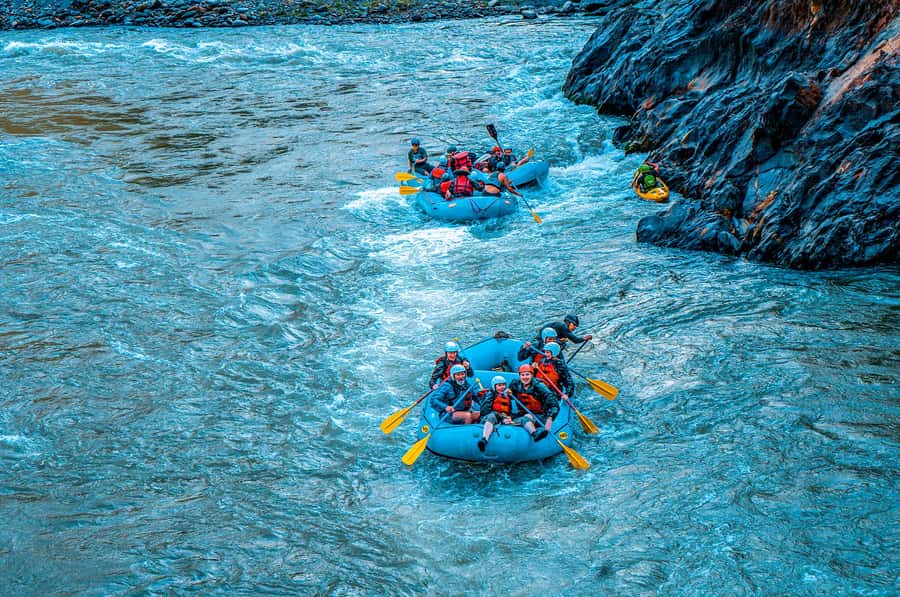
I would choose this route if you want Machu Picchu wrapped inside an active holiday. It suits people who like having several ways to move through a region and who would rather cycle downhill, visit farms, soak in hot springs, and walk through jungle than spend every hour in a vehicle.
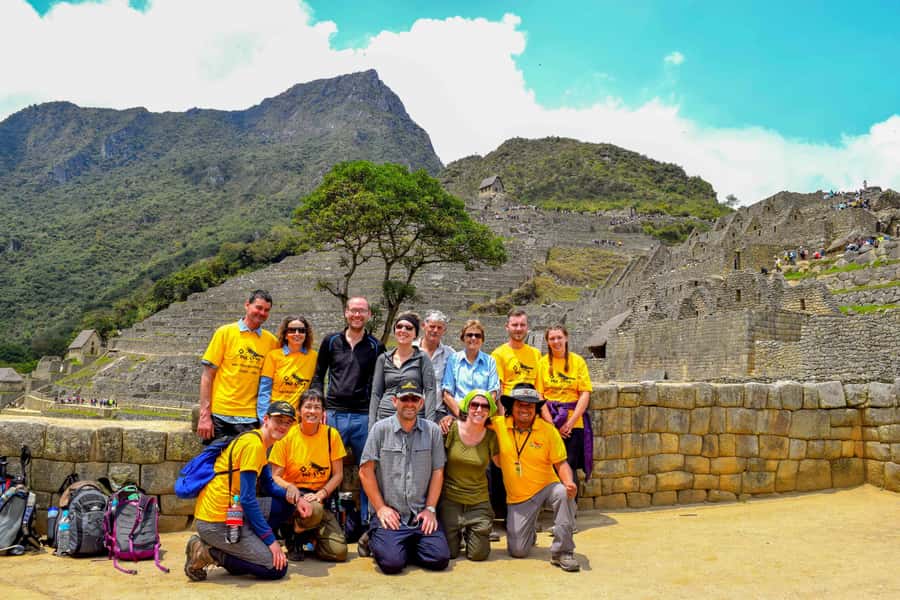
It is also a good choice if you want a social small-group trip. A maximum of 10 people keeps the group manageable, and groups of eight or more receive an assistant guide. The personal guide relationship seems central to the experience. Wilbert, Freddy, and Jonny are all singled out for being friendly, organized, and able to explain what you are seeing.
I would hesitate if you need polished hotels, slow mornings, or a carefully controlled level of comfort. The 5:30 a.m. start, basic hostels, optional rapids, and three-hour railway walk are real parts of the deal. You should also be comfortable with schedule changes that can come with weather and outdoor activities, although the supplied details describe the trip as well organized.
The overall rating is 4.8 from 45 reviews, with especially strong praise for the guides, food, organization, variety, and value. The clearest pattern is that the guide can make or break a busy route like this. The route has plenty of moving parts, so good communication matters as much as the scenery.
Should you book the Inca Jungle Adventure?
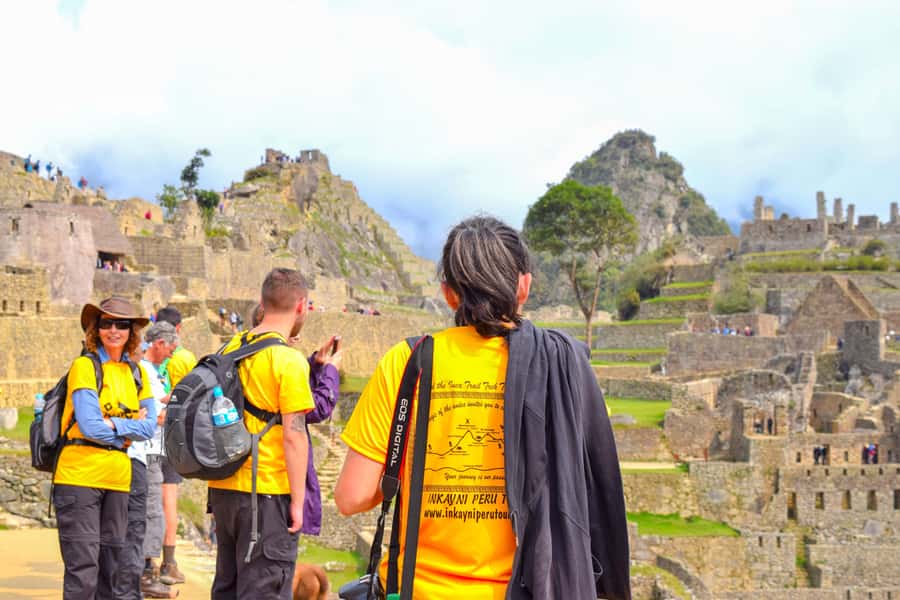
Book it if you want the journey to Machu Picchu to be an adventure in its own right. The bike descent, local farming visit, old Inca route, hot springs, zipline option, railway walk, guided ruins visit, and return train give you four very different days for the price.
Skip it if your priority is comfort or a straightforward Machu Picchu transfer. This is not the easiest way to reach the ruins, but it is one of the more varied. Bring proper clothing, expect early mornings and basic lodging, and reserve any mountain hike months ahead. For active visitors who value a capable guide and a full itinerary, $519 is a convincing package.
FAQ
How long is the Inca Jungle Adventure from Cusco to Machu Picchu?
The experience lasts four days. It begins with hotel pickup in Cusco at 5:30 a.m. on Day 1 and ends after the train to Ollantaytambo and private van transfer back to Cusco on Day 4.
What activities are included?
The trip includes mountain biking equipment, rafting equipment, ziplining, hiking, transportation, and safety equipment. Rafting and ziplining are presented as optional activities within the itinerary.
Is the rafting suitable for beginners?
The rafting uses Class III and IV rapids. The provided information does not specify prior experience requirements, so you should ask the local supplier about suitability before booking if you have concerns.
Are the hot springs included in the price?
No. Entrance to the Cocalmayo hot springs costs PEN 20 and is not included. You should bring swimwear if you plan to use the pools.
Are Huayna Picchu and Machu Picchu Mountain included?
No. Both require separate tickets, and availability is limited. You should reserve months in advance if you want either hike.
What accommodation is provided?
You spend two nights in basic hostel or hotel accommodation in Santa Maria and Santa Teresa, followed by one night at the three-star Golden Sunrise Hotel in Aguas Calientes.
Just added around Cusco
- Cusco: Via Ferrata, Skybike, and Rappel Adventure★ 5.0 · 3 reviews
- From Cusco: Maras and Moray and Ollantaytambo Tour★ 5.0 · 3 reviews
- Cusco: Rainbow Mountain Tour at Sunset Without the Crowds★ 4.7 · 3 reviews
- Cusco: Sacred Valley Day Trip with Maras & Moray Salt Mines★ 5.0 · 3 reviews
- Valle Sur Cusco | half day★ 4.3 · 3 reviews
- IN MACHU PICCHU: Private Tour Guide Service★ 5.0 · 3 reviews
- Salkantay trek to Machu Picchu – 5D/4N – Premium★ 3.3 · 3 reviews
- Guide in Machu Picchu★ 5.0 · 3 reviews
Inca Jungle Treks, compared.
4-Day Inca Jungle Adventure, Mountain Biking, Rafting and Zipline
Read our review →
Inca Jungle Premium to Machu Picchu 4-Day and 3-Nights
Read our review →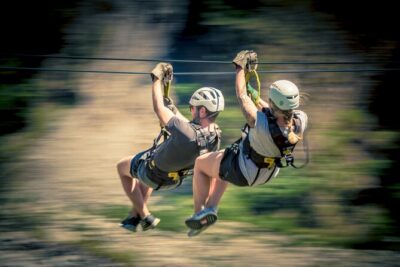
Inca Jungle 4-Day Tour: Full Adventure to Machu Picchu Included
Read our review →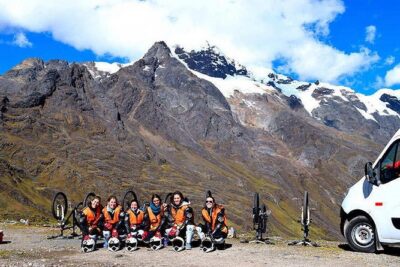
07 Day: Inca Jungle Adventure with Mountain Bike, Rafting, Zipline & Trek
Read our review →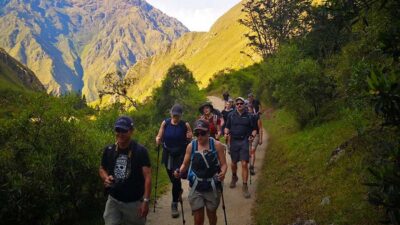
4 days/3 nights: Inka Jungle Trek to Machu Picchu
Read our review →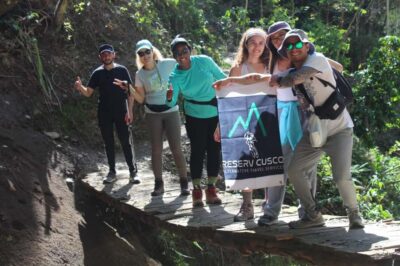
Browse the lists this tour appears in