
Reviewed · CULTURAL EXPERIENCES
07 Day Andean Experience Through the Living Culture of the Incas
Machu Picchu gets the headlines, but this seven-day journey gives you the wider story. You’ll see how Inca engineering shaped mountainsides, how local families still harvest salt, and how Andean weaving and market life continue around Cusco. I especially like the two nights connected to the Sacred Valley sights and the chance to see both famous ruins and working traditions. I also like that the tour includes trains, buses, hotels, entrances, and airport transfers, so you are not left piecing together the difficult parts yourself.
The main drawback is the pace. High-altitude Cusco sits at about 3,400 meters, and several visits reach more than 11,000 feet. You get a rest day at the start, but this is still a full schedule with early departures, long drives, and little room for a slow morning. The nonrefundable booking policy also means you should be certain of your dates before paying.
In This Review
- Key points to know before booking
- What this seven-day Andean route is really about
- Day 1: Let Cusco’s 3,400 meters sink in
- Day 2: Sacsayhuaman and the living streets of Ollantaytambo
- Day 3: Machu Picchu, temples, terraces, and a long day
- Day 4: Moray’s farming circles and the Maras salt pools
- Day 5: A free Cusco day with optional add-ons
- Day 6: Pisac ruins, Andean animals, and the market
- Day 7: A simple farewell in Cusco
- Is $1,299 a fair price?
- What past departures suggest about the guiding
- Who should book this Andean experience?
- FAQ
- How long is the Andean experience?
- Where does the tour begin?
- What altitude is Cusco?
- Is accommodation included?
- Are meals included?
- Is transportation to Machu Picchu included?
- Is the Machu Picchu entrance included?
- Are Huayna Picchu and Machu Picchu Mountain included?
- Is travel insurance included?
Key points to know before booking
- Sacsayhuaman begins the history lesson: See enormous Inca stones above Cusco, then visit Qenko, Tambomachay, and Puca Pucara.
- Machu Picchu receives a full guided visit: The package includes the train, round-trip buses, entrance, and a professional English-speaking guide.
- Moray and Maras show practical Inca ingenuity: One site explores farming at different elevations, while the other is still used for salt production.
- Pisac combines ruins with everyday commerce: Visit the hilltop archaeological site, then browse textiles, jewelry, ceramics, and other handmade goods.
- Your guide can shape the experience: Past departures included guides named Yeny, Jonathan, Percy, Herlin, Julio, Saul, and Ronald, though your assigned guide may differ.
- The price covers many expensive pieces: At $1,299 per person, six hotel nights, six breakfasts, transportation, train tickets, buses, and entrance fees are included.
What this seven-day Andean route is really about
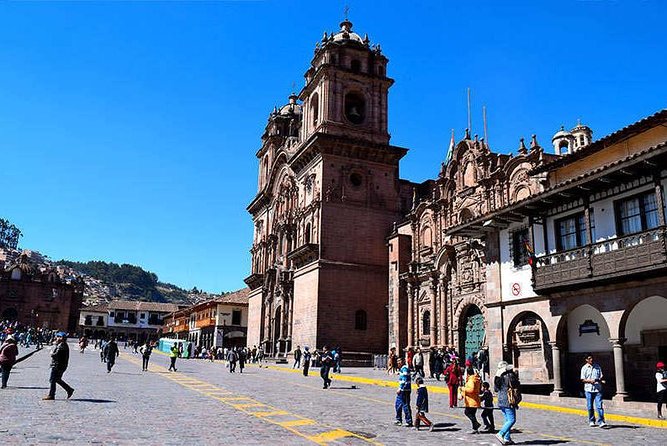
This is not just a Machu Picchu transfer with a few stops added around it. The route links Cusco’s ceremonial sites, the Sacred Valley’s farming towns, major Inca ruins, local crafts, and the modern city that grew over the old imperial capital.
I like that progression. You begin by resting and adjusting to altitude, then move through places that explain how the Inca organized religion, agriculture, transport, and defense. By the time you reach Machu Picchu, you have more context for what you are seeing.
The trip is operated as a private activity, meaning only your group participates. That can be useful if you are traveling with family or friends and want the guide to respond to your group’s pace. The exact guide is not guaranteed in the information provided, but several guides received strong praise for clear explanations, patience, photography, restaurant help, and careful coordination. Yeny, Jonathan, Percy, Herlin, Julio, Saul, and Ronald were all singled out on different departures.
That personal attention matters in Peru. Transport connections and entry times can be complicated, particularly around Machu Picchu. A guide who keeps everyone informed can save you a great deal of mental work.
A few more Cusco departures worth comparing
- Cusco: Folkloric Andean Show & 3-Course Dinner at Tunupa
★ 4.2 · 205 reviews - 6-Day Cultural Tour to Machu Picchu
★ 5.0 · 76 reviews - Amazonas Manu Cultural Zone 4 Days / 3 Nights
★ 4.2 · 8 reviews
Day 1: Let Cusco’s 3,400 meters sink in
Your arrival at Alejandro Velasco Astete Airport is followed by a pickup and transfer to your accommodation in Cusco. The hotel category is listed as three-star, with rooms based on double occupancy.
The first day is deliberately light. You have time to rest, get familiar with the city, and adjust to the thin air before the sightseeing begins. At about 5:00 PM, you meet the expedition group for a briefing about the days ahead.
This rest period is not wasted time. Cusco is around 3,400 meters above sea level, or roughly 11,000 feet. Even fit people can feel the altitude. I would keep your first afternoon quiet, drink water, avoid overplanning, and save strenuous walks for later.
The day includes airport pickup, but international and local flights are not included. You will need to arrange those separately and provide your original passport for the trip. If you plan to use a student discount, bring a current university card.
Day 2: Sacsayhuaman and the living streets of Ollantaytambo
The second day opens with Sacsayhuaman, above Cusco at about 3,700 meters. Its huge stones are the attraction, but the site is more than a pile of impressive masonry. The walls show the precision of Inca stonework, with blocks fitted so closely that the construction still invites questions.
The Spanish used parts of the complex after the conquest, so what you see is not the complete Inca site. Still, the remaining terraces and walls give you a strong sense of the scale of Cusco’s former ceremonial and defensive center.
The route continues to Qenko, Tambomachay, and Puca Pucara. Qenko is associated with sacred and ceremonial use. Tambomachay is known for its water channels and ceremonial baths. Puca Pucara functioned as a guard post or checkpoint. Together, these stops help you see Cusco as a carefully planned center rather than an isolated ruin.
In the afternoon, you travel to Ollantaytambo, at about 2,792 meters. This is one of the most rewarding places on the route because the modern town still follows an Inca street plan. Cobblestone lanes, old stone foundations, and living homes sit beside the archaeological complex.
Ollantaytambo’s terraces rise dramatically above the town. You will see why this was an important strategic and agricultural center. The climb and uneven surfaces require comfortable shoes, but the lower altitude may feel easier than Cusco.
The day is listed at about five hours, though driving and hotel arrangements can affect how it feels. Ask your tour team to confirm where you sleep each night, since the supplied schedule gives the main destinations but not every lodging location.
Day 3: Machu Picchu, temples, terraces, and a long day
Machu Picchu is the emotional center of the trip. After breakfast, you board a morning bus and enter the citadel with your guide. The visit covers temples, ceremonial spaces, terraces, and storage structures, giving you more than a quick photo stop.
A guided visit is particularly useful here. Machu Picchu can look like a collection of beautiful stones if you do not understand how its terraces, water systems, religious spaces, and buildings relate to each other. Your guide can point out the design choices that make the site feel both practical and ceremonial.
The package includes the entrance fee, train transportation through Voyager or IncaRail, and round-trip buses to Machu Picchu. Lunch in Aguas Calientes is not included, so budget separately for that meal.
The schedule lasts about 12 hours. You return to Aguas Calientes after the citadel visit for rest and lunch, then continue according to the planned train and accommodation arrangements. The description indicates further afternoon or evening travel, but the exact sequence is not fully spelled out. Confirm your return time and overnight location before departure.
Huayna Picchu and Machu Picchu Mountain are not included. If you want one of those additional hikes, you must secure the separate entrance in advance. That is an important detail, since these tickets are limited and cannot be added casually at the gate.
Expect crowds, timed entry rules, stairs, and changing weather. Bring your passport, since it is required for the trip, and keep your camera ready. The site can be misty or wet, but weather can change quickly in the mountains.
Same base, a completely different day in the Andes:
- Cusco: Humantay Lake Tour with Breakfast and Buffet Lunch
★ 4.9 · 2,976 reviews - From Cusco: Sacred Valley & Maras Salt Mines Tour with Lunch
★ 4.8 · 2,227 reviews - From Cusco: Moray, Maras Salt Mines & Chinchero Weavers Tour
★ 4.8 · 1,925 reviews - From Cusco: Full-Day Group Tour of Machu Picchu
★ 4.7 · 1,767 reviews
Day 4: Moray’s farming circles and the Maras salt pools
After returning from Aguas Calientes to Ollantaytambo, the route heads into the highlands toward Moray. At about 11,482 feet, this is another day when altitude matters.
Moray consists of large circular terraces cut into the earth. The different levels created separate growing conditions, making the site a striking example of Inca agricultural experimentation. You can read the place as architecture, but its real importance is practical: food production had to work across steep slopes and varied elevations.
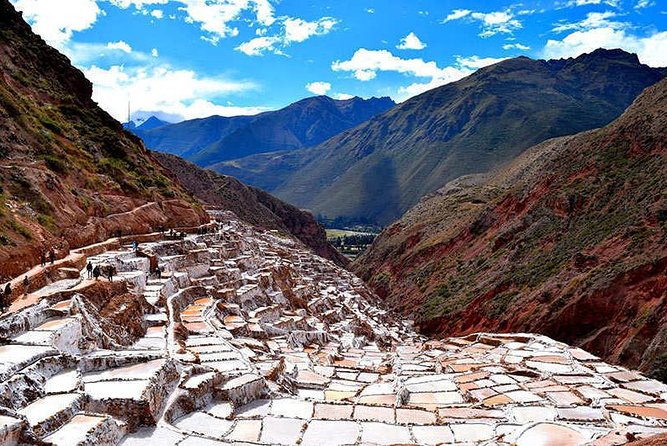
The Maras Salt Mines follow. More than 3,000 salt pools cover the mountainside, and local families continue to harvest salt from them. The pools catch the sun and form bright bands against the brown mountain slopes.
Maras is one of the best cultural stops on the route because it remains part of local work, not only a preserved archaeological site. You see a tradition connected to the area’s past still producing something useful today.
The day lasts about eight hours and includes entrance fees and transportation. Wear shoes that can handle uneven ground, and bring sun protection. At this altitude, strong sunlight and cool air can arrive together, so layers are helpful.
Day 5: A free Cusco day with optional add-ons
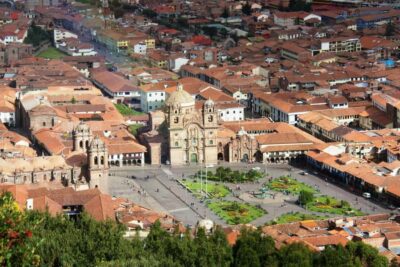
Day five gives you a break from the fixed route. You can walk through Cusco’s historic center, see how colonial facades were built over Inca foundations, and spend time in the city’s plazas.
This is a valuable pause. After several early starts and high-altitude visits, you may prefer a gentle city day rather than another demanding excursion. You can also use the time for shopping, photography, or a slower meal.
Optional activities offered by Inkayni include Rainbow Mountain, a Cusco City Tour, horseback riding near Sacsayhuaman, and an ATV outing to Apukunaq Tianan. These are choices rather than clearly stated inclusions in the seven-day package, so confirm any extra cost, transport, duration, and fitness demands before selecting one.
Rainbow Mountain is the most strenuous-sounding option because of its elevation and trekking format. A city tour is likely the easier choice if you need recovery time, while horseback riding and the ATV trip suit visitors who want outdoor activity without another long archaeological walk. The key advantage is choice. You are not forced into the same activity as everyone else.
Day 6: Pisac ruins, Andean animals, and the market
The sixth day returns to the Sacred Valley and begins at Cochawasi Animal Sanctuary. You can see Andean animals including pumas, condors, alpacas, and llamas.
This stop adds wildlife and conservation to a trip otherwise centered on stonework and agriculture. It also gives you a closer look at animals that are part of Andean identity, transport, farming, and folklore.
Next comes the Pisac archaeological site, at about 2,972 meters. Its terraces and temples climb the hills, with the complex said to be laid out in a form resembling a condor. The ruins offer wide views across the valley and show how the Inca combined farming, ceremony, and settlement planning.
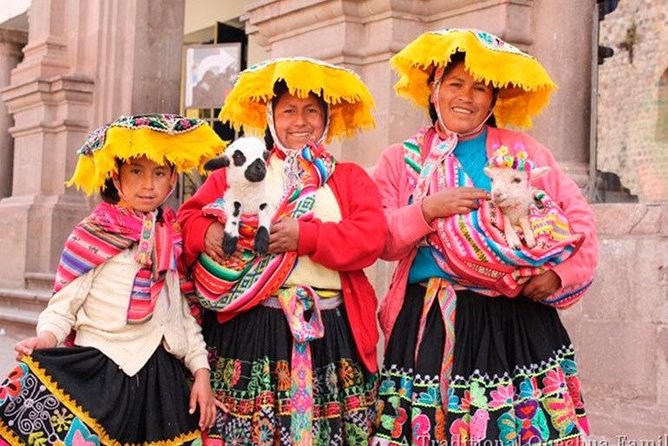
After the ruins, you descend to Pisac Market. This is your chance to browse textiles, jewelry, ceramics, and other handmade items while meeting local artisans. The shopping can feel tourist-oriented, but it is still a useful place to see the colors, patterns, and materials associated with Andean craft.
If you want to support small businesses, this is a good place to spend carefully. Ask about materials and production, compare prices, and buy something you genuinely want rather than filling your bag quickly. The tour gives you time to interact with makers instead of rushing through a single souvenir stall.
The day lasts about seven hours. Pisac’s ruins involve slopes and uneven paths, while the market is easier to explore at your own pace.
Day 7: A simple farewell in Cusco
The final morning includes a quick tour of Cusco’s historic center. An optional free walking tour is also available.
Your airport transfer is scheduled around your flight time. That is convenient, but do not assume the day can hold a long independent excursion. Keep your departure schedule clear and confirm the pickup time with the tour team.
The trip ends where it began, in Cusco, after a week that moves from city streets to high mountain sites and living Andean communities.
Is $1,299 a fair price?
At $1,299 per person, the value depends on how much planning you want to hand over. The package includes six nights in three-star hotels, six breakfasts, entrance fees, all listed transfers, the train to Machu Picchu, round-trip buses, and an English-speaking guide throughout the trip.
Machu Picchu alone can involve several separate expenses and timed arrangements. Add airport pickup, Sacred Valley transportation, multiple archaeological entrances, and hotel coordination, and the bundled price becomes easier to understand.
Still, several costs remain outside the package. International and local flights are not included. Lunch is specifically not included on the Machu Picchu day, Huayna Picchu or Machu Picchu Mountain costs extra, and travel insurance is excluded. Optional day-five activities may also require additional payment.
The hotel setup is based on double occupancy, so solo visitors should ask about the single-room supplement or room arrangement before booking. The tour is private, but the supplied information does not explain whether every transfer is private or how large any expedition group might be during the briefing. Ask for that detail if it affects your decision.
What past departures suggest about the guiding
The strongest praise centers on the guides. Yeny was described as especially good at explaining local culture and history, while Jonathan was repeatedly praised for his friendliness, photographs, patience, and practical help with restaurants and shopping stops.
Percy was noted for keeping a group safe and well organized. Herlin was praised for expert coordination at Machu Picchu, and Ronald was especially attentive to a solo visitor. Julio and Saul were also singled out for making the cultural side of the trip engaging.
That does not mean you can choose any of these guides. Names vary by departure, so request a preferred guide if the company allows it, but treat that as a request rather than a promise.
There is also one serious caution. One departure raised a concern about a guide behaving inappropriately toward women in the group. The company acknowledged the issue and said it would address it. I would not ignore this point. If you are traveling alone or in a women-only group, keep communication open with the tour operator and ask who your guide will be before you arrive.
Who should book this Andean experience?
I would recommend this trip to a first-time visitor who wants the main Cusco and Sacred Valley sights arranged in one package. It suits you if you value an English-speaking guide, included transport, and a clear route more than complete independence.
It also works well for families, friends, and solo visitors who prefer support with trains, buses, entries, and airport transfers. The private format can make the schedule more comfortable for your own group.
I would hesitate if you want long free periods, independent hikes, luxury hotels, or a flexible cancellation policy. The route is busy, altitude is a real factor, and the booking is nonrefundable and cannot be changed after cancellation.
Bring your original passport, waterproof jacket or rain poncho, sun cream of factor 35 or higher, personal medication, and a camera. Most people can participate, but you should be honest with yourself about high-altitude walking and long touring days.
FAQ
How long is the Andean experience?
The tour lasts approximately seven days and includes six nights of accommodation.
Where does the tour begin?
The experience begins with pickup at Alejandro Velasco Astete Airport in Cusco.
What altitude is Cusco?
Cusco is listed at about 3,400 meters, or approximately 11,000 feet.
Is accommodation included?
Yes. Six nights in three-star hotels are included, based on double occupancy.
Are meals included?
Six breakfasts are included. Lunch in Aguas Calientes on the Machu Picchu day is not included.
Is transportation to Machu Picchu included?
Yes. The package includes a Voyager or IncaRail train and round-trip buses to Machu Picchu.
Is the Machu Picchu entrance included?
Yes. Entrance fees for the listed sites are included.
Are Huayna Picchu and Machu Picchu Mountain included?
No. Either mountain requires an additional entrance ticket secured in advance.
Is travel insurance included?
No. Travel insurance is not included, and international and local flights are also excluded.
Just added around Cusco
- Cusco: Via Ferrata, Skybike, and Rappel Adventure★ 5.0 · 3 reviews
- From Cusco: Maras and Moray and Ollantaytambo Tour★ 5.0 · 3 reviews
- Cusco: Rainbow Mountain Tour at Sunset Without the Crowds★ 4.7 · 3 reviews
- Cusco: Sacred Valley Day Trip with Maras & Moray Salt Mines★ 5.0 · 3 reviews
- Valle Sur Cusco | half day★ 4.3 · 3 reviews
- Salkantay trek to Machu Picchu – 5D/4N – Premium★ 3.3 · 3 reviews
- IN MACHU PICCHU: Private Tour Guide Service★ 5.0 · 3 reviews
- Full-Day Condor Viewpoint & Inca Sites Tour★ 5.0 · 3 reviews
Cultural Experiences, compared.
Browse the lists this tour appears in